What’s in today’s article?
- Why in News?
- What is the NBS Scheme?
- Decision Taken by the Central Govt wrt Non-Urea Fertilisers
- How will Companies’ “Unreasonable Profit” be Assessed?
- Significance of the New Guidelines of the DoF
Why in News?
- The Central government has brought di-ammonium phosphate (DAP), muriate of potash (MOP) and all other such fertilisers that receive nutrient-based subsidy (NBS) support under “reasonable pricing” controls.
- NBS fertilisers – unlike urea, whose maximum retail price (MRP) is fixed by the government – are technically decontrolled.





What is the NBS Scheme?
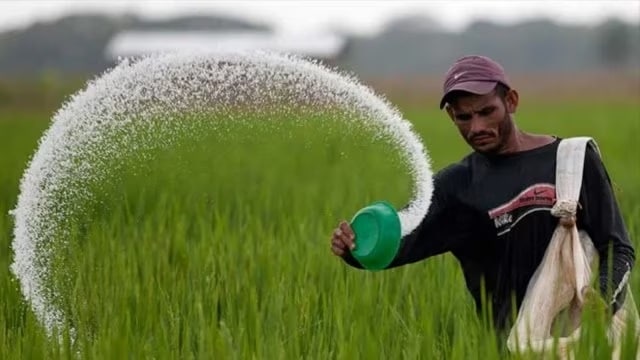
- Fertilisers are essentially food for crops, which need nutrients (Primary [N, P, K)], Secondary [S, calcium, magnesium] and Micro [iron, zinc, copper, manganese, boron, molybdenum]) for plant growth and grain yield.
- Under the NBS scheme, introduced in April 2010, their MRPs are supposed to be market-determined and set by the individual companies selling them.
- The government merely pays a fixed per-tonne subsidy on each of these fertilisers, linked to their nutrient content or specific percentage of nitrogen (N), phosphorus (P), potassium (K) and sulphur (S).
- Unlike the earlier product-specific subsidy regime, NBS was intended to promote balanced fertilisation by discouraging farmers from applying too much urea (46% N), DAP (46% P plus 18% N) and MOP (60% K).
- These are fertilisers with high content of a single nutrient.
- NBS was meant to encourage product innovation, as well as increased use of complex fertilisers (with lower amounts of N, P, K, and S) and single super phosphate – SSP (with just 16% P but 11% S).
- However, urea consumption rose by over a third since 2009-10, worsening the nutrient imbalance and leading to the failure of NBS.
Decision Taken by the Central Govt wrt Non-Urea Fertilisers
- The Department of Fertilisers (DoF), Ministry of Chemicals & Fertilisers, has issued detailed guidelines for the evaluation of “reasonableness” of the MRPs for all non-urea fertilisers covered under NBS.
- The guidelines, to be effective retrospectively from April 1, 2023, have prescribed maximum profit margins that will be allowed for fertiliser companies –
- 8% for importers,
- 10% for manufacturers and
- 12% for integrated manufacturers (those producing finished fertilisers as well as intermediates such as phosphoric acid and ammonia).
- Companies earning “unreasonable profit”, i.e. over and above the stipulated percentages, in a particular financial year (April-March) will have to refund the same to the DoF by October 10 of the following fiscal year.
- If they don’t return the money within the said time limit, an interest @12% per annum on a pro-rata basis would be charged on the refund amount from the next day of the end of financial year.
- The unreasonable profits would also get adjusted against subsequent fertiliser subsidy payments by the government.
How will Companies’ “Unreasonable Profit” be Assessed?
- The guidelines have mandated fertiliser companies to “self-assess” unreasonable profits, based on the cost auditor’s report along with audited cost data approved by their board of directors.
- This report and data have to be furnished to the DoF by October 10 of the following fiscal year.
- The DoF will then scrutinise the “reasonability of MRPs”, as submitted by the companies, by 28th February for each completed previous financial year.
- Following that, it will finalise a report on unreasonable profits earned (if any) and to be recovered from the companies.
Significance of the New Guidelines of the DoF
- Non-urea fertilisers are already under informal price control, which will definitely continue till the Lok Sabha elections are over.
- The new guidelines impose indirect MRP controls on non-urea fertilisers by capping the profits that companies can earn from their sales.
- These will be based on their “total cost of sales”, which would cover cost of production/ import, administrative overheads, selling and distribution overheads, and net interest and financing charges.
- This means, the new guidelines basically extend the regime of detailed cost monitoring and price control currently applicable on urea to other fertilisers.
Q.1. What is the PM PRANAM Scheme?
The “PM Programme for Restoration, Awareness, Nourishment and Amelioration of Mother Earth” (PM-PRANAM) scheme was announced in the Union Budget 2023-24 to incentivize the States and UTs to promote usage of alternative fertilisers and balanced use of chemical fertilisers.
Q.2. What is the Paramparagat Krishi Vikas Yojana (PKVY)?
PKVY is an elaborated component of Soil Health Management (SHM) of the National Mission of Sustainable Agriculture (NMSA). Under PKVY, organic farming is promoted through adoption of organic villages by cluster approach and PGS certification.
Source: Govt brings non-urea fertilisers under price control, fixes profit margins | Fert

 Last updated on March, 2026
→ UPSC Final Result 2025 is now out.
→ UPSC has released UPSC Toppers List 2025 with the Civil Services final result on its official website.
→ Anuj Agnihotri secured AIR 1 in the UPSC Civil Services Examination 2025.
→ UPSC Marksheet 2025 is now out.
→ UPSC Notification 2026 & UPSC IFoS Notification 2026 is now out on the official website at upsconline.nic.in.
→ UPSC Calendar 2026 has been released.
→ Check out the latest UPSC Syllabus 2026 here.
→ UPSC Prelims 2026 will be conducted on 24th May, 2026 & UPSC Mains 2026 will be conducted on 21st August 2026.
→ The UPSC Selection Process is of 3 stages-Prelims, Mains and Interview.
→ Prepare effectively with Vajiram & Ravi’s UPSC Prelims Test Series 2026 featuring full-length mock tests, detailed solutions, and performance analysis.
→ Enroll in Vajiram & Ravi’s UPSC Mains Test Series 2026 for structured answer writing practice, expert evaluation, and exam-oriented feedback.
→ Join Vajiram & Ravi’s Best UPSC Mentorship Program for personalized guidance, strategy planning, and one-to-one support from experienced mentors.
→ Shakti Dubey secures AIR 1 in UPSC CSE Exam 2024.
→ Also check Best UPSC Coaching in India