About New Plant Species:
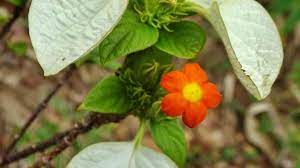
- Researchers discovered two new plant species namely Dendrophthoe longensis (from Andaman and Nicobar islands) and Petrocosmea arunachalense (from Arunachal Pradesh).
- Dendrophthoe longensis
- It is an aerial stem-parasitic flowering plant species discovered from the Long Islands of middle Andamans.
- It was found on the specific host plant – Mango, Mangifera indica in the edge of evergreen forests, low land areas of tropical forests.
- The species is from the family Mistletoe – a group of hemi-parasitic flowering plants which exhibit a suite of remarkable adaptations associated with the hemi-parasitic habitat.
- The species is sparsely scattered and confined to a few localities of Long Island.
- Threats: Aerial stem-parasitic flowering mistletoe plants are under great pressure due to destruction of natural habitat and other anthropogenic activities especially timber harvesting of host tree species, developmental works which are causing population declines worldwide.
- Petrocosmea arunachalense
- It is a very small herb and the researchers located it inside a cave indicating that the species requires less sunlight
- The species is completely white with purple blotch and the plant has a hairy texture.
- It is only the second known species from the genus Petrocosmea in India.
What are biodiversity hotspots?
- Biodiversity hotspots are geographic areas with an exceptionally high richness of species, including rare and endemic species.
- Around the world, 36 areas qualify as hotspots. Their intact habitats represent just 2.5% of Earth’s land surface, but they support more than half of the world’s plant species as endemics
- To qualify as a biodiversity hotspot, a region must meet two strict criteria:
- It must have at least 1,500 vascular plants as endemics — which is to say, it must have a high percentage of plant life found nowhere else on the planet. A hotspot, in other words, is irreplaceable.
- It must have 30% or less of its original natural vegetation and must be threatened.
- There are 4 biodiversity hotspots in India namely; Himalayas, Indo-Burma region, Western Ghats and Sundaland.
Q1: What is Parasitism?
It is a relationship between two species of plants or animals in which one benefits at the expense of the other, sometimes without killing the host organism.
Source: Two bio-geographic hotspots in India yield two new plant species






 Last updated on April, 2026
→ UPSC Final Result 2025 is now out.
→ UPSC has released UPSC Toppers List 2025 with the Civil Services final result on its official website.
→ Anuj Agnihotri secured AIR 1 in the UPSC Civil Services Examination 2025.
→ UPSC Marksheet 2025 is now out.
→ UPSC Notification 2026 & UPSC IFoS Notification 2026 is now out on the official website at upsconline.nic.in.
→ UPSC Calendar 2026 has been released.
→ Check out the latest UPSC Syllabus 2026 here.
→ UPSC Prelims 2026 will be conducted on 24th May, 2026 & UPSC Mains 2026 will be conducted on 21st August 2026.
→ The UPSC Selection Process is of 3 stages-Prelims, Mains and Interview.
→ Prepare effectively with Vajiram & Ravi’s UPSC Prelims Test Series 2026 featuring full-length mock tests, detailed solutions, and performance analysis.
→ Enroll in Vajiram & Ravi’s UPSC Mains Test Series 2026 for structured answer writing practice, expert evaluation, and exam-oriented feedback.
→ Join Vajiram & Ravi’s Best UPSC Mentorship Program for personalized guidance, strategy planning, and one-to-one support from experienced mentors.
→ Shakti Dubey secures AIR 1 in UPSC CSE Exam 2024.
→ Also check Best UPSC Coaching in India