The Nobel Prize in Physiology or Medicine 2025 was announced on October 6, 2025, by the Nobel Assembly at Karolinska Institutet, Sweden. This year’s award recognizes path-breaking research explaining how the immune system prevents attacks on the body’s own tissues, a concept known as peripheral immune tolerance. The discovery offers new understanding of autoimmune diseases and opens ways for modern immunotherapies.
Nobel Prize 2025 in Medicine
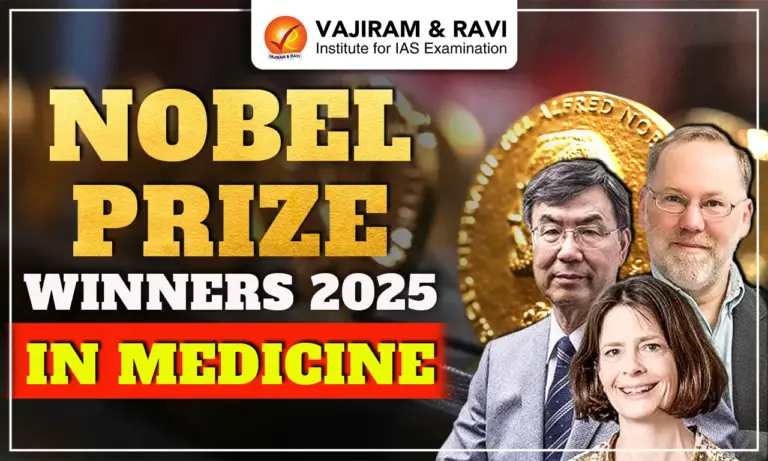
The Nobel Prize 2025 in Medicine was jointly awarded to Mary E. Brunkow, Fred Ramsdell, and Shimon Sakaguchi for their discovery of mechanisms that maintain immune self-tolerance. Their research identified the FOXP3 gene and its role in developing regulatory T cells (Tregs), immune cells that prevent the body from attacking itself. This discovery has transformed immunology, enabling new approaches to treat autoimmune diseases, allergies, and organ rejection. The announcement was made on Monday, 6 October, 11:30 CEST at The Nobel Assembly at Karolinska Institutet, Wallenbergsalen, Nobel Forum, Nobels väg 1, Solna.
Nobel Prize in Physiology or Medicine Historical Background
The Nobel Prize in Physiology or Medicine is one of the most prestigious international awards in medical science. Established in 1901 according to Alfred Nobel’s will, it recognizes discoveries that have “conferred the greatest benefit to humankind.” Awarded annually by the Nobel Assembly at Karolinska Institutet, Sweden, it honors contributions in physiology, medicine, and biomedical research that significantly advance human health and understanding of life sciences.





Nobel Prize Winners 2025 in Physiology or Medicine
The Nobel Prize 2025 continues the legacy by honoring discoveries in immunology, one of the most influential areas of modern medicine.
1. Mary E. Brunkow (USA): Mary E. Brunkow, an American geneticist, identified the FOXP3 gene mutation responsible for immune system imbalance in both humans and mice. Her work showed how a defective FOXP3 gene leads to loss of immune control, causing severe autoimmune disorders such as Type 1 diabetes and IPEX syndrome. This discovery revealed the genetic foundation of immune self-tolerance and opened new directions in molecular immunology.
2. Fred Ramsdell (USA): Fred Ramsdell, an American immunologist, confirmed the functional importance of the FOXP3 gene and its connection to regulatory T cells (Tregs). He demonstrated that FOXP3 acts as a “master control gene” guiding Treg formation. Ramsdell’s contribution bridged genetics and immunology, showing how gene expression regulates immune stability. His findings have helped in developing targeted therapies for autoimmune and inflammatory diseases.
3. Shimon Sakaguchi (Japan): Shimon Sakaguchi, a Japanese scientist, first discovered regulatory T cells (Tregs) in the early 1990s. His research proved that these cells act as “immune guardians,” preventing harmful attacks on the body’s own tissues. Sakaguchi’s work clarified how the immune system balances defense and tolerance, a key to understanding autoimmune diseases. His pioneering studies formed the foundation that later linked with Brunkow’s and Ramsdell’s findings.
Together, these scientists uncovered the complete mechanism of immune self-control, linking a genetic key (FOXP3) to its cellular regulators (Tregs).
Also Read:
Nobel Prize in Physiology or Medicine Laureates
Earlier Nobel Prizes in Medicine have recognized transformative discoveries across fields such as immunology, genetics, physiology, and virology. Some notable laureates include:
Nobel Prize winners in Physiology or Medicine (1901-2025)
| Nobel Prize winners in Physiology or Medicine (1901-2025) | |||
| S. No. | Year | Name | Contribution |
|
1 |
2025 |
Mary E. Brunkow, Fred Ramsdell, and Shimon Sakaguchi |
Discoveries concerning peripheral immune tolerance |
|
2 |
2024 |
Victor Ambros, Gary Ruvkun |
Discovery of microRNA and its role in post-transcriptional gene regulation |
|
3 |
2023 |
Katalin Karikó, Drew Weissman |
Discoveries concerning nucleoside base modifications enabling mRNA COVID-19 vaccines |
|
4 |
2022 |
Svante Pääbo |
Discoveries concerning genomes of extinct hominins and human evolution |
|
5 |
2021 |
David Julius, Ardem Patapoutian |
Discoveries of receptors for temperature and touch |
|
6 |
2020 |
Harvey J. Alter, Michael Houghton, Charles M. Rice |
Discovery of Hepatitis C virus |
|
7 |
2019 |
William G. Kaelin Jr, Sir Peter J. Ratcliffe, Gregg L. Semenza |
Discoveries of how cells sense and adapt to oxygen availability |
|
8 |
2018 |
James P. Allison, Tasuku Honjo |
Discovery of cancer therapy by inhibition of negative immune regulation |
|
9 |
2017 |
Jeffrey C. Hall, Michael Rosbash, Michael W. Young |
Discoveries of molecular mechanisms controlling the circadian rhythm |
|
10 |
2016 |
Yoshinori Ohsumi |
Discoveries of mechanisms for autophagy |
|
11 |
2015 |
William C. Campbell, Satoshi Ōmura, Tu Youyou |
Discoveries concerning therapies against roundworm infections and Malaria |
|
12 |
2014 |
John O’Keefe, May-Britt Moser, Edvard I. Moser |
Discoveries of cells constituting a positioning system in the brain |
|
13 |
2013 |
James E. Rothman, Randy W. Schekman, Thomas C. Südhof |
Discoveries of machinery regulating vesicle traffic |
|
14 |
2012 |
Sir John B. Gurdon, Shinya Yamanaka |
Discovery that mature cells can be reprogrammed to become pluripotent |
|
15 |
2011 |
Bruce A. Beutler, Jules A. Hoffmann, Ralph M. Steinman |
Discoveries on activation of innate immunity and dendritic cells’ role in adaptive immunity |
|
16 |
2010 |
Robert G. Edwards |
Development of in vitro fertilization |
|
17 |
2009 |
Elizabeth H. Blackburn, Carol W. Greider, Jack W. Szostak |
Discovery of how chromosomes are protected by telomeres and telomerase |
|
18 |
2008 |
Harald zur Hausen, Françoise Barré-Sinoussi, Luc Montagnier |
Discovery of HPV causing cervical cancer and HIV |
|
19 |
2007 |
Mario R. Capecchi, Sir Martin J. Evans, Oliver Smithies |
Discoveries of principles for gene modifications in mice using embryonic stem cells |
|
20 |
2006 |
Andrew Z. Fire, Craig C. Mello |
Discovery of RNA interference (gene silencing by double-stranded RNA) |
|
21 |
2005 |
Barry J. Marshall, J. Robin Warren |
Discovery of Helicobacter pylori and its role in gastritis and peptic ulcer disease |
|
22 |
2004 |
Richard Axel, Linda B. Buck |
Discoveries of odorant receptors and organization of the olfactory system |
|
23 |
2003 |
Paul C. Lauterbur, Sir Peter Mansfield |
Discoveries concerning magnetic resonance imaging (MRI) |
|
24 |
2002 |
Sydney Brenner, H. Robert Horvitz, John E. Sulston |
Discoveries on genetic regulation of organ development and programmed cell death |
|
25 |
2001 |
Leland Hartwell, Tim Hunt, Sir Paul Nurse |
Discoveries of key regulators of the cell cycle |
|
26 |
2000 |
Arvid Carlsson, Paul Greengard, Eric Kandel |
Discoveries concerning signal transduction in the nervous system |
|
27 |
1999 |
Günter Blobel |
Discovery that proteins have intrinsic signals governing transport and localization |
|
28 |
1998 |
Robert F. Furchgott, Louis J. Ignarro, Ferid Murad |
Discoveries concerning nitric oxide as a signalling molecule in the cardiovascular system |
|
29 |
1997 |
Stanley B. Prusiner |
Discovery of Prions as a new biological principle of infection |
|
30 |
1996 |
Peter C. Doherty, Rolf M. Zinkernagel |
Discoveries concerning specificity of cell-mediated immune defence |
|
31 |
1995 |
Edward B. Lewis, Christiane Nüsslein-Volhard, Eric F. Wieschaus |
Discoveries concerning genetic control of early embryonic development |
|
32 |
1994 |
Alfred G. Gilman, Martin Rodbell |
Discovery of G-proteins and their role in signal transduction |
|
33 |
1993 |
Richard J. Roberts, Phillip A. Sharp |
Discoveries of split genes |
|
34 |
1992 |
Edmond H. Fischer, Edwin G. Krebs |
Discoveries concerning reversible protein phosphorylation |
|
35 |
1991 |
Erwin Neher, Bert Sakmann |
Discoveries concerning the function of single ion channels in cells |
|
36 |
1990 |
Joseph E. Murray, E. Donnall Thomas |
Discoveries concerning organ and cell transplantation in treatment of human disease |
|
37 |
1989 |
J. Michael Bishop, Harold E. Varmus |
Discovery of the cellular origin of retroviral oncogenes |
|
38 |
1988 |
Sir James W. Black, Gertrude B. Elion, George H. Hitchings |
Discoveries of important principles for drug treatment |
|
39 |
1987 |
Susumu Tonegawa |
Discovery of the genetic principle for generation of antibody diversity |
|
40 |
1986 |
Stanley Cohen, Rita Levi-Montalcini |
Discoveries of growth factors |
|
41 |
1985 |
Michael S. Brown, Joseph L. Goldstein |
Discoveries concerning regulation of cholesterol metabolism |
|
42 |
1984 |
Niels K. Jerne, Georges J.F. Köhler, César Milstein |
Theories on immune system specificity and monoclonal antibody production |
|
43 |
1983 |
Barbara McClintock |
Discovery of mobile genetic elements |
|
44 |
1982 |
Sune K. Bergström, Bengt I. Samuelsson, John R. Vane |
Discoveries concerning prostaglandins and related substances |
|
45 |
1981 |
Roger W. Sperry, David H. Hubel, Torsten N. Wiesel |
Discoveries on cerebral hemisphere specialization and visual system information processing |
|
46 |
1980 |
Baruj Benacerraf, Jean Dausset, George D. Snell |
Discoveries concerning genetically determined structures regulating immunological reactions |
|
47 |
1979 |
Allan M. Cormack, Godfrey N. Hounsfield |
Development of computer-assisted tomography |
|
48 |
1978 |
Werner Arber, Daniel Nathans, Hamilton O. Smith |
Discovery of restriction enzymes and their application in molecular genetics |
|
49 |
1977 |
Roger Guillemin, Andrew V. Schally, Rosalyn Yalow |
Discoveries on peptide hormone production and radioimmunoassays |
|
50 |
1976 |
Baruch S. Blumberg, D. Carleton Gajdusek |
Discoveries on new mechanisms for origin and dissemination of infectious diseases |
|
51 |
1975 |
David Baltimore, Renato Dulbecco, Howard M. Temin |
Discoveries on interaction between tumor viruses and genetic material |
|
52 |
1974 |
Albert Claude, Christian de Duve, George E. Palade |
Discoveries on structural and functional organization of the cell |
|
53 |
1973 |
Karl von Frisch, Konrad Lorenz, Nikolaas Tinbergen |
Discoveries concerning individual and social behaviour patterns |
|
54 |
1972 |
Gerald M. Edelman, Rodney R. Porter |
Discoveries concerning chemical structure of antibodies |
|
55 |
1971 |
Earl W. Sutherland, Jr. |
Discoveries on mechanisms of hormone action |
|
56 |
1970 |
Sir Bernard Katz, Ulf von Euler, Julius Axelrod |
Discoveries on humoral transmitters in nerve terminals |
|
57 |
1969 |
Max Delbrück, Alfred D. Hershey, Salvador E. Luria |
Discoveries on virus replication mechanism and genetic structure |
|
58 |
1968 |
Robert W. Holley, H. Gobind Khorana, Marshall W. Nirenberg |
Interpretation of genetic code and its role in protein synthesis |
|
59 |
1967 |
Ragnar Granit, Keffer Hartline, George Wald |
Discoveries on primary physiological and chemical visual processes |
|
60 |
1966 |
Peyton Rous, Charles B. Huggins |
Discovery of tumor-inducing viruses and hormonal treatment of prostatic cancer |
|
61 |
1965 |
François Jacob, André Lwoff, Jacques Monod |
Discoveries concerning genetic control of enzyme and virus synthesis |
|
62 |
1964 |
Konrad Bloch, Feodor Lynen |
Discoveries concerning mechanism and regulation of cholesterol and fatty acid metabolism |
|
63 |
1963 |
Sir John Eccles, Alan Hodgkin, Andrew Huxley |
Discoveries concerning ionic mechanisms in excitation and inhibition of nerve cells |
|
64 |
1962 |
Francis Crick, James Watson, Maurice Wilkins |
Discoveries concerning molecular structure of nucleic acids and its significance for information transfer |
|
65 |
1961 |
Georg von Békésy |
Discoveries of the physical mechanism of stimulation within the cochlea |
|
66 |
1960 |
Sir Frank Macfarlane Burnet, Peter Medawar |
Discovery of acquired immunological tolerance |
|
67 |
1959 |
Severo Ochoa, Arthur Kornberg |
Discovery of mechanisms in the biological synthesis of RNA and DNA |
|
68 |
1958 |
George Beadle, Edward Tatum, Joshua Lederberg |
Discovery that genes act by regulating chemical events and genetic recombination in bacteria |
|
69 |
1957 |
Daniel Bovet |
Discoveries relating to synthetic compounds inhibiting certain body substances, especially vascular system and skeletal muscles |
|
70 |
1956 |
André F. Cournand, Werner Forssmann, Dickinson W. Richards |
Discoveries concerning heart catheterization and circulatory system pathology |
|
71 |
1955 |
Hugo Theorell |
Discoveries concerning nature and mode of action of oxidation enzymes |
|
72 |
1954 |
John F. Enders, Thomas H. Weller, Frederick C. Robbins |
Discovery of poliomyelitis virus growth in tissue cultures |
|
73 |
1953 |
Hans Krebs, Fritz Lipmann |
Discovery of citric acid cycle and co-enzyme A in intermediary metabolism |
|
74 |
1952 |
Selman A. Waksman |
Discovery of streptomycin, first antibiotic effective against tuberculosis |
|
75 |
1951 |
Max Theiler |
Discoveries concerning yellow fever and its control |
|
76 |
1950 |
Edward C. Kendall, Tadeus Reichstein, Philip S. Hench |
Discoveries relating to adrenal cortex hormones, their structure and effects |
|
77 |
1949 |
Walter Hess, Egas Moniz |
Discovery of functional organization of the interbrain and therapeutic value of leucotomy |
|
78 |
1948 |
Paul Müller |
Discovery of high efficiency of DDT as contact poison against arthropods |
|
79 |
1947 |
Carl Cori, Gerty Cori, Bernardo Houssay |
Discovery of catalytic conversion of glycogen and hormone role in sugar metabolism |
|
80 |
1946 |
Hermann J. Muller |
Discovery of mutation production by X-ray irradiation |
|
81 |
1945 |
Sir Alexander Fleming, Ernst B. Chain, Sir Howard Florey |
Discovery of penicillin and its curative effect in infectious diseases |
|
82 |
1944 |
Joseph Erlanger, Herbert S. Gasser |
Discoveries on highly differentiated functions of single nerve fibers |
|
83 |
1943 |
Henrik Dam, Edward A. Doisy |
Discovery of vitamin K and its chemical nature |
|
84 |
1942 |
Not awarded |
Prize money allocated to main and special fund |
|
85 |
1941 |
Not awarded |
Prize money allocated to main and special fund |
|
86 |
1940 |
Not awarded |
Prize money allocated to main and special fund |
|
87 |
1939 |
Gerhard Domagk |
Discovery of antibacterial effects of prontosil |
|
88 |
1938 |
Corneille Heymans |
Discovery of role of sinus and aortic mechanisms in respiration regulation |
|
89 |
1937 |
Albert Szent-Györgyi |
Discoveries in biological combustion processes, vitamin C, catalysis of fumaric acid |
|
90 |
1936 |
Sir Henry Dale, Otto Loewi |
Discoveries relating to chemical transmission of nerve impulses |
|
91 |
1935 |
Hans Spemann |
Discovery of the organizer effect in embryonic development |
|
92 |
1934 |
George H. Whipple, George R. Minot, William P. Murphy |
Discoveries concerning liver therapy in anemia |
|
93 |
1933 |
Thomas H. Morgan |
Discoveries concerning chromosome role in heredity |
|
94 |
1932 |
Sir Charles Sherrington, Edgar Adrian |
Discoveries regarding neuron functions |
|
95 |
1931 |
Otto Warburg |
Discovery of nature and mode of action of respiratory enzyme |
|
96 |
1930 |
Karl Landsteiner |
Discovery of human blood groups |
|
97 |
1929 |
Christiaan Eijkman, Sir Frederick Hopkins |
Discovery of antineuritic vitamin and growth-stimulating vitamins |
|
98 |
1928 |
Charles Nicolle |
Work on typhus |
|
99 |
1927 |
Julius Wagner-Jauregg |
Discovery of therapeutic value of malaria inoculation in dementia paralytica |
|
100 |
1926 |
Johannes Fibiger |
Discovery of Spiroptera carcinoma |
|
101 |
1925 |
Not awarded |
Prize money allocated to special fund |
|
102 |
1924 |
Willem Einthoven |
Discovery of electrocardiogram mechanism |
|
103 |
1923 |
Frederick G. Banting, John Macleod |
Discovery of insulin |
|
104 |
1922 |
Archibald V. Hill, Otto Meyerhof |
Discoveries relating to heat production in muscle and oxygen-lactic acid metabolism |
|
105 |
1921 |
Not awarded |
Prize money allocated to special fund |
|
106 |
1920 |
August Krogh |
Discovery of capillary motor regulating mechanism |
|
107 |
1919 |
Jules Bordet |
Discoveries relating to immunity |
|
108 |
1918 |
Not awarded |
Prize money allocated to special fund |
|
109 |
1917 |
Not awarded |
Prize money allocated to special fund |
|
110 |
1916 |
Not awarded |
Prize money allocated to special fund |
|
111 |
1915 |
Not awarded |
Prize money allocated to special fund |
|
112 |
1914 |
Robert Bárány |
Work on physiology and pathology of vestibular apparatus |
|
113 |
1913 |
Charles Richet |
Work on anaphylaxis |
|
114 |
1912 |
Alexis Carrel |
Work on vascular suture and organ transplantation |
|
115 |
1911 |
Allvar Gullstrand |
Work on dioptrics of the eye |
|
116 |
1910 |
Albrecht Kossel |
Contributions to cell chemistry through work on proteins and nucleic substances |
|
117 |
1909 |
Theodor Kocher |
Work on physiology, pathology, and surgery of thyroid gland |
|
118 |
1908 |
Ilya Mechnikov, Paul Ehrlich |
Work on immunity |
|
119 |
1907 |
Alphonse Laveran |
Work on role of protozoa in causing diseases |
|
120 |
1906 |
Camillo Golgi, Santiago Ramón y Cajal |
Work on structure of nervous system |
|
121 |
1905 |
Robert Koch |
Investigations and discoveries in relation to tuberculosis |
|
122 |
1904 |
Ivan Pavlov |
Work on physiology of digestion |
|
123 |
1903 |
Niels Ryberg Finsen |
Contribution to treatment of diseases using concentrated light radiation |
|
124 |
1902 |
Ronald Ross |
Work on malaria, showing its entry into the organism and methods to combat it |
|
125 |
1901 |
Emil von Behring |
Work on serum therapy, especially against diphtheria |

 Last updated on March, 2026
→ UPSC Final Result 2025 is now out.
→ UPSC has released UPSC Toppers List 2025 with the Civil Services final result on its official website.
→ Anuj Agnihotri secured AIR 1 in the UPSC Civil Services Examination 2025.
→ UPSC Marksheet 2025 is now out.
→ UPSC Notification 2026 & UPSC IFoS Notification 2026 is now out on the official website at upsconline.nic.in.
→ UPSC Calendar 2026 has been released.
→ Check out the latest UPSC Syllabus 2026 here.
→ UPSC Prelims 2026 will be conducted on 24th May, 2026 & UPSC Mains 2026 will be conducted on 21st August 2026.
→ The UPSC Selection Process is of 3 stages-Prelims, Mains and Interview.
→ Prepare effectively with Vajiram & Ravi’s UPSC Prelims Test Series 2026 featuring full-length mock tests, detailed solutions, and performance analysis.
→ Enroll in Vajiram & Ravi’s UPSC Mains Test Series 2026 for structured answer writing practice, expert evaluation, and exam-oriented feedback.
→ Join Vajiram & Ravi’s Best UPSC Mentorship Program for personalized guidance, strategy planning, and one-to-one support from experienced mentors.
→ Shakti Dubey secures AIR 1 in UPSC CSE Exam 2024.
→ Also check Best UPSC Coaching in India
Nobel Prize Winners 2025 in Physiology or Medicine FAQs
Q1. Who won the Nobel Prize in Physiology or Medicine 2025?+
Q2. What was the 2025 Nobel Prize in Medicine awarded for?+
Q3. Which gene was central to the 2025 Nobel-winning discovery?+
Q4. How has the 2025 discovery impacted medicine?+
Q5. Where was the Nobel Prize in Medicine 2025 announced?+
Tags: nobel prize winners in physiology or medicine 2025 nobel prize winners medicine