What’s in today’s article?
- Why in News?
- Power to Promulgate Ordinance
- Repromulgation of Ordinance
- SC Verdicts on Promulgation/ Repromulgation of Ordinances
- Ordinance wrt Power over Services in the NCT
Why in News?
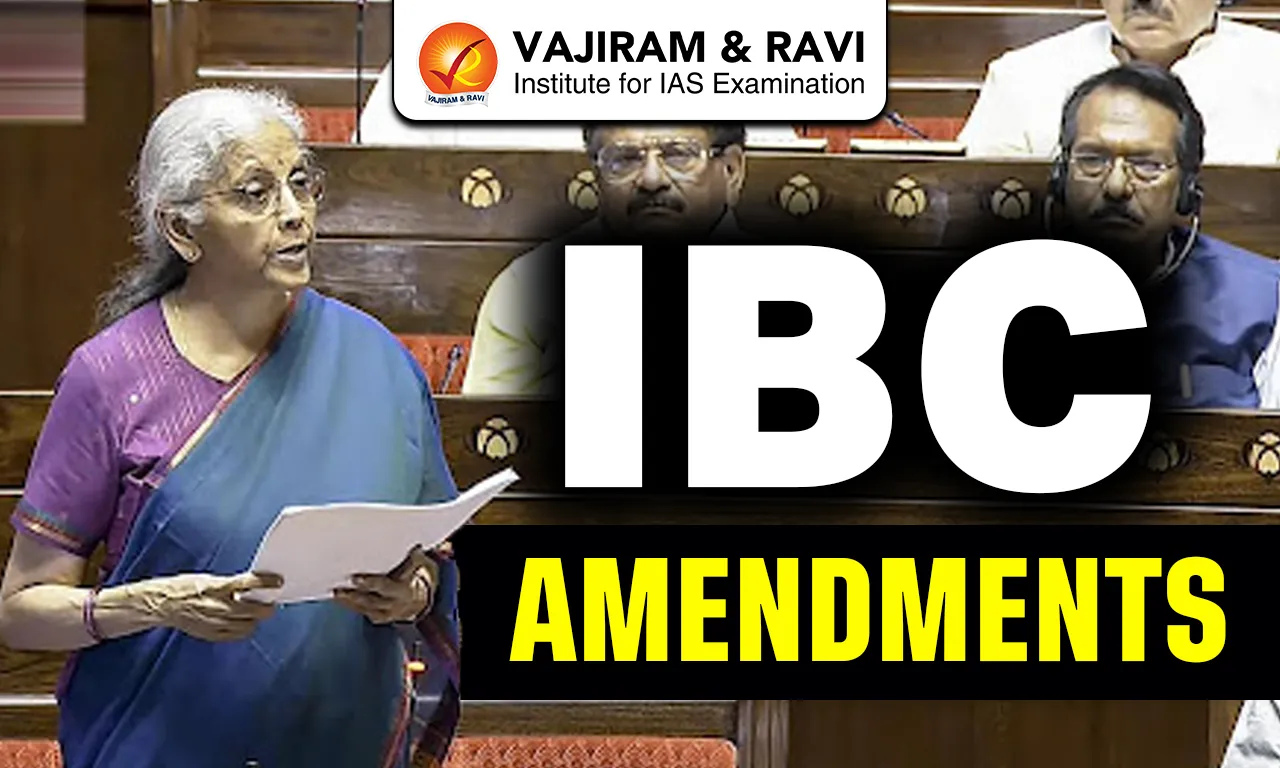
- The central government recently promulgated an Ordinance to undo an unanimous verdict of a 5-judge Constitution Bench of the Supreme Court.
- The SC verdict gave the Delhi government control over the transfer and posting of officials in the National Capital Territory (NCT), except with regard to public order, police, and land.
Power to Promulgate Ordinance:
- Article 123 of the Indian Constitution empowers the President to promulgate Ordinances during recess of Parliament.
- Article 213 deals with the broadly analogous powers of the Governor to promulgate an Ordinance when the state legislature is not in session.
- Article 123 reads “if at any time, except when both Houses of Parliament are in session, the President is satisfied that circumstances exist which render it necessary for him to take immediate action, he may promulgate Ordinances.”
- Since the President acts on the advice of the Council of Ministers (Article 74), it is in effect the government that decides to bring the Ordinance.
- An Ordinance shall have the same force and effect as an Act of Parliament. But the government is required to bring an Ordinance before Parliament for ratification.
- If the government fails to do so it will lead to its lapsing at the expiration of 6 weeks from the reassembly of Parliament.
- The Ordinance may lapse earlier if the President withdraws it/ if both Houses pass resolutions disapproving it (rejection, however, imply the government has lost majority.





Repromulgation of Ordinance:
- As lawmaking is a legislative function, Ordinance power is provided for urgent requirements.
- Therefore, to avoid lapsing of an Ordinance (6 weeks after the two Houses reassemble), it has to be converted into an Act (through Parliamentary ratifications) by then.
- Repromulgation of an Ordinance, on the other hand, essentially extends its life and allows the executive to usurp legislative power.
SC Verdicts on Promulgation/ Repromulgation of Ordinances:
- RC Cooper Case (1970): On the basis that no immediate action was required and that the ordinance had solely been issued to avoid debate and discussion in the legislature, the President’s decision to promulgate the ordinance might be challenged.
- D C Wadhwa v. State of Bihar (1986): It would be a colourable exercise of power for the Government to ignore the Legislature and repromulgate the Ordinance while continuing to regulate the life and liberty of its citizens through Executive-made Ordinances.
- Krishna Kumar Singh v. State of Bihar (2017): A 7-judge Bench of the court reiterated that legislation should normally be done by the legislature, and the Governor’s power to issue an Ordinance is in the nature of an emergency power.
- Repeated re-promulgations without bringing the Ordinance to the legislature would usurp the legislature’s function and would be unconstitutional.
Ordinance wrt Power over Services in the NCT:
- It gave the Lieutenant Governor of Delhi, who is appointed by the Centre, power over services.
- It established a National Capital Civil Service Authority – comprising the Chief Minister and two senior IAS officials.
- It would decide matters by majority of votes of the members present and voting – essentially creating a situation in which the view of the elected CM could potentially be overruled.
Q1) What is the National Capital Civil Service Authority?
Formed under the chairmanship of the CM of the Delhi Government, this Authority will have the right to make recommendations in service-related matters of officers/officials working in The Government of Delhi.
Source: Govt’s power to promulgate, repromulgate Ordinances — why and how

 Last updated on March, 2026
→ UPSC Final Result 2025 is now out.
→ UPSC has released UPSC Toppers List 2025 with the Civil Services final result on its official website.
→ Anuj Agnihotri secured AIR 1 in the UPSC Civil Services Examination 2025.
→ UPSC Marksheet 2025 is now out.
→ UPSC Notification 2026 & UPSC IFoS Notification 2026 is now out on the official website at upsconline.nic.in.
→ UPSC Calendar 2026 has been released.
→ Check out the latest UPSC Syllabus 2026 here.
→ UPSC Prelims 2026 will be conducted on 24th May, 2026 & UPSC Mains 2026 will be conducted on 21st August 2026.
→ The UPSC Selection Process is of 3 stages-Prelims, Mains and Interview.
→ Prepare effectively with Vajiram & Ravi’s UPSC Prelims Test Series 2026 featuring full-length mock tests, detailed solutions, and performance analysis.
→ Enroll in Vajiram & Ravi’s UPSC Mains Test Series 2026 for structured answer writing practice, expert evaluation, and exam-oriented feedback.
→ Join Vajiram & Ravi’s Best UPSC Mentorship Program for personalized guidance, strategy planning, and one-to-one support from experienced mentors.
→ Shakti Dubey secures AIR 1 in UPSC CSE Exam 2024.
→ Also check Best UPSC Coaching in India