About Prepaid Payment Instruments:
- These are instruments that facilitate the purchase of goods and services, conduct of financial services and enable remittance facilities, among others, against the money stored in them. PPIs can be issued as cards or wallets.
- There are two types of PPIs – small PPIs and full-KYC (know your customer) PPIs.
- Further, small PPIs are categorized as – PPIs up to Rs 10,000 (with cash loading facility) and PPIs up to Rs 10,000 (with no cash loading facility).
- PPIs can be loaded/reloaded by cash, debit to a bank account, or credit and debit cards.
- The cash loading of PPIs is limited to Rs 50,000 per month subject to the overall limit of the PPI.
Who can issue PPI instruments?
- PPIs can be issued by banks and non-banks after obtaining approval from the RBI.
- Some of the approved PPI issuing banks are; Airtel Payments Bank, Axis Bank, Bank of Baroda, Jio Payments Bank, Kotak Mahindra Bank etc.
Key Facts about Deposit Insurance and Credit Guarantee Corporation
- It is a statutory body established under the Deposit Insurance and Credit Guarantee Corporation Act, of 1961.
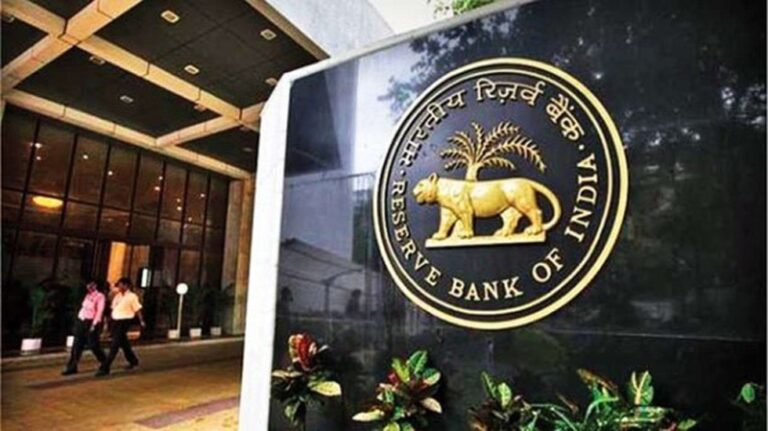
- It is a wholly-owned subsidiary of the Reserve Bank of India (RBI).
- It provides deposit insurance that works as a protection cover for bank deposit holders when the bank fails to pay its depositors.
- The agency insures all kinds of deposit accounts of a bank, such as savings, current, recurring, and fixed deposits up to a limit of Rs. 5 lakh per account holder per bank.
- In case an individual’s deposit amount exceeds Rs.5 lakh in a single bank, only Rs.5 lakh, including the principal and interest, will be paid by DICGC if the bank becomes bankrupt.
What DICGC Does Not Cover?
- Deposits of state or Central governments, foreign governments, Inter-bank deposits, and state land development banks depositing with the state cooperative bank.
- Funds that are due on account of India and deposits received outside India and funds exempted by the corporation with the previous approval from RBI.
Q1) What is Remittance?
Remittance refers to the transfer of money or funds by a person who is working or residing in a foreign country back to their home country.
Source: Deposit insurance cover for PPIs: How will customers benefit?






 Last updated on April, 2026
→ UPSC Final Result 2025 is now out.
→ UPSC has released UPSC Toppers List 2025 with the Civil Services final result on its official website.
→ Anuj Agnihotri secured AIR 1 in the UPSC Civil Services Examination 2025.
→ UPSC Marksheet 2025 is now out.
→ UPSC Notification 2026 & UPSC IFoS Notification 2026 is now out on the official website at upsconline.nic.in.
→ UPSC Calendar 2026 has been released.
→ Check out the latest UPSC Syllabus 2026 here.
→ UPSC Prelims 2026 will be conducted on 24th May, 2026 & UPSC Mains 2026 will be conducted on 21st August 2026.
→ The UPSC Selection Process is of 3 stages-Prelims, Mains and Interview.
→ Prepare effectively with Vajiram & Ravi’s UPSC Prelims Test Series 2026 featuring full-length mock tests, detailed solutions, and performance analysis.
→ Enroll in Vajiram & Ravi’s UPSC Mains Test Series 2026 for structured answer writing practice, expert evaluation, and exam-oriented feedback.
→ Join Vajiram & Ravi’s Best UPSC Mentorship Program for personalized guidance, strategy planning, and one-to-one support from experienced mentors.
→ Shakti Dubey secures AIR 1 in UPSC CSE Exam 2024.
→ Also check Best UPSC Coaching in India