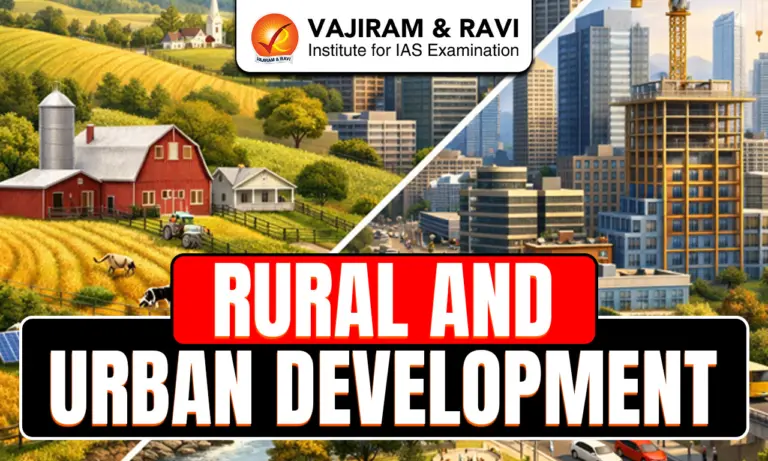
Rural and Urban Development is a crucial part of economic and social development in a country. It focuses on improving the quality of life, infrastructure, and economic opportunities for people living in villages and cities. Balanced development of both rural and urban areas ensures sustainable growth, reduces poverty, and promotes inclusive development.
Rural Development Meaning
Rural Development refers to the process of improving the economic and social conditions of people living in rural areas. It aims to enhance living standards by providing employment opportunities, basic infrastructure, education, healthcare, and access to essential services.
Rural development mainly focuses on reducing poverty, increasing agricultural productivity, and improving infrastructure such as roads, electricity, irrigation systems, and communication networks. It also involves empowering rural communities and promoting participatory decision-making in development programs.
Necessities of Rural Development
Rural development is essential for improving the living standards of people in villages and ensuring balanced economic growth.
- Basic Infrastructure: Development of roads, electricity, irrigation, drinking water, and communication facilities in rural areas.
- Poverty Reduction: Rural development programs help reduce poverty by improving income sources and employment opportunities.
- Agricultural Growth: Improving agricultural productivity through modern farming techniques and better irrigation facilities.
- Employment Generation: Creation of jobs through agriculture, small-scale industries, and rural enterprises.
- Access to Education and Healthcare: Ensuring availability of schools, hospitals, and health services in rural regions.
- Balanced Regional Development: Rural development reduces migration to cities and promotes balanced growth across regions.





Major Areas of Rural Development
Rural development focuses on improving key sectors that influence the economic growth and social well-being of people living in villages. These areas aim to strengthen livelihoods, increase productivity, and provide essential services and infrastructure to rural communities.
- Agricultural Development: Increasing farm productivity through irrigation, modern technology, quality seeds, fertilizers, and better farming practices.
- Rural Infrastructure: Development of roads, electricity, irrigation facilities, drinking water supply, housing, and digital connectivity in villages.
- Rural Industrialization: Promotion of cottage industries, small-scale industries, and agro-based industries to generate employment and diversify rural income.
- Education and Skill Development: Improving literacy and providing vocational training to enhance employment opportunities for rural youth.
- Healthcare and Sanitation: Establishing health centers, improving medical facilities, sanitation systems, and access to clean drinking water.
- Financial Inclusion: Expanding access to banking services, credit, insurance, and financial support for farmers and rural entrepreneurs.
- Social Welfare and Poverty Reduction: Implementing welfare schemes, empowering women, and supporting marginalized communities to reduce poverty and inequality.
Government Schemes Supporting Rural Development
The Government of India has launched several schemes to improve rural infrastructure, generate employment, and enhance the quality of life in villages.
- Pradhan Mantri Gram Sadak Yojana: Aims to provide all-weather road connectivity to rural villages, improving access to markets, education, and healthcare.
- Pradhan Mantri Awas Yojana – Gramin: Provides financial assistance to rural poor families for building permanent houses with basic amenities.
- Deendayal Antyodaya Yojana – National Rural Livelihood Mission: Promotes self-employment and women-led Self-Help Groups (SHGs) to improve livelihoods and reduce rural poverty.
- Swachh Bharat Mission – Gramin: Focuses on construction of toilets and improving sanitation facilities in rural areas to eliminate open defecation.
- Sansad Adarsh Gram Yojana: Encourages Members of Parliament to develop model villages with improved infrastructure, education, and social development.
- Vanbandhu Kalyan Yojana: Aims to improve the socio-economic conditions of tribal communities through better infrastructure, education, and livelihood opportunities.
Urban Development Meaning
Urban Development refers to the planned growth and improvement of towns and cities to ensure better living conditions, efficient infrastructure, and sustainable economic growth.
Urban areas are characterized by high population density, modern infrastructure, and diversified economic activities such as industry, trade, and services. Urban development involves improving housing, transportation, sanitation, water supply, healthcare, education, and environmental management.
Necessities of Urban Development
Urban development is necessary to manage the rapid growth of cities and to ensure better living conditions for urban populations. It focuses on improving infrastructure, public services, and economic opportunities in urban areas.
- Infrastructure Development: Expansion of roads, public transport, electricity, water supply, and communication systems to support growing urban populations.
- Housing Facilities: Development of affordable and adequate housing to address the problem of slums and overcrowding in cities.
- Employment Opportunities: Urban development promotes industries, businesses, and services that create jobs and support economic growth.
- Urban Planning: Proper city planning helps manage land use, transportation, and public spaces efficiently.
- Sanitation and Waste Management: Effective waste disposal systems and sanitation facilities help maintain public health and cleanliness.
- Environmental Protection: Urban development includes pollution control, green spaces, and sustainable resource management.
- Improved Public Services: Better access to healthcare, education, transportation, and other essential services for urban residents.
Major Areas of Urban Development
Urban development focuses on improving essential sectors that support the growth and functioning of cities. These areas aim to provide better infrastructure, services, and living conditions for the increasing urban population.
- Urban Infrastructure: Development of roads, bridges, public transport systems, electricity supply, water supply, and communication networks to support urban life.
- Housing and Urban Planning: Construction of affordable housing and planned urban expansion to reduce slums and overcrowding.
- Transportation Systems: Development of efficient public transport such as buses, metro rail, and improved road networks to reduce traffic congestion.
- Water Supply and Sanitation: Ensuring safe drinking water, proper sewage systems, and sanitation facilities for urban residents.
- Waste Management: Proper collection, recycling, and disposal of solid waste to maintain cleanliness and environmental health.
- Economic and Industrial Development: Promotion of industries, businesses, and service sectors to create employment opportunities in cities.
- Environmental Sustainability: Protection of urban green spaces, pollution control, and promotion of sustainable urban development practices.
Government Schemes Supporting Urban Development
The Government of India has launched several schemes to improve infrastructure, housing, sanitation, and public services in cities. These initiatives aim to manage rapid urbanization and ensure sustainable and planned urban growth.
- Smart Cities Mission: Launched in 2015 to develop 100 smart cities with modern infrastructure, digital governance, sustainable transport, and improved public services.
- Atal Mission for Rejuvenation and Urban Transformation (AMRUT): Focuses on improving urban infrastructure such as water supply, sewerage systems, drainage, and green spaces in cities.
- Pradhan Mantri Awas Yojana – Urban: Aims to provide affordable housing for the urban poor, especially economically weaker sections and low-income groups.
- Swachh Bharat Mission – Urban: Promotes cleanliness, waste management, and sanitation infrastructure in urban areas to improve public health.
- Deendayal Antyodaya Yojana – National Urban Livelihood Mission: Focuses on reducing urban poverty by providing skill development, employment opportunities, and support for self-employment.
- HRIDAY Scheme: The Heritage City Development and Augmentation Yojana aims to preserve and develop heritage cities through infrastructure improvement and cultural conservation.

 Last updated on March, 2026
→ UPSC Final Result 2025 is now out.
→ UPSC has released UPSC Toppers List 2025 with the Civil Services final result on its official website.
→ Anuj Agnihotri secured AIR 1 in the UPSC Civil Services Examination 2025.
→ UPSC Marksheet 2025 is now out.
→ UPSC Notification 2026 & UPSC IFoS Notification 2026 is now out on the official website at upsconline.nic.in.
→ UPSC Calendar 2026 has been released.
→ Check out the latest UPSC Syllabus 2026 here.
→ UPSC Prelims 2026 will be conducted on 24th May, 2026 & UPSC Mains 2026 will be conducted on 21st August 2026.
→ The UPSC Selection Process is of 3 stages-Prelims, Mains and Interview.
→ Prepare effectively with Vajiram & Ravi’s UPSC Prelims Test Series 2026 featuring full-length mock tests, detailed solutions, and performance analysis.
→ Enroll in Vajiram & Ravi’s UPSC Mains Test Series 2026 for structured answer writing practice, expert evaluation, and exam-oriented feedback.
→ Join Vajiram & Ravi’s Best UPSC Mentorship Program for personalized guidance, strategy planning, and one-to-one support from experienced mentors.
→ Shakti Dubey secures AIR 1 in UPSC CSE Exam 2024.
→ Also check Best UPSC Coaching in India
Rural and Urban Development FAQs
Q1. What is rural development?+
Q2. What is urban development?+
Q3. Why is rural development important?+
Q4. Why is urban development necessary?+
Q5. What is the difference between rural and urban development?+
Tags: governance