What’s in today’s article?
- About SMEs
- Characteristics of SMEs
- Key Statistics
- Challenges
- Government Support
- News Summary
About SMEs
- Small and medium enterprises (SMEs) in India are businesses that are categorized as small-scale industrial (SSI) or medium-scale industrial units.
- They are a key part of the Indian economy and are classified based on their annual turnover and investment in equipment and plants.





Characteristics of SMEs
- Classification:
- Micro Enterprises: Investment up to ₹1 crore and turnover up to ₹5 crore.
- Small Enterprises: Investment up to ₹10 crore and turnover up to ₹50 crore.
- Medium Enterprises: Investment up to ₹50 crore and turnover up to ₹250 crore.
- Diverse Sectors:
- Operate across manufacturing, retail, IT, textiles, and more.
- Significant role in rural industrialization.
- Scalability:
- SMEs often act as ancillary units, supplying to large industries while fostering entrepreneurship.
Key Statistics
- Contribution to GDP: SMEs contribute approximately 30% to India’s GDP.
- Exports: Account for nearly 48% of India’s total exports.
- Employment: Provide employment to over 110 million people across urban and rural areas.
- Number of Enterprises: Over 63 million registered SMEs operate in India.
Challenges
- Access to Finance: Limited funding options and high borrowing costs.
- Technology Adoption: Low penetration of advanced technologies.
- Regulatory Compliance: Complex procedures and frequent policy changes.
- Global Competition: Difficulty competing with large-scale industries and international players.
Government Support
- Schemes and Initiatives:
- MSME Samadhan: Resolves payment issues.
- Prime Minister’s Employment Generation Programme (PMEGP): Encourages entrepreneurship.
- Credit Guarantee Fund Scheme for Micro and Small Enterprises (CGTMSE): Offers collateral-free loans.
- Production Linked Incentive (PLI) Scheme: Supports manufacturing SMEs.
- Digital Platforms:
- Udyam Registration: Simplifies the registration process for SMEs.
- TReDS (Trade Receivables Discounting System): Improves cash flow management.
News Summary
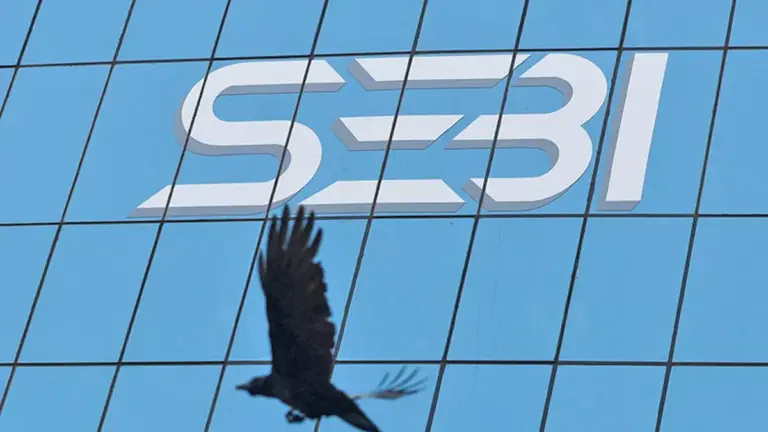
- The Securities and Exchange Board of India (SEBI) has proposed new guidelines to make Small and Medium Enterprise (SME) Initial Public Offerings (IPOs) safer for investors.
- The changes aim to enhance compliance, reduce risks, and improve transparency in the SME IPO segment, which has seen increased retail participation in recent years.
- Key Proposals:

- Minimum IPO Size: Introduction of a minimum IPO size of ₹10 crore, replacing the current scenario where no minimum is mandated.
- Hike in Application Size: Increase in the minimum IPO application size to ₹4 lakh, from the current ₹1 lakh.
- Promoter Restrictions: Limit the sale of promoter shares to 20% of the issue size during the IPO.
- Profitability Requirement: SMEs must show a minimum operating profit of ₹3 crore in two out of the three years prior to filing IPO papers.
- Disclosure and Monitoring:
- IPO offer documents must be made public for at least 21 days before listing.
- A compliance monitoring agency will oversee the utilization of funds raised through IPOs.
- SMEs must disclose quarterly results and shareholding patterns, similar to larger listed companies.
- Rationale Behind the Changes:
- These measures follow concerns over inflated valuations, fund misutilization, and investor losses in the SME segment.
- SEBI’s proposals aim to safeguard smaller retail investors and ensure the SME market remains healthy and trustworthy.
Q1. When was the Ministry of Skill Development established?
The Ministry of Skill Development and Entrepreneurship is a ministry of the Government of India which came into existence on 9 November 2014 and gazetted on 8 December 2014.
Q2. What is SEBI’s objective?
The Securities and Exchange Board of India (SEBI) was established in 1992 to protect investors’ interests, regulate the securities market, and promote its development.
News: Explained | Small and Medium Enterprises (SMEs)

 Last updated on March, 2026
→ UPSC Final Result 2025 is now out.
→ UPSC has released UPSC Toppers List 2025 with the Civil Services final result on its official website.
→ Anuj Agnihotri secured AIR 1 in the UPSC Civil Services Examination 2025.
→ UPSC Marksheet 2025 is now out.
→ UPSC Notification 2026 & UPSC IFoS Notification 2026 is now out on the official website at upsconline.nic.in.
→ UPSC Calendar 2026 has been released.
→ Check out the latest UPSC Syllabus 2026 here.
→ UPSC Prelims 2026 will be conducted on 24th May, 2026 & UPSC Mains 2026 will be conducted on 21st August 2026.
→ The UPSC Selection Process is of 3 stages-Prelims, Mains and Interview.
→ Prepare effectively with Vajiram & Ravi’s UPSC Prelims Test Series 2026 featuring full-length mock tests, detailed solutions, and performance analysis.
→ Enroll in Vajiram & Ravi’s UPSC Mains Test Series 2026 for structured answer writing practice, expert evaluation, and exam-oriented feedback.
→ Join Vajiram & Ravi’s Best UPSC Mentorship Program for personalized guidance, strategy planning, and one-to-one support from experienced mentors.
→ Shakti Dubey secures AIR 1 in UPSC CSE Exam 2024.
→ Also check Best UPSC Coaching in India