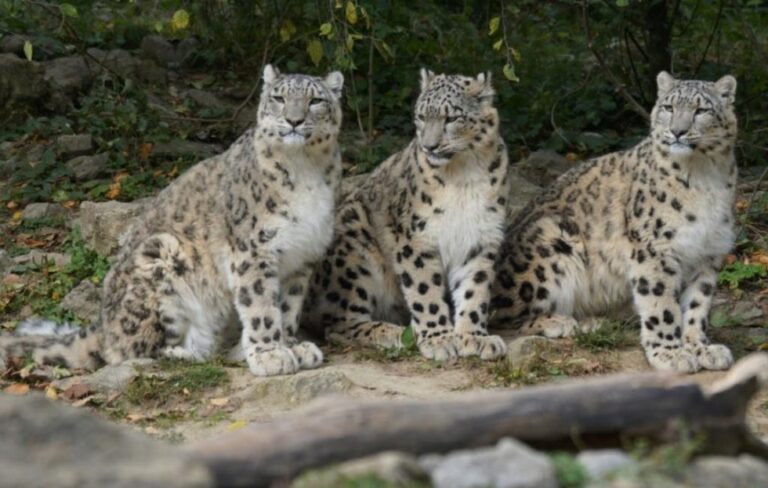
About Snow Leopard Population Assessment of India (SPAI):
- Snow leopard surveys have often focused in neighbouring areas of Ladakh, Himachal Pradesh and Uttarakhand. The survey was expanded to the Baltal-Zojila region of Kashmir
- Camera trapping exercises also raised hopes for other important and rare species such as the Asiatic ibex, brown bear and Kashmir musk deer in the upper reaches of the northernmost part of India.
- Snow Leopard population estimation is part of the Snow Leopard Population Assessment of India (SPAI).
- The Department of Wildlife Protection has been conducting surveys with partner NGOs to understand presence and abundance of snow leopards under the SPAI project funded by the Ministry of Environment Forests and Climate Change.
- The Snow Leopard Population Assessment of India (SPAI) has been concluded so far in Himachal Pradesh and Uttarakhand. The estimated population of the great cat is 50 and 100 in these two States respectively.
- Snow Leopard Population Assessment in India (SPAI):
- It was launched on International Snow Leopard Day on 23rdOctober 2019.
- It has evolved from international effort to develop a global protocol for PAWS under the aegis of GSELP.
- Objective – To help the snow leopard double its population.
- Under SPAI, a two-step process is undertaken to estimate the snow leopard population.
- First step– An occupation-based assessment of snow leopard distribution, which involves identifying the area where the study will be conducted based on conducting preliminary surveys and using interview or sign-based methods.
- Second step– Population sampling for regional density estimation by carrying out a thorough review of already sampled areas.
- Online tools including a data-sharing portal, training app for identifying individual leopards through photographs and threat mapping tool would be utilized.
- Global Snow Leopard and Ecosystem Protection Program (GSLEP):
- The GSLEP is a world first joint initiative that aims to conserve the endangered snow leopard within the broader context of also conserving valuable high mountain ecosystems.
- It unites all 12 range country governments, nongovernmental and inter-governmental organisations, local communities, and the private sector around this aim.
Source : The Hindu






 Last updated on March, 2026
→ UPSC Final Result 2025 is now out.
→ UPSC has released UPSC Toppers List 2025 with the Civil Services final result on its official website.
→ Anuj Agnihotri secured AIR 1 in the UPSC Civil Services Examination 2025.
→ UPSC Marksheet 2025 is now out.
→ UPSC Notification 2026 & UPSC IFoS Notification 2026 is now out on the official website at upsconline.nic.in.
→ UPSC Calendar 2026 has been released.
→ Check out the latest UPSC Syllabus 2026 here.
→ UPSC Prelims 2026 will be conducted on 24th May, 2026 & UPSC Mains 2026 will be conducted on 21st August 2026.
→ The UPSC Selection Process is of 3 stages-Prelims, Mains and Interview.
→ Prepare effectively with Vajiram & Ravi’s UPSC Prelims Test Series 2026 featuring full-length mock tests, detailed solutions, and performance analysis.
→ Enroll in Vajiram & Ravi’s UPSC Mains Test Series 2026 for structured answer writing practice, expert evaluation, and exam-oriented feedback.
→ Join Vajiram & Ravi’s Best UPSC Mentorship Program for personalized guidance, strategy planning, and one-to-one support from experienced mentors.
→ Shakti Dubey secures AIR 1 in UPSC CSE Exam 2024.
→ Also check Best UPSC Coaching in India