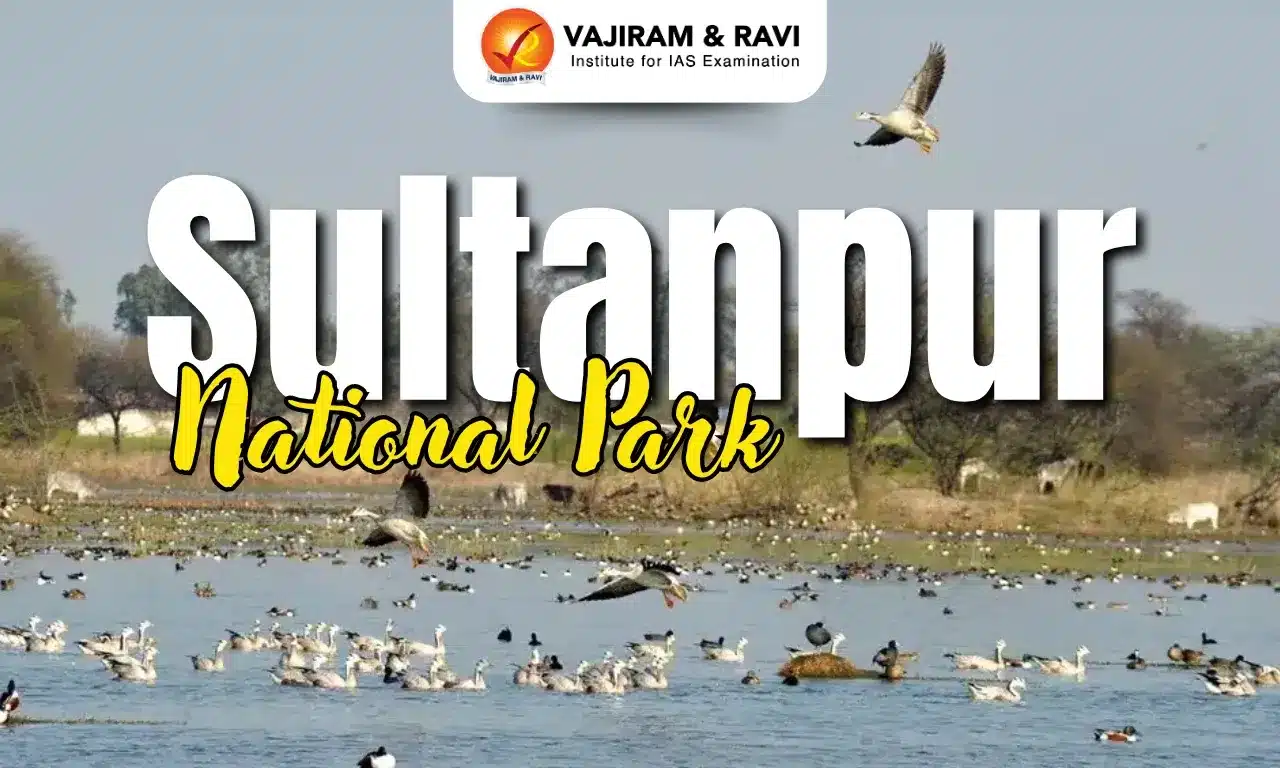
Sultanpur National Park is a renowned wetland national park located in Gurugram district of Haryana, famous for its rich birdlife and biodiversity. The park features a subtropical climate with marshy vegetation that supports a variety of flora and fauna throughout the year. It is home to numerous resident and migratory birds, along with mammals such as Nilgai, Blackbuck, and Sambar. Owing to its ecological importance, Sultanpur National Park plays a significant role in wetland conservation, bird protection, and eco-tourism in northern India.
Sultanpur National Park
Sultanpur National Park is a renowned wetland national park located in Gurugram district of Haryana, known for its rich bird diversity and thriving wetland ecosystem. It serves as an important habitat for migratory birds, attracting thousands of visitors and birdwatchers every year.
Sultanpur National Park History
Sultanpur National Park has evolved from a protected wetland into one of Haryana’s most important bird conservation areas, safeguarding migratory and resident bird species.
- Sultanpur Jheel (covering about 1.21 sq. km) was declared a Bird Sanctuary in April 1971 under the Punjab Wildlife Preservation Act, 1959.
- The sanctuary was established to protect its rich wetland ecosystem and diverse birdlife.
- In July 1991, it was upgraded to Sultanpur National Park under the Wildlife (Protection) Act, 1972.
- The park has since become an important wintering ground for migratory birds arriving from Central Asia and Europe.
- Today, it is recognized as one of the premier birdwatching destinations in northern India and an important wetland conservation site.


Sultanpur National Park Climate & Vegetation
Sultanpur National Park has a subtropical climate with distinct summer, monsoon, and winter seasons. Its wetland ecosystem, grasslands, and marshes create a suitable habitat for a wide variety of wildlife, particularly migratory birds.
- Climate: The park experiences hot summers (April-June), monsoon rains (July-September), and cool winters (October-March).
- Winter Season: Pleasant weather and stable water levels make winter the peak season for migratory birds and wildlife observation.
- Monsoon Influence: Seasonal rainfall replenishes the wetlands, maintaining water availability and supporting the park’s ecological balance.
- Wetland Ecosystem: The landscape is dominated by shallow lakes, marshes, and waterlogged areas that are essential for feeding, nesting, and breeding activities.
- Grassland Habitat: Open grasslands surrounding the wetlands provide shelter and foraging grounds for birds and mammals.
- Vegetation Pattern: The Sultanpur National Park consists of marsh vegetation, native grasses, shrubs, and scattered tree cover that help prevent soil erosion and maintain habitat diversity.
Sultanpur National Park Flora
The flora of Sultanpur National Park consists of wetland vegetation, grasslands, shrubs, and native trees, which support the park’s rich biodiversity and provide food, shelter, and nesting habitats for wildlife.
- Dominant tree species include Babul (Acacia nilotica), Neem (Azadirachta indica), Ber (Ziziphus mauritiana), Banyan (Ficus benghalensis), Peepal (Ficus religiosa), and Kikar (Vachellia nilotica).
- Grasslands are covered with native grasses that provide grazing grounds for herbivores and habitat for ground-nesting birds.
- Marsh vegetation and reeds flourish around the wetlands, offering ideal nesting and breeding sites for waterbirds.
- Aquatic plants such as Typha (Cattail), Phragmites (Common Reed), Hydrilla, Vallisneria, and Water Lily (Nymphaea spp.) help maintain the wetland ecosystem.
- Shrubs and bushes growing around the water bodies provide shelter and protection for small mammals, reptiles, and birds.
- Seasonal monsoon rainfall promotes lush vegetation growth, enhancing the park’s ecological productivity.
- The diverse plant communities help in soil conservation, water purification, nutrient cycling, and maintaining the ecological balance of the wetland ecosystem.
Sultanpur National Park Fauna
Sultanpur National Park supports a rich diversity of wildlife, with its wetlands serving as an important habitat for both resident and migratory species.
- The park is home to over 250 species of resident and migratory birds, making it one of India’s renowned birdwatching destinations.
- Important bird species include Greater Flamingo, Demoiselle Crane, Bar-headed Goose, Greylag Goose, Painted Stork, Black-necked Stork, Eurasian Spoonbill, Northern Pintail, Common Teal, Purple Heron, Grey Heron, Little Cormorant, White-throated Kingfisher, and Siberian Crane (historically recorded).
- Mammals found in the park include Blackbuck, Nilgai (Blue Bull), Hog Deer, Sambar Deer, Jackal, Indian Hare, Small Indian Mongoose, and Leopard (occasionally reported).
- The wetlands also support freshwater turtles, monitor lizards, rat snakes, Indian cobras, frogs, and toads.
- Every winter, thousands of migratory birds arrive from Central Asia, Europe, and Siberia, using the park as a resting and feeding ground.
- The park’s wetlands, grasslands, and woodland patches provide ideal habitats for feeding, breeding, nesting, and sheltering a wide range of wildlife.
Sultanpur National Park Significance
Sultanpur National Park is one of northern India’s most important wetland ecosystems, playing a crucial role in bird conservation, biodiversity protection, and environmental education.
- Serves as a vital wintering and stopover habitat for thousands of migratory birds arriving from Central Asia, Europe, and Siberia.
- Conserves a unique wetland ecosystem that supports a rich diversity of birds, mammals, reptiles, amphibians, and aquatic life.
- Helps maintain the ecological balance of the region through water conservation, nutrient cycling, and habitat protection.
- Acts as an important site for the conservation of resident and migratory bird species in Haryana.
- Promotes eco-tourism, birdwatching, wildlife photography, and nature-based recreation, attracting visitors from across India.
- Provides opportunities for environmental education, biodiversity research, and wildlife monitoring.
- Contributes to the protection of natural wetlands near the National Capital Region (NCR), enhancing regional environmental sustainability.

 Last updated on Oct, 2026
→ UPSC 2027 Notification will be released on 13 January 2027 at upsconline.nic.in.
→ Asian Games 2026 are being held in Aichi-Nagoya, Japan, from 19 September to 4 October.
→ Check Nobel Prize 2026 Winners List here.
→ Download PIB PRiSM Monthly Magazine 2026 here.
→ Check UPSC Monthly Current Affairs Magazine The Recitals here.
→ Check out the latest UPSC Syllabus here.
→ Download UPSC Model Answers for Mains 2026
→ UPSC Mains Question Paper 2026 is out now for Essay & GS Paper 1, 2, 3 & 4.
→ UPSC Calendar 2027 has been released.
→ Enroll in Vajiram & Ravi’s UPSC Mains Test Series 2027 for structured answer writing practice, expert evaluation, and exam-oriented feedback.
→ Join Vajiram & Ravi’s UPSC Mentorship Program 2027 for personalized guidance, strategy planning, and one-to-one support from experienced mentors.
→ Go through the UPSC Mains Previous Year Papers to enhance your preparation.
→ UPSC has released UPSC Toppers List 2025 with the Civil Services final result on its official website.
→ Also check Best UPSC Coaching in India
Sultanpur National Park FAQs
Q1. Why is Sultanpur National Park famous?+
Q2. Is Sultanpur National Park a Ramsar Site?+
Q3. Which is the 2nd largest National Park in India?+
Q4. Which is the 2nd largest Ramsar Site in India?+
Q5. What is India's smallest national park?+
Tags: sultanpur national park upsc current affairs