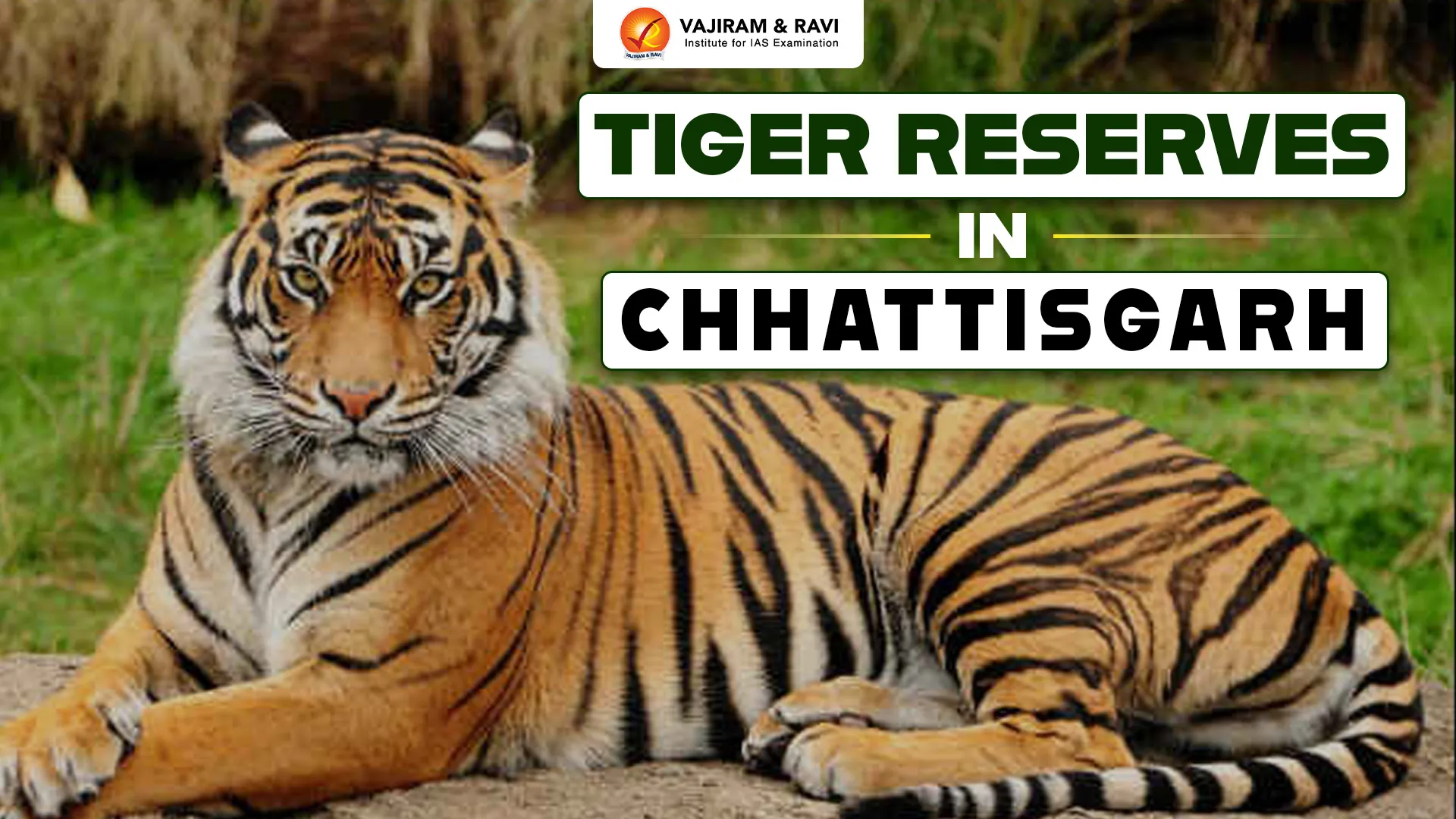
Sundarbans Tiger Reserve is located in West Bengal, within the Ganga-Brahmaputra-Meghna delta along the Bay of Bengal. It is globally significant for its unique mangrove ecosystem and Royal Bengal Tiger population. Its proposed expansion will make it India’s second largest tiger reserve, strengthening tiger conservation and biodiversity protection.
Sundarbans Tiger Reserve
Sundarbans Tiger Reserve is one of India’s most important tiger habitats, recognised for its extensive mangrove forests and distinctive deltaic landscape.
- Location: Situated in South and North 24 Parganas districts of West Bengal, it occupies the southernmost part of the lower Gangetic delta, bordering the Bay of Bengal and Bangladesh.
- Notification: The area was included in the Project Tiger initiative in 1973-74, while Sundarbans Tiger Reserve was formally notified in 2007.
- Existing Area: According to NTCA figures, the reserve covers 2,584.89 sq. km, comprising 1,699.62 sq. km of core area and 885.27 sq. km of buffer area.
- Geographical Features: It comprises numerous islands, estuaries, rivers and interconnected creeks. The landscape includes approximately 102 islands and forms part of the world’s largest delta.
- International Boundaries: Rivers Harinbhanga, Raimangal and Kalindi form its eastern international boundary with Bangladesh, while the Bay of Bengal lies to its south.
- Approved Expansion: On 19 August 2025, the National Board for Wildlife approved an additional 1,044.68 sq. km across the Matla, Raidighi and Ramganga ranges in South 24 Parganas.
- Second Largest Tiger Reserve: Following the approved expansion, its proposed total area will increase to 3,629.57 sq. km, making it India’s second largest tiger reserve after Nagarjunasagar-Srisailam. Final notification of the expansion is yet to be announced.
Sundarbans Tiger Reserve Biodiversity
The Sundarbans Tiger Reserve supports diverse mangrove vegetation and wildlife, making it an ecologically significant habitat for several threatened and endangered species.
- Flora and Mangrove Vegetation: Sundarbans has several plant species, including true mangroves and associated vegetation. Important species include Sundari, Goran, Genwa, Kankra, Keora and Golpata.
- Adaptation of Mangroves: Mangrove plants are adapted to saline and waterlogged conditions through specialised roots, salt tolerance mechanisms and viviparous germination, enabling survival in tidal environments.
- Mammals: The reserve supports Royal Bengal Tigers, fishing cats, spotted deer, wild boars, Gangetic dolphins and Irrawaddy dolphins. It is the only mangrove ecosystem in the world supporting a significant tiger population.
- Tiger Population: According to the All India Tiger Estimation (AITE) 2021-22 report, 81 tigers were photo captured in Sundarbans Tiger Reserve and 20 in adjoining South 24 Parganas, with one common tiger recorded across both divisions. Tigers occupied 1,895 sq. km of the Sundarbans landscape.
- Avifauna: Bird species recorded here including migratory birds, herons, egrets, kingfishers and white bellied sea eagles. The region is also known as a Kingfishers’ Paradise.
- Reptiles: Important reptiles include the endangered estuarine crocodile, king cobra, water monitor lizard and river terrapin (Batagur baska). Olive Ridley, Green Sea and Hawksbill turtles are also found here.
- Aquatic Biodiversity: Its rivers and creeks support diverse fish, prawns, crabs and other aquatic organisms. Important fish include Hilsa and Bhetki, while mangroves provide breeding and nursery grounds for aquatic species.
- Ecological Significance: Mangroves protect coastal areas, support fisheries and maintain ecological balance. The interconnected waterways also provide movement corridors for tigers and other wildlife across the delta.


 Last updated on Nov, 2026
→ UPSC Interview 2026 is scheduled from 7 December 2026 to 12 February 2027.
→ UPSC Interview Guidance Programme (IGP) 2026 by Vajiram & Ravi helps aspirants prepare confidently for the UPSC Personality Test.
→ UPSC DAF 2026 application form is available from 11 to 25 November 2026, till 6:00 PM.
→ UPSC 2027 Notification will be released on 13 January 2027 at upsconline.nic.in.
→ Download PIB PRiSM Monthly Magazine 2026 here.
→ Check UPSC Monthly Current Affairs Magazine The Recitals here.
→ Check out the latest UPSC Syllabus here.
→ UPSC Calendar 2027 has been released.
→ Enroll in Vajiram & Ravi’s UPSC Mains Test Series 2027 for structured answer writing practice, expert evaluation, and exam-oriented feedback.
→ Join Vajiram & Ravi’s UPSC Mentorship Program 2027 for personalized guidance, strategy planning, and one-to-one support from experienced mentors.
→ Go through the UPSC Mains Previous Year Papers to enhance your preparation.
→ UPSC has released UPSC Toppers List 2025 with the Civil Services final result on its official website.
→ Also check Best UPSC Coaching in India
Sundarbans Tiger Reserve FAQs
Q1. Where is Sundarbans Tiger Reserve located?+
Q2. When was Sundarbans Tiger Reserve established?+
Q3. What is the total area of Sundarbans Tiger Reserve?+
Q4. Why is Sundarbans Tiger Reserve ecologically important?+
Q5. Which is India's second largest tiger reserve after the proposed expansion of Sundarbans?+
Tags: sundarbans tiger sundarbans tiger reserve