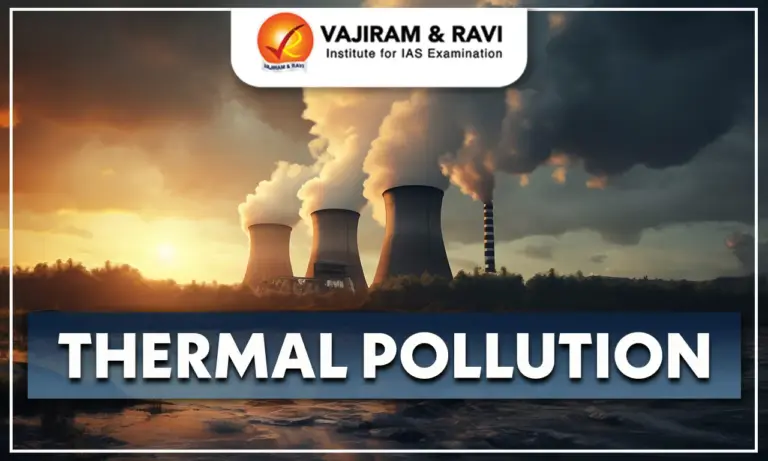
Thermal Pollution happens when industries, factories, or power plants discharge heated water into rivers, lakes, or other natural water bodies. This sudden rise in temperature disturbs the natural balance of aquatic ecosystems. Warmer water holds less oxygen, which makes survival difficult for many species. It can also disturb breeding cycles, alter habitats, and in some cases drive certain species away altogether. Because of these effects, Thermal Pollution is considered a serious threat to the health of our water resources.
Thermal Pollution
Thermal Pollution refers to the rapid rise or fall in the temperature of natural water bodies such as rivers, lakes, ponds, or even oceans. This shift in temperature is largely the result of human activities. A common example is seen in power plants, where water from a nearby river is used for cooling and then released back at a much higher temperature. Such alterations in water temperature upset the ecological balance, making Thermal Pollution a form of environmental degradation.
Thermal Pollution Causes
The main sources of Thermal Pollution can be seen in both human activities and natural processes. Some of the key causes include:
- Power plants and industries: Factories and power stations often use water from rivers or lakes as a coolant. Once used, the heated water is discharged back, raising the overall temperature of the water body.
- Soil erosion: Continuous erosion increases the surface area of water bodies, leaving them more exposed to direct sunlight and consequently warmer.
- Deforestation: Trees and vegetation usually act as a shield, preventing excess sunlight from directly hitting water bodies. When forests are cleared, this natural cover is lost, and water bodies heat up more quickly.
- Urban runoff: Roads and pavements absorb heat during the summer. When it rains, the warm runoff enters drains and eventually flows into rivers and lakes, increasing their temperature.
- Natural factors: Events like volcanic eruptions or geothermal activity under oceans release heat into surrounding waters. Even lightning strikes can add bursts of heat to seas and lakes, though on a smaller scale.





Thermal Pollution Effects
The Thermal Pollution Effects on aquatic ecosystems is wide-ranging and often severe. Some of the major effects include:
- Decline in dissolved oxygen: Warmer water holds less oxygen, which makes survival difficult for fish, plants, and other organisms. In extreme cases, oxygen depletion can create anaerobic conditions, suffocating aquatic life.
- Excessive algae growth: Higher temperatures encourage algae to multiply rapidly on the water’s surface. Over time, these blooms block sunlight, reduce oxygen, and disrupt the ecological balance of the water body.
- Increase in toxins: Continuous discharge of heated industrial water may also carry harmful chemicals or even traces of radiation. These toxic elements accumulate in water bodies and directly threaten aquatic organisms.
- Loss of biodiversity: Many species cannot tolerate sudden changes in water temperature. Some migrate in search of better conditions, leading to overcrowding and competition for resources, while others may die off, reducing biodiversity.
- Ecological imbalance: Sudden temperature changes can cause a phenomenon known as thermal shock, killing large numbers of aquatic organisms at once. Even small shifts can either over-stimulate or suppress the activity of certain species, disrupting natural cycles.
- Impact on reproduction: Most aquatic species reproduce within a specific temperature range. Elevated heat can cause premature release of eggs, hinder proper egg development, or even halt reproduction altogether.
- Changes in metabolic rate: Warmer water raises the metabolic activity of organisms, forcing them to consume more oxygen and food. This can destabilize the food chain and alter the composition of species in the ecosystem.
Thermal Pollution Control Measures
Several strategies can be adopted to minimize the harmful effects of thermal pollution:
- Cooling ponds: Heated water from industries can first be stored in specially designed ponds, where it is allowed to cool naturally before being released into rivers, lakes, or reused by the plant.
- Cooling towers: Warm effluents leaving condensers can be passed through cooling towers, where heat is dissolved into the atmosphere. Once cooled, the water can either be discharged safely into a natural source or recycled back into the system.
- Stormwater management systems: Facilities like infiltration basins and bio-retention systems help absorb or redirect heated runoff into the ground, reducing its direct impact on water bodies.
- Modified dam design: Reservoirs and dams can be engineered to release surface water instead of colder water from the bottom, preventing sudden temperature shocks in downstream ecosystems.
Thermal Pollution Potential Uses
While usually seen as an environmental problem, the excess heat from Thermal Pollution can have certain benefits:
- Industrial and space heating: The warm water discharged from plants can be redirected for industrial processes or even for heating buildings, reducing energy costs.
- Soil warming: In agriculture, controlled use of heated water can warm soil, which supports biological activity and improves crop growth in colder regions.
Greenhouse heating: Warm water can be circulated through greenhouses to maintain suitable temperatures for plant cultivation, especially during winters.

 Last updated on March, 2026
→ UPSC Final Result 2025 is now out.
→ UPSC has released UPSC Toppers List 2025 with the Civil Services final result on its official website.
→ Anuj Agnihotri secured AIR 1 in the UPSC Civil Services Examination 2025.
→ UPSC Marksheet 2025 is now out.
→ UPSC Notification 2026 & UPSC IFoS Notification 2026 is now out on the official website at upsconline.nic.in.
→ UPSC Calendar 2026 has been released.
→ Check out the latest UPSC Syllabus 2026 here.
→ UPSC Prelims 2026 will be conducted on 24th May, 2026 & UPSC Mains 2026 will be conducted on 21st August 2026.
→ The UPSC Selection Process is of 3 stages-Prelims, Mains and Interview.
→ Prepare effectively with Vajiram & Ravi’s UPSC Prelims Test Series 2026 featuring full-length mock tests, detailed solutions, and performance analysis.
→ Enroll in Vajiram & Ravi’s UPSC Mains Test Series 2026 for structured answer writing practice, expert evaluation, and exam-oriented feedback.
→ Join Vajiram & Ravi’s Best UPSC Mentorship Program for personalized guidance, strategy planning, and one-to-one support from experienced mentors.
→ Shakti Dubey secures AIR 1 in UPSC CSE Exam 2024.
→ Also check Best UPSC Coaching in India
Thermal Pollution FAQs
Q1. What is thermal pollution?+
Q2. What are the main causes of thermal pollution?+
Q3. How does thermal pollution affect aquatic life?+
Q4. Which industries contribute most to thermal pollution?+
Q5. What are the harmful effects of thermal pollution?+
Tags: thermal pollution