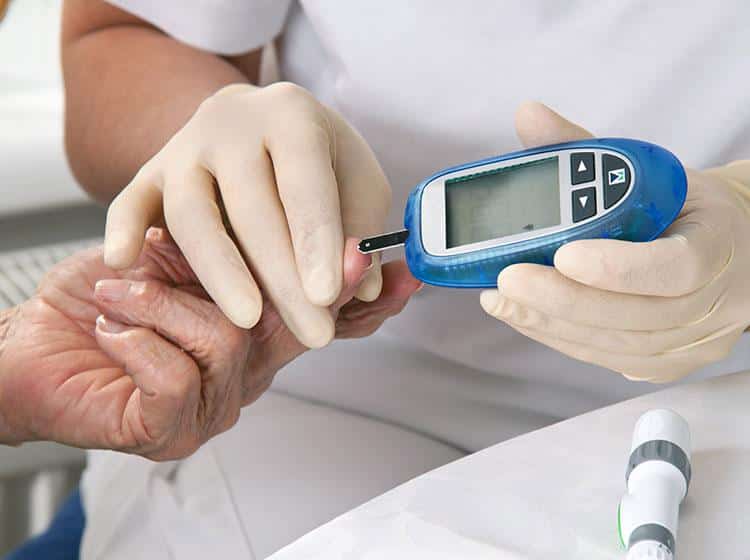
What is Diabetes?
- Diabetes is a chronic disease that occurs when the pancreas can no longer make insulin, or the body cannot make good use of the insulin it produces.
- Insulin is a hormone that regulates blood glucose.
- Not being able to produce or use insulin effectively leads to raised glucose levels in the blood, known as hyperglycaemia.
- Over the long-term high glucose levels are associated with damage to the body and failure of various organs and tissues.
- Diabetes is a major cause of blindness, kidney failure, heart attacks, stroke, and lower limb amputation.
Types of Diabetes:
- Type 1 diabetes:
- It is a condition in which your immune system destroys insulin-making cells in your pancreas. These are called beta cells.
- When you have type 1 diabetes, your body produces very little or no insulin.
- It requires daily administration of insulin to maintain blood glucose levels under control.
- It is usually diagnosed in children and young people, so it used to be called juvenile diabetes.
- Symptoms include excessive excretion of urine (polyuria), thirst (polydipsia), constant hunger, weight loss, vision changes, and fatigue.
- Type 2 diabetes:
- It results from the body’s ineffective use of insulin that it produces.
- More than 95% of people with diabetes have type 2 diabetes.
- This type of diabetes is largely the result of excess body weight and physical inactivity.
- Symptoms may be similar to those of type 1 diabetes but are often less marked. As a result, the disease may be diagnosed several years after onset.
- Gestational diabetes (GDM):
- It is a type of diabetes that consists of high blood glucose during pregnancy and is associated with complications for both mother and child.
- GDM usually disappears after pregnancy, but women affected, and their children are at increased risk of developing type 2 diabetes later in life.
Q1) What is Glucose?
Glucose is the main type of sugar in the blood and is the major source of energy for the body’s cells. Glucose comes from the foods we eat or the body can make it from other substances. Glucose is carried to the cells through the bloodstream. Several hormones, including insulin, control glucose levels in the blood.
Source: Study discovers insulin deficiency associated with Type 1 diabetes leads to smaller pancreas






 Last updated on April, 2026
→ UPSC Final Result 2025 is now out.
→ UPSC has released UPSC Toppers List 2025 with the Civil Services final result on its official website.
→ Anuj Agnihotri secured AIR 1 in the UPSC Civil Services Examination 2025.
→ UPSC Marksheet 2025 is now out.
→ UPSC Notification 2026 & UPSC IFoS Notification 2026 is now out on the official website at upsconline.nic.in.
→ UPSC Calendar 2026 has been released.
→ Check out the latest UPSC Syllabus 2026 here.
→ UPSC Prelims 2026 will be conducted on 24th May, 2026 & UPSC Mains 2026 will be conducted on 21st August 2026.
→ The UPSC Selection Process is of 3 stages-Prelims, Mains and Interview.
→ Prepare effectively with Vajiram & Ravi’s UPSC Prelims Test Series 2026 featuring full-length mock tests, detailed solutions, and performance analysis.
→ Enroll in Vajiram & Ravi’s UPSC Mains Test Series 2026 for structured answer writing practice, expert evaluation, and exam-oriented feedback.
→ Join Vajiram & Ravi’s Best UPSC Mentorship Program for personalized guidance, strategy planning, and one-to-one support from experienced mentors.
→ Shakti Dubey secures AIR 1 in UPSC CSE Exam 2024.
→ Also check Best UPSC Coaching in India