UGC Draft Curriculum Latest News
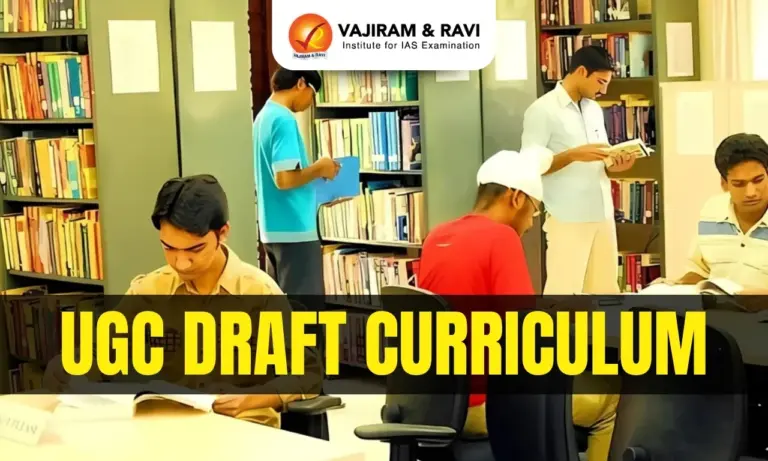
- The University Grants Commission (UGC) recently released draft undergraduate curriculums for feedback.
- However, Opposition-ruled states such as Karnataka and Kerala have raised objections.
- Both states have formed expert panels to review the drafts before submitting their formal responses.
- The UGC has invited comments nationwide, but these objections highlight federal concerns over curriculum design and its alignment with state priorities.
Learning Outcomes-based Curriculum Framework (LOCF)
- The Learning Outcomes-based Curriculum Framework (LOCF) is an educational model designed to enhance higher education by focusing on outcomes — what students should know, understand, and achieve — rather than just content delivery.
- It was developed by the University Grants Commission (UGC) and similar bodies to promote quality, skill-based, and holistic learning.
Key Components
- Graduate Attributes: Broad qualities such as intellectual curiosity, problem-solving skills, ethical conduct, and adaptability expected after completing studies.
- Programme Outcomes: Defined learning outcomes for the entire degree program.
- Course Outcomes: Specific, measurable outcomes for individual courses, describing what students can do upon completion.
Goals of LOCF
- Shift in Focus – Moves away from passive memorisation to active construction and application of knowledge and skills.
- Student Empowerment – Encourages active learning where teachers act as facilitators rather than mere instructors.
- Skill Development – Builds critical 21st-century skills like analytical reasoning, critical thinking, and problem-solving for a tech-driven world.
- Enhanced Employability – Equips students with industry-relevant knowledge and competencies, improving workforce readiness.
- Holistic Development – Promotes not only academic knowledge but also values, attitudes, ethics, and lifelong learning, ensuring all-round growth.





Key Features of UGC’s Proposed Undergraduate Curriculum
- The UGC has released draft curriculum frameworks for nine subjects, including anthropology, chemistry, commerce, economics, geography, home science, mathematics, physical education, and political science.
- Designed as Learning Outcomes-Based Curriculum Frameworks (LOCFs), they define the concepts and skills students should acquire.
- Aligned with the National Education Policy (NEP) 2020, the drafts envision flexible four-year multidisciplinary undergraduate programmes with multiple exit options.
- They also integrate Indian Knowledge Systems into higher education.
- Mathematics electives include ‘Kala Ganana’ (timekeeping traditions) focusing on India’s lunar, solar, and lunisolar calendars.
- Similarly, ‘Philosophy of Indian Mathematics’, introduces the study of Vedas, Vedangas, Puranas, and Darshanas as branches of learning.
- These additions aim to blend traditional knowledge with modern education.
Integration of ‘Bharatiya’ Knowledge in Draft Curriculum
- The new UGC draft LOCFs place strong emphasis on incorporating Indian Knowledge Systems (IKS) into undergraduate courses.
- For instance, the chemistry curriculum includes a unit on traditional Indian dietary practices from Ayurveda under “food chemistry”, recommending texts like Ayurvedic Cooking for Self-Healing.
- Similarly, the draft commerce curriculum introduces a course on Indian management principles, featuring lessons from the Bhagavad Gita, Ramayana, and Vedantic perspectives alongside modern concepts.
- Earlier frameworks lacked such components. Officials clarified that while UGC had issued LOCFs for 38 subjects since 2019 under the choice-based credit system, the rollout of NEP 2020 has prompted a fresh framework.
- According to NEP, a future Higher Education Commission of India (HECI) will ultimately set outcome-based frameworks, though it is yet to be established.
Opposition from States over Draft Curriculum
- The draft UGC curriculum has drawn sharp criticism from opposition-ruled states.
- Kerala’s Higher Education Minister labelled it “obsolete,” “unscientific,” and influenced by Hindutva ideology.
- Experts cited references like Ram Rajya in commerce (as part of CSR discussions) and the inclusion of V D Savarkar’s The Indian War of Independence as recommended reading in political science, alongside a separate elective on Savarkar.
- Karnataka’s Higher Education Minister alleged that the framework aims to impose central government ideologies and objected to UGC’s interference in state curriculums.
- However, UGC clarified that universities retain autonomy to adapt or redesign modules.
- In fact, during earlier LOCF rollouts, universities, including the University of Kerala, had revised their courses in line with UGC guidance.

 Last updated on March, 2026
→ UPSC Final Result 2025 is now out.
→ UPSC has released UPSC Toppers List 2025 with the Civil Services final result on its official website.
→ Anuj Agnihotri secured AIR 1 in the UPSC Civil Services Examination 2025.
→ UPSC Marksheet 2025 is now out.
→ UPSC Notification 2026 & UPSC IFoS Notification 2026 is now out on the official website at upsconline.nic.in.
→ UPSC Calendar 2026 has been released.
→ Check out the latest UPSC Syllabus 2026 here.
→ UPSC Prelims 2026 will be conducted on 24th May, 2026 & UPSC Mains 2026 will be conducted on 21st August 2026.
→ The UPSC Selection Process is of 3 stages-Prelims, Mains and Interview.
→ Prepare effectively with Vajiram & Ravi’s UPSC Prelims Test Series 2026 featuring full-length mock tests, detailed solutions, and performance analysis.
→ Enroll in Vajiram & Ravi’s UPSC Mains Test Series 2026 for structured answer writing practice, expert evaluation, and exam-oriented feedback.
→ Join Vajiram & Ravi’s Best UPSC Mentorship Program for personalized guidance, strategy planning, and one-to-one support from experienced mentors.
→ Shakti Dubey secures AIR 1 in UPSC CSE Exam 2024.
→ Also check Best UPSC Coaching in India
UGC Draft Curriculum FAQs
Q1. What is the UGC draft curriculum?+
Q2. Which subjects have draft UGC curriculums?+
Q3. What is new in UGC’s curriculum approach?+
Q4. Why are some states opposing the draft curriculum?+
Q5. Do universities have to strictly follow the UGC draft?+
Tags: mains articles UGC draft curriculum upsc current affairs upsc mains current affairs