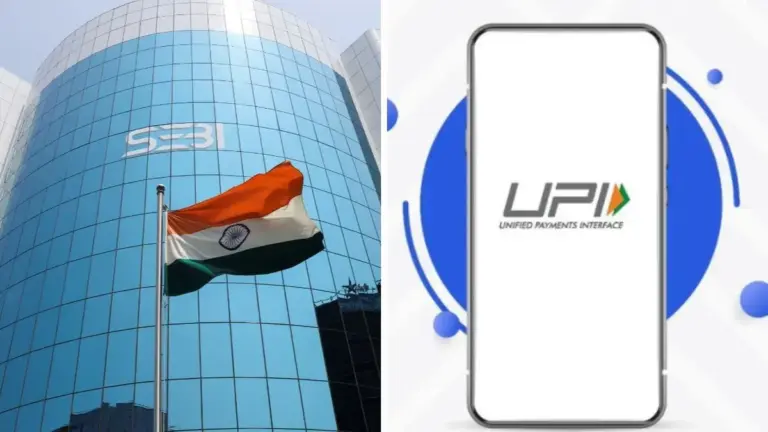
About Unified Payments Interface (UPI) block mechanism:
- It is similar to the Application Supported by Blocked Amount (ASBA) facility that allows trading with blocked amounts.
- In the primary market, the facility ensures that money from an investor gets moved only when the allotment is completed.
- In the UPI block mechanism, clients can trade in the secondary market based on blocked funds in their bank accounts, instead of transferring the funds upfront to the trading member.
- The facility is currently optional for investors, and not mandatory for Trading Members (TMs) to offer as a service to clients.
- Significance: It provides enhanced protection to the client’s funds and securities.
Key facts about Application Supported by Blocked Amount
- It was first introduced by SEBI in 2008.
- It is a process for making initial public offerings (IPOs) or rights issue subscriptions.
- ASBA is a facility provided by banks that allows investors to apply for an IPO or rights issue by blocking the application amount in their bank account instead of transferring the money to the issuer.
- Under ASBA, the investor’s application money remains in their bank account, and only a block is created on the funds for the IPO application amount.
- This blocked amount remains in the investor’s bank account until the allotment process is completed.
- Once the shares are allotted to the investor, the block is released, and only the amount for the allotted shares is deducted from the investor’s account.
- In public issues and rights issues, all investors have to mandatorily apply through ASBA.
Q1: What is Unified Payments Interface (UPI)?
The UPI is a digital and real-time payment system developed by the National Payments Corporation of India (NPCI) and regulated by the Reserve Bank of India (RBI). It was launched on April 11, 2016. It is designed to enable peer-to-peer inter-bank transfers through a single two-click factor authentication process.
Source: SEBI proposes mandatory UPI block mechanism facility for secondary market trading






 Last updated on April, 2026
→ UPSC Final Result 2025 is now out.
→ UPSC has released UPSC Toppers List 2025 with the Civil Services final result on its official website.
→ Anuj Agnihotri secured AIR 1 in the UPSC Civil Services Examination 2025.
→ UPSC Marksheet 2025 is now out.
→ UPSC Notification 2026 & UPSC IFoS Notification 2026 is now out on the official website at upsconline.nic.in.
→ UPSC Calendar 2026 has been released.
→ Check out the latest UPSC Syllabus 2026 here.
→ UPSC Prelims 2026 will be conducted on 24th May, 2026 & UPSC Mains 2026 will be conducted on 21st August 2026.
→ The UPSC Selection Process is of 3 stages-Prelims, Mains and Interview.
→ Prepare effectively with Vajiram & Ravi’s UPSC Prelims Test Series 2026 featuring full-length mock tests, detailed solutions, and performance analysis.
→ Enroll in Vajiram & Ravi’s UPSC Mains Test Series 2026 for structured answer writing practice, expert evaluation, and exam-oriented feedback.
→ Join Vajiram & Ravi’s Best UPSC Mentorship Program for personalized guidance, strategy planning, and one-to-one support from experienced mentors.
→ Shakti Dubey secures AIR 1 in UPSC CSE Exam 2024.
→ Also check Best UPSC Coaching in India