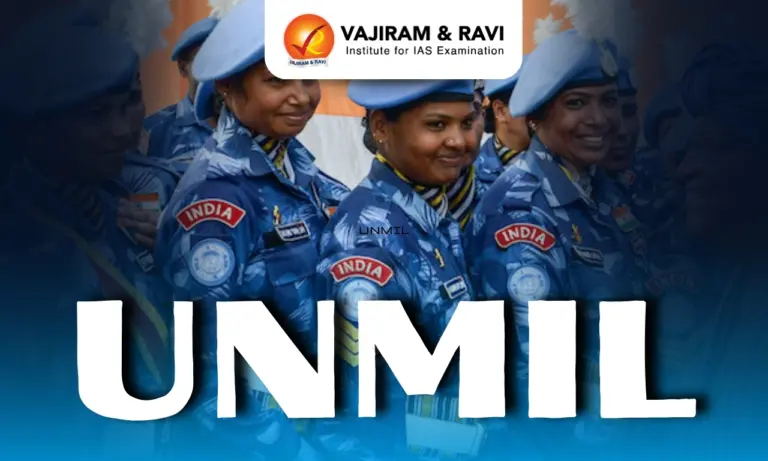
The UNMIL (United Nations Mission in Liberia) was one of the most significant multidimensional peacekeeping missions undertaken by the United Nations in Africa. Established in 2003 under United Nations Security Council Resolution 1509, the mission aimed to restore peace and stability in Liberia after the devastating Second Liberian Civil War. Over the years, UNMIL played a crucial role in rebuilding governance institutions, protecting civilians, strengthening democracy, and reforming the security sector. The mission officially concluded on March 30, 2018, after successfully transferring security responsibilities to Liberian authorities.
UNMIL Operation Background
- Liberia faced two devastating civil wars between 1989 and 2003, resulting in political instability, economic collapse, and widespread violence.
- The conflict led to the deaths of nearly 250,000 people and displaced millions internally and across neighboring countries.
- Armed rebel groups, ethnic tensions, and weak governance severely damaged Liberia’s administrative and security institutions.
- The Second Liberian Civil War (1999–2003) intensified violence and created a major humanitarian crisis in West Africa.
- International concern grew due to increasing human rights violations, child soldier recruitment, and attacks on civilians.
- In August 2003, the Comprehensive Peace Agreement (CPA) was signed in Accra, Ghana, between the Liberian government, rebel groups, and political parties.
- Following the peace agreement, the United Nations Security Council adopted Resolution 1509 in September 2003.
- The resolution established the UNMIL (United Nations Mission in Liberia) as a multidimensional peacekeeping operation.
- The mission was authorized under Chapter VII of the UN Charter, allowing peacekeepers to use force to protect civilians and maintain peace.
UNMIL Operation Objectives
UNMIL Operation was established to restore peace and stability in Liberia after the civil war by protecting civilians, rebuilding institutions, supporting democratic governance, and promoting long-term national recovery.
- Ensure implementation of the ceasefire agreement and maintain peace and security across Liberia.
- Protect civilians, UN personnel, and humanitarian workers from violence and armed conflict.
- Support the Disarmament, Demobilization, and Reintegration (DDR) process for former combatants.
- Assist in rebuilding and reforming the Liberian National Police and military forces.
- Strengthen the rule of law, judicial institutions, and governance systems.
- Promote and monitor human rights protection throughout the country.
- Facilitate the safe delivery of humanitarian assistance to affected populations.
- Support the organization of free and fair democratic elections in Liberia.
- Help refugees and internally displaced persons return safely to their homes.


India’s Historic Role in UNMIL
India played a landmark role in the UNMIL (United Nations Mission in Liberia) by making significant contributions to peacekeeping, security reform, and gender equality. India’s participation strengthened the mission’s effectiveness and enhanced its global reputation as a responsible contributor to United Nations peacekeeping operations.
- India deployed the world’s first-ever all-women Formed Police Unit (FPU) in Liberia in 2007 under UNMIL.
- The contingent was mainly drawn from the Central Reserve Police Force (CRPF).
- Indian women peacekeepers performed duties such as crowd control, patrolling, security management, and training local police personnel.
- The deployment became a major symbol of women empowerment and gender equality in global peacekeeping missions.
- Indian peacekeepers helped build confidence among Liberian women and encouraged them to join the police and security forces.
- The all-women unit inspired the United Nations to increase female participation in future peacekeeping operations worldwide.
- India also contributed military observers, police personnel, and logistical support to maintain peace and stability in Liberia.
- Indian forces gained international recognition for professionalism, discipline, and humanitarian service during the mission.
- The contribution strengthened India’s image as one of the largest and most trusted contributors to UN peacekeeping missions.
Chapter VII of the UN Charter
Chapter VII of the United Nations Charter deals with actions related to threats to peace, breaches of peace, and acts of aggression.
- It gives the UN Security Council authority to take measures to maintain or restore international peace and security.
- The Security Council can first use non-military measures such as economic sanctions, diplomatic restrictions, travel bans, and arms embargoes.
- If peaceful measures fail, the Council can authorize the use of military force against aggressors or conflict groups.
- Peacekeeping missions authorized under Chapter VII can use force beyond self-defense to protect civilians and maintain law and order.
- The chapter empowers the UN to intervene in situations involving civil wars, terrorism, genocide, and humanitarian crises.
- Decisions taken under Chapter VII are legally binding on all UN member states.
- Article 39 allows the Security Council to determine whether a situation is a threat to international peace and security.
- Article 41 covers non-military actions such as sanctions and suspension of diplomatic relations.
- Article 42 permits military operations including air, sea, or land forces if non-military measures prove inadequate.
- Many modern UN peacekeeping missions, including UNMIL, operate under Chapter VII mandates.

 Last updated on Oct, 2026
→ UPSC 2027 Notification will be released on 13 January 2027 at upsconline.nic.in.
→ Check Nobel Prize 2026 Winners List here.
→ Download PIB PRiSM Monthly Magazine 2026 here.
→ Check UPSC Monthly Current Affairs Magazine The Recitals here.
→ Check out the latest UPSC Syllabus here.
→ Download UPSC Model Answers for Mains 2026
→ UPSC Mains Question Paper 2026 is out now for Essay & GS Paper 1, 2, 3 & 4.
→ UPSC Calendar 2027 has been released.
→ Enroll in Vajiram & Ravi’s UPSC Mains Test Series 2027 for structured answer writing practice, expert evaluation, and exam-oriented feedback.
→ Join Vajiram & Ravi’s UPSC Mentorship Program 2027 for personalized guidance, strategy planning, and one-to-one support from experienced mentors.
→ Go through the UPSC Mains Previous Year Papers to enhance your preparation.
→ UPSC has released UPSC Toppers List 2025 with the Civil Services final result on its official website.
→ Also check Best UPSC Coaching in India
UNMIL Operation FAQs
Q1. What is UNMIL?+
Q2. When was UNMIL established?+
Q3. Why was UNMIL created?+
Q4. Which civil war led to the formation of UNMIL?+
Q5. Under which chapter of the UN Charter was UNMIL authorized?+
Q6. What were the major objectives of UNMIL?+
Tags: international relations unmil operation