
India Breaks Into Top 100 in Global SDG Index for the First Time

India SDG Index 2025

India’s Rise in the Global SDG Rankings

  • India has made a significant breakthrough by ranking 99th in the 2025 edition of the Sustainable Development Goals (SDG) Index, marking its first-ever entry into the top 100 nations globally. 
  • This leap forward underscores India’s growing focus on sustainable development and its ongoing efforts to improve across the 17 SDGs adopted by United Nations member states in 2015.
  • The SDG Index is part of the annual Sustainable Development Report (SDR) released by the UN Sustainable Development Solutions Network
  • It evaluates countries on a scale of 0 to 100, where 100 represents complete achievement of all SDGs. India scored 67, a significant improvement from its 109th position in 2024.

Comparative Regional Rankings and Progress

  • India's improved rank places it ahead of several South Asian peers. Bhutan secured 74th place (70.5), Nepal 85th (68.6), Bangladesh 114th (63.9), and Pakistan 140th (57). 
  • Meanwhile, India’s maritime neighbours Maldives and Sri Lanka, ranked 53rd and 93rd, respectively.
  • Since 2015, India has steadily improved its position in the index, from 116th in 2017 to 109th in 2024.
  • This steady climb reflects ongoing efforts to meet national and international development benchmarks, with emphasis on key indicators such as health, education, access to energy, and digital infrastructure.

Global Trends and Regional Bright Spots

  • Despite India's positive momentum, the 2025 SDR warns that global SDG progress is stagnating. 
  • Only 17% of the 169 targets across 17 goals are on track for achievement by 2030. The report attributes the slowdown to conflicts, structural vulnerabilities, and fiscal limitations, particularly in low-income and fragile states.
  • European countries dominate the upper echelons of the index, with Finland, Sweden, and Denmark occupying the top three ranks. Of the top 20 countries, 19 are in Europe. 
    • However, even these countries face challenges in achieving climate and biodiversity-related goals due to unsustainable consumption patterns.
  • East and South Asia emerged as the regions with the fastest SDG progress since 2015, driven by socioeconomic development. Notable improvers include:
    • Nepal (+11.1, Cambodia (+10), The Philippines (+8.6), Bangladesh (+8.3), Mongolia (+7.7)
  • Other standout performers globally include Benin (+14.5), Uzbekistan (+12.1), the UAE (+9.9), Saudi Arabia (+8.1), and Peru (+8.7).

Areas of Advancement and Reversal

  • While India and many developing countries show progress on critical development indicators, global performance presents a mixed picture. Areas of notable advancement include:
    • Access to electricity (SDG 7)
    • Internet and mobile broadband use (SDG 9)
    • Reduction in under-five and neonatal mortality (SDG 3)
  • Conversely, the report highlights significant setbacks in:
    • Obesity (SDG 2)
    • Press freedom (SDG 16)
    • Sustainable nitrogen management (SDG 2)
    • Biodiversity loss (measured via the Red List Index - SDG 15)
    • Corruption perceptions (SDG 16)
  • These reversals underscore the complex and sometimes contradictory nature of development, where progress in one area may coincide with backsliding in another.

Multilateralism and Financial Reform in Focus

  • A unique aspect of the report is its assessment of countries’ commitment to multilateralism. Barbados, Jamaica, and Trinidad and Tobago top the list of most committed countries. 
  • Among G20 nations, Brazil ranks highest at 25th, and Chile leads the OECD countries at 7th.
  • In stark contrast, the United States ranks last (193rd) for the second consecutive year, reflecting its policy stance against the SDGs and its withdrawal from key international frameworks such as the Paris Agreement and the World Health Organisation.
  • The SDR also lays emphasis on the need to reform the global financial architecture. Ahead of the Fourth International Conference on Financing for Development (FfD4) in Seville (June 30-July 3), the report criticises the current system for facilitating capital flows toward rich nations while underfunding emerging and developing economies (EMDEs) that possess greater growth potential.

Conclusion

  • India’s entry into the top 100 of the SDG Index is a commendable achievement and a reflection of its sustained commitment to inclusive and sustainable development. 
  • Despite challenges at the global level, India’s performance demonstrates the impact of focused policy efforts and developmental prioritisation. 
  • Moving forward, continued attention to pressing issues such as biodiversity, governance, and sustainable consumption will be critical to maintaining and accelerating this momentum.

India SDG Index 2025

Q1: What is India’s rank in the 2025 Global SDG Index?

Ans: India ranks 99th in the 2025 Global Sustainable Development Goals (SDG) Index.

Q2: How has India’s SDG ranking changed over the years?

Ans: India improved from 109th in 2024 to 99th in 2025, marking its first entry into the top 100.

Q3: What are the key areas where India and others have shown SDG progress?

Ans: Major gains have been seen in access to electricity, mobile broadband, and child health outcomes.

Q4: Which countries are leading the 2025 SDG Index globally?

Ans: Finland, Sweden, and Denmark top the index, continuing Europe’s dominance.

Q5: What are the biggest challenges highlighted in the 2025 SDR?

Ans: The report points to conflicts, fiscal limitations, and structural vulnerabilities as barriers to SDG progress.
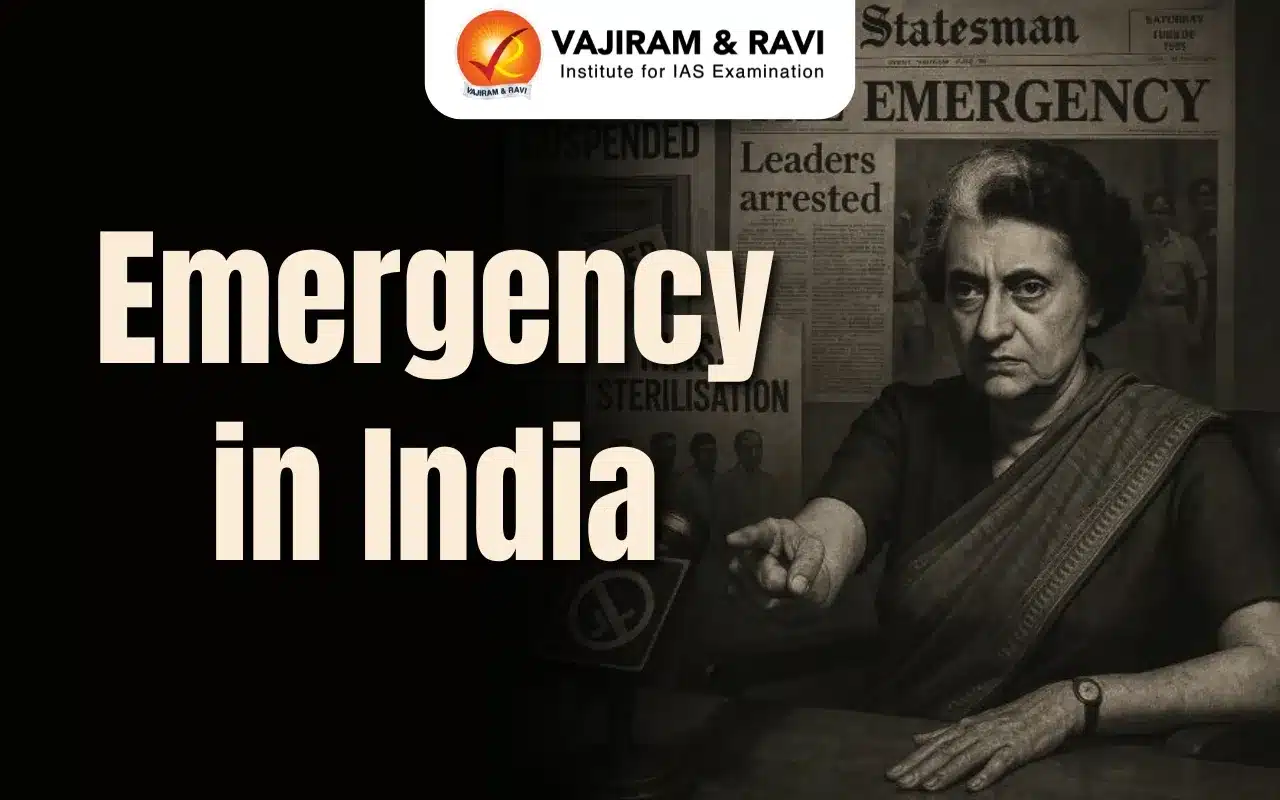
50 Years of Emergency in India and Lasting Lessons

Emergency in India

Emergency in India Latest News

  • On June 25, 1975, exactly 50 years ago, Emergency was imposed in India — marking a 21-month period widely considered one of the darkest chapters in the country's democratic history. 
  • During this time: Civil liberties were suspended; Press freedom was curtailed; Mass arrests of opposition leaders occurred; Elections were cancelled.
  • The country was governed by rule through decrees, bypassing democratic institutions. This period remains a stark reminder of the fragility of democratic freedoms.

Backdrop to the Emergency

  • Indira Gandhi won a landslide victory in 1971, but her government soon faced multiple crises:
    • Economic strain from the 1971 India-Pak war, droughts, and the 1973 oil crisis
    • Rising corruption, misgovernance, and state excesses
  • These factors triggered widespread public dissatisfaction.

The Rise of Student Movements and Jayaprakash Narayan

  • In February 1974, Gujarat’s Navnirman Movement led to the resignation of CM Chimanbhai Patel over corruption. 
  • This inspired a student-led protest in Bihar, uniting socialist and right-wing groups under the Chhatra Sangharsh Samiti.
  • Jayaprakash Narayan (JP), a Gandhian and Quit India Movement veteran, took charge of the movement.
  • On June 5, 1974, from Patna’s Gandhi Maidan, JP gave the iconic call for “Sampoorna Kranti” (Total Revolution), mobilising mass support across Bihar and beyond.

Nationwide Agitation and the Call for Change

  • In May 1974, George Fernandes led a railway workers’ strike, paralysing Indian Railways.
  • Through 1974 and early 1975, the JP Movement gained national momentum.

Trigger: Court Verdict Against Indira Gandhi

  • On June 12, 1975, the Allahabad High Court convicted Indira Gandhi of electoral malpractice, invalidating her Lok Sabha election from Rae Bareli. 
  • This intensified calls for her resignation.

Declaration of Emergency: June 25, 1975

As dissent peaked, President Fakhruddin Ali Ahmed signed the Emergency proclamation late on June 25, 1975.

Emergency Rule by Decree (1975–1977)

From June 25, 1975, to March 21, 1977, Indira Gandhi's government exercised extraordinary constitutional powers, drastically altering India’s democratic structure.

Centre Tightens Control: Federalism Undermined

  • India’s federal structure became de facto unitary.
  • State governments remained in place but were effectively controlled by the Centre.
  • Parliament legislated on State List subjects, and constitutional provisions on Union-State financial allocation were altered with parliamentary approval.

Mass Arrests and Suppression of Dissent

  • Over 1.12 lakh people were detained under harsh laws:
    • MISA (Maintenance of Internal Security Act)
    • Conservation of Foreign Exchange and Prevention of Smuggling Activities Act (COFEPOSA)
    • Defence of India Act and Rules (DISIR)

42nd Constitutional Amendment: Judicial Powers Curtailed

  • Passed in 1976, the 42nd Amendment:
    • Stripped the judiciary of the power to hear election petitions
    • Expanded Union powers to override state matters
    • Gave Parliament absolute authority to amend the Constitution
    • Made laws implementing Directive Principles immune to judicial review

Censorship and Attack on the Press

  • Article 19(1)(a) — the right to freedom of speech — was curtailed.
  • Newspapers were placed under pre-censorship.

Extension of Lok Sabha Tenure

In 1976, when elections were due, Parliament extended its term by one year, delaying democratic restoration.

The Emergency Module

  • Though legally framed, these actions led to a dark phase in Indian democracy, marked by the erosion of rights and constitutional norms. 
  • This decline stemmed from the weaponisation of laws, judicial subversion, and disregard for the rule of law—elements now recognized by scholars as early warning signs of democratic collapse.

Weaponisation of Laws: Targeting Dissent

  • The 39th Constitutional Amendment:
    • Placed MISA in the Ninth Schedule, shielding it from judicial review.
    • Made elections of key constitutional posts non-justiciable, preempting the SC verdict on Indira’s disqualification.

Subversion of Judicial Independence

  • The Emergency era witnessed manipulation of judicial appointments to ensure a “committed judiciary”.
  • In 1977, Justice M H Beg was appointed Chief Justice, superseding Justice H R Khanna, the senior-most judge.
    • Justice Khanna had dissented in the infamous habeas corpus case, opposing the suspension of civil liberties.
  • This politicisation of the judiciary severely undermined judicial autonomy and public trust.

Erosion of the Rule of Law

  • Courts often sided with the state, offering legal impunity for Emergency excesses.
  • Detained citizens were denied due process or the benefit of legal protections.
  • Constitutional amendments were passed while Opposition leaders were jailed, making a mockery of democratic lawmaking.

Key Takeaway: Vigilance is the Price of Liberty

  • The lessons of the Emergency highlight the need to:
    • Recognize early signs of authoritarianism
    • Strengthen institutional checks
    • Safeguard civil liberties
    • Promote constitutional values
  • Repeating these lessons is essential to prevent democratic backsliding in any era.

Source: IE | IE

Emergency in India FAQs

Q1: What triggered the 1975 Emergency in India?

Ans: Indira Gandhi was disqualified by the court; unrest and political dissent led to the imposition of Emergency.

Q2: How did Emergency impact civil liberties?

Ans: Civil liberties were suspended; dissent silenced through arrests, press censorship, and harsh preventive detention laws like MISA.

Q3: What was the 42nd Amendment’s role during Emergency?

Ans: It curtailed judicial power, strengthened Parliament, and shielded laws from review, centralizing authority dangerously.

Q4: Who resisted Emergency among journalists and leaders?

Ans: Leaders like JP Narayan and journalists like Kuldip Nayar resisted; The Indian Express famously protested censorship with blank pages.

Q5: What is the key lesson from the Emergency?

Ans: Democratic freedoms require constant vigilance; misuse of legal provisions can rapidly erode constitutional norms and public accountability.

EC’s Special Voter Roll Revision in Bihar: Proof of Birth Now Mandatory

Voter Roll Revision Bihar

Voter Roll Revision Bihar Latest News

  • The Election Commission has launched a special intensive revision of the electoral roll in poll-bound Bihar, requiring all voters not listed in the 2003 rolls to submit fresh documents proving their eligibility—marking the beginning of a likely nationwide exercise.

Electoral Roll (ER): A Constitutional Responsibility of the ECI

  • The Election Commission of India (ECI) regards the creation, maintenance, and purification of the Electoral Roll (ER) as a core constitutional duty.
  • This duty is rooted in Article 324, the Representation of the People Act, 1950, and the Registration of Electors Rules, 1960 (RER).
  • The ER’s credibility is anchored in continuous updates and decades of revisions, carried out through a rule-based, transparent statutory process.

Special Summary Revision (SSR)

  • SSR involves reviewing the voter list and unveiling a draft electoral roll. It is often held prior to elections.
  • As per Rule 25(1) of RER 1960, there are three types of revisions:
    • Intensive Revision
    • Summary Revision
    • Partly Intensive and Partly Summary

EC Begins Special Revision of Electoral Rolls in Bihar

  • The Election Commission (EC) has ordered a special intensive revision of electoral rolls in Bihar ahead of the upcoming Assembly elections. 
  • Voters not listed in the 2003 rolls must now submit fresh proof of eligibility.
    • The last intensive revision in Bihar was in 2003, with the qualifying date of January 1, 2003.

Proof of Birth and Parental Origin Now Mandatory

  • Born Before July 1, 1987: Must provide proof of their own date and/or place of birth.
  • Born Between July 1, 1987 – December 2, 2004: Must furnish proof of date/place of birth of either parent.
  • Born After December 2, 2004: Must provide date/place of birth proof of both parents.
    These categories align with the Citizenship Act, 1955, according to EC sources.

Legal Basis and Historical Context

  • This revision is being conducted under powers granted by the Representation of the People Act, 1950 (Section 21), which allows the EC to prepare electoral rolls afresh. 
  • The Commission has invoked this power 13 times before, between 1952 and 2004.

Process

  • Booth Level Officers (BLOs) will conduct house-to-house surveys, distribute pre-filled enumeration forms, and collect them with supporting documents. 
  • Forms can also be submitted via the ECINET app or ECI website.
  • Electoral Registration Officers (EROs) verify voter eligibility under Section 23 of the Representation of the People Act, 1950
    • If any claims or objections arise, the AERO will investigate before final approval. 
  • Under Section 24, appeals against ERO decisions can be made to the District Magistrate or Chief Electoral Officer.

Need for intensive revision

  • The last intensive revision in Bihar was done in 2003. 
  • Due to rapid urbanisation, migration, new eligible voters, unreported deaths, and inclusion of foreign illegal immigrants, the EC has now ordered a fresh revision to ensure accurate and error-free electoral rolls.

EC Revises Protocol for Handling EVMs and VVPATs with Mock Poll Data

  • Earlier, EVMs and VVPATs where mock poll data wasn’t deleted or slips weren’t removed were set aside and not counted—but only if the margin of victory exceeded the number of such votes. 
  • This led to discrepancies between total votes polled and counted.

New Instructions: Count All Machines Separately

  • The Election Commission has now directed that such machines must be counted on a separate table, not discarded.
    • Mock poll votes will be subtracted using the mock poll certificate.
    • This ensures a more accurate final count and greater transparency.

Accountability Measures for Poll Officials

  • Strict action will be taken against the Presiding Officer and Polling Officer if:
    • Mock poll data is not erased from the EVM control unit, or
    • VVPAT slips from the mock poll are not removed.
  • These officials will face disciplinary action, reinforcing the need for compliance and care during polling procedures.

Source: IE | PIB | ECI

Voter Roll Revision Bihar FAQs

Q1: Why is Bihar undergoing voter roll revision?

Ans: To update rolls due to urbanisation, migration, new voters, and ensure accuracy before upcoming Assembly elections.

Q2: Who needs to submit birth proof in Bihar?

Ans: Voters not listed in 2003 roll must submit birth or parental proof as per their date of birth.

Q3: What is Special Summary Revision (SSR)?

Ans: A pre-election voter roll update involving house surveys, document verification, and publication of draft and final rolls.

Q4: How is voter eligibility verified?

Ans: Electoral officers verify documents; objections can be raised and appeals made to District Magistrate or Chief Electoral Officer.

Q5: What are the new EVM/VVPAT rules?

Ans: Machines with undeleted mock poll data will be counted separately, and responsible poll officers face strict action.

Enquire Now