
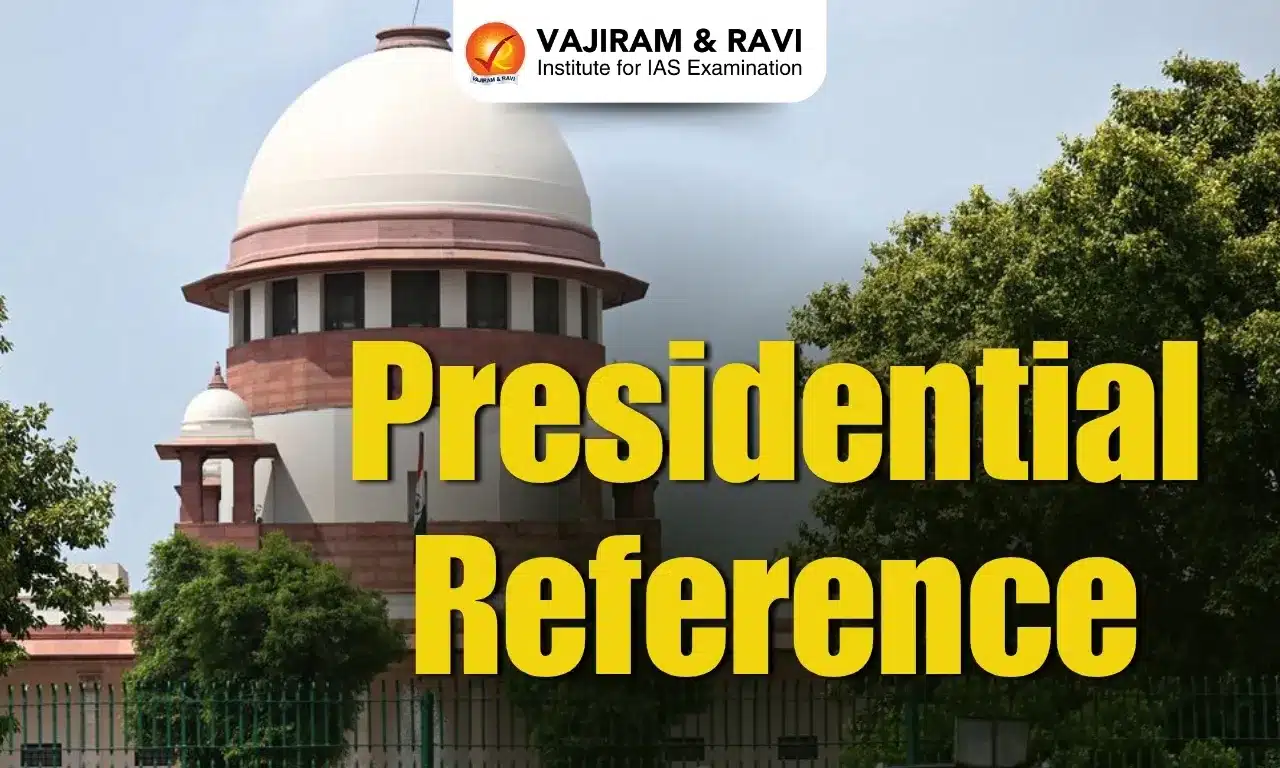
Presidential Reference: Can the Supreme Court Clarify Past Rulings?

Presidential Reference

Presidential Reference Latest News

  • Recently, the Supreme Court issued notices to the Centre and all States on a Presidential Reference seeking its opinion on whether courts can compel the President and Governors to act within specified timelines on Bills passed by State legislatures. 
  • A Constitution Bench, led by Chief Justice B.R. Gavai, will begin detailed hearings by mid-August.

Background of the Case: SC’s April Verdict Under Scrutiny

  • The Reference was made under Article 143 of the Constitution after President Droupadi Murmu submitted 14 questions following the Court’s April 2025 judgment. 
  • That ruling, delivered in a case brought by the Tamil Nadu government, held that Governor R.N. Ravi’s delay in assenting to ten re-passed State Bills was illegal.
  • In this judgment, the apex court, for the first time, imposed judicially enforceable timelines on both Governors and the President.
  • The current Reference seeks clarity on whether courts can direct constitutional authorities on how and when to act. 

Scope and Significance of the Supreme Court’s Advisory Jurisdiction

  • Article 143(1) of the Indian Constitution allows the President to seek the Supreme Court’s opinion on legal or factual matters of significant public importance, even if no case is pending in court. 
  • This advisory power, inspired by the Government of India Act, 1935, has been used at least 14 times since Independence. 
  • The Court’s role in such cases is limited strictly to the questions raised in the Presidential Reference and cannot go beyond them. 
  • Although debated in the Constituent Assembly over concerns of political misuse, the provision was retained to help resolve constitutional deadlocks. 
  • To safeguard its use, Article 145(3) mandates that such References must be heard by a Constitution Bench of at least five judges.

Supreme Court’s Discretion to Decline Presidential References

  • While Article 143(1) empowers the President to seek the Supreme Court’s opinion, the Court is not bound to respond in every case. 
  • It holds discretionary authority to decline a Reference, as clarified in the Special Courts Bill case (1978), which interpreted the term “may” in Article 143 as conferring such discretion. 
  • However, if the Court chooses not to give an opinion, it must record its reasons. 
  • This was reaffirmed in Dr. M. Ismail Faruqui v. Union of India (1994), where the Court held that References involving expert evidence or political questions may be declined. 
  • Notably, in 1993, the Court refused to answer a Reference on the Ayodhya-Babri Masjid dispute due to the ongoing civil case and concerns of constitutional impropriety. 
  • Similarly, in 1982, the Court did not respond to a Reference on a proposed law related to resettlement of migrants in Jammu and Kashmir, as the law was enacted before the Court could intervene. 
  • These cases underscore the Court’s cautious approach in maintaining its judicial integrity and avoiding political entanglement.

Nature of Supreme Court’s Advisory Opinions

  • The binding nature of the Supreme Court’s advisory opinions remains debated
  • Article 141 makes only the “law declared” by the Court binding on all courts, and in St. Xavier’s College v. State of Gujarat (1974), the Court clarified that advisory opinions are not binding precedents but hold persuasive value
  • Still, some rulings, like R.K. Garg v. Union of India (1981), treated the reasoning in advisory opinions as binding, despite earlier caveats. 
  • The ambiguity continued in the Cauvery Water Disputes Tribunal case (1991), where the Court acknowledged advisory opinions as deserving “due weight and respect” but stopped short of declaring them binding. 
  • As of now, any opinion from the current Presidential Reference will not override the binding April 2025 ruling delivered under the Court’s adjudicatory powers. 
  • However, such an opinion will likely influence ongoing and future related cases, including those involving Kerala and Punjab.

Scope of Supreme Court’s Power to Modify April 2025 Verdict via Presidential Reference

  • The Supreme Court has clearly stated in past rulings, such as in the Cauvery Water Disputes Tribunal case, that Article 143 cannot be used by the executive to overturn or review a settled judicial decision
  • Once the Court has authoritatively ruled on a matter under its adjudicatory jurisdiction, there is no room for doubt that would justify a Presidential Reference. 
  • The only valid method to challenge such a decision is through review or curative petitions
  • However, the Court has also held, notably in the Natural Resources Allocation case (2012), that under Article 143(1), it may clarify or restate legal principles without disturbing the core decision or affecting parties’ rights
  • Similarly, in 1998, a Presidential Reference led to modifications in the collegium system without invalidating the original 1993 judgment
  • Hence, while the April 2025 ruling remains final and binding, the current Reference may be used to clarify or elaborate on its legal reasoning. 
  • With 14 questions raised—some going beyond the April ruling—the Constitution Bench may provide broader constitutional interpretations without undoing the earlier judgment.

Source: TH | IE

Presidential Reference FAQs

Q1: What is a Presidential Reference?

Ans: It's a legal query the President sends to the Supreme Court under Article 143 on significant constitutional matters.

Q2: Can the Supreme Court reject a Reference?

Ans: Yes, it has discretionary power to decline and must record reasons, especially if the matter is political or pending.

Q3: Are advisory opinions binding?

Ans: No, Supreme Court’s advisory opinions are persuasive but not binding under Article 141, though often followed.

Q4: Can the Court overturn its rulings via Reference?

Ans: No, but it can clarify or elaborate legal principles without disturbing prior binding decisions.

Q5: Why is the April 2025 ruling under scrutiny?

Ans: The government seeks clarity on whether courts can enforce timelines on the President and Governors for assenting Bills.
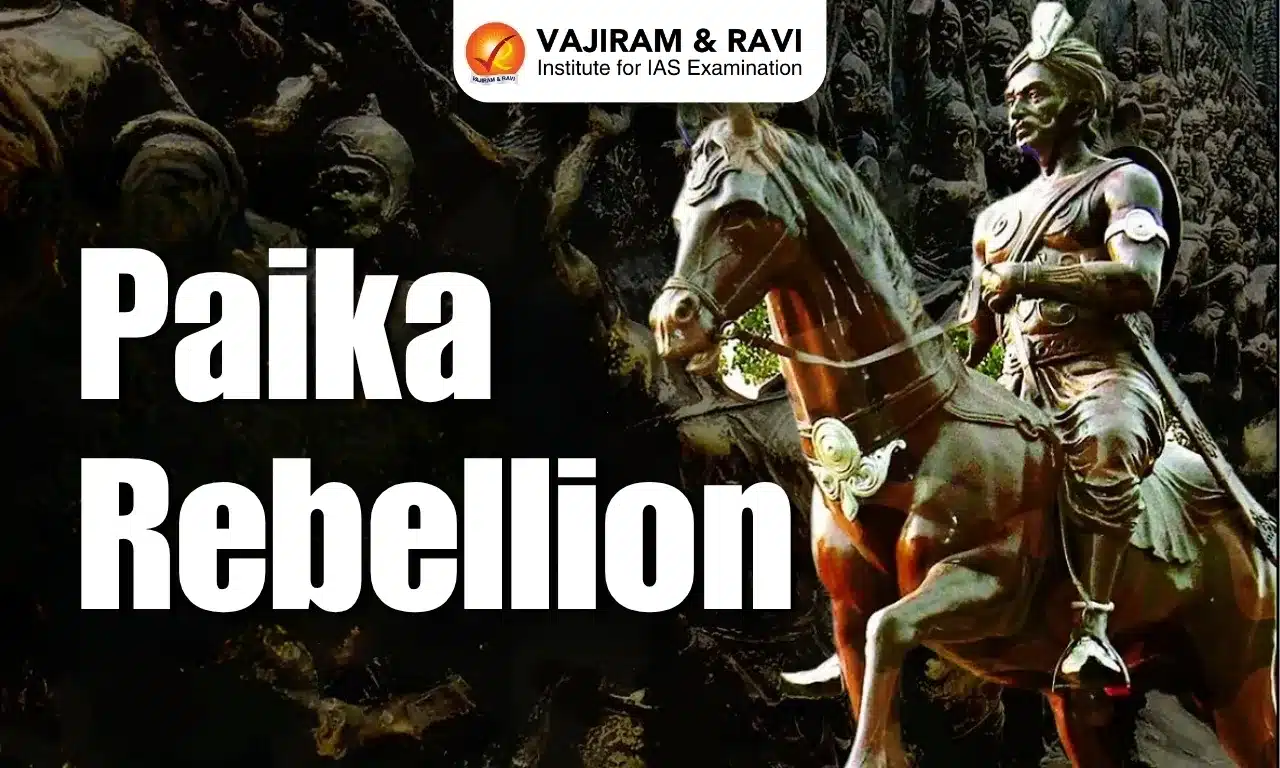
Paika Rebellion Controversy: Odisha’s Historic Uprising and the NCERT Debate

Paika Rebellion

Paika Rebellion Latest News

  • Former Odisha CM Naveen Patnaik has strongly objected to the exclusion of the 1817 Paika Rebellion from NCERT’s new Class VIII history textbook, terming it a “huge dishonour” to the valiant Paikas. 
  • The NCERT clarified that the rebellion would be included in the second volume of the textbook, to be released later this year.

The Paikas: Odisha’s Warrior Farmers

  • In 19th-century rural India, widespread discontent often erupted into armed resistance due to longstanding injustices and the disruptive policies of the expanding British East India Company. 
  • Among those who rose in rebellion were the Paikas of Odishaa class of traditional foot soldiers
  • Since the 16th century, Odisha’s Gajapati kings had recruited Paikas from various social groups to serve as military retainers. 
  • In return for their martial services, they were granted hereditary rent-free lands known as nish-kar jagirs, which they cultivated during times of peace. 
  • The erosion of their privileges under British rule sowed deep resentment, setting the stage for uprisings like the Paika Rebellion of 1817.

British Betrayal and the Fall of Khurda

  • In 1803, Colonel Harcourt’s British forces marched from Madras to Puri with little resistance and moved on to capture Cuttack. 
  • Harcourt struck a deal with Mukunda Deva II of Khurda, promising him compensation of ₹1 lakh and four parganas in exchange for safe passage through his territory.  However, the British failed to fully honour the agreement. 
  • In response, Jayee Rajguru, the king’s custodian, led 2,000 armed Paikas to Cuttack to pressure the British. 
  • While Harcourt paid ₹40,000, he withheld the promised parganas. Rajguru's subsequent conspiracy against British rule was thwarted, leading to his arrest and execution on December 6, 1806. 
  • The British then dethroned the king, destroyed Barunei Fort, seized royal lands, and exiled Mukunda Deva II to Puri.

Growing Resentment and the Road to Revolt

  • The fall of native rule in Odisha led to a sharp decline in the status and livelihood of the Paikas. 
  • Stripped of royal patronage and hereditary rent-free land, they were further burdened by the British East India Company’s new land revenue policies
  • These reforms forced many Odia landowners to sell their land cheaply to absentee Bengali landlords. 
  • Additionally, the switch to a rupee-based taxation system increased economic pressure, especially on tribals, who now had to meet rising demands from landlords paying taxes in silver. 
  • The British also tightened control over salt trade, extending it to coastal Odisha in 1814, further straining hill communities. 
  • These combined economic hardships and the loss of traditional privileges ultimately sparked a full-scale rebellion against British rule.

The Paika Rebellion of 1817

  • In March 1817, a group of around 400 Kondhs from Ghumusar, armed with traditional weapons, marched towards Khurda. 
  • They were soon joined by the Paikas, led by Bakshi Jagabandhu Bidyadhar, the former commander-in-chief of the Khurda kingdom and ex-holder of the Rodanga estate. 
  • Together, they launched a fierce revolt against British authority—attacking the Banpur police station, burning government buildings, looting the treasury, and killing officials. 
  • The uprising spread across several regions with bloody confrontations, but the British eventually suppressed the rebellion. 
  • Jagabandhu evaded capture for years, hiding in the forests, and finally surrendered in 1825 under negotiated terms.

Paika Rebellion and Contemporary Political Narratives in Odisha

  • The legacy of the Paika Rebellion has become a strong symbol of Odia pride and sub-nationalism.
  • In 2017, marking 200 years of the uprising, the then State government demanded that it be recognised as India’s “first war of independence,” citing its occurrence decades before the 1857 Revolt.
  • Although the Centre did not accept this status, the then Union Culture Minister stated in 2021 that the rebellion would be acknowledged in Class VIII textbooks as one of the early popular uprisings against British rule.
  • Prime Minister Modi honoured Paika descendants in 2017, and the then President Ram Nath Kovind laid the foundation of the Paika Memorial in 2019.

Source: IE

Paika Rebellion FAQs

Q1: Who were the Paikas?

Ans: Odisha’s warrior peasants who served the Gajapati kings and revolted when British rule ended their privileges.

Q2: Why did the Paika Rebellion happen?

Ans: British land reforms, salt monopoly, and loss of royal patronage triggered widespread unrest among Paikas and tribals.

Q3: What happened in the 1817 Rebellion?

Ans: Led by Bakshi Jagabandhu, Paikas and Kondhs attacked British posts but were eventually defeated.

Q4: Why is it politically sensitive?

Ans: Odisha leaders want it recognized as India’s first war of independence to assert cultural pride and historical identity.

Q5: What is NCERT’s stance?

Ans: NCERT clarified the rebellion will appear in the second textbook volume, set for release in September-October 2025.

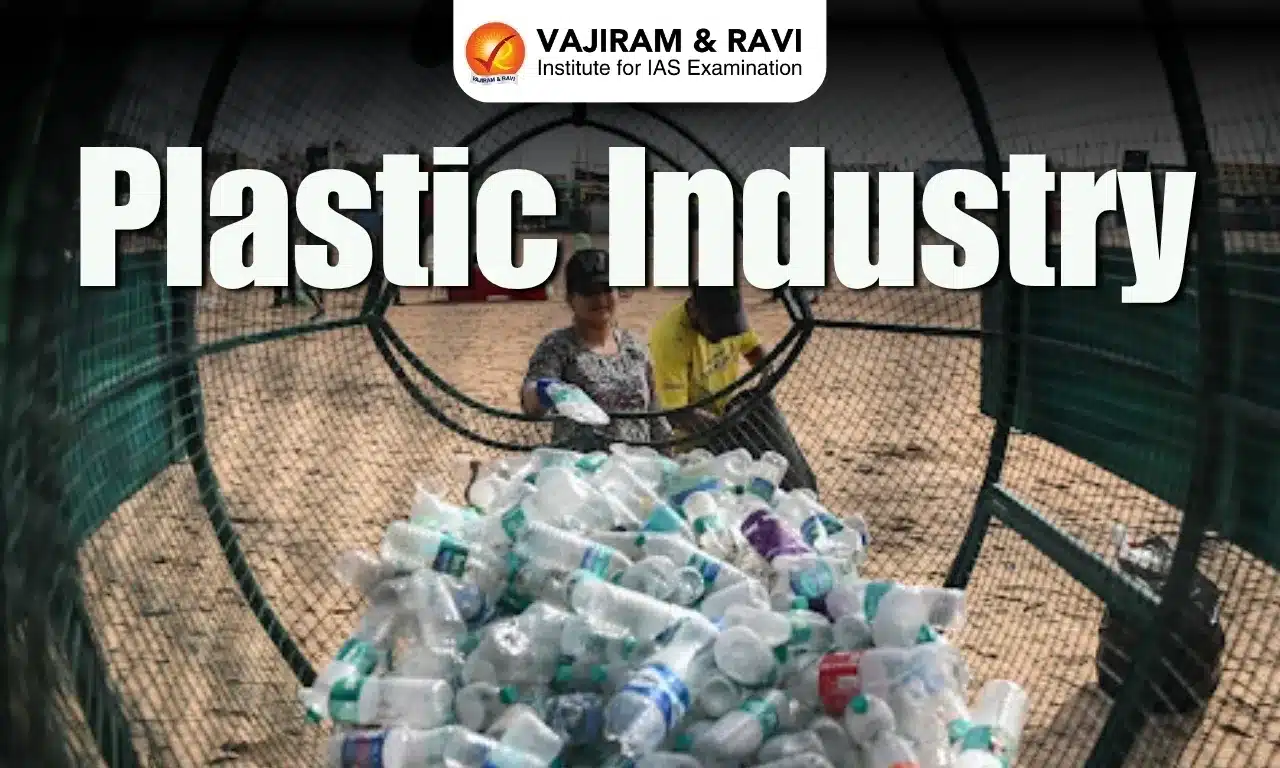
Influence of Plastic Industry on Environmental Policies – A Growing Global Concern

Plastic Industry

Plastic Industry Latest News

  • The plastic industry has come under renewed scrutiny for allegedly deploying tactics to influence environmental policy in its favour, particularly during global treaty negotiations on plastic pollution.

Introduction

  • In recent years, environmental experts have grown increasingly concerned over the plastic industry’s influence on green policy-making. 
  • Reports and investigations indicate that the industry, backed by powerful fossil fuel interests, has employed tactics strikingly similar to those once used by the tobacco industry: sowing public doubt, delaying regulation, and manipulating narratives to shift responsibility from corporations to consumers.
  • These strategies are gaining prominence as governments globally attempt to tighten controls on plastic production and waste, particularly through the formulation of a potential UN treaty on plastic pollution.

Echoes of the Tobacco Industry Playbook

  • The plastic industry’s approach to avoiding regulatory pressure mirrors several historical tactics of the tobacco industry:
    • Shifting Responsibility to Consumers
      • While tobacco ads famously carried disclaimers like “Smoking is injurious to health”, even as they promoted smoking, the plastic industry blames consumers for not recycling effectively, thereby sidestepping the industry's responsibility in creating unsustainable plastic systems.
    • Funding Misleading Science and PR
      • Just as tobacco companies funded studies to deny smoking-related health risks, internal records from major plastic producers show they promoted plastic recycling from the 1980s onward despite privately acknowledging its technical and economic limitations. 
      • Public campaigns highlighting recyclability served to stall bans and stricter regulations.
    • Greenwashing and Mislabelling
      • Much like “light” cigarettes falsely marketed as healthier, today’s biodegradable and compostable plastics often fail to break down as claimed, especially in India’s underdeveloped waste management systems. 
      • Corporate greenwashing further distorts consumer understanding and weakens public demand for accountability.
      • One prominent example was Coca-Cola, which, despite promoting its sustainability image, quietly dropped its target of 25% reusable packaging by 2030 and backtracked on key recycling goals.

Targeting the Global South for Expansion

  • With regulatory pressure mounting in the Global North, the plastic industry has increasingly turned toward low- and middle-income nations to maintain market growth.
  • According to the OECD’s Global Plastic Outlook (2022):
    • Plastic consumption is expected to more than double in Sub-Saharan Africa by 2060.
    • In Asia, it could triple during the same period.
    • In contrast, growth is expected to be just 15% in Europe and 34% in North America.
  • Weaker environmental regulations, limited public awareness, and ineffective waste management infrastructure in these regions make them more vulnerable to plastic pollution and industry manipulation.

India’s Plastic Policy Landscape

  • India has taken several steps to curb plastic pollution, but faces implementation challenges.
    • Informal Sector: Backbone of India’s Plastic Recycling
      • An estimated 70% of India’s recycled plastic is collected and processed by the informal sector, ragpickers, sorters, and grassroots recyclers, who work in hazardous conditions with little legal protection or social security.
      • Recognising their contribution, the National Action for Mechanised Sanitation Ecosystem (NAMASTE) scheme launched in 2024 aims to:
        • Integrate waste workers into formal systems
        • Provide them with Ayushman Bharat health insurance, safety gear, and social security
      • As of May 2025:
        • Over 80,000 workers had been profiled
        • 45,700+ received personal protective equipment
        • 26,400+ were issued Ayushman Bharat cards
    • India’s Plastic Waste Management Rules (2016, amended 2022) mandate manufacturers to take financial and operational responsibility for the plastic they generate.
    • However, enforcement remains weak:
      • Only 11% of single-use plastic waste is covered by India’s current ban
      • Fewer than 50% of producers are reportedly complying with EPR guidelines
      • This undermines progress and allows the industry to continue unchecked in many areas.

Industry Lobbying in Global Negotiations

  • Recent rounds of the UN Intergovernmental Negotiating Committee (INC) for a global plastics treaty have been notably influenced by industry lobbying.
  • At INC-3, fossil fuel and chemical industry lobbyists outnumbered their previous participation by 36%
  • Civil society groups raised concerns about industry-backed delegates slowing down progress on binding commitments
  • Internal documents and reports from the Centre for Climate Integrity and Centre for International Environmental Law (CIEL) have exposed how the plastic industry has long known the inadequacy of recycling as a solution but continued to promote it to avoid scrutiny.

Source: TH

Plastic Industry FAQs

Q1: How is the plastic industry compared to the tobacco industry?

Ans: Both have used delay tactics, misleading science, and PR to avoid regulation and shift responsibility onto consumers.

Q2: What challenges does India face in enforcing its plastic policies?

Ans: India's enforcement is weak, with limited coverage under plastic bans and low compliance with EPR mandates.

Q3: How are waste pickers being supported under new Indian schemes?

Ans: Under the NAMASTE scheme, they receive protective gear, health insurance, and access to formal waste systems.

Q4: How is the plastic industry influencing global policy?

Ans: Through lobbying efforts at UN treaty negotiations and downplaying the inefficacy of recycling solutions.

Q5: Why is the Global South vulnerable to plastic industry tactics?

Ans: Due to weaker regulations, low public awareness, and inadequate waste infrastructure, it is more susceptible to pollution and lobbying pressure.

Enquire Now