Ancient India’s Chola Dynasty and Its Legacy

Chola Dynasty

Chola Dynasty Latest News

  • Recently, Prime Minister Narendra Modi visited Gangaikonda Cholapuram in Tamil Nadu during the valedictory ceremony of the Aadi Thiruvathirai festival to commemorate the birth anniversary of Emperor Rajendra Chola I. 
  • He highlighted the historical achievements of the Chola dynasty and linked their legacy to India’s vision of becoming a developed and united nation.
  • He also highlighted the democratic traditions of the Chola Empire, particularly the Kudavolai system, comparing it with Western ideals like the Magna Carta (1215 CE) and Enlightenment-era political thought.

The Chola Dynasty

  • It was a Tamil empire that dominated South India and rose in prominence from the 9th (founder - Vijayalaya) to the 13th centuries CE (decline after the reign of Kulothunga I). 
  • They were renowned for their military prowess, maritime dominance, and significant contributions to art (advancements in bronze sculpture), architecture (eg., exemplifying the Dravidian style of temple architecture), and literature. 
  • At its peak (and spearheaded by Rajaraja I and his son Rajendra I), the Chola empire stretched from the islands of the Maldives to the banks of the Ganges River in Bangladesh, with colonies in Southeast Asia. 

PM’s Tribute to Chola Emperors

  • Historical inspiration: PM Modi paid homage to Rajaraja Chola and Rajendra Chola I for their military might, naval expansion, administrative innovations, and cultural contributions.
  • Commemorative coin: A coin was released to honour Rajendra Chola I, commemorating his contributions including the building of Gangaikonda Cholapuram, the Brihadisvara Temple, and Cholagangam lake.
  • Statues announcement: The Centre will install statues of both emperors in Tamil Nadu to reinforce national historical consciousness.

Chola Achievements as a Model for Modern India

  • Economic and strategic vision: Chola-era advancements in trade, defence, water management, and local governance were showcased as templates for India's future development.
  • Strengthening defence: Echoing Rajaraja and Rajendra’s naval legacy, PM Modi emphasized modern India's commitment to national security, citing Operation Sindoor as an example of India’s decisive strategic posture.
  • Democratic foundations: The Kudavolai system introduced by the Cholas was hailed as an early form of grassroots democracy.

The Kudavolai System

  • Electoral innovation:
    • Ballot-pot mechanism: The Kudavolai or “ballot pot” involved placing names on palm leaves in a pot and drawing lots publicly by a neutral child, ensuring transparency and fairness.
    • Institutional integrity: The process symbolised a combination of divine will and civic integrity, aimed at preventing dynastic capture of power.
  • Stringent eligibility and disqualification norms:
    • Eligibility criteria: Candidates had to be tax-paying landowners; 35–70 years old; literate in Vedic texts or administrative principles; free from criminal records, debt defaults, alcoholism, or nepotism
    • Disqualification measures: Individuals with financial misdemeanours or ethical lapses were disqualified, even fined or removed as per epigraphic records (e.g., Inscription No. 24 from Epigraphia Indica).

Rediscovering Ancient Indian Democracy

  • Chola contribution to democratic thought:
    • PM Modi emphasized that the Chola Empire practiced structured electoral governance long before Western democracies emerged.
    • The Uttaramerur inscriptions in Tamil Nadu serve as one of the earliest evidence of local self-governance and electoral processes.
  • Administrative decentralisation and local governance:
    • Village councils: Two bodies (Sabha – for Brahmin villages; and Ur – for non-Brahmin settlements) had real power over revenue, water management, temples, and justice.
    • Merchant guilds as partners: Guilds like Manigramam and Ayyavole were key in decentralised governance and trade expansion.
    • Symbolic statecraft: Rajendra Chola’s act of bringing Ganga water to his capital symbolised a liquid pillar of victory, merging military conquest with ritual legitimacy.
  • Limitations of the democratic system:
    • Exclusionary nature: Despite being advanced for its time, the Chola model excluded women, landless labourers, and lower castes, highlighting inequality in participatory governance.
    • Modern interpretations: Historians assert that while imperfect, the Chola model was an early blueprint of strategic, decentralised rule and civic integrity.

Cultural Unity and Preservation

  • Pan-Indian cultural bonds: Initiatives like Kashi Tamil Sangamam and Saurashtra Tamil Sangamam were referenced to reflect the government's efforts in cultural integration.
  • Return of heritage artefacts: Since 2014, India has repatriated over 600 ancient artefacts, including 36 from Tamil Nadu, reflecting cultural revivalism.
  • Shaivite influence: The Shaivite tradition and Tirumular’s message, Anbe Shivam (Love is God), were highlighted as eternal solutions to global crises.

Conclusion

  • By invoking the achievements of the Chola emperors, PM Modi's speech reaffirmed the importance of drawing upon historical strength to build a self-confident, united, and culturally rooted developed India.
  • The Chola Dynasty’s sophisticated systems of local self-government, democratic accountability, and ritual statecraft provide a powerful counter-narrative to Western-centric ideas of political evolution

Source: TH | IE

Chola Dynasty FAQs

Q1: What was the Kudavolai system?

Ans: An early electoral method used by the Cholas involving ballot pots, ensuring transparent local elections.

Q2: How was the Chola administration decentralised?

Ans: Through elected local bodies like Sabha and Ur that handled key civic and administrative functions.

Q3: How did Rajendra Chola use ritual in statecraft?

Ans: By bringing Gangajal to his capital, symbolising conquest with cultural and spiritual legitimacy.

Q4: How was accountability ensured in Chola governance?

Ans: By setting strict qualifications, annual audits, and penalties for misconduct in public office.

Q5: What were the limitations of Chola democracy?

Ans: It excluded women, landless labourers, and lower castes, reflecting social inequality.
China’s Mega Dam on Brahmaputra: A Strategic Concern for India

China Brahmaputra Dam

China Brahmaputra Dam Latest News

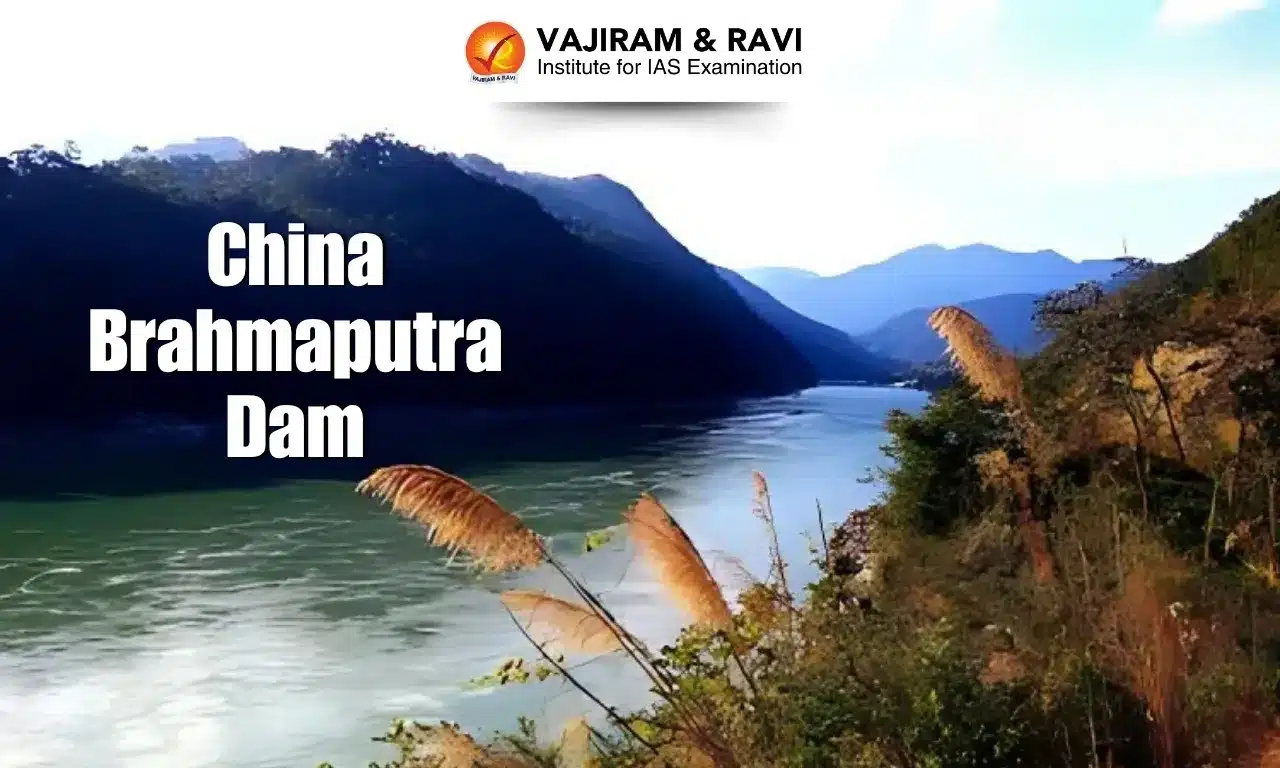
  • China has officially started building a massive $167.8 billion hydropower dam on the Brahmaputra River, near the Indian border in Arunachal Pradesh. 
  • The groundbreaking ceremony was attended by Premier Li Qiang. Once completed, this will be the world’s largest dam. 
  • The project has raised concerns in India and Bangladesh over its potential impact on the river’s natural flow and downstream water availability.

Arunachal Raises Alarm Over China’s Brahmaputra Dam Project

  • China’s construction of a massive 60,000 MW hydropower dam on the Yarlung Zangbo (Brahmaputra) near the “Great Bend” in Tibet, just before the river enters Arunachal Pradesh as the Siang, has sparked serious concerns in India. 

  • Arunachal Pradesh Chief Minister has called it an “existential threat” and likened the project to a potential “water bomb” that could devastate tribal communities and local livelihoods. 
  • He warned that sudden water release could flood the entire Siang region and drastically reduce river flow in the long term. 
  • Experts echo these fears, citing risks of flooding from dam operations, as well as the danger posed by the seismically active and ecologically fragile zone where the dam is being built
  • The project raises broader environmental and geopolitical anxieties for downstream countries like India and Bangladesh.

China’s Brahmaputra Dam: The View From Assam

  • Assam Chief Minister has downplayed immediate concerns about China's dam on the Brahmaputra, highlighting that the river becomes a major waterway only after entering Assam, where it is nourished by tributaries from Bhutan, Arunachal Pradesh, and heavy monsoon rains. 
  • He noted that China's contribution to the Brahmaputra’s flow is limited—about 30–35%—mostly from glacial melt and Tibetan rainfall. 
  • He suggested that even if China were to reduce water flow, it might help manage Assam’s annual floods. 
  • Still, he acknowledged the existence of multiple theories about the dam’s impact and expressed confidence that the central government is either already engaged in talks with China or will initiate discussions soon.

India’s Cautious Response to China’s Brahmaputra Dam Project

  • India has not issued an official response to the recent groundbreaking ceremony of China’s massive dam on the Brahmaputra River, but continues to closely monitor the developments. 
  • The Ministry of External Affairs (MEA) has reiterated India’s concerns as a lower riparian state with established rights, emphasizing the need for transparency and consultation with downstream countries like India and Bangladesh. 
  • MEA had underscored India’s position in January, urging China to avoid actions that could harm downstream interests. 
  • In contrast, China has maintained that the project falls within its sovereign rights and assured ongoing cooperation with downstream nations on hydrological data and disaster management.

Diplomatic Efforts on Multiple Fronts

  • Diplomatic efforts between India and China have continued on multiple fronts. 
  • In October 2024, both nations had agreed on patrolling arrangements along the LAC to resolve past tensions. 
  • Additionally, talks in March 2025 included discussions on cross-border cooperation, including river management. 
  • India also resumed issuing tourist visas to Chinese nationals recently and restarted the Kailash Mansarovar Yatra, signaling a cautious yet active engagement despite the concerns surrounding the dam project.

India’s Mitigation Strategy Amid China’s Brahmaputra Dam Concerns

  • Experts recommend scientific assessment and capacity-building to anticipate any deliberate Chinese actions. 
  • They have proposed constructing storage infrastructure on Brahmaputra tributaries to manage erratic flows. 
  • The Upper Siang project in Arunachal Pradesh, with a 300-metre-high dam, is considered crucial both for hydropower and as a buffer against sudden water releases, although local opposition over environmental concerns has delayed progress.
  • Additional strategies include developing inland channels for excess water diversion and pursuing long-term interlinking projects between the Brahmaputra and Ganga basins, as proposed by the National Water Development Authority. 
  • On the diplomatic front, experts advocate for continuous access to hydrological and project data from China, while also urging coordination with downstream neighbours like Bangladesh, Bhutan, and Myanmar to establish protocols for early warning and disaster preparedness.

Source: IE | TH

China Brahmaputra Dam FAQs

Q1: What is the Brahmaputra dam project in China?

Ans: A 60,000 MW dam near Arunachal, set to be the world’s largest hydropower project.

Q2: Why is Arunachal Pradesh worried?

Ans: Sudden water release could flood Siang region, threatening tribal lives and ecology.

Q3: What is Assam’s view on the dam?

Ans: Assam CM downplays risk, noting Brahmaputra is mainly fed by Indian rainfall and tributaries.

Q4: How has India responded diplomatically?

Ans: India has urged China for transparency and safeguards to protect downstream states' interests.

Q5: What are India’s mitigation strategies?

Ans: Storage dams, inland water channels, data sharing, and regional coordination for disaster response.

India’s Hydrogen Train Coach: A Milestone for Green Railways

India Hydrogen Train

India Hydrogen Train Latest News

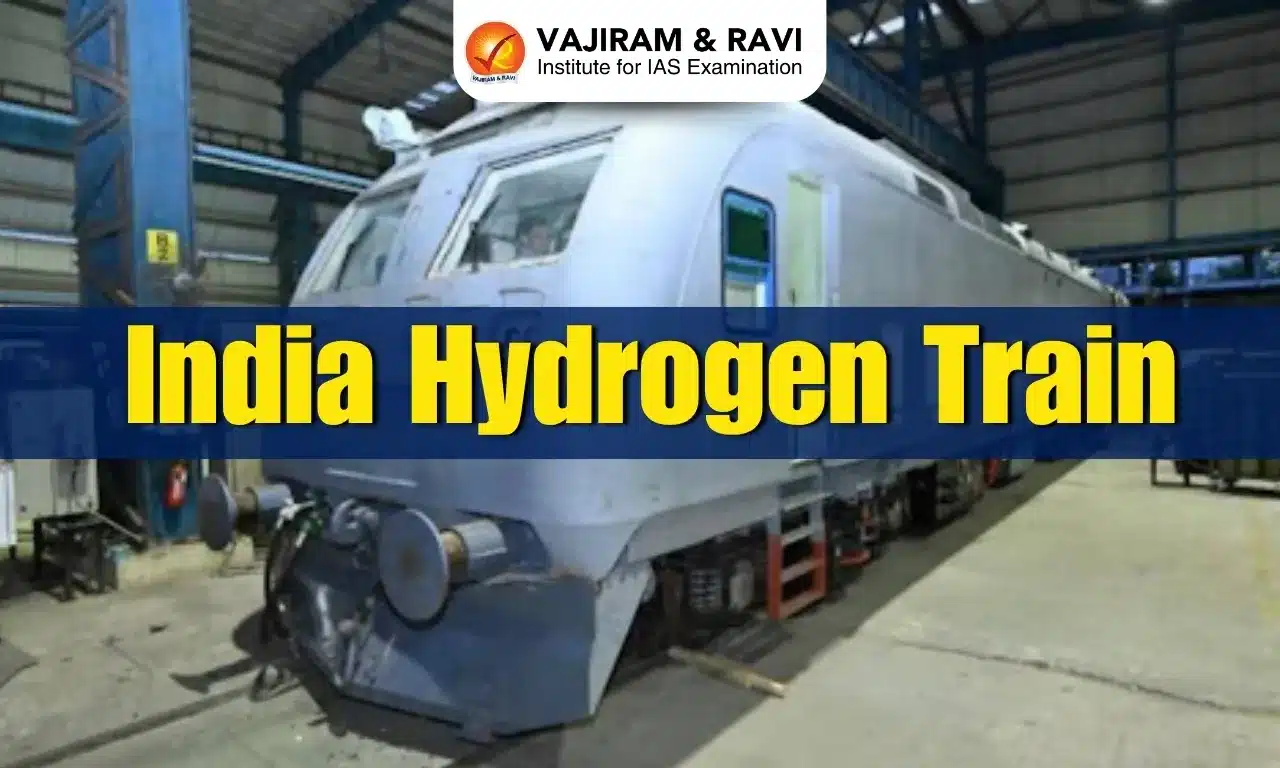
  • Indian Railways has successfully tested its first hydrogen-powered coach at the Integral Coach Factory (ICF) in Chennai, marking a major step towards launching India’s first hydrogen-powered train. 
  • This eco-friendly initiative supports India’s goal of cutting greenhouse gas emissions and boosting renewable energy use. 
  • The project, now in its final stage, is undergoing equipment testing before commercial rollout. Using hydrogen—a clean fuel—will help reduce reliance on fossil fuels. Only a few countries have attempted such projects, most of which remain in the trial phase.

Indian Railways’ Hydrogen Train Project: Key Details

  • Launched by Northern Railway in 2020-21, the hydrogen train project involves converting two 1600 HorsePower (HP) diesel power cars into hydrogen fuel cell-powered units. 
  • The project also includes setting up a hydrogen storage and fuelling facility at Jind, Haryana, with a storage capacity of 3,000 kg of hydrogen. 
  • The Research Design & Standards Organisation (RDSO) is leading the design, testing, and validation. 
  • The converted train, comprising 10 coaches and capable of carrying over 2,600 passengers, will operate between Jind and Sonepat in Haryana, covering two daily round trips of 356 km.

How India’s First Hydrogen Train Will Operate Safely

  • Indian Railways’ hydrogen train project involves retrofitting two diesel power cars with hydrogen fuel cell systems, each storing 220 kg of hydrogen in specially designed cylinders at 350 bar pressure. 
  • Given hydrogen's highly flammable nature, multiple safety measures have been built in, including pressure relief valves, leak and flame detection sensors, temperature monitors, and optimized ventilation systems. 
  • Computational fluid dynamics (CFD) studies have been conducted to simulate worst-case leak scenarios. 
  • Extensive testing of key components—like the traction and auxiliary converters—has been completed. 
  • To ensure global safety standards, German firm TUV-SUD has been brought in as an independent safety auditor, while the engineering is led by Medha Servo Drives at ICF Chennai.

Hydrogen Fuelling Facility at Jind: Backbone of India’s Hydrogen Train Project

  • A dedicated 3,000-kg hydrogen fuelling facility is being established at Jind in Haryana to support the operation of India’s first hydrogen-powered train. 
  • The storage is split into two parts — 2,320 kg at low pressure and 680 kg at high pressure. 
  • The facility will function under the safety norms and specifications of the Petroleum Explosives Safety Organisation (PESO), ensuring strict adherence to national standards. 
  • Northern Railway is also developing supporting infrastructure, including power supply lines, access roads, and a firefighting tank, to make the facility fully operational.

Hydrogen for Heritage: A Green Transport Vision

  • The tested coach is part of the “Hydrogen for Heritage” initiative, under which Indian Railways plans to deploy 35 hydrogen-powered trains on heritage and hill routes. 
  • Each train will cost around ₹80 crore, with an additional ₹70 crore earmarked for ground infrastructure per route.
  • While the running costs of hydrogen-powered trains are currently high, they are expected to fall as scale and efficiency improve. 
    • The main appeal of hydrogen lies in its zero carbon emissions, aligning with India’s green energy goals.
  • India’s hydrogen ambitions are not limited to the rail sector. 
  • In 2024, Union Minister Hardeep Singh Puri presented a hydrogen-fueled bus, developed by Indian Oil, to Bhutan’s Prime Minister during his visit — underscoring India’s broader commitment to clean mobility.

Source: IE | DDN

India Hydrogen Train FAQs

Q1: What is India’s hydrogen train project?

Ans: Retrofit of diesel coaches with hydrogen fuel cells; trial on Jind–Sonipat route.

Q2: How is safety ensured in hydrogen trains?

Ans: Leak detection, flame sensors, pressure relief, CFD testing, and third-party audits.

Q3: Where is hydrogen stored and fueled?

Ans: Jind, Haryana facility stores 3,000 kg hydrogen under PESO guidelines.

Q4: What is 'Hydrogen for Heritage' initiative?

Ans: 35 hydrogen trains planned for heritage/hill routes with green energy goals.

Q5: Why is hydrogen fuel important?

Ans: It enables zero-carbon transport, reducing reliance on fossil fuels in India.

India’s Preparedness Against Glacial Lake Outburst Floods

Glacial Lake Outburst Floods

Glacial Lake Outburst Floods Latest News

  • India has launched a national programme to monitor and mitigate Glacial Lake Outburst Flood (GLOF) risks, prioritising 195 high-risk lakes in the Himalayan region amid rising climate-induced disasters.

Introduction

  • On July 8, 2025, a severe Glacial Lake Outburst Flood (GLOF) struck Nepal, sweeping away a China-built friendship bridge and rendering multiple hydropower plants inoperative. 
  • This catastrophe underscored the growing threat posed by glacial melt in the Himalayas, a region already vulnerable due to global warming and seismic activity.
  • For India, which houses over 7,500 glacial lakes across 11 river basins, GLOF events pose a serious risk to infrastructure, livelihoods, and ecosystems. 
  • The Indian government, through the National Disaster Management Authority (NDMA), has initiated a multi-pronged strategy focused on early warning, risk mitigation, and community engagement to tackle this emerging challenge.

Rising GLOF Risk in the Himalayas

  • GLOFs occur when unstable glacial lakes, formed due to melting glaciers, suddenly burst, releasing massive volumes of water downstream. In the Indian Himalayan Region (IHR), two major types of glacial lakes are found:
    • Supraglacial Lakes: Formed on the glacier surface, vulnerable to summer melting.
    • Moraine-Dammed Lakes: Formed at the glacier toe and dammed by loose debris, highly prone to collapse due to avalanches or ice-core instability.
  • According to the National Remote Sensing Centre, India is home to around 28,000 glacial lakes, with most situated above 4,500 metres, making ground access difficult and monitoring sparse.

Catastrophic Events and Growing Vulnerability

  • India has already experienced several GLOF disasters, such as:
    • Chorabari GLOF (2013): Triggered the Kedarnath tragedy with cascading floods and landslides, killing hundreds.
    • South Lhonak GLOF (2023, Sikkim): Destroyed the 1,250 MW Chungthang dam, raising the Teesta riverbed and decreasing its water-carrying capacity.
  • The risk is compounded by rising temperatures. 2023 and 2024 were the hottest years globally, leading to increased glacier melt and destabilisation of lake structures. 
  • Additionally, the lack of weather and water monitoring stations in high-altitude areas has left most glacial lakes unmapped and unguarded.

National Strategy for GLOF Mitigation

  • Recognising the scale of the threat, the NDMA launched a $20 million national programme, identifying 195 high-risk lakes, classified into four levels of vulnerability. 
  • The initiative, under the Committee on Disaster Risk Reduction (CoDRR), focuses on five core objectives:
    • Hazard Assessment of each lake
    • Installation of Automated Weather and Water Stations (AWWS)
    • Deployment of Early Warning Systems (EWS)
    • Water drawdown or retention structures at critical lakes
    • Community engagement and education to improve response readiness
  • States housing glacial lakes were encouraged to lead the effort by sending scientific expeditions to 40 of the most vulnerable lakes during the summer of 2024.

Scientific Techniques and Innovations

  • To bridge India's existing data and monitoring gaps, several advanced tools and technologies have been deployed:
    • Synthetic Aperture Radar (SAR) Interferometry: Used for micro-level monitoring of slope stability and lake expansion, accurate up to a centimetre.
    • Electrical Resistivity Tomography (ERT): Helps detect subsurface ice cores that could lead to dam failure.
    • Bathymetry and UAV Surveys: Assess lake volume and surrounding terrain.
  • Notably, two lakes in Sikkim are now equipped with AWWS units, transmitting water level and weather data every 10 minutes along with daily images of lake perimeters, establishing India’s first operational monitoring stations in the cryosphere.

Institutional and Community Preparedness

  • Apart from technical tools, India has turned to ground-level institutions like the Indo-Tibetan Border Police (ITBP) for manual early warnings. 
  • Given their high-altitude deployments, ITBP personnel are now being trained to detect visible signs of GLOF risk.
  • Community engagement has also emerged as a critical element. Several scientific teams were welcomed or rejected based on their rapport with local residents. 
  • The importance of culturally sensitive engagement became apparent when an expedition team had to leave behind a member to honour the sanctity of a lake considered sacred by locals.

Future Outlook and Scaling Efforts

  • The government intends to scale the national programme under the upcoming 16th Finance Commission (FY2027–31)
  • The plan includes expanding risk surveillance across thousands of lakes, scaling up scientific monitoring, and building institutional capacities for coordinated response.
  • However, critical gaps remain:
    • The lack of Indian startups or foundations working in Himalayan risk mitigation
    • Limited use of remote sensing technologies despite their availability
    • Absence of a pan-Himalayan early warning network in partnership with neighbouring countries like Nepal and China
  • Bridging these gaps will be essential for India to protect its mountain communities and key river systems downstream.

Source: TH

Glacial Lake Outburst Floods FAQs

Q1: What are Glacial Lake Outburst Floods (GLOFs)?

Ans: GLOFs are sudden floods caused by the rupture of glacial lakes, often due to melting, avalanches, or dam collapse.

Q2: How many glacial lakes are located in India’s Himalayan region?

Ans: India has over 7,500 glacial lakes, most situated above 4,500 metres in altitude.

Q3: What national efforts are underway to mitigate GLOF risks?

Ans: The NDMA has launched a $20 million programme targeting 195 high-risk lakes with hazard assessments, EWS, and community outreach.

Q4: Which technologies are used to monitor GLOF threats?

Ans: India is using SAR interferometry, UAV mapping, bathymetry, and ERT to monitor lake stability and subsurface ice.

Q5: Why is community engagement critical in GLOF mitigation?

Ans: Local acceptance and cultural sensitivities are essential for the success of scientific expeditions and infrastructure projects in remote Himalayan regions.

Enquire Now