
Indian Army’s Drone Integration Post-Operation Sindoor: Bhairav Battalions, Rudra Brigades, and Modernisation Plan

Indian Army Drone Integration

Indian Army Drone Integration Latest News

  • The Indian Army is planning a major organisational overhaul that will integrate UAVs and counter-UAV systems as standard battalion-level assets across most units
  • The restructuring will also include the formation of light commando battalions, integrated brigades, and specialised artillery regiments and batteries, aimed at enhancing operational capabilities for future warfare scenarios.

Drones at the Centre of India’s Modern Warfare Strategy

  • India’s military doctrine is increasingly centred around drone warfare, powered by domestic R&D advancements and proactive policy reforms. 
  • Since 2021, the ban on imported drones and the launch of the Production Linked Incentive (PLI) Scheme have accelerated indigenous drone innovation, laying the groundwork for AI-driven autonomous drones.
    • The PLI Scheme for drones and drone components, notified in September 2021, allocated ₹120 crores over three financial years (2021-22 to 2023-24).
    • It incentivised domestic production and fostering technological advancements in the drone sector.
  • The future lies in autonomous drones with AI-driven decision-making, and India is already laying the groundwork.

Dedicated Drone Units at Battalion Level

  • In the wake of Operation Sindoor following the Pahalgam terror attack, the Indian Army is undertaking a significant organisational overhaul to enhance combat readiness for future warfare. 
  • A key focus is the integration of Unmanned Aerial Vehicles (UAVs) and counter-UAV systems as standard weapon systems at the battalion level across infantry, armoured, and artillery units.
    • Currently, drones are used as secondary assets, operated by personnel diverted from primary roles. 
  • The new structure will create dedicated UAV operating teams within each unit, ensuring focused training and deployment
  • Infantry battalions will incorporate surveillance drones at platoon and company levels, requiring the reassignment of approximately 70 personnel per unit for drone operations.

Institutionalising Drone Procurement and Supply Chains

  • A key objective is to incorporate drones and next-generation equipment as standard issue items for combat arms. 
  • This move will streamline procurement processes, establish dedicated supply chains, and reduce reliance on ad hoc or emergency purchases, ensuring sustained capability development.

Formation of Bhairav Light Commando Battalions

  • The Army plans to raise 30 light commando battalions, called Bhairav, each comprising 250 specially trained soldiers. 
  • These units will have mission-specific roles and will be deployed under various commands to enhance rapid strike capabilities. 
  • The first battalions are expected to be operational within a month.

Creation of Integrated Rudra Brigades

  • To enhance battlefield autonomy, the Army will restructure existing brigades into Rudra Brigades — integrated formations combining infantry, armour, artillery, UAVs, and logistics elements. 
  • These brigades will be capable of independent operations across diverse terrains and tailored for both conventional and hybrid warfare scenarios.

Artillery Modernisation: Drone Batteries and Divyastra Units

  • Artillery regiments will see the establishment of two expanded gun batteries and a third drone battery equipped with surveillance and combat drones
  • New Divyastra artillery batteries will be formed, integrating long-range guns, loitering munitions, and anti-drone systems for deep-strike capabilities and area defence.

Enhancements in Armoured, Mechanised Infantry and Engineers

  • The reorganisation will include upgrading reconnaissance platoons in armoured and mechanised infantry units with surveillance and strike drones. 
  • Discussions are ongoing to convert one company per battalion into a drone-centric unit. 
  • Engineer regiments will integrate drone sections for mine detection, area mapping, and reconnaissance.

Boosting UAV Capabilities in Army Aviation & EME

  • The Army Aviation Corps will be strengthened with additional UAVs to reduce dependence on helicopters for reconnaissance and surveillance missions. 
  • Simultaneously, the Corps of Electronics and Mechanical Engineers (EME) will enhance its drone repair infrastructure at corps zone workshops.

Source: IE | PIB

Indian Army Drone Integration FAQs

Q1: Why is the Indian Army integrating drones at battalion level?

Ans: To enhance surveillance, combat readiness, and operational efficiency after lessons from Operation Sindoor.

Q2: What are Bhairav Light Commando Battalions?

Ans: Specialised rapid-strike units of 250 soldiers, trained for specific missions under various commands.

Q3: What are Rudra Brigades in the Army's restructuring?

Ans: Integrated brigades combining infantry, armour, artillery, UAVs, and logistics for independent multi-terrain operations.

Q4: How will the artillery units be modernised?

Ans: By adding drone batteries, Divyastra units with loitering munitions, and anti-drone systems for deep-strike capabilities.

Q5: What is the long-term aim of Army’s drone initiative?

Ans: To institutionalise drone procurement, build supply chains, and reduce ad-hoc purchases for sustained combat capabilities.
Rhisotope Project: Using Radioactive Isotope Injections to Combat Rhino Poaching in South Africa

Radioactive Isotope Rhino Poaching

Radioactive Isotope Rhino Poaching Latest News

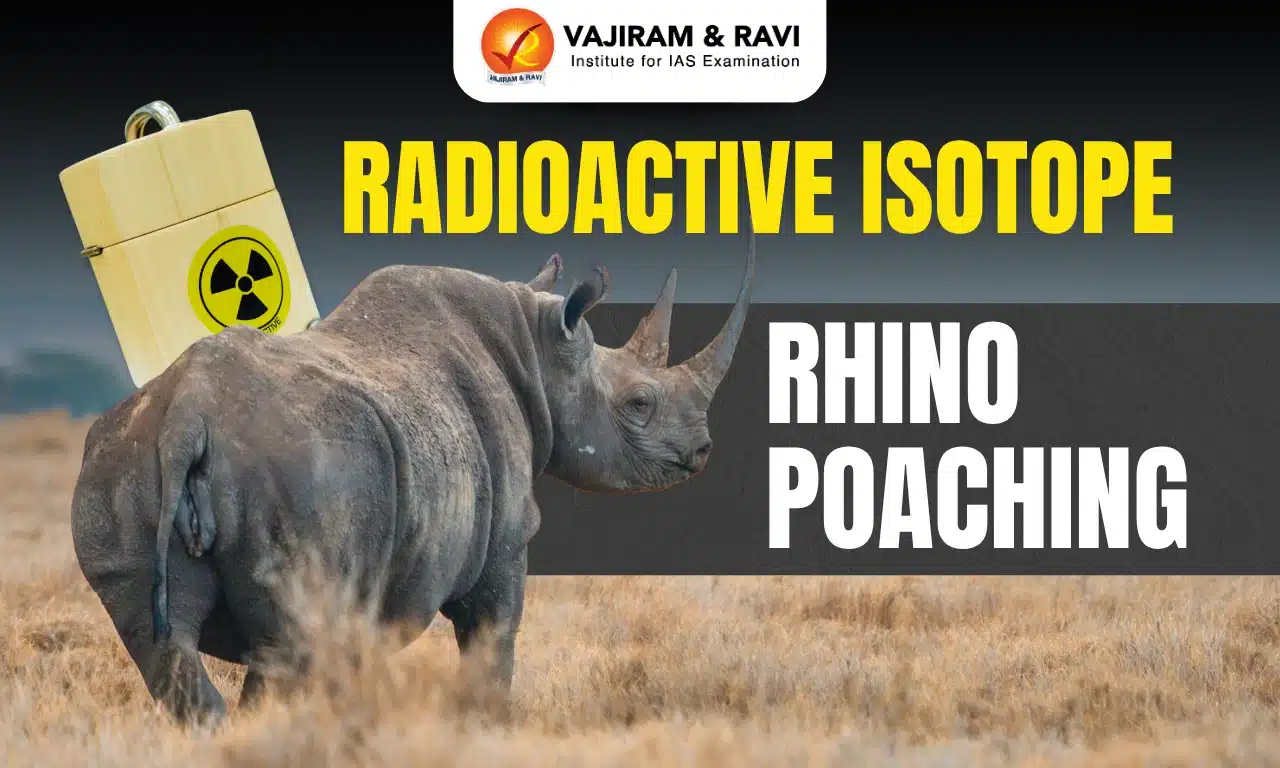
  • A South African university has launched the Rhisotope Project, an anti-poaching initiative that injects radioactive isotopes into rhino horns to deter illegal trafficking. 
  • The method, developed over six years by the University of the Witwatersrand with support from the IAEA, is safe for rhinos and enables customs officials to detect trafficked horns.
  • The project began with five rhinos treated in the Waterberg Biosphere Reserve and aims to scale up for mass treatment to protect South Africa's declining rhino population.

Waterberg Biosphere Reserve

  • The Waterberg Biosphere Reserve is located in the Bushveld district of Limpopo Province, South Africa.
  • It functions as a water reservoir for this arid region.
  • It comprises low mountain ranges, escarpments, and sparse soils with limited economic activity.

Ecological Characteristics

  • The Waterberg Mountain Range is one of three major mountain ranges in the Limpopo Province. 
  • There are four main drainage rivers within the area: the Lephalala, Mokolo, Matlabas and the Mogalakwena.
  • It represents a significant portion of Southern Africa’s savannah biome.
  • It features seven distinct vegetation types, including Central Sandy Bushveld and Waterberg Mountain Bushveld.
  • The reserve is home to numerous threatened species, including the critically endangered black rhinoceros.
  • It also includes the Nylsvley Nature Reserve, a registered Ramsar wetland site.
  • It contains some of South Africa’s most significant San rock art sites.

Radioactive Isotopes: Overview and Uses

  • Radioactive isotopes, or radioisotopes, are unstable forms of elements that emit radiation as they decay into more stable forms.
  • They can occur naturally (e.g., Uranium-238, Carbon-14) or be artificially produced in reactors or accelerators (e.g., Cobalt-60, Iodine-131).

Examples of Radioactive Isotopes

  • Carbon-14: Used in radiocarbon dating of ancient organic materials.
  • Iodine-131: Used in diagnosing and treating thyroid disorders.
  • Cobalt-60: Applied in sterilising medical equipment and cancer radiotherapy.
  • Technetium-99m: Widely used in medical imaging (nuclear scans).
  • Uranium-235 & Plutonium-239: Fuel for nuclear reactors and weapons.

Uses of Radioactive Isotopes

  • Medical Applications: Cancer treatment (radiotherapy); Diagnostic imaging (PET, SPECT scans)
  • Industrial Applications: Non-destructive testing (X-ray of welds, pipelines); Sterilisation of medical equipment.
  • Agriculture: Tracing nutrient uptake in plants; Pest control through irradiation.
  • Scientific Research: Radiocarbon dating for archaeology; Tracer studies in biological and chemical research.
  • Anti-Poaching & Security: Tagging wildlife parts (e.g., rhino horns in the Rhisotope Project) for tracking and detection at borders.

Radioactive Isotope Tagging Aims to Deter Rhino Poaching

  • The Rhisotope Project uses low-dose radioactive isotopes to tag rhino horns, making them detectable by radiation portal monitors (RPMs) at global border points, thereby deterring illegal trafficking. 
  • Developed by the University of the Witwatersrand with IAEA support, the method is non-invasive and harmless to rhinos, while rendering the horns “useless” and “poisonous” to humans
  • Tests using 3D-printed rhino horns confirmed that tagged horns could be detected even inside 40-foot shipping containers. 
  • A pilot phase in June injected isotopes into 20 rhinos, with cytological examinations by Ghent University finding no cellular damage. 
  • This innovation is considered as a potential game-changer in combating the rhino poaching crisis.

The Poaching Crisis

  • The global rhino population has plummeted from 500,000 in the early 20th century to just 27,000 today, largely due to rampant poaching driven by demand for rhino horns in Asian traditional medicine and status symbols
  • South Africa, home to the largest rhino population, has lost over 10,000 rhinos in the past decade, with 103 poaching cases reported in early 2025 alone. 
  • While the Rhisotope Project is not a definitive solution, researchers believe it could serve as a strong deterrent without disrupting rhino behaviour, unlike dehorning, which, though effective in reducing poaching, negatively affects rhino socialisation and territory ranges. 
  • The project’s success could pave the way for similar strategies to protect other endangered species like elephants and pangolins.

Source: IE | UNESCO

Radioactive Isotope Rhino Poaching FAQs

Q1: What is the Rhisotope Project?

Ans: An anti-poaching initiative tagging rhino horns with radioactive isotopes to deter illegal trafficking and enhance detection.

Q2: How do radioactive isotopes deter rhino poaching?

Ans: Tagged horns are traceable via radiation monitors, making them useless and risky for traffickers.

Q3: Is isotope tagging harmful to rhinos?

Ans: No, scientific tests confirmed it’s a non-invasive, safe procedure without harming rhino health.

Q4: How severe is the rhino poaching crisis?

Ans: Global rhino population fell from 500,000 to 27,000 due to poaching driven by demand for horn in Asia.

Q5: Could this method be used for other species?

Ans: Yes, researchers aim to replicate it for endangered species like elephants and pangolins.

Elephant Deaths on Railway Tracks Spur Nationwide Mitigation Strategy

Elephant Deaths

Elephant Deaths Latest News

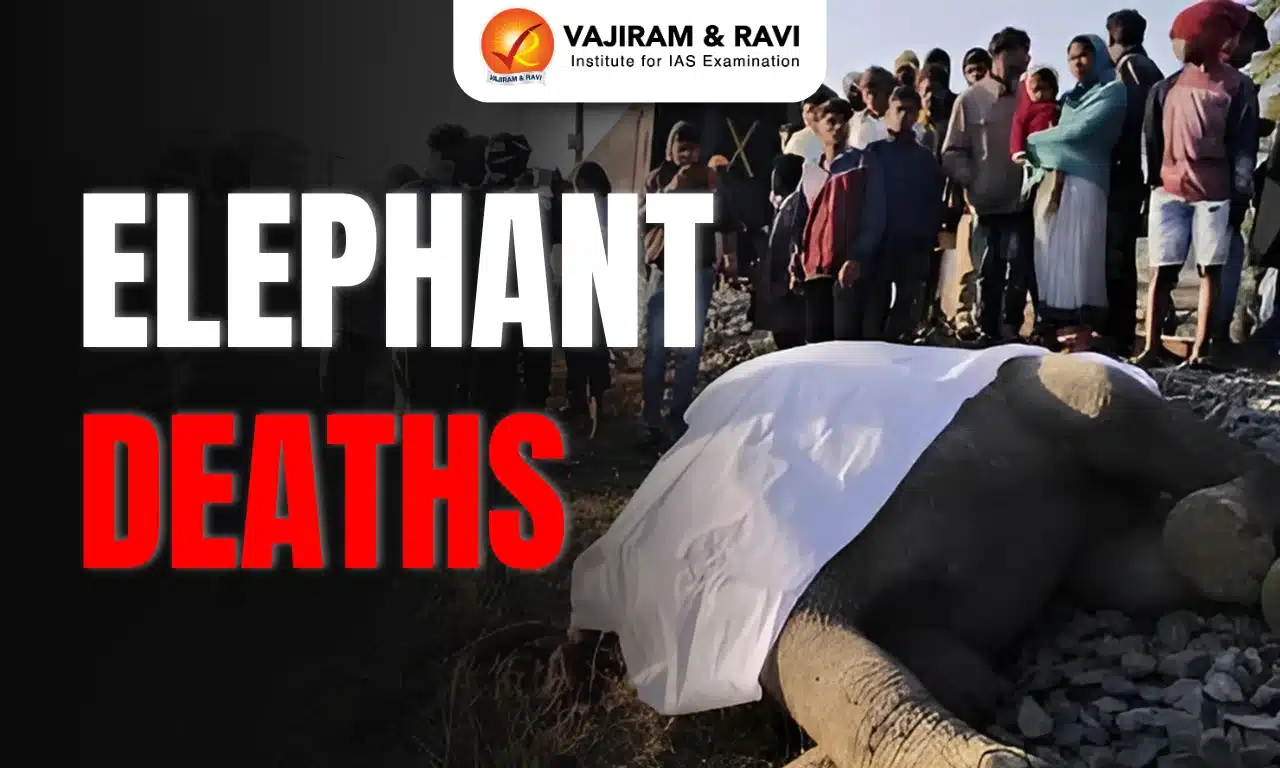
  • The Centre has identified 77 railway stretches across 14 states for urgent mitigation after 186 elephants were killed on railway tracks since 2009.

Introduction

  • India’s expanding railway network has come under scrutiny for its increasing threat to wildlife, particularly elephants. 
  • A recent government survey revealed that 186 elephants were killed in train collisions between 2009-10 and 2024, prompting the Centre to map 77 railway stretches across 14 states for urgent mitigation. 
  • This move reflects a growing recognition of the ecological consequences of infrastructure development in biodiversity-rich regions.

Scope and Findings of the Joint Survey

  • Conducted collaboratively by the Union Ministry of Environment, the Ministry of Railways, and state forest departments, the survey covered 127 railway stretches spanning 3,452 km
  • From this, 77 stretches were identified for immediate intervention based on historical data on elephant movements and fatalities.
  • The survey marked a first-of-its-kind systematic assessment of railway-wildlife conflict zones. 
  • Using on-foot and trolley-based inspections, experts evaluated risk levels based on track elevation, vegetation cover, existing infrastructure, and drainage systems.

Proposed Mitigation Measures

  • A total of 705 structures have been proposed to reduce wildlife mortality, with a major focus on elephants. These include:
    • 503 ramps and level crossings
    • 72 bridge extensions and modifications
    • 65 underpasses
    • 22 overpasses
    • 39 fencing, barricading, or trenching structures
    • 4 exit ramps
  • These mitigation structures are designed to either allow elephants to cross safely or to divert them away from high-risk tracks.
  • States with high elephant populations, such as Assam, Maharashtra, and Uttar Pradesh, have been prioritised. Assam alone will get 131 level crossings with ramps, followed by 125 in Maharashtra and 92 in Uttar Pradesh.

Regional Focus Based on Elephant Populations

  • The 2017 elephant census revealed that Karnataka hosts the highest number of wild elephants (6,049), followed closely by Assam (5,719), Kerala (5,706), and Tamil Nadu (2,761)
  • These states are crucial for targeted interventions as they combine dense forest habitats with active rail lines.

Evolution of Wildlife-Railway Safety Collaboration

  • Discussions between the Environment and Railway Ministries began in August 2022, initially identifying 110 stretches across critical elephant and tiger landscapes. Although some mitigation structures already existed, this exercise aims to institutionalize and scale-up these efforts into a nationally coordinated framework.
  • A notable innovation has been the training of railway personnel in elephant ecology at the Wildlife Institute of India. 
  • These master trainers now educate loco pilots and railway staff on best practices to avoid wildlife collisions.

Integration of Technology: Intrusion Detection Systems (IDS)

  • To supplement physical infrastructure, the Indian Railways has started installing Artificial Intelligence-based Intrusion Detection Systems (IDS), especially in the Northeast Frontier Railway (NFR) zone. 
  • IDS technology alerts control rooms and train operators when elephants are detected near tracks. As of 2025:
    • IDS has been commissioned over 141 km, with plans to expand to 1,158 km.
    • The most significant stretch includes 207.8 km in Odisha across 20 stations in the Sambalpur division.
  • The project spans nine railway zones, including NFR, East Coast Railway, Southern Railway, and Northern Railway.
  • The total investment for IDS implementation is estimated at Rs. 208 crore.

Way Forward and Policy Implications

  • This comprehensive mitigation plan signals a shift in infrastructure policy, recognizing the need to embed ecological sensitivity into transportation planning
  • With greenfield rail projects on the rise, these frameworks will also guide retrofitting and future-proofing of railways in wildlife corridors.
  • The government’s move aligns with conservation goals and India’s obligations under international conventions like the Convention on Migratory Species (CMS) and the Convention on Biological Diversity (CBD).

Source : IE

Elephant Deaths FAQs

Q1: How many elephants have died due to train collisions in India since 2009?

Ans: At least 186 elephants have died in train collisions between 2009–10 and 2024.

Q2: What are the key interventions proposed to prevent elephant deaths on tracks?

Ans: The plan includes over 700 mitigation structures like underpasses, ramps, fences, and AI-based detection systems.

Q3: Which states have been prioritized for mitigation structures?

Ans: Assam, Maharashtra, and Uttar Pradesh are among the top states due to high elephant populations and track density.

Q4: What technology is being used to detect elephant movement near tracks?

Ans: Intrusion Detection Systems (IDS) using AI are being installed across railway zones to alert pilots and control rooms.

Q5: What is the cost of implementing the IDS across Indian Railways?

Ans: IDS projects covering 1,158 km have been sanctioned at an estimated cost of ₹208 crore.

Enquire Now