BioE3 Policy – India’s Push for Biomanufacturing Hubs

BioE3 Policy

BioE3 Policy Latest News

  • India remains heavily dependent on imports for active pharmaceutical ingredients (APIs), fermentation-based drugs, enzymes for biofuels, and biofertilizer reagents.
  • Post Covid-19 pandemic, the government has accelerated efforts for domestic manufacturing under policies like the PLI scheme.
  • The Biotechnology for Economy, Environment, and Employment (BioE3) policy/ BioE3 policy of the Government of India envisions setting up 16 biomanufacturing hubs to strengthen the bioeconomy and ensure self-reliance (Atmanirbharta).

India’s Bioeconomy

  • The bioeconomy is an economic system that utilizes renewable biological resources from plants, animals, and microorganisms—along with organic waste—to create food, feed, energy, and bio-based products. 
  • As in December 2023, Bioeconomy contributes 4.25% to India’s Gross Domestic Product (GDP).
  • Indian Bioeconomy has grown from $10 billion in 2014 to $151 billion in 2023, achieving this target two years ahead of projections for 2025.
  • The number of Biotech Startups has grown from 50 Biotech Startups in 2014 to 8,531 Biotech Startups in 2023.

About the BioE3 Policy

  • Launched on August 27, 2024, it is a Union S&T Ministry’s policy that sets forth a framework to ensure the adoption of cutting-edge advanced technologies for promoting Biomanufacturing
  • The policy outlines guidelines and principles for enabling mechanisms for ‘Fostering High Performance Biomanufacturing’ in the country across diverse sectors. 
  • It is aligned with India’s vision of Green Growth and also with the Lifestyle for Environment (LiFE) initiative that envisions collective approach towards sustainability. 

Key Features of the BioE3 Policy

  • Biomanufacturing hubs:
    • Around 16 hubs to be set up across India.
    • Each hub will house large fermenters (500–1,000 litres).
    • Focus: Fermentation-based medicines, biofuels, bioproteins, carbon capture technologies, and novel monoclonal antibody treatments.
    • Hubs will pool resources → reducing capital burden for start-ups and MSMEs.
  • Product focus:
    • The government has listed approximately 1,000 critical products needed for indigenous manufacturing.
    • Categories:
      • APIs and drugs
      • Enzymes for biofuels
      • Reagents for biofertilizers
      • Smart proteins and nutrition enhancers
      • Carbon capture innovations

Biofoundries - The First Step

  • 6 Biofoundries already supported by Department of Biotechnology (DBT):
    • NABI, Mohali, for sustainable food & nutrition.
    • Tata Memorial Centre, for new drugs.
    • ICGEB, New Delhi, for synthetic biology, microbial cells, biofuels, carbon capture.
    • THSTI, Faridabad, for monoclonal antibody therapies.
    • IPFT, Gurugram, for biopesticides.
    • NCCS, Pune, for enzymes and metabolites.
  • Function: Conduct proof-of-concept testing, and innovations are transferred to hubs for scaling up.

Implementation Model

  • Location: The biomanufacturing hubs will be set up within research institutes, private companies, or near knowledge hubs.
  • Accessibility: Open to government R&D labs, universities, start-ups, and private industry.
  • Cost-sharing model: The start-ups will be charged a maximum of 5% over the actual costs while private companies may be charged up to 15% over the cost.
  • IPR policy: Facilities will not claim IP rights, ensuring innovation ownership with developers.

Significance of BioE3 Policy for India

  • Reduces import dependency in critical pharma and bio-based sectors.
  • Strengthens bioeconomy and aligns with Atmanirbhar Bharat vision.
  • Supports innovation-to-market pipeline through biofoundries → hubs.
  • Boosts R&D collaboration among government, academia, and industry.
  • Promotes start-up ecosystem in biotechnology.

Conclusion

  • The BioE3 policy, by integrating biofoundries with biomanufacturing hubs, positions India to emerge as a global leader in biotechnology-driven solutions for health, energy, and agriculture. 
  • Going forward, sustained investment, industry-academia collaboration, and supportive regulatory frameworks will be key to realising the vision of a self-reliant and innovation-led bioeconomy.

Source: IE

BioE3 Policy FAQs

Q1: Why has the Government of India launched the BioE3 policy?

Ans: The policy aims to reduce India’s import dependency in pharmaceuticals, biofuels, and bio-based products by setting up 16 biomanufacturing hubs.

Q2: How will biomanufacturing hubs under the BioE3 policy support start-ups and MSMEs in India?

Ans: These hubs pool resources by providing shared large fermenters and facilities, reducing the need for heavy capital investment.

Q3: What role do biofoundries play in India’s bioeconomy?

Ans: Biofoundries act as specialised facilities for proof-of-concept testing in areas like new drugs, biofuels, and monoclonal antibodies.

Q4: What is the significance of the cost-sharing and IPR model adopted in the BioE3 policy?

Ans: It allows start-ups and companies to access facilities at subsidised costs while retaining full intellectual property rights, thus encouraging innovation.

Q5: In what ways can the BioE3 policy contribute to India’s Atmanirbhar Bharat vision?

Ans: By promoting domestic manufacturing of bio-products, supporting innovation-to-market pipelines, and strengthening the biotechnology ecosystem.
Kerala Becomes India’s First Fully Digitally Literate State

Kerala Digital Literacy

Kerala Digital Literacy Latest News

  • Recently, Chief Minister Pinarayi Vijayan declared Kerala as the first fully digitally literate State in India after completing the first phase of the Digi Kerala programme. 
  • The initiative, implemented through local self-government bodies, aimed to bridge the digital divide. 
  • As part of the effort, 21.87 lakh people identified as digitally illiterate were trained and successfully cleared evaluations, marking a milestone in grassroots digital empowerment. 
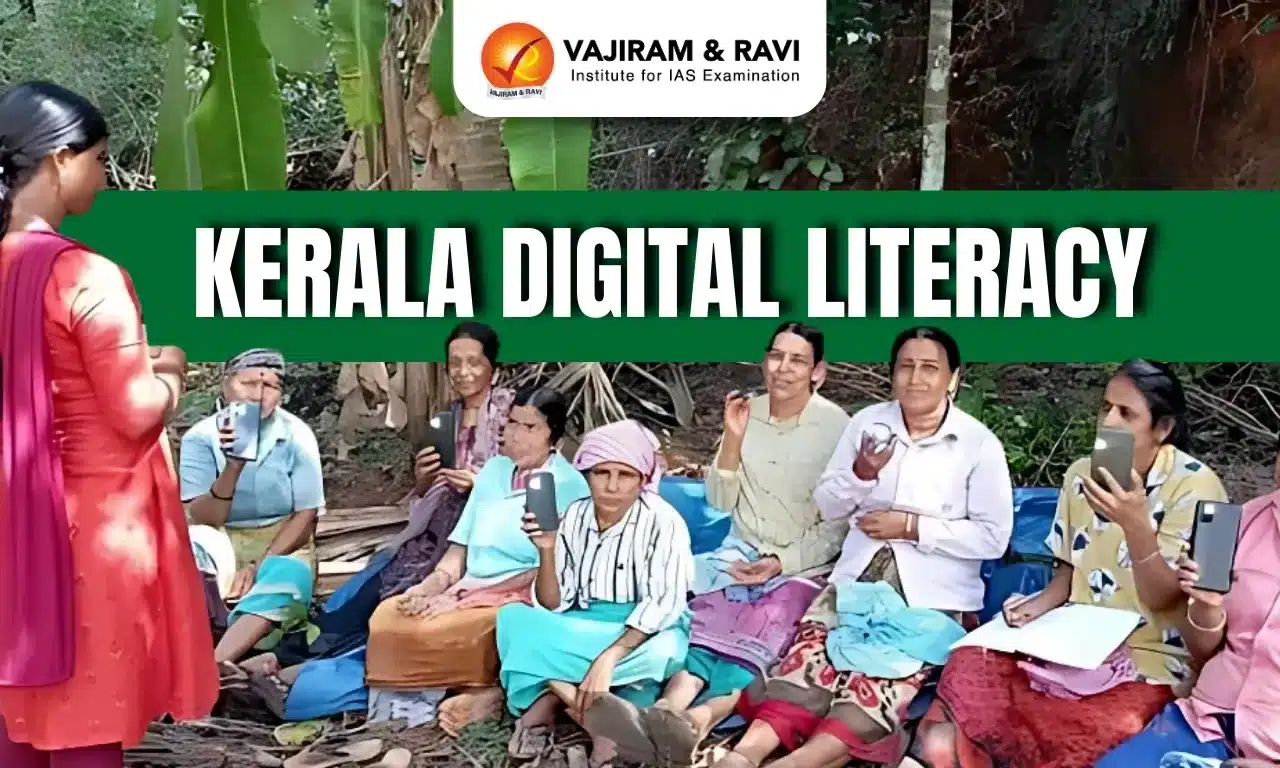
  • Trainees unfamiliar with digital devices learned to make voice and video calls on smartphones, use WhatsApp and social media, access government services, and perform digital transactions.

Origins of Kerala’s Digital Literacy Drive

  • Kerala’s Digi Kerala programme stemmed from a local initiative in Pullampara panchayat, Thiruvananthapuram, in 2021. 
  • Officials noticed long queues outside banks, where daily-wage and MGNREGS labourers often lost a day’s income just to check balances. 
  • This hardship inspired the idea of teaching basic digital skills to reduce dependency on physical banking.

Launch of Digi Pullampara

  • The panchayat launched the Digi Pullampara project, surveying wards to identify 3,917 digitally illiterate residents. 
  • Of these, 3,300 were trained, while bedridden individuals were excluded. 
  • The training included 15 activities in three modules, covering essential digital tasks.

Role of Volunteers and Training Methods

  • Volunteers, including students from NSS units, Kudumbashree members, SC/ST promoters, and library council members, conducted the training. 
  • Sessions were held at MGNREGS worksites, Kudumbashree neighbourhood groups, and even in households for senior citizens. 
  • After training, evaluations tested whether participants could perform at least six out of 15 tasks; retraining was offered to those who failed.

Success and Statewide Expansion

  • Pullampara achieved 96.18% success, becoming Kerala’s first fully digitally literate panchayat in September 2022. 
  • Encouraged by this, Chief Minister Pinarayi Vijayan announced the expansion of the initiative across the State, ultimately shaping Kerala’s digital literacy revolution.

Scaling Up the Pullampara Model Statewide

  • To expand the Digi Pullampara model, the government brought Pullampara’s core team to the Kerala Institute of Local Administration to train master trainers. 
  • These trainers, in turn, prepared 2.57 lakh volunteers across the State.

Survey and Training Process

  • Following the model of the Total Literacy Campaign of the 1980s, surveys covered 1.51 crore people across 83.45 lakh households, identifying 21.88 lakh digitally illiterate individuals
  • Training followed a structured process, and the Economics and Statistics Department conducted third-party evaluations. 
  • Out of those trained, 21.87 lakh passed. Panchayats with more than 10% failures were provided re-training.

Inclusivity Beyond Guidelines

  • Unlike the National Digital Literacy Mission, which mandates training only up to 60 years of age, Kerala included all age groups, even those over 100. 
  • Data shows 15,221 trainees above 90 years, 7.77 lakh between 60–75 years, and 1.35 lakh between 76–90 years were trained.

Wide Participation Across Communities

  • The programme saw participation from over 13 lakh women, eight lakh men, and 1,644 transgender persons, showcasing its inclusive approach. 
  • Officials noted that Kudumbashree workers helped volunteers focus only on households where residents were not already digitally literate, ensuring better targeting.

Digi Kerala 2.0: Expanding the Mission

  • At the Digi Kerala declaration, the Chief Minister launched Digi Kerala 2.0, which will go beyond basic digital skills. 
  • It will include awareness classes on cyber fraud, training to identify and reject fake news, and intensive sessions on accessing government services digitally.

Smartphone-Centric Approach

  • Unlike the national digital literacy programmes that focus mainly on computer use, Kerala has prioritised smartphones as the key tool for navigating daily life, reflecting ground realities.

Integration with Broader Projects

  • The initiative forms part of Kerala’s larger digital vision, integrated with:
    • Kerala Fibre Optic Network (KFON): Ensures universal Internet access, offering free connectivity to BPL families (14,000 connected so far, plus 74,203 commercial homes).
    • K-SMART Project: Aims to bring all local self-government services onto a single digital platform, enhancing accessibility and governance efficiency.
  • This roadmap positions Kerala not only as India’s first fully digitally literate state, but also as a model for bridging the digital divide comprehensively.

Source: TH

Kerala digital literacy FAQs

Q1: What is Kerala’s Digi Kerala programme?

Ans: It’s a state initiative launched in 2021 to bridge the digital divide by training people in smartphone use, online services, and digital transactions.

Q2: How did Digi Kerala begin?

Ans: It originated from Pullampara panchayat, where residents faced hardship accessing banks. The success of “Digi Pullampara” inspired statewide expansion.

Q3: How many people were trained under Digi Kerala?

Ans: Out of 21.88 lakh identified digitally illiterate individuals, 21.87 lakh successfully completed training, making Kerala India’s first fully digitally literate state.

Q4: What does Digi Kerala 2.0 aim to achieve?

Ans: It focuses on cyber fraud awareness, identifying fake news, and advanced training in accessing government services digitally through smartphones.

Q5: How is Digi Kerala linked to broader digital projects?

Ans: It complements initiatives like KFON, providing free Internet to BPL families, and K-SMART, digitising local self-government services on one platform.

Gangotri Glacier Study Reveals Earlier Snowmelt Trends

Gangotri Glacier Snowmelt

Gangotri Glacier Snowmelt Latest News

  • A recent study has reconstructed the long-term discharge flow of the Gangotri Glacier System (GGS), the source of the upper Ganga basin feeding the Bhagirathi River in the central Himalayas. 
  • With climate change driving faster glacier melt globally, glaciologists are closely examining how changes in Gangotri’s discharge patterns could affect water availability, river flow, and long-term sustainability of the region’s ecosystems and livelihoods.

Composition of the Gangotri Glacier System (GGS)

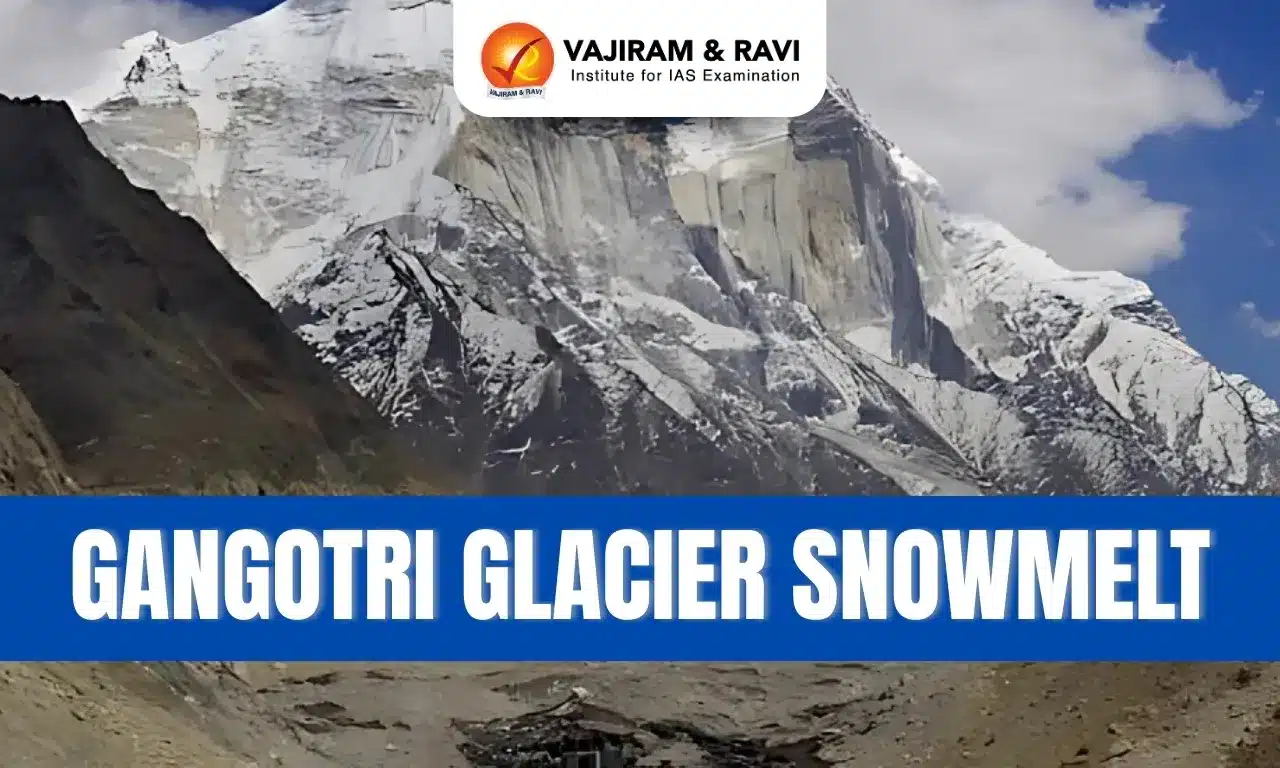
  • The GGS comprises four glaciers — Meru (7 km²), Raktavaran (30 km²), Chaturangi (75 km²), and the largest, Gangotri (140 km²). 
  • Together, the system spans 549 km², with about 48% glacierised area, across elevations from 3,767 m to 7,072 m
  • The GGS receives precipitation from western disturbances in winter (October–April) and the Indian summer monsoon in summer (May–September)
  • Seasonal rainfall (May–October) averages 260 mm, with a mean temperature of 9.4°C recorded between 2000–2003.

New Study on Gangotri Glacier System (GGS)

  • The Hindu Kush Himalaya (HKH) holds vital snow and ice reserves that feed major rivers like the Indus, Ganga, and Brahmaputra, sustaining millions of lives. 
  • In recent decades, climatic changes have altered the cryosphere and hydrological cycles, leading to faster glacial retreat and shifting seasonal discharge patterns. 
  • While most modelling studies focus on large river catchments, it is difficult to separate the impacts of snowmelt and precipitation there. 
  • Smaller systems like the GGS allow for more precise assessments, making it a preferred choice for hydrologists and climate scientists. 
  • However, long-term discharge analysis and understanding climatic drivers have remained limited. 
  • To address this, a new study titled Hydrological Contributions of Snow and Glacier Melt from the Gangotri Glacier System and Their Climatic Controls Since 1980 was conducted.
  • The study, published in the Journal of the Indian Society of Remote Sensing, provides deeper insights into GGS’s meltwater contributions and climate influences.

Key Findings of the Study

  • The study combined the Spatial Processes in Hydrology (SPHY) glacio-hydrological model with the Indian Monsoon Data Assimilation and Analysis (IMDAA) dataset (1980–2020) to reconstruct GGS discharge trends. 
    • SPHY model is a hydrological modelling tool suitable for a wide range of water resource management applications.
  • It found that maximum discharge occurs in summer, peaking in July (129 m³/s)
  • The mean annual discharge was estimated at 28±1.9 m³/s, primarily from snow melt (64%), followed by glacier melt (21%), rainfall-runoff (11%), and base flow (4%).
  • A decadal analysis revealed a shift in discharge peaks from August to July after 1990, linked to reduced winter precipitation and enhanced early summer melting
  • The highest volumetric increase (7.8%) occurred between 1991–2000 and 2001–2010
  • While mean annual temperatures rose, there was no significant trend in precipitation or glacier melt
  • Snow melt declined due to shrinking snow cover, whereas rainfall-runoff and base flow increased
  • The analysis highlighted that summer precipitation was the main driver of annual discharge, followed by winter temperature.

Implications of the Study on GGS

  • The findings highlight warming-induced hydrological changes in the Gangotri Glacier System (GGS), with increasing rainfall run-off and base flow. 
  • This aligns with the 25% excess rainfall observed in North India’s summer monsoon (June–August), which has caused frequent floods in Uttarakhand, Jammu, and Himachal Pradesh. 
  • While such events are often hastily termed “cloudbursts” without scientific evidence, climate change does raise the risk of extreme rainfall. 
  • The study stresses the need for sustained field monitoring and advanced modelling to improve water resource management in glacier-fed river basins, ensuring resilience against future hydrological and climatic shifts.

Source: TH | DTE

Gangotri Glacier Snowmelt FAQs

Q1: What is the Gangotri Glacier System (GGS)?

Ans: The GGS comprises four glaciers—Meru, Raktavaran, Chaturangi, and Gangotri—spanning 549 km², nearly half of which is glacierised, feeding the Bhagirathi river.

Q2: What did the recent study on GGS find?

Ans: The study found peak discharge shifted from August to July after 1990, mainly due to reduced winter precipitation and increased early summer melting.

Q3: Why is the Gangotri Glacier System important?

Ans: It sustains water flow in the Bhagirathi and upper Ganga basin, making it vital for ecosystems, agriculture, and millions of people relying on Himalayan rivers.

Q4: What are the main contributors to GGS discharge?

Ans: Snowmelt contributes 64%, glacier melt 21%, rainfall-runoff 11%, and base flow 4%, highlighting snowmelt as the largest driver of annual discharge.

Q5: What are the implications of the findings?

Ans: The study shows warming-driven hydrological changes, stressing the need for long-term monitoring to manage floods and sustain water resources in glacier-fed rivers.

Supreme Court’s Social Media Regulation Order: Free Speech and Accountability

Social Media

Social Media Latest News

  • The Supreme Court has directed the Centre to frame guidelines for regulating social media, stressing that free speech cannot be misused for commercial gain at the cost of public dignity.

Introduction

  • On August 25, 2025, the Supreme Court of India directed the Union government to draft comprehensive guidelines for regulating social media content. 
  • The order comes amid growing concerns over the misuse of free speech by influencers and digital creators for commercial gain, often at the cost of public sentiment and individual dignity. 
  • The directive marks a significant step in balancing constitutional freedoms with accountability in the digital age.

The Supreme Court’s Directive

  • A two-judge bench stressed that while free speech is a constitutional right under Article 19(1)(a), it cannot be used purely for commercial purposes in a manner that offends vulnerable groups. 
  • The case originated from a petition filed by a non-profit supporting individuals with Spinal Muscular Atrophy (SMA), who alleged derogatory remarks made by comedians had violated their dignity.
  • The court ordered the Centre to frame regulations in consultation with the National Broadcasters and Digital Association (NBDA) and also directed the comedians involved to issue public apologies on their social media platforms.

Constitutional Framework on Free Speech

  • The Constitution permits restrictions on free speech under Article 19(2) on limited grounds, including:
    • Sovereignty and integrity of India
    • Security of the State
    • Friendly relations with foreign states
    • Public order
    • Decency and morality
    • Contempt of court
    • Defamation
    • Incitement to offences
  • The Supreme Court has repeatedly held that restrictions cannot extend beyond these grounds. 
  • In Shreya Singhal v. Union of India (2015), the Court struck down Section 66A of the IT Act for criminalising vague expressions like “annoyance” or “hatred,” affirming that even speech that “offends, shocks, or disturbs” remains constitutionally protected.

The Debate on Commercial Speech

  • The regulation of commercial speech has had an evolving jurisprudence in India:
    • In Hamdard Dawakhana v. Union of India (1959), the Court held that advertisements tied to trade and commerce do not qualify as free speech.
    • However, in Tata Press v. MTNL (1995), the Court recognised commercial speech as constitutionally protected, since advertisements serve public interest by disseminating information.
    • Later judgments, such as A. Suresh v. State of Tamil Nadu (1997), reiterated the need to balance commercial expression with societal interests.
  • This evolution demonstrates the Court’s nuanced approach to distinguishing between public-interest commercial expression and purely profit-driven content.

Existing Legal Framework for Digital Media

  • Social media companies in India are already governed by the IT (Intermediary Guidelines and Digital Media Ethics Code) Rules, 2021 under the IT Act, 2000. 
  • These rules require platforms to restrict obscene, pornographic, or harmful content. 
  • Influencers and online creators are also subject to criminal law if their speech amounts to defamation, incitement, or other recognised offences.
  • Experts caution that any additional guidelines must be carefully drafted to avoid infringing upon free speech, given the Supreme Court’s strong history of protecting this right.

Broader Implications

  • The Court’s intervention raises critical questions about the future of free speech in the digital age. 
  • With nearly 491 million Indians active on social media, the regulation of online platforms is no longer just a legal issue but also a societal necessity. 
  • While the move is aimed at curbing abusive or derogatory content disguised as entertainment or marketing, it also places the responsibility on the government to ensure that regulation does not become a tool of censorship.
  • Legal scholars argue that the Supreme Court’s “polyvocality” in free speech jurisprudence, arising from differing judicial interpretations, has resulted in inconsistencies. 
  • This ruling, therefore, may provide an opportunity to consolidate principles of accountability without diluting constitutional protections.

Source : TH

Social Media FAQs

Q1: What did the Supreme Court recently order on social media regulation?

Ans: The Court directed the Centre to frame guidelines to regulate social media in consultation with NBDA.

Q2: Why did the Supreme Court issue this directive?

Ans: It arose from derogatory remarks made by comedians against individuals with Spinal Muscular Atrophy (SMA).

Q3: Under which constitutional article is free speech protected?

Ans: Free speech is protected under Article 19(1)(a) of the Constitution.

Q4: What are the grounds for restricting free speech under Article 19(2)?

Ans: Restrictions apply only on grounds like sovereignty, security, public order, decency, morality, defamation, contempt of court, and incitement.

Q5: How is social media currently regulated in India?

Ans: Social media is governed by the IT Act, 2000 and the IT Rules, 2021, which mandate removal of harmful and unlawful content.

Enquire Now