New Foreigners Act 2025: Key Provisions, Exemptions and Enforcement Reforms

New Foreigners Act 2025

New Foreigners Act 2025 Latest News

  • The Immigration and Foreigners Act, 2025, which came into effect on September 1, has introduced a comprehensive revamp of India’s framework for managing foreign nationals.
  • The newly notified Rules and Orders restructure regulations governing the entry, stay, and exit of foreigners, while also laying out specific exemptions for certain categories of individuals.
  • This marks one of the most significant updates to India’s immigration system in recent years, aimed at bringing clarity, efficiency, and uniformity to the way foreign nationals are regulated.

Consolidation of Immigration Laws under the 2025 Act

  • The Immigration and Foreigners Act, 2025, passed by Parliament and received Presidential assent, replaces four older laws: 
    • the Passport (Entry into India) Act, 1920; 
    • Registration of Foreigners Act, 1939; 
    • Foreigners Act, 1946; and 
    • Immigration (Carriers’ Liability) Act, 2000.
  • By consolidating these into a single unified statute, the Act streamlines India’s framework for the entry, stay, movement, and exit of foreigners, ensuring greater clarity and efficiency.

Why an Overhaul Was Needed

  • India’s earlier immigration regime was fragmented and outdated, built on four separate Acts dating back to the pre-Independence era (1920–2000). 
  • Their overlapping and confusing provisions led to inconsistent enforcement and frequent ambiguity.
  • Exemptions for groups such as Tibetan and Sri Lankan Tamil refugees, and citizens of Nepal and Bhutan were scattered across various notifications, making them hard to access or interpret.
  • Administrative gaps also persisted — manual reporting, delayed data collection, unclear division of powers between central and local authorities, and non-uniform rules for restricted/protected areas. 

Key Provisions of the Immigration and Foreigners Act, 2025

  • The Immigration and Foreigners Act, 2025, along with its accompanying Rules and Orders, introduces clear, centralised rules for regulating foreign nationals in India.
  • Valid Documents and Entry Points - All entrants must carry a valid passport or travel document and, in the case of foreigners, a valid visa, unless exempted by the Act or special government orders. 
    • Entry and exit are permitted only through designated immigration posts, covering major airports, seaports, land border posts, and rail checkpoints.
  • Role and Powers of Immigration Officers - Immigration Officers posted at these entry points hold final authority to validate or deny entry or exit. They can refuse admission on national security grounds.
  • Registration and Local Control Mechanism - Foreigners must register with designated authorities, such as the SP/DCP or Foreigners’ Regional Registration Officers (FRROs), who oversee regulation at district and regional levels.
  • Reporting Obligations of Accommodation Providers - Hotels, hostels, paying guest facilities, and religious institutions must digitally record and report details of foreign guests — including OCI card holders — within 24 hours of arrival and departure.
  • Educational and Medical Institutions’ Duties - Universities must report admissions of foreign students, while hospitals must notify authorities of foreign patients, births, and deaths within seven days via electronic submission.
  • Authority Over Premises Frequented by Foreigners - Civil authorities may restrict or shut down resorts, clubs, or similar venues if linked to criminal or unlawful activities, or if foreigners frequenting them are deemed undesirable. 
    • Relocation of such operations requires prior approval.
  • Permits for Protected Areas - Access to protected, restricted, or prohibited areas now requires a special online permit. Applications must be filed on designated portals or apps, with standardised procedures in place.

Exempted Categories under the Immigration and Foreigners Act, 2025

  • The Immigration and Foreigners Act, 2025, exempts specific groups from standard entry and visa rules. 
  • These include Indian military personnel and families, citizens of Nepal and Bhutan, Tibetan refugees, minority refugees from Afghanistan, Bangladesh, and Pakistan, registered Sri Lankan Tamils, certain diplomatic passport holders, and foreign military personnel on humanitarian visits
  • All enjoy regulated, conditional entry benefits.

New Provisions in the Immigration and Foreigners Act, 2025

  • The Act not only consolidates older laws but also introduces modernised systems and clear rules for enforcement and regulation.

Digital and Electronic Records

  • Mandatory online notification through portals and apps by accommodation providers, hospitals, and universities.
  • Creates a comprehensive digital database for enforcement, health monitoring, and citizenship-related decisions.

Graduated Fines and Compounding System

  • Clear penalties for infractions like overstaying, visa violations, non-registration, and unauthorised visits to restricted areas.
  • Fines range from ₹10,000 to ₹5 lakh, with lower fines (as low as ₹50) for certain groups like Tibetans, Mongolian monks, and refugees from Pakistan, Bangladesh, and Afghanistan.

Protections and Appeals

  • Limited safeguards for humanitarian cases and for errors made in good faith.
  • Appeal mechanisms for those penalised under the Act.

Centralisation and Delegation of Powers

  • Central government retains primary authority, but can delegate functions to states and Union Territories.
  • Empowered to modify, cancel, or issue directions at any time.

Uniformity in Exemptions

  • No discretionary powers at the local level.
  • All exemptions for entry, visa, or protected area permits must come only from central government orders, ensuring consistency and clarity.

Source: IE

New Foreigners Act 2025 FAQs

Q1: What is the New Foreigners Act 2025?

Ans: It is a consolidated law replacing four older Acts to regulate entry, stay, movement, and exit of foreigners with clarity and efficiency.

Q2: Why was the New Foreigners Act 2025 introduced?

Ans: The Act was needed to replace outdated, fragmented colonial-era laws and address ambiguity, manual reporting gaps, and scattered exemptions for foreign entrants.

Q3: What are the key provisions of the New Foreigners Act 2025?

Ans: It mandates valid documents, digital reporting by hotels and hospitals, FRRO-based registration, and permits for protected or restricted areas.

Q4: Who is exempted under the New Foreigners Act 2025?

Ans: Exempt groups include citizens of Nepal and Bhutan, Tibetan refugees, minority refugees from Pakistan, Afghanistan, and Bangladesh, Sri Lankan Tamils, and certain diplomats.

Q5: How does the Act improve enforcement

Ans: With digital databases, centralised exemptions, and graded fines, it reduces discretion, ensures consistency, and speeds up resolution of violations.


Pulses Production – NITI Aayog’s Plan for Self-Sufficiency

Pulses Production

Pulses Production Latest News

  • NITI Aayog has unveiled a roadmap to boost pulses production in India, aiming for self-sufficiency and reduced import dependence by 2047.

Introduction

  • Pulses are central to India’s food and nutritional security, providing protein-rich diets while also contributing to sustainable agriculture through nitrogen fixation and low water requirements. 
  • India is the world’s largest producer, consumer, and importer of pulses, making self-reliance in production a national priority. 
  • Recognising this, NITI Aayog has released a report titled Strategies and Pathways for Accelerating Growth in Pulses towards the Goal of Atmanirbharta, laying out a comprehensive roadmap to reduce import dependency and enhance domestic production.

Pulses Production in India

  • India’s diverse agro-climatic conditions allow the cultivation of 12 pulse crops across kharif, rabi, and summer seasons. 
  • Major producing states, Madhya Pradesh, Maharashtra, and Rajasthan, account for over 55% of production, while the top ten states contribute over 91% of the national output.
  • Historically, the country’s dependence on imports was high. Production dipped to 16.35 million tonnes (MT) in 2015-16, necessitating 6 MT of imports. 
  • However, government interventions, including the National Food Security Mission (NFSM) and Minimum Support Price (MSP) policies, improved output significantly. 
  • By 2022-23, production rose by nearly 59.4% to 26.06 MT, with productivity increasing by 38%. Import dependence simultaneously fell from 29% to just 10.4%.
  • Despite this progress, challenges persist. Nearly 80% of pulses cultivation is rain-fed, making production vulnerable to climatic fluctuations. 
  • The sector supports the livelihood of over five crore farmers and their families, underscoring the importance of a stable policy framework.

NITI Aayog’s Recommendations

  • NITI Aayog’s roadmap emphasises tailored interventions for different states and districts to boost productivity and sustainability. Key recommendations include:
    • Area Retention and Diversification: Encouraging region-specific crop clusters to optimise cultivation.
    • Technology Adoption: Promoting customised farming technologies suited for varied agro-ecological sub-regions.
    • Seed Quality and Distribution: Focusing on high-quality seed treatment kits and ensuring widespread distribution, particularly in 111 high-potential districts that contribute 75% of national output.
    • Cluster-Based Hubs: Introducing the “One Block–One Seed Village” model through farmer-producer organisations (FPOs) to enhance local productivity.
    • Mission for Atmanirbharta in Pulses: A six-year initiative targeting key crops such as pigeonpea, black gram, and lentil to further strengthen self-sufficiency.
  • The report projects that India’s pulse production will reach 30.59 MT by 2030 and 45.79 MT by 2047, aligning with the nation’s long-term goal of food security and reduced import reliance.

Nutritional and Environmental Importance

  • Beyond food security, pulses are vital for nutrition, especially in a country where vegetarian diets dominate. 
  • They are a major source of protein, iron, and other micronutrients, helping combat malnutrition. 
  • Environmentally, pulses enhance soil fertility through nitrogen fixation, require less water compared to cereals, and reduce the carbon footprint of agriculture.

Conclusion

  • India has made remarkable progress in pulses production over the past decade, but achieving self-sufficiency requires sustained and region-specific interventions. 
  • NITI Aayog’s strategic recommendations, focused on seeds, technology, and targeted clusters, are expected to accelerate progress towards Atmanirbharta in pulses. 
  • By 2047, India envisions not just meeting its domestic demand but also positioning itself as a key player in the global pulses market.

Source: TH

Pulses Production FAQs

Q1: Why are pulses important for India?

Ans: Pulses are crucial for nutritional security, providing protein-rich diets and supporting sustainable agriculture.

Q2: What was India’s pulses production in 2022–23?

Ans: India produced 26.06 million tonnes of pulses in 2022–23.

Q3: How has India reduced its dependence on pulse imports?

Ans: Import dependence fell from 29% in 2015–16 to 10.4% in 2022–23 due to government interventions and increased productivity.

Q4: What is NITI Aayog’s “One Block–One Seed Village” initiative?

Ans: It is a cluster-based model promoting high-quality seed production and distribution through farmer producer organizations.

Q5: What is the projected pulse production target for 2047?

Ans: India aims to produce 45.79 million tonnes of pulses by 2047.

Understanding PVTGs in India: Census Significance, Population, and Challenges

Particularly Vulnerable Tribal Groups

Particularly Vulnerable Tribal Groups (PVTGs) Latest News

  • The Ministry of Tribal Affairs (MoTA) has urged the Registrar General and Census Commissioner of India (RGI) to enumerate particularly vulnerable tribal groups (PVTGs) separately in the upcoming Census.
  • The ministry requested that data on households, individuals, and unique demographic, cultural, and socio-economic traits of PVTGs be collected. 
  • This would enable more accurate planning and effective execution of targeted welfare schemes, including the Pradhan Mantri Janjati Adivasi Nyay Maha Abhiyan (PM JANMAN).

Understanding Particularly Vulnerable Tribal Groups (PVTGs)

  • PVTGs are a sub-category of Scheduled Tribes (STs) characterised by declining or stagnant populations, geographical isolation, pre-agrarian practices, economic backwardness, and low literacy levels.
  • The category was created following the Dhebar Commission (1960–61), which highlighted disparities among tribal groups and noted that some were far more vulnerable than others. 
  • Initially, 52 groups were identified as PVTGs (then called Primitive Tribal Groups) during the Fifth Five-Year Plan (1974–79). 
  • Later, in 2006, 23 more groups were added, bringing the total to 75 PVTGs across 18 states and the Andaman & Nicobar Islands.
  • Experts have raised concerns about the criteria used, particularly the emphasis on geographical isolation.
  • They suggested that the government should revisit and update inclusion parameters before conducting a fresh enumeration to reflect improvements or worsening conditions among different groups.

Separate Enumeration of PVTGs

  • So far, no separate enumeration of PVTGs has taken place in any Census. Since PVTGs are a sub-category of Scheduled Tribes (STs), they are generally counted within the broader ST category. 
  • Many PVTGs are not listed individually but grouped under a common nomenclature, leading to limited visibility in Census data.
  • According to the Ministry of Tribal Affairs (MoTA), 40 out of 75 PVTGs are listed as ‘single entry’ in the notified ST list under Article 342 of the Constitution
  • For example, in the 2011 Census, Baigas of Madhya Pradesh were counted separately, but groups like Abujh Marias, Bharias, Hill Korbas, and Kamars were not. 
  • Later, in 2013, Abujh Maria and Hill Korba were formally added to Chhattisgarh’s ST list through legislation.
  • By convention, the Registrar General of India (RGI) only publishes data for the main STs, with sub-groups and synonyms automatically included, which has prevented focused data collection on PVTGs until now.

Estimates of PVTG Population

  • In November 2023, the government launched the ₹24,104 crore PM JANMAN scheme to uplift PVTGs through improved health, education, livelihoods, and infrastructure in over 200 districts. 
  • To support its rollout, the Ministry of Tribal Affairs (MoTA) and state governments conducted a habitation-level survey, estimating the total PVTG population at 47.5 lakh.
  • Among states, Madhya Pradesh had the largest estimated PVTG population at 13.22 lakh, followed by Maharashtra (6.7 lakh) and Andhra Pradesh (5.18 lakh).
  • The 2011 Census data showed that some PVTG groups had populations of fewer than 1,000 people, including: 
    • the Jarawas, Onges, Sentinelese, and Shompens (Andaman and Nicobar Islands), 
    • Raji (Uttarakhand), 
    • Kota (Tamil Nadu), 
    • Birhor (Odisha), 
    • Kamar (Madhya Pradesh), and 
    • small tribal groups in Bihar. 
  • The Sentinelese were the smallest community with just 15 individuals, while the Baiga of Madhya Pradesh were the largest, numbering 4,14,526.
  • Officials emphasise that accurate enumeration will plug gaps in welfare implementation, particularly in health and education, and help reassess whether current PVTG classification criteria remain relevant.

Source: IE | VP | PIB

Particularly Vulnerable Tribal Groups (PVTGs) FAQs

Q1: What are Particularly Vulnerable Tribal Groups (PVTGs)?

Ans: PVTGs are sub-categories of Scheduled Tribes marked by isolation, economic backwardness, low literacy, and stagnant or declining populations.

Q2: Why does the government want separate enumeration of PVTGs?

Ans: Separate counting will ensure accurate data for planning and better implementation of targeted schemes like PM JANMAN.

Q3: How many PVTGs are there in India?

Ans: There are 75 recognised PVTGs spread across 18 states and the Andaman & Nicobar Islands, identified initially during the Fifth Five-Year Plan.

Q4: Has India ever enumerated PVTGs separately?

Ans: No, PVTGs have never been separately counted in any Census; they are generally included under the broader Scheduled Tribes category.

Q5: What is the estimated population of PVTGs?

Ans: A 2023 habitation-level survey estimated 47.5 lakh PVTGs across India, with Madhya Pradesh having the largest population at 13.22 lakh.

Manipur Violence – Centre Signs Revised Pact for Peace

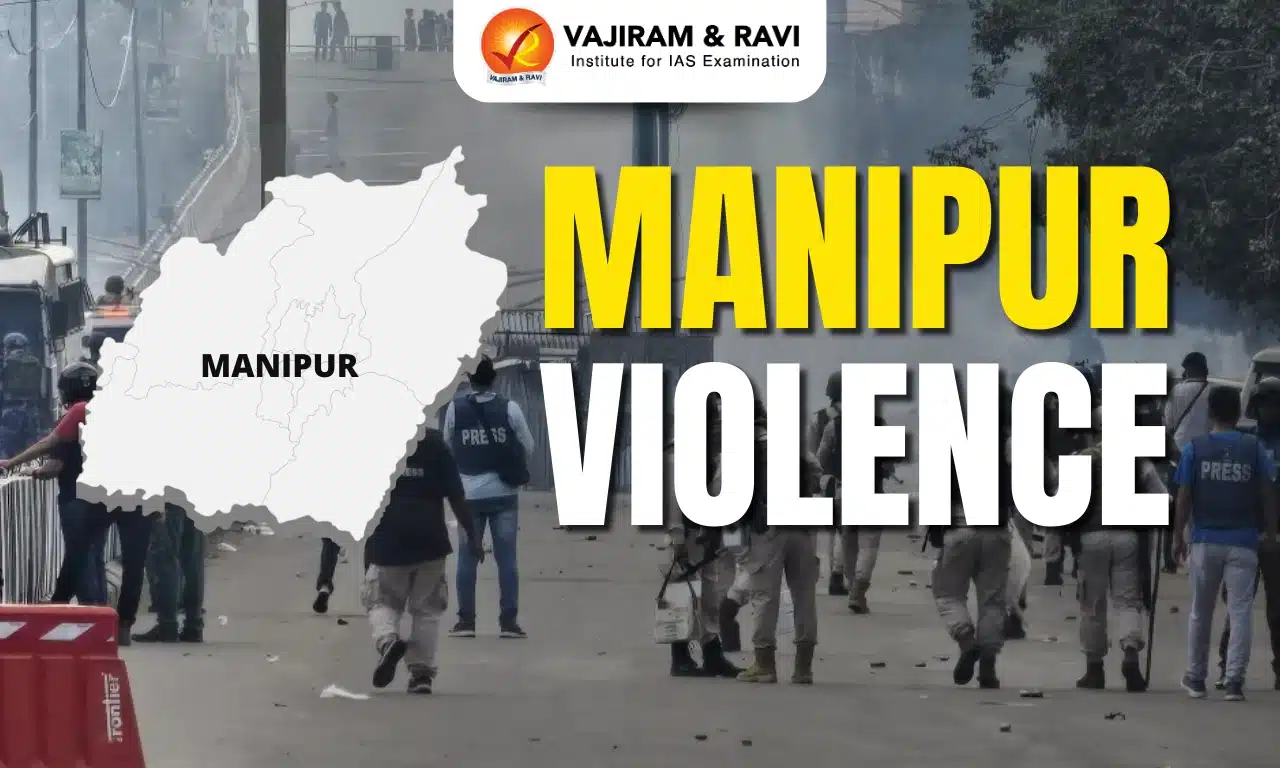
Manipur Violence

Manipur Violence Latest News

  • The Centre has signed a revised Suspension of Operations pact with Kuki-Zo groups, tightening monitoring norms and relocating camps to restore peace in Manipur.

Introduction

  • Manipur, plagued by ethnic violence between the Meitei and Kuki-Zo communities since May 2023, has witnessed a major policy development with the Centre announcing a revised Suspension of Operations (SoO) pact with Kuki-Zo insurgent groups. 
  • The move comes ahead of Prime Minister Narendra Modi’s scheduled visit to the state, marking the government’s most significant step to restore peace and stability. 
  • The new pact seeks to tighten oversight of cadres, relocate militant camps, and ensure compliance with the constitutional framework while opening channels for dialogue.

Free Movement and Confidence-Building Measures

  • The Centre claimed that Kuki civil society groups had agreed to allow free movement along National Highway-02, a vital lifeline for commuters and essential goods in the state. 
  • This move was seen as the beginning of normalcy, but the Kuki-Zo Council (KZC) issued clarifications stating that the highway had never been officially blocked and that its appeal was limited to the Kangpokpi district stretch.
  • While the government portrayed the development as an agreement on “free movement,” Kuki groups insisted that buffer zones between Meitei and Kuki areas would continue to be respected, highlighting persistent mistrust and the fragility of peace. 

About The SoO Pact

  • The new SoO pact was signed on September 4, 2025, between the Ministry of Home Affairs (MHA), the Government of Manipur, and 24 Kuki-Zo insurgent groups under the umbrellas of the Kuki National Organisation (KNO) and the United People’s Front (UPF).
  • Key Features of the Revised Pact:
    • Stricter Monitoring: A Joint Monitoring Group (JMG) led by the Manipur Principal Secretary (Home) will conduct physical verification of cadres, maintain detailed lists, and ensure removal of foreign nationals allegedly present in Kuki camps.
    • Relocation of Camps: The pact mandates reducing the number of designated camps to six each for KNO and UPF, relocating them away from highways, populated areas, and the Myanmar border.
    • Financial Transparency: Cadres will receive stipends only through Aadhaar-linked bank accounts, ensuring payments are restricted to those physically verified at camps.
    • Restrictions on Activities: Groups are barred from recruiting new cadres, carrying weapons outside camps, associating with other armed outfits, or engaging in offensive operations.
    • Respect for Constitution: The preamble emphasises that all signatories must abide by the Constitution of India and respect the territorial integrity of Manipur.

Political and Security Dimensions

  • The signing of the pact has raised concerns among civil society groups. 
  • The Zomi Council, based in Churachandpur, rejected the KZC’s claim of representation, arguing that it does not legitimately represent the Zo people. 
    • This reflects deeper divisions within Kuki-Zo society and complicates negotiations.
  • For the Meiteis, relocation of camps from valley-fringe areas to the hills addresses a long-standing demand, as these camps were allegedly used to launch attacks in the valley. 
  • Simultaneously, Naga groups such as the United Naga Council have voiced their displeasure over exclusion from talks, and have even threatened a trade embargo in response to the border fencing issue with Myanmar.

Path Towards a Political Settlement

  • The revised SoO pact is designed as a confidence-building framework. It will be followed by a tripartite dialogue among the Centre, the Manipur government, and Kuki groups to pave the way for a negotiated political settlement within the Constitution.
  • Parallelly, the Centre is working with other insurgent groups such as the United National Liberation Front (UNLF), for whom designated camps are being set up. This signals a wider attempt to bring insurgent movements under a structured peace process.

Source : TH | IE

Manipur Violence FAQs

Q1: What is the Suspension of Operations (SoO) pact in Manipur?

Ans: The SoO pact is a ceasefire agreement between the Centre , Manipur government, and Kuki-Zo insurgent groups to suspend hostilities and negotiate peace.

Q2: What are the key changes in the revised SoO pact of 2025?

Ans: The revised pact mandates Aadhaar-linked stipends, relocation of camps, physical verification of cadres, and strict adherence to India’s Constitution.

Q3: Why is National Highway-02 significant in the Manipur peace process?

Ans: NH-02 is a vital supply route, and its free movement is seen as a step towards restoring normalcy between Meitei and Kuki areas.

Q4: What role does the Joint Monitoring Group (JMG) play in the pact?

Ans: The JMG verifies cadres, monitors compliance with ground rules, and ensures foreign nationals are excluded from insurgent lists.

Q5: What is the ultimate goal of the revised SoO agreement?

Ans: The pact aims to prepare the ground for a negotiated political settlement under the Constitution of India, ensuring peace and stability in Manipur.

Enquire Now