
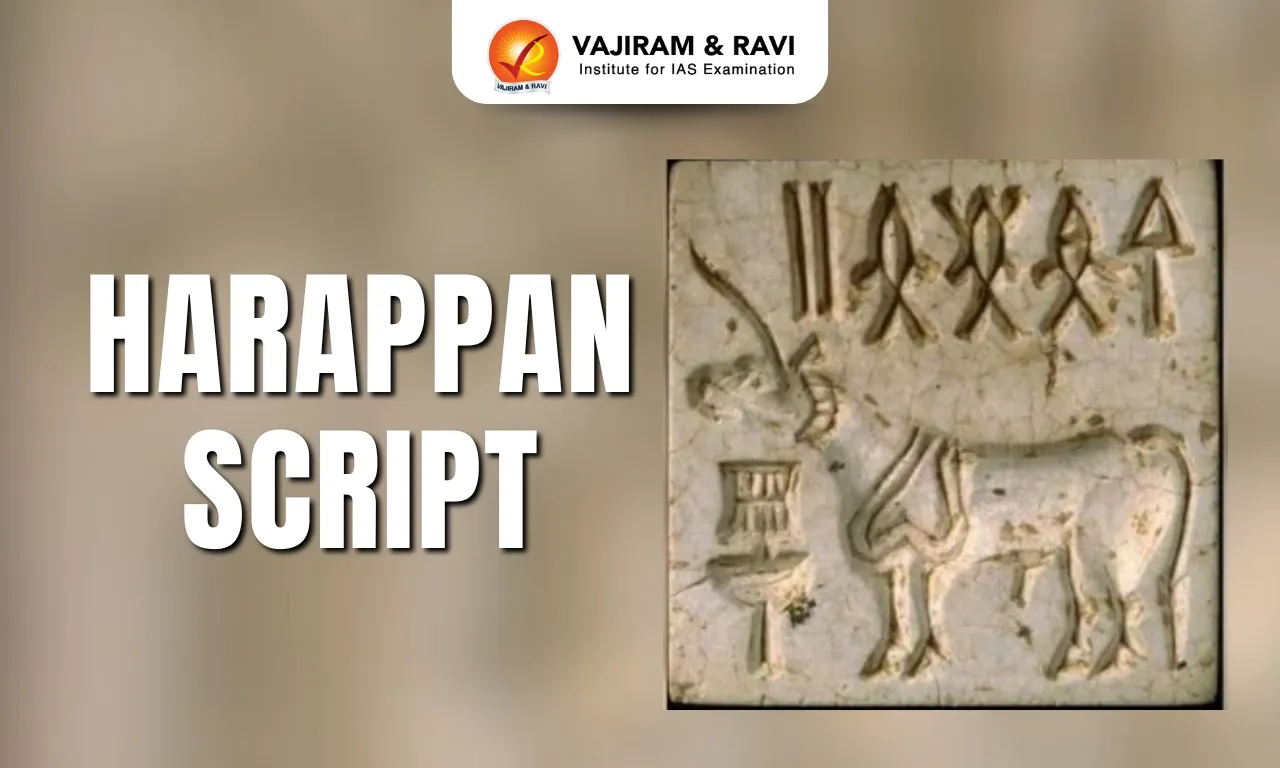
Decoding the Harappan Script: Culture Ministry’s Global Conference

Harappan Script

Harappan Script Latest News

  • The Union Ministry of Culture will host a conference in New Delhi from September 11 to 13, bringing together archaeologists, scientists, and experts from diverse fields to present findings on the undeciphered Harappan script, a mystery since its discovery in the 1920s. 
  • The event is being organised by the Indira Gandhi National Centre for the Arts (IGNCA), an autonomous body under the Culture Ministry.

The Enigma of the Indus Valley Script

  • Since its discovery in the 1920s by Sir John Marshall’s team, the script of the Indus Valley Civilisation (IVC) has remained undeciphered. 
  • The civilisation, flourishing between 2600–1900 BCE, covered nearly 800,000 sq. km across present-day Pakistan and north-west India, making it the world’s largest urban culture of its time, with advanced trade, taxation, and drainage systems.

Nature of the Inscriptions

  • Indus inscriptions appear on seal stones, terracotta tablets, and occasionally on metal, often combining pictograms with animal or human motifs. 
  • Scholars continue to debate the total number of signs in the script. 
  • Estimates vary widely: archaeologist S.R. Rao suggested 62 signs in 1982, Finnish Indologist Asko Parpola proposed 425 signs in 1994, while Bryan K. Wells estimated 676 signs as recently as 2016.

Debates on Linguistic Roots

  • The script’s linguistic base remains unresolved. 
  • Sir Alexander Cunningham, who first reported a Harappan seal, linked the script to Brahmi — the ancestor of over 200 South and Southeast Asian scripts. 
  • Other scholars supported this Brahmi connection. 
  • However, Parpola rejects this, arguing instead that Brahmi evolved from the Aramaic script used in the Persian Empire, distancing it from Harappan origins.
  • The lack of consensus on both the number of symbols and the language underlying the script underscores why the Indus script remains one of history’s greatest undeciphered puzzles.

Debates on the Harappan Script at Upcoming Conference

  • The papers to be presented at the Culture Ministry’s conference on the Harappan script reveal widely differing conclusions.
  • This underscores the continuing mystery of the undeciphered language of the Indus Valley Civilisation.

Competing Theories on the Script

  • Sanskrit and Vedic Linkages: Some researchers claim the script is based on Sanskrit or even contains Rig Vedic mantras. They argue that Indus seals had primarily religious significance, even identifying references to Puranas — though historians note these texts were composed much later.
  • Dravidian Roots: Few experts assert that 90% of the script has been deciphered as Gondi, a Proto-Dravidian language.
  • Santali Connection: Many experts link the script to the Santali language, inspired by Indologist Asko Parpola’s research.

Scholarly Challenges

  • Historians stress that deciphering the script requires rigorous interdisciplinary methods. 
  • They note the absence of bilingual inscriptions, the vast geographical spread of the civilisation, and its longevity make it unlikely that a single language underpinned the script.
  • The diversity of claims — from Sanskrit and Dravidian to Santali and Gondi — illustrates both the fascination and the difficulty of unlocking the Harappan script. 
  • Experts agree that no credible breakthrough has yet been achieved, and the task requires more systematic, contextual, and comparative study.

The Politics of Deciphering the Harappan Script

  • The search for decoding the Harappan script is not just an academic pursuit but one heavily shaped by political and cultural narratives in India.
  • Tamil Nadu CM M.K. Stalin has offered a $1 million award for anyone who can credibly decipher the script. 
  • A Dravidian-origin conclusion would allow the political party in Tamil Nadu to claim that the subcontinent’s oldest civilisation has southern roots rather than being exclusively northern in origin.
  • On the other hand, various groups view the Harappan script as a means to counter the Aryan migration theory. 
  • They argue that Harappans were Vedic people, pointing to the Ghaggar-Hakra (linked to the Saraswati River of the Rig Veda) as central evidence. 
  • If proven, the script’s language would be Sanskrit, strengthening the Vedic-Harappan continuity argument.

Source: IE | IE

Harappan Script FAQs

Q1: What is the Harappan script?

Ans: The Harappan script, a collection of pictograms and symbols from the Indus Valley Civilisation, remains one of the world’s greatest undeciphered languages.

Q2: Why is the Harappan script difficult to decipher?

Ans: The absence of bilingual inscriptions, vast geographical spread, and long civilisation timeline make decoding the script highly challenging.

Q3: What are the main theories about the Harappan script?

Ans: Theories link it to Sanskrit, Dravidian languages like Gondi, and tribal languages like Santali, though no consensus exists.

Q4: Why is the Harappan script politicised?

Ans: Political narratives connect decipherment with identity—Dravidian roots support southern claims, while Vedic continuity strengthens northern perspectives.

Q5: What is the goal of the upcoming conference

Ans: The Ministry of Culture’s conference seeks to present findings and foster dialogue, though experts admit no credible breakthrough has yet been made.
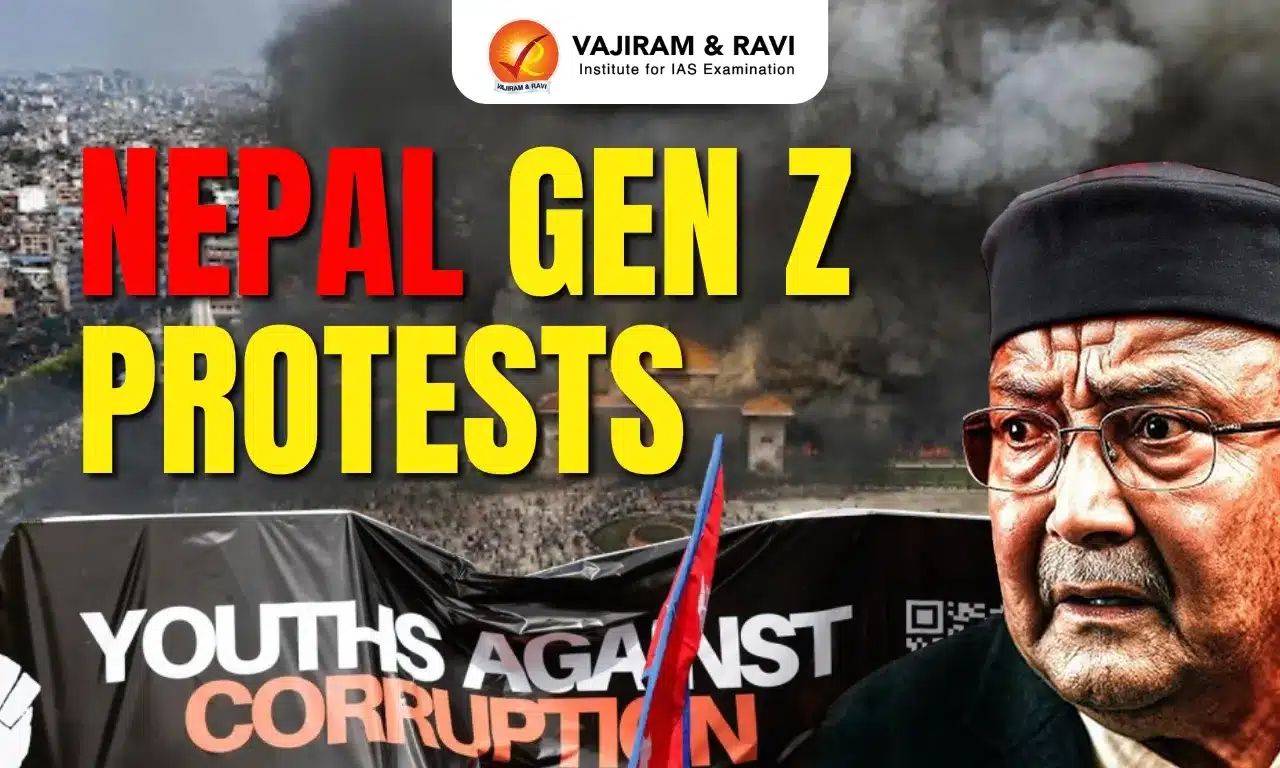

Nepal’s Gen Z Protests: Social Media Ban, Unrest, and Political Fallout

Nepal Gen Z protests

Nepal Gen Z protests Latest News

  • Unprecedented protests erupted across Nepal on September 8, 2025, after the government banned major social media platforms. 
  • What began as peaceful demonstrations by thousands of youth soon turned violent, with at least 19 dead and over 400 injured. 
  • Protesters stormed Parliament and targeted politicians’ homes, prompting curfews in Kathmandu and other cities. 
  • As the Gen Z-led agitation intensified for a second day, Prime Minister K.P. Sharma Oli resigned, his secretariat confirming the decision amidst mounting pressure.

Protesters on Nepal’s Streets and the Reasons Behind Their Anger

  • The protesters are primarily Generation Z youth — those born between 1996 and 2012. 
    • With the age group of 16-25 years, Gen Z youths accounted for 20.8 per cent of total population and 90 per cent of its 30 million people using the internet.
  • Teens and young adults, frustrated with politics and governance, have taken to the streets in large numbers.

Corruption and Nepotism

  • Gen Z has expressed deep anger at Nepal’s entrenched corruption and the impunity enjoyed by politicians since the republic’s formation in 2008. 
  • The extravagant lifestyles of politicians’ children, mocked as “Nepo Babies” and “Nepo Kids,” became a flashpoint of resentment online.

Immediate Trigger: Social Media Ban

  • The government’s decision to ban 26 major social media platforms, including Facebook, WhatsApp, Instagram, X, and YouTube, cut off Gen Z’s primary platform for expression and solidarity. 
    • Authorities accused these platforms of failing to register with Nepali regulators and of being misused for hate speech, misinformation and fraud. 
    • TikTok was the only major platform to comply and remains accessible.
  • This aggravated their frustration.

Protests and Violence

  • The discontent culminated in mass protests on Monday. Police and security forces opened fire, killing 19 and injuring hundreds. 
  • The unrest represented the most forceful youth uprising in years.
  • While the protesters had no detailed charter, they demanded lifting of the social media ban, which was fulfilled. 
  • More broadly, they sought an end to corruption, social inequality, and lack of job opportunities.

India’s Concerns Over Nepal’s Crisis

  • India is closely watching Nepal’s turmoil with concern, mindful of its sensitive political alignments in the country. 
  • Having once lost goodwill with the monarchy and Nepali Congress by backing Maoists, New Delhi now faces a delicate balancing act. 
  • Recently, PM Modi chaired a Cabinet Committee on Security meeting to assess the situation, stressing that the violence was “heart-rending” and reaffirming that Nepal’s stability, peace, and prosperity remain of utmost importance to India.

Analysis: Nepal’s Crisis Beyond Oli’s Resignation

  • The recent violence in Kathmandu, where protesters torched Parliament, ministerial homes, and media offices, reflects deep structural failures in Nepal’s democratic experiment. 
  • PM Oli’s resignation has not stemmed the unrest, which now questions the country’s political future.

Systemic Revolt: From Social Media Ban to Nationwide Rage

  • Protests began against the government’s ban on social media but quickly transformed into a broader indictment of corruption, nepotism, and inequality. 
  • Security forces’ killing of 19 youth on September 8 ignited nationwide outrage, galvanising Gen Z against decades of political dysfunction, unemployment, and institutional decay. 
  • Unlike past democratic movements, these protests lack leadership or clear objectives, instead expressing nihilistic anger against all state institutions.

Dangerous Precedents in Nepal’s Democracy

  • Despite two people’s movements, a new constitution, and republican institutions, Nepal’s governance remains dominated by elite power-sharing and patronage networks
  • This disillusionment has created space for anti-system forces, including pro-monarchy and Hindutva groups. 
  • The amorphous Gen Z protests, without clear democratic alternatives, risk being co-opted by such forces.

Regional Parallels and Outsider Appeal

  • Nepal’s turmoil mirrors unrest in South Asia, from Bangladesh’s student-led uprisings to Sri Lanka’s Aragalaya
  • The popularity of outsider figures like jailed Rabi Lamichhane and Kathmandu Mayor Balendra Shah shows youth distrust of mainstream politics. 
  • However, Shah’s call for Parliament’s dissolution raises fears of anti-institutional rhetoric undermining democratic renewal.

The Road Ahead: Reform or Ruin

  • The Gen Z protests have exposed Nepal’s political bankruptcy and systemic failures
  • Yet, their drift toward violence and institutional destruction threatens democracy itself. 
  • For meaningful change, Nepal’s leaders must channel this energy into building credible alternatives, policy frameworks, and constructive institutions. 
    • Without this, the movement risks destabilising an already fragile state without delivering sustainable solutions.

Source: IE | TH | BBC

Nepal Gen Z protests FAQs

Q1: Who are the main protesters in Nepal’s crisis?

Ans: The protests are led by Generation Z youth, aged 16–25, frustrated by corruption, nepotism, inequality, and lack of opportunities.

Q2: What triggered the Nepal protests?

Ans: The immediate trigger was the government’s ban on 26 social media platforms, cutting off Gen Z’s main avenue for expression and solidarity.

Q3: What happened during the protests?

Ans: At least 19 protesters were killed, hundreds injured, and Parliament and politicians’ homes attacked, leading to PM Oli’s resignation.

Q4: How has India responded to Nepal’s unrest?

Ans: India expressed concern, with PM Modi stressing Nepal’s peace and stability as vital, while carefully balancing its political alignments.

Q5: What risks do these protests pose to Nepal’s democracy?

Ans: The movement’s violent and leaderless nature risks destabilising Nepal further, creating space for anti-system forces and threatening democratic renewal.

Adaptive Learning in Andhra Pradesh Shows Significant Gains

Adaptive Learning

Adaptive Learning Latest News

  • The Andhra Pradesh Personalised Adaptive Learning (PAL) programme is in the news after a Nobel laureate-led study found it significantly boosted students’ math learning outcomes.

Introduction

  • Education reforms in India have increasingly focused on leveraging technology to bridge learning gaps. 
  • One of the promising interventions in this space is Personalised Adaptive Learning (PAL), a digital model that tailors educational content to individual students’ needs. 
  • Andhra Pradesh has been at the forefront of implementing PAL, and a recent evaluation led by Nobel laureate Michael Kremer has revealed significant learning gains, especially in mathematics.

Personalised Adaptive Learning

  • Personalised Adaptive Learning refers to an educational approach where software dynamically adjusts content and difficulty levels according to the learner’s performance
  • This creates a customized pathway for each student, ensuring that those who lag receive additional support, while advanced learners are challenged further.
  • Key features of PAL include:
    • Gamification of concepts to enhance engagement.
    • Continuous assessment that adapts in real-time.
    • Use of digital devices such as tablets and laptops.
    • Focus on skill mastery rather than rote memorisation.
  • The Andhra Pradesh government, in collaboration with ConveGenius AI, introduced PAL in select schools to address the issue of low foundational numeracy and to improve overall math proficiency among government school students.

The Andhra Pradesh Experiment

  • The state government began implementing PAL in 2018, scaling it gradually to 500 schools. 
  • To scientifically measure its effectiveness, a Randomised Control Trial (RCT) was conducted across 120 government schools between 2023 and 2025.
    • Treatment group: 30 schools received PAL-equipped labs with tablets.
    • Control group: 30 schools without PAL for comparison.
    • Sample size: Around 6,800 students across Grades 6 to 9.
    • Intervention period: 17 months, with students spending an average of 35.3 hours on the software.
  • Each participating school had dedicated PAL labs with 30 tablets, and students engaged in two math sessions per week, each lasting 40 minutes.

Key Findings from the Study

  • According to the study, the PAL intervention yielded striking results:
    • Learning Gains: Students achieved the equivalent of 1.9 additional years of schooling compared to peers without PAL.
    • Faster Progress: Students using PAL learned at almost double the rate of those in the control group.
    • Impact by Grade: Gains were higher in younger grades (6 and 7) since students had greater access to devices.
    • Gender Gap: Girls benefited more than boys, largely due to higher usage hours.
    • Cost-effectiveness: Annual per-student implementation cost was estimated at $20-25, making it a scalable and affordable model.
  • Importantly, the evaluation was conducted independently and included external math assessments, ensuring the results were unbiased.

Broader Implications for India

  • The Andhra Pradesh model is being hailed as a proof of concept for technology-driven learning interventions in India. 
  • With nearly 45,000 government schools in the state, scaling PAL across all institutions remains a logistical challenge but holds significant promise.
  • Nationally, PAL can address:
    • The learning crisis highlighted by ASER reports, which repeatedly show low math and reading levels among Indian students.
    • The growing demand for EdTech solutions that complement traditional teaching.
    • The need for cost-effective scalable interventions to improve public education quality.

Future Outlook

  • The Andhra Pradesh government has announced plans to expand PAL to 1,224 schools, including PM-SHRI and residential schools. 
  • If successful, the intervention could serve as a national model for digital learning reforms.
  • Experts suggest that combining PAL with teacher training and infrastructure investment can transform India’s education system, equipping students with the critical skills needed for the 21st century.

Source: TH

Adaptive Leaning FAQs

Q1: What is Personalised Adaptive Learning (PAL)?

Ans: PAL is a digital learning model that tailors educational content to each student’s individual learning level through adaptive software.

Q2: How was PAL implemented in Andhra Pradesh?

Ans: The state introduced PAL in 500 schools, with a Randomised Control Trial in 60 schools to measure its impact.

Q3: What were the key outcomes of the study?

Ans: Students using PAL achieved 1.9 years of additional learning in math over two academic years.

Q4: Who conducted the evaluation of the PAL model?

Ans: Nobel laureate Michael Kremer and his team conducted the study through a Randomised Control Trial.

Q5: What is the cost of implementing PAL per student annually?

Ans: The estimated cost is $20–25 per student, including hardware, software, and support.

Enquire Now

