Vultures and Public Health: How Conservation Prevents Future Pandemics

Vulture Conservation

Vulture Conservation Latest News

  • Vultures, often overlooked in discussions on pandemic preparedness, play a vital role in South Asia’s public health by acting as nature’s most efficient waste managers, preventing disease spread.

Vultures and Their Role in Pandemic Prevention

  • As India’s National Action Plan for Vulture Conservation (2016–25) ends, the next phase highlights vultures as vital for pandemic preparedness. 
  • By swiftly consuming carcasses, they reduce risks of zoonotic spillover and act as the first line of defence in disease surveillance and carcass management. 
  • However, their role in public health has rarely been formalised. 
  • Communities living alongside vultures remain underutilised partners.
  • Conservation financing has not yet recognised vultures as cost-effective pandemic prevention tools, despite the relatively low investments required compared to the enormous costs of outbreak responses.

India’s Vanishing Vultures and Public Health Risks

  • For centuries, vultures acted as nature’s cleanup crew, preventing the spread of deadly pathogens such as anthrax, botulinum, and rabies. 
  • In the 1980s, carcass dumps swarmed with hundreds of vultures. 
  • India once had over 40 million vultures, but since the 1990s, numbers have plummeted by more than 95%, mainly due to the veterinary drug diclofenac
  • This decline is not just ecological — it poses a growing public health challenge by tying biodiversity loss to future pandemic risks.

Central Asian Flyway and Regional Linkages

  • India’s vultures are part of the Central Asian Flyway (CAF), a vast migratory corridor connecting breeding grounds in Central Asia with wintering areas across South Asia. 
  • Spanning more than 30 countries, the CAF is used by millions of migratory birds, including raptors like vultures. 
  • As these birds move, they link ecosystems and disease risks across borders. 
  • Poorly managed landfills, carcass dumps, or stopover sites can quickly become hotspots for pathogen spillover. 
  • Thus, the CAF represents not just a biodiversity corridor but also a public health corridor, making regional cooperation crucial.

Conservation Challenges

  • Despite this importance, conservation efforts remain fragmented and underfunded. 
  • Vulture protection is rarely integrated into One Health strategies, which link human, animal, and environmental health. 
  • Infrastructure threats like electrocution from power lines and continued poisoning from toxic veterinary drugs remain largely unaddressed. 
  • Without stronger investment and policy alignment, regional ambitions to safeguard vultures — and in turn, human health — face major roadblocks.

Protecting India’s Vultures Through a Post-2025 Strategy

  • India’s post-2025 vulture strategy could focus on five key pillars
    • nationwide satellite telemetry to track habitats and hotspots; 
    • a Decision Support System integrating wildlife, livestock, and health data; 
    • stronger cross-sector coordination under the One Health framework; 
    • transboundary collaboration through the Central Asian Flyway with global health commitments; and 
    • community stewardship that empowers women, youth, and local groups in surveillance and awareness. 
  • Together, these measures would conserve vultures as keystone species, strengthen public health systems, reduce pandemic risks, and align with WHO’s regional roadmap for health security. 
  • This approach shifts conservation from recovery to resilience, making India a leader in biodiversity-linked health security.

India’s Opportunities in Linking Vulture Conservation with Health Security

  • India has a unique chance to show how biodiversity conservation can also serve as pandemic prevention
  • By integrating surveillance across human, animal, and environmental health, and cutting detection-to-response time, systemic resilience can be built at modest cost compared to outbreak losses. 
  • With its significant share of Central Asian Flyway vulture species like Himalayan griffon, cinereous, and Eurasian griffon, India can scale telemetry, use Decision Support Systems, and embed vulture protection in One Health strategies. 
  • This model could inspire regional and global adoption, reminding us that safeguarding vultures not only protects ecosystems but also strengthens public health security.

Source: TH | ToI | WA

Vulture Conservation FAQs

Q1: How do vultures help prevent pandemics?

Ans: By consuming carcasses quickly, vultures block pathogens from spreading, reducing risks of zoonotic spillover and supporting disease surveillance at carcass sites.

Q2: Why has India’s vulture population declined?

Ans: Since the 1990s, vulture numbers have fallen over 95%, mainly due to the veterinary drug diclofenac, creating ecological and public health challenges.

Q3: What is the Central Asian Flyway (CAF)?

Ans: A migratory corridor spanning 30+ countries, linking ecosystems and disease risks. Vultures moving along CAF make it a biodiversity and health corridor.

Q4: What are the main conservation challenges?

Ans: Conservation is underfunded and fragmented, with infrastructure risks like power line electrocution and poisoning from veterinary drugs remaining unaddressed.

Q5: What should India’s post-2025 vulture strategy focus on?

Ans: It should include satellite telemetry, Decision Support Systems, One Health integration, regional collaboration, and community stewardship for long-term resilience.
India-Pak Ties and the Indus Waters Treaty: History, Insecurity, and the Road Ahead

Indus Waters Treaty

Indus Waters Treaty Latest News

  • India, after calling for a review and renegotiation of the Indus Waters Treaty (IWT), suspended the 65-year-old agreement following the April Pahalgam terror attack. 
  • Water sharing is now poised to become as contentious as terrorism and Kashmir in bilateral ties. Much debate on the issue has been emotional rather than fact-based.

Divergent Perspectives on the Indus Waters Treaty

  • The Indus Waters Treaty (IWT) gave Pakistan 80% of the Indus system’s waters, a decision that has sparked criticism in India. 
  • As per some experts, this allocation was not based on volume but on geography, terrain, and natural flow. 
  • For India, the then PM Nehru saw the Treaty as a magnanimous step toward peaceful coexistence, even calling it a “purchased peace.” 
  • However, critics, including External Affairs Minister S. Jaishankar, view it as appeasement. 
  • Pakistan, meanwhile, recognized the leverage of an upper riparian state but has never celebrated the 80:20 distribution. 
  • Its leaders avoided claiming victory, knowing it could weaken their narrative of victimhood. 
  • Over time, both nations have remained dissatisfied with the Treaty, albeit for different reasons.

Pakistan’s Insecurity Over Indus Waters

  • While the Indus Waters Treaty (IWT) gave India rights over the eastern rivers and limited use of the western rivers, Pakistan has consistently used the Treaty’s dispute mechanisms to delay Indian projects in J&K. 
  • This reflects not a need for more water, but Pakistan’s deep insecurity about India’s control over river flows. 
  • Its fear is that India could disrupt these flows, on which Pakistan is heavily dependent. 
  • Experts argue that this insecurity ties directly to Pakistan’s Kashmir agenda, where control of rivers is central. 
  • Indeed, soon after the Treaty’s signing, General Ayub Khan openly linked Kashmir’s annexation to Pakistan’s water security concerns.

Why the Indus Waters Treaty Endured

  • The Indus Waters Treaty (IWT) has withstood four wars, terrorism, and decades of hostility, often hailed as a model of cross-border water governance. 
  • Its survival is credited largely to India, which, as the upper riparian, bears the main responsibility — ensuring minimum flows and sharing timely data with Pakistan. 
  • This upstream role directly impacts Pakistan, while Pakistan’s actions have no effect upstream. 
  • Analysts note that had Pakistan been the upper riparian, the Treaty might not have endured. 
  • Even as the lower riparian, Pakistan has exploited Treaty provisions to stall India’s legitimate projects in J&K.

The Future of the Indus Waters Treaty

  • Pakistan recognises it already enjoys the most favourable terms under the Indus Waters Treaty (IWT) and will resist any renegotiation. 
  • Fearing bilateral renegotiation with India, Pakistani experts suggest involving China and Afghanistan in the Indus Waters Treaty talks.
    • About 8% of the Indus basin is in China and 6% in Afghanistan.
  • India, however, insists that revisions must remain bilateral, excluding third parties like the World Bank. 
  • Freed from strict adherence to Treaty provisions, India now prioritises completing water projects in J&K, aiming to fully utilise its rights over western rivers without disrupting flows. 
  • While India may still share some flow and weather data, the suspension of Permanent Indus Commissioner meetings reduces structured exchanges
  • By leveraging its upper riparian advantage, India signals it is ready to pressure Pakistan into rethinking its stance on cross-border terrorism and water disputes.

Source: IE

Indus Waters Treaty FAQs

Q1: What is the Indus Waters Treaty (IWT

Ans: The IWT is a 1960 water-sharing agreement, giving Pakistan 80% of the Indus system’s waters while India retained rights over eastern rivers.

Q2: Why has the IWT faced criticism in India?

Ans: Many believe India conceded too much, as 80% of the waters flow to Pakistan. Nehru called it “purchased peace,” while critics call it appeasement.

Q3: Why does Pakistan feel insecure despite favorable terms?

Ans: Pakistan fears India could disrupt river flows critical to its survival, linking water concerns to its long-standing Kashmir ambitions.

Q4: Why has the IWT endured decades of hostility?

Ans: Its survival is credited to India, the upper riparian, ensuring flows and data-sharing. Pakistan exploited provisions to stall India’s J&K projects.

Q5: What is the future of the IWT?

Ans: India seeks bilateral renegotiation and greater use of western rivers, while Pakistan resists and suggests involving China and Afghanistan in talks.

Govt Exploring Isobutanol Blending with Diesel

Isobutanol Blending

Isobutanol Blending Latest News

  • The government is exploring isobutanol blending with diesel after ethanol blending trials failed, with ARAI conducting tests to ensure compatibility and support farmer incomes.

Introduction

  • India’s biofuel sector is witnessing a shift in its approach as the government explores alternatives to ethanol blending with diesel. 
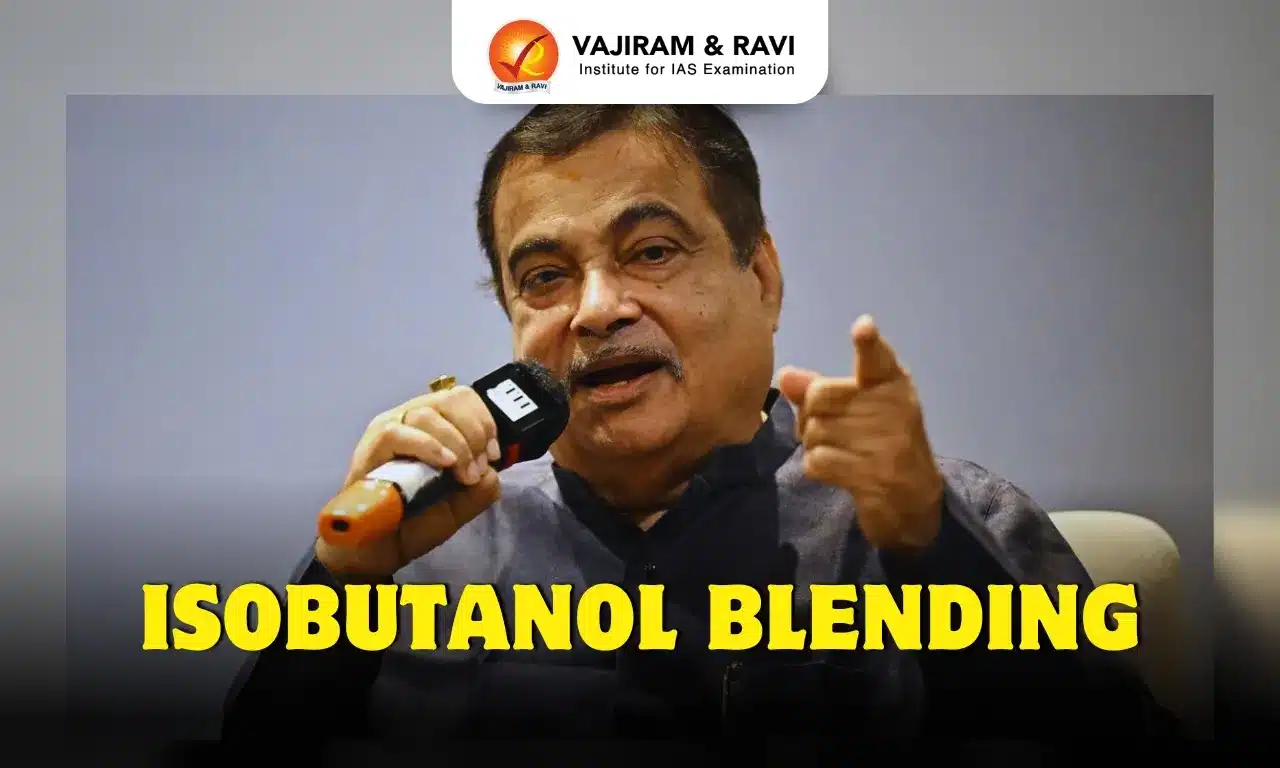
  • Union Minister for Road Transport and Highways, Nitin Gadkari, recently announced that the Automotive Research Association of India (ARAI) is conducting trials to blend 10% isobutanol with diesel. 
  • This development comes after ethanol-diesel blending trials were found to be unsuccessful. 
  • The move signals India’s determination to diversify its energy mix, enhance farmer incomes, and reduce reliance on conventional fossil fuels.

Background on Ethanol Blending

  • Ethanol blending has been one of the cornerstone policies in India’s biofuel roadmap. 
  • While ethanol blending in petrol has been relatively successful, reaching 20% ahead of schedule, it has faced technical challenges when used with diesel. 
  • Ethanol’s corrosive nature and compatibility issues with diesel engines limited its large-scale adoption in this segment.
  • Despite these hurdles, ethanol blending has benefited farmers significantly. 
  • With corn being used as a major raw material for ethanol production, farmers have earned over Rs. 42,000 crore
  • The prices of corn have risen from Rs. 1,200 per quintal to Rs. 2,600-2,800 per quintal since the implementation of the policy, strengthening rural incomes.

Exploring Isobutanol as an Alternative

  • Isobutanol, an alcoholic compound widely used as a solvent in industries like paints and coatings, is now being evaluated as a potential biofuel. 
  • Currently, trials are underway to test a 10% blend of isobutanol with diesel
    • Unlike ethanol, isobutanol has properties that may make it more compatible with diesel engines. 
    • It also holds promise as a standalone biofuel or in combination with compressed natural gas (CNG) in agricultural machinery and tractors.
  • This shift highlights the government’s commitment to innovation in the biofuel sector. 
  • By diversifying fuel sources, India aims to reduce import dependence, support energy security, and encourage sustainable farming practices.

Policy Push for Farmers and the Sugar Industry

  • Union Minister for Consumer Affairs, Food, and Public Distribution, Pralhad Joshi, emphasised the government’s efforts to safeguard farmer interests while ensuring the viability of sugar mills. 
  • Measures like clearing over 96% of payments for the current sugar season and reducing cane dues to record lows were highlighted.
  • He further encouraged ethanol producers to increase output for both domestic use and exports. 
  • He urged the industry to adopt advanced technologies, diversify into second and third-generation ethanol using bamboo and agricultural residues, and expand distilleries for higher production.

Industry Concerns and Recommendations

  • At the India Sugar and Bio-Energy Manufacturers Association (ISMA) conclave, industry representatives highlighted key challenges. 
  • The President of ISMA urged the government to align the fair and remunerative price (FRP) of sugarcane with rising procurement costs and revise the minimum support price (MSP), which has remained unchanged since 2019.
  • He also advocated for increasing the permissible sugar export quota by 2 million tonnes for the 2025-26 season. This, he argued, would help mills secure better prices and expand their market reach.

Growth in Sugar and Ethanol Production

  • India’s sugarcane production has risen by 40% over the last decade, with sugar output increasing by 58%. 
  • According to preliminary ISMA estimates, gross sugar production is expected to grow by 20% year-on-year, reaching 34.9 million tonnes in the current season
  • This growth underscores the importance of integrating the sugar sector with India’s energy policies to ensure better utilisation of resources and farmer benefits.

Source: TH

Isobutanol Blending FAQs

Q1: Why is India exploring isobutanol blending with diesel?

Ans: Ethanol blending with diesel faced technical challenges, prompting trials with isobutanol as a more compatible alternative.

Q2: How will isobutanol blending benefit farmers?

Ans: It will diversify biofuel demand, creating new markets for crops like corn and sugarcane, thereby raising farmer incomes.

Q3: What did Nitin Gadkari announce regarding biofuels?

Ans: He confirmed ARAI is testing a 10% isobutanol-diesel blend and exploring its standalone use and CNG mix for tractors.

Q4: How has ethanol blending impacted the sugar and corn sectors?

Ans: It boosted farmer earnings, raised corn prices significantly, and improved the financial health of sugar mills.

Q5: What are ISMA’s key demands from the government?

Ans: ISMA seeks revision of sugarcane FRP, higher export quotas, and better alignment of pricing policies to sustain industry growth.

India–Mauritius Ties – From Partnership to Family

India–Mauritius Ties

India-Mauritius Ties Latest News

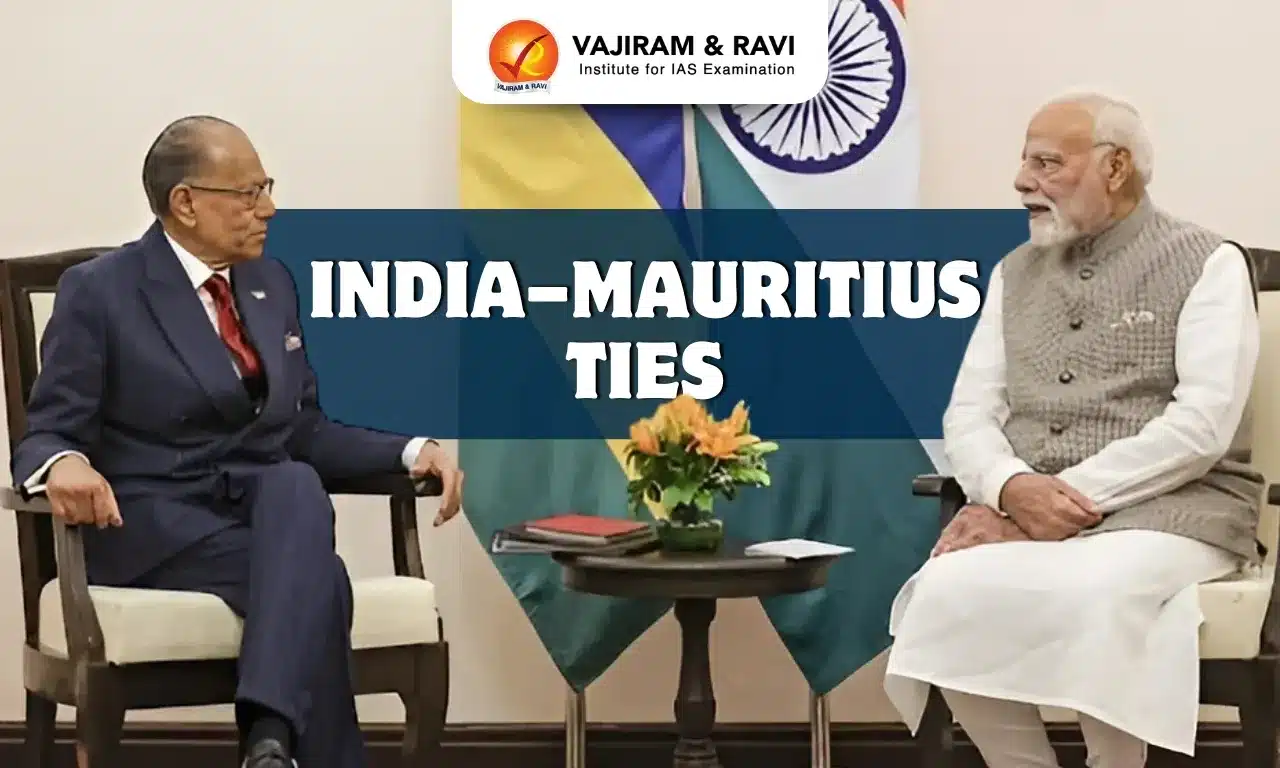
  • India announced a special economic package worth $680 million for Mauritius, combining infrastructure, healthcare, defence preparedness, and maritime security. 
  • The announcement came after a bilateral meeting between the Prime Minister (PM) of India and Mauritius PM Navinchandra Ramgoolam in Varanasi, further strengthening India-Mauritius ties.

Key Developments in the India-Mauritius Ties

Significance of These Developments in the India-Mauritius Ties

  • Soft power diplomacy:
  • Academic collaborations: IIT Madras and Indian Institute of Plantation Management signed agreements with University of Mauritius.
  • Mission Karmayogi training modules: To be launched in Mauritius for civil service capacity building.
  • Healthcare: 500-bed Sir Seewoosagur Ramgoolam National Hospital, AYUSH Centre of Excellence, Veterinary School and Animal Hospital. First Jan Aushadhi Kendra outside India inaugurated in Mauritius.
  • Financial connectivity: Building on last year’s launch of UPI and RuPay services in Mauritius. Both nations to work towards trade in local currencies.
  • Strategic and maritime security dimension:
    • Hydrography agreement: Joint surveys, navigation charts, and hydrographic data collection for Mauritius’ Exclusive Economic Zone (EEZ) over the next five years.
    • Maritime domain awareness in the Indian Ocean: India to assist Mauritius in maritime surveillance, resource exploitation, and capacity building.
    • Chagos archipelago significance: Agreements for development and surveillance of the Chagos Marine Protected Area and expanded EEZ after sovereignty treaty with the UK.
  • Geopolitical significance:
    • India backed Mauritius’ sovereignty over Chagos, aligning with its anti-colonial stance.
    • The UK retains Diego Garcia for US-UK military operations, but India’s role ensures strategic leverage in the Indian Ocean.
    • Symbolic and cultural aspects:
    • From partnership to family: The Indian PM emphasised that India and Mauritius are “not just partners but a family”.
    • Historical linkages: Indian culture and traditions became part of Mauritian daily life centuries ago.
    • Symbolic spiritual connect: The Mauritius PM witnessed the Ganga Aarti, and he is scheduled to offer prayers at Shri Kashi Vishwanath Dham before leaving for Ayodhya.

Broader Strategic Context

  • Mauritius views India as a preferred partner for safeguarding maritime interests, reaffirming its position as a -
    • Net security provider in the Indian Ocean.
  • Champion of South-South cooperation.
  • Supports the vision of a free, open, secure, stable, and prosperous Indo-Pacific.
  • Reinforces India’s influence amidst rising China’s presence in the region.

India-Mauritius Ties and Emerging Contours in the Region

  • India as a first responder: As Mauritius is one of the closest African nations to India, India has consistently supported Mauritius during crises, including the Covid-19 pandemic, the Wakashio oil spill in 2020, etc.
  • Economic ties:
    • Mauritius is a major economic partner, ranking as the second-largest source of Foreign Direct Investment (FDI) in India after Singapore. 
    • The two countries signed the Comprehensive Economic Cooperation and Partnership Agreement in 2021, India’s first trade deal with an African nation. 
  • Development assistance: India has provided nearly $1.1 billion in development assistance to Mauritius over the last decade, including $729 million in lines of credit and $427 million in grants. 
  • Diaspora: Around 70% of the island's 1.3 million residents are of Indian descent. 
  • Emerging geopolitical contours in the western Indian Ocean: 
    • China, Russia, Iran, Turkey, and Gulf nations are increasing their presence in the region.
    • Europe is seeking to reassert influence in the Indian Ocean.
    • Mauritius has balanced its global partnerships while maintaining strategic autonomy.

Conclusion

  • India’s package for Mauritius marks a blend of hard (maritime security cooperation) and soft power (development diplomacy) diplomacy.
  • Strengthening Mauritius’ EEZ surveillance will not only secure its resources but also expand India’s strategic reach in the Indian Ocean.
  • With the Chagos Agreement strengthening Mauritius’ sovereignty, India stands to gain a trusted ally in a geopolitically sensitive region.
  • The partnership reinforces India’s  Neighbourhood First and Vision Mahasagar, while advancing its role as a key maritime power in the Indo-Pacific.

Source: TH | ToI | IE

India–Mauritius Ties FAQs

Q1: What is the Special Economic Package announced by India for Mauritius?

Ans: The package blends infrastructure, healthcare, and maritime security assistance, positioning India as Mauritius’ trusted development partner.

Q2: What does India’s support for Mauritius’ sovereignty over the Chagos Archipelago signifies?

Ans: India’s backing strengthens decolonisation, expands Mauritius’ EEZ, and enhances India’s influence in the Indian Ocean.

Q3: What role does India aim to play in strengthening Mauritius’ Exclusive Economic Zone (EEZ) and maritime security?

Ans: India provides hydrography cooperation, surveillance, and capacity-building to secure Mauritius’ EEZ against illegal fishing, drug trafficking, and strategic threats.

Q4: What are the India-Mauritius collaborations in education, science, and digital finance?

Ans: Partnerships with IIT Madras, Mission Karmayogi modules, and UPI–RuPay integration expand cooperation beyond aid into innovation, capacity-building, and financial connectivity.

Q5: What does the statement “India and Mauritius are not just partners but a family” signifies?

Ans: The partnership is rooted in shared history, cultural ties, and development cooperation.

Enquire Now