

France Recognises Palestine: Global Shift and Gaza War Implications

Recognition of Palestine

Recognition of Palestine Latest News

  • At the UN General Assembly, France joined the UK, Canada, Australia, and several European nations in recognising Palestine statehood. 
  • Israel strongly criticised the move, calling it a reward for terrorism.

Impact of Palestine Recognition on Gaza War

  • Palestine enjoys wide international recognition, has diplomatic missions, and competes in global events. 
  • Yet, it lacks agreed borders, a capital, and full sovereignty due to Israel’s occupation of the West Bank and Gaza. 
  • Recognition is thus symbolic, signaling moral and political support rather than immediate change on the ground.
  • The growing recognition of Palestinian statehood adds diplomatic pressure but has little effect on the Gaza war. 
  • Israel continues its offensive, with Netanyahu declaring the war will persist regardless of hostage releases. 
  • While some European states are restricting military exports, the US maintains unconditional support, recently approving $6.4 billion in arms sales. 
    • Germany also remains a key supplier, alongside Washington, together accounting for over 90% of Israel’s defence imports. 
  • Thus, despite international momentum, recognition alone has minimal impact on halting the conflict.

The Question of Palestinian Statehood

  • Under the 1933 Montevideo Convention, statehood requires defined territory, a permanent population, a government, and capacity for international relations. 
  • For Palestine, these pillars remain contested under Israeli occupation.

Territory

  • Palestinian lands — West Bank, East Jerusalem, and Gaza — are effectively under Israel’s control. 
  • Settlement expansion and annexation efforts further erode prospects of territorial sovereignty.

Permanent Population

  • The Gaza war has devastated the population, with over 65,000 deaths estimated and widespread famine. 
  • Such conditions threaten the very survival of Palestinians as a people.

Government

  • The Palestinian Authority (PA) governs limited West Bank areas, while Hamas controls Gaza under blockade. 
  • Calls for PA reform and Hamas’ disarmament highlight governance challenges, leaving sovereignty curtailed.

International Recognition

  • Global recognition strengthens Palestine’s ability to engage diplomatically, even as effective control of land, population, and governance remains compromised. 
  • Recognition thus primarily boosts Palestine’s lobbying capacity on the world stage.

Israel’s Response to Growing Recognition of Palestine

  • Israel has reacted to increasing global recognition of Palestine by intensifying military action and deepening its occupation. 
  • After the UK’s recognition, Prime Minister Netanyahu vowed that a Palestinian state “will never be established” and claimed credit for blocking it despite international pressure. 
  • Similar defiance followed the UNGA’s vote for a two-state solution. 
  • Each escalation on the ground in Gaza and the West Bank strengthens Israel’s control, further diminishing the feasibility of a Palestinian state.

India’s Stand on Palestine

  • India has long supported the Palestinian cause as part of its foreign policy.
  • In 1974, India became the first non-Arab state to recognize the Palestine Liberation Organization (PLO).
  • In 1988, India was among the first to recognize the State of Palestine.
  • In 1996, India opened its Representative Office in Gaza, later moved to Ramallah in 2003.

Support at Multilateral Fora

  • India has actively supported Palestine at global platforms.
  • Backed UN resolutions affirming Palestinians’ right to self-determination and urging Israeli compliance with international law.
  • Supported Palestine’s status as a UN non-member state and, in 2011, voted for its full membership in UNESCO.

Policy Approach

  • India advocates a negotiated Two-State solution, seeking a sovereign, independent, and viable Palestinian state coexisting peacefully with Israel. 
    • The Two-State solution refers to establishing a Palestinian state in the West Bank and Gaza, with East Jerusalem as its capital, based on pre-1967 borders.
  • It emphasizes diplomacy, dialogue, de-escalation, and early resumption of peace talks.

Source: IE | BBC

Recognition of Palestine FAQs

Q1: What does “recognition of Palestine” mean in international law?

Ans: It signals a country’s formal acceptance of Palestine as a state, enabling diplomatic relations and reinforcing support for its right to statehood.

Q2: Why has France decided to recognise Palestine now?

Ans: France’s move follows other Western nations and reflects growing diplomatic pressure and consensus around the two-state solution.

Q3: How has Israel responded to countries recognising Palestine?

Ans: Israel has criticised the recognitions, calling them rewards for terrorism, and stated that a Palestinian state will never be established.

Q4: Will recognition of Palestine by many countries stop the Gaza war?

Ans: Not directly. Recognition offers diplomatic pressure but lacks the power to alter military or occupation dynamics without stronger actions.

Q5: What is India’s policy on recognition of Palestine?

Ans: India supports a negotiated two-state solution, has long recognised the State of Palestine, and calls for dialogue, de-escalation, and peace.
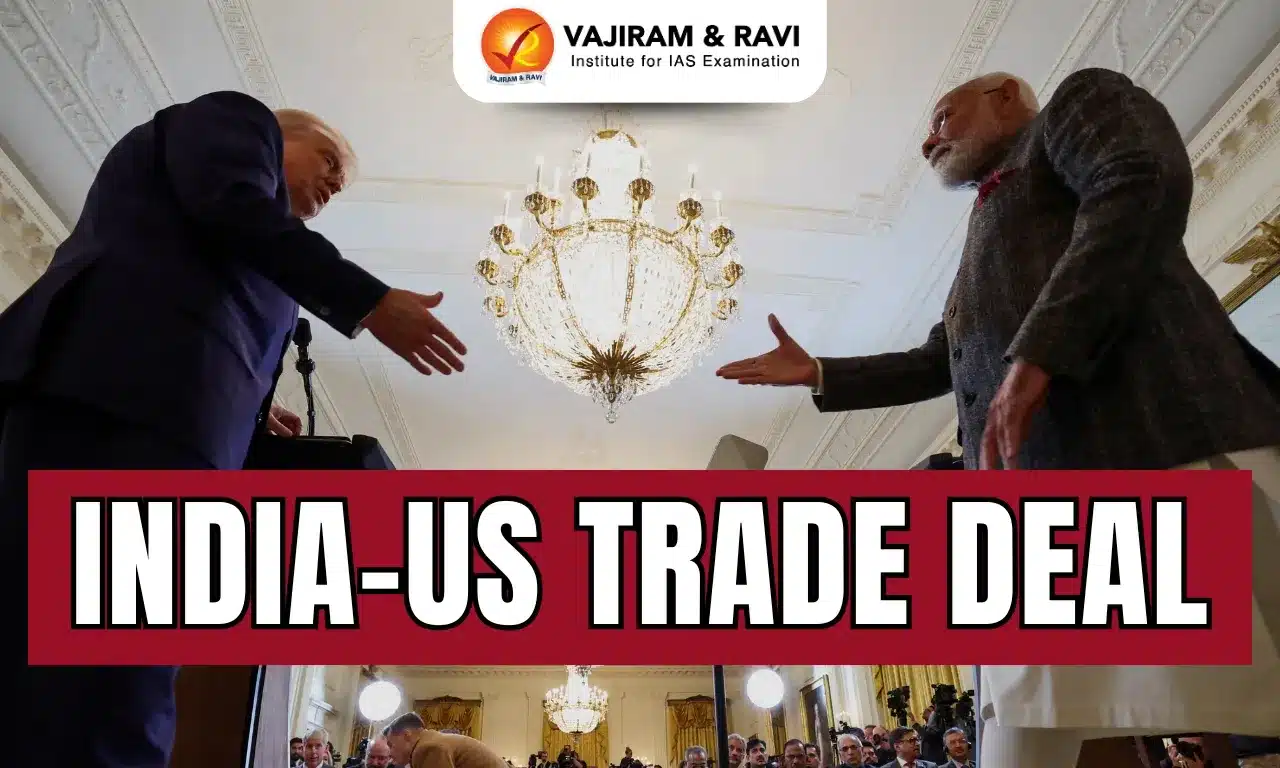
India-US Trade Deal Nears Final Stage Amid Tariff and Visa Challenges

India-US trade deal

India-US Trade Deal Latest News

  • After prolonged delays, the India-US trade deal is back on track. A high-level Indian delegation has reached Washington to resume talks, with signs that negotiations are entering the final stage.

India-US Trade Talks Resume With Renewed Push

  • Commerce Minister Piyush Goyal is leading India’s trade team in Washington, where talks on the long-delayed India-US trade deal appear to be regaining momentum. 
  • Earlier attempts had collapsed after the White House demanded more concessions despite a draft agreement being cleared by both sides. 
  • This time, India is likely to offer additional sweeteners — including major defence purchases and nuclear cooperation — to frame the deal within the broader strategic partnership. 
  • The negotiations follow recent meetings between US and Indian trade officials and come after tensions escalated when President Trump doubled tariffs on Indian goods, citing India’s purchase of Russian crude.

India’s Messaging in Trade Negotiations

  • Firm Stand Against Tariff Pressure
    • Indian officials believe Washington now recognises that India will not bow to tariff threats, unlike South Korea, Japan, or the EU. 
    • New Delhi has consistently flagged its red lines and indicated it would not compromise, even if that meant no trade deal.
  • Key Expectations
    • India expects reciprocal and punitive tariffs to be removed in a single step and replaced with one consolidated tariff rate. 
    • The earlier draft deal is likely to serve as the basis for fresh talks, with some additional concessions included.
  • H-1B Visa Issue as Leverage
    • The Trump administration’s recent H-1B visa fee decision, which primarily impacts India, is viewed as a negotiating tool. 
    • Trade experts suggest its timing signals additional leverage against India, much like secondary tariffs over Russian oil imports.
  • The Challenge Ahead
    • India’s main challenge will be balancing the removal of tariff barriers on goods while addressing the H-1B issue, without letting non-tariff concerns derail the core trade deal.

Mixed Signals in India-US Trade Talks

  • Optimism Over Tariff Removal
    • Chief Economic Adviser V Anantha Nageswaran stated that the additional 25% US tariffs imposed on India over Russian oil imports would not continue beyond November 30, indicating positive backchannel progress.
  • Leaders Express Confidence
    • Trump recently said he was “certain” trade negotiations with India would succeed, while PM Modi responded by calling the two countries “natural partners” committed to a brighter, more prosperous future.
  • Renewed Pressure on Russian Oil Purchases
    • Soon after, the US urged G7 nations to intensify pressure on countries buying Russian oil, highlighting India and China as the largest importers. The move complicates trade discussions.
  • India’s Firm Position
    • India has defended its Russian oil imports, citing economic and commercial needs. 
    • Finance Minister Sitharaman reiterated this stance, while PM Modi affirmed India will not compromise farmers’, fisherfolk’s, and cattle keepers’ well-being.

Source: IE

India-US Trade Deal FAQs

Q1: Why are India-US trade talks resuming now?

Ans: Talks resumed after prolonged delays, with India sending a high-level team to Washington to restart negotiations on a long-pending trade agreement.

Q2: What is India offering to push the deal forward?

Ans: India may offer defence purchases and nuclear cooperation to frame the deal strategically and encourage US concessions on tariffs.

Q3: How is the H-1B visa issue linked to trade talks?

Ans: The $100,000 H-1B fee decision, mainly affecting India, is seen as leverage in trade talks, similar to tariffs over Russian oil imports.

Q4: What signals optimism in the trade negotiations?

Ans: Statements by Trump and Modi calling both nations “natural partners,” along with CEA’s assurance on tariff rollback, show positive momentum.

Q5: What challenges remain in finalising the deal?

Ans: Balancing tariff removal with non-tariff concerns like H-1B visas and Russian oil purchases remains India’s key challenge in sealing the trade deal.

Indian Tea Sector – Scope for Global Opportunities

Indian Tea Sector

Indian Tea Sector Latest News

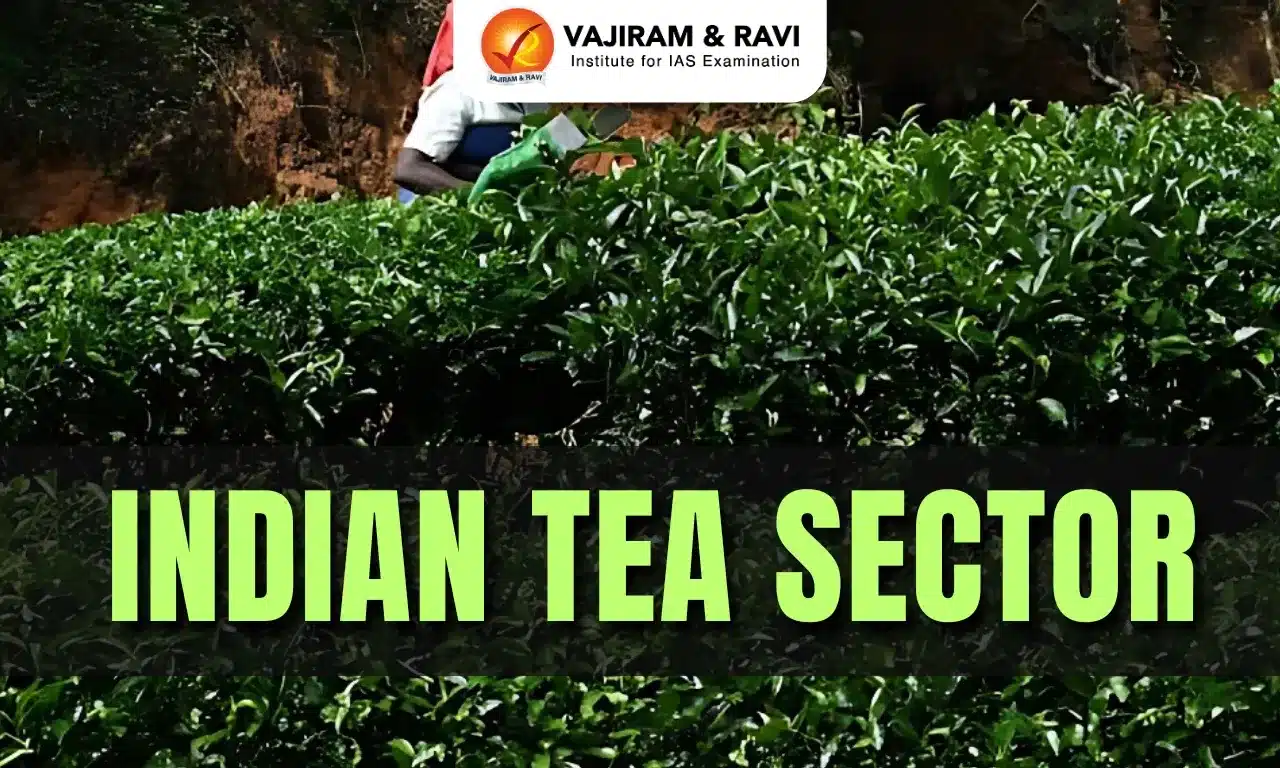
  • India’s tea sector is in the news after experts highlighted its vast potential to become a tea superpower by focusing on quality, new export markets, and boosting domestic consumption.

Introduction

  • India’s tea sector holds a unique position in the global economy, being one of the world’s largest producers and consumers of tea. 
  • With tea deeply ingrained in the country’s cultural fabric and economy, the industry plays a vital role in rural livelihoods, exports, and domestic consumption. 
  • Recent assessments by global experts point toward vast untapped potential, particularly in improving quality standards, exploring emerging markets, and enhancing per capita consumption within India.

The Indian Tea Sector: An Overview

  • India is the second-largest producer and consumer of tea and the third-largest exporter globally. 
  • Tea cultivation spans across Assam, West Bengal, Kerala, and Tamil Nadu, providing employment to over 1.2 million workers directly and sustaining millions more indirectly.
  • Production: In 2024, India produced 1.303 billion kg of tea, contributing significantly to the global production of 7.074 billion kg.
  • Consumption: Domestic consumption stood at 1.22 billion kg, highlighting India’s centrality in balancing global supply and demand.
  • Exports: India exported 255 million kg, valued at nearly $800 million, positioning itself after Kenya, China, and Sri Lanka.

Challenges in the Sector

  • Low realisation per export unit compared to Sri Lanka and Kenya due to quality inconsistencies.
  • Stagnant domestic per capita consumption of 840 grams per year, compared with Turkey’s 3 kg per year, the highest globally.
  • Pressure from climate change, ageing tea bushes, and rising labour costs is affecting productivity.

Recent Steps by the Government and Industry

  • Initiatives under the Tea Development Board to modernise tea estates.
  • Promotional efforts through the India Tea brand to improve recognition in global markets.
  • Incentives for organic and speciality tea production to capture premium markets.

News Summary

  • At the India International Tea Convention in Kochi, experts underscored India’s untapped potential in the global tea trade.
  • Focus on Quality: India must improve quality standards to secure better prices in international markets.
  • Exploring New Markets: India needs to expand exports beyond traditional buyers to newer markets such as South America and Africa, where demand is rising.
  • Domestic Market Potential: Indian consumers are increasingly willing to pay for quality. The participants noted that if per capita consumption rises even to 1 kg annually, India could absorb its entire production domestically.
  • Comparative Position: While Kenya exports almost its entire tea output and Sri Lanka earns $1.4 billion from 245 million kg exports, India earns significantly less despite exporting a higher volume.
  • The experts concluded that with its scale, heritage, and growing consumer sophistication, India has all the “ingredients to become a tea superpower.”

Conclusion

  • The Indian tea sector stands at a critical juncture. While it enjoys the advantage of scale and deep-rooted cultural demand, the focus must shift toward quality enhancement, brand positioning, and diversification into new global markets. 
  • Rising domestic consumer aspirations also present opportunities to boost per capita consumption. 
  • If these challenges are addressed, India has the potential to transform from being a large producer into a true global tea superpower.

Source: TH

Indian Tea Sector FAQs

Q1: What is India’s rank in global tea production?

Ans: India is the second-largest producer of tea globally.

Q2: How much tea did India produce in 2024?

Ans: India produced 1.303 billion kg of tea in 2024.

Q3: What is India’s current per capita tea consumption?

Ans: India’s per capita consumption is 840 grams per year.

Q4: Which new markets are suggested for India’s tea exports?

Ans: South America and Africa are identified as emerging opportunities.

Q5: Why is India’s tea export revenue lower than Sri Lanka’s despite higher volumes?

Ans: India faces lower realization per unit due to quality inconsistencies and weaker premium market positioning.

Enquire Now

