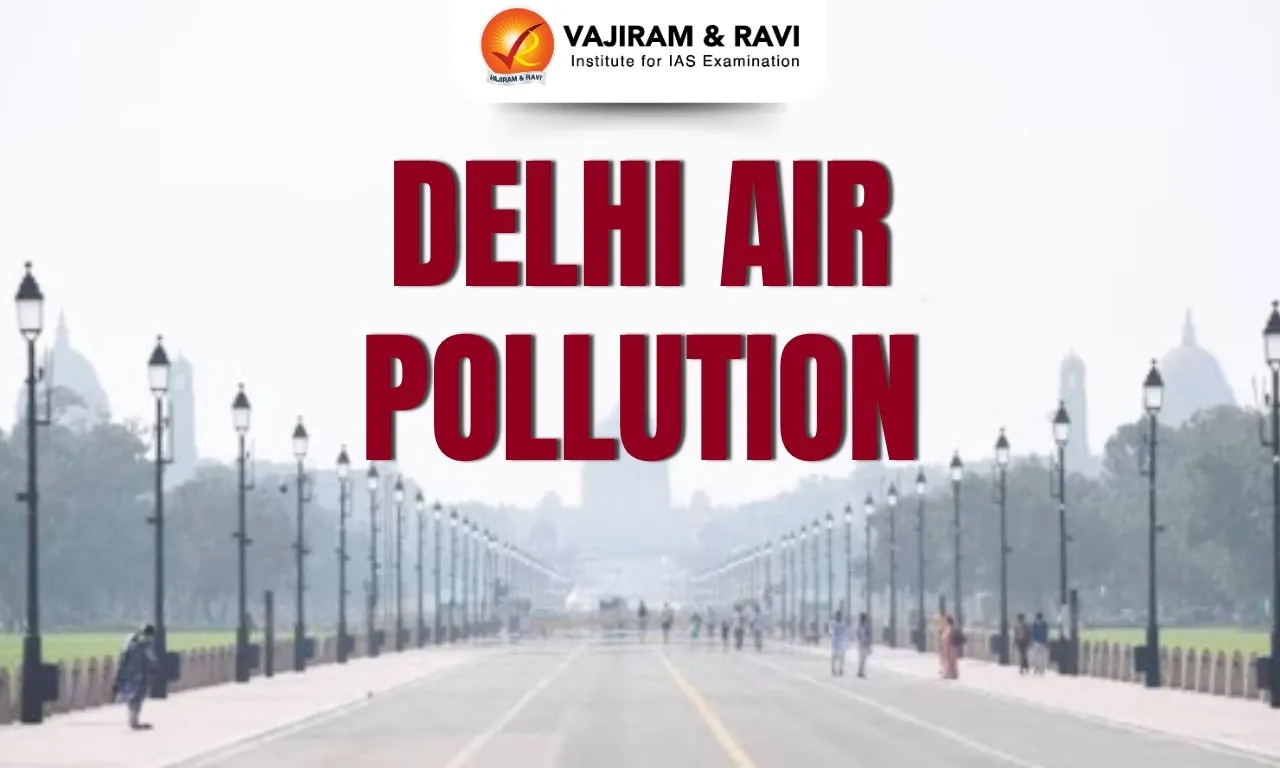
Delhi’s Air Pollution Explained: How the DSS Tracks the Real Polluters

Delhi Air Pollution

Delhi Air Pollution Latest News

  • As Delhi braces for its annual winter air pollution spike, the Decision Support System (DSS) for Air Quality Management has been reactivated. 
  • Developed by the Indian Institute of Tropical Meteorology (IITM), Pune, the DSS uses numerical models to identify and estimate daily contributions of different pollution sources — including vehicles, industries, dust, and farm fires — to particulate matter levels (PM2.5 and PM10).
  • It also projects how various emission-control measures could impact air quality. 
  • While recent rain and winds have temporarily kept pollution levels low, officials warn that cooler temperatures, shifting wind patterns, and increasing stubble burning in Punjab and Haryana are likely to worsen air quality in the coming weeks.

What’s Choking Delhi’s Air: Farm Fires or Traffic 

  • According to Decision Support System (DSS) data, farm fires have so far contributed minimally to Delhi’s pollution
  • On October 5, stubble burning accounted for only 0.22% of PM2.5 levels, and on October 6, it contributed nothing at all, based on VIIRS satellite data that track active fire counts.
    • VIIRS, or Visible Infrared Imaging Radiometer Suite, is a set of instruments aboard polar-orbiting weather satellites that produce data streams that monitor changes in surface vegetation, including fires.
  • Though paddy harvesting has started in Punjab, the Indian Agricultural Research Institute (IARI) reported no residue burning events across six states on October 6, and only 210 fires since September 15 — far below previous years.
  • At present, transport emissions are the biggest source of Delhi’s pollution
  • Other contributors include residential sources (4–5%) and industries (3–5%), underscoring that urban emissions, not farm fires, currently dominate Delhi’s air pollution.

How the DSS Tracks and Forecasts Delhi’s Pollution

  • The Decision Support System (DSS), developed by IITM Pune, operates on a 10-km horizontal grid to generate five-day forecasts and insights on Delhi’s air quality. 
  • It quantifies:
    • how emissions from Delhi and 19 neighbouring districts affect the city’s air;
    • the share of eight key emission sectors (like transport, industries, and households) in Delhi’s pollution;
    • the impact of biomass burning in nearby states; and
    • how emission-control measures could influence severe pollution events.
  • The DSS also uses climatological fire and emission data to predict short-term pollution levels. 
  • However, it currently runs only during winter, limiting year-round tracking. 
  • The Council on Energy, Environment and Water (CEEW) has recommended continuous operation and advanced modelling to make it more effective.

DSS Accuracy Questioned Amid Outdated Emissions Data

  • Experts have raised concerns over the accuracy of the Decision Support System (DSS) due to its reliance on a four-year-old emissions inventory from 2021, which affects the precision of source-wise pollution estimates.
  • According to IITM officials, a new emissions inventory is being prepared to improve forecasting accuracy. 
  • Environmental researchers stressed that updated, real-time data are vital for implementing targeted pollution-control measures.
  • Last year, the Commission for Air Quality Management (CAQM) had temporarily suspended the DSS over data reliability issues, but it remains the only active system providing source-wise pollution analysis for Delhi. 
  • IITM maintains that once the new dataset is integrated, the DSS’s estimates will become significantly more accurate and reliable.

Source: IE | ToI

Delhi Air Pollution FAQs

Q1: What is the Decision Support System (DSS)?

Ans: The DSS is a modelling tool developed by IITM Pune to identify and forecast the contribution of different pollution sources to Delhi’s air quality.

Q2: Which source contributes most to Delhi’s air pollution now?

Ans: Currently, the transport sector is the largest contributor to PM2.5 levels, followed by residential and industrial emissions, according to DSS data.

Q3: How does DSS forecast pollution?

Ans: It runs on a 10-km grid, using emissions and climatological data to provide five-day forecasts and sector-wise contributions to air pollution.

Q4: Why is DSS data questioned?

Ans: Experts say DSS relies on a four-year-old emissions inventory from 2021, which can reduce the accuracy of its real-time source attribution.

Q5: How can the DSS be improved?

Ans: Researchers recommend updating emissions data and operating DSS year-round to strengthen forecasting accuracy and inform policy decisions.


Nobel Prize 2025 in Medicine: How Scientists Unlocked the Body’s Immune Secrets

Nobel Prize in Medicine

Nobel Prize in Medicine Latest News

  • The 2025 Nobel Prize in Physiology or Medicine, the first of this year’s awards, has been jointly given to Mary E. Brunkow and Fred Ramsdell of the USA, and Shimon Sakaguchi of Japan, for their groundbreaking discoveries on the human immune system.
  • Their work represents two interconnected phases — Sakaguchi’s earlier research laid the foundation, while Brunkow and Ramsdell’s later findings complemented and completed it, together advancing understanding of immune regulation and tolerance. 
  • The Medicine Prize traditionally opens the Nobel season, followed by those for Physics, Chemistry, Literature, Peace, and Economics.

The Discovery: Key Cells That Prevent the Body from Attacking Itself

  • The 2025 Nobel Prize in Medicine laureates — Mary Brunkow, Fred Ramsdell, and Shimon Sakaguchi — were honoured for discovering the mechanism of peripheral immune tolerance
  • Their research revealed regulatory T cells, the body’s “immune security guards,” which prevent immune cells from attacking healthy tissues. 
  • This breakthrough has been crucial to understanding autoimmune diseases and developing targeted therapies for immune-related disorders and cancers.
    • For years, scientists were puzzled by how the immune system fights infections without harming the body’s own cells. 
    • By the 1980s, they understood central tolerance, where self-reactive T cells are eliminated. But this couldn’t explain all immune regulation.
    • In 1995, Shimon Sakaguchi provided groundbreaking evidence for a special class of T cells, later called regulatory T cells, which act as “police” preventing other T cells from attacking healthy tissues.

Read About: Nobel Prize Winners 2025

The Immune System and the Discovery of Regulatory T Cells

  • The immune system protects the body from thousands of microbes daily, distinguishing between harmful invaders and the body’s own healthy cells. 
  • When this identification fails, it leads to autoimmune diseases or organ transplant rejection.
  • T cells are central to this defence: helper T cells detect threats, while killer T cells destroy them. 
  • Traditionally, scientists believed the thymus gland ensured immune tolerance by filtering out self-attacking T cells — a process called central tolerance.
  • However, the 2025 Nobel laureates — Mary Brunkow, Fred Ramsdell, and Shimon Sakaguchi — discovered an additional layer of control.
  • This control involved regulatory T cells, which act as immune system “security guards”, preventing other T cells from attacking the body’s own tissues. 
  • This breakthrough transformed the understanding of immune regulation and opened new paths for treating autoimmune and transplant-related disorders.

Shimon Sakaguchi’s Discovery of Regulatory T Cells

  • In the mid-1990s, Shimon Sakaguchi challenged prevailing scientific views by proposing that certain specialised T cells act as “security guards” of the immune system, preventing excessive immune reactions.
  • Through experiments on mice without a thymus, into which mature T cells were later injected, he identified a unique class of cells — now known as regulatory T cells — that suppress other T cells attacking the body’s own tissues.
  • Although initially overlooked due to skepticism from earlier unconvincing studies, Sakaguchi’s insight later became a cornerstone of modern immunology, redefining how the body maintains self-tolerance.

Brunkow and Ramsdell Linked the FOXP3 Gene to Immune Regulation

  • Working independently from Sakaguchi, Mary Brunkow and Fred Ramsdell studied sick male mice and traced their condition to a mutation linked to a rare human autoimmune disorder called IPEX. 
  • Both the mouse disease and IPEX were caused by defects in the FOXP3 gene.
  • Subsequent research confirmed that the FOXP3 gene is crucial for the development of regulatory T cells — the same immune “security guards” that Sakaguchi had discovered earlier. 
  • Together, their complementary findings explained how the immune system maintains self-tolerance and laid the scientific foundation for the 2025 Nobel Prize in Medicine.

How the Nobel-Winning Discoveries Are Transforming Medicine

  • The discoveries of regulatory T cells and the FOXP3 gene have revolutionised immune-regulation research, opening new therapeutic pathways for several major diseases.
  • In cancer, scientists are exploring ways to block regulatory T cells that shield tumours from immune attacks, helping the body’s defences target cancer cells more effectively.
  • In contrast, for autoimmune diseases, treatments aim to enhance regulatory T cell activity to suppress harmful immune responses that damage healthy tissues.
  • These insights are also improving organ transplant success, helping prevent rejection by fine-tuning the immune system’s response. 
  • Overall, the discoveries have laid the groundwork for precision immunotherapy and targeted treatment innovations.

Source: IE | IE | TH

Nobel Prize in Medicine FAQs

Q1: Who won the 2025 Nobel Prize in Medicine?

Ans: Mary Brunkow, Fred Ramsdell, and Shimon Sakaguchi won for discoveries revealing how the immune system prevents attacking the body’s own cells.

Q2: What did the laureates discover?

Ans: They identified regulatory T cells and the FOXP3 gene, explaining how the immune system maintains balance and prevents autoimmune diseases.

Q3: What is the role of regulatory T cells?

Ans: Regulatory T cells act as “security guards,” stopping other T cells from attacking healthy tissues and maintaining immune tolerance.

Q4: Why is the FOXP3 gene important?

Ans: The FOXP3 gene controls the development of regulatory T cells; mutations in it cause autoimmune disorders like IPEX syndrome.

Q5: How do these discoveries impact medicine?

Ans: Their work underpins new immunotherapies — weakening regulatory T cells to fight cancer, or boosting them to treat autoimmune diseases and aid transplants.

MGNREGA – Centre Mandates Minimum Spending on Water Conservation Works

MGNREGA

MGNREGA Latest News

  • The Ministry of Rural Development (MoRD) has amended Schedule-I of the Mahatma Gandhi National Rural Employment Guarantee Act (MGNREGA), 2005.
  • This is to ensure a minimum proportion of funds is allocated for water conservation and harvesting works across rural India. 
  • The amendment aims to address India’s deepening groundwater crisis and promote sustainable rural livelihoods.

Background - Understanding Schedule-I of MGNREGA

  • MGNREGA provision: Every state government shall introduce a scheme to provide at least 100 days of guaranteed employment in a financial year to every rural household, based on demand.
  • Schedule-I: Lists permissible public works and defines the scheme’s minimum features.
  • Amendment power: While changes to the Act need Parliament’s approval, the Centre can amend the Schedule via notification (issued by the Ministry of Rural Development [MoRD]) — done nearly 24 times since 2005.

The Latest Amendment

  • The amendment inserts a new proviso mandating minimum expenditure on water-related works at the block level, depending on groundwater status.
  • Earlier, 60% of district-level works (in terms of cost) had to create productive assets directly linked to agriculture and allied activities through development of land, water and trees.
  • Now, the focus has shifted from district-level to block-level implementation.
  • Proportion of expenditure on water works: Categories as per -
    • For over-exploited rural blocks (groundwater extraction>100%), minimum 65% of MNREGA funds for water-related works.
    • For critical rural blocks (90–100%) - 65%
    • For semi-critical (70–90%) - 40%
    • For safe (≤70%) - 30%
  • Reference of (above) categorisation: 
    • The Central Ground Water Board’s (CGWB) Dynamic Ground Water Resources Assessment Report (2024) serves as the reference for categorisation.
    • As per CGWB’s report, there are total 6,746 blocks, out of which -
      • Over-exploited blocks are 751 (11.13%)
      • Critical: 206 (3.05%)
      • Semi-critical: 711 (10.54%)
      • Safe: 4,951 (73.39%)
      • Saline: 127 blocks

Likely Benefits of the Decision

  • Out of the Rs 86,000 crore allocated for MGNREGS in FY 2025–26, about Rs 35,000 crore is expected to be directed toward water-related works.
  • The states with the highest number of over-exploited and critical blocks will gain the most funds - Rajasthan (214), Punjab (115), Tamil Nadu (106), Haryana (88), Uttar Pradesh (59).

Significance for Rural India

  • Encourages climate-resilient rural infrastructure.
  • Aligns MGNREGA with the Jal Shakti Abhiyan and Atal Bhujal Yojana.
  • Reduces groundwater stress through community-based interventions.
  • Promotes employment generation in water management sectors.

Way Forward

  • Integrated planning: Convergence with schemes like PM Krishi Sinchayi Yojana (PMKSY) and watershed programmes.
  • Capacity building: Training for Gram Sabhas and local engineers for scientific water management.
  • Monitoring and transparency: Use of GIS mapping and real-time dashboards for implementation tracking.
  • Sustainability focus: Promote recharge structures, afforestation, and soil-water conservation.

Conclusion

  • The amendment marks a strategic shift in India’s rural employment and water management framework. 
  • By linking MGNREGA works to groundwater sustainability, the government seeks to tackle one of India’s most pressing environmental challenges while strengthening rural livelihoods and climate resilience. 
  • Effective execution at the block and Gram Panchayat levels will be crucial for realising these objectives.

Source: IE

MNREGA FAQs

Q1: Why did the Centre amend Schedule-I of the MGNREGA, 2005?

Ans: The amendment mandates a minimum expenditure on water conservation and harvesting works to address groundwater depletion.

Q2: What are the key changes introduced in the recent amendment to Schedule-I of MGNREGA?

Ans: The Centre has specified block-level minimum spending targets on water-related works—65% for over-exploited/critical, etc., based on CGWB categorisation.

Q3: How does the Central Ground Water Board (CGWB) classify blocks under the new framework?

Ans: Blocks are classified as Over-exploited (>100% extraction), Critical (90–100%), Semi-critical (70–90%), and Safe (≤70%).

Q4: Which states are expected to benefit most from the amended MGNREGA norms?

Ans: States like Rajasthan, Punjab, Tamil Nadu, Haryana, and UP will benefit most due to their high number of over-exploited groundwater blocks.

Q5: How does the MGNREGA amendment contribute to India’s broader water security goals?

Ans: By ensuring targeted investments in water conservation, the amendment strengthens groundwater recharge and promotes sustainable agriculture.

Securities Transaction Tax – Explained

Securities Transaction Tax

Securities Transaction Tax Latest News

  • The Supreme Court has agreed to examine the constitutional validity of the Securities Transaction Tax (STT) under the Finance Act, 2004, following a petition alleging that the levy amounts to double taxation and violates fundamental rights.

About Securities Transaction Tax (STT)

  • The Securities Transaction Tax (STT) is a direct tax levied on the purchase and sale of securities listed on recognised stock exchanges in India. 
  • Introduced through the Finance Act of 2004, STT was designed to simplify taxation on securities trading and curb tax evasion in the capital market. 
  • It is administered by the Central Board of Direct Taxes (CBDT) under the Ministry of Finance.

Objective and Rationale

  • Before 2004, profits from stock market trading were taxed under capital gains, but tax evasion was rampant due to underreporting of transactions. 
  • STT was introduced to create a transparent and traceable mechanism for collecting taxes on market transactions. 
  • The idea was to impose a small, upfront tax at the point of transaction, ensuring tax compliance and generating consistent revenue for the government.
  • Essentially, STT acts as a Transaction-Based Tax (TBT), collected automatically when a security is traded, making it difficult to evade. 
  • This has improved tax buoyancy from capital market activities and reduced speculative trading in the long term.

Structure and Applicability

  • STT applies to transactions executed on recognised stock exchanges involving:
    • Equity shares of listed companies.
    • Derivatives, including futures and options.
    • Equity-oriented mutual funds (purchase and sale of units).
    • Equity-oriented ETFs (Exchange-Traded Funds).
  • The rates of STT vary depending on the type of transaction and whether it is a purchase or sale
  • STT is automatically deducted by the stock exchange and deposited into the government’s account, ensuring administrative simplicity and minimal scope for evasion.

Impact on Investors and Traders

  • While STT has streamlined the taxation process and improved compliance, its impact varies across investor categories:
    • Long-term investors view STT as manageable, given that it simplifies reporting and exempts them from certain documentation.
    • High-frequency traders and day traders, however, argue that STT increases transaction costs and reduces profit margins, particularly for intraday or derivative trading where profit spreads are minimal.
    • Unlike Tax Deducted at Source (TDS), STT is non-refundable, even if the trader incurs losses. This makes it punitive for loss-making transactions, as the tax applies to all trades, irrespective of profit or loss.
  • Despite these concerns, STT has been a steady revenue contributor, generating over ₹30,000 crore annually for the central exchequer in recent years.

News Summary

  • On October 6, 2025, the Supreme Court of India decided to examine the constitutional validity of the Securities Transaction Tax (STT) under the Finance Act, 2004
  • The Court issued a formal notice to the Union Government, specifically the Ministry of Finance, seeking its response to the petition.

Key Grounds of the Challenge

  • Violates Fundamental Rights: The tax allegedly infringes on the fundamental rights to equality (Article 14), the right to trade or practice a profession (Article 19(1)(g)), and the right to livelihood and dignity (Article 21).
  • Constitutes Double Taxation: The petitioner argues that market participants already pay Capital Gains Tax on profits from trading, and paying STT on the same transaction constitutes double taxation.
  • Arbitrary and Unjustified: The plea highlights that STT is imposed irrespective of profit or loss. A trader operating at a loss must still pay STT, making it punitive in nature and equivalent to taxing the act of the profession itself.
  • Lacks Refund Provisions: Unlike TDS, which is adjusted or refunded at the end of the financial year, STT offers no such provision for refund, even in the case of losses or no gains.
  • The petition also pointed out that while STT was initially introduced as a deterrent to tax evasion, its continued imposition without adjustment mechanisms has led to unfair tax burdens on retail and professional traders alike.

Background and Judicial Context

  • The STT has been in force since 2004 and has faced criticism from sections of market participants, though previous challenges were dismissed as policy matters. 
  • This fresh petition, however, brings constitutional arguments into focus, prompting the Supreme Court to scrutinise its fairness and proportionality under Article 265, which states that no tax shall be levied or collected except by authority of law.
  • If the court finds merit in the arguments, it could potentially redefine the legal basis of transaction-based taxes in India.

Possible Implications

  • A ruling against the tax could affect government revenue streams and compel a redesign of securities taxation.
  • Alternatively, the Court could uphold STT but recommend procedural reforms, such as introducing refund or offset mechanisms similar to TDS.
  • The verdict will likely set a precedent for how transactional taxes are treated under the constitutional framework of economic equality and fairness.

Source: TH

Securities Transaction Tax FAQs

Q1: What is the Securities Transaction Tax (STT)?

Ans: STT is a direct tax levied on the purchase and sale of securities listed on recognized stock exchanges in India.

Q2: When was STT introduced in India?

Ans: STT was introduced through the Finance Act of 2004 to prevent tax evasion and ensure transparency in market transactions.

Q3: Why is the constitutional validity of STT being challenged?

Ans: The Supreme Court is reviewing a petition claiming that STT violates fundamental rights and results in double taxation.

Q4: Who filed the petition against STT?

Ans: The petition was filed by Aseem Juneja, a stock market trader, through advocate Siddhartha K. Garg.

Q5: What could be the implications of the Supreme Court’s ruling on STT?

Ans: The verdict could lead to reforms in securities taxation, refund provisions, or potential changes in government revenue mechanisms.

Enquire Now