

Nobel Prize 2025: How Innovation Drives Economic Growth

Nobel Prize

Nobel Prize 2025 Latest News

  • The 2025 Nobel Prize in Economics has been awarded to Joel Mokyr, Philippe Aghion, and Peter Howitt for their pioneering work in explaining innovation-driven economic growth.
  • The Royal Swedish Academy of Sciences announced that half the prize will go to Mokyr, with the remaining half shared by Aghion and Howitt. 
  • Their research highlights how technological progress and innovation act as key drivers of long-term prosperity.

2025 Economics Nobel Laureates: Pioneers of Innovation-Led Growth

  • Joel Mokyr (Netherlands), Professor at Northwestern University, was recognised “for identifying the prerequisites for sustained growth through technological progress.”
  • Philippe Aghion (France), Professor at Collège de France, INSEAD, and LSE, and Peter Howitt (Canada, 1946), Professor at Brown University, jointly received the other half of the prize “for the theory of sustained growth through creative destruction.”
  • Their combined work has deepened global understanding of how innovation, knowledge, and competition fuel long-term economic prosperity.

Joel Mokyr’s Theory of “Useful Knowledge”

  • Joel Mokyr’s research seeks to explain why global economic growth has accelerated and sustained over the past 200 years, breaking centuries of stagnation. 
  • His work, grounded in economic history, identifies how the systematic creation and application of knowledge triggered the Industrial Revolution and continues to sustain progress today.

The Concept of “Useful Knowledge”

  • Mokyr proposed that sustained growth depends on a continuous flow of “useful knowledge”, which he divided into two interconnected parts:
    • Propositional Knowledge: Understanding why things work — derived from scientific theories and natural observations.
    • Prescriptive Knowledge: Knowing how things work — practical, reproducible instructions or “recipes” that enable implementation, such as technical drawings or process manuals.
  • He argued that before the Industrial Revolution, innovators possessed ample propositional knowledge but lacked strong prescriptive knowledge, limiting their ability to apply scientific ideas to real-world production.

The Turning Point: Scientific Revolution and Reproducibility

  • According to Mokyr, the transformation began in the 16th and 17th centuries, when scientists started to use precise measurements, controlled experiments, and reproducible results. 
  • This new scientific discipline created a feedback loop between theoretical understanding and practical application — a dynamic exchange that laid the foundation for continuous technological improvement.

From Theory to Application: Examples of “Useful Knowledge”

  • Mokyr illustrated his theory with examples such as:
    • The steam engine’s evolution, enabled by deeper insights into atmospheric pressure and vacuums.
    • The advancement of steel production, made possible by understanding how oxygen reduces carbon content in molten iron.
  • These innovations exemplify how tighter feedback between scientific discovery and practical engineering created self-sustaining progress, driving industrialisation and modern economic growth.

Policy Lessons from Joel Mokyr’s Work: Skills and Openness as Pillars of Sustained Growth

  • Joel Mokyr’s research offers two key policy insights for achieving long-term, innovation-led economic growth.
  • First, new ideas succeed only when supported by abundant practical, technical, and commercial skills
    • The policy takeaway is that governments must invest heavily in skilling and vocational training to transform innovation into sustained prosperity.
  • Second, Mokyr emphasised that societies must remain open to change
    • Innovation inevitably creates winners and losers, and resistance from entrenched interests can stifle progress. 
    • Therefore, policymakers must foster a culture that embraces technological disruption and mitigates its social costs through inclusive, adaptive institutions.

Aghion and Howitt’s Theory of Creative Destruction: Modelling Innovation and Growth

  • Economists Philippe Aghion and Peter Howitt built a mathematical model of “creative destruction”, explaining how innovation drives economic growth by continuously replacing old technologies and firms with new ones.
  • Their model assumes that firms invest in research and development (R&D) to create new, patentable products, giving them temporary monopoly power. 
  • However, innovation is cumulative and competitive — a new firm can develop a better product that displaces the incumbent, shifting profits and market dominance to itself.
  • This constant cycle of innovation and replacement fuels long-term economic growth, but also brings instability and structural change. 
  • Aghion and Howitt’s framework allows economists to study the optimal level of R&D investment in a free-market economy, balancing innovation incentives against the disruptions caused by technological progress.

Balancing Innovation and Efficiency: How Much Should Governments Subsidise R&D

  • According to Philippe Aghion and Peter Howitt’s model of creative destruction, government support for research and development (R&D) requires a careful balance between encouraging innovation and avoiding inefficiency.
  • On one hand, when new innovations replace old technologies, society continues to benefit from the older inventions even after their creators stop earning profits. 
    • This social spillover effect justifies public subsidies for R&D, ensuring firms remain motivated to innovate despite diminishing private returns.
  • On the other hand, when an innovation offers only incremental improvements but yields disproportionately high monopoly profits for the innovating firm, excessive R&D spending can become socially inefficient. 
    • In such cases, subsidies may overstimulate research investment with limited societal gains.
  • Thus, the optimal level of R&D support depends on the structure of each economy, the pace of technological change, and the extent of knowledge spillovers — a balance policymakers must strike to achieve sustained, innovation-driven growth.

Source: TH | IE

Nobel Prize 2025 FAQs

Q1: Who won the 2025 Nobel Prize in Economics?

Ans: Joel Mokyr, Philippe Aghion, and Peter Howitt won for their pioneering work explaining how innovation and technological progress sustain long-term global economic growth.

Q2: What is Joel Mokyr’s key contribution?

Ans: Mokyr introduced the concept of “useful knowledge,” showing how scientific theory and practical skills together fueled the Industrial Revolution and sustained modern economic progress.

Q3: What theory did Aghion and Howitt develop?

Ans: They built the “creative destruction” model, explaining how innovation continuously replaces older technologies and firms, driving growth but also causing structural change.

Q4: What policy lessons emerge from Mokyr’s work?

Ans: Governments must invest in skilling and maintain openness to change, ensuring that innovation translates into prosperity while managing social disruption.

Q5: Should R&D be subsidised according to Aghion and Howitt?

Ans: Their model suggests a balance — subsidies encourage innovation but must avoid overinvestment when societal benefits from incremental improvements are limited.

Supreme Court Issues Landmark Order to Protect Pedestrians and Enforce Road Safety

Road Safety

Road Safety Latest News

  • In a major step to address India’s rising road fatalities, the Supreme Court has issued comprehensive directions to improve pedestrian safety and regulate road discipline
  • Pedestrians remain the most vulnerable road users, accounting for 20.4% of total fatalities in 2023, with 35,221 deaths—double the share in 2016. 
  • Additionally, over 54,000 two-wheeler riders died last year due to non-compliance with helmet norms, highlighting the urgent need for stronger enforcement and safer infrastructure.

Supreme Court Issues Comprehensive Blueprint for Pedestrian and Road Safety

  • A Supreme Court bench of Justices JB Pardiwala and KV Viswanathan issued the directives while hearing a PIL on road safety highlighting rising pedestrian deaths.
  • The Court observed that the lack of specific laws and the poor enforcement of existing rules to remove encroachments from footpaths compel pedestrians to walk on roads, increasing their vulnerability to accidents.

Nationwide Footpath Audit in Top 50 Cities

  • It directed NHAI and other road-owning agencies to audit existing footpaths across India’s top 50 cities with populations exceeding one million — including Delhi, Mumbai, Chennai, Lucknow, and Kolkata — where 4,604 pedestrians were killed in 2023.
  • The audit must prioritise crowded areas such as markets, railway stations, bus stands, religious and educational institutions, and accident-prone stretches (15–20 spots per city).
  • Authorities must identify deficiencies in width, height, and surface quality of footpaths and propose remedial measures to ensure safety and accessibility.

Adoption of Indian Roads Congress (IRC) Pedestrian Safety Standards

  • The Court endorsed the IRC 103-2022 guidelines on pedestrian infrastructure, mandating:
    • Footpath width: 4 m (residential) to 6.5 m (high-street areas)
    • Footpath height: 150 mm
    • Anti-skid surfaces and tactile paving for the visually impaired
    • Wheelchair ramps and bollards to deter illegal parking
  • The NHAI, State Governments, and Municipal Authorities must also set up an online grievance redressal system for public complaints and suggestions regarding encroachments and maintenance of footpaths.

Strict Enforcement of Helmet Rules

  • The Court ordered stringent implementation of helmet laws for two-wheeler riders and passengers.
  • Authorities must use electronic surveillance systems (such as traffic cameras) to detect violations and submit reports on:
    • Number of offenders penalised
    • Amounts collected through challans
    • Licenses suspended
  • These details are to be regularly reported to the Supreme Court.

Curbing Wrong-Lane Driving

  • To address lane discipline violations, the Court recommended:
    • Automated cameras and graduated fines
    • Coloured or textured lane markings (for bus/cycle lanes)
    • Dynamic lighting, rumble strips, and tyre killers at conflict points
    • Real-time dashboards displaying lane violation data to raise public awareness and improve compliance.

Regulation of Headlights and Banning Illegal Flashers

  • The MoRTH, State Transport Departments, and traffic police must:
    • Prescribe limits for maximum luminance and beam angles in headlights.
    • Conduct vehicle fitness checks and penalise non-compliance.
    • Launch targeted drives against modified or excessively bright headlights.
  • A complete ban on unauthorised red-blue strobe lights and illegal hooters must be enforced through seizures, market crackdowns, and penalties.
  • Additionally, nationwide awareness campaigns will be conducted to educate drivers and pedestrians about the dangers of dazzling headlights, flashing lights, and illegal hooters, promoting safer and more disciplined road use across India.

States Directed to Frame Rules for Pedestrian Safety and Road Design Standards

  • Following the Supreme Court’s order, all states and union territories (UTs) must formulate and notify rules within six months under two key provisions of the Motor Vehicles Act (MV Act):
    • Section 138(1A): To regulate the activities and access of non-mechanically propelled vehicles and pedestrians on public roads and highways.
    • Section 210-D: To establish standards for the design, construction, and maintenance of roads other than national highways.
  • Together, these rules aim to create a legal and infrastructural framework to enhance pedestrian safety and improve road design standards across India.

A Decade of Judicial Intervention: Timeline of the Supreme Court’s Road Safety Case

  • 2012 – The Petition is Filed
    • Orthopaedic surgeon Dr. S. Rajasekaran filed a Public Interest Litigation (PIL) highlighting India’s rising road fatalities despite multiple laws and court orders. He compared the scale of deaths and injuries to “national genocides.”
  • 2014 – Road Safety Recognised as a Public Health Issue
    • In April 2014, the Supreme Court acknowledged road safety as a matter of public health and governance, not just traffic control.
    • It established the Supreme Court Committee on Road Safety (SCCoRS) headed by Justice K.S. Radhakrishnan, focusing on the “four Es” — Enforcement, Engineering, Education, and Emergency Care.
    • States were directed to report within three months on vehicle fitness, licensing, enforcement, and emergency care facilities.
  • 2017 – Mandatory State-Level Road Safety Mechanisms
    • By November 30, 2017, with fatalities still rising, the Court issued binding directions to all States and Union Territories to:
      • Adopt Road Safety Policies
      • Establish State Road Safety Councils and District Road Safety Committees (DRSCs) under the Motor Vehicles Act, 1988
      • Create dedicated Road Safety Funds
      • Set up trauma care centres in every district
    • The Ministry of Road Transport and Highways (MoRTH) later launched a Road Safety Committee Portal to track state compliance.
  • 2024 – Victim Compensation Strengthened
    • In January 2024, the Court reviewed the Hit-and-Run Compensation Scheme (2022) and raised compensation to ₹2 lakh for deaths and ₹50,000 for grievous injuries.
    • It directed police to inform victims or families about these entitlements immediately after accidents.
  • 2025 – “Golden Hour” Cashless Treatment Mandated
    • In January 2025, the Supreme Court ordered the nationwide rollout of a cashless “Golden Hour” scheme.
    • This was to ensure immediate medical treatment for accident victims within the first critical hour, when timely care can significantly improve survival rates.

Source: IE | HT | SCCO

Road Safety FAQs

Q1: Why did the Supreme Court issue new road safety directions?

Ans: To address rising pedestrian fatalities and ensure safer roads through better infrastructure, stricter enforcement, and state-level road design regulations.

Q2: What are the key directives for pedestrian safety?

Ans: NHAI and states must audit footpaths in 50 major cities, improve width, height, and surfaces, and set up online grievance systems for public complaints.

Q3: What standards did the Court endorse?

Ans: The Court approved the Indian Roads Congress (IRC 103-2022) guidelines mandating anti-skid surfaces, ramps, tactile paving, and 4–6.5 m footpath widths.

Q4: What new rules must states frame?

Ans: Within six months, states must notify rules under Sections 138(1A) and 210-D of the MV Act to regulate pedestrian access and road design.

Q5: How has the Supreme Court shaped road safety over time?

Ans: Since 2012, it has mandated state road safety councils, trauma centres, compensation schemes, and cashless “Golden Hour” treatment for accident victims.

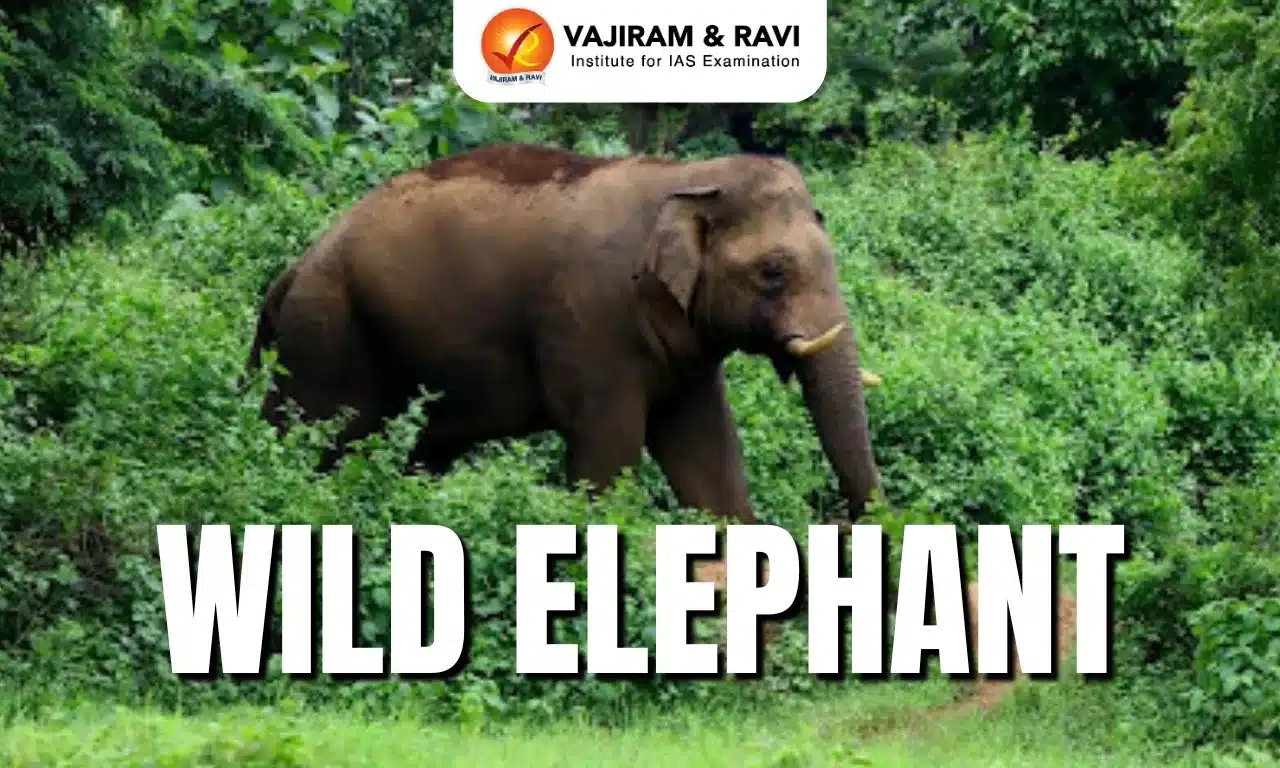
Wild Elephant Numbers Decline by 18% – DNA-Based Census

Wild Elephant

Wild Elephant Latest News

  • India’s first-ever DNA-based elephant census has estimated 22,446 wild elephants, showing an 18% decline since 2017.

Elephants in India: Symbol of Heritage and Ecological Balance

  • Elephants hold deep ecological, cultural, and spiritual significance in India. 
  • Revered in mythology as symbols of strength and wisdom, elephants are also keystone species, playing a vital role in maintaining forest ecosystems. 
  • India is home to over 60% of the global Asian elephant population, making it crucial to the survival of the species.
  • Habitat and Distribution
    • Asian elephants in India are distributed across four major landscapes: the Western Ghats, North Eastern Hills and Brahmaputra floodplains, Shivalik Hills and Gangetic plains, and Central India and Eastern Ghats
    • Major elephant-bearing states include Karnataka, Assam, Tamil Nadu, Kerala, Uttarakhand, and Odisha. Together, these states account for more than 80% of India’s elephant population.
  • Threats to Elephant Populations
    • Habitat fragmentation and encroachment due to agriculture, mining, and infrastructure projects.
    • Human-elephant conflict often results in loss of lives and property on both sides.
    • Poaching for ivory and retaliatory killings.
    • Barriers to migration corridors, including railways, highways, and power lines, disrupt traditional movement patterns.
    • Invasive plant species and land-use changes, particularly in the Western Ghats and Northeast, are further degrading habitats.
  • Conservation Status and Legal Protection
    • The Asian elephant (Elephas maximus) is listed as Endangered on the IUCN Red List and is included in Schedule I of India’s Wildlife (Protection) Act, 1972, providing the highest level of legal protection. 
    • It is also included in Appendix I of CITES, which prohibits international trade of elephant parts.
  • Conservation Efforts in India
    • India has implemented several measures for elephant conservation, including:
    • Project Elephant (1992) - A flagship initiative to ensure long-term conservation and management of elephants and their habitats.
    • Elephant Corridors Programme - Identification and protection of 101 critical corridors across India to facilitate safe migration.
    • Gaj Yatra Campaign - A nation-wide awareness initiative promoting coexistence between humans and elephants.
    • Technology-based monitoring - Use of satellite mapping, camera traps, and mobile apps such as M-Stripes for population estimation and conflict management.

News Summary - India’s First DNA-Based Elephant Census Sets a New Benchmark

  • India’s wild elephant population has been estimated at 22,446, according to the Synchronous All-India Elephant Estimation (SAIEE) 2021–25, released by the Ministry of Environment, Forest and Climate Change (MoEFCC), Project Elephant, and the Wildlife Institute of India
  • This marks an 18% decline from the 2017 estimate of 27,312 elephants, though officials emphasise that the figures are “not directly comparable” due to the introduction of new, scientific methodology.
  • The latest estimation, India’s first-ever DNA-based count, provides a new baseline for future monitoring and conservation planning. 
  • It used genetic mark-recapture methods, previously employed for tiger population surveys, to offer a more accurate picture of elephant abundance and distribution.

How the DNA-Based Census Was Conducted

  • The 2025 elephant census combined ground-based surveys, satellite mapping, and DNA fingerprinting.
  • Over 21,000 dung samples were collected from elephant landscapes across 20 states.
  • DNA extracted from these samples helped identify 4,065 unique elephants using genetic markers.
  • The final population estimate was derived through a mark-recapture model, which extrapolates total population size based on identified individuals.
  • The exercise covered 6.7 lakh km of forest trails and examined over 3.1 lakh dung plots.
  • Unlike traditional methods, which relied on direct sightings or dung-decay rates, the new approach provides a statistically robust, non-invasive, and replicable method for long-term monitoring.

Key Findings of the 2025 Report

  • Total Population: 22,446 elephants (range: 18,255-26,645).
  • Regional Distribution:
    • Western Ghats: 11,934 elephants (largest stronghold).
    • North Eastern Hills and Brahmaputra Floodplains: 6,559 elephants.
    • Shivalik Hills and Gangetic Plains: 2,062 elephants.
    • Central India and Eastern Ghats: 1,891 elephants.
  • State-Wise Leaders:
    • Karnataka: 6,013 elephants (highest), Assam: 4,159, Tamil Nadu: 3,136, Kerala: 2,785, Uttarakhand: 1,792, Odisha: 912

Ecological Insights and Conservation Concerns

  • The report emphasises the fragmentation of elephant habitats across key landscapes, with corridors increasingly disrupted by railways, roads, hydropower projects, and encroachments
  • In the Western Ghats, elephants are losing connectivity due to coffee and tea plantations, fencing, and land-use changes. In Central India, mining pressures remain a major threat.
  • Experts note that while the apparent decline in population may partly reflect methodological improvements, it also underscores real pressures on elephant habitats
  • The government has therefore called for stronger enforcement of habitat protection, restoration of ecological corridors, and community-based conflict mitigation measures.

Significance of the New Baseline

  • The SAIEE 2025 marks a scientific milestone in wildlife monitoring, establishing a reliable and repeatable framework for tracking elephant populations. 
  • Officials assert that this new approach will enable better integration of genetic, spatial, and ecological data, thereby strengthening India’s ability to plan conservation strategies under Project Elephant 2.0, a revamped version currently being drafted.

Source: TH | IE

Wild Elephant FAQs

Q1: What is India’s current estimated elephant population?

Ans: As per the 2025 DNA-based census, India has an estimated 22,446 wild elephants.

Q2: Which state has the highest elephant population in India?

Ans: Karnataka hosts the largest population, with 6,013 elephants.

Q3: Why are the 2025 and 2017 elephant estimates not comparable?

Ans: The 2025 count used a new DNA-based method instead of traditional sighting or dung-decay approaches.

Q4: What are the major threats to India’s elephant population?

Ans: Habitat fragmentation, human-elephant conflict, poaching, and infrastructure development are key threats.

Q5: What is the significance of the SAIEE 2025 census?

Ans: It provides India’s first scientific, DNA-based baseline for future elephant monitoring and conservation planning.

Enquire Now

