Need for Preserving Dogri Language – Explained

Dogri Language

Dogri Language Latest News

  • A recent study has highlighted the sharp decline in the use and literacy of the Dogri language in Jammu and Kashmir, raising concerns over the erosion of regional linguistic heritage despite its official recognition.

Preserving Dogri Language: Reviving India’s Endangered Linguistic Heritage

  • The Dogri language, once a vibrant symbol of Jammu’s cultural identity, is now at a critical juncture. 
  • Despite being recognised as one of the 22 official languages of India and one of the five official languages of Jammu and Kashmir, the language is experiencing a gradual erosion from public life, particularly among the younger generation and urban populations.
  • According to a recent study, the decline of Dogri reflects a broader global trend of linguistic homogenisation, where smaller regional and indigenous languages are disappearing under the dominance of global and national tongues. 
  • India, as per UNESCO’s report, leads the world in the number of dialects at risk of extinction, having lost over 220 languages in the past five decades.

The Cultural and Linguistic Significance of Dogri

  • Dogri belongs to the Indo-Aryan branch of the Indo-European language family and is mainly spoken in the Jammu region of Jammu and Kashmir, parts of Himachal Pradesh, and by diaspora communities across North India. 
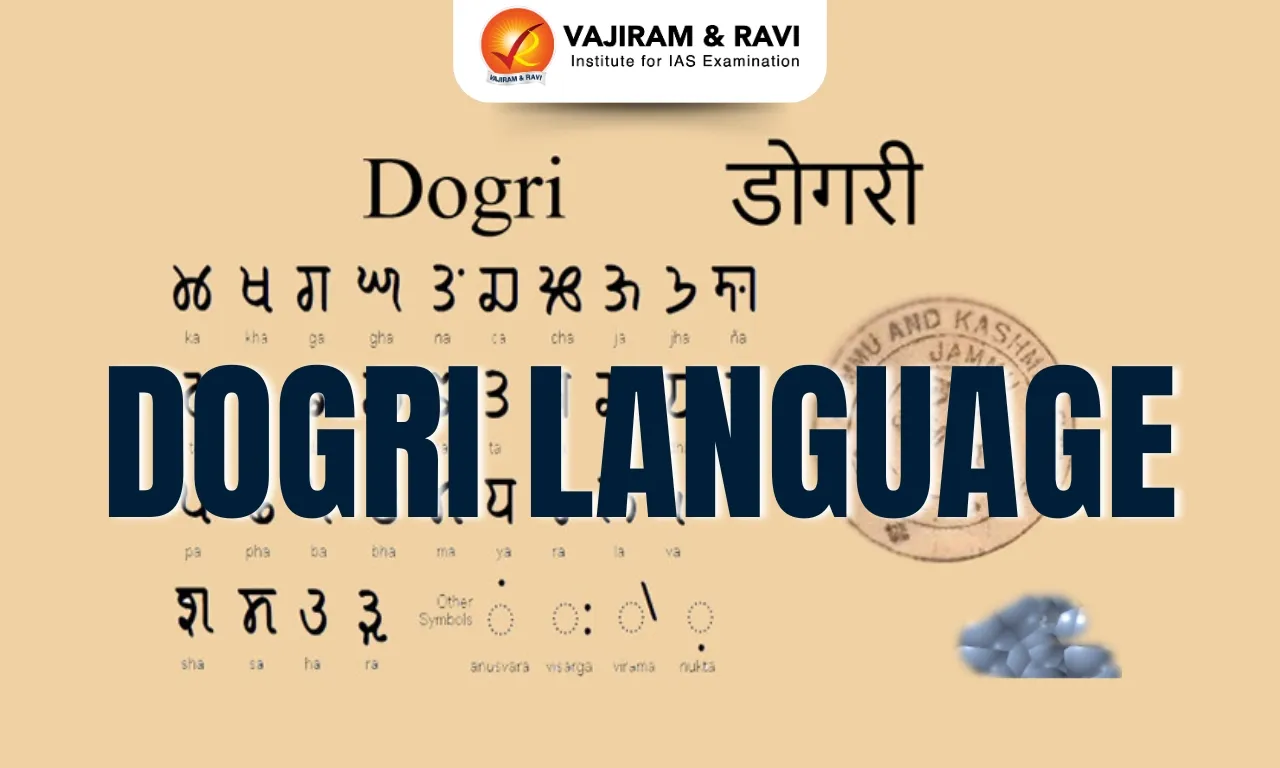
  • It is written in both Devanagari and Takri scripts, and is deeply embedded in the Dogra culture, expressed through its literature, folklore, crafts, and oral traditions.
  • The inclusion of Dogri in the Eighth Schedule of the Constitution in 2003 and its recognition under the Jammu and Kashmir Official Languages Act, 2020, marked significant milestones in its journey. 
  • However, linguistic recognition on paper has not translated into functional visibility. Dogri remains largely absent from school curricula, administrative communication, and media content.

Causes Behind the Decline

  • The decline of Dogri in Jammu and surrounding regions can be understood through three interlinked factors: policy neglect, generational disconnect, and urban influence.
  • Policy Gaps and Limited Institutional Support
    • Dogri received formal recognition much later than other regional languages such as Urdu and Hindi. 
    • This delay resulted in a lack of infrastructure for linguistic promotion, from teacher training to the development of textbooks and cultural programming.
    • A survey conducted across 20 locations in the Jammu region revealed that 48% of respondents believed the government had failed to provide adequate support for Dogri’s inclusion in education and public discourse. 
    • 43% said the language offered little economic relevance, which disincentivised younger generations from learning it.
  • Generational Disconnect
    • Dogri’s decline is particularly visible across generations. Respondents above 60 years of age showed full proficiency in speaking and moderate reading and writing skills, while the 21-40 age group showed near-zero literacy in Dogri
    • Among those under 20 years of age, no proficiency in reading or writing Dogri was recorded, signalling a complete breakdown in intergenerational transmission.
  • The Rural-Urban Divide
    • The linguistic divide between rural and urban populations further compounds the issue. 
    • While 56% of rural respondents said they actively speak Dogri, only 45% of urban respondents reported the same. 
    • Writing proficiency was even lower, 15% in rural areas and merely 4% in urban settings

Broader Linguistic Context in India

  • Dogri’s decline is part of a wider linguistic crisis in India. 
  • The People’s Linguistic Survey of India (PLSI) estimates that nearly half of India’s 780 languages could vanish in the next 50 years if current trends persist. 
  • Factors such as migration, economic aspirations, and cultural homogenisation have weakened local linguistic ecosystems.
  • Experts argue that the hegemony of English as the academic and aspirational language has pushed regional languages to the periphery. 
  • This has created a cultural paradox where multilingualism thrives superficially, but linguistic diversity weakens structurally.

Revival Strategies and the Way Forward

  • Reviving Dogri requires a multi-pronged cultural and policy approach that focuses on education, awareness, and community engagement.
  • Integration into Education
    • Dogri must be introduced at the primary and secondary education levels, ensuring that children develop early familiarity with the language. 
    • The National Education Policy (NEP) 2020 already advocates the use of mother tongues as mediums of instruction, a provision that could benefit Dogri if implemented effectively in Jammu’s schools.
  • Digital and Media Promotion
    • Dogri’s visibility can be enhanced through digital archives, online courses, and media content in Dogri, including films, radio shows, and social media platforms. 
    • The Dogri Sanstha and the Sahitya Akademi have made notable contributions, but a sustained state-backed effort is necessary to expand their reach.
  • Cultural Incentives and Employment Opportunities
    • Language preservation efforts must tie linguistic skills to economic and cultural incentives
    • Government jobs, tourism initiatives, and creative industries could reward bilingualism in Dogri and Hindi, reinforcing the idea that preserving one’s language can have practical advantages.
  • Census and Linguistic Data Updates
    • The absence of updated linguistic data due to the delay in the 2021 Census has hindered precise policy formulation. 
    • Reviving census-based linguistic mapping is essential to identify endangered dialects and allocate funding accordingly.

Source: TH

Dogri Language FAQs

Q1: What is the Dogri language?

Ans: Dogri is an Indo-Aryan language spoken primarily in the Jammu region and recognised in India’s Eighth Schedule.

Q2: When did Dogri receive constitutional recognition?

Ans: Dogri was included in the Eighth Schedule of the Indian Constitution in 2003.

Q3: What are the key reasons for Dogri’s decline?

Ans: Lack of government support, generational disconnect, and urban preference for Hindi and English are major causes.

Q4: How does Dogri proficiency differ between rural and urban areas?

Ans: Around 56% of rural residents actively speak Dogri, compared to only 45% in urban areas.

Q5: What steps can help revive Dogri?

Ans: Integrating Dogri into education, expanding media presence, and linking language skills with employment opportunities can help its revival.
India – Spain Bilateral Relationship

India – Spain Bilateral Relationship

What’s in today’s article?

  • Why in the News?
  • Historical Ties
  • Bilateral Trade
  • Strategic Significance and Cooperation
  • Common Groupings and Multilateral Cooperation
  • Indian Diaspora in Spain
  • News Summary

Why in the News?

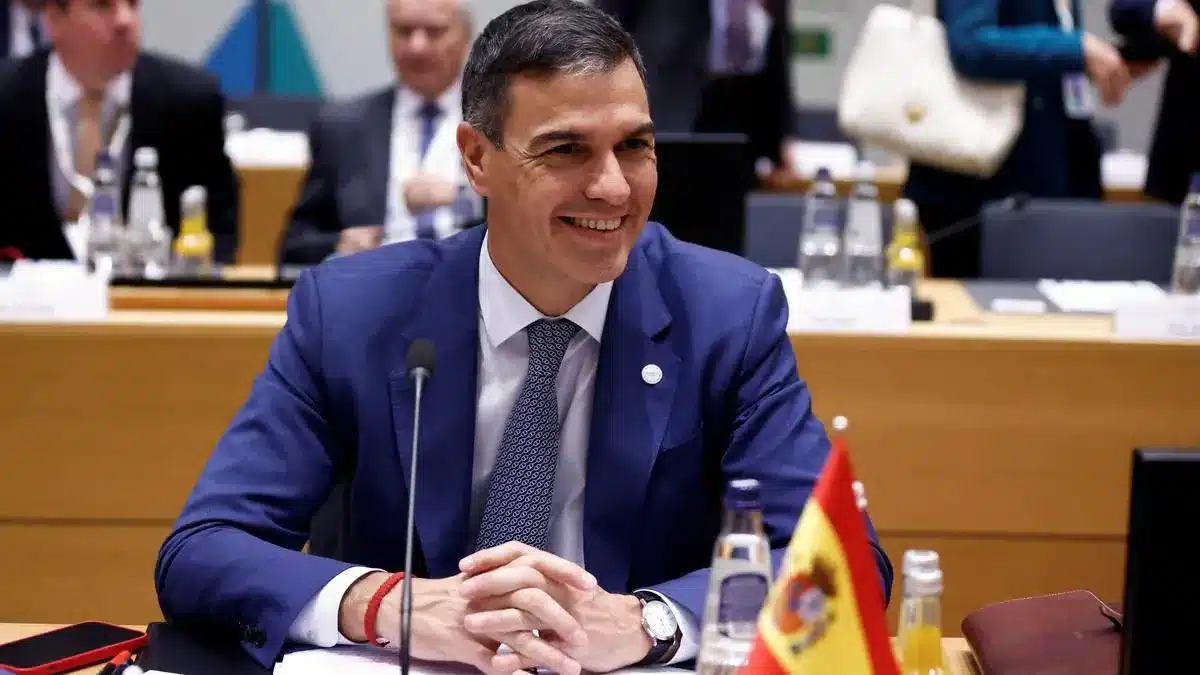
  • Spain’s Prime Minister Pedro Sanchez is reaching Vadodara, Gujarat where he and Prime Minister Narendra Modi will hold bilateral talks and inaugurate the Final Assembly Line (FAL) plant of the C295 medium-lift tactical transport aircraft for the Indian Air Force.

Historical Ties

  • India and Spain established diplomatic relations in 1956.
  • Though limited historical interaction existed prior, both nations’ shared democratic values, commitment to global peace, and respect for multiculturalism have formed a strong foundation for bilateral ties.
  • High-level visits, including by heads of state, have helped solidify this relationship over the years.

Bilateral Trade

  • Spain is India’s 6th largest trade partner in the European Union.
  • Total Trade (2023): US$ 8.25 billion, a 4.2% increase from the previous year.
  • India’s Exports to Spain: US$ 6.33 billion (growth of 5.2%).
  • India’s Imports from Spain: US$ 1.92 billion (growth of 1.05%).
  • Top Indian Exports: Mineral fuels, chemical products, iron and steel, electrical machinery, apparel, nuclear reactors, marine products, and articles of iron and steel.
  • Foreign Direct Investment:
    • Spanish FDI in India:
      • US$ 3.94 billion (April 2000 - December 2023), with Spain as India’s 16th largest investor.
      • Over 280 Spanish companies in India, focusing on metallurgical industries, renewable energy, automotive, ceramics, and infrastructure.
      • Major destinations: Maharashtra, Tamil Nadu, Gujarat, Andhra Pradesh, Karnataka.
    • Indian FDI in Spain:
      • ~US$ 900 million; 80 Indian companies in Spain, primarily in software & IT services, pharmaceuticals, chemicals, and logistics.
      • India is among Spain’s top 30 investors globally and top 5 from Asia.
  • Trade and Economic Cooperation Framework:
    • India-Spain Joint Commission on Economic Cooperation (JCEC): Established in 1972; has met 12 times, with the latest meeting in April 2023 in New Delhi.
    • India-Spain CEOs Forum: Established in 2015; first formal meeting held in May 2017 in Madrid.

Strategic Significance and Cooperation

  • The strategic relationship between India and Spain is steadily expanding, encompassing areas like defense, counter-terrorism, and cybersecurity:
  • Defense:
    • Spain is a key partner in India’s defense modernization, providing expertise in aerospace and naval technology.
    • Spanish companies are involved in defense projects, including submarine technology transfer and collaborations for military aircraft.
  • Counter-Terrorism:
    • India and Spain actively cooperate in counter-terrorism and intelligence sharing, recognizing mutual concerns regarding global terrorism.
  • Sustainable Development and Climate Action:
    • Both nations are committed to the Paris Agreement and actively collaborate on climate change and sustainable development goals.
    • Spain’s expertise in renewable energy aligns with India’s goal of increasing clean energy sources.

Common Groupings and Multilateral Cooperation

  • India and Spain engage collaboratively through several multilateral platforms, including:
  • United Nations: Both countries work together on issues of global peace, sustainable development, and humanitarian aid.
  • G20: As members of the G20, India and Spain share a commitment to addressing global economic challenges, trade reforms, and climate action.
  • International Solar Alliance (ISA): Spain is a member of the ISA, aligning with India’s initiative to promote solar energy and sustainable development.

Indian Diaspora in Spain

  • The Indian community in Spain is relatively small but has been growing in recent years.
  • Population: As of 2023, approximately 55,000 Indians reside in Spain, contributing actively to sectors like hospitality, retail, IT, and healthcare.

News Summary

  • Spain’s Prime Minister Pedro Sanchez is visiting India from October 28 to 30, marking the first visit by a Spanish PM in 18 years.
  • Sanchez will hold bilateral talks with Prime Minister Narendra Modi in Vadodara, Gujarat, where they will inaugurate the Final Assembly Line (FAL) plant for the C295 tactical transport aircraft.
    • It is India's first private military transport aircraft production facility, developed by Tata Advanced System Limited (TASL) in partnership with Airbus Defence and Space.
  • Under the $2.5 billion contract, 56 C295 aircraft will be supplied, with the first 16 delivered from Spain and the remaining 40 assembled in Vadodara.
  • This plant is expected to produce its first "Made-in-India" C295 in 2026, with all deliveries by 2031.
  • The project aims to build a complete industrial ecosystem in aerospace manufacturing in India, with contributions from Bharat Electronics Ltd, Bharat Dynamics Ltd, and private MSMEs.
  • Sanchez will also visit Mumbai, engaging with industry leaders and film personalities to strengthen collaborations in trade, media, and entertainment.
  • Several MoUs are expected to be signed, furthering cooperation in trade, IT, infrastructure, renewable energy, defence, pharma, and tourism.

Q1. What do you mean by Diplomacy and Foreign Policy?

Diplomacy focuses on conducting international relations through diplomatic channels, while foreign policy encompasses the broader framework of a state's strategies, goals, and approaches in its interactions with other countries.

Q2. What is the difference between Statecraft and Diplomacy?

Diplomacy (using non-lethal means to manage interstate relations and foreign threats) and statecraft (managing state power to promote national interests) are the key tools by which a nation? s foreign policy is implemented.

Source: Spanish PM Pedro Sanchez to visit India from October 27-29: MEA | EOI

Special Intensive Revision (SIR) – Election Commission Launches SIR of Electoral Rolls in 12 States and UTs

Special Intensive Revision sir

Special Intensive Revision (SIR) Latest News

  • The Election Commission of India (ECI) has initiated a Special Intensive Revision (SIR) of electoral rolls in 12 states and Union Territories, covering 51 crore electors, to ensure the purity and accuracy of electoral rolls
  • This is the first nationwide SIR since 2002–2005, aimed at eliminating duplicate, migrated, or ineligible entries and verifying voter eligibility.

Background and Significance

  • Evolution of SIR:
    • The ECI’s order (June 2025) mandated all registered electors to fill new enumeration forms, while those added after the last intensive revision (2002–2005) must submit eligibility and citizenship-related documents.
    • The first phase began in Bihar, where Assembly elections are due, serving as a pilot model for future nationwide implementation.
  • Constitutional and legal basis:
    • The ECI cites Article 326 of the Constitution — which restricts voting rights to Indian citizens aged 18 and above — to justify verifying eligibility (not citizenship cancellation).
    • The process is governed by the Representation of the People Act, 1950.
    • This ensures free and fair elections, one of the basic features of the Constitution.
  • Need for SIR: 
    • Political parties have repeatedly complained about the “impurity” in electoral rolls due to - 
      • Migration and multiple registrations.
      • Non-removal of deceased voters.
      • Wrongful inclusion of non-citizens.
    • The SIR had been conducted 8 times since 1951 and the last intensive revision was conducted between 2002–2005, followed by only summary revisions.

Coverage and Implementation

  • States and UTs involved: The SIR will be conducted in A&N Islands, Chhattisgarh, Goa, Gujarat, Kerala, Lakshadweep, MP, Puducherry, Rajasthan, Tamil Nadu, UP, and West Bengal.
  • Key dates:
    • Enumeration period: Begins November 4, 2025.
    • Draft roll publication: December 9, 2025.
    • Final roll publication: February 7, 2026.
  • Excluded state: Assam is excluded due to ongoing NRC process and distinct Citizenship Act provisions.

Operational Details

  • Enumeration process:
    • 5.33 lakh Booth Level Officers (BLOs) to conduct house-to-house verification.
    • All electors must submit enumeration forms by December 4 to remain on the draft roll.
    • Eligibility proof required for those not traceable to 2002–2005 SIR rolls.
  • Documents accepted:
    • 13 types of documents, including Aadhaar and extracts from Bihar’s SIR roll.
    • Aadhaar to be used only for identity verification, not citizenship proof.
    • Electors born after July 1, 1987 must submit proof of parents’ eligibility.

Special Cases and Administrative Coordination

  • Bihar’s experience:
    • Bihar’s SIR concluded on September 30, 2025, with electors reducing by 6% (to 7.42 crore).
    • No appeals were filed against Electoral Registration Officers’ (ERO) decisions.
    • This model will guide the second phase of SIR.
  • State-specific considerations:
    • Urban areas like Delhi and Chandigarh have low linkage with old rolls due to migration.
    • Weather conditions and local body elections have also influenced state selection and timelines.

Challenges and Controversies

  • Legal challenge: The Supreme Court is hearing petitions questioning -
    • ECI’s authority to verify citizenship of registered voters.
    • The procedure adopted in Bihar’s SIR.
  • Political opposition:
    • West Bengal CM termed it an “NRC through the backdoor”.
    • However, ECI maintains that constitutional bodies will carry out their respective roles independently.
  • Administrative: Tight timelines and document verification may burden BLOs and EROs.
  • Social: Risk of disenfranchisement if citizens lack documentary proof.

Way Forward

  • Transparency and technology: Use of the Voter Portal to help citizens trace old roll entries.
  • Electoral integrity: Purified rolls could reduce bogus voting and increase public trust.
  • Awareness campaigns: To ensure mass participation and timely documentation.
  • Data synchronization: Integration of digital databases to prevent duplication.
  • Periodic SIRs: Institutionalizing regular intensive revisions to maintain credibility.
  • Stakeholder engagement: Institutionalised consultations with political parties, civil society, and local administration before rollout.
    • Legal clarity: Seek SC guidance to define ECI’s powers under Article 326 and the RPA, 1950.
    • Document access facilitation: Simplify and digitise the process of submitting eligibility proofs, especially in rural and migrant-heavy areas.
  • Phased implementation: Adopt Bihar’s learnings for gradual state-by-state rollout instead of a single nationwide push.

Conclusion

  • The SIR of electoral rolls marks a major administrative reform to restore public trust in the electoral process. 
  • By verifying eligibility and updating voter lists, the EC aims to strengthen democratic legitimacy. 
  • However, political concerns and legal scrutiny highlight the delicate balance between ensuring voter purity and protecting voter rights.

Source: IE | IE

Special Intensive Revision (SIR) FAQs

Q1: What is the rationale behind the ECI’s decision to conduct a SIR of electoral rolls after two decades?

Ans: The SIR aims to ensure electoral purity by identifying duplicate, migrated, or ineligible entries.

Q2: How does the ECI’s power under Article 326 of the Constitution relate to its authority to conduct the SIR?

Ans: Article 326 empowers the ECI to justify verification of eligibility without infringing on citizenship status.

Q3: What administrative and political challenges are associated with implementing a nationwide SIR of electoral rolls?

Ans: The SIR faces challenges like document verification burdens, potential disenfranchisement due to lack of proof, political allegations of exclusion, etc.

Q4: What is the significance of involving political parties and CEOs in the preparation for the nationwide SIR?

Ans: Consultations with political stakeholders enhance transparency, reduce suspicion of bias, and promote collective ownership of electoral integrity.

Q5: How the SIR of electoral rolls aligns with the principles of free and fair elections in India?

Ans: By cleansing voter lists of inaccuracies while maintaining inclusiveness and transparency, the SIR upholds the constitutional principle of free and fair elections.

PM-SHRI Schools Scheme: Kerala’s U-turn and Political Row Explained

PM-SHRI

PM-SHRI Latest News

  • The PM-SHRI schools scheme has sparked a fresh political controversy in Kerala, as the CPI(M)-led LDF government reversed its earlier stance and agreed to implement the scheme by signing an MoU with the Centre.
  • The move has faced criticism from both the opposition and within the LDF itself, with the CPI objecting that it was not consulted and reminding that the Left had previously opposed the National Education Policy (NEP) 2020, under which the scheme operates.

PM-SHRI Schools: Model Institutions for Implementing NEP 2020

  • Approved in 2022, the PM Schools for Rising India (PM-SHRI) scheme aims to develop 14,500 schools across the country as model institutions showcasing the core principles of the National Education Policy (NEP) 2020. 
    • So far, 13,070 schools have been selected, including 1,533 Kendriya Vidyalayas and Navodaya Vidyalayas.
  • The scheme covers existing government and local body schools at the elementary, secondary, and senior secondary levels. 
  • These schools are expected to adopt innovative learning methods such as art-based and toy-based learning, introduce vocational education, and establish skill labs. 
  • They must ensure foundational literacy and numeracy, zero dropouts, and improved learning outcomes.
  • Curriculum will follow either the National Curriculum Framework (NCF) or the State Curriculum Framework (SCF) aligned with NEP 2020. 
  • Schools will be assessed through a School Quality Assessment Framework, with funding linked to their performance.
  • The scheme follows a 60:40 funding ratio between the Centre and states, aiming to transform schools into exemplars of modern, inclusive, and competency-based education.

States Implementing the PM-SHRI Scheme

  • With Kerala now agreeing to join, most Indian states have come on board with the PM Schools for Rising India (PM-SHRI) scheme.
  • Congress-ruled states such as Karnataka, Telangana, and Himachal Pradesh have implemented the scheme, along with AAP-ruled Punjab and Delhi, which had earlier relented after the Education Ministry stopped Samagra Shiksha funds.

States Opposing the Scheme

  • Only Tamil Nadu and West Bengal continue to hold out.
  • West Bengal objects to prefixing “PM-SHRI” to school names despite sharing project costs.
  • Tamil Nadu opposes the scheme because it implies adopting the National Education Policy (NEP) 2020 “in entirety.”

Conditions for Implementing the PM-SHRI Scheme

  • The implementation of the PM-SHRI scheme is closely linked to the Centre’s Samagra Shiksha programme, which shares the same 60:40 funding ratio between the Centre and states.

Link Between PM-SHRI and Samagra Shiksha Funding

  • The Centre has made PM-SHRI participation a condition for the release of Samagra Shiksha funds, which support key education initiatives such as:
    • Implementation of the Right to Education Act (RTE),
    • Provision of uniforms and textbooks for government school students,
    • Support for children with disabilities, and
    • Reimbursements to private schools for EWS admissions.
  • States that refused to implement PM-SHRI — including Kerala, Tamil Nadu, and West Bengal — did not receive Samagra Shiksha funds.

Kerala’s Funding Shortfall

  • Kerala has received no central funds for Samagra Shiksha in 2024-25 and 2025-26, and only a partial allocation in 2023-24, amounting to about ₹1,150 crore. 
  • The state has used its own share of funds to cover essential expenses like RTE entitlements, textbooks, and salaries, but scholarships, uniforms, and school grants remain pending.

Signing the MoU and NEP Clause

  • To access funds, Kerala recently signed an MoU with the Centre, which requires states to implement the NEP 2020 in entirety
  • However, Kerala’s General Education Minister clarified that the state will adopt only selective provisions of NEP, retaining control over its curriculum and textbooks while complying with central funding norms.

Source: IE

PM-SHRI FAQs

Q1: What is the PM-SHRI Schools Scheme?

Ans: Approved in 2022, it aims to develop 14,500 model schools showcasing NEP 2020 principles, focusing on innovation, inclusivity, and skill-based education.

Q2: Which states are implementing the scheme?

Ans: Most states, including Karnataka, Telangana, Punjab, and Delhi. Only Tamil Nadu and West Bengal continue to resist implementation.

Q3: Why is Kerala’s decision controversial?

Ans: Kerala’s LDF government reversed its earlier opposition to NEP-linked reforms, sparking criticism from CPI and Congress over political compromise.

Q4: What are the funding conditions for the scheme?

Ans: It follows a 60:40 Centre-state funding ratio. Non-implementing states risk losing Samagra Shiksha funds for school education.

Q5: How does the scheme link to NEP 2020?

Ans: PM-SHRI schools must adopt NEP guidelines, focusing on competency-based assessments, vocational training, and digital infrastructure to improve learning outcomes.

Mission for Aatmanirbharta in Pulses: India’s Push for Self-Reliance in Food Security

Aatmanirbharta in Pulses

Aatmanirbharta in Pulses Latest News

  • The Ministry of Agriculture has issued operational guidelines to launch the Mission for Aatmanirbharta in Pulses from the current rabi season, aiming to boost domestic pulses production and reduce import dependence.

Mission for Aatmanirbharta in Pulses: India’s 6-Year Plan for Self-Reliance

  • Launched by PM Modi on October 11, and first announced by Finance Minister Nirmala Sitharaman in the Union Budget 2025-26, the Mission for Aatmanirbharta in Pulses aims to make India self-sufficient in pulse production.
  • The six-year mission (2025-26 to 2030-31) has a total outlay of ₹11,440 crore. Its key focus areas include:
    • Developing and promoting climate-resilient, high-protein pulse varieties,
    • Enhancing productivity and expanding the area under pulses,
    • Improving post-harvest storage and management, and
    • Ensuring fair and remunerative prices for farmers.
  • By 2030-31, the mission targets: 
    • a 45% rise in production — from 242 lakh metric tonnes in 2023-24 to 350 lakh metric tonnes;
    • a 13% expansion in area (from 275 to 310 lakh hectares) and 
    • a 28% boost in yield (from 881 kg/ha to 1,130 kg/ha).

Current Status of Pulses Cultivation and Production in India

  • During 2023-24, pulses were cultivated over 275 lakh hectares across India. 
  • Rajasthan had the largest share with 54.67 lakh hectares, followed by Madhya Pradesh (51 lakh ha), Maharashtra (44 lakh ha), and Uttar Pradesh (30 lakh ha).
  • In terms of production, Madhya Pradesh led with 59.74 lakh metric tonnes, followed by Maharashtra (40 lakh MT), Rajasthan (33 lakh MT), and Uttar Pradesh (31 lakh MT), together contributing a major share of the total 242 lakh metric tonnes produced nationwide.
  • Nearly half of the total cultivated area and over 60% of production occur during the rabi season.
  • Among crops, gram (chana) dominates both in area and output, mainly grown in Maharashtra, Madhya Pradesh, Rajasthan, and Uttar Pradesh. 
  • Moong ranks second, largely cultivated in Rajasthan and Madhya Pradesh, followed by tur (arhar) grown in Karnataka, Maharashtra, and Uttar Pradesh. 
  • Urad is mainly produced in Madhya Pradesh, Uttar Pradesh, Tamil Nadu, and Maharashtra, while masoor (lentil) is concentrated in Madhya Pradesh and Uttar Pradesh.

Significance of the Mission for Aatmanirbharta in Pulses

  • India is both the world’s largest producer and consumer of pulses, yet domestic output falls short of demand.
  • Therefore, India is forced to rely on imports from Myanmar, Mozambique, Tanzania, Australia, and Canada — a trend that has grown in recent years.
  • According to NITI Aayog’s report, India’s pulses demand is projected to reach 268 lakh metric tonnes by 2030 and 293 lakh metric tonnes by 2047. To bridge this gap, boosting domestic production is essential.
  • Currently, India’s average yield (881 kg/hectare) lags far behind Canada (2,200 kg/ha) and China (1,815 kg/ha). 
  • The mission, therefore, seeks to raise productivity to 1,130 kg/hectare, making India self-reliant in pulses and reducing import dependence.

Focus on Tur, Urad, and Masoor in the Pulses Mission

  • The Mission for Aatmanirbharta in Pulses prioritises tur (arhar), urad, and masoor (lentil) as these three crops together account for about 34% of India’s total pulses area and make a major contribution to national production.
  • However, a large yield gap persists in these crops, which the mission aims to close through targeted interventions.
  • Out of the proposed 35 lakh hectare expansion, about 9 lakh hectares will be added for tur, mainly in Karnataka, Maharashtra, Uttar Pradesh, Gujarat, and Jharkhand, along with new cultivation in the Northeast.
  • Urad cultivation will expand by using rice fallow lands in Uttar Pradesh, Andhra Pradesh, and Maharashtra, while masoor will be promoted in rice fallows of West Bengal, Bihar, and Chhattisgarh.

How the New Pulses Mission Differs from the Earlier NFSNM Scheme

  • The Mission for Aatmanirbharta in Pulses replaces and expands upon the pulses component of the National Food Security and Nutrition Mission (NFSNM), introducing broader interventions and stronger farmer support.
  • Under the new framework, assistance for Front Line Demonstrations (FLDs) has been increased to ₹10,000 per hectare, up from ₹9,000 earlier, to promote advanced agricultural technologies.
  • A key change is the provision for 100% procurement of tur, urad, and masoor by NAFED and NCCF under the Price Support Scheme (PSS) of PM-AASHA for the next four years.
    • PM-AASHA, which stands for Pradhan Mantri Annadata Aay Sanrakshan Abhiyan, is an integrated scheme by the Indian government to ensure farmers receive remunerative prices for their produce and to make essential commodities affordable for consumers.
  • Procurement will be done directly from registered farmers through formal agreements, verified using Aadhaar-based biometric or facial authentication. Procurement of other pulses will continue as per regular PSS norms.

Implementation Strategy of the Pulses Mission

  • The Mission for Aatmanirbharta in Pulses will adopt a cluster-based approach to strengthen the entire agriculture value chain — from inputs to markets.
  • Each cluster will cover a minimum of 10 hectares (or 2 hectares in hilly and northeastern regions). 
  • These clusters and districts will be chosen from potential pulses-growing areas across India.
  • Selection will follow NITI Aayog’s classification of districts —
    • High Area–High Yield (HA–HY)
    • High Area–Low Yield (HA–LY)
    • Low Area–High Yield (LA–HY)
    • Low Area–Low Yield (LA–LY)
  • Priority will also be given to:
    • Rice fallow, rainfed, and watershed areas,
    • Districts under PM Dhan-Dhaanya Krishi Yojana,
    • Aspirational, border, and Left Wing Extremism (LWE)-affected districts,
    • Areas under Adarsh Gram Yojana,
    • Regions in the Northeast, Himalayan states, islands, and other backward areas,
    • And any other region approved by the State Steering Committee or notified by the Centre.

Source: IE | PIB | TH

Aatmanirbharta in Pulses FAQs

Q1: What is the Mission for Aatmanirbharta in Pulses?

Ans: A six-year initiative (2025–31) with ₹11,440 crore outlay to boost pulse production, productivity, and farmer income, reducing import dependence.

Q2: Why is the pulses mission significant?

Ans: India, the world’s largest pulses consumer, imports heavily. The mission targets yield improvement to make the country self-sufficient by 2030–31.

Q3: Which pulses are prioritised under the mission?

Ans: Tur, urad, and masoor — covering 34% of the total pulses area — are prioritised for area expansion and productivity improvement.

Q4: How does the mission differ from NFSNM?

Ans: It subsumes NFSNM’s pulses component, raises demonstration aid to ₹10,000/ha, and mandates 100% procurement of tur, urad, and masoor.

Q5: How will the mission be implemented?

Ans: Through a cluster-based approach across 10-hectare blocks, focusing on high-yield and aspirational districts, rainfed areas, and NE regions.

Global Diplomacy on the Responsible Use of AI in Warfare: India, US, and China’s Stand

Global Diplomacy on the Responsible Use of AI in Warfare: India, US, and China’s Stand

What’s in today’s article?

  • Why in News?
  • Responsible Use of Artificial Intelligence in the Military Domain (REAIM)
  • The AI Debate in Warfare
  • Stand of India, China, US and UN on AI use in weapons 

Why in News?

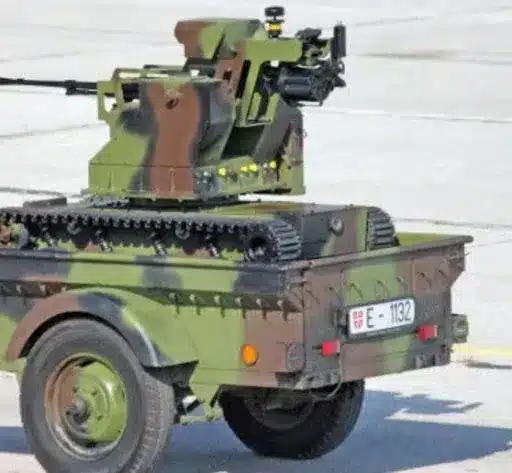
As military use of artificial intelligence (AI) expands, efforts to regulate its application in warfare are also intensifying. Conflicts like those in Ukraine and Gaza are becoming testing grounds for AI in combat.

India, despite its active role in promoting the development and safe use of AI in the civilian sector, has been largely absent from the global discussion on restricting its military applications. As international frameworks for AI arms control begin to take shape, it is crucial for India to engage and influence these discussions rather than remain on the sidelines.

Responsible Use of Artificial Intelligence in the Military Domain (REAIM)

  • About the summit
    • The Summit on Responsible Use of Artificial Intelligence in the Military Domain (REAIM) is part of a growing global effort to establish norms for AI's military applications.
    • This is the second iteration of the summit. It begins on September 9 in Seoul, co-hosted by Kenya, the Netherlands, Singapore, and the United Kingdom.
  • Objectives of the Korea Summit
    • The second REAIM summit in South Korea aims to build on the progress from the first summit and achieve a three-fold objective:
    • Understand the implications of military AI on global peace and security.
    • Implement new norms for using AI systems in military affairs.
    • Develop ideas for long-term global governance of AI in the military domain.
  • Outcome of the first summit
    • The first summit, held in February 2023 in The Hague, broadened the debate on military AI, focusing on issues like autonomous weapons or "killer robots."
    • A key concern is keeping humans in the decision-making loop on the use of force.
    • Discussions on lethal autonomous weapon systems (LAWS) have been ongoing at the United Nations since 2019.

The AI Debate in Warfare

  • Increased use of AI in warfare
    • The REAIM process has broadened the discussion on military AI beyond just "killer robots" to recognize the increasing role of AI in various aspects of warfare.
    • While AI has long been used for tasks like inventory management and logistical planning, its application in intelligence, surveillance, and reconnaissance (ISR) on the battlefield has significantly grown in recent years.
    • Leading militaries are now leveraging AI to process vast amounts of data, enhance situational awareness, speed up decision-making on the use of force, improve precision in targeting, limit civilian casualties, and increase the overall tempo of warfare.
  • Concerns Over AI in Warfare
    • Despite these perceived benefits, many critics caution that the allure of AI in warfare could be illusory and dangerous.
    • The rise of AI decision-making support systems (AI-DSS) is a critical area of debate under the REAIM process, with concerns over the risks and ethical implications of relying on AI for battlefield decisions.
  • Promoting responsible use of AI in military affairs
    • The REAIM process has shifted its focus from trying to reverse the AI revolution in military affairs to advocating for the responsible use of AI in warfare.
    • It is part of several global efforts—national, bilateral, plurilateral, and multilateral—aimed at promoting responsible AI.
    • At the end of the Hague summit, the United States issued a draft political declaration on responsible AI use, formalizing it in November 2023.
    • In 2020, the US had already released national guidelines for the military use of AI and has encouraged NATO allies to adopt similar standards.
    • NATO's 2021 strategy identified six principles for responsible AI use in military settings and released corresponding guidelines in July 2023, aiming to accelerate AI deployment in warfare while ensuring safety and responsibility.
    • As part of this effort, the US is also conducting a bilateral dialogue with China to discuss limiting AI’s impact on nuclear deterrence.

Stand of India, China, US and UN on AI use in weapons

  • US introduced resolution at the UNGA
    • The United States introduced a resolution on the responsible use of AI at the UN General Assembly (UNGA), co-sponsored by 123 countries and adopted by consensus.
    • While the UN's focus is broad, the REAIM process fosters more detailed discussions on military AI and aims to build a wide international coalition to establish new global norms.
    • Over 50 countries have endorsed the US's political declaration on responsible AI use in the military, and the US is reaching out to Global South countries for support.
  • India’s stand
    • India has taken a 'watch-and-wait' approach to this debate, carefully evaluating the long-term significance of these developments without fully committing to the new AI initiatives.
    • It did not endorse the “call to action” at The Hague summit and may or may not support the global AI blueprint expected at the Korea summit.
    • However, India risks being left behind if it remains passive in shaping these crucial norms.
    • India’s negative experience with nuclear arms control, where hesitation cost it the opportunity to shape global rules, serves as a reminder that it’s easier to influence global norms during the design phase rather than trying to change them after they are established.
  • Stand of China
    • China has been proactive, engaging in both strategic and regulatory discussions on military AI.
    • China talks about "intelligised warfare" and released a White Paper on military AI regulation in 2021. It also supported the Hague summit’s call to action.

Q.1. What is the objective of the REAIM summit on responsible AI use in warfare?

The REAIM summit seeks to establish norms for the responsible use of AI in military operations, focusing on global peace, security, and long-term governance, with input from various stakeholders including governments and tech companies.

Q.2. How does India’s stance on military AI differ from other major countries like the US and China?

While the US and China are actively shaping military AI policies, India has adopted a cautious, 'watch-and-wait' approach, analyzing the long-term implications of AI arms control before fully committing to global initiatives.

Source: Expert Explains: What is the responsible use of Artificial Intelligence in war; where India, US and China stand

Enquire Now