Supreme Court’s Advisory Opinion on Governor’s Powers

Advisory Opinion

Advisory Opinion Latest News

  • The Supreme Court has issued a significant advisory opinion under Article 143 of the Constitution, responding to a Presidential reference triggered by a two-judge Bench judgment from April 2025 related to delays in assent to State Bills. 

Background to the Presidential Reference

  • The Presidential reference arose due to the Supreme Court’s April 2025 judgment in State of Tamil Nadu vs. Governor of Tamil Nadu, which:
    • Mandated a three-month timeline for Governors and the President to act on Bills,
    • Declared such decisions judicially reviewable,
    • Exercised Article 142 powers to grant “deemed assent” to several pending Tamil Nadu Bills.
  • This ruling generated constitutional uncertainty, prompting the Union government to seek clarification on:
    • Whether courts can prescribe timelines,
    • Whether presidential inaction is justiciable,
    • Whether the Supreme Court’s Article 142 powers can override constitutional provisions. 

Scope of Questions Raised in the Reference

  • The reference placed 14 constitutional questions before a Constitution Bench, primarily relating to:
    • Interpretation of Article 200 and Article 201 regarding assent to State Bills,
    • Whether courts can intervene before a Bill becomes law,
    • The justiciability of delays,
    • The permissible boundaries of Article 142. 
  • These questions went to the heart of India’s federal structure and the functional relationship among State legislatures, Governors, and the Union.

Key Takeaways from the Supreme Court’s Advisory Opinion

  • The five-judge Bench delivered a comprehensive opinion, which reshapes constitutional understanding on several fronts.
  • Governor’s Options Under Article 200
    • The Court clarified that a Governor has three constitutionally recognised choices when presented with a Bill:
      • Assent,
      • Reserve the Bill for Presidential consideration,
      • Withhold assent and return the Bill to the legislature with observations.
        These options are explicitly grounded in the constitutional text. 
  • Discretion of the Governor
    • The Court held that the Governor enjoys discretion in choosing among these options and is not bound by the aid and advice of the Council of Ministers regarding assent-related decisions. 
    • This interpretation marks a significant shift from earlier decisions such as Shamsher Singh (1974) and Nabam Rebia (2016), which emphasised the primacy of ministerial advice. 
  • Limited Justiciability
    • Governor’s actions under Article 200 are generally not justiciable,
    • However, in cases of “glaring prolonged and unexplained inaction”, courts may issue a limited mandamus directing the Governor to act,
    • Courts cannot review the validity of the Governor/President’s decision before a Bill becomes law. 
  • No Judicial Timelines
    • A key reversal of the April 2025 judgment: the Court held that in the absence of constitutional timelines, the judiciary cannot prescribe time limits for Governors or the President to act on Bills. 
  • No ‘Deemed Assent’
    • The Court strongly rejected the concept of “deemed assent,” holding that the judiciary cannot substitute executive authority through Article 142. Assent-related decisions belong exclusively to the Governor or President. 

Issues Arising from the Opinion

  • Potential Undermining of Legislative Intent
    • The Court’s recognition of wide gubernatorial discretion contradicts earlier judicial positions and expert committee recommendations.
    • The Sarkaria Commission (1987) held that reserving Bills for the President should occur rarely, and only in cases of clear unconstitutionality.
    • Earlier Supreme Court cases insisted that Governors act on ministerial advice, not independent discretion.
    • The current opinion risks allowing Governors to delay or derail the legislative agenda of elected State governments. 
  • Concerns Over Lack of Timelines
    • The Punchhi Commission (2010) recommended a six-month limit for gubernatorial decisions.
    • The Supreme Court itself had earlier set non-textual timelines (e.g., in K.M. Singh, three months for Speakers to decide disqualification petitions).
    • Thus, critics argue that judicially crafted timelines can be constitutionally permissible when required to uphold democratic functioning. 
    • The current advisory opinion rejects such purposive interpretation. 

Way Forward

  • While the Governor represents the Union and the ideal of national unity, federalism is a basic structure of the Constitution. Moving forward:
    • Governors must exercise constitutional powers with responsible urgency,
    • The Centre must ensure the office is not used to thwart State governments,
    • Judicial oversight must remain available to prevent constitutional paralysis while respecting the separation of powers. 

Source: TH

Advisory Opinion FAQs

Q1: What triggered the Presidential reference?

Ans: A 2025 judgment prescribing timelines and granting deemed assent to pending Bills.

Q2: What options does a Governor have under Article 200?

Ans: Assent, return the Bill, or reserve it for the President.

Q3: Can courts set timelines for Governors or the President?

Ans: No, the Court held timelines cannot be judicially prescribed.

Q4: Is gubernatorial discretion subject to judicial review?

Ans: Only in extreme cases of prolonged unexplained inaction.

Q5: Can the Supreme Court grant ‘deemed assent’?

Ans: No, Article 142 cannot substitute constitutional powers of Governors/President.
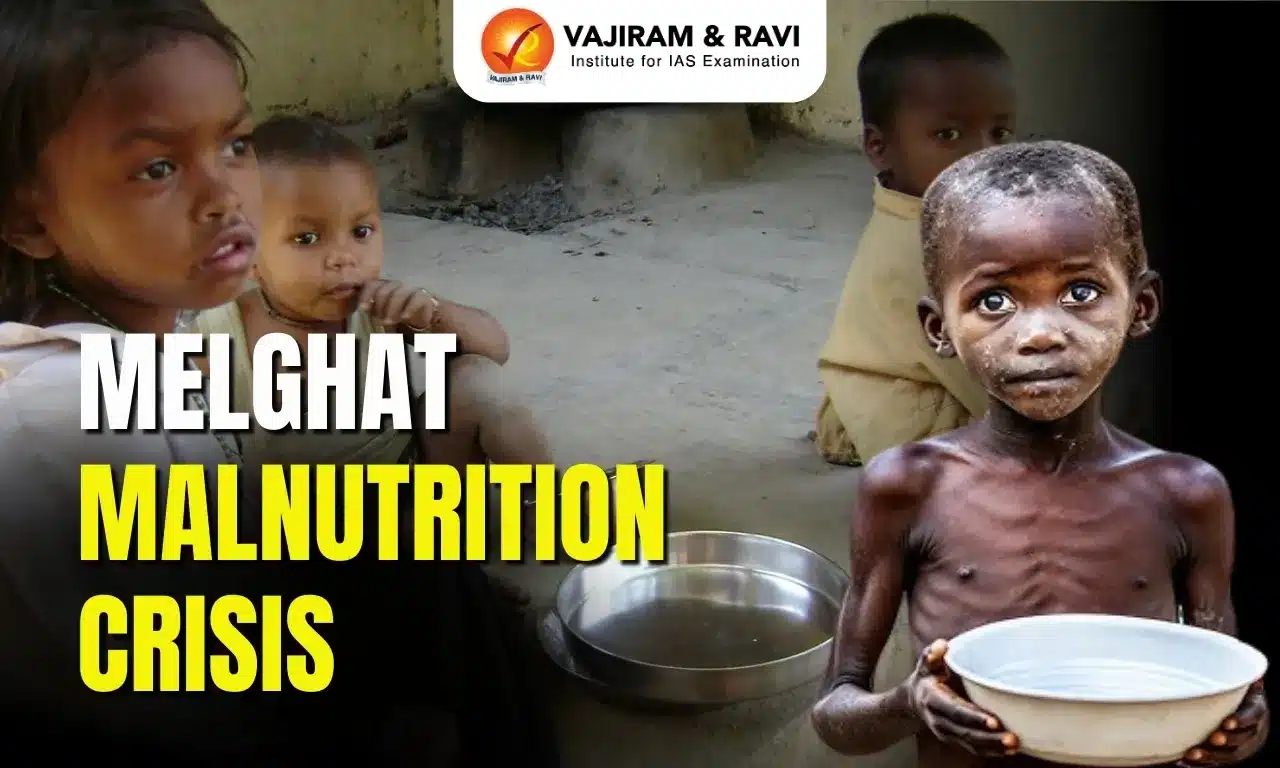
Melghat Malnutrition Crisis: Why Infant Deaths Persist and What Experts Recommend

Melghat Malnutrition Crisis

Melghat Malnutrition Crisis Latest News

  • Recently, the Bombay High Court sharply criticised the Maharashtra and Union governments for their extremely casual handling of the alarming rise in malnutrition-related infant deaths in Melghat, a tribal-dominated region in Amravati district.
  • A petitioner informed the court that 65 infants (0–6 months) had died due to malnutrition between June 2025 and now, and over 220 children were currently classified as Severe Acute Malnutrition (SAM) — with half at risk of dying without immediate intervention.

Melghat’s Persistent Malnutrition Crisis: Current Status

  • For over three decades, Melghat, home to predominantly Korku tribal communities, has struggled with chronic infant and maternal deaths linked to malnutrition and poor healthcare access. 
  • Despite multiple government schemes, malnutrition remains widespread due to:
    • Food insecurity
    • High infection rates
    • Poor access to healthcare
    • Severe anaemia

Infant Deaths: Fluctuating but Persistently High

  • Melghat comprises Dharni and Chikhaldara talukas with 324 villages. Infant deaths remain worryingly high.
  • Officials argue deaths stem not only from malnutrition but also:
    • Anaemia
    • Sickle cell disease
    • Pneumonia
    • Delayed treatment due to poor connectivity
  • However, the petitioner maintains that malnutrition exacerbates these illnesses, making them fatal without timely care.

Alarming Malnutrition Numbers

  • An affidavit submitted to the High Court shows:
    • 10,000 children identified with malnutrition (SAM) in November 2024
      • Dharni: 1,290 children
      • Chikhaldara: 788 children
  • The district administration claims interventions like:
    • Hot cooked food scheme (eggs & bananas 4 times a week)
    • Village Child Development Centres (VCDC)
  • But also acknowledges persistent “peripheral issues” like connectivity and healthcare delays.

Statewide Malnutrition Landscape

  • According to Maharashtra's Women & Child Welfare Minister (Poshan Tracker data, Feb 2025):
    • 1.82 lakh malnourished children in the state
    • 30,800 Severe Acute Malnutrition (SAM)
    • 1,51,643 Moderate Acute Malnutrition (MAM)
  • IIPS Mumbai also reports Maharashtra’s poor nutrition indicators:
    • 35% stunted
    • 35% underweight
    • 26% wasted
  • These figures show systemic shortcomings beyond Melghat.

Persistent Challenges Fueling Melghat’s Malnutrition and Infant Mortality Crisis

  • Melghat faces severe infrastructural deficits that delay urgent medical care:
    • Poor road conditions make reaching hospitals on time difficult.
    • Inadequate electricity supply affects homes and healthcare facilities.
    • Shortage of fully functional PHCs, forcing dependence on distant hospitals.
  • These gaps contribute directly to preventable infant and maternal deaths.

Fragmented Governance and Poor Coordination

  • Experts note that various government departments work in silos, leading to:
    • Irregular supply of nutrition supplements
    • Weak monitoring of malnutrition cases
    • Poor coordination in implementing policies
  • This fragmentation undermines even well-designed interventions.

Severe Shortage of Doctors and High Absconding Rates

  • Melghat continues to struggle with recruiting and retaining medical professionals - High absenteeism among doctors.
  • Despite improved salaries and incentives, difficult working conditions deter medical staff.

Cultural Preference for Traditional Healing

  • A large section of the tribal community still depends on bhoomkas (traditional healers).
  • Methods like damma (burning skin with hot iron tongs) delay scientific treatment and worsen conditions, particularly in sick infants.

Intergenerational Malnutrition Cycle

  • Health challenges often begin before birth:
    • Many tribal women enter pregnancy underweight and anaemic
    • They give birth to low-birth-weight babies with weak immunity
    • Limited healthcare access means infections go untreated, raising mortality risks
  • This perpetuates a cycle of malnutrition across generations.

Expert-Backed Solutions to Tackle Malnutrition in Melghat

  • Experts emphasise that eliminating malnutrition requires far more than food distribution. It demands a holistic, coordinated, and systems-based approach.
  • Strengthen the Healthcare Ecosystem
    • Build a robust maternal and child healthcare system.
    • Ensure timely care for infections, anaemia, and other co-morbidities.
    • Upgrade civic and health infrastructure across Melghat.
  • Empower ASHA Workers with Strong Training
    • Create a well-trained cadre of ASHA workers skilled in early identification of malnutrition.
    • Equip them to initiate timely referrals and follow-up interventions.
  • Integrate Health and Nutrition Interventions
    • Combine nutrition support with treatment of associated illnesses.
    • Implement coordinated health–nutrition programmes rather than isolated initiatives.
  • Promote Community-Centred Behaviour Change
    • Engage communities to shift harmful practices and strengthen trust in modern healthcare.
    • Encourage awareness on maternal health, child feeding, and hygiene.
  • Ensure Interdepartmental Convergence
    • Experts stress that lasting solutions require all departments to work together:
    • Health, Women & Child Development, Rural Development, Tribal Welfare, Social Welfare, PWD
    • Coordinated action prevents gaps and improves service delivery.
  • Fix Doctor Recruitment and Retention
    • Enforce due diligence during appointments.
    • Ensure doctors serve full tenures, backed by improved working conditions and monitoring.

Conclusion

  • Melghat’s crisis is not just about food scarcity but a complex mix of poor infrastructure, healthcare gaps, cultural practices, and administrative weaknesses. 
  • Without systemic, coordinated reforms, infant deaths and malnutrition will persist.
  • Ending malnutrition in Melghat requires a synchronised, multi-sector effort — strong healthcare systems, empowered frontline workers, integrated programmes, community engagement, and strict accountability in staffing.

Source: TH | HT

Melghat Malnutrition Crisis FAQs

Q1: Why is Melghat witnessing persistent infant deaths?

Ans: Melghat faces chronic malnutrition, weak healthcare access, infections, anaemia, and delays in treatment due to poor roads and inadequate medical infrastructure.

Q2: What did the Bombay High Court observe about Melghat’s situation?

Ans: The court criticised the Maharashtra and Union governments for a casual approach and demanded detailed action-taken reports on rising infant deaths and SAM cases.

Q3: What systemic challenges worsen Melghat’s malnutrition crisis?

Ans: Poor roads, weak electricity supply, shortage of doctors, fragmented departmental coordination, and continued reliance on traditional healers worsen the crisis.

Q4: How widespread is malnutrition in Maharashtra according to Poshan Tracker?

Ans: Maharashtra has over 1.82 lakh malnourished children, including 30,800 SAM and 1.5 lakh MAM cases, indicating deep structural nutrition issues beyond Melghat.

Q5: What expert-backed solutions can help reduce infant deaths in Melghat?

Ans: Experts recommend strengthening healthcare, training ASHA workers, integrating health-nutrition interventions, improving infrastructure, and ensuring interdepartmental convergence.

Red Fort Blast Explained: How IEDs Work and Why India Needs a Counter-IED Policy

IED

IED Latest News

  • A deadly blast near the Red Fort Metro Station in Delhi on November 10 killed 13 people and injured several others, likely caused by an improvised explosive device (IED). 
  • While official details are still emerging, experts explain that IEDs are dangerous, easily assembled weapons capable of causing mass harm. 
  • They emphasise that IEDs reflect the darkest impulses of human intent and highlight the urgent need for a comprehensive national counter-IED strategy to prevent future attacks.

Why Terrorists Rely on IEDs

  • IEDs remain the preferred weapon for terrorists because they are low-risk, high-impact, and easy to assemble using widely available materials. 
  • An IED typically consists of a container, battery, detonator, switch, and explosives, with added fragments like ball bearings or nails to increase lethality. 
  • Except for the detonator, most components can be improvised from everyday items. 
  • While most groups use commercially made detonators for reliability, some extremists have experimented with unstable homemade versions. 
  • Overall, the ease of fabrication and devastating potential make IEDs a go-to tool for terror attacks.

How IEDs Reveal the ‘Signature’ of the Terror Group

  • IED components often carry identifiable patterns that help investigators trace the group behind an attack. 
  • The type of explosive used — military-grade like RDX/TNT, commercial explosives, or homemade mixtures such as ANFO (Ammonium Nitrate Fuel Oil) — offers key clues, since terror groups usually stick to familiar materials and methods.
  • The triggering mechanism also narrows down suspects. Whether the device is command-operated, timer-based, or victim-operated (like suitcase or transistor bombs) reflects the group’s typical modus operandi. 
  • Additionally, the method of placement — vehicle-borne, suicide-borne, or person-borne — further refines the analysis.
  • Together, these elements form a distinct “bomb signature,” enabling agencies to link an attack to likely perpetrators. 
  • The National Bomb Data Centre of the NSG maintains detailed blast records and provides expert assessments to support such investigations.

Declining Patterns in IED Attacks Across Conflict Zones

  • IED attacks in India have shown a steady decline across major conflict areas, including Jammu & Kashmir, Naxal-affected regions, and the hinterland. 
  • In J&K, recent blasts have often used a mix of military-grade, commercial, and homemade explosives — as seen in the 2019 Pulwama attack, which combined RDX from Pakistan with locally sourced commercial explosives and fertiliser-based materials. 
  • Drone-dropped magnetic IEDs from Pakistan, once a concern in J&K and Punjab, have also reduced significantly.
  • In Naxal-affected regions, IED incidents have sharply fallen, with most devices relying on commercially available explosives. 
  • In the rest of the country, only a few significant incidents have occurred, such as the 2024 Bengaluru Rameshwaram Café blast using low-grade explosives. 
  • Overall, jihadi groups now increasingly mix different explosive types to assemble devices, even as the overall frequency of attacks declines.

Sources of Explosives: A Persistent Cat-and-Mouse Battle

  • Military-grade materials largely enter India through Pakistan-backed channels — via drones or human couriers. 
  • Despite stronger border surveillance, agencies must intercept every attempt, while handlers need only one success. 
  • This creates an unending cat-and-mouse dynamic requiring continuous technological upgrades and vigilance.

Commercial Explosives: Pilferage from Licensed Supply Chains

  • Commercial explosives and detonators used in mining, construction and road projects are regulated by the Petroleum and Explosives Safety Organization (PESO).
  • Although PESO enforces strong safety standards, its limited manpower leads to gaps at the last-mile. 
  • In insurgency-prone zones, pilferage occurs through coercion or collusion with end-users, making enforcement a challenge.

Homemade Explosives: Misuse of Precursor Chemicals

  • Terrorists often extract explosive material from precursor chemicals and commonly available substances such as fertilisers.
  • While Indian fertilisers include safeguards that make “cooking” difficult, the threat persists due to the wide availability of precursor items. 
  • Experts recommend identifying such chemicals clearly and mandating vendors to report bulk purchases to local police.
  • This layered sourcing — border smuggling, local pilferage, and chemical extraction — underscores the need for tighter monitoring, inter-agency coordination, and proactive regulation.

Toward a National Counter-IED Policy Framework

  • A comprehensive National Counter-IED Policy is urgently needed to unify strategy, clarify responsibilities, and strengthen coordination among all stakeholders involved in preventing and responding to explosive threats.
  • The Red Fort blast appears to involve a nitrate-based mix, but speculating further is premature. 
  • The Nowgam police station explosion highlights critical gaps in safe handling
    • Such blasts can occur either due to an embedded detonator accidentally triggering upon friction or because contaminated, confined ammonium nitrate detonates when exposed to sustained heat.
  • The key lesson is clear: all recovered explosives, blast remnants, and devices must be “rendered safe” exclusively by trained Bomb Detection and Disposal Squads before any evidence collection begins.
  • The account also underscores the exemplary actions of the Srinagar doctor-cop whose meticulous investigation dismantled a new terror module — a reminder of the critical role of skilled, alert personnel in counter-terror operations.

Source: IE | BS

IED FAQs

Q1: What caused the Red Fort blast according to initial assessments?

Ans: The Red Fort blast was likely triggered by a nitrate-based improvised explosive device (IED), though full details are still under investigation by security agencies.

Q2: Why are IEDs popular among terrorist groups?

Ans: IEDs are cheap, easy to assemble from common materials, involve low risk for attackers, and can create large-scale destruction, making them ideal weapons.

Q3: How do investigators identify the terror group behind an IED blast?

Ans: Investigators analyse the explosive type, triggering mechanism, and placement method to determine a group’s unique “bomb signature” and trace likely perpetrators.

Q4: What are the key trends in IED attacks in India?

Ans: IED attacks have declined across J&K, Naxal regions, and the hinterland, but groups now commonly use mixed explosive materials, including military, commercial, and homemade components.

Q5: Why does India need a national counter-IED policy?

Ans: A unified policy would streamline responsibilities, improve coordination, strengthen explosive monitoring, and ensure safe handling of recovered devices to prevent accidental detonations.

Enquire Now