1979 Islamic Revolution: Fall of the Pahlavi Dynasty in Iran

1979 Islamic Revolution

1979 Islamic Revolution Latest News

  • Protests that erupted in Iran in late December over rising inflation and economic distress have turned deadly, with at least 42 deaths reported by January 9. 
  • While authorities acknowledge economic hardships, they have responded with a strong crackdown on dissent.
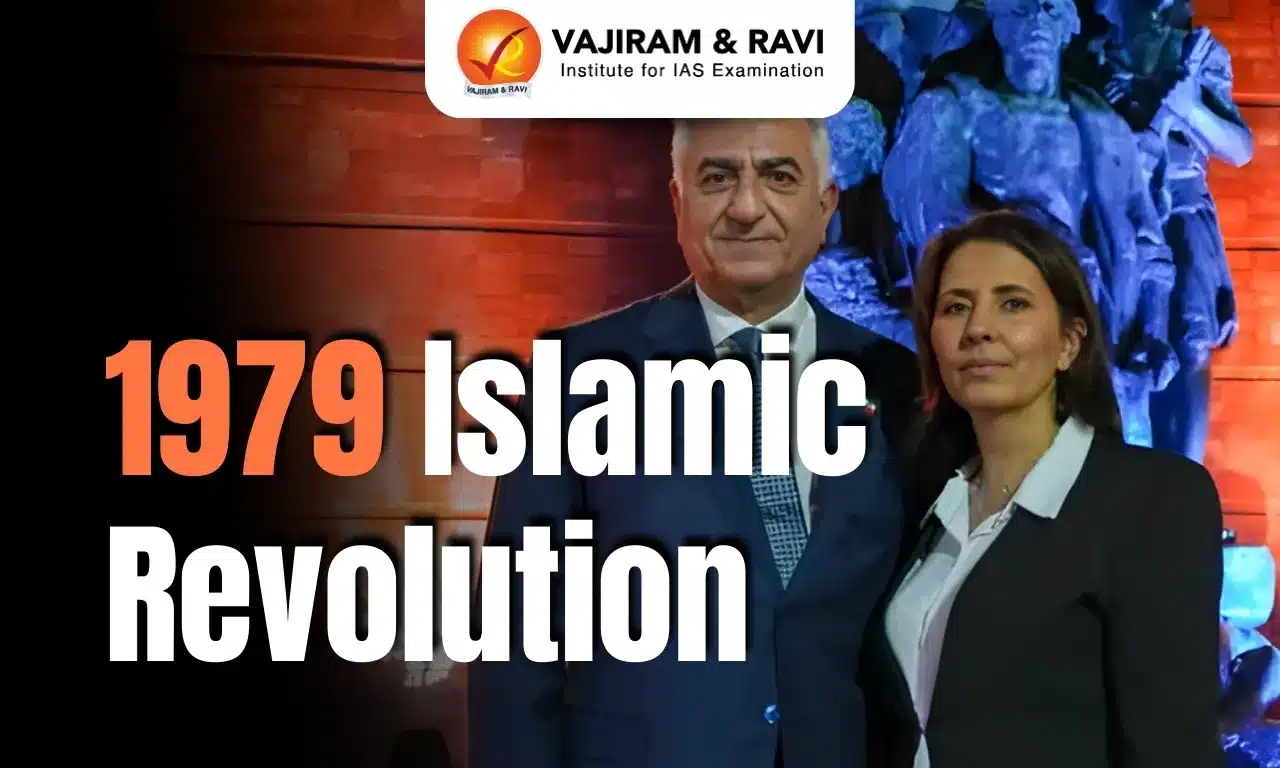
  • The unrest has created political space for Reza Pahlavi, son of the last Shah of Iran, Mohammad Reza Pahlavi, who was overthrown in the 1979 Islamic Revolution. 
  • Living in exile, Pahlavi has sought to position himself as a rallying figure amid the turmoil.

Origins of the Pahlavi Dynasty

  • Reza Shah Pahlavi, grandfather of Reza Pahlavi, rose from a military background and seized power in 1925 after a coup against Ahmad Shah Qajar. 
  • His takeover occurred amid imperial pressures, with Britain and Russia vying for influence in Iran.

Foreign Influence and Economic Concessions

  • Iran’s vulnerability was underscored by sweeping concessions to foreign powers. 
  • In 1872, a British company secured extensive industrial and mineral rights from the Qajar dynasty—later criticised by Lord Curzon as an unprecedented surrender of national resources. 
  • Though revoked, the episode highlighted Iran’s subjugation to external interests.

Abdication and Wartime Upheaval

  • Reza Shah abdicated in 1941 after Allied forces invaded Iran, citing its ties with Germany. 
  • This shifted national sentiment toward democratic leadership and sovereignty.

Mossadegh and the Oil Nationalisation Drive

  • Mohammed Mossadegh, a Western-educated jurist, became Prime Minister (1951–1953) and championed nationalising Iran’s oil to benefit its people. 
  • His stance antagonised Western powers, particularly Britain, which had controlled Iranian oil through the Anglo-Iranian Oil Company (later British Petroleum).

The 1953 Coup and Restoration of the Shah

  • Fearing loss of strategic and economic interests, Britain—with US backing—engineered regime change in 1953. 
  • Mossadegh was arrested, and Mohammad Reza Pahlavi was restored to power, entrenching the Pahlavi monarchy under Western support.

Iran under Mohammad Reza Pahlavi

  • Mohammad Reza Pahlavi pursued social and economic modernisation, but his rule remained authoritarian. 
  • A key instrument of repression was SAVAK, the secret police notorious for surveillance, arrests, and torture of dissidents.
  • Independent political and civic institutions were not allowed to function. 
    • As noted by historians, political parties, unions, student groups, and civic organisations were suppressed, forcing dissent into mosques and giving the opposition a growing religious character.

Rise of Mass Protests and Collapse of Monarchy 

  • By the 1970s, widespread dissatisfaction culminated in protests involving diverse groups, from communists to Islamists. 
  • Despite harsh crackdowns, sustained agitation weakened the regime’s hold on power.
  • In 1979, the Shah and his family fled Iran. 
  • A referendum soon after established an Islamic Republic with Ayatollah Khomeini as Supreme Leader. 
  • While the new regime promised change, it soon mirrored many authoritarian practices of the past, compounded by religious fundamentalism.

1979 Islamic Revolution

  • The 1979 Islamic Revolution overthrew the monarchy of Mohammad Reza Pahlavi, ending over five decades of Pahlavi rule in Iran.

Context and Causes

  • The revolution was not a single event but a culmination of decade-long grievances against Shah Mohammad Reza Pahlavi.
    • Political Autocracy: The Shah ruled as a secular dictator, suppressing dissent through his brutal secret police, SAVAK.
    • The "White Revolution": Launched in 1963, these were aggressive modernization and land reforms. While intended to modernize Iran, they alienated the traditional Ulema (clergy) and the rural peasantry.
    • Westernization & Cultural Identity: Rapid Western-style modernization was perceived as "Westoxification" (Gharbzadegi), undermining Iran's Islamic and cultural fabric.
    • Economic Disparities: Despite high oil revenues, the gap between the rich (elite) and the poor (urban working class/migrant peasants) widened, fueled by corruption and inflation.
    • Foreign Influence: The Shah was seen as a "puppet" of the US, especially after the 1953 CIA-backed coup that ousted the democratically elected PM Mohammad Mossadegh.

Key Events of the Revolution (1978–1979)

  • Jan 1978: Protests ignited in Qom after a state-sponsored article insulted Ayatollah Ruhollah Khomeini, who was in exile.
  • Black Friday (Sept 1978): Security forces fired on protesters in Tehran’s Jaleh Square, leading to massive casualties and making the revolution irreversible.
  • Shah’s Departure: On January 16, 1979, the Shah fled Iran for Egypt.
  • Khomeini’s Return: On February 1, 1979, Khomeini returned from exile to a rapturous welcome.
  • Proclamation of the Republic: On April 1, 1979, following a national referendum, Iran was declared an Islamic Republic.

Post-Revolutionary Governance: Velayat-e Faqih

  • The new political system was based on Khomeini’s doctrine of "Guardianship of the Islamic Jurist":
    • Theocracy + Democracy: It blended republican elements (Parliament/Majlis, President) with theocratic ones (Supreme Leader, Guardian Council).
    • Sovereignty: Unlike Western democracies where sovereignty lies with the people, here it is derived from Divine Will, interpreted by the Supreme Leader.

Source: IE | AJ

1979 Islamic Revolution FAQs

Q1: What was the 1979 Islamic Revolution?

Ans: The 1979 Islamic Revolution overthrew Iran’s monarchy, ended Pahlavi rule, and established an Islamic Republic under Ayatollah Khomeini, fundamentally transforming Iran’s political system.

Q2: What role did the Pahlavi dynasty play before the 1979 Islamic Revolution?

Ans: Before the 1979 Islamic Revolution, the Pahlavi dynasty ruled Iran with Western backing, pursuing modernisation but suppressing dissent through authoritarian governance and the SAVAK.

Q3: Why did oil nationalisation contribute to the 1979 Islamic Revolution?

Ans: Oil nationalisation symbolised resistance to foreign control and Western dominance, deepening resentment that later fuelled mass support for the 1979 Islamic Revolution.

Q4: How did religion shape the 1979 Islamic Revolution?

Ans: Religion unified opposition forces, with clerical leadership mobilising masses, making Islam the ideological core of the 1979 Islamic Revolution against secular authoritarianism.

Q5: What political system emerged after the 1979 Islamic Revolution?

Ans: After the 1979 Islamic Revolution, Iran adopted a theocratic system based on velayat-e faqih, combining republican institutions with supreme clerical authority.
India–Germany Strategic Partnership Enters a New Phase

India-Germany Strategic Partnership

India-Germany Strategic Partnership Latest News

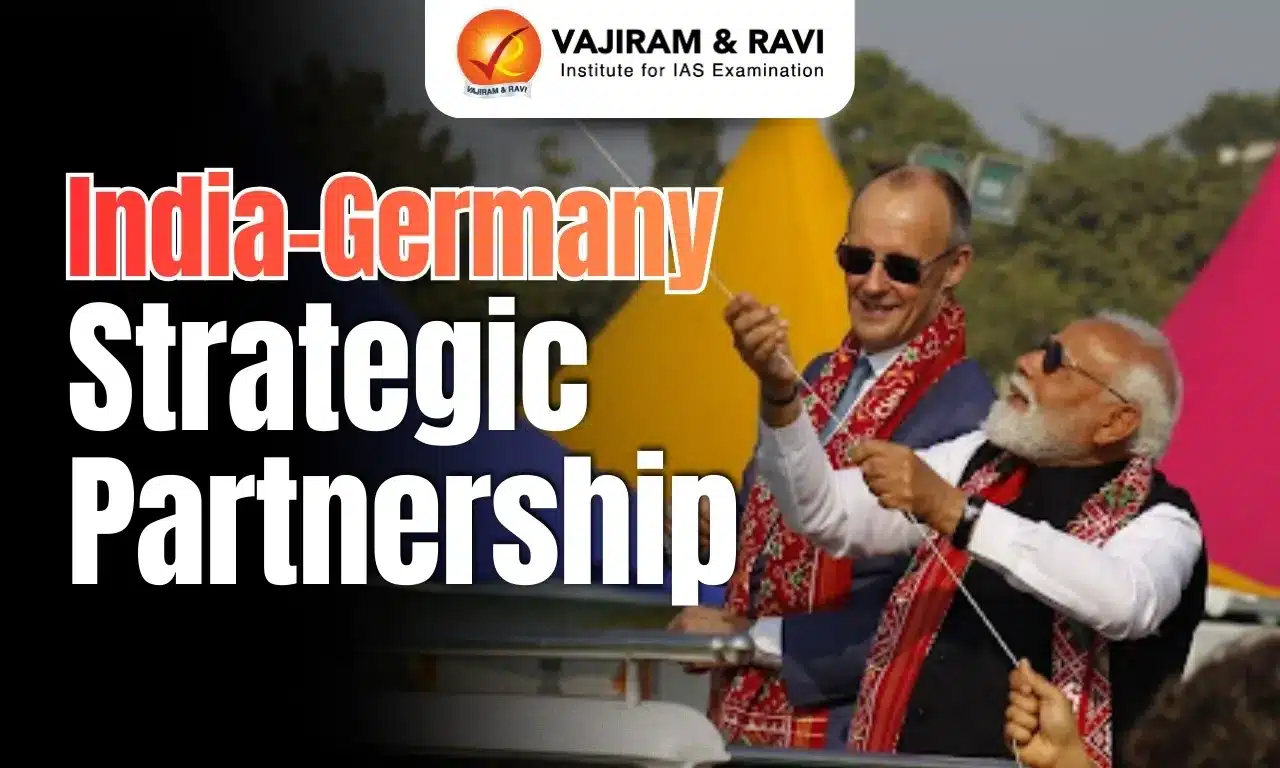
  • German Chancellor Friedrich Merz’s first visit to India and Asia coincides with 25 years of India–Germany Strategic Partnership and 75 years of diplomatic relations.
  • The visit precedes the EU leaders’ visit for India’s Republic Day and the India–EU Summit.
  • Outcome-driven diplomacy with the signing of 19 agreements/MoUs, signalling deepening strategic, economic and geopolitical convergence.

Key Outcomes of the Visit

  • 19 bilateral pacts signed, covering:
    • Defence industrial cooperation
    • Higher education and global skills
    • Critical minerals and semiconductors
    • Indo-Pacific dialogue
    • Renewable energy and green hydrogen
  • Visa-free transit regime for Indian passport holders transiting through German airports.
  • Announcement of a new bilateral Indo-Pacific consultation mechanism.

Major Areas of Cooperation

  • Strategic and defence cooperation:
    • Key developments: 
      • Joint Declaration of Intent (JDoI) on a Defence Industrial Cooperation Roadmap.
      • Focus on: Co-development and co-production, technology partnerships, and faster defence export clearances from Germany.
    • Ongoing defence collaboration: Submarines, obstacle avoidance systems for helicopters, Counter-Unmanned Aerial Systems (C-UAS), joint Air Force and Naval exercises, port visits and new security consultation formats.
    • Strategic significance:
      • Defence indigenisation, Atmanirbhar Bharat, strategic autonomy, and co-production.
      • Reduces India’s defence dependence on Russia, and leverages -
        • India’s skilled workforce and cost advantage 
        • Germany’s advanced technology and capital
  • Higher education and global skills partnership: It focuses on human capital, skill mobility, aligning with NEP 2020, and demographic dividend, with following initiatives -
    • Comprehensive roadmap on higher education: India invited German universities to open campuses in India.
    • Global skills partnership (JDoI): Facilitates mobility of healthcare professionals.
    • Proposal to expand German language teaching in: Schools, Universities, and Vocational institutions.
    • New initiative: Indo-German Centre of Excellence for Skilling in Renewable Energy - curriculum development, industry collaboration, job-market-oriented training.
  • Economic and trade relations:
    • It focuses on supply chain resilience, Trade diversification, and FTA diplomacy. Bilateral trade between India and Germany crossed USD 50 billion in 2024 (over 25% of India–EU trade).
    • Strong two-way investments supporting supply chain diversification, SMEs, startups, digitalisation, AI, and innovation.
    • Institutional mechanism - Strengthening cooperation via the German–Indian CEO Forum.
    • FTA push: Strong support for concluding the India–EU Free Trade Agreement, seen as a key deliverable of the upcoming EU–India Summit.
  • Critical and emerging technologies:
    • Focus areas: Semiconductors, critical minerals, telecommunications, digitalisation and AI, health and bioeconomy.
    • Key institutional steps: JDoI on Semiconductor Ecosystem Partnership, JDoI on Critical Minerals Cooperation, Indo-German Digital Dialogue Work Plan (2026–27), and JDoI on Telecommunications.
    • Strategic importance:
      • Trusted supply chains, critical technologies, and digital sovereignty - reducing dependence on China-dominated supply chains.
      • Supporting India’s ambitions in electronics manufacturing and Industry 4.0.
  • Climate, energy and sustainability:
    • Establishment of India–Germany Centre of Excellence in Renewable Energy.
    • Joint projects in climate action, urban development and mobility, and green hydrogen (mega project).
    • Strategic alignment - Clean energy transition, climate diplomacy (climate finance and technology transfer), and long-term energy security.
  • Indo-Pacific and global geopolitics: 
    • Reaffirmed commitment to Free and Open Indo-Pacific, UNCLOS and international law. 
    • Germany’s growing engagement under the Indo-Pacific Oceans Initiative (IPOI) (co-led by India & Germany).
    • Global Issues discussed:
      • Ukraine war: Support for a just and lasting peace under the UN Charter.
      • Gaza conflict: Support for a negotiated two-state solution.
      • Strong condemnation of terrorist attacks in Pahalgam and Delhi.
  • Multilateral cooperation (Global governance reforms, Multilateralism, G4): Renewed commitment to UN Security Council (UNSC) reforms. Continued coordination through the G4 group (India, Germany, Japan, Brazil).

Current State of India-Germany Relations

  • Institutional architecture: The Inter-Governmental Consultations (IGC) mechanism—used by Germany with only a few select partners—anchors policy coordination and makes India–Germany ties among the most institutionalised in Europe–India relations.
  • Trade and investment depth: While over 2,000 German companies operate in India, supporting around 4 lakh jobs; Indian investments in Germany have crossed €6.5 billion, reflecting two-way economic interdependence.
  • Project 75I Submarine Programme: The project involves AIP-enabled submarines, over 60% indigenisation, major technology transfer, and is central to India’s Indian Ocean deterrence strategy amid China’s naval expansion.
  • Science & technology legacy: India and Germany marked 50 years of formal S&T cooperation in 2024, which is now being scaled up to strategic domains such as quantum tech, cybersecurity, biotech and AI.
  • Green financing commitment: Under the Green and Sustainable Development Partnership (2022), Germany has committed up to €10 billion till 2030 for India’s green transition.
  • Mobility and migration framework: The Comprehensive Migration and Mobility Partnership (2022) and Germany’s Skilled Immigration Act have made Germany a major destination for Indian talent, with -
    • Around 2.8 lakh Indians residing in Germany (2025)
    • India as the largest source of international students in Germany (over 42,000 students)
    • Special focus on healthcare, STEM and technical professionals
  • Essence of India–Germany relations today: It rests on a deeply institutionalised, multi-layered partnership, positioning Germany as India’s most consequential partner within the European Union.

Challenges and Way Ahead

  • No concrete breakthrough yet on submarine deal: Operationalise defence industrial roadmap with flagship co-production projects.
  • Divergences on some geopolitical issues persist: Deepen Indo-Pacific coordination amid rising great power competition.
  • Translating MoUs into time-bound implementation: Institutionalise semiconductor and critical minerals cooperation.
  • Aligning EU regulatory standards with Indian market realities: Fast-track India–EU FTA conclusion.
  • Slow education and skills partnership: Expand German educational presence under NEP 2020. Ensure skill mobility agreements are mutually beneficial and ethical.

Conclusion

  • The Merz–Modi summit marks a qualitative upgrade of the India–Germany Strategic Partnership, moving beyond trade to encompass strategic sectors like defence manufacturing.
  • As global geopolitics undergoes rapid realignment, India and Germany emerge as natural partners anchored in shared democratic values, economic complementarities and a commitment to a rules-based international order—making this partnership a key pillar of India’s Europe and Indo-Pacific strategy.

Source: TH | IE | news18

India–Germany Strategic Partnership

Q1: How does the India–Germany defence industrial cooperation roadmap support India’s strategic autonomy?

Ans: It promotes co-development and co-production of defence platforms, reduces dependence on traditional suppliers like Russia.

Q2: What is the significance of the India–Germany Global Skills Partnership?

Ans: It enables structured mobility of skilled professionals, especially in healthcare and renewable energy.

Q3: Why is cooperation on critical minerals and semiconductors strategically important for India–Germany relations?

Ans: It helps build resilient and trusted supply chains, reduces dependence on China-dominated ecosystems, etc.

Q4: In what ways does India–Germany cooperation contribute to a free and open Indo-Pacific?

Ans: Through a new Indo-Pacific consultation mechanism, joint naval exercises, and collaboration under the IPOI in line with UNCLOS.

Q5: How does the deepening India–Germany partnership strengthen India–EU economic relations?

Ans: By boosting trade beyond USD 50 billion, reinforcing momentum towards the India–EU Free Trade Agreement.

PSLV Mission Failures: What Consecutive Setbacks Mean for ISRO

PSLV Mission Failures

PSLV Mission Failures Latest News

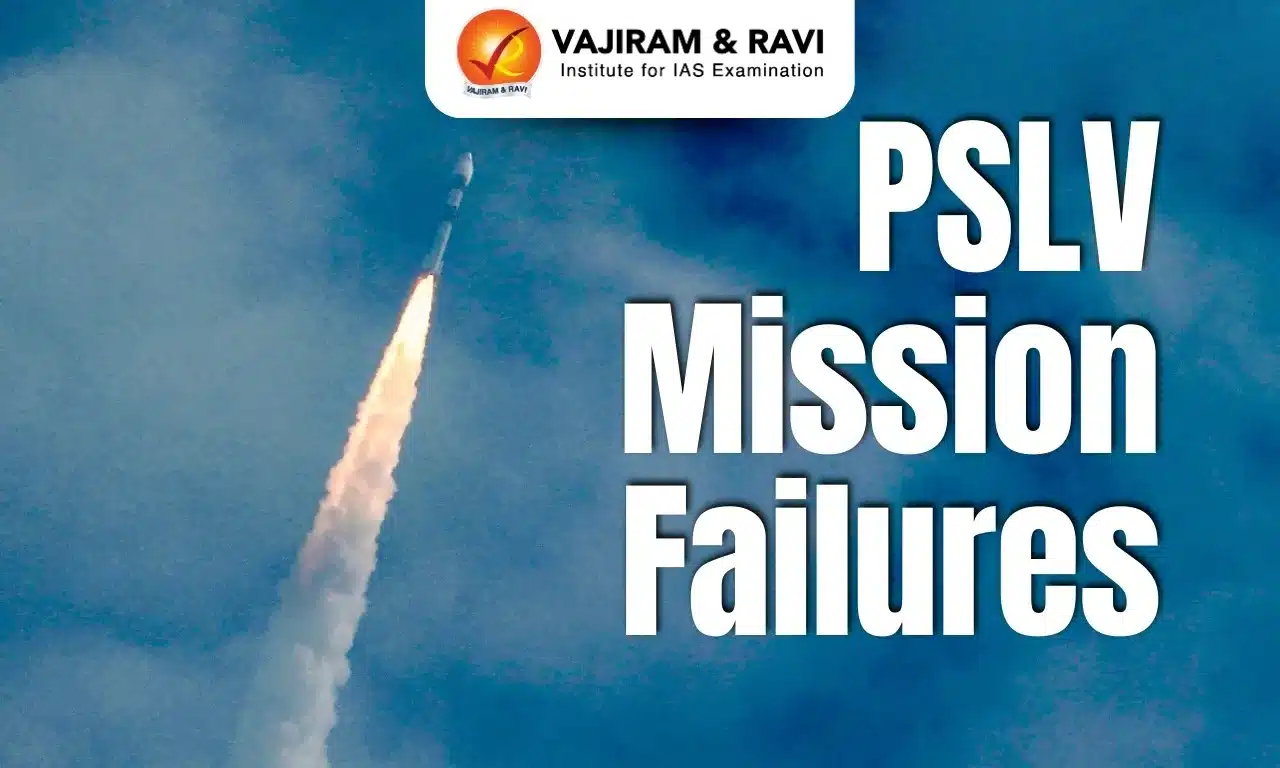
  • The Indian Space Research Organisation’s first launch of the year ended in failure when the PSLV-C62 mission carrying 16 satellites failed to reach its intended orbit. 
  • This marks the second consecutive failure of the PSLV, ISRO’s workhorse launch vehicle for over three decades.
  • In both the January 2026 failure and the earlier setback (PSLV-C61 in May 2025), the rocket performed normally through the first two stages but developed problems during the third stage, which is critical for achieving orbital velocity. 
  • The previous failure was attributed to an unexpected drop in combustion chamber pressure, though the Failure Analysis Committee report was not made public. While the cause of the latest failure is yet to be confirmed, it is suspected to be similar. 
  • A pressure drop during the third stage reduces thrust, preventing the rocket from attaining the acceleration required to sustain orbit around the Earth.

PSLV: How India’s Workhorse Rocket Reaches Orbit

  • Polar Satellite Launch Vehicle (PSLV) is a four-stage launch vehicle, with each stage using its own engine and fuel to sequentially propel the mission before detaching once its role is complete.

First Stage: Lift-off and Atmospheric Ascent

  • The first stage handles lift-off and a near-vertical climb to about 50–60 km. 
  • Using solid propellant, it overcomes gravity and atmospheric drag, consuming massive fuel in under two minutes before being jettisoned.

Second Stage: Vertical-to-Horizontal Transition

  • Powered by the indigenously developed Vikas engine and a liquid fuel, the second stage continues ascent while building horizontal velocity. 
  • It takes the rocket to roughly 220–250 km altitude and accelerates it to about 14,000 km/h, significantly reducing overall mass.

Third Stage: Rapid Acceleration

  • In this phase, the vehicle moves almost entirely horizontally on a sub-orbital path. 
  • Burning solid fuel, the third stage rapidly accelerates the rocket to orbital speeds of around 26,000–28,000 km/h—crucial for preventing it from falling back to Earth.
  • The third stage is, therefore, about rapid acceleration. The PSLV rocket burns solid fuel to achieve this.

Fourth Stage: Precise Orbital Insertion

  • The final stage uses liquid propulsion to precisely place satellites into their designated low-Earth orbits, typically between 250 and 2,000 km. 
  • Once payload deployment is complete, all stages have separated, having fulfilled their roles.

The Critical Role of PSLV’s Third Stage

  • The third stage is one of the most delicate phases of a launch. 
  • If the rocket fails to achieve the required velocity, it cannot sustain orbit and is pulled back by Earth’s gravity, as seen in the PSLV-C61 failure last year.
  • In this stage, solid fuel burns and turns into gas, increasing pressure inside the combustion chamber. 
  • The high-pressure gas exits through a nozzle, producing thrust that rapidly accelerates the rocket to near-orbital speeds.
  • Higher chamber pressure results in greater thrust and acceleration. Any pressure drop—due to leakage or other faults—reduces thrust, preventing the rocket from attaining the speed needed to maintain orbit.

What Went Wrong Earlier

  • Last year’s failure was attributed to a manufacturing defect that caused leakage and reduced pressure in the combustion chamber. 
  • If the latest failure is due to a similar issue, it could pose a reputational challenge for Indian Space Research Organisation.

Fallout of Repeated PSLV Failures for ISRO

  • Space missions allow little margin for error, and while failures are not uncommon globally, back-to-back setbacks involving the trusted PSLV are a serious concern for ISRO. 
  • With three of its last six missions failing, ISRO faces an unusually high failure rate. 
  • As the PSLV is a key revenue generator through commercial and foreign launches, questions over its reliability could hurt both credibility and finances. 
  • However, ISRO’s strong history of recovery from crises offers hope that it can restore confidence after the latest mission.

The Bigger Picture

  • Regardless of the precise technical causes, the central concern is institutional. 
  • By keeping the PSLV-C61 FAC (Failure Analysis Committee) report internal, ISRO avoided external scrutiny of its corrective measures and return-to-flight criteria. 
  • Launching PSLV-C62 just eight months after a major failure, without public disclosure of investigation findings, has intensified questions about transparency, quality control, and risk management—now placing ISRO under sharper technical and reputational scrutiny.

Source: IE| TH | IE

PSLV Mission Failures FAQs

Q1: What are the recent PSLV mission failures?

Ans: PSLV mission failures occurred in May 2025 and January 2026 when rockets failed during the third stage, preventing satellites from reaching intended orbits.

Q2: Why is the third stage critical in PSLV mission failures?

Ans: PSLV mission failures highlight third-stage importance, as pressure drops reduce thrust, preventing the rocket from achieving orbital velocity needed to sustain Earth orbit.

Q3: How do PSLV mission failures affect ISRO’s reputation?

Ans: Repeated PSLV mission failures damage ISRO’s reliability image, especially as PSLV is its main commercial launch vehicle for foreign and private satellite customers.

Q4: What institutional issues are exposed by PSLV mission failures?

Ans: PSLV mission failures expose concerns over quality control, supply chain oversight, transparency, and the decision to withhold Failure Analysis Committee reports.

Q5: Can ISRO recover from PSLV mission failures?

Ans: Despite PSLV mission failures, ISRO’s strong track record of technical recovery suggests it can restore confidence through rigorous fixes and transparent return-to-flight protocols.

Unilateral Use of Force and International Law – Explained

International Law

International Law Latest News

  • Recent unilateral military actions by the United States have reignited global debate on violations of international law and the weakening of the UN-led multilateral order.

International Law and the Use of Force

  • International law is founded on the principle of sovereign equality of states and the prohibition of force in inter-state relations. 
  • These principles were codified after the Second World War through the United Nations Charter, with the objective of preventing unilateral military aggression and preserving global peace. 
  • Article 2(4) of the Charter explicitly prohibits the threat or use of force against the territorial integrity or political independence of any state.
  • The only two exceptions recognised under international law are:
    • Use of force authorised by the UN Security Council, and
    • The inherent right of self-defence under Article 51 is applicable only in response to an armed attack.
  • Despite this legal framework, powerful states have increasingly justified military interventions outside these exceptions, raising concerns about the erosion of the international legal order.

Violation of the UN Charter Framework

  • The recent U.S. military action against Venezuela represents a significant departure from established international legal norms. 
  • The operation was undertaken without authorisation from the UN Security Council and did not meet the legal threshold of self-defence. 
  • As such, it constitutes a direct violation of Article 2(4) of the UN Charter.
  • The action also undermines the principle of non-intervention in domestic affairs, a cornerstone of international law. 
  • By forcibly intervening in the political leadership of a sovereign state, the operation challenges the legitimacy of multilateral institutions designed to regulate global security.

Breakdown of the Balance of Power

  • The current international system reflects a weakening of the traditional balance-of-power mechanism. 
  • During the Cold War, the bipolar structure ensured that no single power could act without restraint. 
  • The presence of two competing superpowers acted as a deterrent against unilateral military action.
  • Historical examples illustrate this dynamic clearly. During the 1971 Bangladesh Liberation War, external intervention threats were neutralised through counter-deployments by rival powers. 
  • Similarly, during the 1973 Yom Kippur War, superpower intervention prevented escalation and forced diplomatic restraint.
  • Following the collapse of the Soviet Union in 1991, the global system transitioned into a largely unipolar order. 
  • This shift has enabled the United States to exercise military power with minimal external constraints, contributing to repeated interventions in West Asia and Latin America.

Expansion of Pre-emptive Military Doctrine

  • A notable feature of contemporary U.S. foreign policy has been the increasing reliance on pre-emptive and preventive military action. 
  • The justification for such actions often rests on broad claims related to terrorism, weapons proliferation, or transnational crime.
  • In the Venezuelan case, the stated objective of countering narco-terrorism appears legally tenuous. 
  • Available data suggest that Venezuela is not a major source of narcotics affecting the U.S., raising questions about the proportionality and necessity of military action. 
  • Instead, strategic and economic considerations, particularly access to natural resources, appear to play a significant role.

Implications for the Global Order

  • The repeated bypassing of international legal norms has serious implications for global governance. 
  • It weakens the authority of the United Nations, normalises unilateralism, and sets dangerous precedents for other powerful states to follow.
  • In the emerging geopolitical context, China is increasingly viewed as the only potential counterweight capable of restoring a degree of balance. 
  • While Russia and China may form tactical alignments, structural differences limit the prospects of a stable multipolar order in the near term.

Implications for India’s Foreign Policy

  • For India, these developments highlight the risks inherent in a weakened rules-based international order. 
  • India has traditionally relied on international law and multilateralism to safeguard its sovereignty and security interests.
  • The current global environment underscores the need for India to strengthen its strategic autonomy, invest in its defence-industrial base, and pursue diversified partnerships. 
  • A credible military and economic capacity remains essential for safeguarding national interests in an increasingly unilateral world order.

Source: TH

Intenrational Law FAQs

Q1: Which UN Charter provision prohibits the use of force by states?

Ans: Article 2(4) of the UN Charter prohibits the threat or use of force against sovereign states.

Q2: When is the use of force legally permitted under international law?

Ans: Only with UN Security Council authorisation or in self-defence after an armed attack.

Q3: Why is unilateral military action problematic for global order?

Ans: It undermines international law, weakens multilateral institutions, and sets dangerous precedents.

Q4: How did the Cold War balance of power restrain military aggression?

Ans: Rival superpowers counter-balanced each other, preventing unchecked use of force.

Q5: What lesson does this situation hold for India?

Ans: India must strengthen strategic autonomy and defence capacity to protect its interests in a unipolar world.

Enquire Now