India’s Power Sector – Transitioning From Coal Backbone to Renewable Dominance For Net Zero

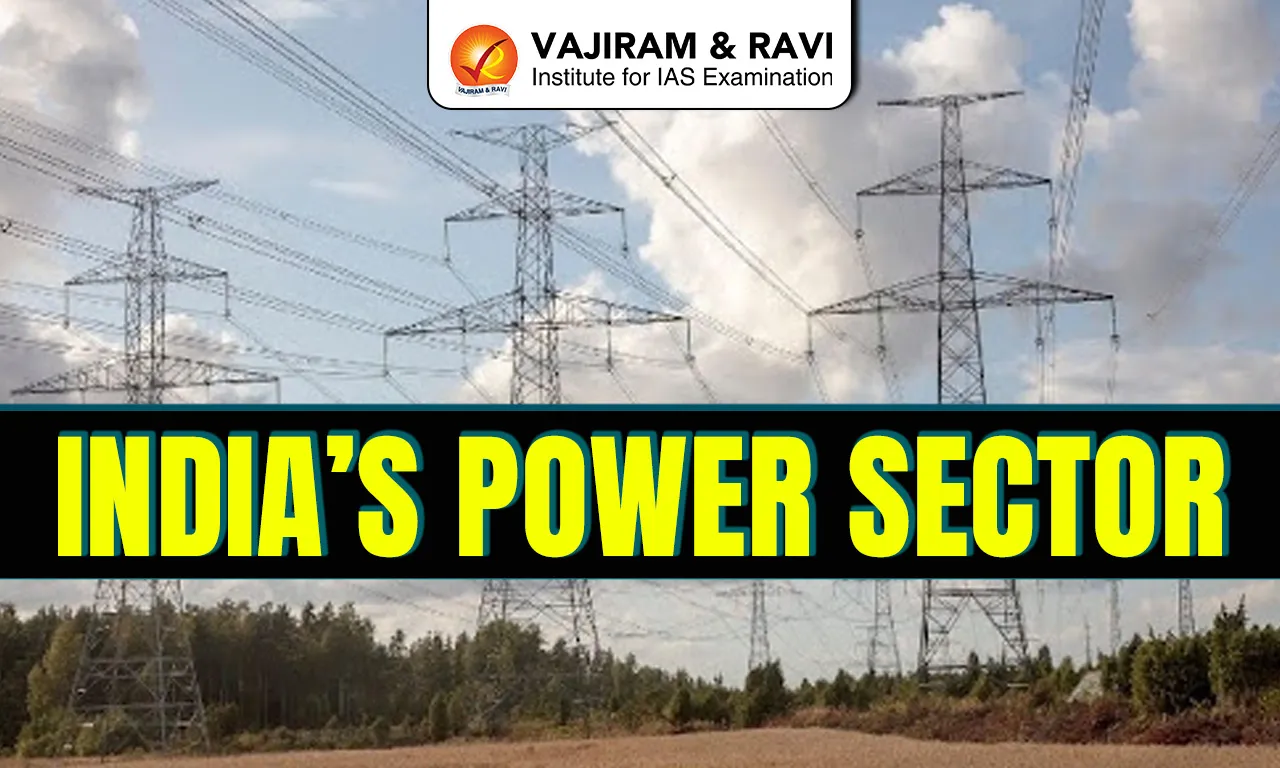
India’s Power Sector

India’s Power Sector Latest News

  • A new study by NITI Aayog titled “Scenarios Towards Viksit Bharat and Net Zero” outlines possible pathways for India’s electricity transition up to 2070.
  • While coal currently dominates India’s electricity generation, the report projects a long-term structural shift toward renewable energy (RE).
  • This shift will be supported by nuclear expansion, storage technologies, and possible decarbonisation of coal through Carbon Capture, Utilisation and Storage (CCUS).
  • The study examines two pathways: Current Policy Scenario (CPS) – Continuation of existing policies, and Net Zero Scenario (NZS) – Accelerated pathway aligned with India’s 2070 net-zero target.

Present Electricity Landscape - Coal Still the Backbone

  • Coal accounts for about 74% of electricity generation, providing low-cost base-load power, grid stability, and round-the-clock reliability.
  • Installed capacity (December 2025):
    • Total: 513 GW
    • Fossil-based: 48%
    • Renewable: 50%
    • Nuclear: 1.7%
  • However, despite renewables constituting 50% of installed capacity, their contribution to actual electricity generation remains only about 22% (2024-25).

Structural Constraints in Renewable Energy

  • The gap between renewable capacity and actual generation is due to following structural challenges -
    • Low capacity utilisation factor (CUF): Solar and wind operate below maximum potential output.
    • Intermittency and variability: Solar and wind are weather-dependent, leading to curtailment, dispatch challenges, and grid instability risks.
    • Grid constraints: Limited transmission capacity, and inadequate system flexibility.
    • Storage deficit: Lack of large-scale long-duration energy storage. 
  • Because of these constraints, coal continues to provide essential balancing power.

Electricity Mix Projections up to 2070

  • Under CPS:
    • Renewable share in generation is expected to increase from 20% (2024-25) to over 80% (2070). The respective share of coal and nuclear will be coal share [74% → 6–10%], and nuclear [3% → 5–8%].
    • Coal capacity may rise from 268 GW (2025) to peak at 450–470 GW by 2050, and gradually decline afterward.
  • Under NZS:
    • Coal-based generation could fall to zero by 2070, and coal capacity may peak earlier at 420–435 GW by 2045, and decline sharply thereafter.
    • Renewables become the dominant backbone of the grid.

Massive Storage Expansion Required

  • A renewables-heavy grid demands unprecedented storage capacity.
  • Battery Energy Storage Systems (BESS) to scale up from less than 50 GW in 2030 to about 1,300-1,400 GW under CPS and up to 2,500-3,000 GW under NZS by 2070.
  • Pumped Storage Plants are also expected to play a crucial role in providing long-duration storage and grid stability, growing from 13-19 GW in 2030 to about 110 GW in CPS and 150-165 GW in NZS.
  • Storage becomes central to grid reliability, load balancing, and round-the-clock power supply.

Nuclear Power as Strategic Pillar

  • Targets:
    • The study identifies nuclear energy as crucial in a renewable-dominated grid.
    • It projects nuclear power capacity to grow from the current 8.18 GW in 2025 to 90-135 GW by 2070 under CPS — an increase of 10 to 15 times.
    • Under the NZS, nuclear capacity could touch 295-320 GW. 
  • Key roles of nuclear energy:
    • Firm low-carbon base-load power
    • Industrial high-temperature heat
    • Power supply for green hydrogen electrolyzers
    • Grid balancing support
  • The report recommends:
    • Advanced reactors
    • Small Modular Reactors (SMRs)
    • Transition of captive coal plants to SMRs. This helps reuse existing land, transmission connectivity, and industrial infrastructure.

Coal’s Continuing Role in Transition

  • Despite the clean energy push, coal remains indispensable in the near to medium term because storage remains expensive; nuclear projects have high capital cost, long gestation period; and renewables face land and clearance challenges.
  • In some pathways, coal continues even in 2070 with deep decarbonisation via:
    • CCUS: Captures CO₂ from coal plants. Stores underground or reuses it. Prevents atmospheric emissions.
    • This pathway becomes relevant if nuclear expansion slows, renewable deployment faces cost or grid barriers.

Alternative Pathway Risks

  • If nuclear growth remains limited, solar capacity may need to exceed 5,500 GW, storage requirements would rise dramatically, and grid stability risks would intensify.
  • This creates financial stress, infrastructure bottlenecks, and land acquisition challenges.

Challenges and Way Forward

  • Intermittency of renewables: Rapid scale-up of BESS and Pumped Storage. Improve market mechanisms for flexible dispatch.
  • High storage costs: Develop domestic manufacturing ecosystem for storage technologies. Promote CCUS research and pilot deployment.
  • Grid infrastructure inadequacy: Accelerate grid modernization and transmission expansion.
  • Nuclear capital intensity: Fast-track nuclear expansion including SMRs. Encourage industrial shift to nuclear-based captive power.
  • Managing stranded coal assets: Strategic planning to avoid stranded coal assets.

Conclusion

  • India’s electricity transition will not be a simple coal-to-solar swap. It will require a carefully calibrated mix of renewables, storage, nuclear expansion, grid reform, and transitional coal support.
  • Coal may remain the backbone in the medium term, but by 2070, renewables — supported by large-scale storage and nuclear power — could decisively reshape India’s energy architecture.
  • The real challenge lies not in installing capacity, but in ensuring reliability, flexibility, affordability, and system stability in a net-zero compatible electricity grid.

Source: IE

India’s Power Sector FAQs

Q1: Why has installed renewable capacity share in actual electricity generation remained modest in India?

Ans: Due to low CUF, intermittency, grid constraints, variability-driven curtailment, and inadequate storage capacity.

Q2: What projections are made under the Current Policy Scenario (CPS) and Net Zero Scenario (NZS) by 2070?

Ans: Under CPS, renewables exceed 80% and coal declines to 6–10%, while under NZS coal-based generation may fall to zero.

Q3: Why is nuclear energy considered a strategic pillar in India’s renewable-dominated electricity grid?

Ans: Because nuclear provides firm, low-carbon base-load power and grid stability, crucial for balancing intermittent renewables.

Q4: What is the role of energy storage in India’s long-term electricity transition?

Ans: Massive scaling of BESS and Pumped Storage Plants is essential to ensure grid reliability, load balancing, etc.

Q5: What is the continuing relevance of coal in India’s energy transition towards Net Zero?

Ans: Coal remains critical in the near-to-medium term for energy security and grid stability, with possible long-term decarbonisation through CCUS.


Urban Challenge Fund: ₹1 Lakh Crore Boost for India’s Urban Infrastructure

Urban Challenge Fund

Urban Challenge Fund Latest News

  • The Union Cabinet has approved the launch of the Urban Challenge Fund (UCF). The fund will provide ₹1 lakh crore in central assistance to drive urban development initiatives.
  • According to the government, the UCF is expected to catalyse a total investment of ₹4 lakh crore over the next five years in the urban sector, significantly boosting city infrastructure and development.
  • The approval comes alongside the Centre’s clearance of projects worth about ₹1.6 trillion ($18 billion) focused on infrastructure, urban development, and startup ecosystems.

Urban Challenge Fund: Budget Announcement and Allocations

  • The Urban Challenge Fund (UCF) was first announced in the Union Budget 2025–26 by Finance Minister Nirmala Sitharaman. 
  • The fund, with a proposed corpus of ₹1 lakh crore, aims to support projects focused on cities as growth hubs, creative urban redevelopment, and improvements in water and sanitation infrastructure.
  • An initial allocation of ₹10,000 crore was proposed for 2025–26, though operational rules were still pending at the time. 
  • In the Union Budget 2026–27, another ₹10,000 crore was allocated to continue the rollout of the fund.

Objectives and Vision of the Urban Challenge Fund

  • The UCF aims to mobilise market financing, encourage private sector participation, and promote citizen-centric reforms to build high-quality urban infrastructure.
  • It seeks to create resilient, productive, inclusive, and climate-responsive cities, positioning urban centres as engines of India’s next phase of economic growth.
  • The initiative represents a shift from traditional grant-based funding to a market-linked, reform-driven, and outcome-oriented model of urban development.
  • The UCF will operate from FY 2025–26 to FY 2030–31, with a possible extension of implementation up to FY 2033–34.

Coverage and Target Cities Under the Urban Challenge Fund

  • The UCF will cover all cities with a population above 10 lakh, all State capitals, and major industrial cities with populations exceeding 1 lakh.
  • In addition, the Centre will place special emphasis on Tier-II and Tier-III cities, as well as cities in the North Eastern and hilly regions, ensuring balanced and inclusive urban development across the country.

Project Focus Areas Under the Urban Challenge Fund

  • The Urban Challenge Fund (UCF) will support projects across three key verticals aimed at strengthening urban infrastructure and sustainability.
  • Cities as Growth Hubs - This vertical focuses on greenfield and semi-greenfield development, along with trunk infrastructure creation. It includes projects along transit and economic corridors, as well as the development of counter-magnets to improve urban mobility and reduce congestion.
  • Creative Redevelopment of Cities - This component emphasises retrofitting and upgrading legacy infrastructure, promoting pedestrian-friendly mobility, and rejuvenating Central Business Districts and heritage cores. It also supports regeneration of brownfield areas and removal of negative externalities.
  • Water and Sanitation - Under this segment, projects will upgrade water supply, sewerage, and stormwater systems, and establish water grids. The focus includes Swachhata initiatives, solid waste management, legacy waste remediation, and integrated water processing systems.

Funding Structure of the Urban Challenge Fund

  • Under the UCF, the Centre will provide 25% of a project’s cost as central assistance, provided that at least 50% of the funding is raised through market sources.
  • The remaining 25% will be contributed by States, Union Territories, urban local bodies, or other external stakeholders, ensuring shared financial responsibility and market participation.

Source: IE | IE | PMI

Urban Challenge Fund FAQs

Q1: What is the Urban Challenge Fund?

Ans: The Urban Challenge Fund is a ₹1 lakh crore central assistance scheme aimed at transforming Indian cities through market-linked, reform-driven infrastructure development and urban renewal projects.

Q2: When was the Urban Challenge Fund announced?

Ans: The Urban Challenge Fund was first announced in the Union Budget 2025-26, with allocations continuing in Budget 2026-27.

Q3: Which cities are eligible under the Urban Challenge Fund?

Ans: Cities above 10 lakh population, state capitals, major industrial cities, Tier-II and Tier-III cities, and North Eastern and hilly region cities are covered.

Q4: How will the Urban Challenge Fund projects be financed?

Ans: The Centre funds 25%, at least 50% must be raised from markets, and the remaining 25% comes from states, ULBs, or external partners.

Q5: What sectors does the Urban Challenge Fund prioritise?

Ans: The Urban Challenge Fund prioritises growth corridors, creative urban redevelopment, water supply upgrades, sewerage, stormwater systems, and solid waste management.

India-US-Bangladesh Textile Trade Dynamics

Textile Trade

Textile Trade Latest News

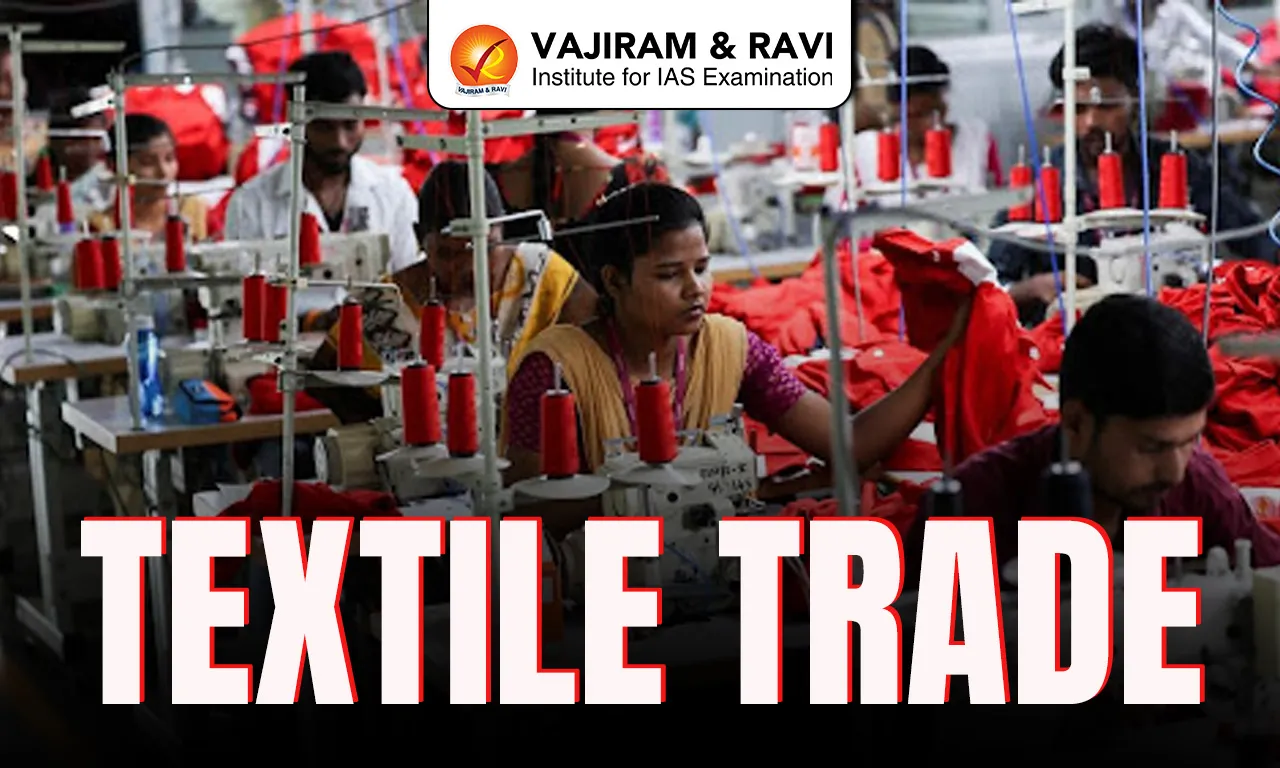
  • The U.S.-Bangladesh reciprocal trade agreement, granting zero reciprocal tariffs on select apparel, has triggered concerns for Indian textile exporters. 

Background of the U.S.-Bangladesh Textile Deal

  • The United States has agreed to establish a mechanism under which certain textile and apparel goods from Bangladesh will receive a zero reciprocal tariff rate. 
  • However, this benefit is conditional. The zero reciprocal tariff will apply only to a specified volume of imports and will be linked to the use of U.S.-produced cotton and man-made fibre (MMF) textile inputs. 
  • This development is significant because Bangladesh is one of the largest exporters of garments to the U.S., competing directly with India, China, and Vietnam.

Structure of Bangladesh’s Textile Industry

  • Bangladesh exported garments worth $50.9 billion globally in 2024, with $7.4 billion going to the U.S. 
  • Its industry model is heavily dependent on imported textile inputs. In 2024, Bangladesh imported textile inputs worth $16.1 billion, of which $3.1 billion came from India. 
  • Bangladesh imports around 85 lakh bales of cotton annually from Brazil, India, and African countries. India alone exported 12-14 lakh bales of cotton and $1.47 billion worth of cotton yarn to Bangladesh in 2024-25. 
  • This indicates that Bangladesh’s garment exports are deeply integrated with Indian raw material supply chains.

India’s Exposure to the U.S. Market

  • India exports approximately $16 billion worth of garments annually, with nearly one-third going to the U.S. 
  • Both India and Bangladesh primarily produce cotton-based apparel. Therefore, any preferential access granted to Bangladesh directly affects Indian exporters competing in the same market segment.
  • Currently, Indian goods face an 18% reciprocal tariff in the U.S., while Bangladeshi goods will face 19%, reduced from 20%. 
  • Thus, the tariff differential between India and Bangladesh has narrowed significantly.

India-U.S. Cotton Trade

  • India imports around five lakh bales of U.S. cotton annually, including 2.5 lakh bales of extra-long staple (ELS) cotton such as American PIMA. 
  • India levies an 11% import duty on cotton, except for ELS cotton. Indian mills are already nominated by American brands to supply yarn made from U.S. cotton.
  • The Union Commerce Ministry has stated that Indian garment exporters will receive similar access benefits to the U.S. market as Bangladesh. 
  • However, operational clarity on this promise is still awaited.

Possible Shift in Trade Dynamics

  • Bangladesh may replace Indian cotton with U.S.-produced cotton to qualify for zero reciprocal tariffs. 
  • If this happens, the immediate impact will be on Indian cotton and yarn exporters supplying Bangladesh.
  • However, analysts note that over 63% of Bangladesh’s garment exports go to the European Union duty-free. 
  • Since its supply chains are oriented toward European buyers, restructuring production to use U.S. cotton may require significant investment in spinning and fabric processing capacity.

Key Concerns for Indian Exporters

  • Several practical concerns remain:
    • Whether India will waive the 11% import duty on U.S. cotton to ensure competitiveness.
    • How the U.S. will determine the quantity of U.S. cotton content in garments.
    • Whether increased demand will push up U.S. cotton prices, reducing cost competitiveness.
    • Whether benefits apply only to reciprocal tariffs or also to basic duties.
  • Both India and Bangladesh exporters will get relief only from the reciprocal tariff if they use U.S. cotton, not from the basic duty. 
  • If U.S. cotton becomes expensive due to higher demand, garments made from it may not remain competitive compared to those made from cheaper global cotton.

Broader Strategic Implications

  • The development highlights three structural issues:
    • Growing importance of rules-of-origin conditions in trade agreements.
    • Increasing integration of trade with supply-chain geopolitics.
    • Need for India to align domestic tariff policy with export competitiveness.
  • India’s textile industry is the largest employment generator after agriculture. 
  • Hence, any shift in global trade patterns has serious economic and employment implications.

Source : TH

[youtube url="https://www.youtube.com/watch?v=FBITZNIfw0Y" width="560" height="315"]

Textile Trade FAQs

Q1: What did the U.S. promise Bangladesh under the new trade agreement?

Ans: The U.S. agreed to grant zero reciprocal tariffs on select apparel linked to the use of U.S. cotton and MMF.

Q2: How much of Bangladesh’s garment exports go to the U.S.?

Ans: Bangladesh exported $7.4 billion worth of garments to the U.S. in 2024.

Q3: What is India’s share in Bangladesh’s textile input imports?

Ans: Bangladesh imported $3.1 billion worth of textile inputs from India in 2024.

Q4: What is the current tariff difference between India and Bangladesh in the U.S.?

Ans: Indian goods face 18% reciprocal tariff, while Bangladesh faces 19% after the new deal.

Q5: What is the key concern for Indian exporters?

Ans: Uncertainty over cotton import duty, pricing of U.S. cotton, and operational clarity of the proposed facility.

Enquire Now