Metabolic Diseases Burden in India – Explained

Metabolic Diseases

Metabolic Diseases Latest News

  • A recent analysis of the Global Burden of Disease (GBD) Study 1990-2023 has revealed that India and China have the highest metabolic disease burdens in the Asia-Pacific region. 

Understanding Metabolic Diseases

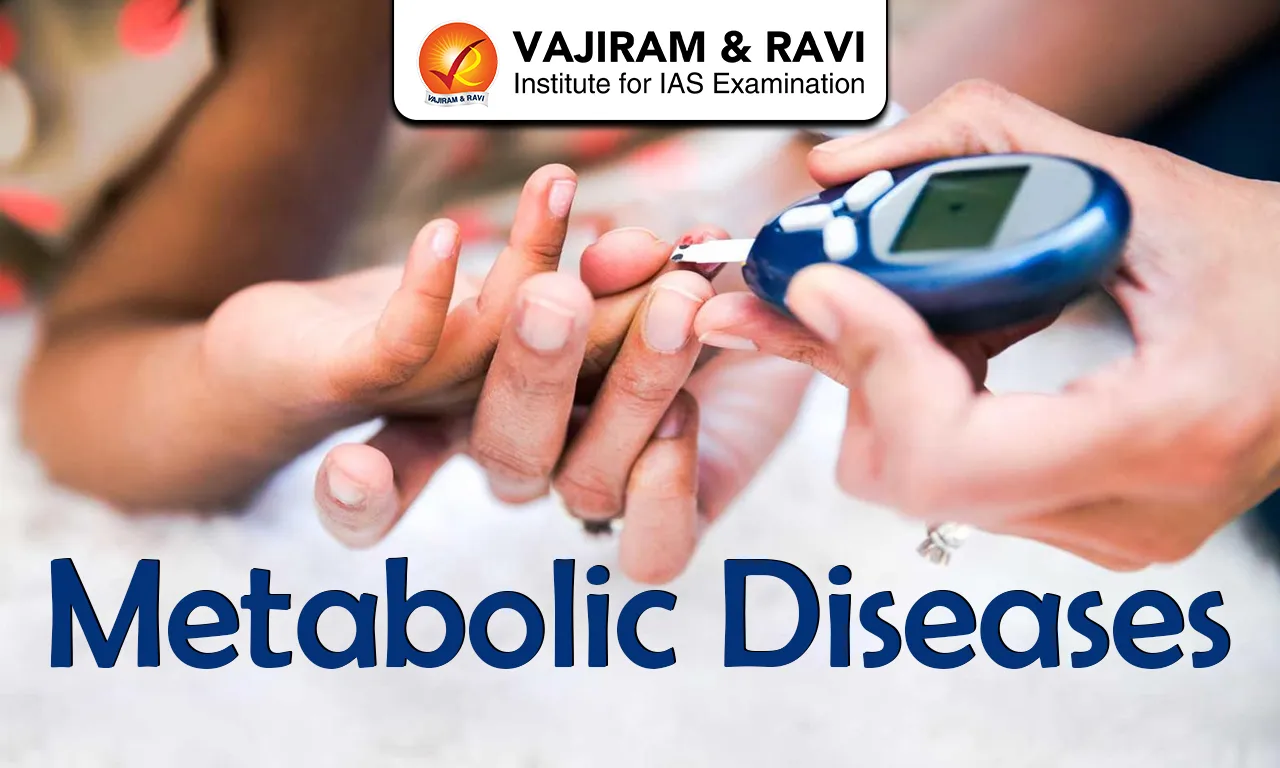
  • Metabolic diseases refer to a group of disorders that disrupt the body’s normal metabolic processes, particularly the way energy from food is broken down, stored, and utilised. 
  • Common metabolic diseases include Type 2 diabetes mellitus, High blood pressure (hypertension), Obesity or high body mass index (BMI), High LDL cholesterol and Metabolically-dysfunction-associated steatotic liver disease (MASLD) 
  • These conditions are closely linked to lifestyle factors such as unhealthy diets, sedentary behaviour, and increasing urbanisation. 
  • They are also major contributors to non-communicable diseases (NCDs), which account for a significant proportion of deaths globally.

Findings of the Global Burden of Disease Study

  • The study analysed data for the period 1990-2023, with projections up to 2030 for the Asia-Pacific region. 
  • Researchers assessed the burden of metabolic diseases using two key indicators:
    • Disability-Adjusted Life Years (DALYs) - a measure of overall disease burden combining years lost due to premature death and years lived with disability.
    • Mortality rates - the number of deaths caused by specific diseases.
  • The study identified five major metabolic risk factors contributing to disease burden:
    • Type 2 diabetes mellitus
    • High systolic blood pressure
    • High BMI
    • High LDL cholesterol
    • Metabolically-dysfunction-associated steatotic liver disease (MASLD) 
  • The findings indicate that metabolic disorders have become one of the most serious health challenges in the Asia-Pacific region.

India’s Metabolic Disease Burden

  • According to the study, India has one of the highest absolute metabolic disease burdens in the Asia-Pacific region. In 2023, India recorded:
    • Approximately 21 million DALYs linked to type 2 diabetes
    • Around 5.8 lakh deaths due to diabetes 
  • High systolic blood pressure was another major contributor to disease burden, accounting for nearly 3.8 crore DALYs and around 15.7 lakh deaths in the country. 
  • These numbers indicate that hypertension and diabetes remain among the leading health challenges facing India.
  • In terms of DALYs, India overtook China in 2023 to become the country with the highest metabolic disease burden in the Asia-Pacific region
  • However, under other parameters such as high BMI, LDL cholesterol, and MASLD, India still ranks second after China.

Rising Risk Factors in India

  • The study highlights several metabolic risk factors that are increasing steadily in India.
  • One of the most significant trends is the rising prevalence of obesity and high BMI, which is growing at an annual rate of about 2.7-2.9%
  • High LDL cholesterol levels and fatty liver disease (MASLD) are also becoming increasingly common.
  • These trends are largely driven by:
    • Rapid urbanisation
    • Sedentary lifestyles
    • Increasing consumption of ultra-processed foods
    • High intake of sugar, salt, and unhealthy fats
  • Together, these factors are contributing to the growing burden of metabolic diseases in India.

Implications for Public Health

  • Metabolic diseases have far-reaching consequences for public health and economic productivity.
  • If current trends continue, these diseases could place enormous pressure on healthcare systems due to Increased hospitalisation, Long-term treatment costs and Reduced workforce productivity
  • The study also warns that most metabolic risk factors are expected to continue rising until 2030, unless strong preventive measures are adopted. 
  • Thus, tackling metabolic diseases has become a major priority for health policymakers.

Prevention and Policy Measures

  • Experts emphasise that an integrated public health approach is needed to address the rising metabolic disease burden in India.
  • Key recommended strategies include:
    • Promoting healthier diets: Governments should regulate ultra-processed foods and reduce excessive sugar, salt, and unhealthy fats in commonly consumed foods. 
    • Nutrition labelling: Clear front-of-pack nutrition labels can help consumers make informed dietary choices.
    • Urban design and physical activity: Cities should be redesigned to encourage active lifestyles through safe walking spaces, cycling tracks, and public exercise facilities. 
    • Screening and early detection: Large-scale screening for diabetes, hypertension, obesity, and fatty liver disease should be integrated into primary healthcare systems.
  • India has already initiated programmes through the Union Health Ministry and State governments, but experts emphasise the need for stronger and more uniform implementation across the country.

Source: TH

Metabolic Diseases FAQs

Q1: What are metabolic diseases?

Ans: Metabolic diseases are disorders that disrupt the body’s normal metabolism, including conditions such as diabetes, hypertension, and obesity.

Q2: Which study highlighted India’s metabolic disease burden?

Ans: The Global Burden of Disease (GBD) Study 1990–2023 analysed metabolic disease trends in the Asia-Pacific region.

Q3: How many deaths were caused by diabetes in India in 2023?

Ans: Around 5.8 lakh deaths in India were attributed to type 2 diabetes in 2023.

Q4: Which metabolic risk factor contributes significantly to disease burden in India?

Ans: High systolic blood pressure is a major contributor to DALYs and deaths in India.

Q5: What strategies can help reduce metabolic diseases?

Ans: Healthy diets, increased physical activity, early screening, and regulation of processed foods can help reduce metabolic diseases.


India-Finland Relations – Strategic Partnership in Digitalisation and Sustainability

India-Finland Relations

India-Finland Relations Latest News

  • India and Finland have elevated their bilateral ties to a “Strategic Partnership in Digitalisation and Sustainability” following talks between the Indian Prime Minister and Finnish President (Alexander Stubb) in New Delhi. 
  • The visit resulted in multiple agreements covering mobility, environment, statistics, and emerging technologies, reflecting a growing convergence in technology, sustainability, and global governance.
  • The partnership comes amid the recent conclusion of the India–European Union Free Trade Agreement (2026) and aims to deepen cooperation between India and the Nordic region.

Key Outcomes of the India-Finland Talks

  • Institutional and economic initiatives:
    • Goal to double bilateral trade by 2030.
    • Establishment of a Joint Working Group on Digitalisation.
    • Formation of a Joint Task Force on 6G telecommunications.
    • Enhanced startup ecosystem connectivity between the two countries.
    • Initiation of a consular dialogue mechanism to improve people-to-people engagement.
  • Agreements signed: 
    • Three key agreements were signed in the areas of -
      • Migration and Mobility (comprehensive agreement facilitating movement of talent and students).
      • Environment cooperation.
      • Statistical collaboration.
    • These agreements aim to strengthen economic exchanges, knowledge transfer, and sustainable development initiatives.

Areas of Strategic Cooperation

  • Digital technology and emerging technologies:
    • The partnership focuses on high-technology sectors, including Artificial Intelligence (AI), 6G telecommunications, Quantum computing, and Digital infrastructure.
    • India and Finland aim to promote trustworthy technologies and resilient digital ecosystems.
  • Sustainability and circular economy:
    • India and Finland will co-host the World Circular Economy Forum in India.
    • Cooperation in clean energy, environmental protection, and sustainable technologies will be expanded.
    • Finland’s expertise in circular economy models aligns with India’s sustainable development goals and climate commitments.
  • Defence, space and critical technologies:
    • Both nations agreed to deepen cooperation in defence and security technologies, space cooperation, semiconductors and critical minerals supply chains.
    • This is important for supply chain resilience and technological self-reliance.

Examples of India-Finland Cooperation

  • Synergy: Between Finnish technological expertise and India’s scale of implementation -
    • Telecommunications: Finnish company Nokia’s networks and mobile technology have connected millions in India.
    • Infrastructure: Finnish architects contributed to the construction of the Chenab Rail Bridge, the world’s highest railway bridge.
    • Bioenergy: Collaboration helped establish the world’s largest bamboo-to-bioethanol refinery in Numaligarh (Assam).
  • Education and mobility:
    • Finland is emerging as a preferred destination for Indian students and skilled professionals.
    • The Migration and Mobility Agreement aims to facilitate legal migration and talent exchange.
    • Expanded cooperation in teacher training, school-to-school partnerships, and research on the future of education.
    • Finland’s globally reputed education system offers valuable learning opportunities for India’s education reforms.
  • Arctic and Polar cooperation:
    • Finland is an important partner for India in the Nordic and Arctic region.
    • Key areas of collaboration include Arctic and polar research, climate change monitoring, and sustainable resource management.
    • This aligns with India’s Arctic Policy (2022) and its growing role in polar scientific research.

India-Finland Relations

  • Background: Finland established diplomatic relations with India in 1949. In recent years, there has been an increase in joint initiatives and the active exchange of delegations between the two.
  • Bilateral trade: In the range of EUR 1.5–2 billion annually. Finland has a slight trade surplus with India, especially in the goods trade.
  • Investment: Over 100 Finnish companies have operations in India. Large Finnish companies like Nokia, Wartsila, UPM, Lindstrom, Fortum, Ahlstrom, Elcoteq, etc., have manufacturing facilities in India.

Challenges and Way Forward

  • Limited bilateral trade volume: Trade between India and Finland remains modest compared to potential. Use the India–EU FTA to expand trade and investment opportunities.
  • Geographical and market distance: Limited direct connectivity and awareness between businesses. Expand startup and innovation ecosystem collaboration.
  • Technological competition: Collaboration must navigate global competition in advanced technologies. Promote joint research and development in emerging technologies.
  • Geopolitical uncertainties: Ongoing global conflicts (in the Middle East, Sudan and Ukraine) and shifting alliances may affect economic and security cooperation.
    • Convergence on global governance and geopolitics: Both countries emphasised -
      • Urgent reform of global institutions to address emerging global challenges.
      • Commitment to multilateralism and global cooperation.
      • Joint commitment to eliminate terrorism in all its forms.
      • On the need to restore a rules-based international order.

Conclusion

  • The elevation of India–Finland relations reflects the growing importance of technology, innovation, and sustainability in modern diplomacy. 
  • By combining Finland’s technological expertise and education excellence with India’s scale and economic growth, the partnership has the potential to - 
    • Strengthen India–EU relations, 
    • Promote resilient supply chains, and 
    • Contribute to a rules-based international order.

Source: IE

India-Finland Relations FAQs

Q1: Why is the India–Finland Strategic Partnership in Digitalisation and Sustainability significant?

Ans: It strengthens cooperation in emerging technologies, sustainability, and resilient supply chains while deepening India–EU engagement.

Q2: How does Finland contribute to India’s technological and infrastructure development?

Ans: Through collaborations in telecom networks, infrastructure design (Chenab Bridge), and bioenergy projects like the Numaligarh bioethanol refinery.

Q3: What role does the Migration and Mobility Agreement play in India–Finland relations?

Ans: It facilitates legal migration, talent mobility, and deeper educational and innovation cooperation.

Q4: How does India–Finland cooperation support global sustainability efforts?

Ans: Through initiatives such as the World Circular Economy Forum and collaboration in clean energy and environmental technologies.

Q5: Why is Arctic cooperation important in India–Finland relations?

Ans: It supports climate research, sustainable resource management, and India’s growing engagement in polar scientific studies.

Maritime Law and Warfare: Rules Governing Naval Conflict

Maritime Law and Warfare

Maritime Law and Warfare Latest News

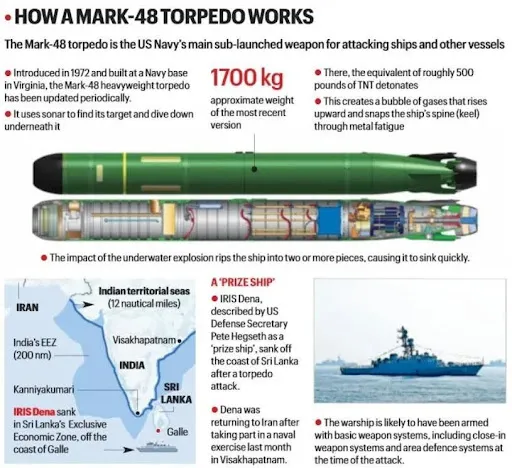
  • A US submarine torpedoed the Iranian warship IRIS Dena off the coast of Sri Lanka, outside its territorial waters. The ship was returning after participating in the International Fleet Review and MILAN-2026 naval exercise hosted by India near Visakhapatnam.
  • The attack resulted in the death of at least 80 sailors and expanded the US-Israel–Iran conflict beyond West Asia into the Indian Ocean region.
  • The incident has also sparked a debate in India over maritime security, especially given India’s strong naval presence in the Indian Ocean. 
  • Experts noted that ships sailing in international waters cannot be protected by another country from hostile action. Once outside a nation’s territorial boundaries, ships are subject mainly to international maritime law and conventions, which govern conduct during naval conflicts.

Legal Framework Governing Maritime Conflict

  • International maritime law is mainly governed by the United Nations Convention on the Law of the Sea (UNCLOS), although the United States is not a signatory. 
  • UNCLOS primarily deals with peacetime maritime governance and does not clearly regulate the conduct of parties during armed conflicts.

Law of Naval Warfare

  • During conflicts, the law of naval warfare operates alongside UNCLOS
  • Under these rules, warships belonging to a belligerent state can be considered legitimate military targets, regardless of whether they are directly engaged in combat.

Provisions Under the UN Charter

  • The UN Charter regulates the use of force in international waters. 
  • Article 2(4) generally prohibits the use of force, but Article 51 allows states to act in self-defence if they face an armed attack.
  • Military action may also be authorised by the UN Security Council under Chapter VII of the UN Charter. 
  • However, such approval requires a majority vote and no veto from any permanent member, making it difficult to obtain in many situations.

US Sanctions on the Iranian Warship

  • The Iranian warship IRIS Dena was sanctioned by the US Treasury in February 2023, along with executives of the Iranian drone company Paravar Pars. 
    • The sanctions were linked to Iran’s alleged supply of UAVs to Russia for attacks on infrastructure in Ukraine.
  • However, these sanctions did not prevent the ship from participating in peacetime multilateral naval exercises, though they restricted its commercial or transactional activities.
  • At the time of the attack, the warship was likely equipped with basic defensive weapon systems, including close-in weapon systems and area defence systems.

Expert Views on the Incident

  • No Fixed War Zones at Sea - Experts stated that there are no defined war zones in the maritime domain. The attack occurred after the Iranian ship left India, making it part of the wider conflict environment.
  • Incident Near Sri Lanka’s EEZ - The attack happened in Sri Lanka’s Exclusive Economic Zone (EEZ). This proximity allowed authorities to begin search and rescue operations quickly. The location also suggests the ship may have been aware of potential threats.
  • Legal Concerns Over Use of Force – Critics, however, argued that attacking a foreign warship on the high seas is generally unlawful unless justified as self-defence or within an ongoing armed conflict, as recognised under Article 51 of the UN Charter.

Escalation of the Conflict

  • Analysts described the attack as a major escalation in the US-Israel-Iran conflict. 
  • The ship was reportedly on a peaceful passage outside the conflict zone, which may have led to the crew being caught off guard despite defensive capabilities.

Source: IE

Maritime Law and Warfare FAQs

Q1: What does Maritime Law and Warfare refer to?

Ans: Maritime Law and Warfare refers to international legal rules governing naval conflicts at sea, including UNCLOS provisions, naval warfare principles, and UN Charter rules on the use of force.

Q2: How does UNCLOS relate to Maritime Law and Warfare?

Ans: UNCLOS governs maritime activities mainly in peacetime, but during conflicts the law of naval warfare works alongside it to regulate military actions at sea.

Q3: Are warships legitimate targets under Maritime Law and Warfare?

Ans: Yes. Under the law of naval warfare, warships belonging to a belligerent state may be considered legitimate military targets during armed conflict.

Q4: How does the UN Charter regulate naval conflict?

Ans: The UN Charter generally prohibits the use of force under Article 2(4), but Article 51 allows states to use force in self-defence if they face an armed attack.

Q5: Can the UN Security Council authorise naval strikes?

Ans: Yes. Under Chapter VII of the UN Charter, the UN Security Council can authorise military action, though approval requires majority support and no veto from permanent members.

Rethinking India’s Rice Production and Export Strategy

India’s Rice Production and Export Strategy

India’s Rice Production and Export Strategy Latest News

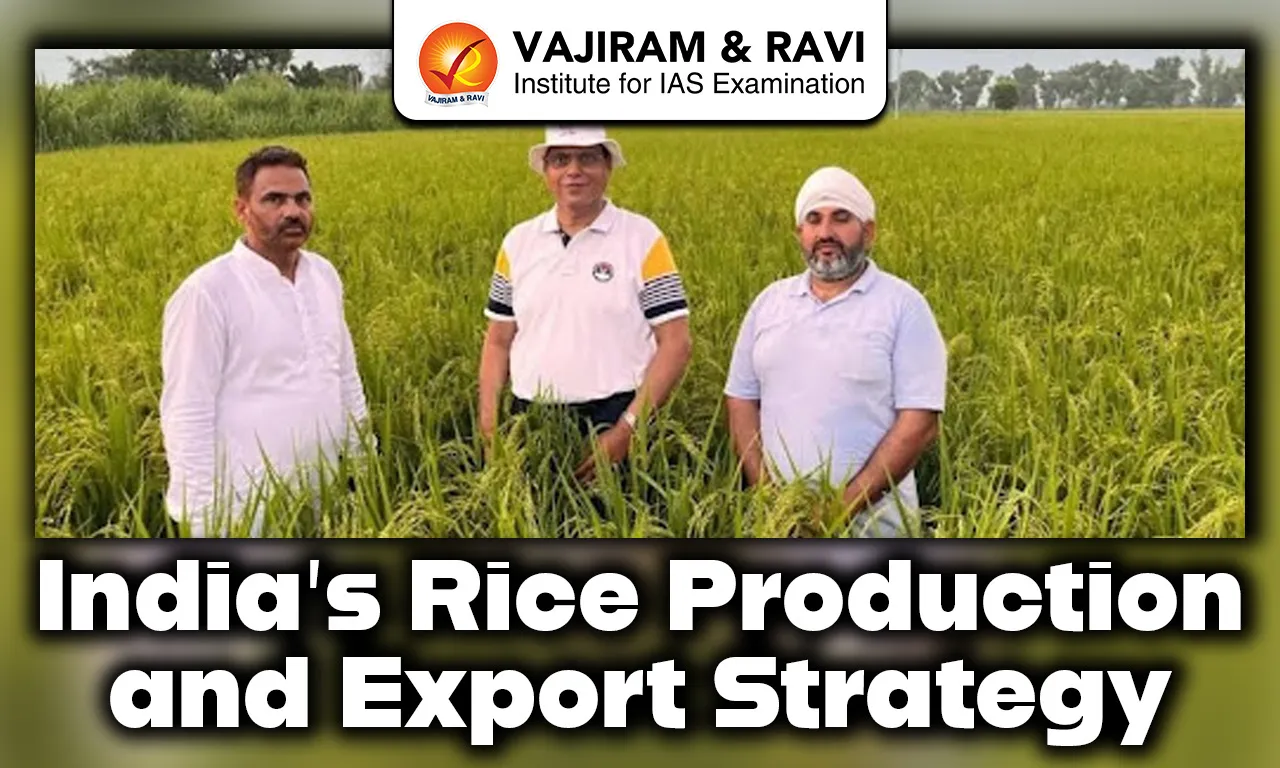
  • India has been the world’s largest rice exporter since 2011–12. In 2024–25, India exported about 21.69 million tonnes, far higher than Thailand (7.86 million tonnes) and Vietnam (8.06 million tonnes).
  • India also became the largest rice producer in the world in 2024–25, with an estimated 150 million tonnes of output, surpassing China’s 145.28 million tonnes.
  • However, the key challenge ahead is maintaining this leadership while ensuring environmental sustainability and financial viability.

Environmental Costs of Paddy Cultivation

  • Paddy is an extremely water-intensive crop. A single irrigation covering one acre to a depth of 2.5 cm requires about 1,01,171 litres of water. 
  • To control weeds, paddy fields are usually kept submerged under about 5 cm of water for long periods.
  • Depending on crop duration and planting time, paddy requires 20 to more than 30 irrigations. 
  • Under the conventional system of transplanting with continuous flooding, about 25 irrigations at 5 cm depth can consume roughly 5 million litres of water per acre.

Water Footprint of Rice Production

  • With an average yield of 2.5 tonnes of paddy per acre, producing one kilogram of paddy requires about 2,000 litres of water. 
  • After milling (which gives about two-thirds recovery), one kilogram of rice requires nearly 3,000 litres of water.
  • This means that every kilogram of rice exported by India effectively represents the export of about 3,000 litres of water, raising concerns about the environmental sustainability of large-scale rice exports.

Financial Sustainability of Rice Exports

  • India exports both basmati and non-basmati rice, but their export values differ significantly. 
  • In 2023–24 and 2024–25, basmati exports were about 5–6 million tonnes, less than half of non-basmati exports (11–14 million tonnes).
  • However, the export value of both categories was almost similar. Basmati exports earned about $5.8–5.9 billion, while non-basmati exports generated $4.5–6.5 billion.
  • The average unit value of basmati rice was ₹82.9–92.3 per kg, compared with ₹34–39.2 per kg for non-basmati rice, showing that basmati brings higher revenue per kilogram.

Water Efficiency in Basmati Cultivation

  • Basmati rice also requires less irrigation water compared with many non-basmati varieties. 
  • Non-basmati paddy is usually transplanted in June, during peak summer, which requires frequent irrigation.
  • In contrast, basmati varieties are transplanted in July with the onset of monsoon, reducing the need for irrigation.

Climatic Advantage for Aroma

  • Basmati crops flower and develop grains in October, when temperatures fall to 30–31°C. 
  • These cooler conditions help the formation of 2-acetyl-1-pyrroline, the compound responsible for basmati’s distinctive aroma.
  • If transplanted earlier in June, grain filling happens in September when temperatures remain high, which reduces aroma quality.

Shift Towards High-Value Rice Exports

  • Because basmati generates higher export earnings and uses less water, it offers better economic and environmental returns. 
  • Experts suggest increasing exports of basmati and other high-value aromatic rice varieties.
  • These include GI-protected varieties such as Kalanamak and Adamchini (Uttar Pradesh), Katarni (Bihar), Gobindobhog (West Bengal), Badshah Bhog (Chhattisgarh), Koraput Kalajeera (Odisha), Wayanad Jeerakasala and Gandhakasala (Kerala), and Seeraga Samba (Tamil Nadu).
  • The broader goal is to shift from exporting bulk commodity rice to exporting high-value, less water-intensive rice varieties.

Towards a Non-Basmati Phaseout Strategy

  • India’s basmati exports have increased sharply from 0.6–0.7 million tonnes in the early 2000s to 5–6 million tonnes in recent years. 
  • Export earnings have also risen from $400–450 million to about $5.8–5.9 billion. 
  • This growth is largely due to high-yielding basmati varieties developed by scientists at the Indian Agricultural Research Institute (IARI).

High-Yield Modern Basmati Varieties

  • Pusa Basmati-1509 yields about 2.5 tonnes of paddy per acre and matures in 115–120 days, compared with 1 tonne yield and 155–160 days maturity for traditional basmati varieties.
  • India’s basmati GI region covers about 6.2 million hectares across Punjab, Haryana, western Uttar Pradesh, Uttarakhand, Jammu and Himachal Pradesh.
  • However, actual basmati cultivation is only about 2.1 million hectares. Expanding basmati to the entire GI area could increase production, exports, and sustainability in rice farming.

Policy Measures for Transition

  • Experts suggest gradually reducing non-basmati rice cultivation in water-stressed regions like Punjab and Haryana.
  • The government could instead procure non-basmati paddy from eastern states such as Uttar Pradesh, Bihar, West Bengal and Assam, where groundwater stress is lower.
  • The government can set a floor price for basmati paddy in mandis to protect farmers from price crashes.

Advances in Rice Breeding Strategies

  • IARI scientists introduced genes from wild rice and landraces into popular varieties such as Pusa Basmati-1509, 1121 and 1401 using marker-assisted selection.
  • This led to disease-resistant varieties Pusa Basmati-1847, 1885 and 1886, which resist bacterial leaf blight and rice blast.
  • Genetic resistance reduces the need for antibiotics and fungicides. Lower chemical use helps maintain basmati’s premium quality in global markets.

Tackling Other Crop Threats

  • Researchers are now identifying genes for resistance against diseases (bakanae, false smut, brown spot) and pests (stem borer, leaf folder, plant hoppers).
  • The focus is also on traits like drought, heat and salinity tolerance.

Source: IE

India’s Rice Production and Export Strategy FAQs

Q1: Why is India’s Rice Production and Export Strategy under debate?

Ans: India’s Rice Production and Export Strategy faces environmental concerns because rice cultivation is highly water-intensive and large exports indirectly mean exporting significant quantities of water.

Q2: How much water is required for rice production in India?

Ans: Producing one kilogram of rice can require nearly 3,000 litres of water, making rice cultivation particularly demanding on water resources

Q3: Why is basmati rice economically advantageous for exports?

Ans: Basmati rice earns significantly higher export value per kilogram compared with non-basmati varieties, making it more profitable and resource-efficient for India’s rice export strategy.

Q4: What policy shift is suggested in India’s Rice Production and Export Strategy?

Ans: Experts recommend expanding basmati cultivation, reducing non-basmati rice in water-stressed regions, and promoting high-value GI-protected aromatic rice varieties.

Q5: How can new breeding technologies improve India’s rice sector?

Ans: Modern breeding methods such as marker-assisted selection and predictive breeding can develop disease-resistant and climate-resilient rice varieties while reducing chemical inputs and improving productivity.

Enquire Now