
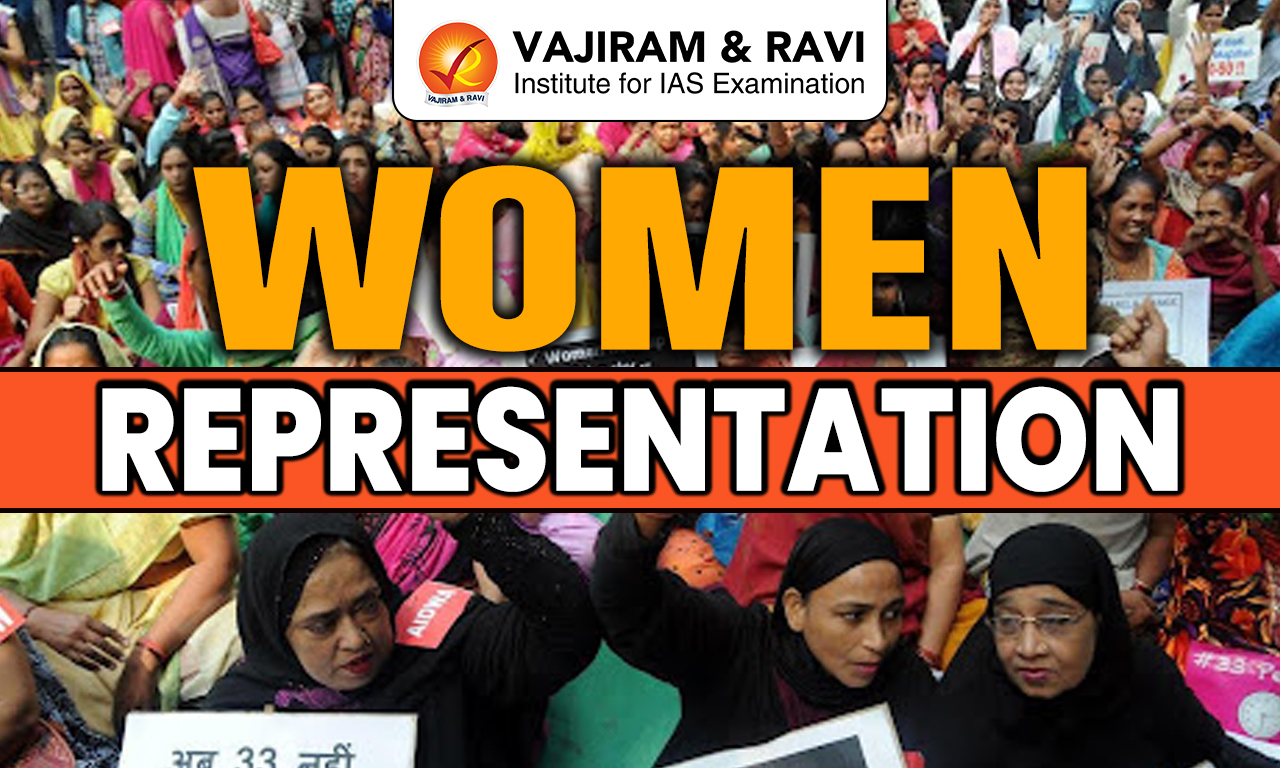
Women Representation in Indian Politics – Explained

Women Representation

Women Representation Latest News

  • Recent analyses of electoral data highlight that women now vote at nearly the same rate as men in India, yet their representation in legislatures and political campaigns remains limited. 

Women’s Political Participation in India

  • Women’s participation in electoral politics in India has undergone a significant transformation over the past six decades. 
  • Earlier, women faced major barriers in accessing the electoral process, but today their participation as voters has reached near parity with men.
  • Despite this remarkable progress in voter turnout, women’s political representation in Parliament and active engagement in political campaigns remain relatively low. 
  • This creates a paradox in Indian democracy: high electoral participation but limited political power. 

Women as Voters: The Rise in Electoral Participation

  • In the decades following Independence, women participated in elections at much lower rates than men.
  • For example, in the 1967 Lok Sabha election, male voter turnout was 66.7%, while female turnout stood at 55.5%, reflecting a gender gap of more than 11 percentage points. 
  • Such disparities persisted into the 1970s due to several structural factors:
    • Lower female literacy rates
    • Restricted mobility
    • Domestic responsibilities
    • Limited political outreach to women
  • However, from the 1980s onwards, the gender gap in voter turnout began to narrow steadily.
  • By 2009, the gap had declined to around 4.4 percentage points. The most dramatic shift occurred in the last decade. 
  • In 2014, the difference reduced to about 1.5 percentage points, and by the 2019 and 2024 Lok Sabha elections, women voted at nearly the same rate as men. 

Trends in State Assembly Elections

  • In the early 1990s, women’s voter turnout was typically 4-5 percentage points lower than men’s turnout. Over time, this gap narrowed significantly.
  • By the late 2000s, the difference had almost disappeared. After 2011, the trend reversed in many states, with women voting at slightly higher rates than men.
  • Between 2015 and 2016, women’s turnout exceeded men’s by about 2.8 percentage points in several State elections. Even during the 2020–2025 period, women’s turnout remained marginally higher than men’s. 

Electoral Participation Beyond Voting

  • While voter turnout has improved significantly, women’s participation in other political activities remains limited.
  • Across Lok Sabha elections between 2009 and 2024, men consistently reported higher participation in campaign-related activities such as attending rallies, participating in processions, and canvassing voters. 
  • For example:
    • Women attending election rallies increased from 9% in 2009 to about 16% in recent elections.
    • Participation in processions and door-to-door canvassing rose from around 5–6% to about 11%.
  • Although these numbers show gradual improvement, men’s participation remains roughly double that of women in many campaign activities.
  • One major factor limiting women’s involvement in public political activities is family approval. Surveys show that many women require permission from family members to attend rallies or political meetings. 

Women’s Representation in Parliament

  • Despite increasing voter participation, women remain underrepresented in India’s legislatures.
  • In the first Lok Sabha in 1952, only 22 women were elected to Parliament. For several decades, the number of women MPs remained relatively small.
  • A noticeable increase began in the 21st century. The number of women MPs rose from 59 in 2009 to 62 in 2014, and reached a historic high of 78 in 2019. However, this number slightly declined to 74 in 2024
  • Even at its highest point, women constituted only about 14% of the Lok Sabha, which is far below their nearly 50% share in the electorate.

The Candidate Nomination Gap

  • In 1957, only 45 women contested parliamentary elections. This number increased gradually over the decades.
  • By 2014, around 668 women contested elections. The number rose to 726 in 2019 and 800 in 2024
  • However, these numbers remain small compared to the thousands of male candidates contesting elections.
  • Political parties often argue that women candidates are less likely to win elections. Yet empirical evidence challenges this claim.
  • In several elections, women candidates have had equal or higher success rates than men. For example:
    • In 2019, about 11% of women candidates won, compared to 6% of male candidates.
    • In 2024, success rates were 9% for women and 6% for men. 
  • This suggests that when women receive party nominations, they are equally capable of winning elections.

Structural and Social Barriers

  • Women’s underrepresentation in politics is shaped by multiple structural and social barriers.
  • According to survey findings:
    • 58% of women believe it is easier for those from political families to enter politics.
    • 57% think women from wealthier backgrounds have better chances of entering politics.
    • 44% believe political parties prefer men when distributing election tickets. 
  • Women also face broader social challenges. Respondents identified several key obstacles:
    • Patriarchal social structures
    • Household responsibilities
    • Lack of political experience or awareness
    • Cultural and financial barriers

Way Forward

  • Improving women’s political participation requires both institutional reforms and social change.
  • One significant step is the Women’s Reservation Bill (Nari Shakti Vandan Adhiniyam), which aims to reserve 33% of seats in the Lok Sabha and State Assemblies for women.
  • In addition, political parties must increase the number of women candidates and promote women’s leadership within party structures.

Source : TH

Women Representation FAQs

Q1: How has women’s voter turnout in India changed over time?

Ans: Women’s voter turnout has increased significantly and now matches or sometimes exceeds men’s turnout in elections.

Q2: What percentage of the Lok Sabha is currently represented by women?

Ans: Women constitute about 14% of the Lok Sabha, despite forming nearly half of the electorate.

Q3: Why are fewer women elected to Parliament in India?

Ans: Limited party nominations, social barriers, and political constraints contribute to women’s low representation.

Q4: Do women candidates perform worse than men in elections?

Ans: No, women candidates often have similar or higher success rates than male candidates when given party tickets.

Q5: What reform aims to increase women’s representation in Indian legislatures?

Ans: The Women’s Reservation Bill (Nari Shakti Vandan Adhiniyam) proposes reserving 33% seats for women in Parliament and State Assemblies.

Section 301 Investigation: US Launches Trade Probe into India and Other Countries

Section 301 Investigation

Section 301 Investigation Latest News

  • The United States has launched a Section 301 investigation into several countries, including India and China, over concerns of structural excess capacity and overproduction in manufacturing sectors. 
  • This is the first such probe by the Trump administration after the US Supreme Court struck down tariffs imposed under the International Emergency Economic Powers Act (IEEPA). 
  • The investigation will examine economies with large trade surpluses or underutilised industrial capacity across multiple sectors.

Section 301 of the US Trade Act

  • Section 301, part of the Trade Act of 1974 (Sections 301–310), empowers the Office of the United States Trade Representative (USTR) to investigate foreign trade practices that may violate trade agreements or unfairly restrict US commerce. 
  • The law allows the USTR to initiate investigations independently or based on complaints, examine foreign government policies affecting trade, and impose remedies such as tariffs or other trade restrictions. 
  • As a result, Section 301 serves as the US government’s primary legal instrument for responding to perceived unfair trade practices by other countries.

Possible Tariffs as US Launches Fast-Track Section 301 Probe

  • Trade experts note that most countries targeted in the investigation have trade deficits in goods with the US
  • The probe is moving quickly, with a short window for public comments and hearings scheduled for early May.
  • This could mean that fresh tariffs could be imposed on India and other countries after May.

US Concerns Over India’s Excess Manufacturing Capacity

  • The USTR has targeted India for structural excess capacity in several manufacturing sectors. 
  • It noted that India recorded a $58 billion trade surplus with the US in 2025, with global surpluses in textiles, healthcare products, construction materials, and automobiles. 
  • The USTR also highlighted excess capacity in sectors such as solar modules, petrochemicals, and steel, stating that India’s solar module production is nearly three times higher than its domestic demand.

Trade Deal Uncertainty Amid US Concerns Over Excess Capacity

  • The US investigation comes as India and the US are negotiating a trade deal that is yet to be formally signed. 
  • India has indicated that talks will resume once there is clarity on tariff policies. 
  • Meanwhile, the US argues that structural excess capacity in manufacturing sectors among trading partners undermines its efforts to reshore supply chains and create domestic jobs. 
  • According to the USTR, government-supported overcapacity leads to overproduction, persistent trade surpluses, and underutilised industrial capacity, distorting global trade dynamics.

Implications of the US Section 301 Investigation for India

  • According to the Global Trade Research Initiative (GTRI), the US investigation highlights several Indian sectors where structural excess capacity or export surpluses may exist.
  • This includes solar modules, petrochemicals, steel, textiles, healthcare goods, construction materials, and automobiles.
  • The US notice points out that India’s solar module manufacturing capacity is nearly three times higher than domestic demand, suggesting the possibility of export-driven surpluses. 
  • Similar concerns have been raised regarding expanding capacity in petrochemicals and steel.
  • Experts stated that the investigation mainly addresses global concerns over manufacturing overcapacity. 
  • They emphasised that India’s export growth is largely demand-driven and diversified, though the situation will need to be closely monitored.

US Legal Tools Used to Impose Tariffs

  • International Emergency Economic Powers Act (IEEPA), 1977 - The Trump administration invoked the IEEPA in February 2025 to impose tariffs. However, in February 2026, the US court ruled that this law cannot be used to impose tariffs.
  • Section 122 of the Trade Act, 1974 - In February 2026, the US President invoked Section 122 to impose 10% tariffs on all countries for 150 days, with the authority to increase the tariffs up to 15%.
  • Section 232 of the Trade Expansion Act, 1962 - This provision allows the US to impose trade restrictions on national security grounds. It has been used to impose sector-specific tariffs on steel, aluminium, and auto components, and could potentially be expanded to other sectors.
  • Section 301 of the Trade Act, 1974 - Section 301 is designed to address unfair foreign trade practices that harm US commerce. It allows the US to respond to policies considered unjustifiable, unreasonable, or discriminatory, though investigations require evidence and follow a formal legal process.
  • Section 302(b) of the Trade Act, 1974 - Under Section 302(b), the US Trade Representative (USTR) can self-initiate investigations under Section 301 to examine foreign trade practices that may affect US economic interests.

Source: IE | BL | DC

Section 301 Investigation FAQs

Q1: What is the Section 301 Investigation launched by the US?

Ans: The Section 301 Investigation is a US trade tool used to examine unfair foreign trade practices and allows Washington to impose tariffs if such practices harm US commerce.

Q2: Why has the US launched a Section 301 Investigation against India?

Ans: The US claims India and other countries show structural excess capacity in manufacturing sectors such as solar modules, steel, and petrochemicals, which may distort global trade and create large surpluses.

Q3: Which sectors in India are under scrutiny in the Section 301 Investigation?

Ans: The investigation highlights sectors including solar modules, petrochemicals, steel, textiles, healthcare products, construction materials, and automobiles as possible areas with excess production capacity.

Q4: How could the Section 301 Investigation affect India?

Ans: If the Section 301 Investigation finds unfair trade practices, the US could impose new tariffs on Indian exports, potentially affecting bilateral trade and ongoing negotiations for a trade agreement.

Q5: What legal tools does the US use to impose trade tariffs?

Ans: The US uses several laws such as Section 301 of the Trade Act, Section 232 of the Trade Expansion Act, Section 122 of the Trade Act, and earlier attempted tariffs under the IEEPA.

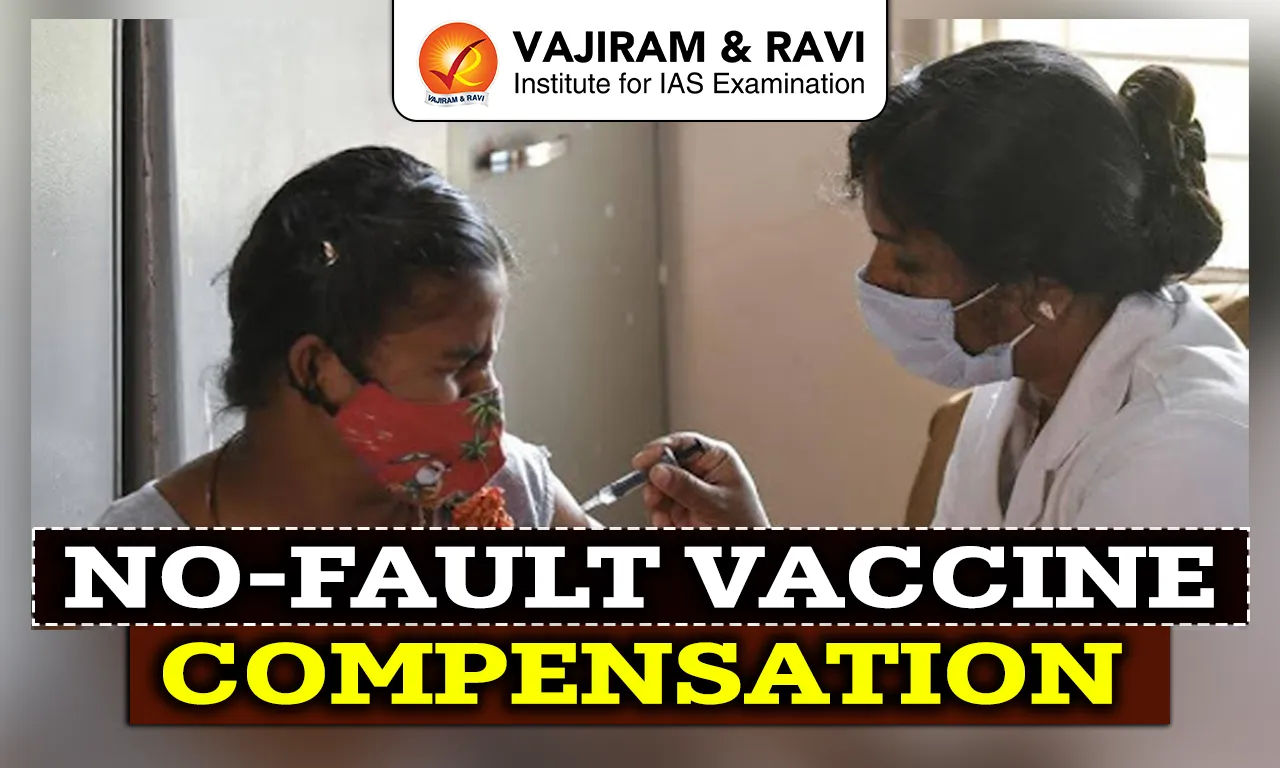
No-Fault Vaccine Compensation: SC Orders Relief for Covid Vaccine Side-Effects

No-Fault Vaccine Compensation

No-Fault Vaccine Compensation Latest News

  • The Supreme Court directed the Centre to create a “no-fault” compensation policy for people who suffered serious side effects or died after receiving Covid vaccines. 
  • The Court said victims’ families should not have to prove negligence in courts and that the State must provide a structured compensation mechanism as part of its public health responsibility during the vaccination drive.

Background: Vaccine Injury Cases Before the Supreme Court

  • The Supreme Court heard petitions filed by families who lost their children or spouses, aged between 18 and 40 years, due to rare complications such as blood clotting disorders after receiving Covishield and Covaxin vaccines in 2021.

Petitioners’ Arguments

  • Lack of Informed Consent - The petitioners argued that the government failed to ensure proper informed consent and did not adequately communicate the potential risks associated with the Covid vaccines.
  • Vaccination Effectively Mandatory - They also contended that although vaccination was officially voluntary, administrative restrictions on unvaccinated individuals effectively made it mandatory, thereby infringing their fundamental rights.

Government’s Defence

  • Safety and Regulatory Approval - The Union government maintained that the vaccines had undergone rigorous regulatory approvals and that India’s system for detecting Adverse Events Following Immunisation (AEFI) was robust.
  • Rare Incidence of Vaccine-Related Deaths - It argued that vaccine-related deaths were extremely rare, citing a reporting rate of 0.001 per one lakh doses for certain clotting disorders.
  • Existing Legal Remedies - The government suggested that affected families could seek compensation by approaching civil or consumer courts and proving negligence by vaccine manufacturers.

Supreme Court’s Observations

  • The Bench rejected the suggestion of pursuing individual cases in lower courts. 
  • It noted that proving negligence in vaccine injury cases involves complex scientific evidence, which places an excessive burden on families.
  • The Court also warned that forcing families into multiple individual legal battles could lead to inconsistent outcomes and unequal access to relief, undermining the principle of equality under Article 14 of the Constitution.

No-Fault Liability and the Right to Health

  • To address vaccine injury claims, the Supreme Court invoked the principle of “no-fault liability,” which allows victims or their families to receive compensation without proving negligence or wrongdoing. 
  • The Court noted that this principle already exists in Indian law, such as in motor vehicle accident compensation, and is commonly used in vaccine injury compensation schemes in countries like Australia, the United Kingdom, and Japan.

Constitutional Basis under Article 21

  • The judgment relied on Article 21 of the Constitution, which guarantees the right to life and the right to health. 
  • The Court emphasised that the State cannot remain a passive observer to human suffering but must act as a guardian of welfare and dignity. 
  • Since the Covid-19 vaccination programme was a State-led public health initiative, the government has a responsibility to support those who suffered serious adverse outcomes, regardless of how rare they are.

Reference to Earlier Supreme Court Ruling

  • The Court clarified that it was not reviewing the scientific validity of the vaccines. 
  • It cited its 2022 judgment in Jacob Puliyel vs Union of India, which upheld the legality of the vaccine approval process and the AEFI monitoring system, while affirming that bodily integrity under Article 21 means vaccination cannot be forcibly imposed.

Adequacy of Existing AEFI Mechanisms

  • Based on the earlier ruling, the Court refused to establish a separate expert medical board to investigate vaccine-related deaths.
  • It stated that the existing AEFI committees are sufficient for monitoring and investigation.

Directive to Formulate Compensation Framework

  • The Supreme Court directed the Ministry of Health and Family Welfare to quickly develop and publish a no-fault compensation policy for serious adverse events related to the Covid-19 vaccination drive. 
  • It clarified that such a policy should not be treated as an admission of liability or fault by the Union government.

Supreme Court’s Direction on Compensation for Covid-19 Deaths

  • The Supreme Court’s recent judgment on vaccine injury compensation reflects its earlier intervention during the pandemic in the 2021 case of Gaurav Kumar Bansal vs Union of India, which dealt with financial relief for families of Covid-19 victims.
  • It directed the NDMA to frame guidelines for providing ex gratia compensation to families of those who died due to Covid-19.

NDMA Guidelines on Ex Gratia Compensation

  • Following the Court’s direction, the NDMA issued guidelines in September 2021, fixing an ex gratia amount of ₹50,000 for each Covid-19 death, to be paid by states through the State Disaster Response Fund (SDRF).
  • To ensure fair access to compensation, a simplified procedure was introduced. 
  • Deaths occurring within 30 days of a positive Covid-19 test were treated as Covid deaths, and district-level grievance redressal committees were established to resolve disputes over death certificates.

Source: IE | ToI

No-Fault Vaccine Compensation FAQs

Q1: What is No-Fault Vaccine Compensation?

Ans: No-Fault Vaccine Compensation allows victims or their families to receive financial relief for vaccine injuries without proving negligence, ensuring quicker and fairer compensation through a structured public health mechanism.

Q2: Why did the Supreme Court order No-Fault Vaccine Compensation?

Ans: The Supreme Court held that families should not bear the burden of proving negligence for vaccine injuries and that the State must ensure No-Fault Vaccine Compensation during a state-led vaccination programme.

Q3: What constitutional principle supports No-Fault Vaccine Compensation?

Ans: The judgement relied on Article 21 of the Constitution, stating that the right to life includes the right to health, requiring the State to support victims of rare vaccine-related adverse outcomes.

Q4: What earlier case influenced the Supreme Court’s reasoning?

Ans: The Court referred to the Jacob Puliyel vs Union of India (2022) judgement, which upheld vaccine approvals while affirming that bodily integrity under Article 21 protects individuals from forced vaccination.

Q5: How does the ruling relate to earlier Covid compensation policies?

Ans: The ruling echoes the Supreme Court’s 2021 decision directing ex gratia compensation for Covid deaths under the Disaster Management Act, where NDMA later fixed ₹50,000 assistance per deceased person.

Enquire Now

