

US Iran Ceasefire: Key Impacts of US Iran Ceasefire on Global Stability

US Iran Ceasefire

US Iran Ceasefire Latest News

  • A ceasefire between the United States and Iran was announced by former US President Donald Trump shortly before his stated deadline, with Iran’s Foreign Minister Seyed Abbas Araghchi agreeing soon after. 
  • The move followed a public appeal by Pakistan’s Prime Minister Shehbaz Sharif to de-escalate tensions. 
  • Coming 39 days into the conflict, the ceasefire marked a significant step back from escalation, especially after strong threats regarding Iran’s energy infrastructure and the Strait of Hormuz, bringing temporary relief to the international community.

US-Iran Ceasefire: Key Takeaways

  • Trump Steps Back from Escalation
    • US President Trump displayed strong brinkmanship through threats and aggressive rhetoric during the conflict, but gradually moved towards de-escalation with phased pauses in military action.
    • The ceasefire is tied to Iran’s agreement to reopen the Strait of Hormuz, which Trump considers a major strategic win, especially in the absence of direct military support from European allies.
    • Post-ceasefire, Trump indicated a softer stance, expressing willingness to work with Iran and support reconstruction efforts, signalling a shift towards cooperation and reduced tensions.
  • Iran’s Strategic Leverage: Control of the Strait of Hormuz
    • Iran’s control over the Strait of Hormuz—through which nearly one-fifth of global energy flows pass—disrupted global oil markets, driving prices up despite the U.S. not directly depending on this route.
    • The Strait became Iran’s strongest strategic lever, allowing it to expand the conflict into the energy and economic domains of Gulf countries while sustaining pressure despite attacks on its infrastructure and nuclear facilities.
    • Iran permitted selective passage of ships, reportedly charging around $2 million per vessel, a system informally dubbed the “Ayatoll booth.”
    • Iran’s reopening of the Strait for two weeks reflects a temporary de-escalation, creating space for negotiations while maintaining leverage over future developments.
  • Iran’s Maximalist Peace Terms: Negotiation Challenges Ahead
    • Iran has presented a comprehensive 10-point plan, including demands for non-aggression commitments, control over the Strait of Hormuz, acceptance of uranium enrichment, lifting of all sanctions, termination of UN resolutions, compensation, and US troop withdrawal.
    • Key Iranian demands—especially sanctions relief and non-aggression guarantees—have remained consistent throughout earlier negotiations with US representatives.
    • The breadth and intensity of these demands make the negotiations highly challenging, requiring significant diplomatic effort to reconcile differences and reach a final agreement.
  • Pakistan’s Emerging Role as a Mediator in the Ceasefire
    • Pakistan has significantly elevated its diplomatic profile by playing a central role in brokering the ceasefire between the United States and Iran. 
    • Islamabad is now seeking to institutionalise this role by hosting further negotiations, branding them as the “Islamabad Talks,” and inviting both sides for continued dialogue. 
    • Behind the scenes, Pakistan’s military leadership is reported to have engaged with key US and Iranian figures to shape the agreement. 
    • While other actors, including China, may have contributed, Pakistan is positioning itself as the primary facilitator of peace, amid differing views within the US and its allies on whether to accept the deal.
  • Relief For the Region
    • The 39-day conflict has had a devastating impact across the region, with the death toll exceeding 3,000, including heavy casualties in Iran, Lebanon, Gulf countries, Israel, and among US military personnel. 
    • Iran’s retaliatory strikes on countries hosting American bases disrupted the relative stability of Gulf nations such as the UAE, Saudi Arabia, Qatar, and Oman.
    • Continuous missile and drone attacks targeted critical infrastructure, severely affecting economic and social stability.
    • In this context, the two-week ceasefire offers a crucial window for negotiations, with Gulf countries particularly seeking a durable peace to reduce economic disruption and restore regional stability.

Impact on India: Economic Strain and Strategic Relief

  • Energy Crisis and Economic Impact - The conflict disrupted oil and gas supplies from the Gulf, on which India depends for about 60% of its energy needs, raising concerns about economic slowdown and growth stability.
  • Relief from Ceasefire and Strait Reopening - The ceasefire and reopening of the Strait of Hormuz provide major relief, as India had managed to receive only a limited number of shipments during the conflict period.
  • Diplomatic Undercurrents - While Pakistan’s role as a mediator has drawn attention, India has officially welcomed the ceasefire and expressed hope for lasting peace, without acknowledging Pakistan’s involvement.
  • Impact on Indian Citizens - The conflict affected Indian nationals, with eight deaths reported and concerns for nearly one crore Indians in the Gulf, who contribute significantly to remittances.
  • Broader Strategic Concerns - India highlighted the wider disruption to global energy supply and trade networks, emphasising the importance of free navigation through the Strait of Hormuz for economic stability.

Source: IE | IE

US Iran ceasefire FAQs

Q1: What is the US Iran ceasefire?

Ans: US Iran ceasefire is a two-week agreement to halt hostilities, reopen the Strait of Hormuz, and create space for negotiations after a prolonged regional conflict.

Q2: Why is the US Iran ceasefire important?

Ans: US Iran ceasefire is important because it reduces global energy disruptions, stabilises oil markets, and prevents further escalation in a strategically critical region.

Q3: How did Iran gain leverage in the US Iran ceasefire?

Ans: Iran used control over the Strait of Hormuz, affecting global oil supply, to pressure negotiations and secure concessions during the US Iran ceasefire.

Q4: What role did Pakistan play in US Iran ceasefire?

Ans: Pakistan acted as a mediator in the US Iran ceasefire, facilitating dialogue between both sides and positioning itself as a key diplomatic player.

Q5: How does US Iran ceasefire affect India?

Ans: US Iran ceasefire benefits India by stabilising energy supplies, reopening trade routes, and reducing economic risks caused by disruptions in Gulf oil and gas flows.
FBR in India: How FBR Strengthens India’s Nuclear Energy Strategy

FBR

FBR Latest News

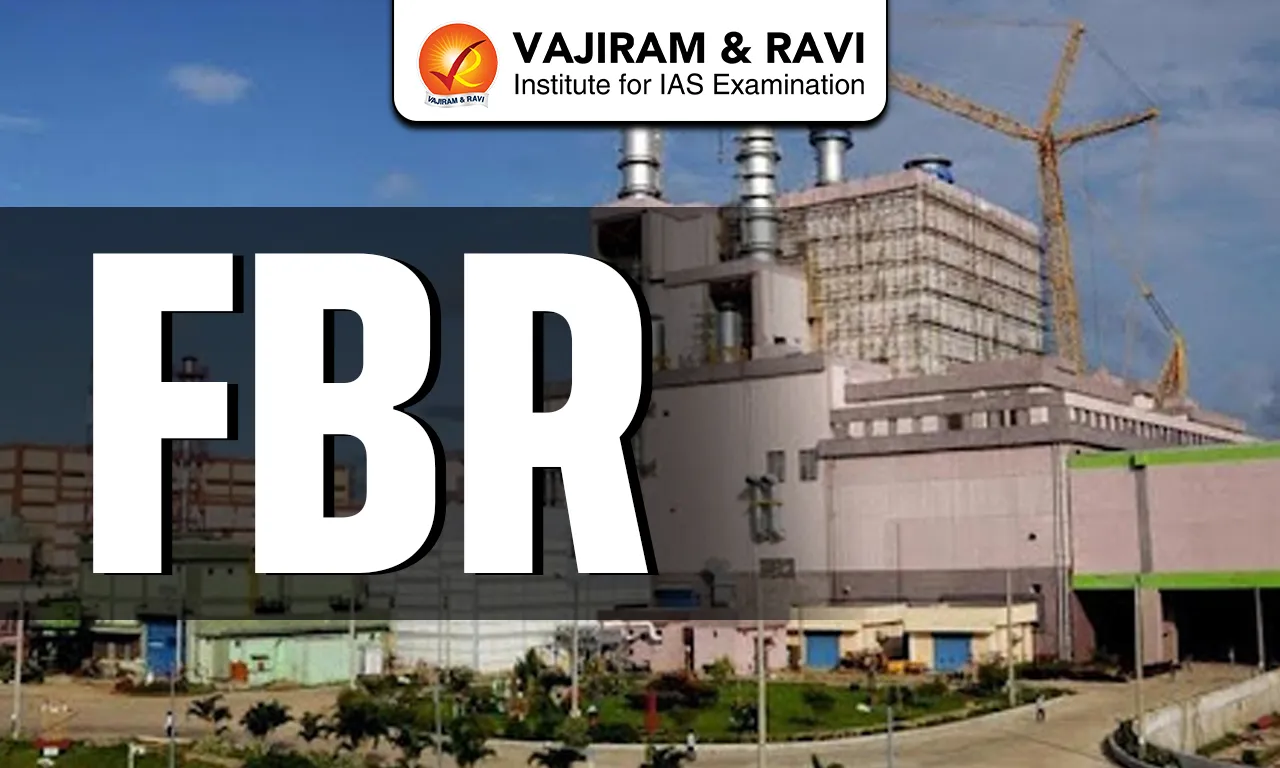
  • India’s Prototype Fast Breeder Reactor (PFBR) at Kalpakkam achieved criticality on April 6, 2026, marking a key milestone in its nuclear programme.
  • While “criticality” is often seen as a major achievement, it is not the final goal but actually the initial stage of reactor operation. 
  • It represents the beginning of a controlled nuclear chain reaction, signalling progress but not completion of the project.

Criticality in Nuclear Reactors

  • Criticality occurs when a nuclear reactor achieves a self-sustaining chain reaction, where each fission event releases neutrons that trigger further fission in surrounding nuclei. 
  • Engineers carefully control fuel composition, neutron movement, and reactor temperature to maintain this state. 
  • While criticality indicates a stable and controlled reaction, it does not mean the reactor is ready for commercial operation. 
  • After reaching criticality, the reactor is run at low power for extended periods to ensure all parameters remain within design limits before progressing to higher operational stages.

Conventional PHWRs and Their Limitations

  • Most of India’s nuclear reactors are Pressurised Heavy Water Reactors (PHWRs) that use natural uranium, which contains 99.3% uranium-238 and 0.7% uranium-235
  • Neutrons are slowed using a moderator to enable uranium-235 fission, producing heat, a small amount of plutonium, and more neutrons
  • However, PHWRs are inefficient, as only about 1% of the fuel is utilised before becoming unusable.

Working of Fast Breeder Reactors 

  • Fast Breeder Reactors (FBRs) are significantly more efficient, with a fuel utilisation rate of around 10% or more. 
  • Unlike PHWRs, FBRs primarily use plutonium as fuel and do not rely on slowing down neutrons.
  • The reactor core is surrounded by a blanket of depleted uranium. When fast neutrons strike this blanket, uranium is converted into plutonium, which can be reprocessed and reused as nuclear fuel.
  • Plutonium-based fuel undergoes fission using fast neutrons, releasing more fast neutrons that continue the process. 
  • This creates a system where the reactor not only generates energy but also produces additional fuel, enhancing efficiency.

India’s Three-Stage Nuclear Programme and FBRs

  • India’s nuclear programme, conceived by Homi Bhabha, is structured in three stages to achieve long-term energy security. 
  • In the first stage, Pressurised Heavy Water Reactors (PHWRs) use natural uranium to generate electricity while producing plutonium and depleted uranium as by-products. 
  • In the second stage, Fast Breeder Reactors (FBRs) utilise this plutonium and depleted uranium to generate more energy and produce additional plutonium. 
  • In the final stage, advanced reactors will use plutonium and thorium to produce electricity, leveraging India’s abundant thorium reserves. 
  • FBRs act as a crucial bridge between the initial uranium-based phase and the final thorium-based cycle, enabling self-sufficiency in nuclear power.

Challenges in Developing Fast Breeder Reactors 

  • Technical Complexity and Delays - Developing FBRs has proven far more difficult than anticipated. India’s Prototype PFBR faced significant challenges during construction despite being designed and executed by specialised institutions.
  • Use of Liquid Sodium Coolant - FBRs use liquid sodium as a coolant, which improves heat transfer and avoids the need for high pressure. However, sodium reacts violently with air and water, requiring perfectly sealed systems and strict leak detection, making operations complex and costly compared to water-cooled reactors.
    • Japan’s Monju reactor suffered a sodium leak and fire, leading to eventual shutdown.
    • France’s Superphénix reactor was closed due to technical problems and high costs.
    • Russia continues to operate a limited number of FBRs, showing technical feasibility.
  • Economic and Public Acceptance Issues - Although technically feasible, FBRs are not yet economically viable and have struggled to gain public acceptance. High costs and safety concerns remain major barriers.
  • Need for Strong Safety and Oversight - FBRs require rigorous monitoring, engineering precision, and a strong safety culture, making their successful operation dependent on both technological capability and institutional discipline.

India’s Approach to Fast Breeder Reactors 

  • Strategic Focus on Long-Term Fuel Security - India’s pursuit of FBRs is driven by its three-stage nuclear programme, which aims to ensure long-term energy security by efficiently utilising available nuclear resources.
  • State-Driven and Insulated Governance Structure - India’s nuclear sector is largely state-controlled, with the Department of Atomic Energy (DAE) reporting directly to the Prime Minister’s Office. This structure has enabled continuity of nuclear projects across political cycles.
  • Limited Accountability and Transparency Issues - The insulated decision-making framework has reduced scrutiny. Projects have faced delays and cost overruns, with accountability diffused across agencies. The PFBR’s cost rose from ₹3,500 crore to ₹6,800 crore, alongside multiple deadline extensions.

Source: TH | AJ

FBR FAQs

Q1: What is FBR in India?

Ans: FBR in India refers to fast breeder reactors that use plutonium fuel and produce more fuel, improving nuclear efficiency and supporting long-term energy security goals.

Q2: Why is FBR important for India?

Ans: FBR is important because it acts as a bridge in India’s three-stage nuclear programme, enabling better fuel utilisation and supporting the transition to thorium-based energy systems.

Q3: How does FBR work?

Ans: FBR uses fast neutrons and plutonium fuel to generate energy while converting depleted uranium into more plutonium, creating a self-sustaining and efficient nuclear fuel cycle.

Q4: What are the challenges of FBR?

Ans: FBR faces challenges like high costs, technical complexity, sodium coolant risks, delays, and limited economic viability, making its widespread adoption difficult.

Q5: What is the future of FBR in India?

Ans: FBR development in India will depend on successful PFBR operation, improved safety systems, fuel cycle infrastructure, and economic feasibility for long-term nuclear expansion.

Land Inequality in India – Distribution, Patterns and Key Findings

Land Inequality

Land Inequality Latest News

  • A recent study by the World Inequality Lab highlights significant land concentration in rural India. 

Land Distribution in India

  • Land ownership in India, particularly in rural areas, has historically been unequal due to colonial land systems, socio-economic hierarchies, and agrarian structures.
  • Despite land reforms after independence, disparities persist in ownership patterns. Land is a crucial asset in rural India as it determines income, social status, and access to credit.
  • Broadly, land distribution can be classified into:
    • Large landholders controlling significant agricultural land. 
    • Small and marginal farmers owning limited land. 
    • Landless households dependent on wage labour. 
  • This unequal distribution has direct implications for poverty, agricultural productivity, and rural development.

Key Features of Land Inequality

  • Land inequality in India is measured using indicators such as land share concentration and the Gini coefficient.
  • The Gini coefficient reflects inequality, where a higher value indicates greater disparity. 
  • Major features include:
    • High concentration of land among a small percentage of households. 
    • Large proportion of rural households being landless. 
    • Regional variations influenced by historical and institutional factors.

News Summary

  • As per a recent study, the top 10% of rural households in India own 44% of total land, while about 46% of rural households are landless. 
  • The study, based on data from the Socio-Economic Caste Census (2011), covered around 650 million individuals across 270,000 villages in major Indian states. 
  • The concentration is even sharper at higher levels, with the top 5% owning 32% and the top 1% owning 18% of total land. 
  • State-wise analysis shows wide variation. Bihar records the highest land concentration, with the top household owning up to 20.1% of land, while Uttar Pradesh shows relatively lower concentration at 7.3%. 
  • Punjab has the highest landlessness at 73%, despite being an agriculturally advanced state. Meanwhile, Rajasthan and Uttar Pradesh show relatively lower levels of landlessness compared to Bihar and Madhya Pradesh. 
  • The Gini coefficient analysis reveals that Kerala has the highest inequality (around 90), followed by Bihar, Punjab, Tamil Nadu, and West Bengal. Karnataka and Rajasthan have comparatively lower inequality levels. 
  • The study notes that although 46% of households are landless, among those owning land, the average landholding size is 6.2 hectares. A significant portion of land is concentrated in small holdings, but control remains skewed. 
  • The largest landholder in a village controls about 12.4% of land on average, and in nearly 3.8% of villages, a single landlord owns more than half of the land. 
  • The report also identifies key drivers of inequality. Agricultural suitability and market access together explain about 18.3% of the variation in land inequality. Areas with better agro-ecological conditions tend to have higher land concentration. 
  • Social factors also play a role. Regions with higher Scheduled Caste populations exhibit higher inequality due to increased landlessness. 
  • Proximity to infrastructure such as towns, highways, and railway stations is associated with higher inequality, indicating that development alone does not automatically reduce disparities. 
  • Historical factors remain crucial. Areas under the zamindari system show higher inequality, while former princely states have relatively lower inequality due to lower landlessness. 

Implications of Land Inequality

  • Persistent land inequality has wide-ranging consequences.
    • It reinforces rural poverty and limits upward mobility. 
    • It affects agricultural productivity due to fragmented holdings and unequal access to resources. 
    • It creates social tensions and deepens caste-based disparities. 
  • Further, high landlessness reduces access to institutional credit and government benefits, thereby perpetuating economic exclusion.

Way Forward

  • Addressing land inequality requires a multi-pronged approach.
    • Strengthening land reforms and tenancy rights. 
    • Digitisation and transparency in land records. 
    • Promoting cooperative farming and land pooling. 
    • Enhancing access to credit and agricultural inputs for small farmers. 
  • Policy focus should also include social equity and targeted interventions for vulnerable communities.

Source: IE

Land Inequality FAQs

Q1: What percentage of rural households are landless in India?

Ans: About 46% of rural households are landless.

Q2: How much land is owned by the top 10% households?

Ans: The top 10% rural households own 44% of total land.

Q3: Which state shows the highest land inequality?

Ans: Kerala has the highest Gini coefficient, indicating high inequality.

Q4: What is the average size of landholding in India?

Ans: The average landholding size is about 6.2 hectares among landowners.

Q5: What historical factor increases land inequality?

Ans: The zamindari system contributes to higher land inequality.

Enquire Now

