What is Fattah 2?

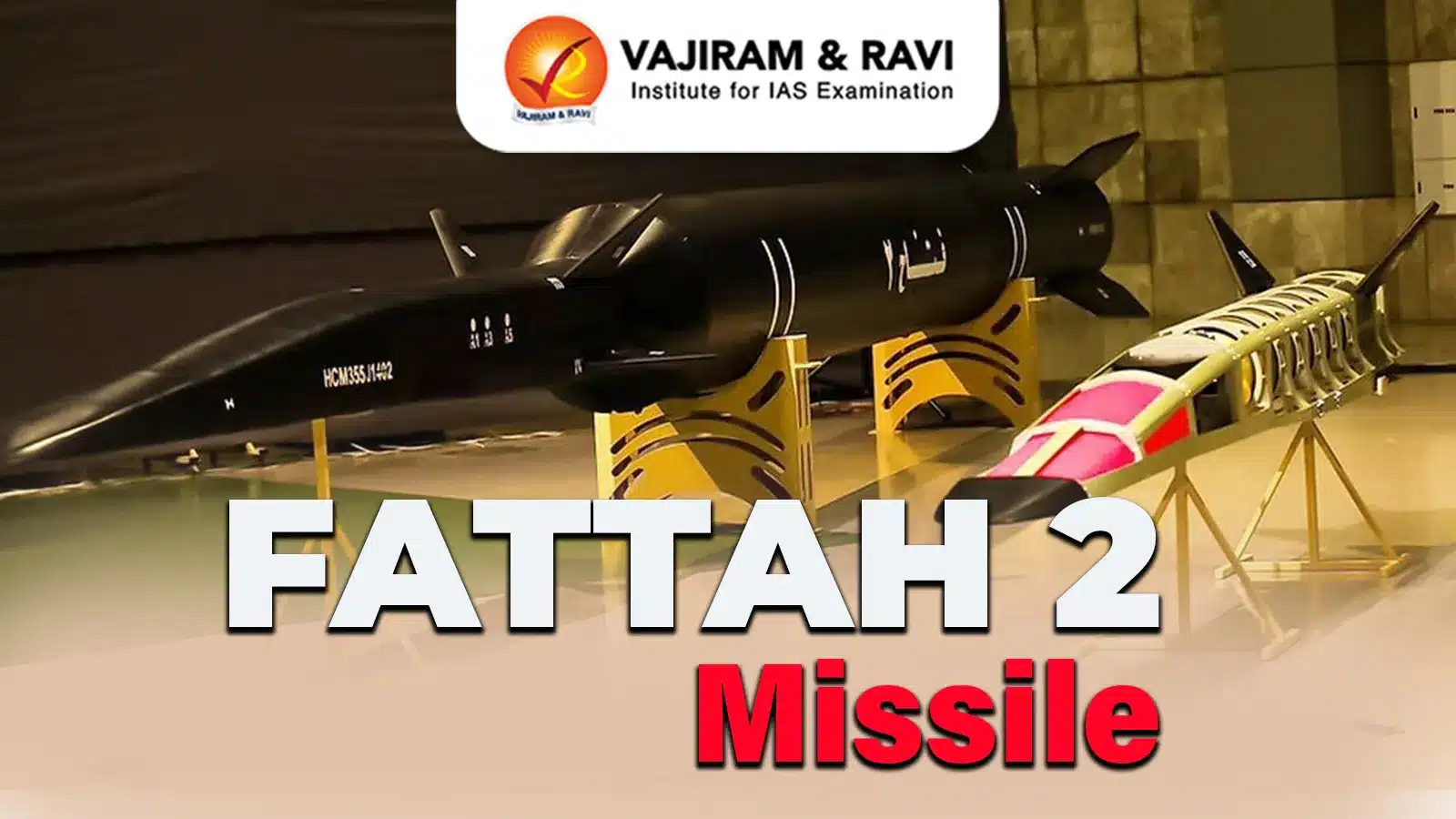
Fattah 2 Missile

About Fattah 2 Missile

  • Fattah, which means conqueror in Farsi, is a hypersonic ballistic missile.
  • It was developed by Iran. It is a new version of its first domestically made hypersonic ballistic missile named ‘Fattah’.

Fattah 2 Missile Features

  • It is equipped with a hypersonic glide vehicle (HGV) warhead that can manoeuvre and glide at hypersonic speed.
  • It uses a liquid-fuel rocket propellant. The liquid fuel engine has the ability to adjust the thrust force.
  • The precision-guided two-stage missile can hit targets within a range of 1500 kilometres with a velocity of Mach 15 (fifteen times the speed of sound, i.e 18522 km/hr).
  • Measuring 12 meters in length, it can carry 200 kilograms of explosives.
  • It is capable of significant trajectory changes during flight to evade defence systems.
  • While the missile can accelerate outside the Earth's atmosphere, its aerodynamic control surfaces allow for steering within the atmosphere.

Source: IT

Fattah 2 FAQs

Q1: What are Ballistic Missiles?

Ans: Ballistic missiles are powered initially by a rocket or series of rockets in stages, but then follow an unpowered trajectory that arches upwards before descending to reach its intended target. Ballistic missiles can carry either nuclear or conventional warheads.

PM-WANI Scheme

What is Prime Minister Wi-Fi Access Network Interface (PM-WANI) Scheme?

PM-WANI Scheme Latest News

The Telecom Regulatory Authority of India (TRAI) recently prescribed a cap on tariffs charged to Public Data Offices (PDOs) under the PM-WANI scheme, in order to keep public Wi-Fi affordable.

About PM-WANI Scheme

  • The Prime Minister Wi-Fi Access Network Interface (PM-WANI) scheme was launched by the Department of Telecommunication in December 2020.
  • The scheme aims to enhance the proliferation of public WiFi hotspots to create robust digital communications infrastructure in the country, especially in rural areas.
  • Through better access to public hotspots, the government aims to increase employment for small and micro-entrepreneurs and provide low-cost internet to the underserved urban poor and rural households.
  • The scheme encourages local shops and establishments to provide Wi-Fi for last-mile internet delivery, which does not require a licence or charge a registration fee.

PM-WANI Ecosystem Components

  • Public Data Office (PDO): 
    • It will establish, maintain, and operate only WANI-compliant Wi-Fi access points and deliver broadband services to subscribers. No license is required from DoT.
    • The local shops and small establishments as PDOs may earn extra income from selling internet without any requirement of license, registration, and/or any fees to DoT.
  • Public Data Office Aggregator (PDOA): It will be an aggregator of PDOs and perform the functions relating to authorization and accounting.
  • App Provider: It will develop an App to register users and discover WANI-compliant Wi-Fi hotspots in the nearby area and display the same within the App for accessing the internet services.
  • Central Registry: 
    • It will maintain the details of App Providers, PDOAs, and PDOs. 
    • It is currently maintained by the Centre for Development of Telematics (C-DoT).

How can you Access the PM-WANI internet?

  • A user who wants to access broadband through public wifi will need to download the relevant app, get authenticated, and thereafter access broadband at any public wifi hotspot. 
  • When the user reaches a public wifi hotspot, the app on the mobile phone will show various available networks.
  • The user can then choose the wifi network of choice, pay an amount—either online or through voucher—and use the network till the balance is exhausted.

Source: TH

PM-WANI Scheme FAQs

Q1: What is the PM Wani scheme?

Ans: The Prime Minister Wi-Fi Access Network Interface (PM-WANI) scheme aims to enhance the proliferation of public WiFi hotspots to create robust digital communications infrastructure in the country, especially in rural areas.

Q2: Which ministry launched PM Wani?

Ans: Department of Telecommunications (DoT), under Ministry of Communications & Information Technology

Q3: When was the PM-WANI scheme launched?

Ans: December 2020

Q4: In the PM-WANI ecosystem, what does PDO stand for?

Ans: Public Data Office

Q5: Who currently maintains the Central Registry under the PM-WANI scheme?

Ans: Centre for Development of Telematics (C-DoT)

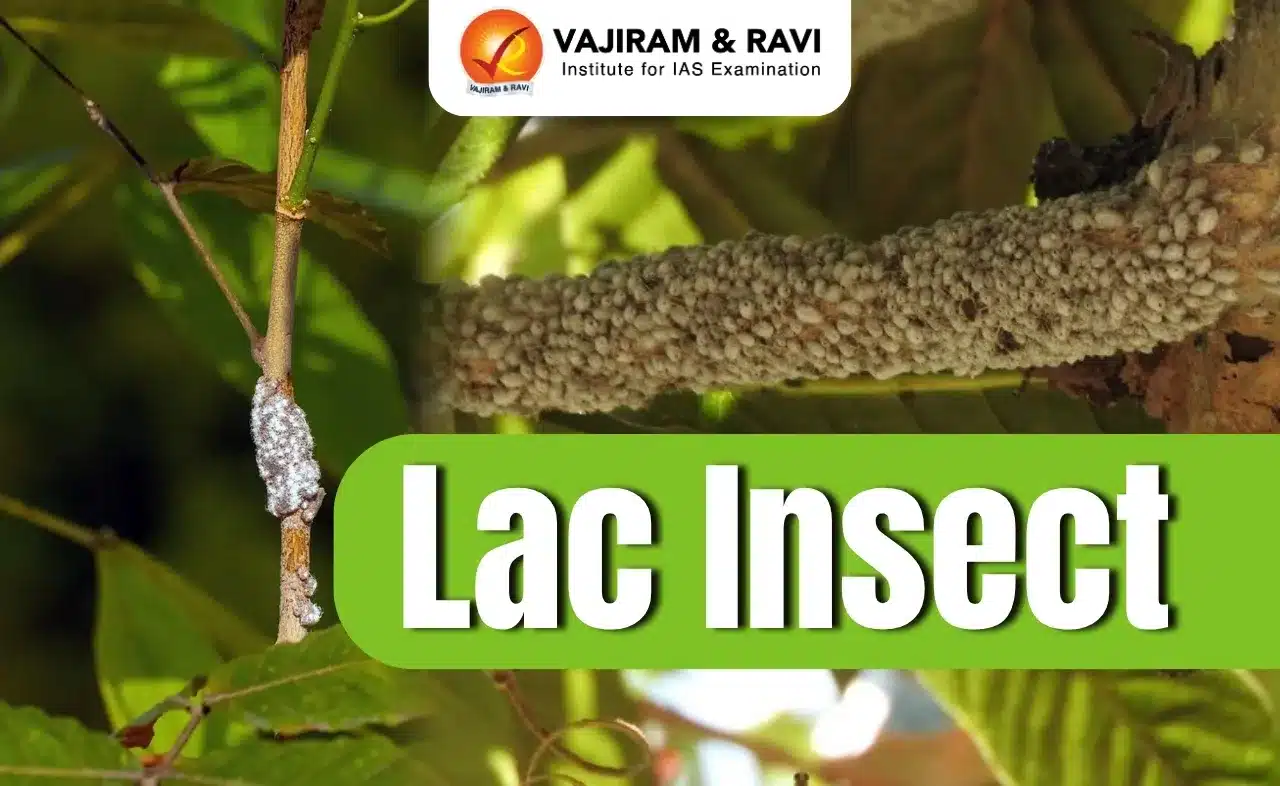
Lac Insect

Lac Insect

Lac Insect Latest News

In a new study, researchers at the Indian Institute of Science (IISc) have unravelled the mystery behind how the lac insect produces laccaic acid that is used to make lac pigment.

About Lac Insect

  • It is hemimetabolous i.e. it undergoes gradual metamorphosis.
  • The main stages of lac insect life cycle are egg, nymph instars, pupa and adult.
  • The lac insects show an ovoviviparous reproduction. The life cycle is completed in about six months.
  • Lac insects live in cavities or cells made in the resin or lac secreted by them on their host plant.
  • The lac insect grows on certain trees (like the flame of the forest), drinks its sugary sap, and secretes a sticky resin called shellac.
  • It also makes a bright red compound called laccaic acid, which is used to make the pigment.
  • In India, mainly there are two distinct strains of Lac insect: kusumi and rangeeni.
  • Lac insects have six genera from which only five can secrete lac, but commercial lac can be secreted by only one, i.e. Laccifer.
  • The commonest and most widely occurring species of lac insect in India is Laccifer lacca
  • Distribution: The lac insects are distributed in South-East Asian countries like India, Thailand, Malaya, Lao Myanmar, and Yuan province of China.
  • Among these countries India and Thailand are the main lacs producing areas in the world.
  • In India over 90% of lac produced comes from the states of Bihar, Jharkhand, West Bengal, Madhya Pradesh, Chhattisgarh, Eastern Maharashtra and northern Orissa.
  • Uses of Lac pigment: The lac pigment is a prized commodity used in food colouring, textiles, dyes, handicrafts, and folk art.

Highlights of the Research

  • Researchers have found that the colourful pigment extracted from the lac insect may actually be produced by a symbiotic yeast-like organism living inside the insect.
  • One of the key ingredients required for laccaic acid synthesis is an amino acid called tyrosine, which the insect cannot make on its own or source from the tree sap.
  • Such missing ingredients are usually supplied by symbiotic bacteria or fungi that live inside insect bodies and secrete these molecules in exchange for housing.
  • The fungus is actually inside the insect’s oocyte (egg cell).
  • The fungus floats around in the insect’s haemolymph — the equivalent of animal blood — and as soon as the oocyte matures, it latches on to it and enters the oocyte, and gets transmitted to the offspring that emerges from the oocyte.

Source: TH

Lac Insect FAQs

Q1: Which state is the largest producer of lac in India?

Ans: Jharkhand

Q2: Which is the major host plant of lac insect in India?

Ans: Butea monosperma (Palash), Zizyphus spp (Ber), Schleichera oleosa (Kusum) and Acacia catechu (Khair).

Q3: What are the applications of lac?

Ans: Wood finish, Skin cosmetic, Lacquerware and dye for wool and silk.

Cyber Suraksha

Cyber Suraksha

Cyber Suraksha Latest News

Recently, the Defence Cyber Agency ‘Cyber Suraksha’, a comprehensive cybersecurity exercise organised under the aegis of the Integrated Defence Staff headquarters.

About Cyber Suraksha

  • It is a multi-phased proactive step towards bolstering cyber resilience at national level.
  • It encompasses the conduct of targeted training sessions, evaluation and an engaging capsule for leadership.
  • It is designed to simulate real-world cyber threats, reinforce secure practices, and test the analytical and defensive cyber skills of participants in a high-paced, gamified environment.
  • Combining structured learning with dynamic hands-on challenge environments will empower participants to act decisively in the face of cyber threats.
  • It was organized by the Defence Cyber Agency and it plans to conduct such exercises on a regular basis to maintain a state of readiness and cultivate a security-first culture across all levels.

What is the Defence Cyber Agency? 

  • It is a tri-service command of the Indian Armed Forces and tasked with handling cyber security threats.
  • It was formally created in 2019, and its establishment marked a significant milestone in the country's efforts to strengthen its cybersecurity posture. 
  • It was fully operational with respective Cyber Emergency Response Teams (CERT) set up by each military branch.
  • The DCyA draws personnel from all three branches of the Armed Forces.
  • The head of the DCyA is an officer of two-star rank, and reports to the Chief of Defence Staff (CDS) through the Integrated Defence Staff (IDS).
  • Headquarter: New Delhi

Source: PIB

Cyber Suraksha FAQs

Q1: Who is the father of cyber security?

Ans: Bob Thomas is a computer scientist who is widely regarded as the father of cybersecurity.

Q2: What is cyber crime or cyber Suraksha?

Ans: Cyber crimes are actions made to compromise the confidentiality, integrity, or availability of digital systems.

Global Nuclear Arsenal

Global Nuclear Arsenal

Global Nuclear Arsenal Latest News

The Stockholm International Peace Research Institute (SIPRI) recently revealed in its new yearbook 2025 that nine countries worldwide possess as many as 12,241 nuclear weapons as of January 1, 2025.

About Global Nuclear Arsenal

  • At the start of 2025, nine states together possessed approximately 12,241 nuclear weapons.
  • Which countries have nuclear warheads? As per the report, the nine nuclear-armed states are the US, Russia, the United Kingdom (UK), France, China, India, Pakistan, the Democratic People’s Republic of Korea (North Korea), and Israel.
  • How many nuclear warheads do these countries have?
    • Russia: 5,459 nuclear weapons 
    • US: 5,177 nuclear weapons
    • China: 600 nuclear weapons
    • France: 290 nuclear weapons
    • UK: 225 nuclear weapons
    • India: 180 nuclear weapons
    • Pakistan: 170 nuclear weapons
    • Israel: 90 nuclear weapons
    • North Korea: 50 nuclear weapons
  • The report said that these countries "continued intensive nuclear modernisation programmes in 2024, upgrading existing weapons and adding newer versions".
  • The report further revealed that of the total global inventory of an estimated 12,241 warheads in January 2025, about 9,614 were in military stockpiles for potential use.
  • An estimated 3,912 of those warheads were deployed with missiles and aircraft, and the rest were in central storage.
  • Around 2,100 of the deployed warheads were kept in a state of high operational alert on ballistic missiles.
  • China’s nuclear arsenal is growing faster than any other country’s, by about 100 new warheads a year since 2023.
  • It also mentioned that India is believed to have once again slightly expanded its nuclear arsenal in 2024 and continued to develop new types of nuclear delivery systems, including potentially canisterised missiles capable of carrying multiple warheads.
  • Russia and the USA together possess around 90 percent of all nuclear weapons.
  • The U.S. has 1,770 deployed and 1,930 stored warheads, while its inventory stands at 5,177 in 2025 compared with 5,328 in 2024.
  • Russia has 1,718 deployed and 2,591 stored warheads, and its inventory stands at 5,459, as against 5,580 in 2024.
  • Overall, the number of nuclear warheads in the world continues to decline, due to the USA and Russia dismantling retired warheads.

Source: TH

Global Nuclear Arsenal FAQs

Q1: How many nuclear weapons did the world possess at the start of 2025, according to the report?

Ans: 12,241

Q2: Which two countries together possess approximately 90% of the world's nuclear weapons?

Ans: US and Russia

Q3: Which country has the largest nuclear arsenal?

Ans: Russia

Q4: How many nuclear-armed states are there as of 2025?

Ans: 9 (US, Russia, UK, France, China, India, Pakistan, North Korea, Israel)

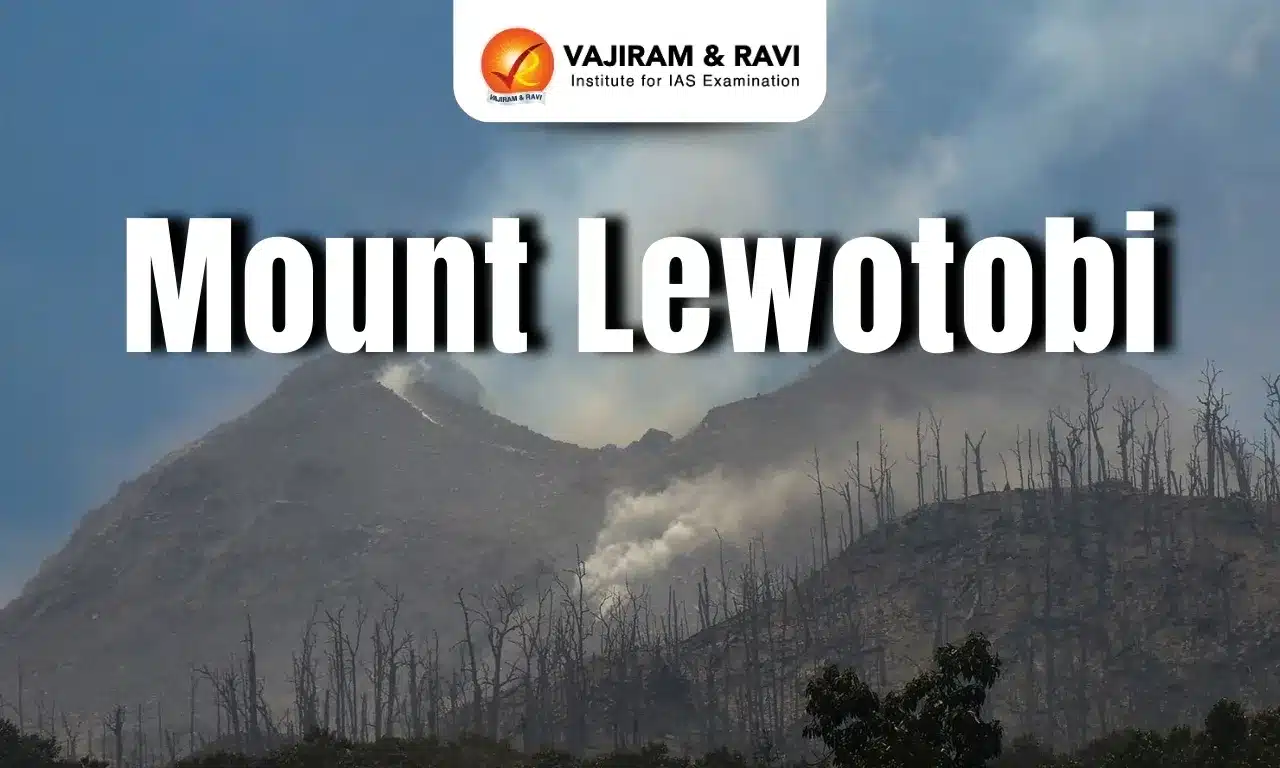
Mount Lewotobi Laki-Laki

Mount Lewotobi

Mount Lewotobi Laki-laki Latest News

Recently, a volcanic eruption in Mount Lewotobi Laki-laki in Indonesia spewed ash cloud to a whopping 11 kilometers.

About Mount Lewotobi Laki-laki

  • Location: It is located in Indonesia’s East Nusa Tenggara province on Flores Island.
  • It is situated along the famous ‘Ring of Fire’ in the Pacific region.
  • It is one of the most frequently active volcanoes in the region. 
  • It has two peaks arranged on a NW-SE line separated by 2 km and a 1232 m high saddle. This gave the twin volcano its name, Lewotobi, “husband and wife”.
  • The two peaks correspond to the Lewotobi Lakilaki (man) and Lewotobi Perempuan (woman) stratovolcanoes. 
  • Lewotobi Lakilaki (1584 m) has a summit crater of 400 m diameter open to the north. Lewotobi Perampuan (1703 m)’s crater is 700 m wide.
  • Lewotobi Lakilaki has been frequently active during the 19th and 20th centuries, while the taller and broader Lewotobi Perempuan has erupted only twice in historical time.
  • Small lava domes have grown during the 20th century in the summit craters of both volcanoes.

Source: HT

Mount Lewotobi Laki-Laki FAQs

Q1: Where is Mount Lewotobi laki-laki?

Ans: East Nusa Tenggara province

Q2: Is Lewotobi active?

Ans: Yes, Mount Lewotobi Laki-Laki is currently active and has been experiencing ongoing eruptions.

What are Hydraulics?

Hydraulic system

Hydraulics Latest News

Worldwide, hydraulics constitute a $45-50 billion market and is growing steadily.

About Hydraulics

  • A hydraulics system is based on the simple principle of Pascal’s law, named for the 17th century French scientist Blaise Pascal.
  • The law states that when pressure is applied to an incompressible fluid, it is transmitted equally in all directions throughout the fluid. (Pressure here is simply the amount of force per unit area).

Working of Hydraulics System

  • In a hydraulic system, pressure is created by applying force to a fluid. And because it is subsequently transmitted equally in all directions, a small force applied over a small area can create a much larger force over a larger area.
  • A small force applied at one end can be used to generate a much larger force at the other end just by having a larger area of contact.
  • There’s no need to change the pressure. This is perhaps the simplest use of hydraulics. There are many more actions that a hydraulic system can perform than just lifting.
  • Parts of a hydraulic system: Pumps, Pipes, Valves, Linear actuators or rotary actuators, Tank (with filters) and Sensors or switches

Applications of Hydraulics

  • They can be used for both mobile equipment — cranes, excavators, etc. which move on wheels or tracks — and static applications such as a hydraulic press, moulding machines, windmills,
  • They are equipped with sensors to track movement, temperature, pressure, flow, oil contamination.

Advantages of Hydraulics

  • Hydraulics have many advantages over mechanical methods of transmitting energy.
  • The principal ones are smooth movements, high power to weight ratio, better heat dissipation, smooth controls, and higher precision.

Source: TH

Hydraulics FAQs

Q1: What principle explains Hydraulics?

Ans: Pascal's Law

Q2: What is a hydraulic tool?

Ans: Hydraulic tools operate using the force created by pressurized fluids.

Quantum Communication

Quantum Communication

Quantum Communication Latest News

Recently, the Ministry of Defence said in a statement that IIT-Delhi scientists together with the Defence Research and Development Organisation (DRDO) demonstrated quantum communication over a distance of more than 1 km in free space.

About Quantum Communication

  • It is a way to send information using the tiniest particles in the universe, like light particles (called photons), in a super secure way.
  • It is an umbrella term for any scheme that uses the concepts of quantum physics, but especially entanglement, to make a given communication channel leak-proof.      
  • It can be used to create communication channels that are protected against computational attacks since any attempt to tap the quantum channel will itself be revealed. Thus they have great value in defence settings.
  • If any third party intercepts one of the photons, the other photon will immediately be disturbed as well and the channel will be revealed as insecure.
  • An important method in quantum communication is quantum key distribution (QKD).
  • Quantum entanglement is a strange phenomenon where two tiny particles, like photons (particles of light), become linked in such a way that whatever happens to one instantly affects the other — even if they are far apart.

Applications of Quantum Communication

  • Military and government: It is used for transmitting highly sensitive information, providing secure communication channels that are immune to eavesdropping.
  • Banking: Protects financial transactions from cyber-attacks by using quantum key distribution (QKD) to secure online banking and international transactions.
  • Power grids: Secures communication within the power industry, safeguarding against cyber-attacks that could lead to outages or damage to the electrical grid.
  • Consumer privacy: Enhances the security of personal data transmitted over the internet, such as in cloud services or when shopping online.
  • Scientific collaboration: Allows secure sharing of research data between institutions, especially when dealing with proprietary or sensitive information.
  • Navigation: Quantum communication could be used to enhance the security of signals in GPS systems, providing tamper-proof navigation data.

Source: TH

Quantum Communication FAQs

Q1: Who invented quantum?

Ans: Niels Bohr and Max Planck

Q2: Who invented quantum theory in India?

Ans: Satyendra Nath Bose

Enquire Now