Kounis Syndrome

Kounis Syndrome

Kounis Syndrome Latest News

Recently, a prominent Indian industrialist died due to bee sting which raised questions about rare allergic reactions named Kounis Syndrome and sudden heart attacks in healthy adults. 

About Kounis Syndrome

  • It is a rare medical condition where an allergic reaction triggers a heart problem.
  • It is classified as a form of acute coronary syndrome (ACS)–a term typically used for conditions like heart attacks–brought on by an allergic or hypersensitivity response.
  • It is sometimes referred to as allergic angina or allergic myocardial infarction.
  • It occurs when a person is exposed to a trigger–such as an insect sting, drug, or food–the body’s immune system activates mast cells, which release chemicals including histamine and cytokines.
  • These substances cause sudden spasm or tightening of coronary arteries, may rupture or erode existing plaque, worsening any blockages and reduce blood flow to the heart, leading to ischemia (lack of oxygen) or infarction (tissue death).
  • Symptoms: Chest pain, Rash, hives, or swelling (angioedema), shortness of breath or wheezing, low blood pressure, ECG changes such as ST-segment elevation or depression

Types of Kounis Syndrome

  • Type I: Occurs in individuals with normal coronary arteries. The allergic reaction causes spasms, reducing blood flow and potentially leading to a heart attack.
  • Type II: Affects those with existing coronary disease. The allergic reaction destabilises plaques, causing rupture and a full heart attack.
  • Type III: Seen in patients with coronary stents. The allergic response may lead to clot formation within the stent.

What can Trigger it?

  • Insect stings or bites (such as bees and wasps)
  • Certain medications, particularly antibiotics and NSAIDs (painkillers)
  • Foods, such as shellfish, nuts, or kiwi
  • Environmental allergens such as latex or contrast dyes
  • Underlying health conditions like mastocytosis (a disorder involving excess mast cells)

Treatment for Kounis Syndrome

  • For the allergic reaction: antihistamines, corticosteroids, and sometimes epinephrine is given
  • For the heart: standard cardiac care like oxygen, nitrates, and blood thinners

Source: FE

Kounis Syndrome FAQs

Q1: What drugs cause Kounis syndrome?

Ans: Analgesics, Antibiotics, Glucocorticoids, nonsteroidal anti-inflammatory drugs, and anticancer drugs may cause Kounis syndrome.

Q2: What is the pathology of Kounis syndrome?

Ans: Kounis syndrome is described as acute coronary syndrome in the presence of an allergic reaction.

Q3: What is histamine and its function?

Ans: Histamine is a signaling molecule, sending messages between cells. It tells stomach cells to make stomach acid. And it helps our brain stay awake.

Gwada Negative

Gwada negative

Gwada Negative Latest News

Recently, France’s national blood agency, the French Blood Establishment (EFS) has identified a completely new blood group system dubbed as “Gwada negative” which is officially recognised by the International Society of Blood Transfusion (ISBT).   

About Gwada Negative

  • It is named EMM-negative and colloquially dubbed “Gwada negative” in reference to the Guadeloupean origin of the woman who carries it.
  • It is the informal name given to the newly classified EMM-negative blood group system, officially registered by ISBT as ISBT042.
  • It is defined by the absence of the EMM antigen, which is normally found on red blood cells and is considered a high-incidence antigen.
  • High-incidence antigens are present in nearly all humans but lacking in this new system which is extremely rare and medically significant.
  • Criteria to consider a new blood group a new system: It should be genetically determined, inherited, identifiable via serological or molecular techniques, and have an associated antibody -- criteria that EMM-negative meets.
  • The identification of the EMM-negative blood type adds to the previously known 47 blood group systems, making it the 48th globally recognised system in transfusion science.
  • As of now, the woman from Guadeloupe is the only known person in the world to possess this blood type.
  • Her case is especially unique because she inherited the mutated gene from both her mother and her father, each of whom likely carried a single copy of the rare gene variant. This dual inheritance led to a complete lack of the EMM antigen in her red blood cells.

Key Facts about International Society of Blood Transfusion

  • It was founded in 1935 in Paris.
  • Headquarter: Amsterdam
  • Functions: It aids in the solution of scientific and practical problems in blood transfusion and also facilitates the development of closer ties among those concerned with such problems, and to promote standardization of methods, equipment, and norms for its field.

Source: TH

Gwada negative FAQs

Q1: What is m-antigen?

Ans: The M antigen is located on the red blood cell surface glycoprotein known as glycophorin A.

Q2: What is Blood Transfusion?

Ans: A blood transfusion is a generally very safe procedure where blood from someone else (a donor) goes into a vein in your arm through a narrow tube.

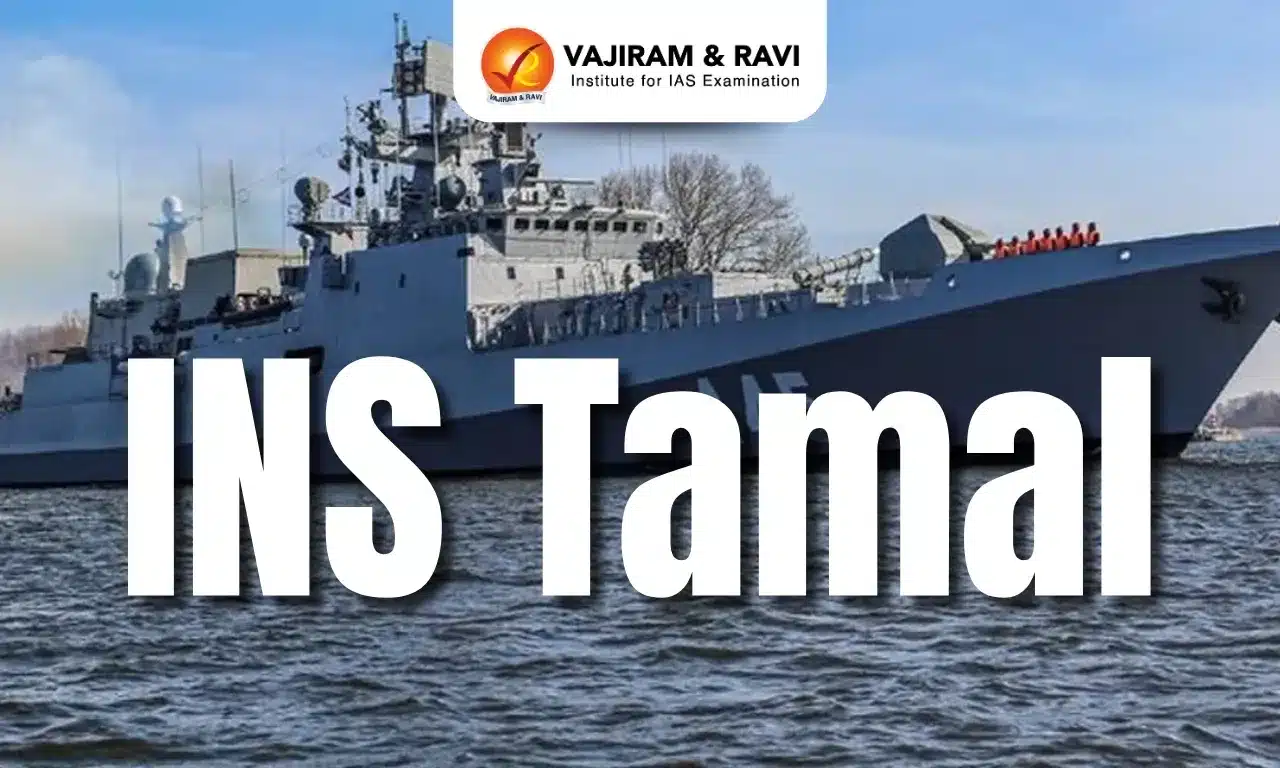
INS Tamal

INS Tamal

INS Tamal Latest News

The Indian Navy is all set to commission its latest stealth multi-role frigate Tamal on 01 Jul 2025 at Kaliningrad, Russia. 

About INS Tamal

  • It is the stealth multi-role frigate belonging to the series of Krivak class frigates inducted from Russia over the past two decades. 
  • The ship’s name, Tamal, symbolises the mythical sword used for combat by Indra - the King of the gods.
  • It is the second ship of the Tushil Class, which are the upgraded versions of their predecessors, Talwar and Teg classes having three ships each. 
  • It was built at Yantar Shipyard in Kaliningrad, Russia, and is the last warship to be inducted from a foreign source, in line with the Government of India’s impetus on Aatmanirbhar Bharat and Make in India initiatives.

Features of INS Tamal

  • It has 26% indigenous components, including the BrahMos long-range cruise missile for targeting both at sea and land.
  • It has significant upgrades in its arsenal in comparison to its predecessors, such as vertically launched surface-to-air missiles, improved 100 MM gun, new age EO/IR system in addition to the standard 30 MM CIWS, heavyweight torpedoes, urgent-attack anti-submarine rockets, and a host of surveillance and fire control radars and systems.
  • Force multipliers include Air Early Warning and Multi Role helicopters, which can operate from the deck of Tamal.
  • The combat capability of the ship is augmented by a host of Network Centric Warfare capabilities and advanced Electronic Warfare suite
  • Tamal punches well above its weight with a very high tonnage to firepower ratio, extended endurance, and a top speed in excess of 30 knots.
  • It has successively completed extensive sea trials undertaken over three months, proving its systems, weapons and sensors. 
  • Its mascot is inspired by the congruence of the ‘Jambavant’ the Immortal Bear King of Indian Mythology and the Russian National Animal - the Eurasian Brown Bear. 

Source: PIB

INS Tamal FAQs

Q1: What class of warship is INS Tamal?

Ans: It is Krivak-III class stealth guided missile frigate

Q2: What is BrahMos?

Ans: BrahMos is a long-range supersonic cruise missile system capable of being launched from land, sea, or air.

Lake Tahoe

Lake Tahoe

Lake Tahoe Latest News

Tragedy struck on Lake Tahoe recently when a boat capsized, leaving six people dead and two others missing.

About Lake Tahoe

  • It is a cobalt blue freshwater lake located in the Sierra Nevada Mountains, on the border of California and Nevada, United States.
  • It is the largest freshwater lake in the Sierra Nevada and the largest alpine lake in North America. 
  • It is situated at an elevation of 1,897 m above sea level and is the highest lake in the United States.
  • It is 22 miles long and 12 miles wide with 75 miles of shoreline. The surface area covers 191 square miles. 
  • Lake Tahoe’s deepest point is 1,645 feet, making it the second-deepest in the United States after Crater Lake in Oregon.
  • Lake Tahoe, with a water volume of 150 km3, is the largest lake by volume in the United States after the Great Lakes.
  • There are 63 streams that flow into Lake Tahoe and only one, the Truckee River, that flows out and into Pyramid Lake. Unlike most bodies of water in North America, Tahoe’s water never reaches the ocean.
  • Lake Tahoe is one of the purest bodies of water in the world, with 99.994% of the water pure.
  • The lake and the surrounding area of national forests have been developed as tourist resorts.

Source: HT

Lake Tahoe FAQs

Q1: Where is Lake Tahoe located?

Ans: Sierra Nevada Mountains, on the border of California and Nevada, United States.

Q2: What is the maximum depth of Lake Tahoe?

Ans: Lake Tahoe’s deepest point is 1,645 feet, making it the second-deepest in the United States after Crater Lake in Oregon.

Q3: Which river is the only outlet of Lake Tahoe?

Ans: Truckee River

Q4: What makes Lake Tahoe unique in terms of its water purity?

Ans: It contains 99.994% pure water.

Palm Tree

Palm Tree

Palm Tree Latest News

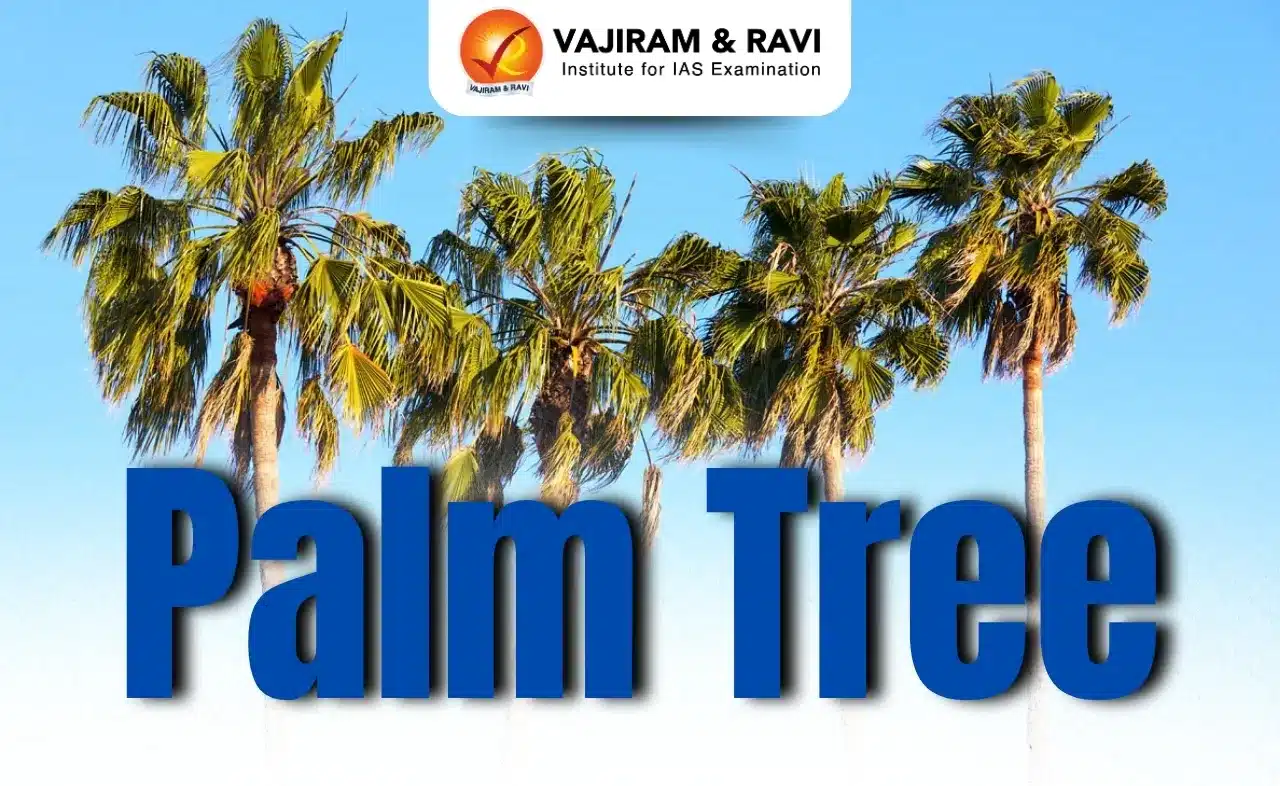
The National Green Tribunal (NGT) has sought a response from the Central Pollution Control Board (CPCB) and others in a matter related to the large-scale felling of palm trees in Bihar which is reportedly causing an increase in lightning-related deaths.

About Palm Tree

  • Palm is a member of the Arecaceae, or Palmae, a single family of monocotyledonous flowering plants of the order Arecales.
  • It is an evergreen plant which can grow in the form of shrubs, trees, or long, woody vines called lianas.
  • Distribution: It is distributed in America and in Asia, from India to Japan and south to Australia and the islands of the Pacific and Indian oceans, with Africa and Madagascar as a third but much less important palm region. 

Characteristics of Palm Tree

  • They are characterized by a tall, unbranched stem or, rarely, by a dichotomous branching stem (Hyphaene), and of the same diameter all along from base to top;
  • Palmate leaves, like hands, grow in a bunch at the end of a stem. Pinnate leaves are like feathers, growing all along either side of a stem.
  • Though many species of palms are sturdy and plentiful, as many as 100 species are endangered due to deforestation and unsustainable cultivation practices.
  • The palms with the greatest importance in world commerce are the coconut and the African oil palm (Elaeis guineensis); both are prime sources of vegetable oil and fat. 

Source: TH

Palm Tree FAQs

Q1: What are the uses of palm trees?

Ans: In addition to the fruit, other parts of the palm are used: the fermented sap (palm wine and alcohol), the heart (palm cabbage), the stem (furniture making), the fronds (roofing).

Q2: What is Palm Oil?

Ans: Palm oil is an edible oil that comes from the fruit of the oil palm tree (Elaeis guineensis). Crude palm oil, or “red palm oil,” is high in beta-carotene.

Chios Island

Chios Island

Chios Island Latest News

More than 100 firefighters assisted by water-dropping helicopters and planes were battling a large wildfire burning near the main town of the eastern Aegean island of Chios recently.

About Chios Island

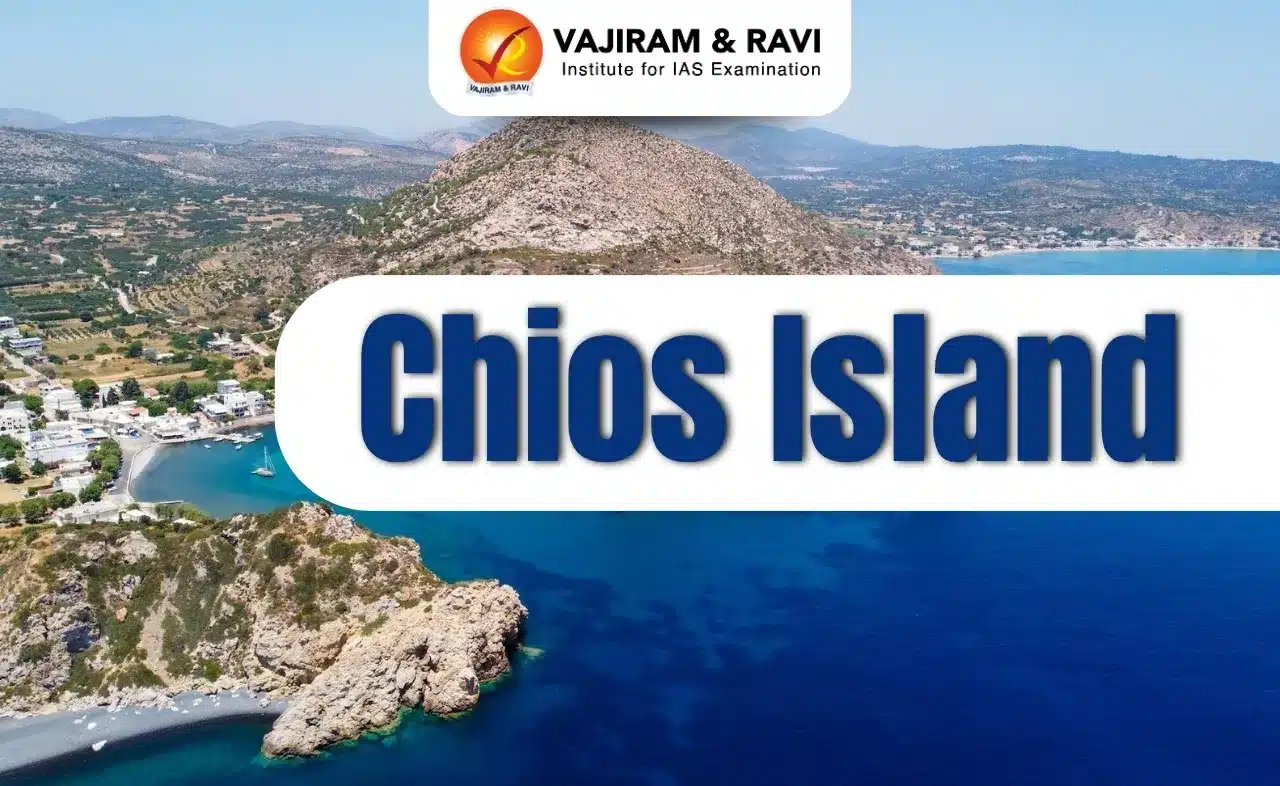
  • It is a Greek island situated in the Aegean Sea.
  • It is the fifth-largest island in Greece, with a surface area of 842.29 sq.km. 
  • It is situated 5 miles (8 km) off the western coast of Turkey.
  • It is about 30 miles (50 km) long north-south and from 8 to 15 miles (13 to 24 km) wide.
  • It is traversed north-south by mountains culminating in Mount Pelinaíon (1,297 meters). 
  • The principal town of the island and seat of the municipality is Chios town.
  • Chios is notable for its exports of mastic gum, and the island is also known as "the Mastic Island." 
  • It is a very attractive island because of its lush vegetation, fine beaches, and unique  medieval  villages,  which  are kept in very good condition.
  • It is also famously rich in history, said to be the birthplace of Homer as well as several Greek writers and politicians, and historic records date back to the Neolithic Age, and examples of Byzantine architecture can be found across the island.

Source: TH

Chios Island FAQs

Q1: Is Chios in Greece or Turkey?

Ans: Chios is a Greek island.

Q2: Chios is located in which sea?

Ans: Aegean Sea

Q3: How far is Chios from the western coast of Turkey?

Ans: 5 miles (8 km)

Q4: What is the name of the highest mountain on Chios Island?

Ans: Mount Pelinaíon

Q5: What is Chios famously known for exporting?

Ans: Mastic gum

INS Nilgiri

INS Nilgiri

INS Nilgiri Latest News

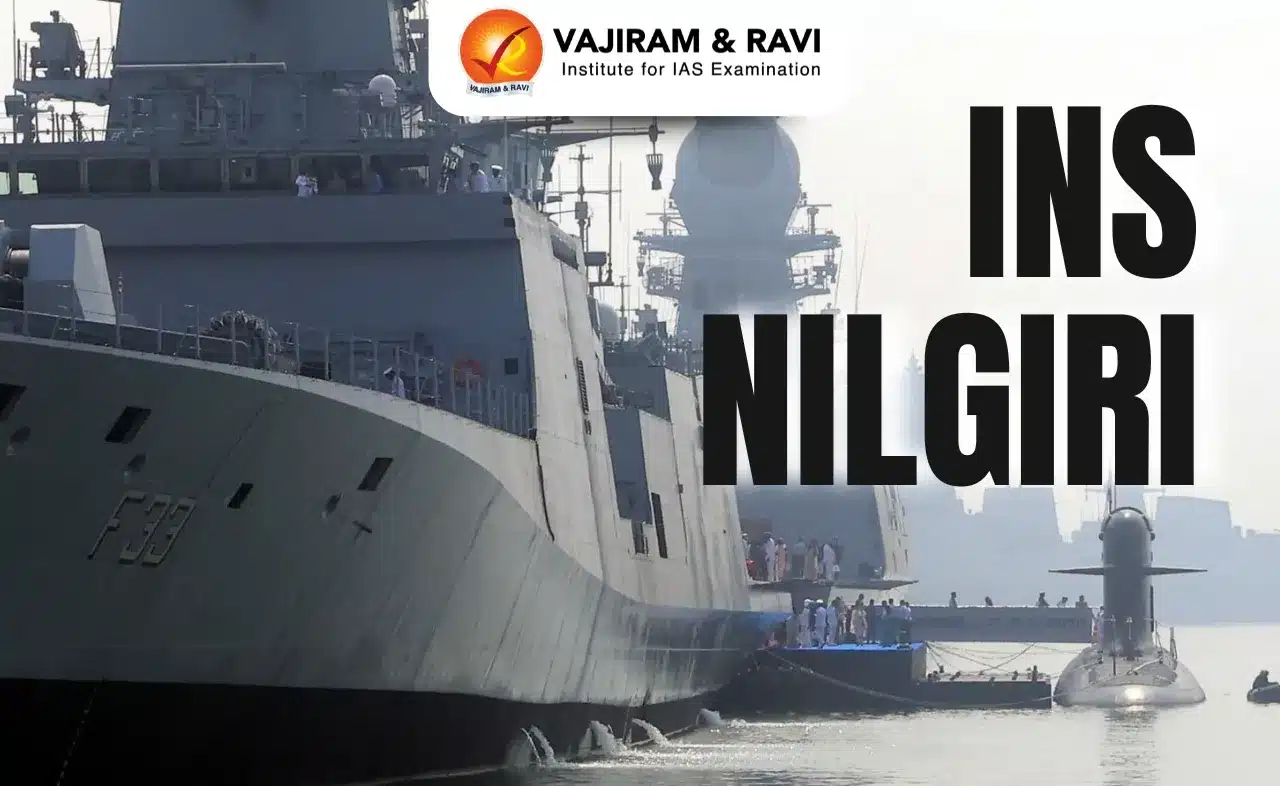
INS Nilgiri recently joined the Eastern Naval Command and would be an integral part of the Eastern Sword-Sunrise Fleet.

About INS Nilgiri

  • It is the first of the indigenously built Project 17A stealth frigates of the Indian Navy.
  • It is designed by the Indian Navy’s Warship Design Bureau and built at the Mazagon Dock Shipbuilders Limited (MDL), Mumbai.
  • The Nilgiri class is a design derivative of the indigenous Shivalik class stealth frigates (Project 17).
  • Other Ships in the Class: The remaining six frigates — Himgiri, Taragiri, Udaygiri, Dunagiri, Vindhyagiri, and Mahendragiri— are under construction at Mazagon Dock Shipbuilders Limited (MDL), Mumbai, and Garden Reach Shipbuilders and Engineers (GRSE), Kolkata.
  • INS Nilgiri would be an integral part of the Eastern Naval Command.

INS Nilgiri Features

  • INS Nilgiri is 149 meters long, with a displacement of approximately 6,670 tonnes.
  • It is powered by a sophisticated combined diesel and gas (CODAG) propulsion system.
  • It can achieve speeds of up to 28 knots.
  • The warship is enabled to operate independently without supporting vessels and to function as the flagship of the Naval task force.
  • Armed with 16 Barak-8 Surface-to-Air Missiles, INS Nilgiri offers strong anti-aircraft protection. 
  • Additionally, it includes 8 BrahMos missiles for anti-ship and surface-to-surface combat. 
  • The radar systems on board include MF-STAR for 360-degree cover, 3D AESA radar for the tracking of multi-targets, and Nishant radar for targeting. 
  • The Combat Management System (CMS) integrates all systems, which enables the smooth execution of network-centric warfare and cooperative operations with other platforms.

Source: TH

INS Nilgiri FAQs

Q1: What is INS Nilgiri?

Ans: It is a stealth frigates of the Indian Navy.

Q2: INS Nilgiri belongs to which project of the Indian Navy?

Ans: Project 17A

Q3: INS Nilgiri was built at which shipyard?

Ans: Mazagon Dock Shipbuilders Limited (MDL), Mumbai

Q4: What type of propulsion system is used in INS Nilgiri?

Ans: Combined Diesel and Gas (CODAG)

Enquire Now