Haemophilia A

Haemophilia A

Haemophilia A Latest News

A simple and affordable point-of-care test kit has been indigenously developed by the National Institute of Immunohaematology for early diagnosis of genetic bleeding disorders haemophilia A and Von Willebrand Disease.

About Haemophilia A

  • It is a hereditary bleeding disorder that happens when your blood doesn’t clot as well as it should.

Haemophilia A Causes

  • When you bleed, a series of reactions take place in the body that help blood clots form. This process is called the coagulation cascade. 
  • It involves as many as 20 different special proteins called coagulation, or clotting, factors. 
  • You may have a higher chance of excess bleeding if one or more of these factors are missing or are not functioning like they should.
  • Factor VIII (eight) is one such coagulation factor. Hemophilia A is the result of the body not making enough factor VIII.

How is Haemophilia A Passed On?

  • It is usually caused by an altered gene being passed on to a child by their parents (inherited).
  • Men with the altered gene will have symptoms.
  • Women with the altered gene (carriers) can have symptoms, but this is less common, and the symptoms are less severe than in men.

Haemophilia A Symptoms

  • The severity of symptoms varies. Prolonged bleeding is the main symptom. It is often first seen when an infant is circumcised. 
  • Other bleeding problems usually show up when the infant starts crawling and walking.
  • Mild cases may go unnoticed until later in life. 
  • Symptoms may first occur after surgery or injury. Internal bleeding may occur anywhere.
  • Symptoms may include:
    • Bleeding into joints with associated pain and swelling
    • Blood in the urine or stool
    • Bruising
    • Gastrointestinal tract and urinary tract bleeding
    • Nosebleeds
    • Prolonged bleeding from cuts, tooth extraction, and surgery
    • Bleeding that starts without cause

Haemophilia A Treatment

  • Healthcare providers typically treat hemophilia A with factor replacement therapy. 
  • Healthcare providers will inject concentrated factor VIII into your bloodstream.
  • Factor VIII replaces the missing blood protein, or factor, that helps blood to clot

Key Facts about Von Willebrand Disease (VWD)

  • VWD is a blood disorder in which the blood does not clot properly. 
  • Cause: People with the disease have low levels of von Willebrand factor, a protein that helps blood clot, or the protein doesn't perform as it should.
  • Most people with the disease are born with it, having inherited it from one or both parents. 

Von Willebrand Disease Symptoms

  • VWD does not always cause symptoms unless you have an injury
  • Sometimes it's found when you have more bleeding than usual after surgery or giving birth.
  • Symptoms of VWD can include:
    • bruising easily
    • frequent nosebleeds
    • bleeding gums
    • bleeding more than usual after an injury or cut
    • heavy periods
  • Some people also have more severe symptoms, such as:
    • heavy bleeding that's difficult to stop, for example, after an injury or procedure
    • blood in your poo
    • blood in your pee (urine)
    • pain, swelling and stiffness in a joint

Von Willebrand Disease Treatment

  • VWD can't be cured. 
  • But with treatment and self-care, most people with this disease can lead active lives.

Source: ET

Haemophilia A FAQs

Q1: What is the hemophilia A?

Ans: Hemophilia A is a genetic bleeding disorder caused by a deficiency or absence of clotting factor VIII.

Q2: What is the mainstay of treatment for Haemophilia A?

Ans: Factor VIII replacement therapy.

Q3: Which organ systems may show bleeding symptoms in a person with Haemophilia A?

Ans: Gastrointestinal and urinary tracts.
Organization of Islamic Cooperation (OIC)

Organisation of Islamic Cooperation

Organisation of Islamic Cooperation Latest News

Recently, India slammed the Organisation of Islamic Cooperation (OIC) for “unwarranted” and “factually incorrect” remarks that were made under the influence of Pakistan, a state that has turned terrorism into “statecraft.”

About Organisation of Islamic Cooperation

  • It is the second largest intergovernmental organisation after the United Nations, with the membership of 57 states, covering four continents.
  • It was established upon a decision of the historical summit, which took place in Rabat, Kingdom of Morocco on 25 September 1969.
  • It aims to preserve Islamic values, safeguard and defend the national sovereignty and independence of member states, and contribute to international peace and security. 
  • The OIC is the collective voice of the Muslim world to ensure and safeguard their interest in economic, social, and political areas. 
  • Its official languages are Arabic, English, and French.
  • The OIC is composed of the following main bodies:
    • Islamic Summit Conference (ISC): It is the supreme authority of the OIC, which meets every three years to lay down the Organization’s policy.
    • Council of Foreign Ministers (CFM): It  meets once a year to examine the implementation of its decisions taken within the framework of the policy defined by the Summit
    • General Secretariat: It is the executive organ of the OIC entrusted with the implementation of the decisions of the two preceding bodies
  • The OIC partners with international mechanisms (including every specialized UN agency), governments, and civil society organizations (CSOs) to address issues of concern to its member states and Muslims worldwide.
  • Headquarters: Jeddah, Saudi Arabia.

Source: TH

Organisation of Islamic Cooperation FAQs

Q1: What is the organization of Islamic cooperation?

Ans: The Organisation of Islamic Cooperation (OIC) is the second largest inter-governmental organisation after the United Nations

Q2: Is India a member of the Organization of Islamic Cooperation?

Ans: No, India is not a member of the Organisation of Islamic Cooperation (OIC)

Training of Trainers (ToT) Programme

Training of Trainers (ToT) Programme

Training of Trainers (ToT) Programme Latest News

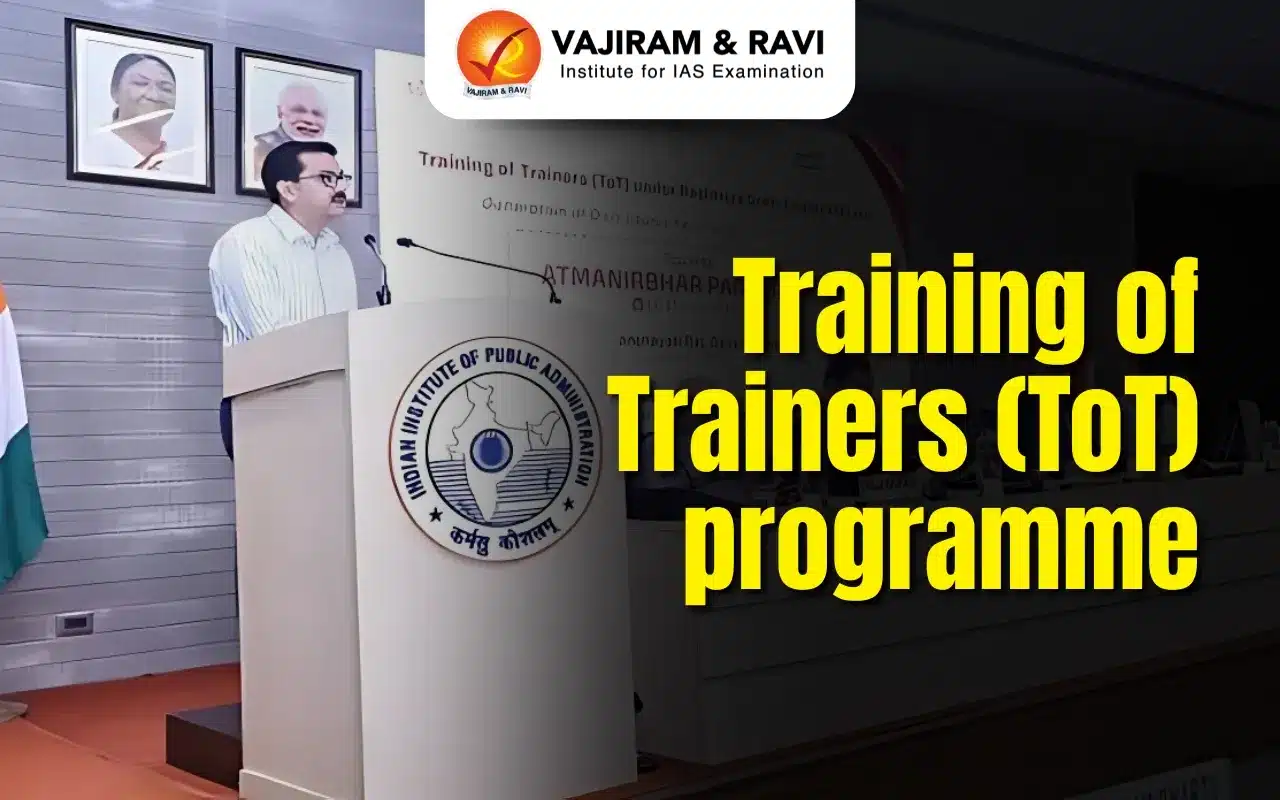
Recently, the Ministry of Panchayati Raj (MoPR), under the banner of Azadi Ka Amrit Mahotsav, has launched a comprehensive Training of Trainers (ToT) programme.

About Training of Trainers (ToT) Programme

  • It is aimed at strengthening the financial autonomy of Panchayats.
  • It focuses on enhancing the capacity of Panchayats to generate their Own Source Revenue (OSR).
  • This initiative is being implemented under the Rashtriya Gram Swaraj Abhiyan (RGSA) in collaboration with the Indian Institute of Management (IIM) Ahmedabad.
  • This Training of Trainers on OSR marks a structured and forward-looking initiative to build robust, responsive, and financially capable Panchayats across the country.  

Key Facts about Rashtriya Gram Swaraj Abhiyan

  • It was launched on 24th April 2018 as an umbrella scheme of the Ministry of Panchayati Raj, Govt. of India.
  • It is a unique scheme proposed to develop and strengthen the Panchayati Raj System across India in the rural areas implemented during 2018-19 to 2021-22. 
  • The scheme was revamped and the Centrally Sponsored Scheme of Revamped Rashtriya Gram Swaraj Abhiyan (RGSA) was approved for the implementation from financial year 2022-23 to 2025-26 for capacity building of elected representative of Panchayati Raj Institutions (PRIs).
  • The primary objective of Revamped RGSA is to develop the governance capabilities of the Panchayats to deliver on Sustainable Development Goals (SDGs) which are covered within the purview of Panchayats.
  • The Revamped RGSA extends to all States and Union Territories (UTs) of the country including institutions of rural local government in non-Part IX areas, where Panchayats do not exist.

Source: DD News

Training of Trainers (ToT) Programme FAQs

Q1: Who is the father of Panchayati Raj institutions in India?

Ans: Balwant Rai Mehta

Q2: What is the 3 tier Panchayati Raj system?

Ans: It consists of Gram Panchayat at the village level, Panchayat Samiti at the intermediate level, and Zila Parishad at the district level.

Enhanced Rock Weathering

Enhanced Rock Weathering (1)

Enhanced Rock Weathering Latest News

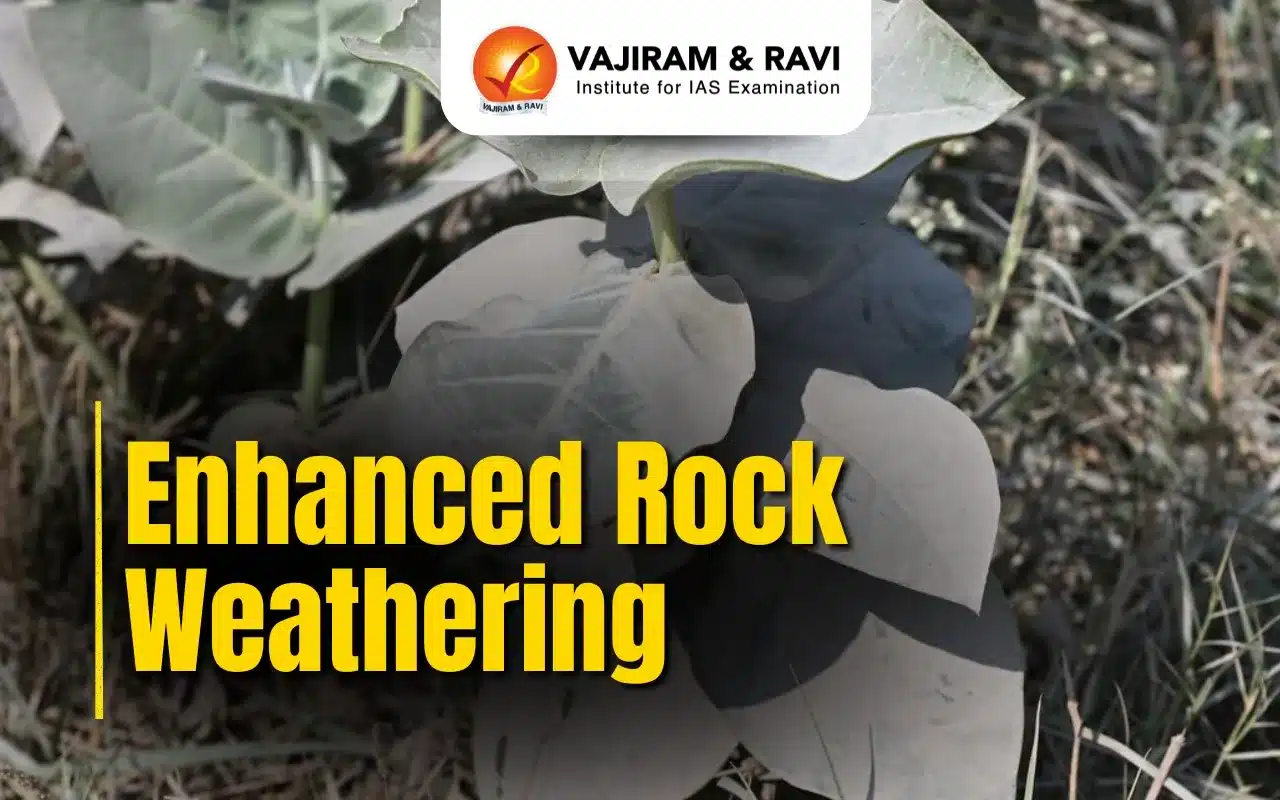
Recently, big business with tech giants, airlines and fast fashion firms lining up to buy carbon credits from enhanced rock weathering (ERW) projects.  

About Enhanced Rock Weathering

  • It aims to speed up the natural capture and storage of carbon dioxide -- a planet-warming greenhouse gas -- and also to turbocharge a natural geological process called weathering.
  • Weathering is the breakdown of rocks by carbonic acid, which forms when carbon dioxide in the air or soil dissolves into water.
  • Weathering occurs naturally when rain falls on rocks, and the process can lock away carbon dioxide from the air or soil as bicarbonate, and eventually limestone.
  • ERW speeds the process up by using quick-weathering rocks like basalt that are ground finely to increase their surface area.
  • Projects are happening in most parts of the world, including Europe, North America, Latin America and Asia.

Effectiveness of Enhanced Rock Weathering

  • Its rates depend on variables including rock type and size, how wet and hot the climate is, soil type and land management.
  • The added rock increases soil alkalinity, which can boost crop growth, soil nutrients and soil formation.
  • Basalt is both naturally abundant and often available as a byproduct of quarrying, lowering the costs of the process.
  • Experts note that even if the rock reacts with other acids in the soil, failing to lock away carbon dioxide at that stage, it can still have planetary benefits.
  • That is because acids in the soil would otherwise eventually wash into rivers and the sea, where acidification leads to the release of carbon dioxide.
  • It prevents carbon dioxide being released from the water into the atmosphere downstream.
  • Issue with ERW: Some quick-weathering rocks have high levels of potentially poisonous heavy metals.

Source: TH

Enhanced Rock Weathering FAQs

Q1: What is the enhanced rock weathering protocol?

Ans: It is a process that aims to accelerate natural rock weathering during which carbon dioxide reacts with rocks. CO2 is removed from the atmosphere and converted to bicarbonates and/or carbonates.

Q2: What are the benefits of enhanced rock weathering?

Ans: It accelerates natural weathering - results in significantly higher first year crop yields, improved soil pH, and higher nutrient uptake.

Digital Payment Intelligence Platform

Digital Payment Intelligence Platform

Digital Payment Intelligence Platform Latest News

Recently, the Reserve Bank Of India has roped in major public and private sector banks to develop the Digital Payment Intelligence Platform (DPIP) as a Digital Public Infrastructure (DPI).

About Digital Payment Intelligence Platform

  • It seeks to bolster fraud risk management by facilitating real-time intelligence sharing and gathering, thereby preventing fraudulent digital transactions.
  • The institutional structure of the proposed entity would be created with the help of both public sector and private sector lenders.
  • It will collect and analyse data from various sources to identify potential threats and prevent fraudulent activities.
  • By enabling real-time data sharing, the platform will help prevent scams and ensure secure transactions.
  • The Reserve Bank Innovation Hub (RBIH) has been assigned to build a prototype of DPIP in consultation with 5-10 banks.
  • It is going to leverage advanced technologies to curb payment-related frauds.
  • RBI formed a committee, chaired by AP Hota to examine various aspects of establishing this digital public infrastructure. 

Why is the Digital Payment Intelligence Platform needed?

  • The volume of frauds also rose to 15.51 lakh during the March 2024 period from 11.5 lakh in the previous six-month period.
  • The alarming increase coincides with India’s rapid transformation into a digital payments powerhouse, fuelled by the widespread adoption of the unified payments interface (UPI) since its launch in 2016.

Source: ET

Digital Payment Intelligence Platform FAQs

Q1: What is meant by digital intelligence?

Ans: Digital intelligence encompasses safe online behaviors, understanding digital tools, and adapting to the unique challenges of the digital space, such as cyberbullying and online privacy.

Q2: What do you mean by digital public infrastructure?

Ans: Digital Public Infrastructure (DPI) is a set of foundational digital systems that forms the backbone of modern societies.

State of the Climate in Asia 2024 Report

State of the Climate in Asia 2024 Report

State of the Climate in Asia 2024 Report Latest News

The State of the Climate in Asia 2024 report stated that the year 2024 was the warmest year on record in Asia, with widespread and prolonged heatwaves.

About State of the Climate in Asia 2024 Report

  • It is published by the World Meteorological Organisation (WMO).
  • It is the fifth edition of climate reports published annually for this region and has involved National Meteorological and Hydrological Services (NMHSs), WMO Regional Climate Centres (RCCs), and several research institutions, as well as United Nations agencies, international and regional organizations.
  • The report provides the status of key climate indicators and latest data and information on impacts, risks and policy from United Nations agencies.

Key Findings of the Report  

  • The global mean temperature in 2024 was the highest on record for the period 1850-2024,
  • Each of the years from 2015 to 2024 was one of the 10 warmest years on record.
  • Sea surface temperatures were the highest on record, with Asia’s sea surface decadal warming rate nearly double the global average.
  • Sea level rise on the Pacific and Indian Ocean sides of Asia exceeded the global average, heightening risks for low-lying coastal areas, according to the report.
  • It also highlighted changes in key climate indicators such as surface temperature, glacier mass and sea level, which will have major repercussions for societies, economies and ecosystems in the region.
  • In 2024, most of the ocean areas of Asia were affected by marine heatwaves of strong, severe, or extreme intensity — the largest extent since records began in 1993.
  • The northern Indian Ocean and in the ocean area adjacent to Japan, the Yellow Sea, and East China Sea were especially affected.
  • Three out of four cyclones formed over the Bay of Bengal (Remal, Dana, Fengal), and one formed over the Arabian Sea (Asna). 
  • Extreme high temperatures affected the Makkah region of Saudi Arabia in mid-June with temperatures reaching 49 °C. 

Source: TH

State of the Climate in Asia 2024 Report FAQs

Q1: Where is the headquarter of World Meteorological Organisation?

Ans: Geneva, Switzerland

Q2: Is India a member of World Meteorological Organisation?

Ans: India is a founding Member of WMO since 1950.

Candida Tropicalis

Candida tropicalis

Candida Tropicalis Latest News

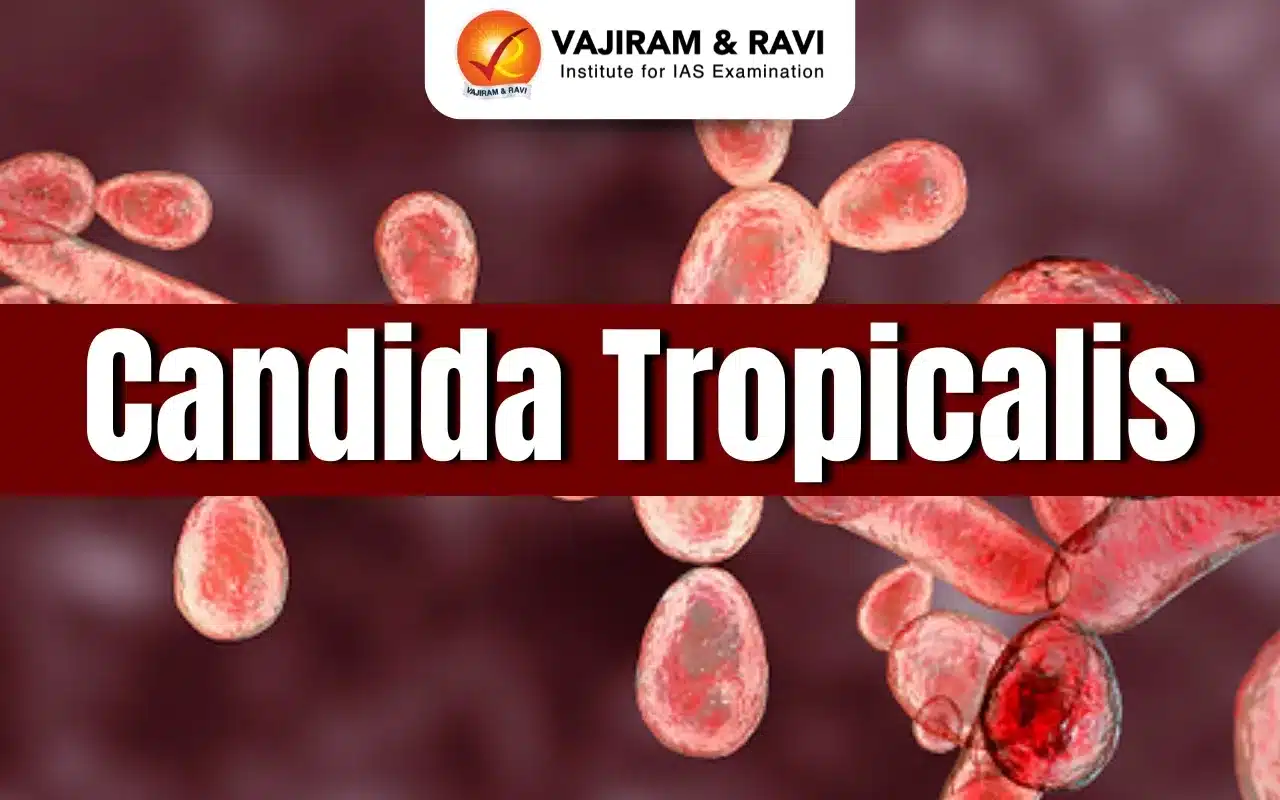
‘Candida tropicalis’, an important fungal pathogen in India and in many other parts of the world, has been found using chromosome alterations to resist common antifungal drugs such as fluconazole and voriconazole.

About Candida tropicalis

  • It is a species of yeast (fungus) that is part of the Candida genus.
  • It is a human pathogen associated with high mortality rates.
  • Habitat
    • It is one of the fungal species that has been obtained from seawater, sea sediments, mudflats, marine fish intestine, mangrove plants, marine algae, and shrimps.
    • Therefore, they are widely distributed in the tropical and subtropical marine environments.
    • It is also dominantly found in the human gut, fruit surfaces, a variety of foods, and soil.
  • It is a common systemic fungus, affecting persons with immune-compromised and immune-suppressed systems.
  • It is known to be pathogenic in neutropenic hosts and disseminating through the bloodstream to peripheral organs.
    • A neutropenic host refers to a person with neutropenia, a condition characterized by an abnormally low count of neutrophils, a type of white blood cell essential for fighting off infections, especially bacterial and fungal infections.
  • It is also known to cause infections when the normal microbiota in the human host has been compromised by intake of antimicrobial agents such as antibiotics or when the sugar levels are high in the system.
  • It causes infections on human skin, in the gastrointestinal tract, and also in the female genitourinary tract.
  • Its infections are associated with a mortality rate of 55-60%.
  • The most common mode of transmission is the nosocomial transmission between health-care workers and patients.
  • Treatment: Antifungal drugs are typically utilized to treat C. tropicalis infections.

Source: TH

Candida tropicalis FAQs

Q1: Candida tropicalis belongs to which of the following groups of organisms?

Ans: Fungus

Q2: Candida tropicalis is widely distributed in which types of environments?

Ans: Tropical and subtropical marine environments

Q3: What is the estimated mortality rate associated with Candida tropicalis infections?

Ans: 55-60%

Q4: What is the treatment option used for Candida tropicalis infections?

Ans: Antifungal drugs

Sree Narayana Guru

Sree Narayana Guru

Sree Narayana Guru Latest News

The Prime Minister recently attended the centenary celebration of the historic 1925 conversation between Mahatma Gandhi and Sree Narayana Guru at Vigyan Bhawan, New Delhi.

About Sree Narayana Guru

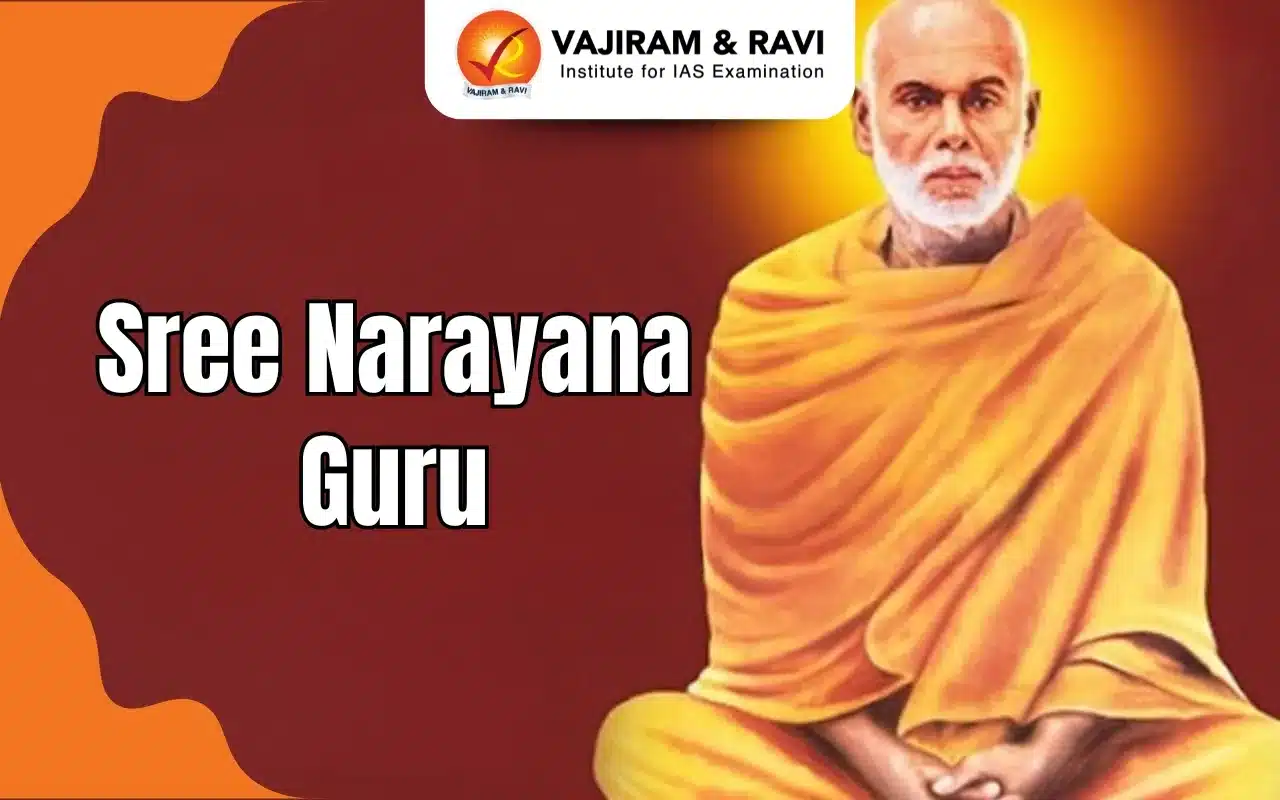
  • Sree Narayana Guru (20 August 1856 – 20 September 1928) was a saint, philosopher, spiritual leader, and social reformer from Kerala.
  • The Guru was born into an Ezhava family in an era when people from backward communities like the Ezhavas faced social injustice in the caste-ridden Kerala society. 
  • Sree Narayan Guru, under the guidance of Ayyavu Swamikal, learned yoga and meditation. This led to him becoming a hermit for eight years, during which he practised yoga and meditation to attain spirituality. 
  • Gurudevan, as he was known among his followers, led a reform movement in Kerala, revolted against the caste system, and worked on propagating new values of freedom in spirituality and social equality, which transformed Kerala society.
  • He is revered for his Vedic knowledge, poetic proficiency, openness to the views of others, non-violent philosophy, and unrelenting resolve to set right social wrongs.
  • He was one of the most successful social reformers to revolt against the caste system in India. 
  • He demonstrated a path to social emancipation without invoking the dualism of the oppressed and the oppressor.
  • Philosophy: “Oru Jathi, Oru Matham, Oru Daivam, Manushyanu” translates to “One Caste, One Religion, One God for Mankind” and is a core message advocated by Shri Narayana Guru.
  • Aruvippuram Movement (1888): Sree Narayana Guru consecrated a Shiva idol at Aruvippuram, a village in present-day Thiruvananthapuram district of Kerala, symbolising resistance against social injustice, particularly the caste-based restrictions that barred lower castes from temple entry. 
  • The Guru went on to establish more than 40 temples across the state of Kerala, to enable everyone, including the lower caste and oppressed segments of society, to practise their faith. 
  • He opened several ashrams, schools, etc., for children and others from underprivileged societies. Here, free education was provided to everyone, irrespective of their caste. 
  • He founded an ashram, or religious retreat, on Sivagiri hill, near Varkkallai, in 1904. The ashram is now called Sivagiri Matha (or Sivagiri Mutt).
  • Established SNDP: 
    • Under the Indian Companies Act, the Sri Narayana Guru Dharma Paripalana Yogam (SNDP) was established in 1903
    • Narayana Guru served as its permanent chairman, while Kumaran Asan, a renowned poet and disciple of Guru, became its general secretary.
    • The Ezhava’s right to attend public schools, access to government services, and political representation were all addressed by the SNDP.
  • The Guru also led the ‘Vaikom Satyagraha’ protest movement against caste discrimination, untouchability, and inequality. 
  • The Sivagiri foundation was established in 1924 by the Guru to promote virtues of cleanliness, education, devotion, agriculture, handicrafts, and trade.
  • The Sivagiri pilgrimage (Sivagiri Theerthadanam), initiated by his followers, promotes values of purity, education, and organization.
  • Literary Contributions: He authored several important works, including Advaitha Deepika, Atmavilasam, Daiva Dasakam, and Brahmavidya Panchakam.
  • After his death, Guru’s birth anniversary was established as “Sri Narayana Jayanthi,” and both his birth and death days are observed as public holidays in Kerala and other states.

Source: NIE

Sree Narayana Guru FAQs

Q1: Which philosophical message is most closely associated with Sree Narayana Guru?

Ans: “One Caste, One Religion, One God for Mankind”

Q2: What was the significance of the Aruvippuram Movement (1888) led by Sree Narayana Guru?

Ans: Consecration of a Shiva idol by a non-Brahmin.

Q3: What does SNDP Yogam stand for?

Ans: Sree Narayana Dharma Paripalana Yogam

Q4: In which year was Sivagiri Mutt, the spiritual center established by Guru, founded?

Ans: 1904

Sabka Vishwas – (Legacy Dispute Resolution) Scheme, 2019 (SVLDRS)

Sabka Vishwas - (Legacy Dispute Resolution) Scheme

Sabka Vishwas -(Legacy Dispute Resolution) Scheme, 2019 Latest News

The New Delhi Bench of Customs, Excise, and Service Tax Appellate Tribunal (CESTAT) recently stated that revenue proceedings are not possible after the issuance of discharge certificate under SVLDRS [Sabka Vishwas (Legacy Dispute Resolution) Scheme, 2019] Scheme.

About Sabka Vishwas -(Legacy Dispute Resolution) Scheme, 2019

  • It was a one-time amnesty scheme proposed in the Union Budget, 2019, and introduced to resolve all disputes relating to the erstwhile Service Tax and Central Excise Acts, which are now subsumed under GST, as well as 26 other Indirect Tax enactments.
  • It was introduced for taxpayers who wish to close their pending disputes, with substantial relief provided by the government.
  • Operational Period: September 1, 2019 – December 31, 2019
  • Objectives:
    • To encourage voluntary disclosure of past disputes of Central Excise, Service Tax, and 26 other Indirect Tax Enactments. 
    • To facilitate an eligible person to declare the unpaid tax dues and pay the same in accordance with the provisions of this scheme.
    • To provide certain immunities, including penalty, interest or any other proceedings, including prosecution, to eligible persons who pay the declared tax due.
  • This scheme provided for a substantial relief margin on all duty demands, ranging from 40% to 70% of the demand, except in the case of voluntary disclosure.

Source: TAXS

Sabka Vishwas - (Legacy Dispute Resolution) Scheme, 2019 FAQs

Q1: The Sabka Vishwas – (Legacy Dispute Resolution) Scheme, 2019 was introduced to resolve disputes related to?

Ans: Service Tax and Central Excise

Q2: which Union Budget was the SVLDRS Scheme proposed?

Ans: 2019–20

Q3: What was the operational period of the SVLDRS scheme?

Ans: September 1, 2019 – December 31, 2019

Q4: What kind of relief did the SVLDRS scheme offer to taxpayers?

Ans: Immunity from penalty, interest, and prosecution

Price Support Scheme (PSS)

Price Support Scheme

Price Support Scheme Latest News

The Union Agriculture minister recently approved a move to procure moong and urad in Madhya Pradesh and urad in Uttar Pradesh under the Price Support Scheme (PSS).

About Price Support Scheme 

  • It is implemented by the Government of India under India’s umbrella scheme “PM-AASHA” (Pradhan Mantri Annadata Aay Sanrakshan Abhiyan), launched in 2018.
  • Implemented by: 
    • The Department of Agriculture & Cooperation implements this scheme for procurement of oilseeds, pulses, and cotton, through the National Agricultural Cooperative Marketing Federation of India (NAFED), which is the Central nodal agency, at the MSP (minimum support price) declared by the government.
    • In addition to the NAFED, the Food Corporation of India (FCI) will take up PSS operations in states/districts.
  • What are the Benefits?
    • When the price of commodities falls below the MSP, State and central notified procurement nodal agencies purchase commodities directly from the farmers at MSP under FAQ (Fair Average Quality).
    • By this way prices of the main commodities are procured and protect the farmers against the economical loss in farming.
    • Procurement under PSS is continued till prices stabilize at or above the MSP.
    • The procurement expenditure and losses due to procurement will be borne by the Central Government as per norms.

Key Facts about Pradhan Mantri Annadata Aay SanraksHan Abhiyan

  • It is an umbrella scheme aimed at ensuring remunerative prices to the farmers for their produce.
  • PM AASHA has three components, and states can choose whichever one they wish to implement. The three components are
  • Price Support Scheme (PSS)
  • Price Deficiency Payment Scheme (PDPS): 
    • Under PDPS, it is proposed to cover all oilseeds for which MSP is notified.
    • Direct payment of the difference between the MSP and the selling/model price will be made to pre-registered farmers selling his produce in the notified market yard through a transparent auction process.
    • All payments will be done directly into the registered bank account of the farmer.
    • This scheme does not involve any physical procurement of crops, as farmers are paid the difference between the MSP price and the Sale/model price on disposal in the notified market.
    • The support of the central government for PDPS will be given as per norms.
  • Pilot of Private Procurement and Stockist Schemes (PPPS):
    • In addition to PDPS, for oilseeds, states have the option to roll out PPSS on a pilot basis in selected districts/Agricultural Produce Market Committee (APMCs) of districts involving the participation of private stockists. 
    • This scheme will allow private players to participate in the procurement of crops.
    • The pilot district/selected APMC(s) of the district will cover one or more crops of oilseeds for which MSP is notified.
  • Only one scheme, i.e., PSS or PDPS, may be made operational in one State with respect to one commodity.

Source: LMINT

Price Support Scheme FAQs

Q1: The Price Support Scheme (PSS) is part of which umbrella scheme launched in 2018?

Ans: PM-AASHA (Pradhan Mantri Annadata Aay Sanrakshan Abhiyan)

Q2: What is the primary purpose of the Price Support Scheme (PSS)?

Ans: Procure crops from farmers when prices fall below MSP.

Q3: Which is the central nodal agency responsible for implementing the Price Support Scheme (PSS)?

Ans: National Agricultural Cooperative Marketing Federation of India (NAFED)

Q4: What happens when the market price of a commodity falls below the MSP under PSS?

Ans: Government agencies procure at MSP.

Q5: In addition to NAFED, which agency may also take up PSS operations in states/districts?

Ans: Food Corporation of India (FCI)

Enquire Now