Integrated Biodiversity Assessment Tool Alliance

Integrated Biodiversity Assessment Tool Alliance

Integrated Biodiversity Assessment Tool Alliance Latest News

Recently, the integrated biodiversity assessment tool (IBAT) Alliance announced that its 2024 investment in biodiversity data reached a record level of $2.5 million — an increase from $1.2 million in 2023.

About Integrated Biodiversity Assessment Tool Alliance

  • It was founded in 2008 as collaboration between four of the world’s largest and most influential conservation organizations.
  • The four organisations that form part of the Alliance are
  • BirdLife International, Conservation International, the International Union for Conservation of Nature and the United Nations Environment Programme World Conservation Monitoring Centre.
  • IBAT has been a trusted resource for organizations worldwide, supporting the private sector, governments, not-for-profits, and research institutions in making informed biodiversity decisions for nearly two decades.
  • It licences commercial access to the IBAT platform - the world’s most authoritative biodiversity data platform, providing trusted data to assess biodiversity risks and align with global frameworks to support nature-positive goals.
  • It provides datasets which are the World Database of Protected Areas (WDPAs), World database of Key Biodiversity Areas (WDKBA) and the IUCN Red list of Threatened Species.
  • It also provides derived datasets - the Rarity-Weighted Richness layer and Species Threat Abatement and Restoration or STAR metric.
  • The IBAT platform provides unique access to these datasets and layers helping to inform your world-leading biodiversity decisions.
  • It is supported by a network of conservation and scientific expertise. This collaboration ensures IBAT provides the gold standard in biodiversity data, helping organizations navigate sustainability challenges with confidence.
  • It is headquartered in Cambridge, UK.

Source: DTE

Integrated Biodiversity Assessment Tool Alliance FAQs

Q1: What is a biodiversity sensitive area?

Ans: A biodiversity-sensitive area can be defined as a location that has a high concentration of biodiversity, unique species, or rare ecosystems that are particularly vulnerable to human impacts.

Q2: What is biodiversity assessment?

Ans: Assessment of biodiversity determines the richness, evenness and heterogeneity of living organisms in an area.
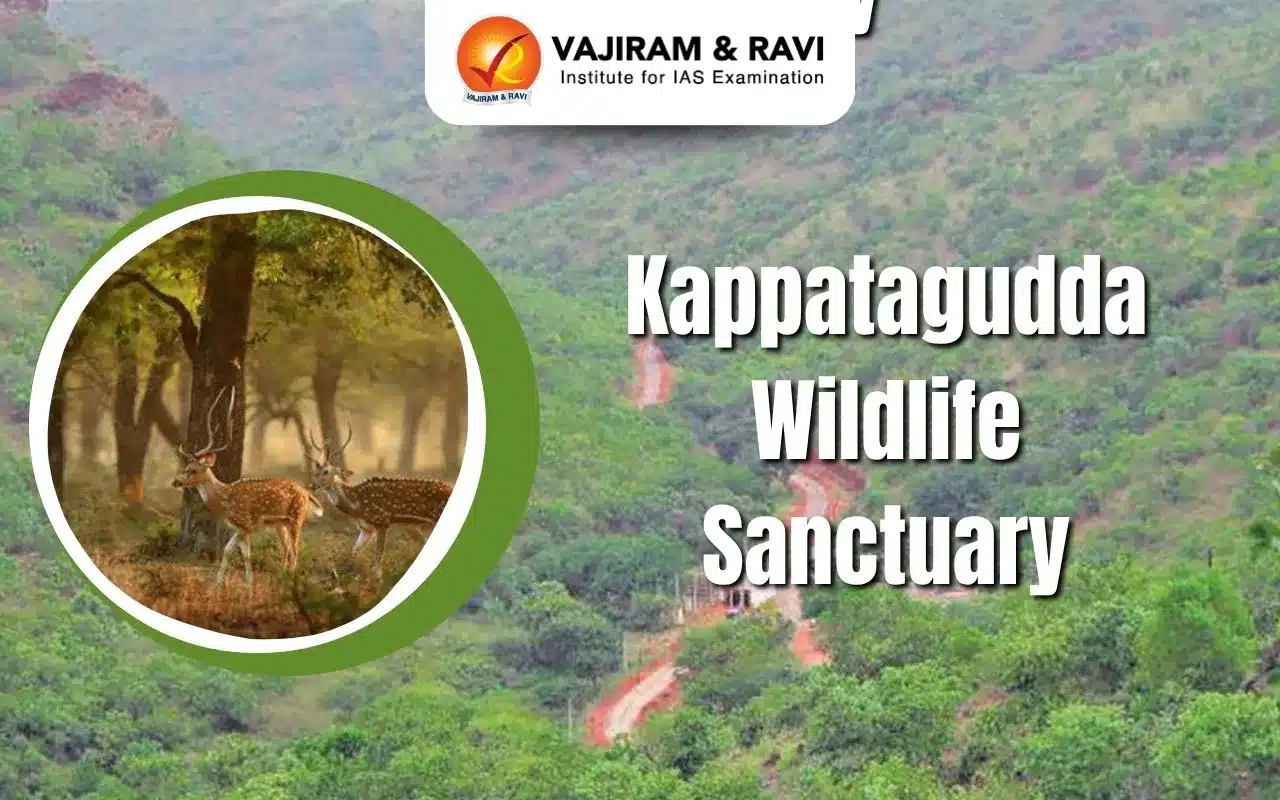

Kappatagudda Wildlife Sanctuary

Kappatagudda Wildlife Sanctuary

Kappatagudda Wildlife Sanctuary Latest News

The Union government recently issued the final notification declaring the Eco Sensitive Zone (ESZ) around the Kappatagudda Wildlife Sanctuary, marking the culmination of a decade-long movement to protect the ecologically rich region in arid north Karnataka.

About Kappatagudda Wildlife Sanctuary

  • It is located in the Gadag district of Karnataka.
  • It spans over 244.15 sq.km.
  • The sanctuary features diverse habitats—dry deciduous forests, grasslands, scrublands, and riverine zones—earning it the nickname “Western Ghats of North Karnataka”.
  • The sanctuary’s historical significance traces back centuries, evident in the remnants of ancient temples and ruins that dot the hillsides.
  • These structures are adorned with intricate carvings and tell tales of dynasties that once ruled the land, such as the Chalukyas and Rashtrakutas.
  • Moreover, the architectural marvels strewn across Kappatagudda, such as the Kappatagudda Jain Basadi, Brahma Jinalaya, Trikuteshwara Temple, and the Dambala Temple, stand testament to the craftsmanship and religious diversity of the region. 
  • Flora
    • The sanctuary supports diverse vegetation typical of dry-scrub and deciduous ecosystems.
    • The forest has about 400 medicinal plant species.
  • Fauna
    • Carnivores such as gray wolves, striped hyenas, leopards, and golden jackals are in good numbers.
    • Small carnivores such as jungle cats, rusty-spotted cats, small Indian civets, common palm civets, ruddy mongooses, and Indian gray mongooses also exist.

Source: DH

Kappatagudda Wildlife Sanctuary FAQs

Q1: Kappatagudda Wildlife Sanctuary is located in which Indian state?

Ans: Karnataka

Q2: What is the approximate area covered by Kappatagudda Wildlife Sanctuary?

Ans: 244.15 sq.km

Q3: The Kappatagudda region is associated with which historic dynasties?

Ans: Chalukyas and Rashtrakutas

Q4: Which ecosystem types are represented in the Kappatagudda Wildlife Sanctuary?

Ans: Dry deciduous, grasslands, scrublands, and riverine zones.

Iliamna Volcano

Iliamna Volcano

Iliamna Volcano Latest News

A recent satellite image showing Alaska’s Iliamna Volcano “ready to rumble" has sparked renewed interest in the snow-covered peak, just as scientists recorded a spike in earthquakes on its slopes.

About Iliamna Volcano

  • It is located in southwest Alaska, United States.
  • It sits in the Chigmit Mountains within Lake Clark National Park and Preserve.
  • It soars to 10,016 feet (3,053 m) tall from nearby Cook Inlet. 
  • Iliamna is a stratovolcano, characterised by its steep, conical shape and periodic explosive eruptions. 
  • It comprises andesite lava flows and pyroclastic rocks on a base of Jurassic-era granite. 
  • The volcano is not a symmetric cone but is made of a summit peak and four other peaks that make a 5-km-long ridge.
  • Most of the volcano is covered by perennial snow and ice, and numerous glaciers radiate from the summit area. 
  • Large avalanche deposits occur on the flanks of the volcano, particularly down the Umbrella Glacier on the southwest side of the volcano.
  • The volcano is currently considered dormant, as the most recent reported eruption occurred in 1876.

What is a Stratovolcano?

  • It is a tall, steep, and cone-shaped type of volcano.
  • Unlike flat shield volcanoes, they have higher peaks.
  • They are typically found above subduction zones, and they are often part of large volcanically active regions, such as the Ring of Fire that frames much of the Pacific Ocean.
  • Stratovolcanoes comprise the largest percentage (~60%) of the Earth’s individual volcanoes, and most are characterized by eruptions of andesite and dacite, lavas that are cooler and more viscous than basalt.
  • These more viscous lavas allow gas pressures to build up to high levels. Therefore, these volcanoes often suffer explosive eruptions. 
  • They are usually about half-half lava and pyroclastic material, and the layering of these products gives them their other common name of composite volcanoes.
  • At the peak, stratovolcanoes usually have a small crater. The crater may be filled with water or ice, or it may contain a volcanic dome during a period of relative inactivity.

Source: NEWS18

Iliamna Volcano FAQs

Q1: Where is the Iliamna volcano?

Ans: It is located in southwest Alaska, United States.

Q2: How tall is Mount Iliamna?

Ans: It soars to 10,016 feet (3,053 m) tall from nearby Cook Inlet.

Q3: When did Iliamna last erupt?

Ans: 1867

Q4: What type of volcano is Iliamna?

Ans: Stratovolcano

Chemotherapy

Chemotherapy

Chemotherapy Latest News

A landmark study published recently has reported that about a fifth of chemotherapy drugs tested failed quality tests; 16 of the 17 implicated manufacturers are India-based.

About Chemotherapy

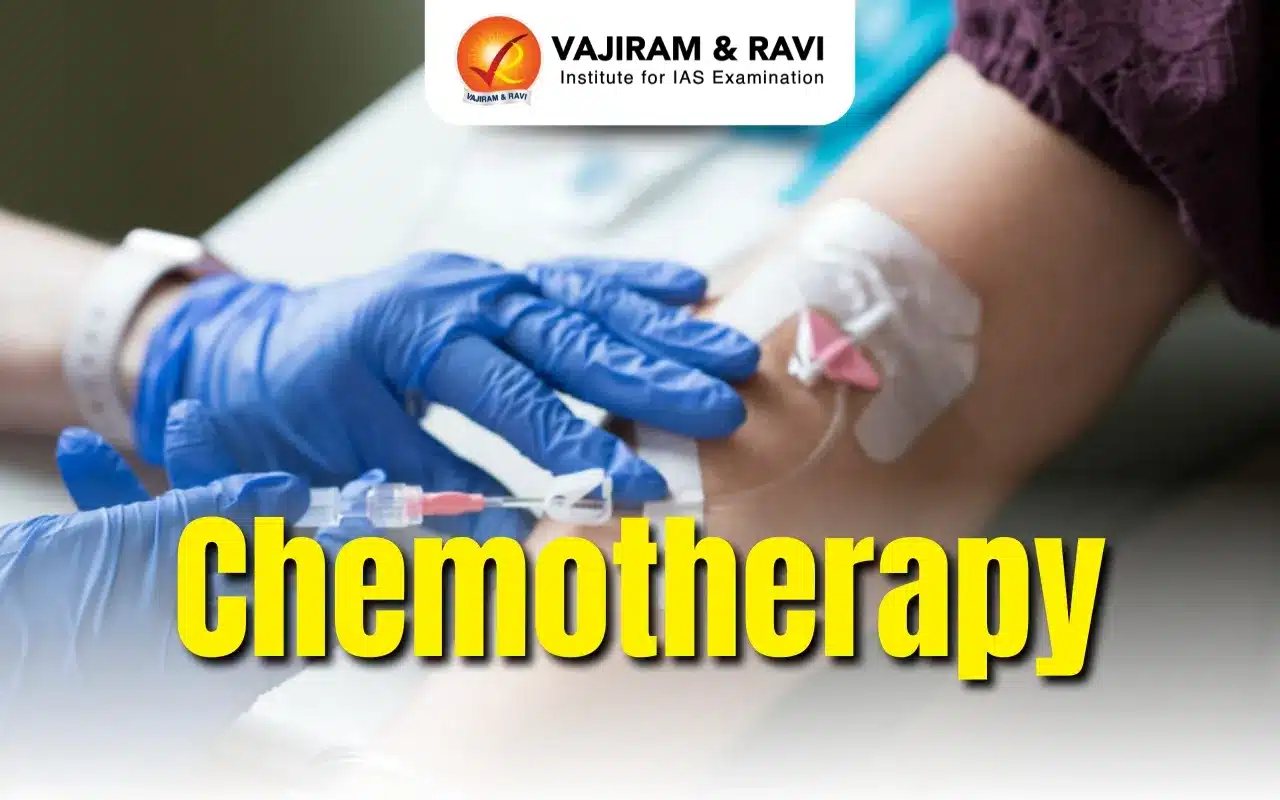
  • Chemotherapy is a treatment that uses medicines to destroy cancer cells. 
  • There are many different types of chemo. They don’t all work exactly the same way, so different types of chemo might be used for different types of cancer. 
  • Most are given as an infusion into a vein (IV), but some are given as an injection, taken as pills, or applied to the skin.

How is Chemo Different from Other Cancer treatments?

  • Chemo is a systemic treatment. 
  • It travels through the bloodstream to reach all parts of your body. 
  • It can kill cancer cells that have spread (metastasized) to parts of the body far away from the original (primary) tumor or cancer cells in blood cancers, such as leukemia, that have spread throughout the body. 
  • This makes chemo different from local treatments like surgery and radiation, which only affect one part of the body.

How Does Chemotherapy Work?

  • Chemotherapy works by affecting cells when they are growing and dividing to make new cells. During this process (called the cell cycle), cells:
    • Grow in size.
    • Make copies of their genetic material (DNA).
    • Divide to form new cells.
  • Some cells, such as skin cells, are fast-growing, meaning they move through this process quickly. Other cells, such as muscle cells, complete it more slowly. 
  • Cancer cells tend to be faster growing, moving through the cell cycle very quickly.
  • Different types of chemo target cells at different phases of the cell cycle. This is why certain chemo drugs work better for different types of cancer cells, and sometimes different combinations of chemo work better together. 
  • Understanding how chemo works also helps doctors plan how often each chemo should be given, and how those doses should be timed.

Chemotherapy Side Effects

  • Chemo interrupts the cell cycles of normal cells, tooespecially cells that grow faster.
  • Blood cells and the cells in your skin, hair follicles, and digestive tract are examples of cells that grow and multiply quickly. 
  • That’s why some common side effects of chemotherapy occur in these areas, including:
    • Anemia.
    • Bleeding.
    • Constipation.
    • Diarrhea.
    • Fatigue.
    • Hair loss.
    • Infection.
    • Loss of appetite.
    • Nausea and vomiting.

Source: TH

Chemotherapy FAQs

Q1: What is the main purpose of chemotherapy in cancer treatment?

Ans: To destroy cancer cells

Q2: How is chemotherapy typically administered?

Ans: As an infusion, injection, pills, or skin application.

Q3: Why is chemotherapy effective in treating blood cancers like leukemia?

Ans: Because it travels throughout the body and targets widespread cancer cells.

Passport Seva Portal

Passport Seva Portal

Passport Seva Portal Latest News

The Passport Seva Portal experienced widespread server issues recently, disrupting operations at Passport Seva Kendras (PSKs) across India.

About Passport Seva Portal

  • Established by the Ministry of External Affairs (MEA) in partnership with Tata Consultancy Services, the Passport Seva portal is an excellent example of a Public-Private Partnership. 
  • It simplifies the passport application and renewal process in India. 
  • Through this portal, individuals can quickly apply for a passport or its renewal from the convenience of their homes. 
  • It is a user-friendly portal providing access to various passport services online.  
  • The MEA has retained sovereign functions like verification, granting, and issuance of a passport as well as ownership of core assets, including data and information of the applicants. 
  • Users can perform the following functions on the Passport Seva Online Portal:
    • Apply for a new passport.
    • Apply for renewal of a passport.
    • Apply for re-issue of lost or damaged passport.
    • Download the application form for the Police Clearance Certificate.
    • Download the application form for the Surrender Certificate.
    • Download the application form for the Identity Certificate.
  • The portal offers complete information regarding the documents required and the process to be followed for obtaining any of the documents mentioned above. You can complete these steps online. 
  • But in some instances, you will be required to take a printout of the application form, book an appointment, and then visit your nearest Passport Seva Kendra. 
  • To be able to use the facilities made available under Passport Seva, it is mandatory to register for Passport Seva Online first.

What is the Passport Seva Project (PSP)?

  • The Ministry of External Affairs (MEA) is responsible for the issuance of passports to Indian citizens through a network of 37 passport offices across the country and 190 Indian missions and posts abroad.
  • The PSP was launched by the MEA in May 2010, with the objective of delivering Passport Services to the citizens in a comfortable environment with wider accessibility and reliability. 
  • The project envisages setting up Passport Seva Kendras (PSKs) across the country, a Data Centre and Disaster Recovery Centre, a Call centre operating in multiple Indian languages, and a centralized nationwide computerized system for the issuance of passports.
  • With the implementation of the PSP, PSKs are working as extended arms of Regional Passport Offices. 
  • An applicant may ascertain the jurisdiction of the Regional Passport Office and PSK before submitting an application.
  • It enables simple, efficient, and transparent processes for delivery of passports and related services.
  • Apart from creating a countrywide networked environment for Government staff, it integrates with the Indian missions and posts abroad, and with a few external stakeholders, such as State Police for physical verification of applicant's credentials with India Post for delivery of passports, and UIDAI for applicant’s demographics and biometrics validation.

Source: ET

Passport Seva Portal FAQs

Q1: The Passport Seva Portal is operated under a Public-Private Partnership between the Ministry of External Affairs (MEA) and which company?

Ans: Tata Consultancy Services (TCS)

Q2: What is the main purpose of the Passport Seva Portal?

Ans: To simplify the process of passport application and renewal.

Q3: Who retains the sovereign functions such as verification, granting, and issuance of passports?

Ans: Ministry of External Affairs

Q4: What must users do in certain cases after completing the online application process?

Ans: Print the form, book an appointment, and visit a Passport Seva Kendra.

Black Mass Recovery Technology

Black Mass Recovery Technology

Black Mass Recovery Technology Latest News

The Technology Development Board (TDB), Department of Science & Technology (DST), Government of India, has extended financial support for commercialisation of Indigenous Battery Recycling Technology.

About Black Mass Recovery Technology

  • It is designed to extract battery-grade lithium, cobalt, nickel, and manganese from end-of-life lithium-ion batteries.
  • Its dual-mode (wet and dry) black mass recovery technology ensures high separation efficiency and recovery rates of up to 97–99%.
  • The end-to-end process, including collection, shredding, metal leaching, and downstream purification, is indigenously developed and patented, significantly reducing reliance on imported recycling equipment.
  • Significance: It seeks to minimize import of critical minerals by recycling already available one within the country.       
  • The recovered battery-grade compounds—such as lithium carbonate and cobalt sulphate—meet global specifications and will cater to both domestic consumption and exports.

What is Black Mass?

  • It is the term used to describe the dark, granular material that remains after lithium-ion batteries are shredded during recycling.
  • It contains a valuable mix of metals, including: Lithium, Cobalt, Nickel, Manganese and Graphite
  • These materials are essential to the production of new batteries, especially for electric vehicles, energy storage systems, and electronics. 

Source: PIB

Black Mass Recovery Technology FAQs

Q1: What are the components of black mass?

Ans: Cobalt, Nickel, Lithium,carbon and various inactive materials.

Q2: Is black mass toxic?

Ans: Black mass is a highly toxic powder.

Tansen

Tansen

Tansen Latest News

Recently, the Madhya Pradesh High Court dismissed an appeal seeking permission to perform religious and cultural activities at the tomb of Hazrat Sheikh Muhammad Ghaus and also this premise houses the grave of musical maestro Tansen in Gwalior. 

About Tansen

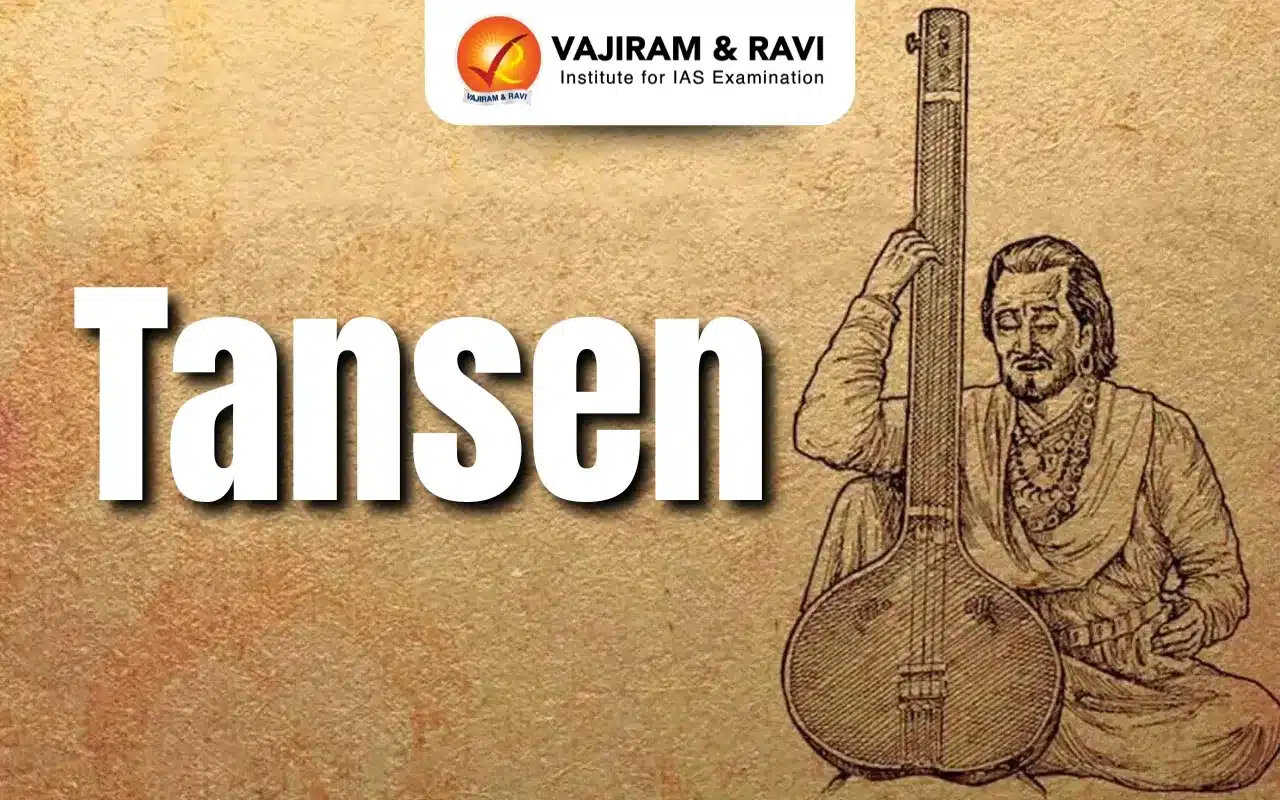
  • Tansen was a prominent Indian classical music composer, musician and vocalist, known for a large number of compositions.
  • He was also an instrumentalist who popularised and improved the plucked rabab (of Central Asian origin).
  • He first stayed under the shelter of Daulat Khan, son of Sher Shah Suri and then was appointed as the court singer of King Ramchandra of Bandhavgarh. 
  • He was among the Navaratnas (nine jewels) at the court of the Mughal Emperor Jalal ud-din Akbar.
  • Akbar gave him the title Mian, an honorific, meaning learned man.
  • Tansen as a historical personality is difficult to extract from the extensive legend that surrounds him.

Cultural contribution of Tansen

  • He is given credit for introducing some famous ragas viz., Miyan ki Malhar, Miyan ki Todi and Darbari.
  • Tansen was remembered for his classical Dhrupad compositions

Source: IE

Tansen FAQs

Q1: Which gharana is related to Tansen?

Ans: Gwalior Gharana

Q2: Who gave Tansen the title of Mian?

Ans: Emperor Akbar

Q3: Who is the father of Indian classical music?

Ans: Purandara Dasa

International Potato Centre

International Potato Centre

International Potato Centre Latest News

Recently, the Union Cabinet has approved a proposal from the Department of Agriculture & Farmers Welfare to establish the International Potato Centre (CIP)’s South Asia Regional Centre (CSARC) at Agra, Uttar Pradesh.

About International Potato Centre

  • It was founded in 1971 as a research-for-development organization with a focus on potato, sweetpotato and Andean roots and tubers.
  • It delivers innovative science-based solutions to enhance access to affordable nutritious food, foster inclusive sustainable business and employment growth, and drive the climate resilience of root and tuber agri-food systems.
  • CIP is a CGIAR research center, a global research partnership for a food-secure future. CGIAR science is dedicated to transforming food, land and water systems in a climate crisis.
  • Its research is carried out by 13 CGIAR Centers/Alliances in close collaboration with hundreds of partners, including national and regional research institutes, civil society organizations, academia, development organizations and the private sector. 
  • Headquarter: It is in Lima, Peru and it has a research presence in more than 20 countries in Africa, Asia and Latin America.

Potato Production in India

  • India is the world’s second top producer and consumer of potato
  • Major potato growing states: Uttar Pradesh, West Bengal, Bihar, Gujarat, Madhya Pradesh and Punjab.
  • As of now, at least two different centres of Indian Council of Agricultural Research (ICAR) work on tuber crops.
  • While the Shimla-based ICAR-CPRI (Central Potato Research Institute) is working on potato, the Thiruvananthapuram-based ICAR-CTCRI (Central Tuber Crops Research Institute is working on sweetpotato.

Source: PIB

International Potato Centre

Q1: Where is the International Potato Center?

Ans: Lima, Peru

Q2: What is the International Potato Center needed for?

Ans: It is for achieving food security, well-being, and gender equity for poor people in root and tuber farming systems in the developing world.

Enquire Now