Central Sector Scheme of Scholarship for College and University Students (CSSS)

Central Sector Scheme of Scholarship for College and University Students

Central Sector Scheme of Scholarship for College and University Students Latest News

The CBSE recently announced the Central Sector Scheme of Scholarship for College and University Students (CSSS) for the academic year 2025-26, inviting applications from eligible students via the National Scholarship Portal, scholarships.gov.in.

About Central Sector Scheme of Scholarship for College and University Students

  • Pradhan Mantri Uchchatar Shiksha Protsahan (PM-USP) Central Sector Scheme of Scholarship for College and University Students" is a scholarship scheme by the Department of Higher Education, Ministry of Education.
  • The primary objective of the scheme is to provide financial assistance to meritorious students from poor families to meet a part of their day-to-day expenses while pursuing higher studies. 
  • The scholarships are awarded based on the results of the Higher Secondary/Class 12th Board Examination. 

Allocation of Scholarships

  • A maximum of 82,000 fresh scholarships (41,000 for boys and 41,000 for girls) per annum are provided for pursuing Graduate/ Postgraduate degrees in colleges and universities and for professional courses, such as medical, engineering, etc.
  • The total number of scholarships is divided amongst the State Education Boards based on the State's population in the age group of 18-25 years, after segregating the share of CBSE and ICSE on the basis of the number of students passing out from various Boards in the country.
  • The number of scholarships allotted to a State Education Board is distributed amongst pass-outs of the Science, Commerce, and Humanities streams in the ratio of 3:2:1. In case of a shortfall in the number of applications, the scholarship slots could be interchanged.

Benefits: Rate of Scholarship

  • ₹12,000/- per annum at the graduation level for the first three years of college and university courses.
  • ₹20,000 per annum at the post-graduation level.
  • ₹20,000/- per annum in the 4th and 5th years to the students pursuing professional courses, in cases where the duration of the course is five (5) years/integrated courses.
  • Students pursuing technical courses such as B.Tech, B.Engg. will get a scholarship up to graduation level only i.e. ₹12,000 p.a. for 1st, 2nd, and 3rd years and ₹20,000 in the 4th year.
  • The scholarship will be disbursed directly into the savings bank accounts of the beneficiaries through Direct Benefit Transfer (DBT).

Eligibility

  • The applicant must be pursuing regular degree courses.
  • The applicant must be pursuing courses at colleges/institutions recognized by the All India Council for Technical Education and the respective regulatory bodies concerned.
  • The gross parental/family income of the applicant should not exceed ₹450,000/- per annum.
  • For renewal of scholarship in each year of study, besides getting at least 50% marks in the Annual Examination, maintenance of adequate attendance should be at least 75%.
  • The students are required to have bank accounts opened, especially in their name.
  • Application must be verified by the student’s institution: 
  • CBSE has made it clear that all applications must be verified by the student’s college or university. 
  • If required, students must show their original documents to their institution. 
  • Without verification, the application will be considered invalid.

Exclusions

  • Students who are pursuing correspondence or distance mode or pursuing diploma courses are not eligible.
  • Students who are already availing the benefit from any other scholarship schemes, including state-run scholarship schemes/fee waiver & reimbursement schemes, are not eligible.

Source: ET

Central Sector Scheme of Scholarship for College and University Students FAQs

Q1: Which ministry implements the Central Sector Scheme of Scholarship for College and University Students (CSSS)?

Ans: It is a scholarship scheme by the Department of Higher Education, Ministry of Education.

Q2: What is the main objective of the Central Sector Scheme of Scholarship for College and University Students?

Ans: To assist meritorious students from poor families with higher education expenses.

Q3: What is the total number of fresh scholarships awarded per year under Central Sector Scheme of Scholarship for College and University Students?

Ans: 82,000

Q4: What is the annual scholarship amount at the undergraduate level under Central Sector Scheme of Scholarship for College and University Students?

Ans: ₹12,000

Q5: What is the scholarship amount at the postgraduate level under the Central Sector Scheme of Scholarship for College and University Students??

Ans: ₹20,000 per annum
Khasi People

KHasi People

Khasi People Latest News

The Meghalaya High Court recently admitted a PIL that could determine the fate of hundreds of tribal certificate applications from the Khasi community, following a government decision that has effectively halted the issuance of ST certificates to certain categories of applicants.

About Khasi People

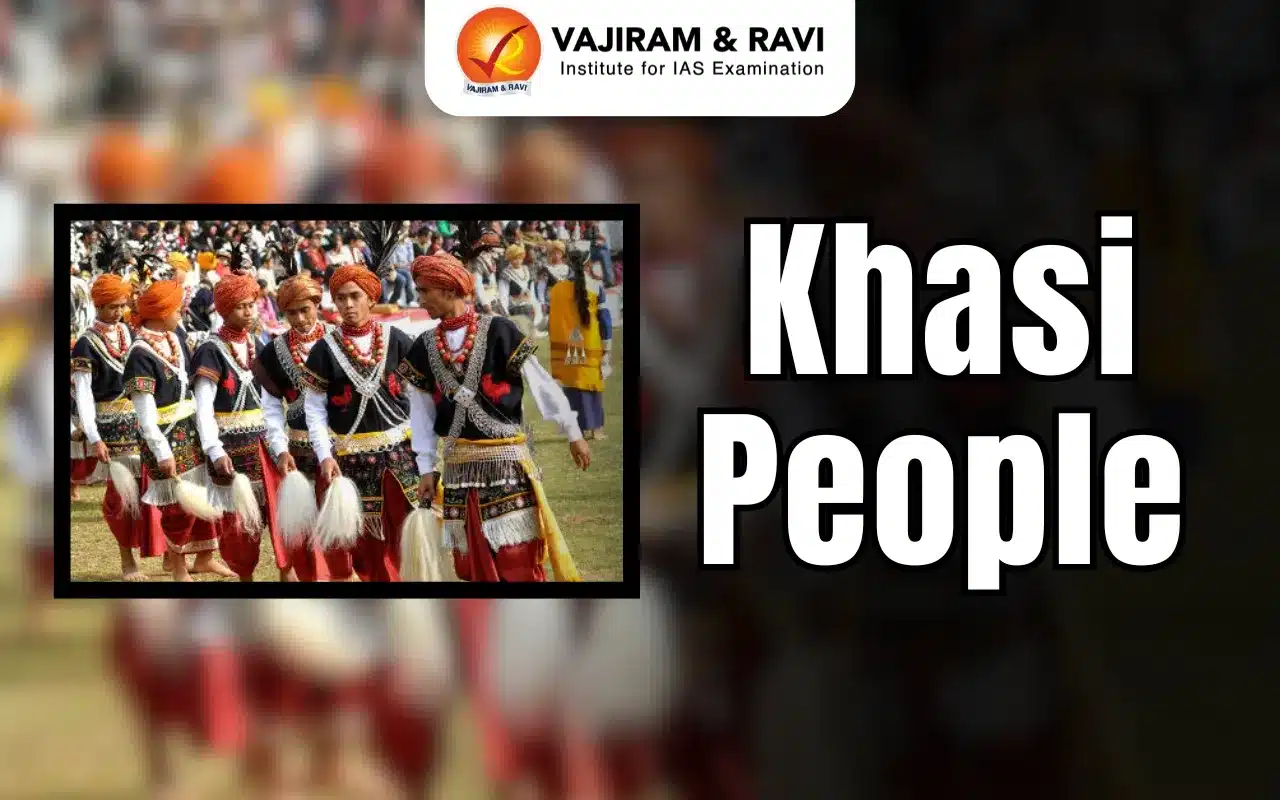
  • They are an indigenous tribe primarily living in the Khasi and Jaintia hills of Meghalaya. 
  • The Indian state of Assam and neighboring country of Bangladesh also host small populations of this tribe.
  • They are known to be one of the earliest ethnic groups in the region and are believed to have migrated to the northeastern hills from Tibet or Burma around 500 B.C.
  • They have a number of clans such as Lyngdoh, Diengdoh, Marbaniang, Shiemliah, Lapang, and Songkali.
  • The Khasi are generally people of short stature. 
  • Language
    • The Khasi language, known as “Khasi,” is an integral part of their identity. 
    • While English and Hindi are also spoken, Khasi remains the primary language for daily communication within the community.
  • One of the most striking aspects of the Khasi tribe is their matrilineal society. 
    • In Khasi culture, lineage and inheritance are passed down through the mother’s side of the family.
    • Women play a crucial role in decision-making processes and the management of family affairs.
  • Religion: A vast majority of the Khasis are Christians, while there are some groups of Hindus and Muslims too among them.
  • Livelihood:  
    • Cultivation has been their primary source of livelihood for ages. 
    • In the present day, however, Khasi youth have entered into many other professional fields and are successful doctors, engineers, businessmen or women, teachers, and more.
  • They are officially  recognized as a "Scheduled Tribe"  in India and have certain privileges. 
    • They are allowed to practice their customary laws and also enjoy tax benefits not available elsewhere in India. 
    • They have land designated for their use and a quota system that reserves seats for them in education and jobs.
  • The Khasi Hills Autonomous District Council is the official body protecting the unique laws of these people.
  • Festivals and Celebrations:
    • Shad Suk Mynsiem: A spring festival celebrating nature, fertility, and gratitude. Men and women participate in a vibrant dance, wearing traditional attire.
    • Nongkrem Dance Festival: A five-day religious festival where the Khasi people offer prayers to the divine for a prosperous harvest.
    • Behdienkhlam Festival: Celebrated to drive away evil spirits and bring good health and fortune to the community.
    • Traditional Khasi music features instruments like Duitara (a stringed instrument) and Tangmuri (a bamboo flute).
  • Living Root Bridges:
    • Perhaps the most famous example of the Khasi tribe’s connection to nature is the living root bridges. 
    • These extraordinary architectural marvels are formed by training the roots of the Ficus elastica tree to grow in a specific direction, creating sturdy, natural bridges. 
    • These bridges can span up to 100 feet and are known to last for centuries.
    • The most famous of these bridges, the “Double-Decker Living Root Bridge,” is located in the village of Nongriat.

Source: ITNE

Khasi People FAQs

Q1: The Khasi people are primarily found in which Indian state?

Ans: Meghalaya

Q2: What is the primary language spoken by the Khasi people?

Ans: Khasi

Q3: What is the Nongkrem Dance Festival celebrated for?

Ans: Prosperous harvest and prayers to the divine.

Q4: The most famous "Double-Decker Living Root Bridge" is located in:

Ans: Nongriat village, Meghalaya

Myogenesis

Myogenesis

Myogenesis Latest News

Group Captain Shubhanshu Shukla recently launched groundbreaking Myogenesis experiments on the ISS, marking India's advancements in space research.

About Myogenesis

  • It is the process by which muscle fibers are formed.
  • It is a complex and highly regulated process that is crucial for the development and maintenance of skeletal muscle tissue. 
  • The significance of myogenesis lies in its role in forming the musculature of the body, enabling movement, maintaining posture, and regulating metabolism.
  • Myogenesis involves the differentiation of precursor cells, known as myoblasts, into multinucleated muscle fibers. 
  • This process is not only essential during embryonic development but also plays a critical role in muscle repair and regeneration throughout life. 
  • The study of myogenesis is important for understanding muscle development and related disorders, as well as for developing therapeutic strategies for muscle diseases.

Overview of the Myogenic Process

  • The myogenic process can be broadly divided into several stages: myoblast proliferation, differentiation, and fusion into multinucleated myotubes, followed by maturation into muscle fibers. 
  • Each stage is tightly regulated by a complex interplay of transcription factors, signaling pathways, and cellular processes.

Role of Key Transcription Factors

  • Key transcription factors such as MyoD and Myf5 play a crucial role in regulating myogenesis. 
  • These myogenic regulatory factors (MRFs) are essential for the specification of myoblasts and their differentiation into muscle fibers.
    • MyoD is a master regulator that drives myoblast differentiation by activating the expression of muscle-specific genes.
    • Myf5 is involved in the early stages of myogenesis, regulating myoblast proliferation and specification.

Cellular Processes Regulating Myogenesis

  • Cellular processes such as cell proliferation and differentiation are tightly regulated during myogenesis.
  • Cell Proliferation: Myoblast proliferation is a critical step that precedes differentiation. It ensures an adequate number of myoblasts for muscle formation.
  • Cell Differentiation: Myoblast differentiation involves a series of molecular changes that enable myoblasts to fuse and form multinucleated myotubes.

Source: TOI

Myogenesis FAQs

Q1: What is myogenesis?

Ans: The process by which muscle fibers are formed.

Q2: Which type of cells differentiate into muscle fibers during myogenesis?

Ans: Myoblasts

Q3: Which transcription factor is considered the "master regulator" of myoblast differentiation?

Ans: MyoD

Q4: What is the function of the Myf5 transcription factor in myogenesis?

Ans: Regulates myoblast proliferation and specification.

Q5: What happens during the differentiation stage of myogenesis?

Ans: Myoblasts fuse to form myotubes.

Botrytis Fungi

Botrytis Fungi

Botrytis Fungi Latest News

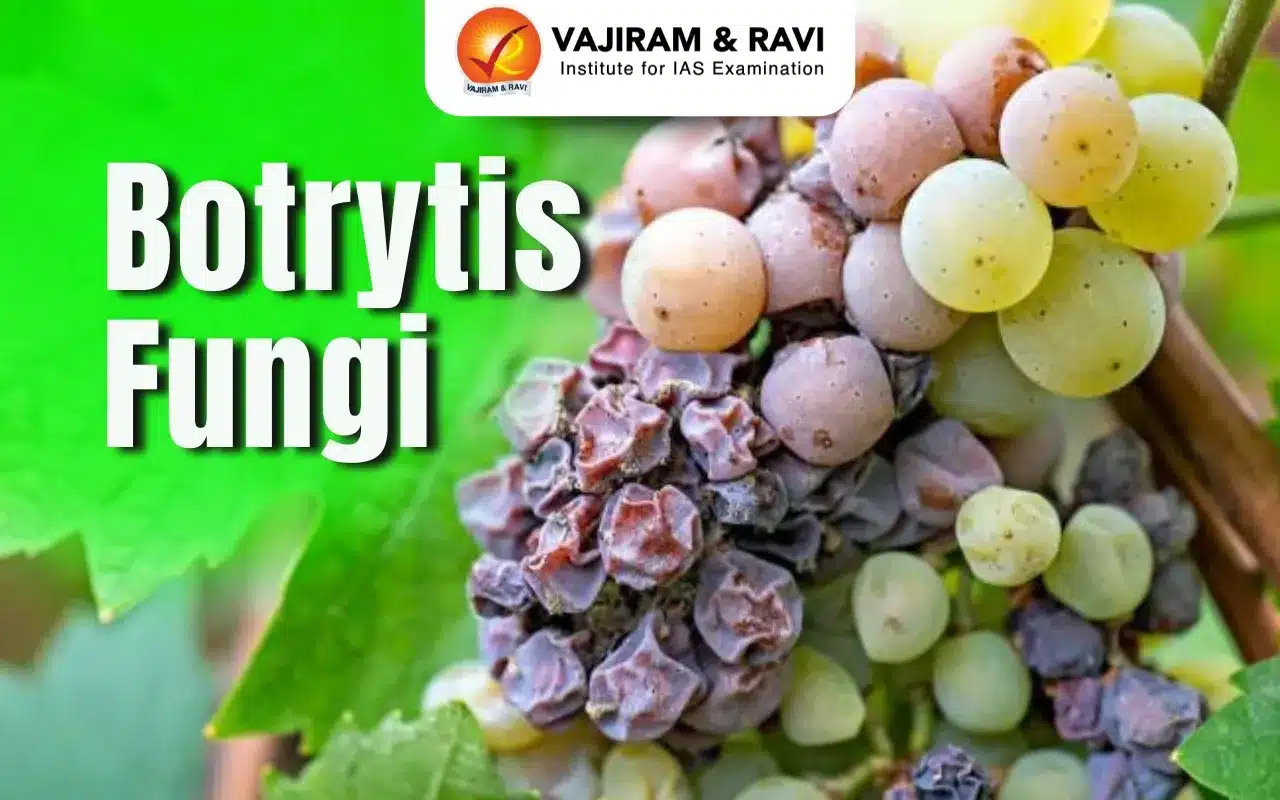
Recently, researchers from Sichuan University and the University of British Columbia have found that botrytis fungi (Botrytis cinerea) cannot be cloned.

About Botrytis Fungi

  • It is a widespread necrotrophic fungal pathogen.
  • Botrytis cinerea needs to obtain nutrients before it can penetrate a plant.
  • Dead or damaged plant tissue, such as old flower petals, can provide nutrients that the fungus needs.
  • Owing to this feeding source, the infection gains strength and spreads to healthy plant tissues. A brownish rot develops in newly infected tissues, which is how Botrytis cinerea deteriorates plants.
  • These fungi usually attack blossoms and fruit, but they can also cause rot and blight on buds, stems, leaves, roots, bulbs, and tubers.
  • The fungus typically targets fragile, wounded, aging, or dead plant parts.
  • It infects grapes, penetrates the skin, causes the berries to lose water by evaporation and shrivel up, and thus concentrates the sugars and flavours in them.
  • It was also found recently that this fungi exhibits an unusual idiosyncrasy.
  • In these fungi, no single nucleus contains a complete set of chromosomes. Instead, the chromosome set is distributed across two or more nuclei, and any one nucleus contains only a subset.
  • It requires warm temperatures, high humidity, and prolonged wetness which facilitate easy fungus inoculation.
  • Additionally, it can release organic acids, such as oxalic acid, which acidify the surrounding environment.

Source: TH

Botrytis Fungi FAQ's

Q1: What type of fungus is Botrytis?

Ans: Botrytis is a genus of anamorphic fungi in the family Sclerotiniaceae.

Q2: What temperature kills Botrytis?

Ans: The results demonstrated that B. cinerea spores can be inactivated by heat treatments using relatively low temperatures (42-46 °C).

GPS Interference

GPS interference

GPS Interference Latest News

Recently, three mishaps in recent years had a common cause of GPS interference which has emerged as one of the biggest challenges for seafaring vessels and aircraft.  

About GPS Interference

  • It refers to spoofing or jamming, two types of deliberate cyber-attacks on Global Positioning System (GPS) signals, which disrupt or deceive vehicles’ navigation systems.
  • While both are often used synonymously with each other, spoofing and jamming refer to slightly different kinds of interference.  
  • GPS jamming, also known as GPS intervention, involves a device (jammer) emitting strong radio signals on GPS frequencies in order to overpower weaker signals. This disrupts the functioning of GPS systems by rendering receivers unable to determine location or time.
  • GPS spoofing involves a device transmitting signals on the same frequencies used by GPS satellites, overwhelming or blocking the GPS receivers from acquiring or maintaining the right satellite signals.
  • Unlike jamming, which disrupts signals entirely, spoofing deceives the receiver into trusting false data.
  • GPS interference can disrupt both military and civilian transport operations from afar, without physical confrontation.
  • GPS interference can occur due to various reasons, not all of them malicious.
  • These include electromagnetic radiation from nearby devices, adverse atmospheric conditions like ionospheric disturbances, solar activity (such as flares), and, of course, intentional jamming/spoofing.
  • Most often, countries with advanced electronic warfare capabilities and involved in an active conflict are responsible.
  • While interference may or may not be targeted at civilian vessels, those in the vicinity, relying on the same GPS infrastructure, are nonetheless susceptible.

Source: IE

GPS Interference FAQs

Q1: What do you mean by GPS?

Ans: The Global Positioning System (GPS) is a U.S.-owned utility that provides users with positioning, navigation, and timing (PNT) services.

Q2: What is a GPS system used for?

Ans: Global Positioning Systems (GPS) is the foundation behind digital mapping. GPS are used to find the exact location of things.

GoIStats App

GoIStats App

GoIStats App Latest News

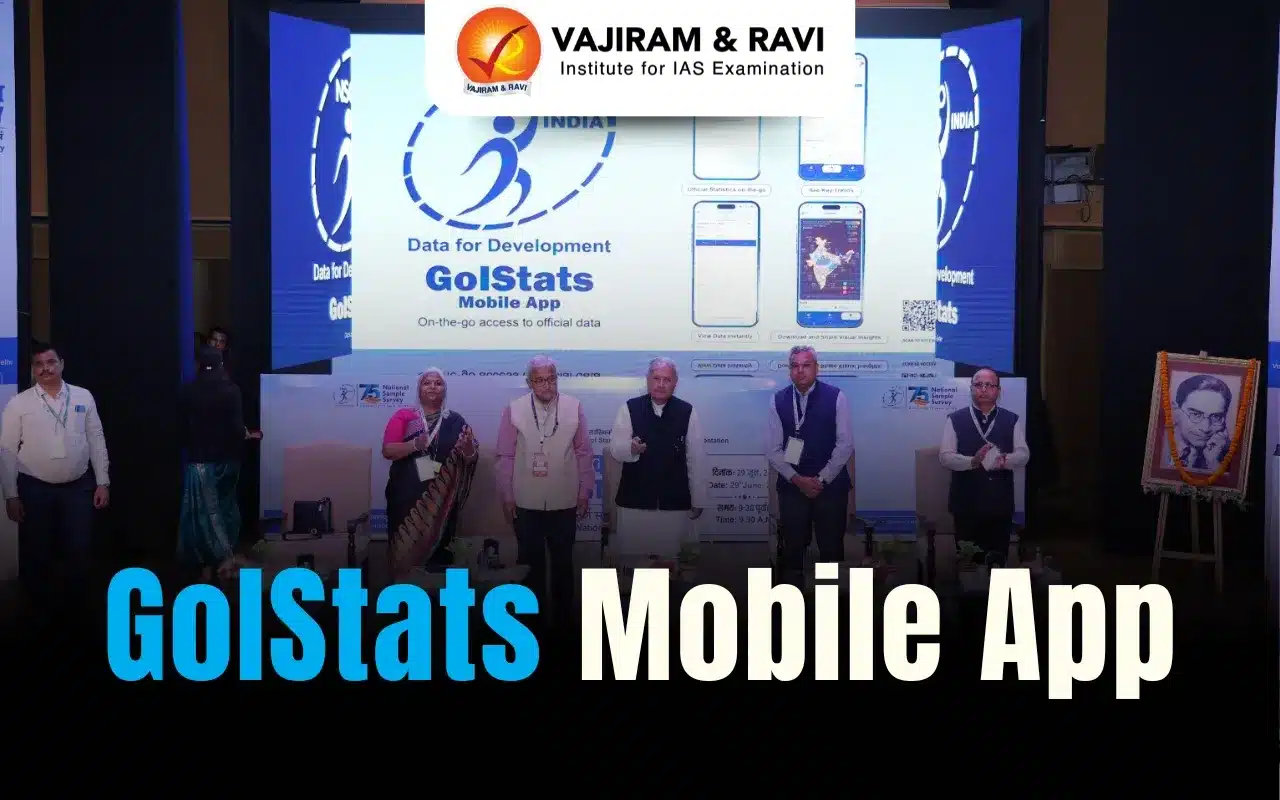
Recently, the National Sample Survey Office (NSO), under the Ministry of Statistics and Programme Implementation (MoSPI), launched the GoIStats mobile application on Statistics Day 2025.

About GoIStats App

  • The GoIStats mobile application represents NSO's vision of creating an all-encompassing data ecosystem where every stakeholder can seamlessly access official data on the go.

Features of GoIStats App

  • It has an interactive "Key Trends" dashboard showcasing important socio-economic indicators with dynamic visualizations of critical metrics including GDP, inflation, employment data.
  • Users gain direct access to NSO's database through the "Products" section, featuring one-click CSV downloads.
  • It also has advanced filtering and search capabilities with comprehensive metadata, and mobile-optimized data tables are also available for seamless viewing.   
  • It contains visual data storytelling capabilities include a curated infographics section that transforms complex statistics into digestible insights, interactive charts and graphs with contextual explanations, social sharing features to promote data literacy across communities.
  • It provides users with the access to NSO reports and publications with instant download functionality. Regular updates aligned with NSO's publication calendar are provided to the user with app notification facility.

Source: PIB

GoIStats App FAQs

Q1: What is the role of the Ministry of Statistics and Programme Implementation?

Ans: It functions as the Cadre Controlling Authority to manage the Indian Statistical Service and Subordinate Statistical Service including matters like training, career and manpower planning.

Q2: Which ministry is National Sample Survey Office (NSSO) under?

Ans: Ministry of Statistics and Program Implementation

Q3: What is the role of the National Statistics Office?

Ans: It organizes and conducts periodic all-India Economic Censuses and follow-up enterprise surveys.

Begonia nyishiorum

Begonia nyishiorum

Begonia nyishiorum Latest News

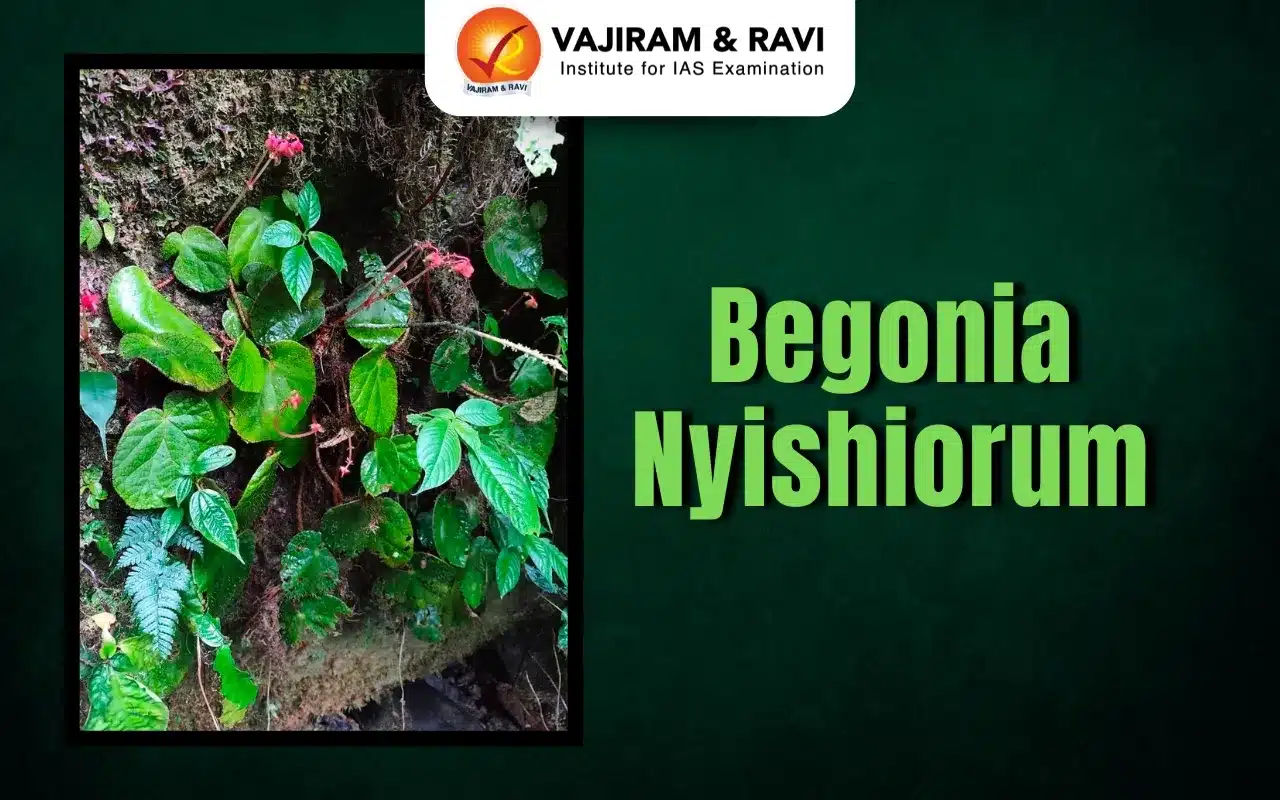
Forest officials in Arunachal Pradesh recently discovered a new flowering plant “Begonia nyishiorum”, endemic to the state’s East Kameng district. 

About Begonia nyishiorum

  • It is a new species of flowering plant.
  • It is endemic to the East Kameng district of Arunachal Pradesh. 
  • It grows in moist, shaded mountain slopes between 1,500 and 3,000 metres above sea level.
  • It is instantly recognisable by the dense crimson, fringed scales that sheath its light green petioles-an indumentum previously unseen in any Asian begonia. 
  • Currently known only from two forest sites in East Kameng, the species’ petiole “fringe” sets it apart from over 2,150 accepted begonias worldwide.
  • The epithet nyishiorum honours the Nyishi community whose traditional stewardship protects these high-elevation forests.
  • The species is assessed as Data Deficient according to the IUCN Red List criteria.

Source: NIE

Begonia nyishiorum FAQs

Q1: What is Begonia nyishiorum?

Ans: A new species of flowering plant.

Q2: Begonia nyishiorum is endemic to which Indian state?

Ans: Arunachal Pradesh

Q3: In which district is Begonia nyishiorum specifically found?

Ans: East Kameng

Q4: What is unique about the petioles of Begonia nyishiorum?

Ans: They are fringed with dense crimson scales.

Q5: What is the conservation status of Begonia nyishiorum according to the IUCN Red List?

Ans: Data Deficient

Football for Schools (F4S) Programme

Football for Schools (F4S) programme

Football for Schools (F4S) Programme Latest News

Recently, the union Minister for Education presided over the distribution of FIFA footballs as part of the Football for Schools (F4S) programme at PM SHRI Kendriya Vidyalaya, Fort William, Kolkata, West Bengal.     

About Football for Schools (F4S) Programme

  • It is an ambitious programme run by Fédération Internationale de Football Association (FIFA) in collaboration with UNESCO,
  • It aims to contribute to the education, development and empowerment of around 700 million children.
  • It seeks to make football more accessible to both boys and girls around the world by incorporating football activities into the education system, in partnership with relevant authorities and stakeholders.
  • The programme has been designed to promote targeted life skills and competencies through football and contribute to the United Nations’ Sustainable Development Goals (SDGs) and other priorities.
  • The F4S Programme is aligned with global sport, education and health policies, including UNESCO’s Kazan Action Plan, the Education 2030: Incheon Declaration and Framework of Action, and the World Health Organization (WHO) Global Action Plan on Physical Activity (GAPPA).
  • Project timeline: It was launched in mid-2019 with pilot projects in Puerto Rico and Lebanon. The F4S Programme will be re-launched in other regions in 2021 and will run until 2023 at least.
  • In India, the programme is implemented by the Department of School Education and Literacy, Ministry of Education (DoSEL), with support from the All India Football Federation (AIFF) and the Sports Authority of India (SAI). 

Objectives of the Football for Schools Programme

  • Empower learners (boys and girls) with valuable life skills and competencies
  • Empower and provide coach-educators with the training to deliver sport and life-skills activities
  • Build the capacity of stakeholders (schools, MAs and public authorities) to deliver training in life skills through football
  • Strengthen the cooperation between governments, MAs and participating schools to enable partnerships, alliances and intersectoral collaboration

Source: PIB

Football for Schools (F4S) Programme FAQs

Q1: What is the FIFA for schools program?

Ans: FIFA Football For Schools is a programme where football meets education, inspiring children to learn life skills through fun football sessions.

Q2: What does FIFA stand for?

Ans: Fédération Internationale de Football Association

Q3: What is the Sports Authority of India?

Ans: The Sports Authority of India (SAI) was established by the Govt. in 1984 as a Society under the Societies Registration Act, 1860, with the twin objective of broad-basing of sports and to achieve excellence at the national and international level.

Similipal Tiger Reserve

Similipal Tiger Reserve

Similipal Tiger Reserve Latest News

The Odisha High Court recently issued notice to the Integrated Tribal Development Agency (ITDA), Baripada, over a ban preventing Munda tribals of Jamunagarh village from performing rituals at Jayara, a sacred site within Similipal Tiger Reserve.

About Similipal Tiger Reserve 

  • It is located within the Mayurbhanj District, in the northernmost part of Odisha.
  • Situated in the Deccan Peninsular Bio-geographic Zone, it harbours a unique blend of Western Ghats, Eastern Ghats, and eastern Himalayan biodiversity.
  • It is spread over 2750 sq.km. and has some beautiful waterfalls like Joranda and Barehipani.
  • It comes under the Mayurbhanj Elephant Reserve that includes the adjacent Hadgarh and Kuldiha Wildlife Sanctuaries.
  • It is surrounded by high plateaus and hills, the highest peak being the twin peaks of Khairiburu and Meghashini (1515 m above mean sea level).
  • The terrain is mostly undulating and hilly, interspersed with open grasslands and wooded areas.
  • History and Current Status:
    • Declared a Tiger Reserve in 1956 and included under Project Tiger in 1973.
    • Recognised as part of the World Network of Biosphere Reserves by UNESCO in 2009.
  • Drainage:  
    • At least twelve rivers cut across the plain area, all of which drain into the Bay of Bengal. 
    • The prominent among them are Burhabalanga, Palpala Bandan, Salandi, Kahairi, and Deo.
  • It is also home to various tribes, including Kolha, Santhala, Bhumija, Bhatudi, Gondas, Khadia, Mankadia, and Sahara.
  • Vegetation: The vegetation is a mix of different forest types and habitats, with Northern tropical moist deciduous dominating some semi-evergreen patches. 
  • Flora:
    • The floristic composition indicates a connecting link between South Indian and North Eastern Sub-Himalayan Species. 
    • Sal is the dominant tree species here. 
    • The park also has extensive grasslands that are grazing grounds for many of the herbivores. 
    • These forests boast of many plants that have medicinal and aromatic properties. 
  • Fauna:
    • It is known for the tiger, elephant, and hill mynah.
    • It holds the highest tiger population in Odisha.
    • Apart from the tiger, the major mammals are the leopard, sambar, barking deer, gaur, jungle cat, wild boar, four-horned antelope, giant squirrel, and common langur.

Source: NIE

Similipal Tiger Reserve FAQs

Q1: Which state is Similipal Tiger Reserve in?

Ans: Odisha

Q2: Which tribes live in Similipal Tiger Reserve?

Ans: It is home to various tribes, including Kolha, Santhala, Bhumija, Bhatudi, Gondas, Khadia, Mankadia, and Sahara.

Q3: What is the approximate area covered by the Similipal Tiger Reserve?

Ans: 2,750 sq.km.

Q4: Which is the dominant tree species in Similipal?

Ans: Sal

Enquire Now