International Financial Services Centres Authority (IFSCA)

International Financial Services Authority (IFSCA)

International Financial Services Centres Authority Latest News

The largest privately owned bank in Taiwan, CTBC Bank, is the latest to apply to the International Financial Services Centres Authority (IFSCA) for setting up a IFSC Banking Unit (IBU) in GIFT City.

About International Financial Services Centres Authority

  • It is a statutory authority established under the International Financial Services Centres Authority Act, 2019 (IFSCA Act).
  • The IFSCA is a unified authority for the development and regulation of financial products, financial services, and financial institutions in the International Financial Services Centre (IFSC) in India. 
  • The IFSCA aims to develop a strong global connection and focus on the needs of the Indian economy as well as to serve as an international financial platform for the entire region.
  • Prior to the establishment of IFSCA, the domestic financial regulators, namely, RBI, SEBI, Pension Fund Regulatory and Development Authority (PFRDA), and Insurance Regulatory and Development Authority (IRDAI), regulated the business in IFSC.
  • It is headquartered at GIFT City, Gandhinagar, in Gujarat.
  • At present, the GIFT IFSC is the maiden IFSC in India.

Members of International Financial Services Centres Authority

  • It consists of nine members, appointed by the central government.
  • They will include the chairperson of the authority, a member each from the RBI, SEBI, IRDAI, and PFRDA.
  • Two members from the Ministry of Finance. 
  • In addition, two other members will be appointed on the recommendation of a Selection Committee.
  • Term: All members of the IFSC Authority will have a term of three years, subject to reappointment.

Source: THB

International Financial Services Centres Authority FAQs

Q1: Under which Act was the International Financial Services Centres Authority (IFSCA) established?

Ans: International Financial Services Centres Authority Act, 2019

Q2: What is the primary objective of the International Financial Services Centres Authority (IFSCA)?

Ans: To develop and regulate financial products, services, and institutions in International Financial Services Centre (IFSC) in India.

Q3: Where is the headquarters of the International Financial Services Centres Authority (IFSCA) located?

Ans: Gandhinagar
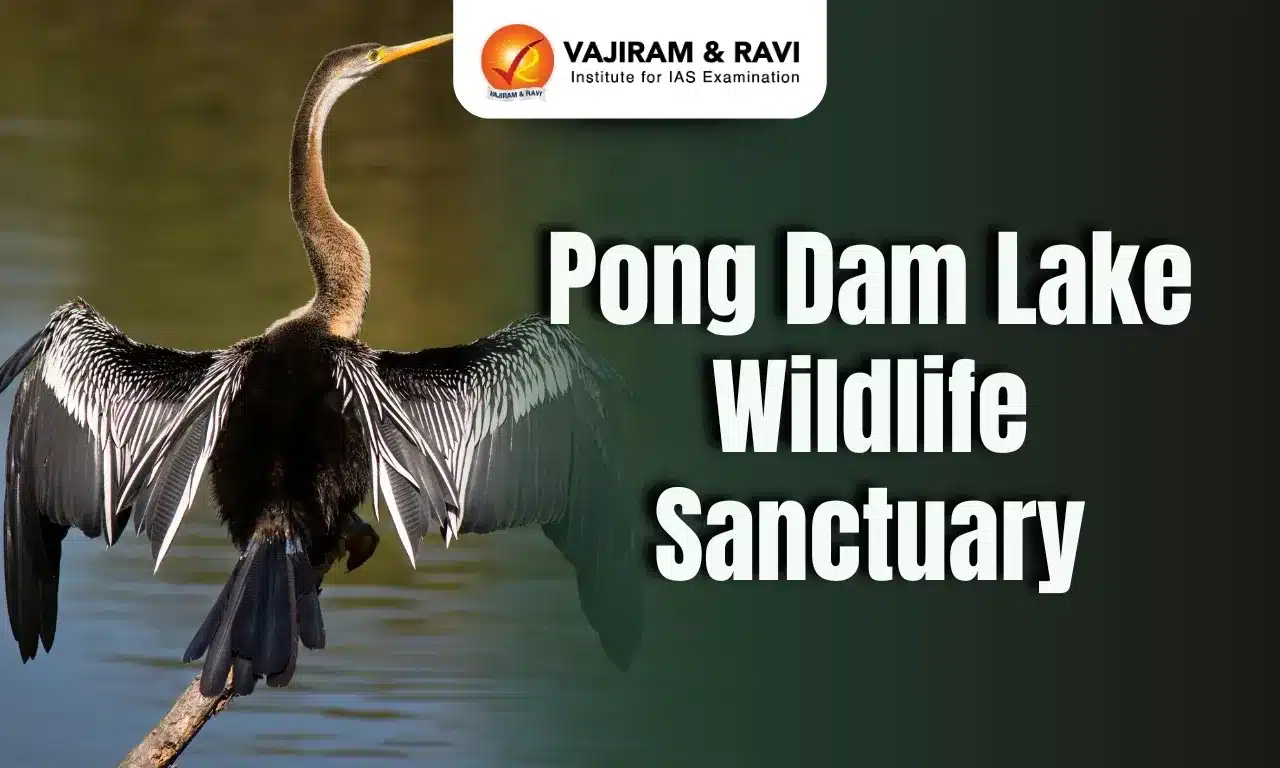
Pong Dam Lake Wildlife Sanctuary

Pong Dam Lake Wildlife Sanctuary

Pong Dam Lake Wildlife Sanctuary Latest News

Hundreds of buffaloes can be seen grazing freely in the restricted Pong wildlife sanctuary area in Samkehar, Bathu and Panalath near the Pong Wetland in clear violation of sanctuary norms.

About Pong Dam Lake Wildlife Sanctuary

  • Pong Dam Lake (also known as Maharana Pratap Sagar) is a manmade reservoir formed due to the construction of Pong Dam on the Beas River in the wetland zone of the Shivalik hills in the Kangra district of Himachal Pradesh
    • The Pong Dam is the highest earth-fill dam in India and was constructed in 1975.
  • It is one of the largest man-made wetlands in Northern India. 
  • Covering about 245 sq.km., the sanctuary comprises the water body of the reservoir as well as surrounding wetland environments.
  • Pong Dam Lake was designated a Ramsar site in 2002.
  • Flora: Consists of submerged vegetation, grasslands, and forests, including species like eucalyptus, acacia, and shisham.
  • Fauna
    • Given the site’s location on the trans-Himalayan flyway, more than 220 bird species have been identified, with 54 species of waterfowl.
    • Avifauna include Bar-headed geese, Pintails, common pochards, coots, Grebes, Cormorants, Herons, Storks, , angle fowls, peafowl, Grey partridges, etc.
    • It is also home to animals like Sambar, Barking Deer, Wild Bear, Nilgai, Clawless Otter, and Leopards.

Source: TI

Pong Dam Lake Wildlife Sanctuary FAQs

Q1: Where is Pong Dam Lake located?

Ans: Kangra district of Himachal Pradesh

Q2: Is Pong Dam a Ramsar site?

Ans: Yes, Pong Dam Lake (Maharana Pratap Sagar) is a Ramsar site.

Q3: On which river is the Pong Dam constructed?

Ans: Beas

Bhadrakali Lake

Bhadrakali Lake

Bhadrakali Lake Latest News

Activists urge the Telangana government to rethink island development in Bhadrakali Lake amid lake shrinkage concerns.

About Bhadrakali Lake

  • It is an artificial lake located in Warangal, Telangana.
  • It covers an area of approximately 32 acres. The lake stretches to 2 km in distance.
  • It is believed to have been built during the 12th century by the Ganapati Deva of the Kakatiya dynasty.
  • The lake is connected to the Maneru Dam via the Kakatiya Canal and was initially formed for drinking water resources. 
  • The main highlight of the lake is the Bhadrakali Temple, located on one of the islands within the lake. 
    • It is an ancient temple which was originally built during the Chalukyan reign in 625 AD.
    • The temple is dedicated to Goddess Bhadrakali, an incarnation of Goddess Durga.

Source: DC

Bhadrakali Lake FAQs

Q1: Where is Bhadrakali Lake located?

Ans: Warangal, Telangana

Q2: Approximately how much area does Bhadrakali Lake cover?

Ans: It covers an area of approximately 32 acres.

Q3: Who is believed to have constructed Bhadrakali Lake?

Ans: It is believed to have been built during the 12th century by the Ganapati Deva of the Kakatiya dynasty.

Q4: Bhadrakali Lake is connected to which dam via the Kakatiya Canal?

Ans: Maneru Dam

BRICS Grouping

What is ‘BRICS’ Grouping?

BRICS Grouping Latest News

U.S. President Donald Trump’s threat to impose 10% tariffs on members of the BRICS grouping that held a summit in Rio de Janeiro recently is the latest in a series of similar threats.

About BRICS Grouping

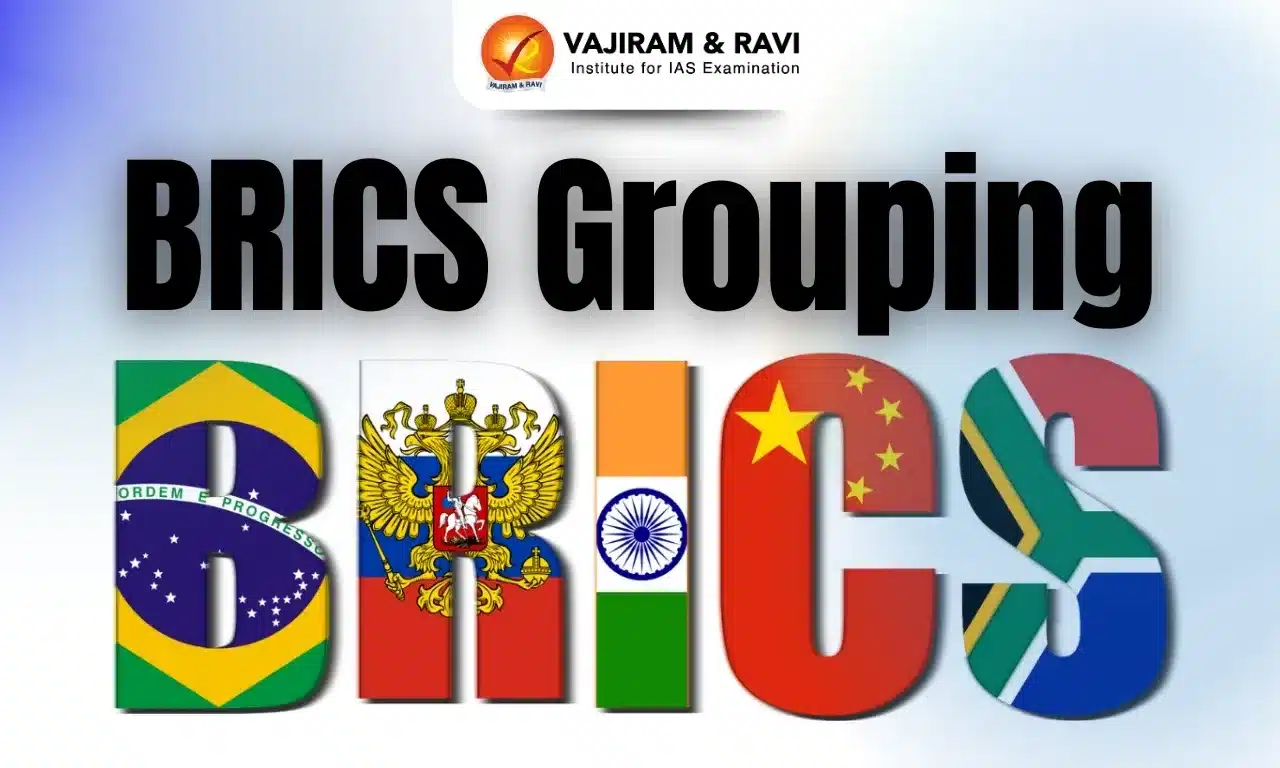
  • BRICS is an acronym for Brazil, Russia, India, China, and South Africa, a bloc of countries that formed a partnership following the creation of an acronym ‘BRIC’ in 2001 by Goldman Sachs economist Jim O’Neill (but it didn’t include South Africa at the time).
  • Representatives of the BRIC countries first began meeting informally during the 2006 meeting of the United Nations General Assembly.
  • South Africa joined in 2010, making it “BRICS”.
  • The objectives of BRICS include strengthening economic, political, and social cooperation among its members, as well as increasing the influence of Global South countries in international governance. 
  • The group seeks to improve the legitimacy, equity in participation, and efficiency of global institutions such as the UN, IMF, World Bank, and WTO. Moreover, it aims to bolster sustainable social and economic development and promote social inclusion.
  • BRICS work is based on action plans approved during annual summits since 2010.
  • BRICS Grouping New Members: Egypt, Ethiopia, Iran, the United Arab Emirates, and Indonesia.
  • The expanded group has a combined population of about 3.5 billion, or 45% of the world’s inhabitants.
  • Combined, members’ economies are worth more than $28.5tn – about 28% of the global economy.

New Development Bank (NDB)

  • NDB is a multilateral development bank established by BRICS with the purpose of mobilising resources for infrastructure and sustainable development projects in emerging markets and developing countries (EMDCs).
  • The Agreement was signed during the BRICS Summit held in Fortaleza in 2014, and the Bank started operations in 2015.
  • Headquarters: Shanghai, China, with regional offices in South Africa and Brazil.
  • The membership is open to members of the United Nations.
  • The voting power of each member shall equal its subscribed shares in the capital.
  • However, the share of the BRICS nations can never be less than 55% of the voting power. Also, none of the countries will have veto power.

Source: TH

BRICS Grouping FAQs

Q1: Who originally coined the term "BRIC"?

Ans: Jim O'Neill, Goldman Sachs economist.

Q2: When did representatives of the BRIC countries first start meeting informally?

Ans: 2006 (During the UN General Assembly)

Q3: Approximately what percentage of the global population is represented by the expanded BRICS grouping?

Ans: 45%

Q4: What is the estimated combined GDP of the expanded BRICS group as of 2025?

Ans: $28.5 trillion

Plague

Plague

Plague Latest News

A resident of north Arizona, United States, recently died from pneumonic plague, marking the first death in the region in 18 years.

About Plague

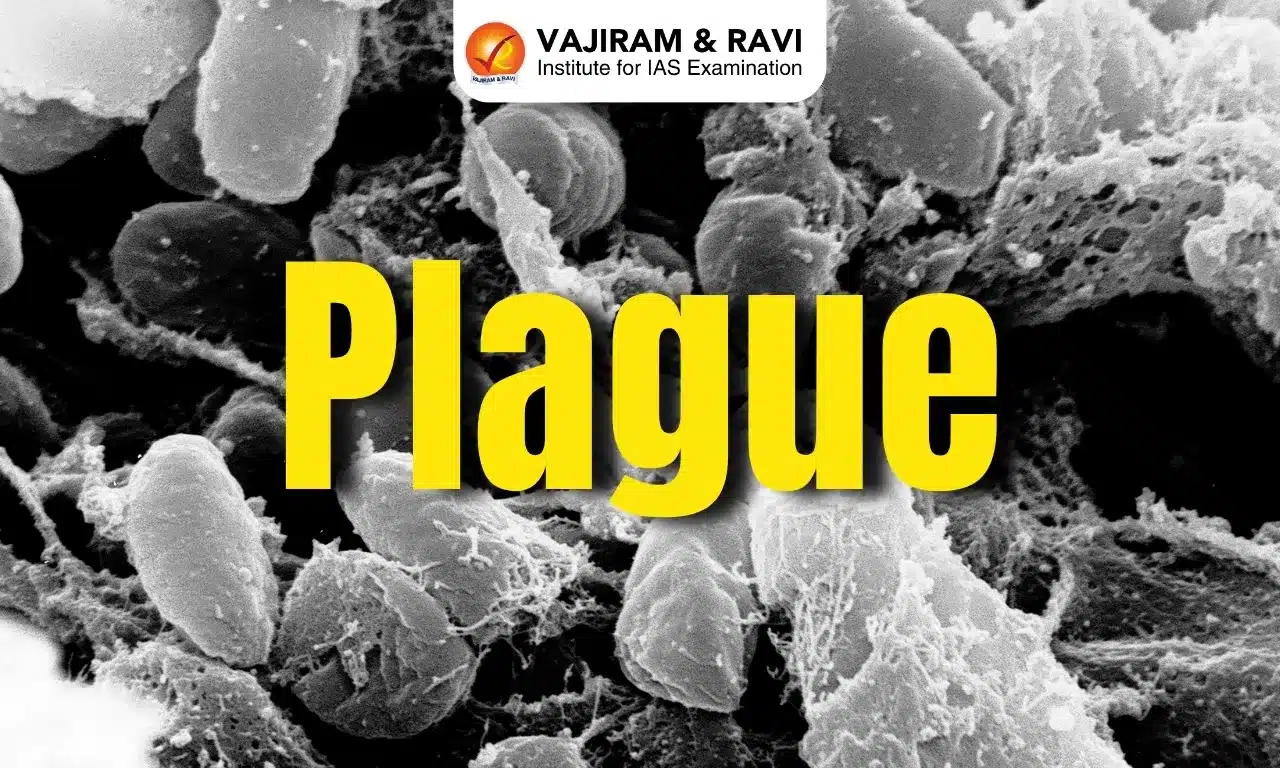
  • Plague is an infectious disease caused by a specific type of zoonotic bacterium called Yersinia pestis.
  • This disease usually spreads through bites from fleas that previously bit an infected animal.
  • Plague is infamous for killing millions of people in Europe during the Middle Ages. 
  • Nowadays, it is a rare but persistent cause of illness in rural areas in the western United States and certain regions of Africa and Asia.
  • There are three types of plague.  Bubonic plague infects your lymph nodes, septicemic plague is in your blood and pneumonic plague affects your lungs.
  • Pneumonic plague, which spreads to the lungs from other untreated forms of plague, is the most serious and is usually rare.
  • Plague can be a very severe disease in people, with a case-fatality ratio of 30% to 60% for the bubonic type, and is always fatal for the pneumonic kind when left untreated.
  • Plague can be cured with antibiotics, but these must be given promptly to prevent serious illness or death.

Source: LM

Plague FAQs

Q1: What is the causative agent of plague?

Ans: It is caused by a specific type of zoonotic bacterium called Yersinia pestis.

Q2: How is plague most commonly transmitted to humans?

Ans: Bites from fleas that have fed on infected animals.

Q3: What are the three main types of plague?

Ans: Septicemic, pneumonic, and bubonic

Operation Shiva

Operation Shiva

Operation Shiva Latest News

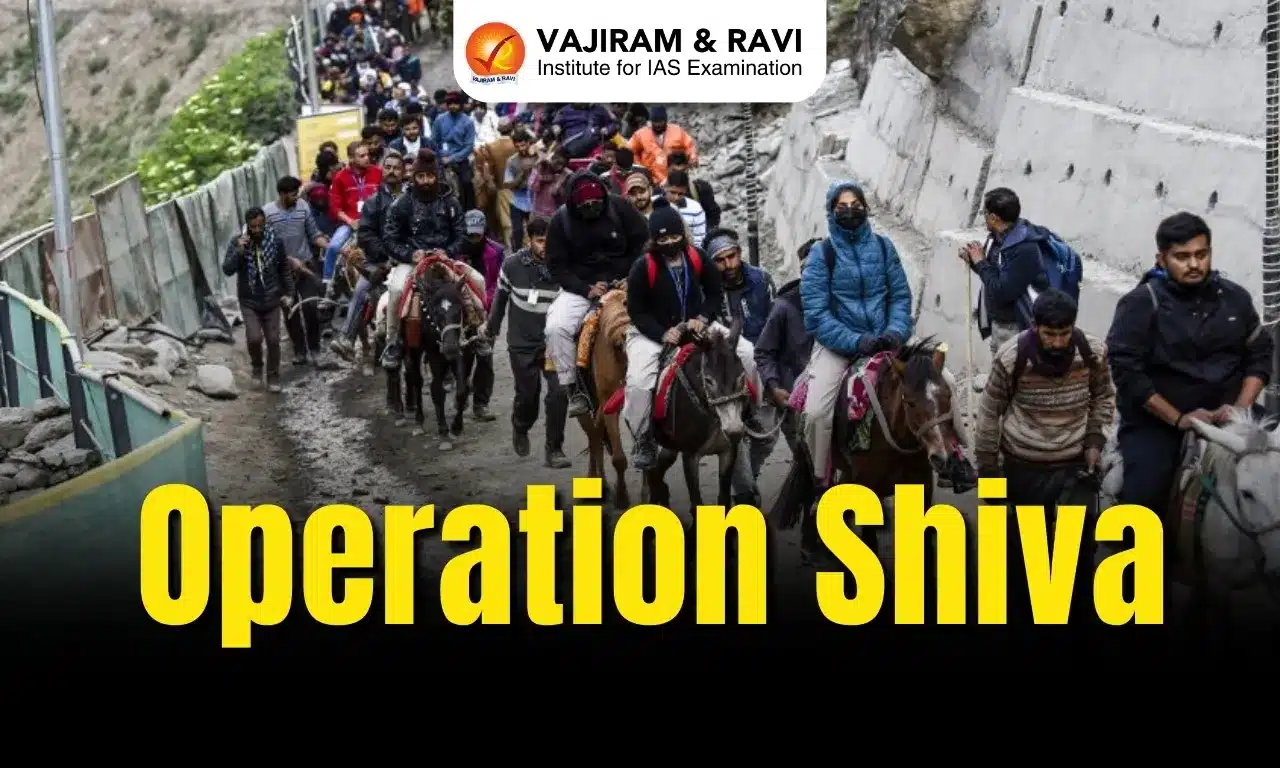
The Indian Army recently launched Operation Shiva as part of a multi-tier security setup to secure the ongoing Amarnath Yatra.

About Operation Shiva

  • It was launched by the Indian Army to ensure the smooth and secure conduct of the Amarnath Yatra.
    • The Amarnath Yatra is an annual Hindu pilgrimage to the sacred Amarnath Cave in Jammu & Kashmir (elevation ~3,888 m), where a naturally formed ice Shivling – believed to symbolize Lord Shiva – emerges. 
  • Operation Shiva is being carried out in close coordination with the civil administration and Central Armed Police Forces (CAPFs).
  • This annual high-tempo operation aims to provide robust security architecture along both the Northern and Southern Yatra routes, particularly in light of the heightened threat from Pakistan-backed proxies in the aftermath of Operation Sindoor.
  • Over 8,500 troops have been deployed, supported by a wide array of technological and operational resources.
  • The operation involves "a dynamic counter-terrorism grid, prophylactic security deployment, and corridor protection measures.
  • Comprehensive assistance to civil authorities is also being provided, particularly in disaster management and emergency response.
  • A Counter-Unmanned Aerial System (C-UAS) grid with more than 50 C-UAS and Electronic Warfare (EW) systems each to neutralise drone threats has been set up.
  • Signal companies for seamless communication, EME (Electronics and Mechanical Engineers) detachments for technical support, and Bomb Detection & Disposal Squads have been deployed.
  • The Unmanned Aerial Vehicles (UAVs) are being deployed on regular missions and live monitoring of Yatra routes and the Holy Cave.
  • Engineer task forces have also been deployed for bridge construction, track widening, and disaster mitigation, with more than 150 doctors and medical personnel, two advanced dressing stations, nine medical aid posts, a 100-bed hospital, and 26 oxygen booths supported by 2,00,000 litres of oxygen.
  • By implementing live tracking of yatra convoys between Jammu and the holy cave, the Army is maintaining constant situational awareness through high-resolution PTZ camera and drone feeds.

Source: NDTV

Operation Shiva FAQs

Q1: What is the main objective of Operation Shiva launched by the Indian Army?

Ans: To ensure the smooth and secure conduct of the Amarnath Yatra.

Q2: How many troops have been deployed for Operation Shiva?

Ans: Over 8,500

Q3: What role do UAVs (Unmanned Aerial Vehicles) play in Operation Shiva?

Ans: Monitoring yatra routes and the Holy Cave

Software Technology Parks of India (STPI)

Software Technology Parks of India

Software Technology Parks of India 

Software Technology Parks of India is now repositioning itself to be able to drive the next wave of digital transformation that is set to sweep across the country.

About Software Technology Parks of India

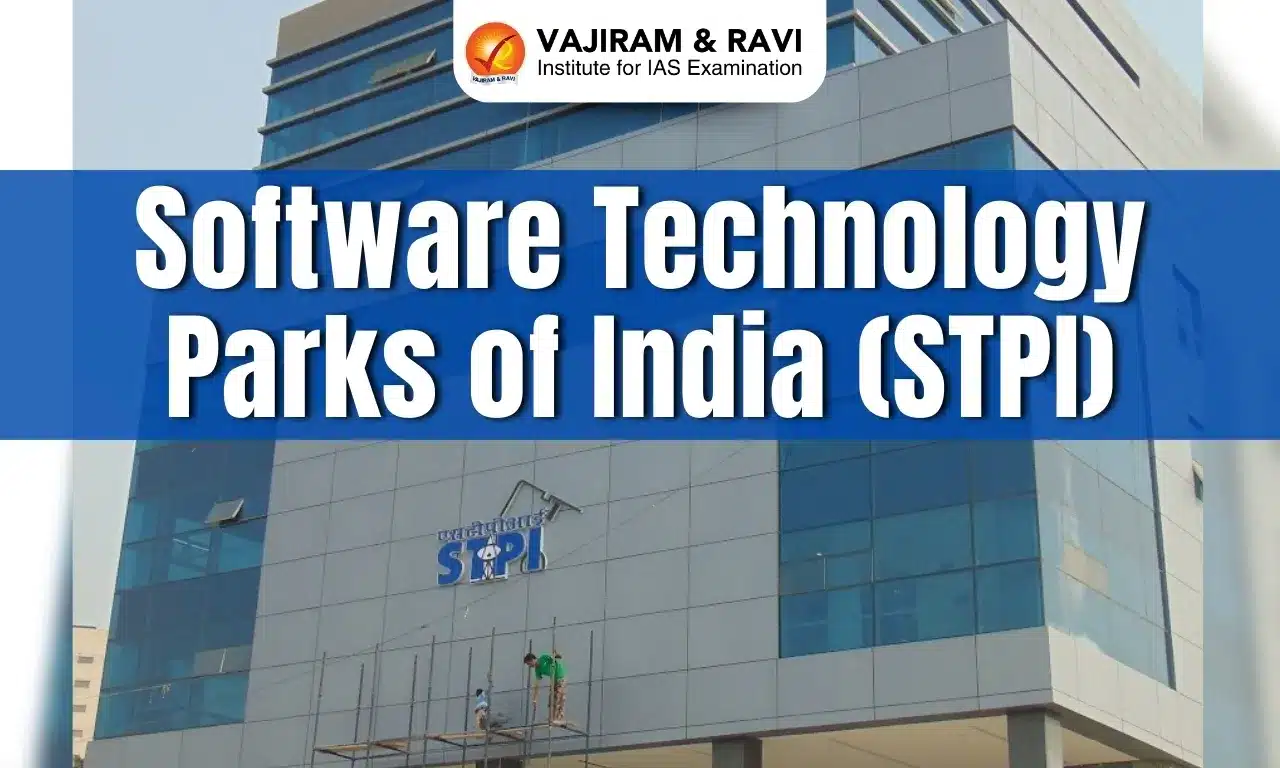
  • STPI was established in 1991 as an autonomous society under the Ministry of Electronics and Information Technology (MeitY). 
  • STPI strives to promote software exports from the country and has been implementing the Software Technology Park (STP) scheme and Electronics Hardware Technology Park (EHTP) scheme for the promotion of the IT/ITES industry.
  • STPI helps in facilitating software development, export, and compliance with regulatory requirements, including customs and foreign exchange rules.
  • Further, STPI is nurturing pan India start-up ecosystem through its initiatives like Centres of Entrepreneurship (CoEs) & Next Generation Incubation Scheme (NGIS).
  • STPI Services:
    • Infrastructure Support: Provides plug-and-play office space with IT infrastructure for software exporters.
    • Customs Clearances: Facilitates duty-free imports of capital goods, consumables, and other goods necessary for software export.
    • Statutory Compliance: Ensures compliance with export regulations and assists companies in meeting their export obligations.
    • Consultation and Guidance: Offers advice and support on matters related to exports, tax exemptions, and regulatory issues.

Source: TH

Software Technology Parks of India FAQs

Q1: When was the Software Technology Parks of India (STPI) established?

Ans: 1991

Q2: Software Technology Parks of India (STPI) was set up under which Ministry?

Ans: Ministry of Electronics and Information Technology

Q3: What is the primary objective of Software Technology Parks of India (STPI)?

Ans: To promote software exports from India.

Enquire Now