Ordinarily Resident

Ordinarily Resident

Ordinarily Resident Latest News

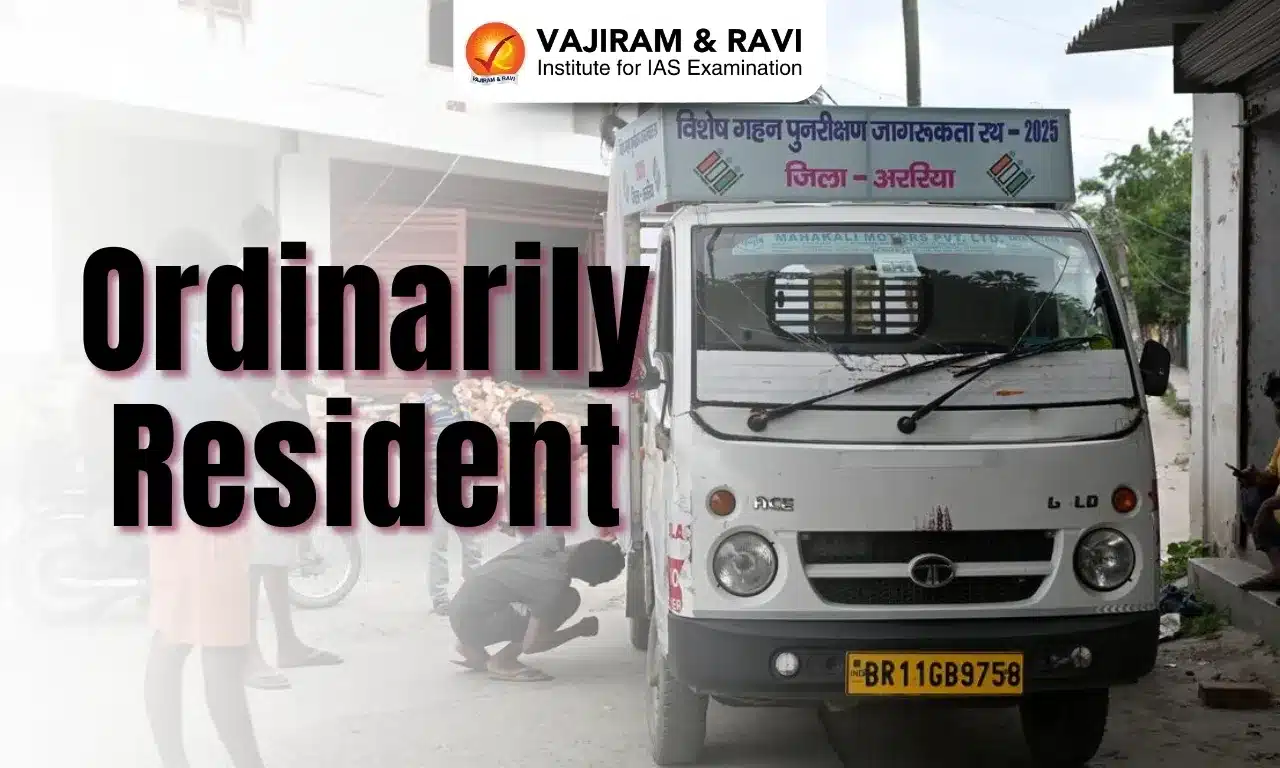
Recently, the Election Commission’s Special Intensive Revision (SIR) in Bihar has sparked discussions on electoral inclusion, particularly for migrant populations, focusing on the balance between electoral roll integrity and inclusive democratic participation.

Who is an ‘Ordinarily Resident’?

  • According to Section 19 of the RP Act, only a person who is an ‘ordinarily resident’ in a constituency can be enrolled in its electoral roll.
  • Section 20 of the RP Act defines the term ‘ordinarily resident’. It states that merely owning or possessing a house in a constituency does not qualify a person as an ordinarily resident.
  • A person temporarily absent from their regular residence (for work, travel, etc.) is still considered ordinarily resident in that location.
  • Specific categories covered under Section 20:
    • Armed forces personnel.
    • Members of the State armed police serving outside the State.
    • Central government employees posted abroad.
    • Persons holding a constitutional office declared by the President in consultation with the EC.
    • Their spouses are also considered ordinarily resident in the original constituency.
  • Section 20A (added in 2010) allows Non-Resident Indians (NRIs) to register and vote from the address mentioned in their passport, even if they live abroad for extended periods.
  • The Election Commission of India (ECI) is responsible for preparing electoral rolls under the Representation of the People Act, 1950 (RP Act).

Rules Governing Electoral Rolls

  • The Registration of Electors Rules, 1960 (RER), framed by the Central Government in consultation with the ECI, govern the:
    • Preparation of electoral rolls.
    • Inclusion and exclusion of names.
    • Process of verification and changes in voter lists.

Why ‘Ordinarily Resident’ Status Matters

  • The requirement ensures that the voter has a genuine and habitual connection with the constituency.
  • It maintains electoral integrity, reduces fraudulent registrations, and ensures accountability in representation.
  • The Gauhati High Court (1999, Manmohan Singh Case) ruled that:
    • The person should be a habitual and permanent resident.
    • There must be an intention to dwell in that place.
    • A reasonable person must accept the individual as a resident.

Source: TH

Ordinarily Resident FAQs

Q1: Who is an Ordinarily Resident in India?

Ans: A person who has resided in India for at least 182 days in the preceding financial year and intends to stay indefinitely.

Q2: Can NRIs become ordinarily resident?

Ans: Yes, if they return and satisfy the stay and intent criteria under Indian law.

Q3: Is citizenship required to be an ordinarily resident?

Ans: No, even non-citizens can be ordinarily residents if they meet the residency criteria.

Carbon Credit Trading Scheme (CCTS)

Carbon Credit Trading Scheme

Carbon Credit Trading Scheme (CCTS) Latest News

Recently, the Indian government announced greenhouse gas emissions intensity targets for entities in eight of the nine heavy industrial sectors participating in the Carbon Credit Trading Scheme's compliance mechanism.

What is CCTS?

  • The Carbon Credit Trading Scheme (CCTS) is a market-based framework developed under the Indian Carbon Market (ICM) to regulate and trade carbon credits.
  • It aims to accelerate India’s transition to a low-carbon economy by assigning a monetary value to greenhouse gas (GHG) emissions.
  • Objective: The primary aim of CCTS is to decarbonise industrial sectors by shifting focus from energy efficiency (PAT Scheme) to GHG emissions intensity reductions.
  • The CCTS is overseen by the Bureau of Energy Efficiency (BEE) and the National Steering Committee for Indian Carbon Market (NSCICM), ensuring transparent and accountable governance.

Transition from PAT to CCTS

  • India’s earlier Perform, Achieve, and Trade (PAT) scheme emphasised energy efficiency improvements in energy-intensive sectors through Energy Saving Certificates (ESCerts).
  • The CCTS supersedes PAT, focusing on direct GHG emissions intensity and issuing Carbon Credit Certificates (CCC), each representing 1 tonne of COâ‚‚ equivalent reduced.
  • Target sectors (Compliance Mechanism): CCTS mandates participation from eight high-emission sectors: aluminium, cement, pulp & paper, chlor-alkali, iron & steel, textiles, petrochemicals, and refineries. These sectors account for ~16% of India’s total GHG emissions.
  • Power sector exclusion: The power sector, which contributes ~40% of India’s total GHG emissions, is currently excluded from the compliance mechanism but may be included in later phases.

Key Mechanisms under CCTS

  • Compliance mechanism: Entities in obligated sectors must meet sector-specific emission intensity targets. Those who exceed targets earn tradable CCCs, while others must buy credits.
  • Offset mechanism: Entities outside the compliance mandate can voluntarily participate by reducing emissions and earning carbon credits, promoting broader climate participation.
  • Under its Nationally Determined Contributions (NDCs), India targets a 45% reduction in emission intensity of its GDP by 2030 (relative to 2005 levels). The CCTS is a key policy instrument toward achieving this goal.
  • The eight sectors include aluminium, cement, paper and pulp, chlor-alkali, iron and steel, textiles, petrochemicals, and petro refineries.

Source: TH

Carbon Credit Trading Scheme (CCTS) FAQs

Q1: What is the Carbon Credit Trading Scheme (CCTS)?

Ans: It is India’s market-based mechanism to reduce GHG emissions by trading carbon credits..

Q2: What is a Carbon Credit Certificate (CCC)?

Ans: It represents a verified reduction of 1 tonne of COâ‚‚ equivalent emissions.

Barak Valley

Barak Valley

Barak Valley Latest News

Assam Pradesh Congress Committee (APCC) president and Lok Sabha MP Gaurav Gogoi recently urged the Prime Minister to urgently intervene in the worsening connectivity crisis of the Barak Valley.

About Barak Valley

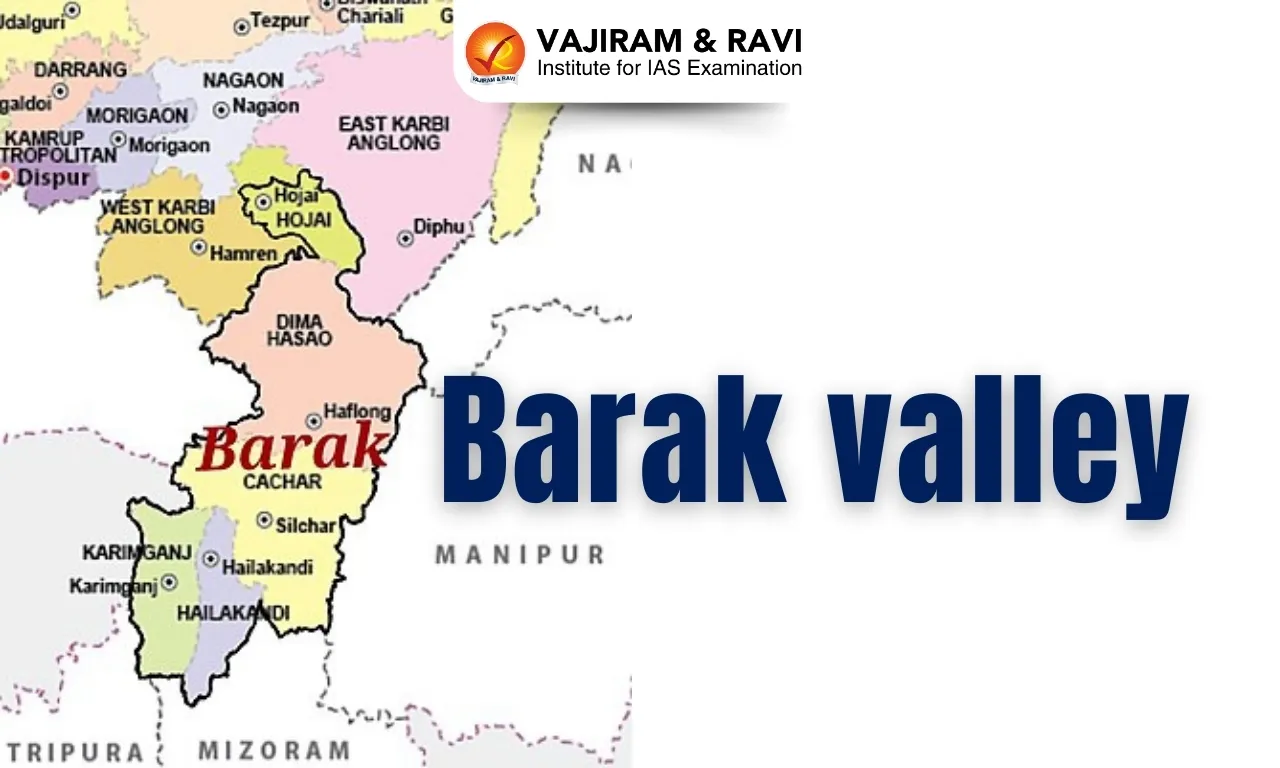
  • It is the southernmost region of Assam, named after the Barak River that flows through it.
  • It includes the three southernmost districts of Assam, viz., Cachar, Hailakandi, and Karimganj, which together cover about 9% of the geographical area of the state.
  • It shares borders with Meghalaya on its north, Mizoram on its south, Manipur on its east, and Tripura and the Sylhet division of Bangladesh on its west. 
  • The area is known to have fertile lands, making agriculture a major occupation of the region. 
  • Silchar is one of the main cities and also the educational hub of the region. 

Key Facts about Barak River

  • It is the second largest river in Northeast India after the Brahmaputra. 
  • The river runs through Manipur, Nagaland, Mizoram, Assam in India, and Bangladesh.
  • Course:
    • Origin: It rises from the Manipur hills, south of Mao in the Senapati district of Manipur, at an elevation of 2,331 m.
    • It flows then along the Nagaland-Manipur border through hilly terrains and enters Assam.
    • It further enters Bangladesh, where it is known by the name of the Surma and the Kushiyara and later called the Meghna before receiving the combined flow of the Ganga and the Brahmaputra.
    • It finally outfalls into the Bay of Bengal.
  • Length: Barak has a length of about 900 km, of which 564 km fall in India.
  • Tributaries: The principal tributaries of Barak are the Jiri, the Dhaleswari, the Singla, the Longai, the Sonai, and the Katakhal.

Source: TOI

Barak Valley FAQs

Q1: Where is Barak Valley located?

Ans: It is located in the southern part of the Indian state of Assam.

Q2: Approximately what percentage of Assam's geographical area is covered by the Barak Valley region?

Ans: 9%

Q3: Which major city in Barak Valley is considered the educational hub of the region?

Ans: Silchar

Exercise Talisman Sabre 2025

Exercise Talisman Sabre

Exercise Talisman Sabre Latest News

India, along with 18 other nations, is participating in Talisman Sabre 2025, a major bilateral military drill led by Australia that commenced recently.

About Exercise Talisman Sabre

  • It is the largest bilateral military exercise between Australia and the United States, with multinational participation.
  • It has been conducted between Australia and the United States biennially since 2005. 
  • It is conducted across a number of locations across Australia and offshore, using both Defence and non-Defence training areas. 
  • It is designed to advance a free and open Indo-Pacific by strengthening partnerships and interoperability among key allies.
  • Now in its 11th iteration, Talisman Sabre 2025 is the largest and most sophisticated warfighting exercise ever conducted in Australia.
    • More than 35,000 military personnel are participating.
    • In addition to the United States, forces from Canada, Fiji, France, Germany, India, Indonesia, Japan, the Netherlands, New Zealand, Norway, Papua New Guinea, the Philippines, the Republic of Korea, Singapore, Thailand, Tonga, and the United Kingdom are participating. 
    • Malaysia and Vietnam will also attend as observers.
    • This year’s exercise will consist of live-fire exercises and field training activities, incorporating force preparation activities, amphibious landings, ground force manoeuvres, and air combat and maritime operations.

Source: TH

Exercise Talisman Sabre FAQs

Q1: What is Exercise Talisman Sabre?

Ans: It is the largest bilateral military exercise between Australia and the United States, with multinational participation.

Q2: Since when has Exercise Talisman Sabre been conducted?

Ans: 2005

Q3: What is the main objective of Exercise Talisman Sabre?

Ans: To strengthen partnerships and interoperability for a free and open Indo-Pacific.

Q4: How often is Exercise Talisman Sabre held?

Ans: Biennially

Q5: Is India participating in Exercise Talisman Sabre 2025?

Ans: Yes, India is a participating country in Exercise Talisman Sabre 2025

ADEETIE Scheme

ADEETIE Scheme

ADEETIE Scheme Latest News

In a significant push towards industrial competitiveness, job creation, and climate goals, the Union ministry of power, through the Bureau of Energy Efficiency (BEE), is launching a first-of-its-kind scheme called ADEETIE (Assistance in Deploying Energy Efficient Technologies in Industries & Establishments).

About ADEETIE Scheme

  • ADEETIE (Assistance in Deploying Energy Efficient Technologies in Industries & Establishments) Scheme is a flagship initiative of the Bureau of Energy Efficiency (BEE) under the Ministry of Power, Government of India. 
  • It aims to catalyze the adoption of energy-efficient technologies among Micro, Small, and Medium Enterprises (MSMEs), enhancing their competitiveness and contributing to India’s climate goals. 
  • This Scheme offers comprehensive financial and technical support to Udyam-registered MSMEs, enabling them to implement energy-efficient technologies with a proven potential to save at least 10% of energy. 
  • The scheme is structured to provide targeted assistance in the form of interest subvention on loans, Investment Grade Energy Audits (IGEA), Detailed Project Reports (DPRs), and post-implementation Monitoring and Verification (M&V). 
  • The scheme is envisaged to provide interest subvention of 5% for Micro and Small Enterprises and 3% for Medium Enterprises on loans, ensuring accessibility and affordability for MSMEs seeking financial aid for energy efficiency projects.
  • The scheme also includes provisions for capacity building, with BEE providing assistance through its ADEETIE online platform, designed to facilitate financing for energy-efficient projects in the MSME sector.

Source: DC

ADEETIE Scheme FAQs

Q1: Which organization implements the ADEETIE Scheme?

Ans: Bureau of Energy Efficiency (BEE)

Q2: What is the objective of ADEETIE Scheme?

Ans: It aims to catalyze the adoption of energy-efficient technologies among MSMEs.

Q3: What interest subvention is provided under the ADEETIE Scheme for Micro and Small Enterprises?

Ans: 5%

Q4: What is the minimum energy savings potential a project must demonstrate to be eligible under the ADEETIE Scheme?

Ans: 10%

Flue Gas Desulphurisation (FGD)

Flue Gas Desulphurisation

Flue Gas Desulphurisation (FGD) Latest News

Recently, the Environment Ministry has exempted most coal-fired plants in India from installing Flue Gas Desulphurisation (FGD) systems aimed at reducing sulphur dioxide (SO2) emissions.

About Flue Gas Desulphurisation (FGD)

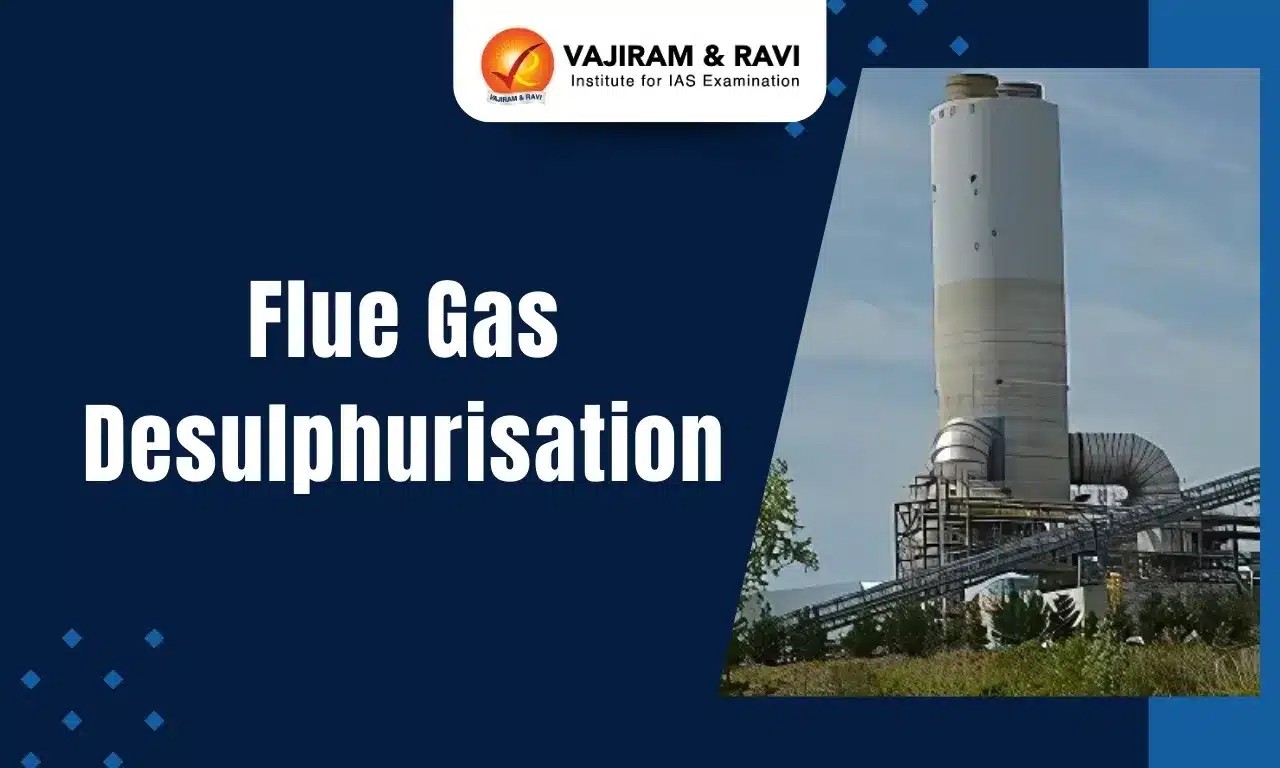
  • Flue Gas Desulphurisation (FGD) is a pollution-control process that removes Sulphur Dioxide (SOâ‚‚) from the flue gases produced by the combustion of fossil fuels, especially coal.
  • The key aim of FGD is to reduce SOâ‚‚ emissions, which are major contributors to acid rain and particulate matter pollution, harming crops, soil, water bodies, infrastructure, and human health.
  • FGD systems typically use limestone (CaCO₃), lime (CaO), or ammonia (NH₃) to react with and neutralize SOâ‚‚ in flue gases.

FGD Technology Types

  • Dry Sorbent Injection (DSI): Injects limestone or lime into the flue gas before it passes through dust collectors.
  • Wet Limestone Scrubbing: Uses a slurry of limestone (CaCO₃) to absorb SOâ‚‚ and convert it into gypsum (CaSO₄·2Hâ‚‚O).
  • Seawater FGD: Uses the alkalinity of seawater to neutralise SOâ‚‚, common in coastal plants, with low installation costs but limited applicability.

Recent Policy Changes and Issues

  • In 2015, India’s Environment Ministry mandated that all coal-fired thermal power plants must install FGD systems by 2017 to curb SOâ‚‚ pollution. There are about 180 such plants, comprising 600 individual units.
  • This exemption decision was based on scientific studies suggesting:
    • Indian coal has low sulphur content.
    • SOâ‚‚ levels near plants with and without FGDs were similar.
    • Sulphates may have a cooling effect, counteracting global warming.
  • As of now, only ~8% of these units have installed FGDs, with most installations by NTPC (public sector). The rest failed due to vendor shortages, high costs, COVID-related delays, and an anticipated rise in power tariffs.

Source: TH

Flue Gas Desulphurisation (FGD) FAQs

Q1: What is Flue Gas Desulphurisation (FGD)?

Ans: It is a process to remove sulphur dioxide (SOâ‚‚) from the exhaust gases of fossil fuel-based power plants.

Q2: Which substances are commonly used in FGD systems?

Ans: Limestone (CaCO₃), lime (CaO), and ammonia (NH₃) are typical absorbents.

Q3: What are the main types of FGD technologies?

Ans: Dry sorbent injection, wet limestone-based systems, and seawater-based systems.

Jarawa Tribe

Jarawa Tribe

Jarawa Tribe Latest News

Concerns regarding the enumeration of isolated indigenous tribes, especially the Jarawa Tribe of Andaman Islands, were addressed by experts who said reaching the Jarawas will not be tough due to existing contact and welfare initiatives.

About the Jarawa Tribe

  • The Jarawas are among the world’s oldest surviving indigenous communities.
  • They are recognised as a Particularly Vulnerable Tribal Group (PVTG).
  • Their population is estimated to be between 250 to 400 individuals.
  • They inhabit the Middle and South Andaman Islands, living in nomadic bands of 40–50.
  • Their habitat includes dense tropical forests, mangroves, and coastal zones.

Origin & History

  • The Jarawas are believed to be descendants of the extinct Jangil tribe.
  • Some theories link their ancestry to the first wave of human migration out of Africa, making them part of the earliest human settlers in Asia.
  • They survived British colonization (since 1789) and World War II, despite a massive decline in population.

Cultural & Lifestyle Characteristics

  • The Jarawas are hunter-gatherer-fishermen, relying on forest produce, hunting, and coastal fishing.
  • They are known for their robust physical health, attributed to their nutritional lifestyle.
  • Traditional Jarawa attire is minimal, suited to the humid tropical climate of the Andaman Islands.
  • Known as territorial defenders, the Jarawas historically resisted intrusion into their lands.

About 16th Census of India

  • The Government of India has announced that the 16th Census of India will be conducted in two phases:
    • October 1, 2026 for snow-bound states and A&N Islands.
    • March 1, 2027 for the rest of India.
  • This census will also include nationwide caste enumeration, the first since 1931.

Source: TH

Jarawa Tribe FAQs

Q1: Who are the Jarawas?

Ans: They are one of the indigenous tribes of the Andaman Islands, classified as a Particularly Vulnerable Tribal Group (PVTG).

Q2: Where is the Jarawa tribe located?

Ans: They inhabit the South and Middle Andaman Islands in the Andaman & Nicobar Islands.

Q3: What is the legal protection framework for Jarawas?

Ans: They are protected under the Andaman and Nicobar Protection of Aboriginal Tribes Regulation, 1956.

Patriot Air Defence Missile System

Patriot Air Defence Missile System

Patriot Air Defence Missile System Latest News

The US President recently announced that Washington will send Patriot air defence systems to Ukraine amid mounting Russian aggression.

About Patriot Air Defence Missile System

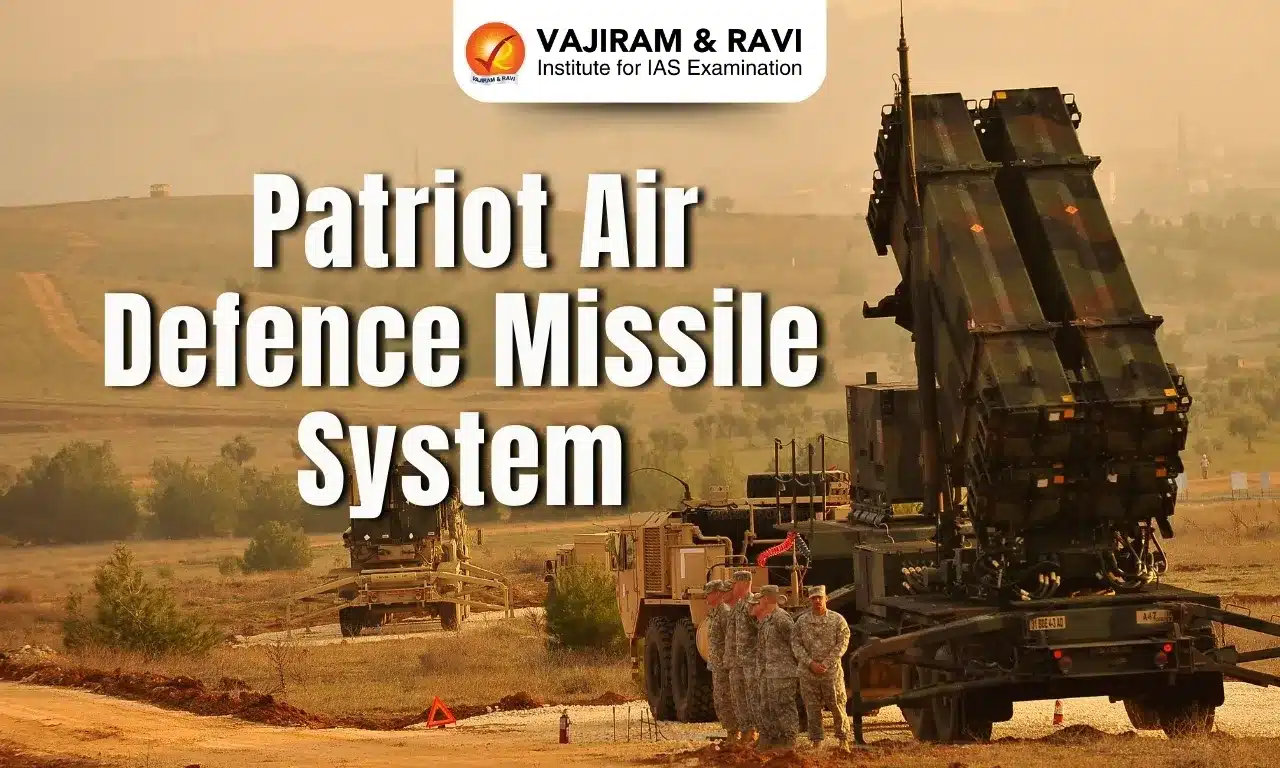
  • The Patriot (MIM-104), which stands for Phased Array Tracking Radar for Intercept on Target, is an all-altitude, all-weather surface-to-air missile defense system.
  • While initially designed as an antiaircraft system, newer variants of Patriot are capable of engaging ballistic and cruise missiles, loitering munitions, and aircraft. 
  • It is built by Raytheon Technologies Corp. (a US aerospace and defense company).
  • It is the United States Army’s most advanced air defense system.
  • It is a combat-proven air defence system operated by the US and a number of its allies, including Germany, Greece, Israel, Japan, Kuwait, the Netherlands, Saudi Arabia, South Korea, Poland, Sweden, Qatar, the United Arab Emirates, Romania, Spain, and Taiwan.
  • The system was first used in combat during the 1991 Gulf War, with batteries protecting Saudi Arabia, Kuwait, and Israel, and later used during the U.S. invasion of Iraq in 2003.

Patriot Air Defence Missile System Features

  • A Patriot battery (i.e., the basic firing unit) consists of a phased array radar, an engagement control station, computers, power generating equipment, and up to eight launchers, each of which holds four ready-to-fire missiles. 
  • There are about 90 soldiers assigned to a battery, but three soldiers in the engagement control station are the only personnel required to operate the battery in combat. 
  • It is equipped with a track-via-missile (TVM) guidance system. Midcourse correction commands are transmitted to the guidance system from the mobile engagement control centre.
  • The system has different capabilities depending on the type of interceptor used.
  • The PAC-2 interceptor uses a blast-fragmentation warhead, while the newer PAC-3 missile uses more advanced hit-to-kill technology.
  • Depending on the version in use, the interceptor missiles can reach an altitude of more than 24 kilometers and hit targets up to 160 kilometers away.
  • The system’s radar has a range of over 150 km (93 miles).

Source: IT

Patriot Air Defence Missile System FAQs

Q1: Which company manufactures the Patriot Air Defence Missile System?

Ans: It is built by Raytheon Technologies Corp. (a US aerospace and defense company).

Q2: 1991 Gulf War

Ans: What is the range capability of the Patriot system’s radar?

Enquire Now