Raji Tribe

Raji Tribe

Raji Tribe Latest News

In Khetar Kanyal, a village dominated by the Raji tribe in Uttarakhand’s Pithoragarh district, the absence of a female candidate for the village head (pradhan) reveals a deeper crisis.

About Raji Tribe

  • The Raji tribe is a small indigenous community from the Kumaon region of Uttarakhand, India, and parts of western Nepal.
  • The Raji tribe is one of the smallest tribes of India.
  • They reside primarily in the remote areas of Uttarakhand’s Pithoragarh district.
  • They are also called "Banrawats," "Ben-Manus", and "cave dwellers." 
  • They are classified as a Particularly Vulnerable Tribal Group (PVTG).
  • Traditionally forest dwellers and cave dwellers, they speak the Tibeto-Burman language Bat-Kha.
  • Livelihood: 
    • They work as gatherers, collecting honey from bee-hives, fishing, and hunting. 
    • In recent decades, many have shifted to agriculture, with rice, maize, and barley being the staple crops. 
    • In addition to agriculture, the Rajis are skilled in various handicrafts, including weaving and basketry
  • Religion: They worship Hindu gods, and they worship nature. 
  • Social Organization:
    • The Raji tribe has a well-defined social structure, with elders playing a crucial role in decision-making and conflict resolution. 
    • The community is organized into clans, each with its customs and traditions. 
    • Panchayats (local councils) are responsible for maintaining social harmony and addressing issues within the community.
  • Housing and Architecture:
    • The traditional homes of the Rajis are constructed using locally available materials like wood, stone, and mud.
    • These houses are designed to withstand the harsh climatic conditions of the region and are typically built on elevated platforms to protect against floods and wild animals.

Source: OLI

Raji Tribe FAQs

Q1: Which state is Raji tribe in?

Ans: Uttarakhand

Q2: What is another name for the Raji tribe?

Ans: Banrawats

Q3: In which district of Uttarakhand do the Rajis primarily reside?

Ans: Pithoragarh

Q4: What language is traditionally spoken by the Raji tribe?

Ans: They speak the Tibeto-Burman language Bat-Kha.
Exercise Prachand Shakti

Prachand Shakti

Exercise Prachand Shakti Latest News

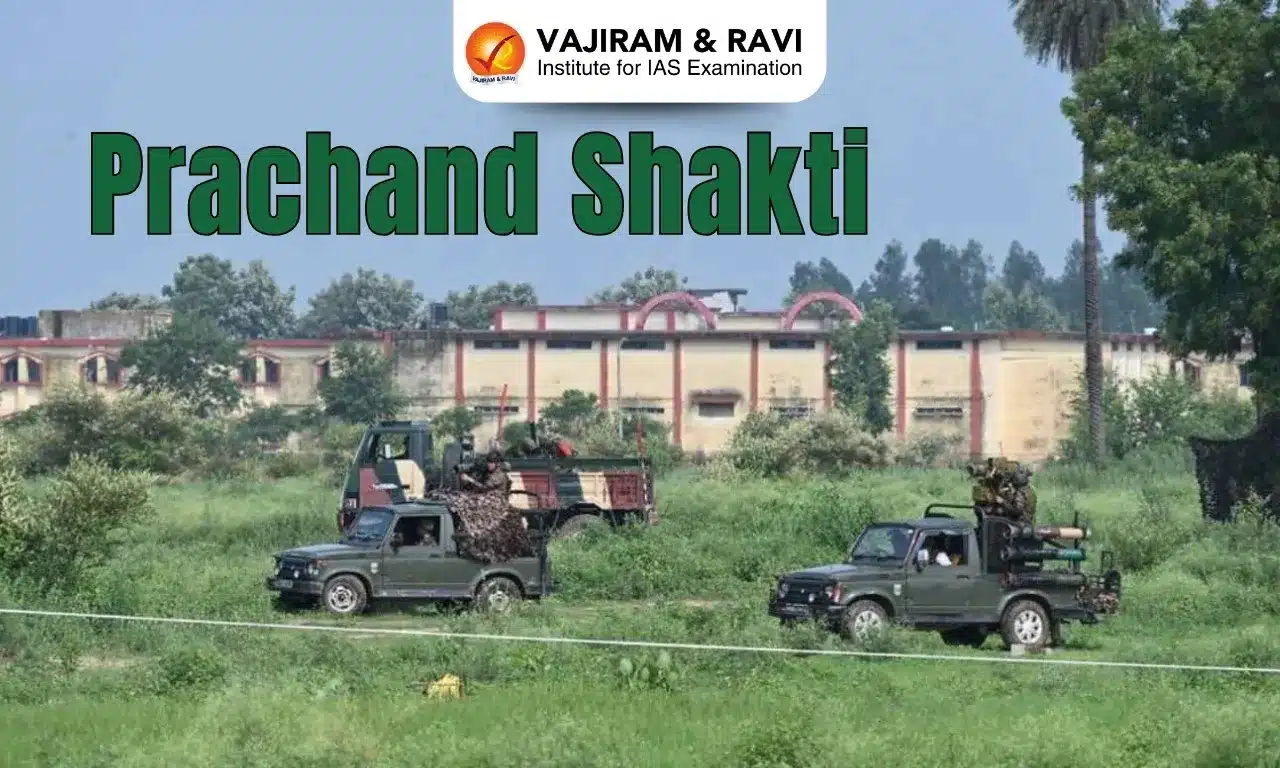
In a major step towards battlefield modernisation, the Ram Division of the India Army conducted a high-impact demonstration titled 'Prachand Shakti' .

About Exercise Prachand Shakti

  • It was conducted by the Indian Army at the Kharga Corps Field Training Area, in Uttar Pradesh's Meerut.
  • The exercise focused on the employment of disruptive technologies by infantry units in Strike Corps operations, showcasing the Army's technological transformation in real-time combat scenarios.
  • The core objective of the event was to demonstrate how such disruptive technologies can significantly enhance the agility, lethality, and survivability of infantry formations engaged in deep offensive missions conducted by Strike Corps.
  • This event highlighted the changing dynamics of warfare, where Unmanned Aerial Vehicles (UAVs), AI-enabled systems, loitering munitions, and autonomous platforms are playing a pivotal role in redefining operational capabilities.
  • This demonstration was part of the Indian Army's broader initiative under the 'Year of Tech Absorption', aimed at integrating indigenous and advanced technological solutions from civilian innovators into military operations.

Source: NDTV

Exercise Prachand Shakti FAQs

Q1: Where was Exercise Prachand Shakti conducted?

Ans: Meerut, Uttar Pradesh

Q2: What was the primary focus of Exercise Prachand Shakti?

Ans: Use of disruptive technologies in Strike Corps operations.

Q3: Exercise Prachand Shakti was part of which broader Indian Army initiative?

Ans: It was part of the Indian Army's broader initiative under the 'Year of Tech Absorption'.

European Free Trade Association (EFTA)

European Free Trade Association

European Free Trade Association Latest News

The Union Minister of Commerce and Industry recently said the Free Trade Agreement (FTA) between India and the four-nation European bloc ‘European Free Trade Association’ (EFTA), will be implemented from 1st October.

About European Free Trade Association

  • It is an intergovernmental organisation established in 1960 by the Stockholm Convention.
  • Objective: Promotes free trade and economic integration between its members within Europe and globally.
  • Member Countries: 
    • There were 7 founding countries: Austria, Denmark, Norway, Portugal, Sweden, Switzerland,  and the United Kingdom (UK). 
    • They were joined in 1970 by Iceland, in 1986 by Finland, and in 1991 by Liechtenstein. 
    • Meanwhile, in 1973, Denmark and the UK joined the European Union (EU); in 1986, Portugal joined the EU, and, in 1995, Austria, Finland, and Sweden joined the EU, consequently leaving EFTA.
    • EFTA currently has 4 member countries: Iceland, Liechtenstein, Norway, and Switzerland.
    • The four EFTA States are all open, competitive economies committed to the progressive liberalisation of trade in the multinational arena and in free trade agreements (FTAs). 
  • The association is responsible for the management of:
    • the free trade between the EFTA countries;
    • EFTA’s participation in the European Economic Area (EEA), which includes the European Union and three EFTA countries (Iceland, Liechtenstein, and Norway, but not Switzerland);
    • EFTA’s worldwide network of FTAs.
  • In contrast to the European Union (EU), EFTA is not a customs union. This means that the individual EFTA States are free to set their own customs tariffs and arrange other foreign trade measures vis-à-vis the non-EFTA States.
  • The EFTA countries have developed one of the largest networks of FTAs. These FTAs span over 60 countries and territories, including the EU.

European Free Trade Association Governance Structure

  • Its highest governing body is the EFTA Council. It generally meets 8 times a year at the ambassadorial level and twice a year at the ministerial level.
  • The headquarters of the EFTA Secretariat is located in Geneva. It assists the EFTA Council in the management of relations between the 4 EFTA States and deals with the negotiation and operation of EFTA’s FTAs.
  • EFTA Surveillance Authority (ESA): It monitors compliance with EEA rules in Iceland, Liechtenstein, and Norway. 
  • EFTA Court: It is based in Luxembourg and has the competence and authority to settle internal and external disputes regarding the implementation, application or interpretation of the EEA agreement.
    • Its jurisdiction corresponds to that of the Court of Justice of the European Union in matters relating to the EEA EFTA countries.

Source: NOA

European Free Trade Association FAQs

Q1: Which convention led to the establishment of European Free Trade Association (EFTA)?

Ans: EFTA was established in 1960 by the Stockholm Convention.

Q2: How many countries are currently members of European Free Trade Association (EFTA)?

Ans: EFTA currently has 4 member countries: Iceland, Liechtenstein, Norway, and Switzerland.

Q3: Which country is not part of the European Economic Area (EEA) among the EFTA members?

Ans: Switzerland

Q4: Where is the headquarters of the European Free Trade Association (EFTA) Secretariat located?

Ans: Geneva

INS Sandhayak

INS Sandhayak

INS Sandhayak Latest News

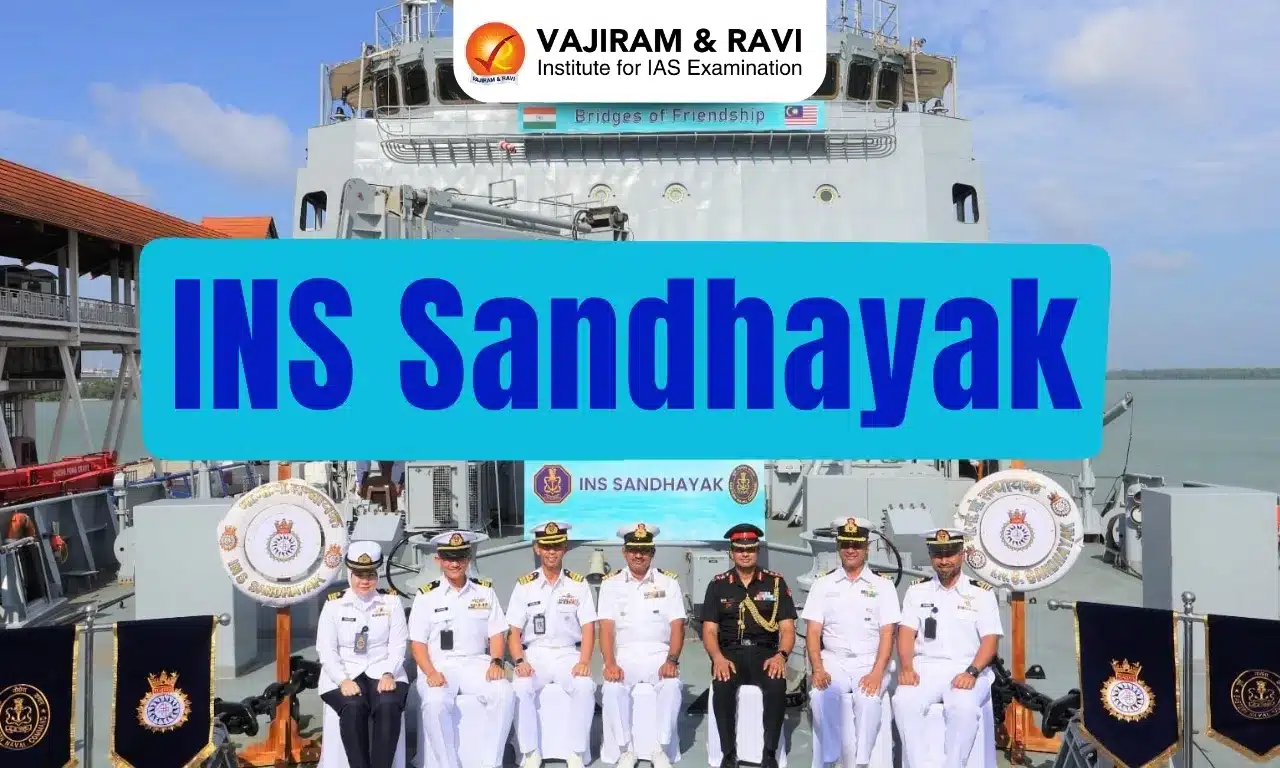
Recently, Indian Navy's INS Sandhayak made her maiden port call at Port Klang, Malaysia, for hydrographic cooperation.

About INS Sandhayak

  • It is the first of the indigenously designed and built Sandhayak-class hydrographic survey ship, was commissioned in Feb 2024 
  • It was constructed at Garden Reach Shipbuilders & Engineers (GRSE), Kolkata.
  • The ship has full‑scale coastal and deep‑water surveying capacity, oceanographic data collection and is capable of Search and Rescue (SAR)/humanitarian operations with onboard helicopter and hospital functions.
  • The primary purpose of the ship is to conduct comprehensive coastal and deep-water Hydrographic Surveys for Port and Harbour approaches, as well as determining navigational channels and routes.
  • The operational zone extends up to maritime limits, covering the Exclusive Economic Zone (EEZ) and extended continental shelf.
  • In its secondary role, the ship can offer limited defence capabilities and serve as a hospital ship during wartime or emergencies.
  • It is equipped with cutting-edge hydrographic tools, including a Data Acquisition and Processing System, Autonomous Underwater Vehicle, Remotely Operated Vehicle, DGPS Long-range positioning systems, and Digital side-scan sonar.
  • Powered by two diesel engines, the vessel boasts a speed capability exceeding 18 knots....
  • The maiden visit of the ship to port Klang aims at facilitating technical exchanges and strengthening institutional ties via concerted cooperation like sharing of survey technologies and sustained hydrographic support engagements.

Source: PIB

INS Sandhayak FAQs

Q1: What is the role of INS Sandhayak?

Ans: The primary role of the ship is to carry out full scale hydrographic surveys of ports, harbours, navigational channels/routes, coastal areas and deep seas, towards enabling safe marine navigation.

Q2: Which is the first survey vessel in India?

Ans: Sandhayak

BioEmu

BioEmu

BioEmu Latest News

A new deep learning system called BioEmu predicts the full range of shapes a protein naturally explores under biological conditions.

About BioEmu

  • Biomolecular Emulator (BioEmu for short) is a generative deep learning system.
  • It can generate thousands of statistically independent samples from the protein structure ensemble per hour on a single graphical processing unit
  • It is a model that samples from the approximated equilibrium distribution of structures for a protein monomer, given its amino acid sequence.
  • Developed by: It is developed by Microsoft and researchers at Rice University in the US and Freie Universität in Germany.

Working of BioEmu

  • It predicts the full range of shapes a protein naturally explores under biological conditions.
  • It promises to be faster and cheaper than classical approaches at predicting protein function
  • It allows high-resolution protein flexibility modelling at scale, unlike slower, more classical approaches like molecular dynamics (MD) which is slow and costly.
  • It captures large shape changes in enzymes, local unfolding that switches proteins on or off, and fleeting cryptic pockets, temporary crevices that can serve as drug docking sites, like in the cancer-linked protein Ras.
  • It predicts 83% of large shifts and 70-81% of small changes accurately, including open and closed forms of a vital enzyme called adenylate kinase.
  • It also handled hard to predict proteins that don’t have a fixed 3D structure and how mutations affect protein stability.
  • It quickly generates snapshots of all the stable shapes a protein is likely to adopt. It can produce thousands of these structures in minutes to hours on a single GPU.
  • BioEmu can’t model cell walls, drug molecules, pH changes or show prediction reliability like AlphaFold and also can’t handle temperature shifts, membranes, and other conditions.

Source: TH

BioEmu FAQs

Q1: What is BioEmu?

Ans: Microsoft Research AI for Science introduces BioEmu, a deep learning system that emulates protein equilibrium ensembles by generating thousands of statistically independent structures per hour on a single GPU.

Q2: What is the protein?

Ans: Proteins are large, complex molecules that play many important roles in the body.

Pact for Future

Pact for Future

Pact for Future Latest News

India has reiterated its firm support for the Pact for the Future and its key annexes- the Global Digital Compact and the Declaration on Future Generations- during the third informal dialogue to review the agreement.

About Pact for Future

  • It is the most wide-ranging international agreement covering entirely new areas and issues on which agreement has not been possible in decades.
  • Aim: It aims to strengthen global cooperation and accelerate progress on the Sustainable Development Goals (SDGs)
  • It ensures that international institutions can deliver in the face of a world that has changed dramatically since they were created.
  • Issues covered: The Pact covers a broad range of issues including peace and security, sustainable development, climate change, digital cooperation, human rights, gender, youth and future generations, and the transformation of global governance. 
  • The Pact for the Future includes a Global Digital Compact and a Declaration on Future Generations. 
  • It was adopted at the Summit of the Future held in New York in September 2024.
  • Its adoption demonstrates that countries are committed to an international system with the United Nations at its centre.

Source: News on Air

Pact for Future FAQs

Q1: What is a Pact for the Future?

Ans: The Pact for the Future formulates 56 commitments in the areas of: sustainable development and financing for development; international peace and security; science, technology, and innovation and digital cooperation; youth and future generations; and transforming global governance.

Q2: Why are SDGs important?

Ans: The Sustainable Development Goals (SDGs) aim to transform our world. They are a call to action to end poverty and inequality, protect the planet, and ensure that all people enjoy health, justice and prosperity.

Solar EruptioN Integral Field Spectrograph

Solar EruptioN Integral Field Spectrograph

Solar EruptioN Integral Field Spectrograph Latest News

NASA, along with a team of international solar physicists, will launch a sounding rocket Solar EruptioN Integral Field Spectrograph (SNIFS) experiment from New Mexico. 

About Solar EruptioN Integral Field Spectrograph

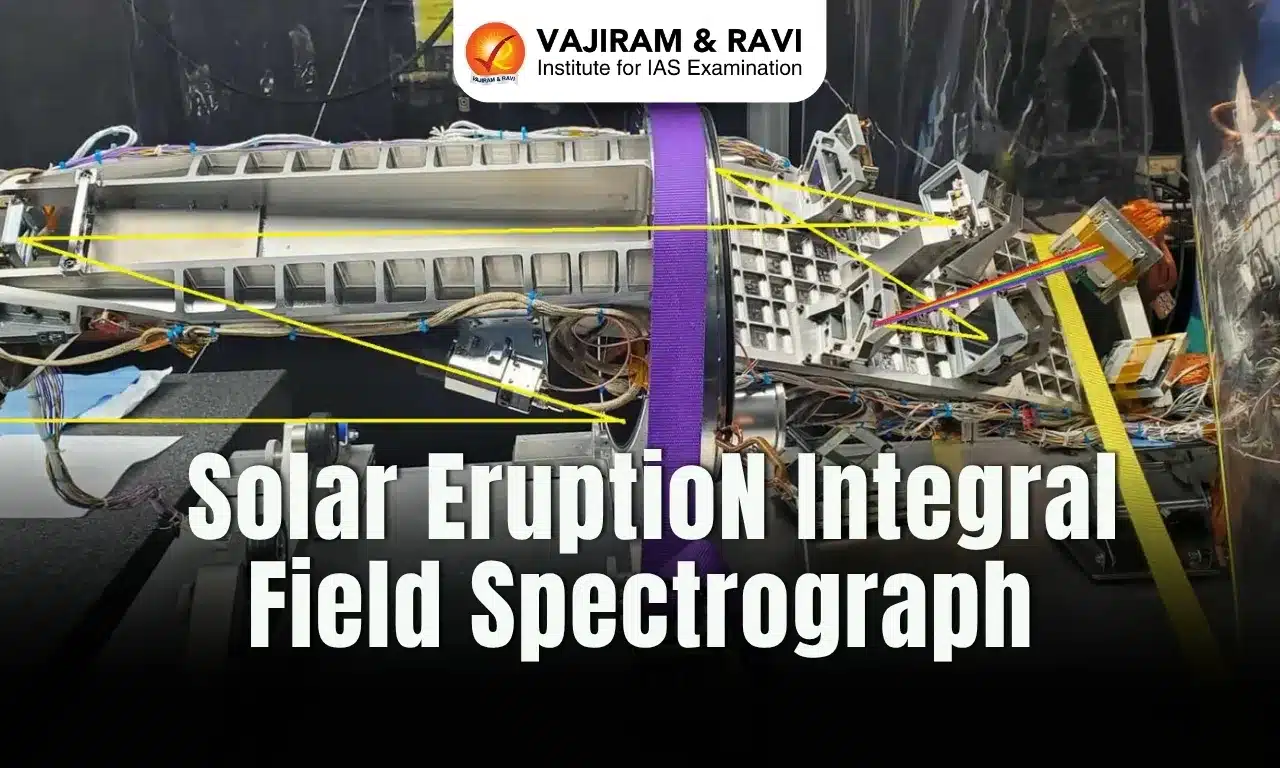
  • Its sounding rocket is designed to break new ground by using a unique set of capabilities to probe the most vexingly complex region of the solar atmosphere, the chromosphere.
  • The SNIFS rocket mission has a primary objective to explore the energetics and dynamics of the chromosphere using a next-generation solar spectral imager.
  • It is the first ever solar ultraviolet integral field spectrograph, an advanced technology combining an imager and a spectrograph.
  • Imagers capture photos and videos, which are good for seeing the combined light from a large field of view all at once.
  • Spectrographs dissect light into its various wavelengths, revealing which elements are present in the light source, their temperature, and how they’re moving — but only from a single location at a time. 
  • The SNIFS mission combines these two technologies into one instrument.  
  • It will observe a magnetically active region on the Sun and capture high-resolution spectroscopic data from both the chromosphere and the transition region — in real time
  • SNIFS will target the hydrogen Lyman-alpha line — the brightest line in the solar ultraviolet spectrum and one of the most powerful diagnostics for upper chromospheric conditions.

Source: IE

Solar EruptioN Integral Field Spectrograph FAQs

Q1: What is the purpose of a spectrograph?

Ans: Spectrographs are instruments that are used to conduct spectroscopy. They provide scientists with the data they need to analyse the materials that make up stars, nebulae, galaxies and the atmospheres of planets.

Q2: What are the 3 layers of the Sun?

Ans: The inner layers are the Core, Radiative Zone and Convection Zone. The outer layers are the Photosphere, the Chromosphere, the Transition Region and the Corona.

Indian Astronomical Observatory (IAO)

Indian Astronomical Observatory

Indian Astronomical Observatory Latest News

Indian astronomers have successfully photographed the interstellar comet C/2025 N1 (ATLAS), also known as 3I/ATLAS, using the Himalayan Chandra Telescope (HCT) of the Indian Astronomical Observatory (IAO) at Hanle, Ladakh.

About Indian Astronomical Observatory 

  • The Indian Astronomical Observatory, also known as the Hanle Observatory, is located in the Hanle Valley, Ladakh.
  • It is situated at an altitude of 4500 metres above mean sea level to the north of Western Himalayas. 
  • Inaugurated in 2001, the observatory is run by Bengaluru's Indian Institute of Astrophysics (IIA).
  • The site is a dry, cold desert with sparse human population and the ancient Hanle monastery as its nearest neighbour. 
  • The cloudless skies and low atmospheric water vapour make it one of the best sites in the world for optical, infrared, sub-millimetre, and millimetre wavelengths.
  • It houses a 2-meter aperture Himalayan Chandra Telescope (HCT), which is remotely operated from the Centre for Research and Education in Science and Technology (CREST) in Bengaluru.
  • It also features a solar power plant, satellite-based communication systems, and a liquid nitrogen plant for cooling detectors.
  • Hanle is also home to a unique Dark Sky Reserve designated by the International Dark-Sky Association. 
    • A Dark Sky Reserve is a designated area that aims to preserve and protect the quality of its night skies by minimising light pollution. 
    • Dark Sky Reserves are typically located in areas with exceptional natural darkness and starry skies. 
    • And Hanle, with less than 1000 people living in the village, is the perfect area.

Source: ETVB

Indian Astronomical Observatory FAQs

Q1: Where is the Indian Astronomical Observatory (IAO) located?

Ans: Hanle Valley, Ladakh

Q2: Which institute operates the Indian Astronomical Observatory?

Ans: Bengaluru's Indian Institute of Astrophysics (IIA).

Q3: Which telescope is housed at the Indian Astronomical Observatory?

Ans: Himalayan Chandra Telescope

Q4: What unique designation has Hanle received from the International Dark-Sky Association?

Ans: Dark Sky Reserve

Q5: What natural features make Hanle an ideal location for astronomical observation?

Ans: Cloudless skies and low atmospheric water vapour.

Enquire Now