Sea Slugs

Sea slugs

Sea Slugs Latest News

Scientists recently identified and formally described two previously unknown species of wart sea slugs found in the waters off North Sulawesi, Indonesia, named Phyllidia ovata and Phyllidia fontjei.

About Sea Slug

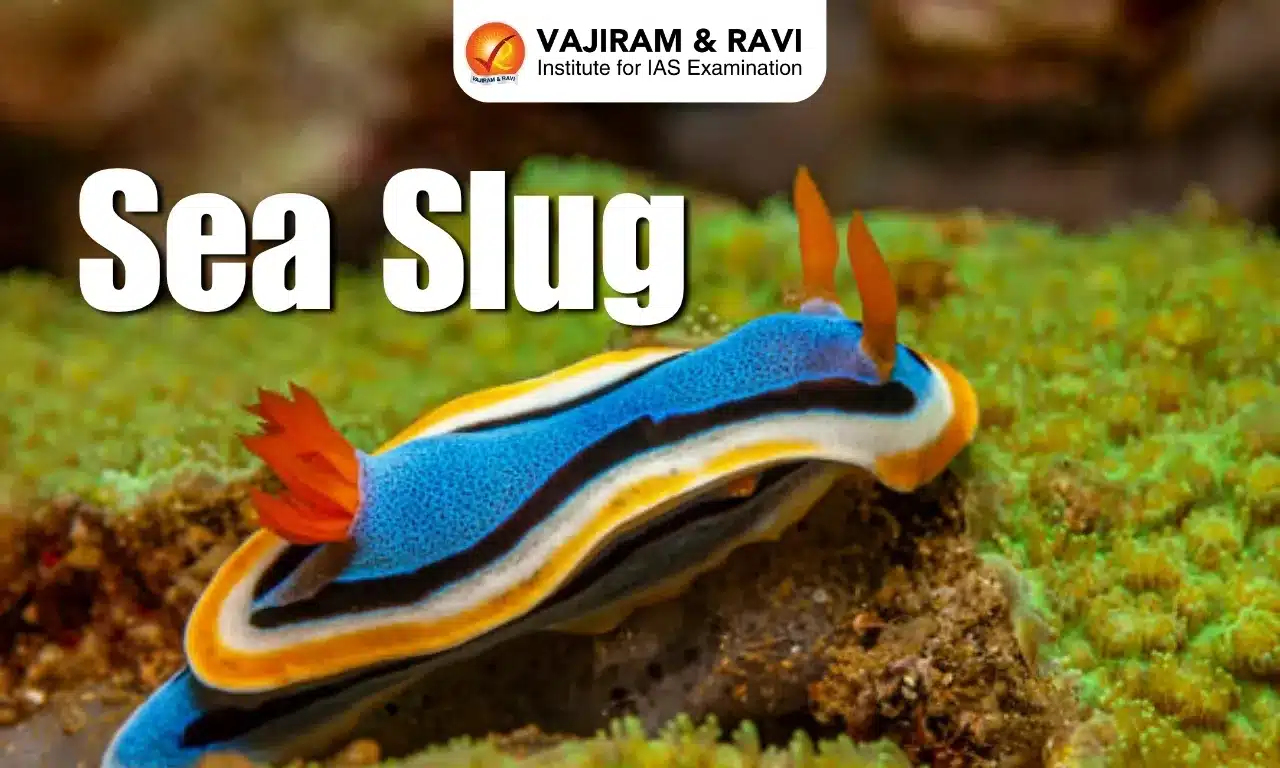
  • Sea slugs, also known as Nudibranchs, are soft-bodied marine molluscs found in all the world's oceans, from shallows to the deep sea. 
  • They belong to Phylum Mollusca and Class Gastropoda.
  • They look like naked snails, i.e., without shells.  
  • These slow-moving grazers consume algae, sponges, and other small invertebrates, showcasing a range of feeding habits.
  • They are usually found in coral reefs, and their presence is a significant indicator of a strong coral ecosystem.
  • Sea slugs are renowned for their vibrant colours and intricate patterns, which often serve as warning signals to predators due to their toxicity. 
  • They get their toxicity from the creatures they eat, and some sea slugs can even keep the stinging cells of jellyfish inside their bodies.
  • Beyond their striking appearance, sea slugs possess other intriguing traits. 
    • Some can photosynthesise, producing their own food with sunlight. 
    • Others regenerate lost limbs, and a few can steal genes from their prey and incorporate them into their DNA.
  • Most sea slugs are active throughout the day, but some species are also nocturnal.

Source: NOA

Sea Slug FAQs

Q1: What are Sea Slugs?

Ans: Sea slugs are soft-bodied marine molluscs found in all the world's oceans.

Q2: Sea slugs belong to which phylum and class?

Ans: They belong to Phylum Mollusca and Class Gastropoda.

Q3: When are most sea slugs active?

Ans: Mostly during the day, but some are nocturnal

UK-India Young Professionals Scheme

What is the UK-India Young Professionals Scheme?

UK-India Young Professionals Scheme Latest News

The UK recently opened its final 2025 visa ballot for the India Young Professionals Scheme, offering Indians aged 18–30 a chance to live, work, or study in the UK for two years.

About UK-India Young Professionals Scheme

  • It was conceived as part of an India-U.K. Migration and Mobility MoU signed in May 2021 and was announced in November at the G20 summit in Bali.
  • It was formally launched in February 2023.
  • Features:
    • It allows Indian citizens between 18 and 30 years old to live and work in the UK for up to 2 years.
    • It will enable candidates to enter the UK at any time while their visa is valid and leave and return anytime during their stay.
  • Eligibility to get Visa:
    • You have to be an Indian national aged between 18 and 30 years.
    • You must have a bachelor’s degree or above.
    • You must have 2,530 pounds in savings.
    • You must not have any children under the age of 18 who live with you or whom you are financially supporting.
    • A person must be selected in the India Young Professionals Scheme ballot before they can apply for a Young Professionals Scheme visa.
    • You cannot apply if you’ve already been in the UK under this scheme or the Youth Mobility Scheme visa.
    • In case the applicant is issued a visa, they must enter the UK within six months of the date on which the visa was issued.
  • Once in the UK, the applicant can
    • Study -for certain degree programs, such as post-graduation or research in sensitive subjects in the UK, an additional certificate under the Academic Technology Approval Scheme (ATAS) needs to be applied before starting the course or research.
    • Work in most jobs.
    • Be self-employed and set up a company – as long as your premises are rented, your equipment is not worth more than £5,000, and you do not have any employees.
  • Visa Limitations:
    • The visa cannot be extended, and applicants are not eligible for most public benefits. 
    • Family members cannot be included in the application and must apply separately if they wish to come.
    • Working in the sports category, including coaching, is not permitted.

Source: TOI

UK-India Young Professionals Scheme FAQs

Q1: When was the UK-India Young Professionals Scheme formally launched?

Ans: February 2023

Q2: Which age group of Indian citizens is eligible for UK-India Young Professionals Scheme?

Ans: 18–30 years

Q3: What is the maximum duration an individual can live and work in the UK under UK-India Young Professionals Scheme?

Ans: 2 years

Q4: What is the time limit within which a visa holder must enter the UK after the visa is issued under UK-India Young Professionals Scheme?

Ans: 6 months

Central Board of Direct Taxes (CBDT)

CBDT

Central Board of Direct Taxes Latest News

The Central Board of Direct Taxes (CBDT) aims to step up its crackdown on evasion through the greater use of data analytics and artificial intelligence (AI) to identify discrepancies in the reporting of income.

About Central Board of Direct Taxes

  • It is a statutory authority constituted under the Central Board of Revenue Act, 1963.
  • It is a part of the Department of Revenue in the Ministry of Finance.

Central Board of Direct Taxes Functions

  • Its functions include formulation of policies, dealing with matters relating to levy and collection of direct taxes, and supervision of the functioning of the entire Income Tax Department. 
  • CBDT also proposes legislative changes in direct tax enactments and changes in rates and structure of taxation in tune with the policies of the Government.

Central Board of Direct Taxes Historical Background

  • In 1924, a Board of Revenue was set up to make tax collection more efficient in British India. 
  • Initially, the Board was in charge of both direct and indirect taxes.
  • However, when the administration of taxes became too unwieldy for one Board to handle, the Board was split up into two, namely the Central Board of Direct Taxes and Central Board of Excise and Customs, with effect from 1.1.1964
  • This division was formalized through the constitution of the two Boards under Section 3 of the Central Board of Revenue Act, 1963.

Central Board of Direct Taxes Structure

  • The CBDT is headed by a Chairman and also comprises six members, all of whom are ex-officio Special Secretary to the Government of India.
  • Member (Income Tax)
  • Member (Legislation and Computerization)
  • Member (Revenue)
  • Member (Personnel & Vigilance)
  • Member (Investigation)
  • Member (Audit & Judicial)
  • The Chairman is the co-ordinating head, and each of the members has been assigned a specialized function.
  • The Chairman and Members of CBDT are selected from Indian Revenue Service (IRS).

Source: ET

Central Board of Direct Taxes FAQs

Q1: The Central Board of Direct Taxes (CBDT) was constituted under which Act?

Ans: Central Board of Revenue Act, 1963

Q2: CBDT is a part of which department?

Ans: Department of Revenue in the Ministry of Finance

Q3: The Chairman and Members of CBDT are selected from which service?

Ans: Indian Revenue Service (IRS)

Kanniyakumari Wildlife Sanctuary

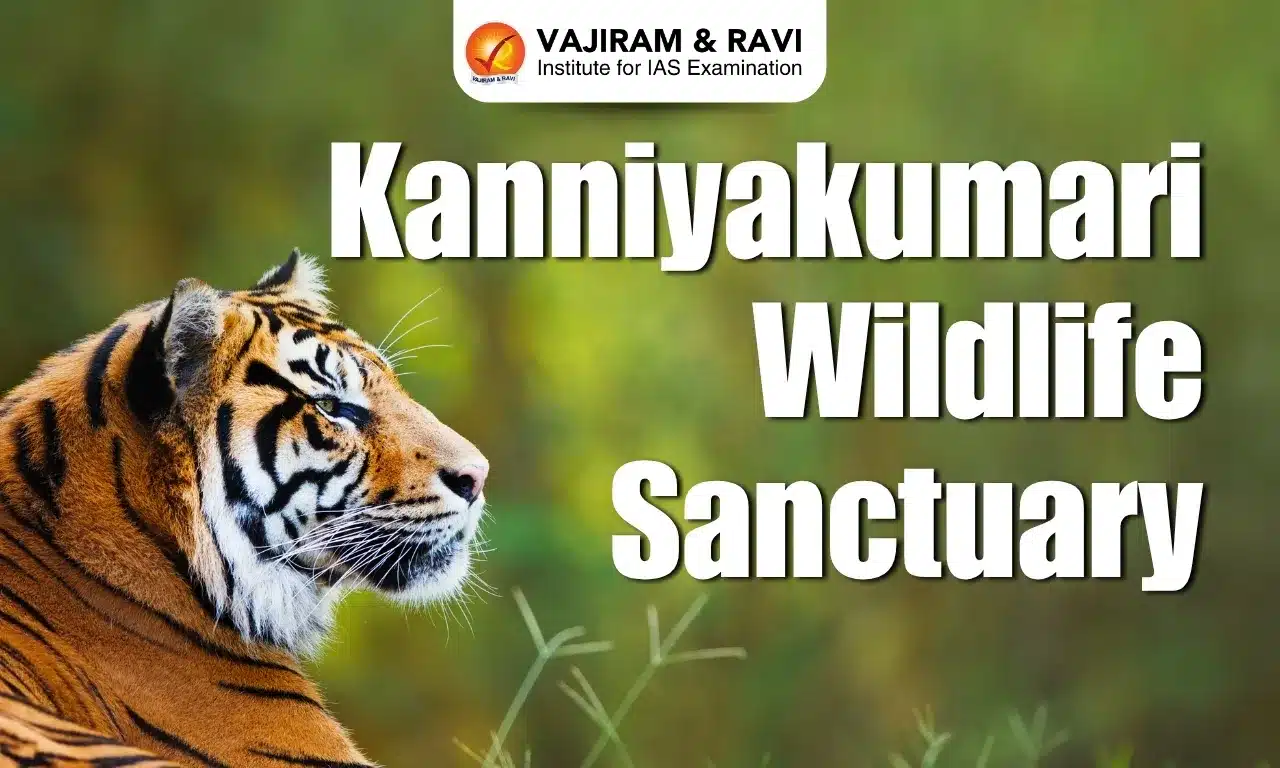
Kanniyakumari Wildlife Sanctuary

Kanniyakumari Wildlife Sanctuary Latest News

Recently, a research scholar has documented around 450 species of moths at the Kanniyakumari Wildlife Sanctuary.

About Kanniyakumari Wildlife Sanctuary

  • Location: It is located in the Kanyakumari district of Tamil Nadu.
  • It is situated near the southernmost tip of India at the confluence point of three major water bodies namely; Arabian Sea, Bay of Bengal, and the Indian Ocean.
  • The sanctuary is bounded at North by KalakkadMundanthurai Tiger Reserve, South by Kodayar left bank channel and Thovalai channel and in West by Kerala State.
  • The area is also home to several tribal communities living in adjoining reserve forests.
  • Rivers: Seven rivers have their origin in this forest including the famous Pahrali and Thamirabarani rivers. 
  • Vegetation: The natural vegetation of this region represents southern thorn forests, dry deciduous, moist deciduous, semi evergreen forests and ever green hill sholas with grassy downs.
  • Fauna: It is home to Indian Bison, Elephant, Nilgiri Tahr, Sambar Deer, Lion-tailed Macaque and also reptiles such as Indian Rock Python.

Source: NIE

Kanniyakumari Wildlife Sanctuary FAQs

Q1: Which is the first largest wildlife sanctuary in Tamil Nadu?

Ans: Sathyamangalam Wildlife Sanctuary

Q2: What is the Thamirabarani River famous for?

Ans: The Thamirabarani river is known for its irrigation potential in the upper reaches.

Lumpy Skin Disease (LSD)

What is Lumpy Skin Disease (LSD)?

Lumby Skin Disease Latest News

With over 900 cattle infected with Lumpy Skin Disease (LSD) and more cases emerging daily, Pune district is staring at a potential decline in milk supply.

About Lumby Skin Disease

  • It is a highly infectious viral disease that affects all breeds of cattle and water buffalo. 
  • Causative Agent: It is caused by the lumpy skin disease virus (LSDV), a member of the genus Capripoxvirus (CaPV) within the family Poxviridae (smallpox and monkeypox viruses are also a part of the same family). 
  • LSDV is not zoonotic, so humans cannot get infected by the virus.
  • The disease is endemic in Africa and the Middle East and has been spreading increasingly in Europe and Southeast Asia over recent years.
  • The disease is most common in the wet summer and fall months, especially in low-lying areas near water bodies, but it can also occur in the dry season. 
  • LSD is a highly host-specific disease. It primarily affects cows and to a lesser extent, buffalo.
  • The disease is more severe in cattle compared to buffaloes in terms of morbidity and mortality. 
  • The disease is of economic importance as it can cause a temporary reduction in milk production, temporary or permanent sterility in bulls, damage to hides and, occasionally, death.

Lumby Skin Disease Transmission

  • It is transmitted by blood-feeding insects, such as certain species of flies, mosquitoes, or ticks.
  • Infected animals shed the virus through oral and nasal secretions, which may contaminate common feeding and water troughs.
  • Thus, the disease can either spread through direct contact with the vectors or through contaminated fodder and water.

Lumby Skin Disease Symptoms

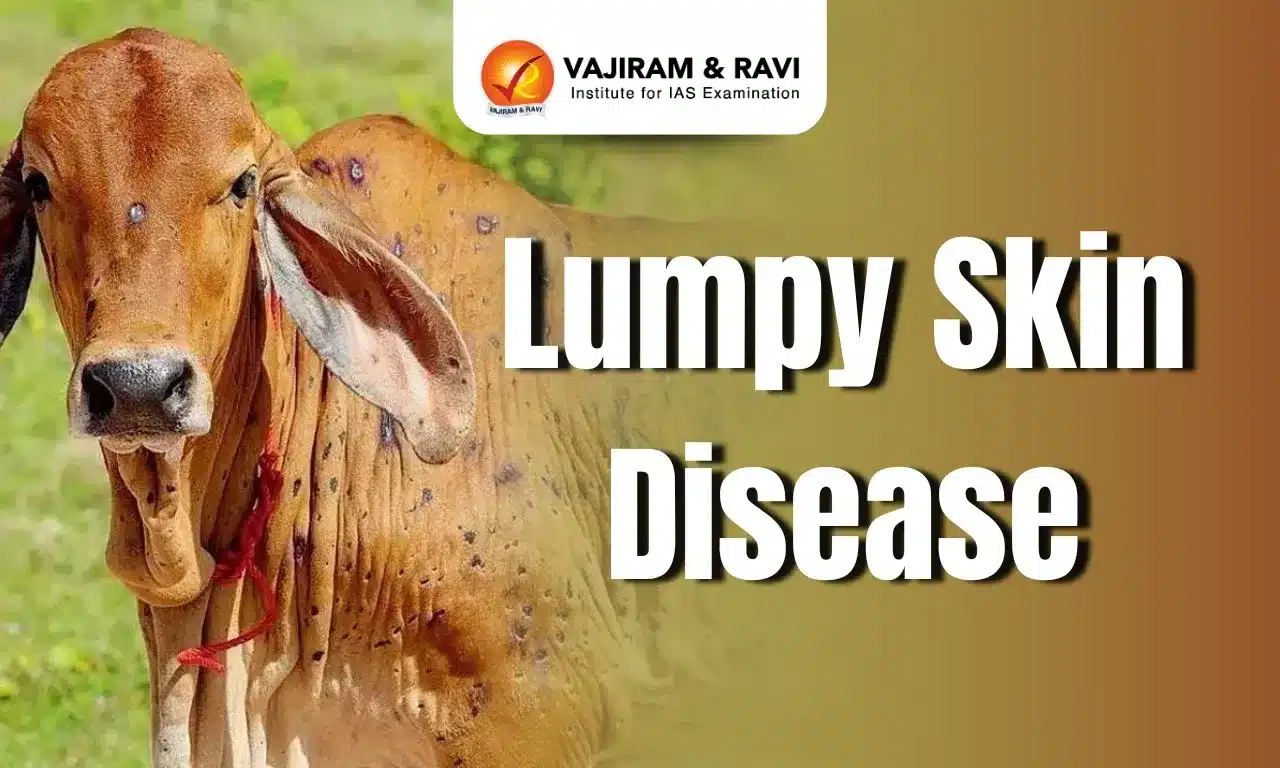
  • The disease is characterized by high fever and enlarged superficial lymph nodes on the skin and peculiar multiple nodules or lumps on the skin. 
  • It can also lead to death, especially in animals that have not previously been exposed to the virus or have low immunity.

Lumby Skin Disease Treatment

  • There is no treatment for the virus, so prevention by vaccination is the most effective means of control.
  • The infected animals receive supportive care, which involves the use of antibiotics, painkillers, and wound care sprays to treat symptoms.

Source: HT

Lumby Skin Disease FAQs

Q1: What is lumpy skin disease caused by?

Ans: It is caused by the lumpy skin disease virus (LSDV).

Q2: Can humans catch lumpy skin disease?

Ans: Lumpy Skin Disease is not zoonotic, which means it does not spread from animals to humans.

Q3: Lumpy Skin Disease is endemic in which regions?

Ans: Africa and the Middle East

Q4: How is Lumpy Skin Disease primarily transmitted?

Ans: Blood-feeding insects like flies, mosquitoes, or ticks.

Mig-21

Mig-21

Mig-21 Latest News

The Indian Air Force is set to retire Russian-made MiG-21 Bison fighter jets by September, marking an end of an era for one of its longest-serving aircraft.

About Mig-21

  • It is a supersonic jet fighter aircraft.
  • It was designed by the Mikoyan-Gurevich Design Bureau (OKB) of the erstwhile Soviet Union.
  • First inducted into the Indian Air Force (IAF) in 1963, the MiG-21 is India's first-ever supersonic jet.
  • India’s Hindustan Aeronautics Limited (HAL) built 657 MiG-21s under a license that was granted by Russia.  
  • It is the second most produced jet aircraft in the world.
  • Its NATO reporting name is ‘Fishbed’. Other nicknames include ‘Balalaika’ because its planform resembles the stringed musical instrument of the same name; ‘Ołówek’ (Polish for ‘pencil’), due to the shape of its fuselage; and ‘Én Bạc’, meaning ‘silver swallow’ in Vietnamese.
  • The MiG-21 has seen more conflicts than any other fighter in history.
  • The MiG-21 participated in nearly every war or conflict India has faced since 1963, the 1965 and 1971 India-Pakistan wars, the 1999 Kargil War, the Balakot airstrikes in 2019, and most recently, Operation Sindoor.

Source: N18

Mig-21 FAQs

Q1: What is Mig-21?

Ans: A supersonic jet fighter aircraft.

Q2: When was the MiG-21 first inducted into the Indian Air Force (IAF)?

Ans: 1963

Q3: What is the NATO reporting name of the MiG-21?

Ans: Fishbed

Q4: Which Indian company manufactured MiG-21 aircraft under a license from Russia?

Ans: Hindustan Aeronautics Limited (HAL)

Karenia Mikimotoi

Karenia Mikimotoi

Karenia Mikimotoi Latest News

A massive outbreak of toxic algae due to karenia mikimotoi off South Australia, which has devastated hundreds of species of marine life and disrupted local tourism and fishing.

About Karenia Mikimotoi

  • It is one of the most common red-tide dinoflagellates proliferating in the eastern North Atlantic and around Japan.
  • It releases hemolytic toxins and ichthyo toxins, causing massive negative impacts on fishery and marine ecological environment.
  • There have not been confirmed reports of direct impacts to human health by Karenia mikimotoi, but blooms of this species can cause large-scale mortality events of marine fauna such as shellfish, echinoderms, crustaceans, and fish. 
  • Anoxic conditions can also occur when K. mikimotoi cells die in large numbers and subsequent breakdown by bacteria deplete oxygen in the surrounding waters. 
  • It is less toxic but more globally widespread with blooms reported in Ireland, Norway, India, Japan, Korea, Australia, South Africa, Alaska, Texas, and the east coast of the U.S. 

Key Features of Karenia Mikimotoi

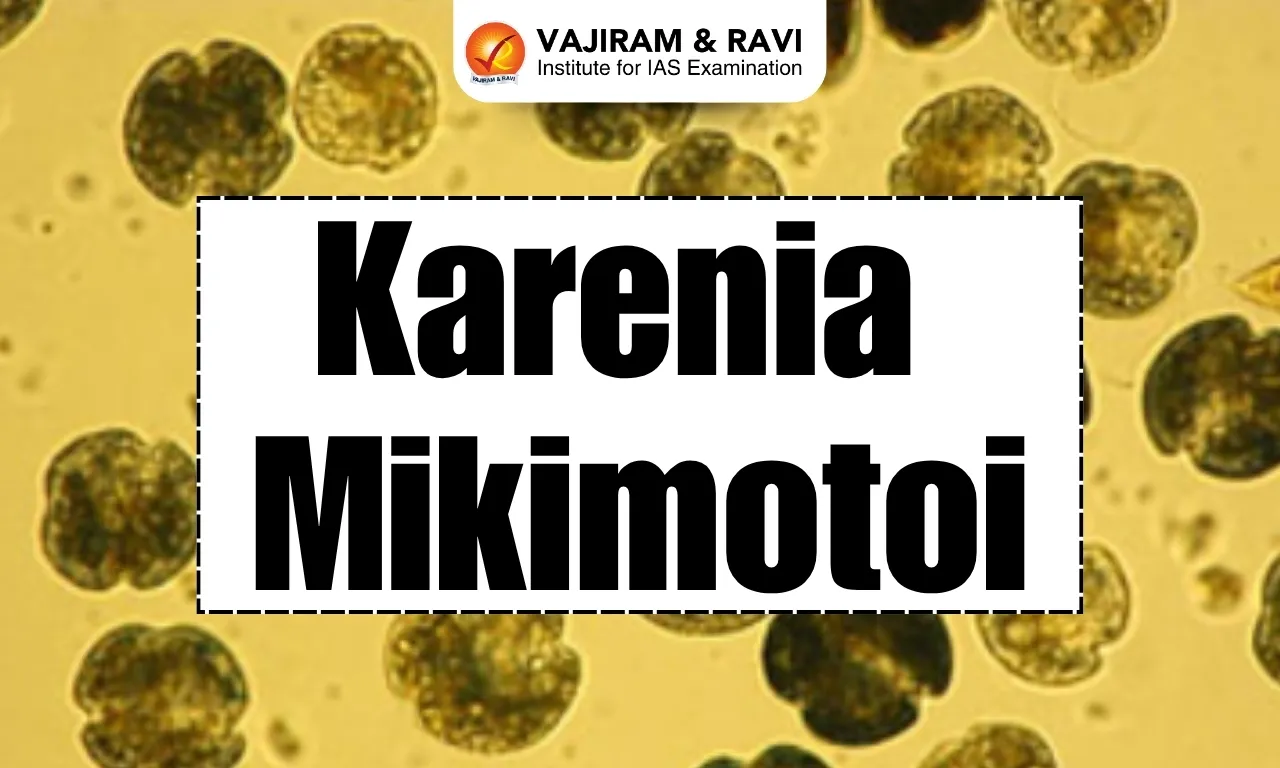
  • It is a photosynthetic species with several oval to round yellow-brown chloroplasts, each with a pyrenoid. The large ellipsoidal nucleus is located in the left hypothecal lobe.
  • It can adapt to various light, temperature, salinity, and nutrient conditions.

Source: DD News

Karenia Mikimotoi FAQs

Q1: What is the size of karenia Mikimotoi?

Ans: 18–37 μm long

Q2: What does karenia mikimotoi cause?

Ans: Karenia mikimotoi does not produce a toxin that is harmful to humans and does not cause long term harmful effects. However, it is toxic to marine wildlife by damaging gills and gill structures.

Financial Inclusion Index

Financial Inclusion Index

Financial Inclusion Index Latest News

The Reserve Bank of India has informed that the Financial Inclusion Index of the FI index for Financial Year 2025 has improved and stands at 67 percent as compared to 64.2 percent for FY 2024.

About Financial Inclusion Index

  • The FI-Index has been conceptualised as a comprehensive index incorporating details of banking, investments, insurance, postal as well as the pension sector in consultation with Government and respective sectoral regulators.
  • The index captures information on various aspects of financial inclusion in a single value ranging between 0 and 100, where 0 represents complete financial exclusion and 100 indicates full financial inclusion.
  • Parameters: The FI-Index comprises three broad parameters viz., Access (35%), Usage (45%), and Quality (20%) with each of these consisting of various dimensions, which are computed based on a number of indicators.
  • The Index is responsive to ease of access, availability and usage of services, and quality of services, comprising in all 97 indicators.
  • A unique feature of the Index is the Quality parameter which captures the quality aspect of financial inclusion as reflected by financial literacy, consumer protection, and inequalities and deficiencies in services.
  • The FI-Index has been constructed without any ‘base year’ and as such it reflects cumulative efforts of all stakeholders over the years towards financial inclusion.
  • The FI-Index will be published annually in July every year.
  • The index also includes data from various sectors such as banking, investments, insurance, postal services, and pensions, making it a comprehensive measure of financial inclusion in the country.

Source: NOA

Financial Inclusion Index FAQs

Q1: Who published the financial inclusion index in India?

Ans: The Reserve Bank of India

Q2: What is meant by financial inclusion?

Ans: Financial inclusion means that individuals and businesses have access to useful and affordable financial products and services that meet their needs – transactions, payments, savings, credit and insurance – delivered in a responsible and sustainable way.

Lantana Camara

Lantana Camara

Lantana Camara Latest News

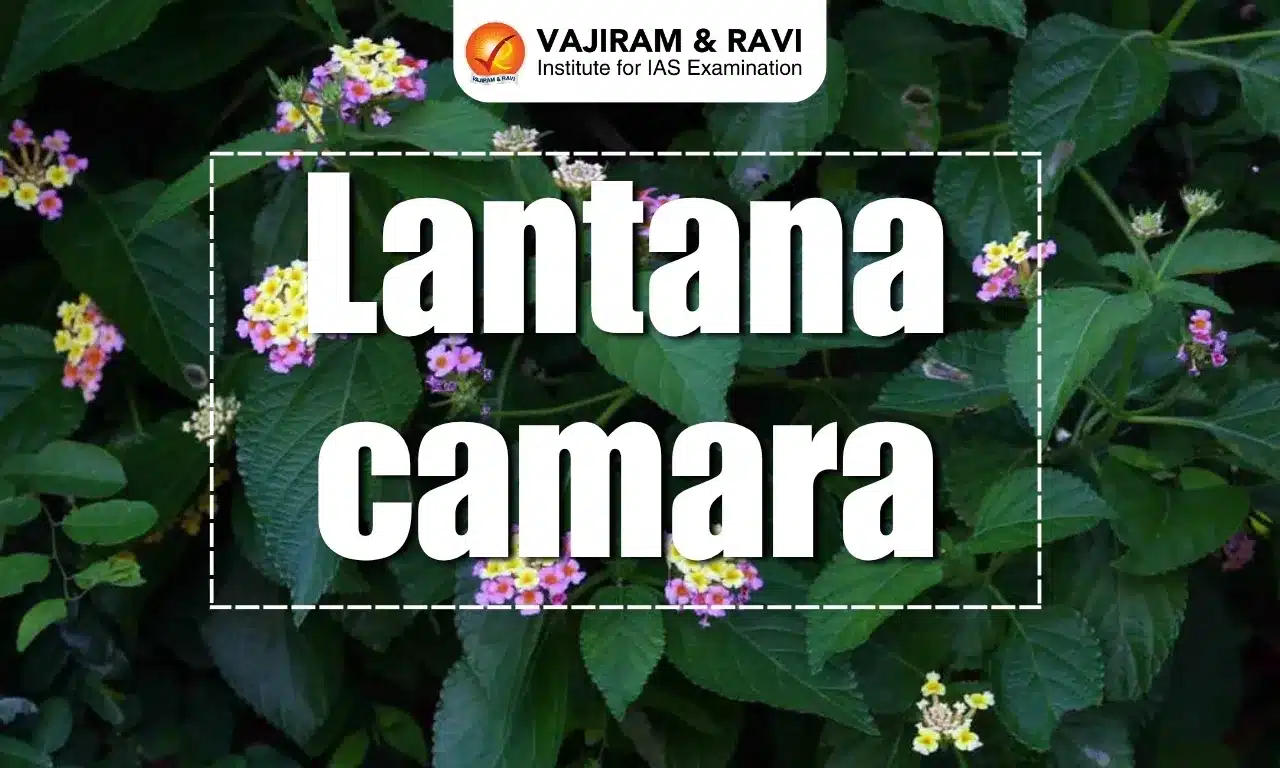
Lantana camara species introduced decades ago as an ornamental plant, now infests approximately 3,25,282 hectares of forests in Himachal Pradesh, posing a threat to the State’s native biodiversity. 

About Lantana Camara

  • It is an invasive alien species.
  • It is a pantropical weed species, is native to the tropical and sub-tropical regions of Central and South America.
  • It is an exotic weed that aggressively proliferates and forms a dense mesh of bushes.
  • In India, it was first introduced in the early 18th century, and since then, it has invaded almost all the tropical areas across the country.
  • It has been observed that it has been infesting from lower areas towards higher regions.
  • Ecological Impact: It is known to produce allelochemicals that restrict the growth of other species under its canopy.
  • Hence, it replaces native flora, resulting in homogeneous vegetation, significantly contributing to decline in biodiversity.
  • Its management can be achieved by using its biomass for socioeconomic purposes — its timber for making furniture and also as fuelwood, etc.
  • Its biomass can be used to produce organic compost and vermicompost, which will be better for organic farming and an alternative to inorganic manures available in the market.

Source: TH

Lantana Mamara FAQs

Q1: What is the problem with Lantana camara?

Ans: Lantana is one of the world's ten worst invasive species and a species of High Concern for India.

Q2: What is the nickname of Lantana camara?

Ans: Lantana camara, also known as big-sage (Malaysia), wild-sage, red-sage, white-sage (Caribbean) and tickberry (South Africa).

Chola Gangam Lake

Chola Gangam Lake

Chola Gangam Lake Latest News

In view of the birth anniversary of the legendary Tamil king Rajendra Chola I Tamil Nadu Chief Minister announced that the ‘Chola Gangam’ lake would be developed.

About Chola Gangam Lake

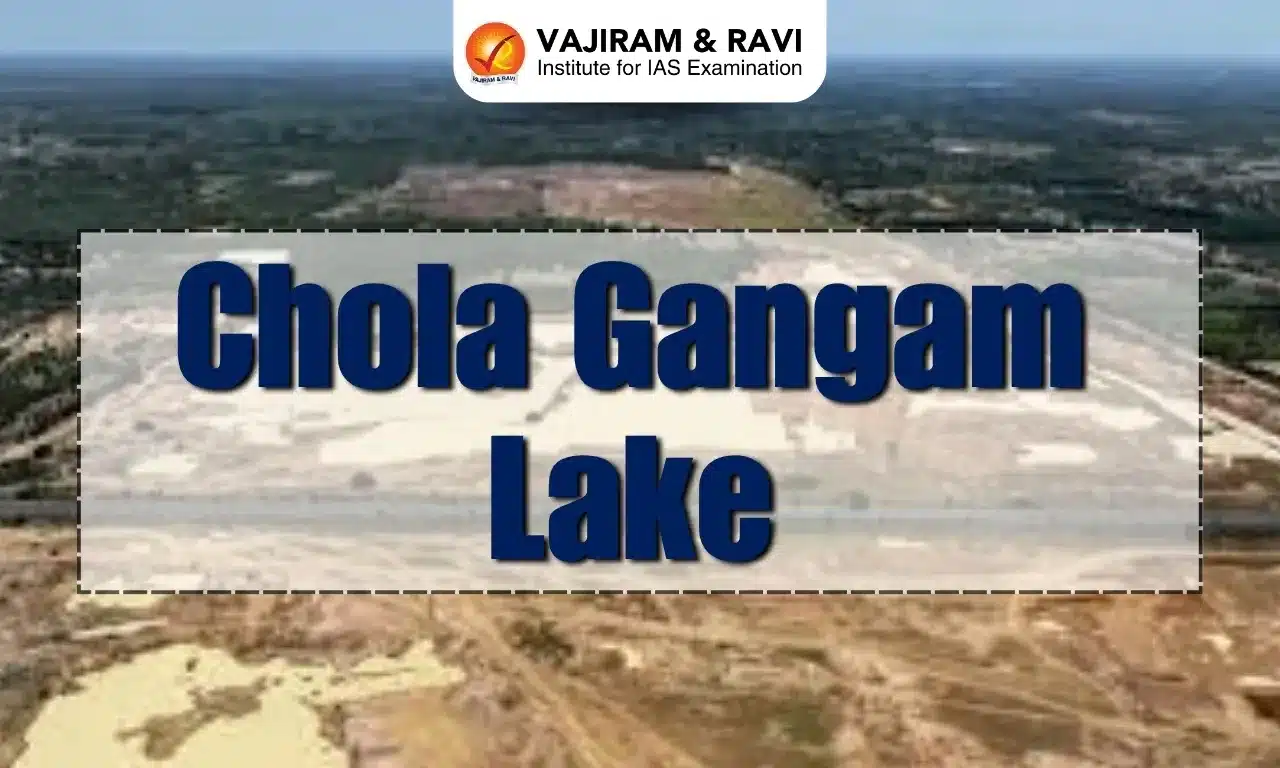
  • Location: It is a prominent water body situated within the vicinity of Gangaikonda Cholapuram in the Ariyalur District of Tamil Nadu, India.
  • It is locally known as Ponneri lake.

Historical Background

  • This historic lake owes its existence to Rajendra Chola I, a famous ruler of the Chola Dynasty 
  • It was dug by King Rajendra Chola I to celebrate his northern campaign, according to Tiruvalangadu Copper Plates.
  • To ensure a continuous water supply to Cholagangam Lake, a meticulously planned canal was constructed at a distance of sixty stones` throw from the Kollidam River.
  • This canal served as a vital waterway, connecting the Kollidam River to Cholagangam Lake, ensuring the consistent replenishment of the reservoir.
  • The lake depends on surface water collected during the rains.
  • According to some records the tank once irrigated 1,564 acres of land, its primary purpose being to supply drinking water to Gangaikonda Cholapuram.

Who was Rajendra Chola I?

  • He is often described as Rajendra the Great, was a Chola emperor who ruled between 1014 and 1044 CE. 
  • Rajendra succeeded his father, Rajaraja I, in 1014 CE.
  • He was also known as Gangaikonda Cholan, meaning “Bringer of the Ganges River”. Another title was Kadaram Kondan, which means “Conqueror of Kedah”.
  • In order to commemorate his victory to the Ganges and over the northern kings, Rajendra Chola I assumed the title of ‘Gangaikondachola’ and had a temple dedicated to Lord Shiva built, which he named ‘Gangaikondacholeshwaram Mahadev’. 
  • He also founded the city of ‘Gangaikondacholapuram’ and shifted his capital there from Thanjavur

Source: TH

Chola Gangam Lake FAQs

Q1: Which lake was built by Rajendra Chola?

Ans: Chola Gangam

Q2: What are the Thiruvalangadu copper plates?

Ans: These copperplates discovered in 1905 C.E. comprise one of the largest so far recovered and contains 31 copper sheets. The Thiruvalangadu plates contain text written in Sanskrit and Tamil. These two seem to have been written at least a decade apart.

Enquire Now