S.H.I.N.E. Initiative

SHINE initiative

S.H.I.N.E. Initiative Latest News

Recently, the Department of Health Research (DHR) and the Indian Council of Medical Research (ICMR) organized a nationwide open day titled S.H.I.N.E. initiative.

About S.H.I.N.E. Initiative

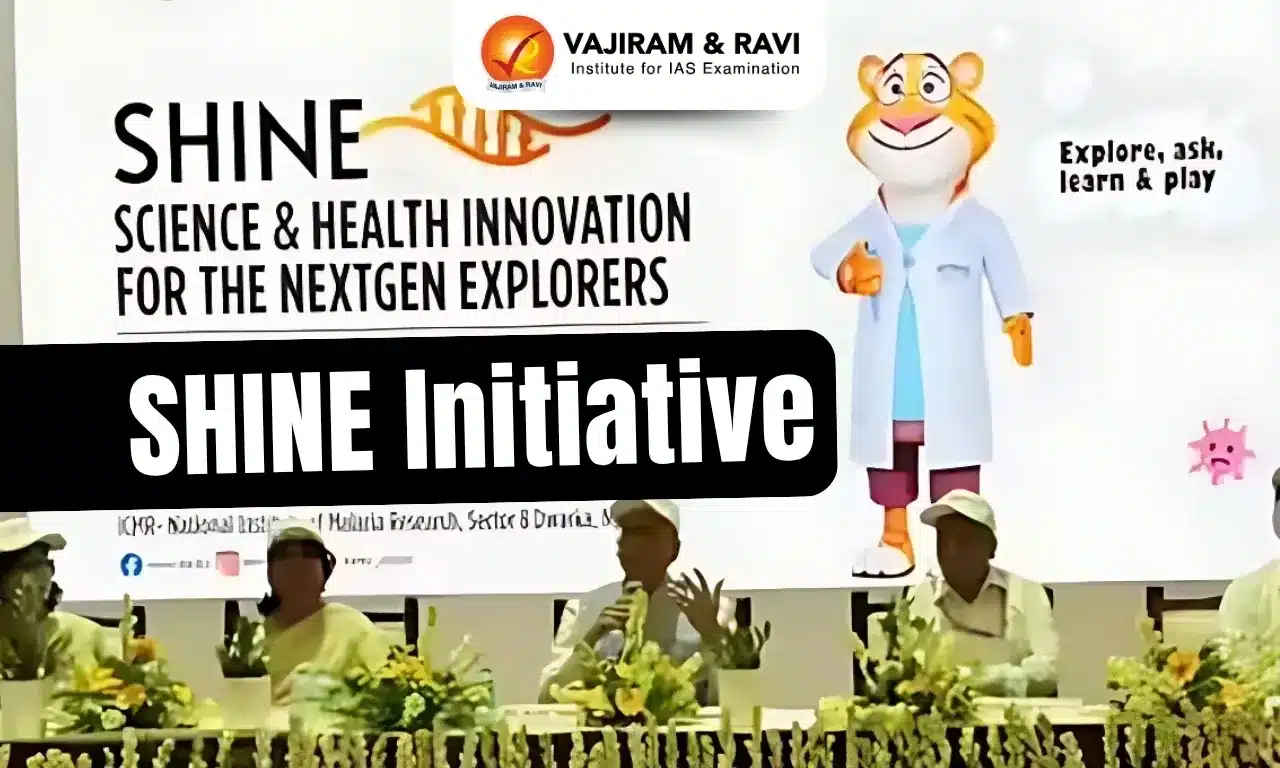
  • SHINE stands for Science, Health and Innovation for Nextgen Explorers which is a nationwide student outreach Program.
  • This is a unique initiative of Indian Council of Medical Research (ICMR) to ignite scientific curiosity, foster innovation and inspire the next generation of health researchers.
  • The initiative aimed to introduce students to the field of health and biomedical research, highlight ICMR’s contributions to improving the nation’s health, and motivate young learners to pursue careers in science and public health,
  • The event drew more than 13,000 students in grades 9-12 from over 300 schools across 39 districts in 16 states and union territories to various ICMR institutes in the country
  • The programme included a range of interactive activities such as guided laboratory tours, research exhibitions, poster walks, video presentations, and live demonstrations of ongoing scientific work.
  • To make the experience more engaging, a mascot named Dr. Curio was introduced as a friendly and relatable guide for the students.

Source: PIB

S.H.I.N.E. Initiative FAQs

Q1: What is the role of ICMR in India?

Ans: Indian Council of Medical Research develops and disseminates guidelines and regulations on a range of public health issues.

Q2: What is meant by biomedical research?

Ans: Biomedical research is the study of human physiology and the treatment or understanding of disease.

FAO Food Price Index

FAO Food Price Index

FAO Food Price Index Latest News

Recently, the United Nations' Food and Agriculture Organization said that world food commodity prices rose in July to their highest in over two years.

About FAO Food Price Index

  • The Food and Agriculture Organization’s (FAO) food price index is a measure of the monthly change in international prices of a basket of food commodities.
  • It consists of the average of five commodity group price indices (cereal, vegetable, dairy, meat and sugar), weighted with the average export shares.
  • Base year: 2014-16

Key Facts about the Food and Agriculture Organization

  • It is a specialized agency of the United Nations that leads international efforts to defeat hunger and improve nutrition and food security.
  • Its goal is to achieve food security for all and make sure that people have regular access to enough high-quality food to lead active, healthy lives.
  • Members: It consists of 195 members – 194 countries and the European Union, FAO works in over 130 countries worldwide.
  • Its sister bodies are the World Food Programme (WFP) and the International Fund for Agricultural Development (IFAD).
  • Reports published by the FAO: The State of the World’s Forests (SOFO), The State of World Fisheries and Aquaculture (SOFIA), The State of Agricultural Commodity Markets (SOCO), The State of Food Security and Nutrition in the World (SOFI).
  • Headquarter: Rome (Italy)

Source: Reuters

FAO Food Price Index FAQs

Q1: What is the food price index based on?

Ans: The FAO food price index is a measure of the monthly change in international prices of a market basket of food commodities.

Q2: Who publishes the food price index?

Ans: Food and Agriculture Organization of the United Nations

MANAS Helpline

MANAS Helpline

MANAS Helpline Latest News

Recently, the Minister of State in the Ministry of Home Affairs informed the success of MANAS Helpline in the Rajya Sabha.

About MANAS Helpline

  • Madak-Padarth Nished Asoochna Kendra (MANAS) Helpline was launched on 18th July 2024 by the Government of India.
  • Objective: It empowers citizens to fight against the drug menace and to function as a secure, citizen-centric platform to enable anonymous reporting of drug trafficking, illicit cultivation, and related offences.

Features of MANAS Helpline

  • It also extends support for counselling and rehabilitation, thereby strengthening the participation of citizens in combating the drug menace.
  • It is developed as a unified, secure and bilingual digital platform, MANAS offers citizens a seamless, confidential and multi-channel interface to report drug-related issues and access rehabilitation resources.
  • Citizens can utilize the MANAS Helpline for:
    • Anonymously report any information related to drug trafficking, storage, manufacturing or cultivation.
    • Seek counselling and rehabilitation guidance through integrated transfer to Ministry of Social Justice & Empowerment (MoSJE) Helpline 14446.
    • Access awareness resources (posters, videos, brochures) via the MANAS web portal for public outreach.
    • Engage in awareness activities, through quizzes, poster-making, and reel-making contests on the MyGov platform, amplifying the Drug-Free Bharat campaign.

Source: PIB

MANAS Helpline FAQs

Q1: What is the vision behind Manas helpline?

Ans: To raise awareness and establish a comprehensive platform for reporting and seeking assistance for drug-related issues.

Q2: What is 1933 Manas?

Ans: MANAS (Madak-Padarth Nished Asoochna Kendra) Helpline- 1933 was launched on 18th July 2024 by the Government.

Human African Trypanosomiasis (HAT)

Human African Trypanosomiasis (HAT)

Human African Trypanosomiasis Latest News

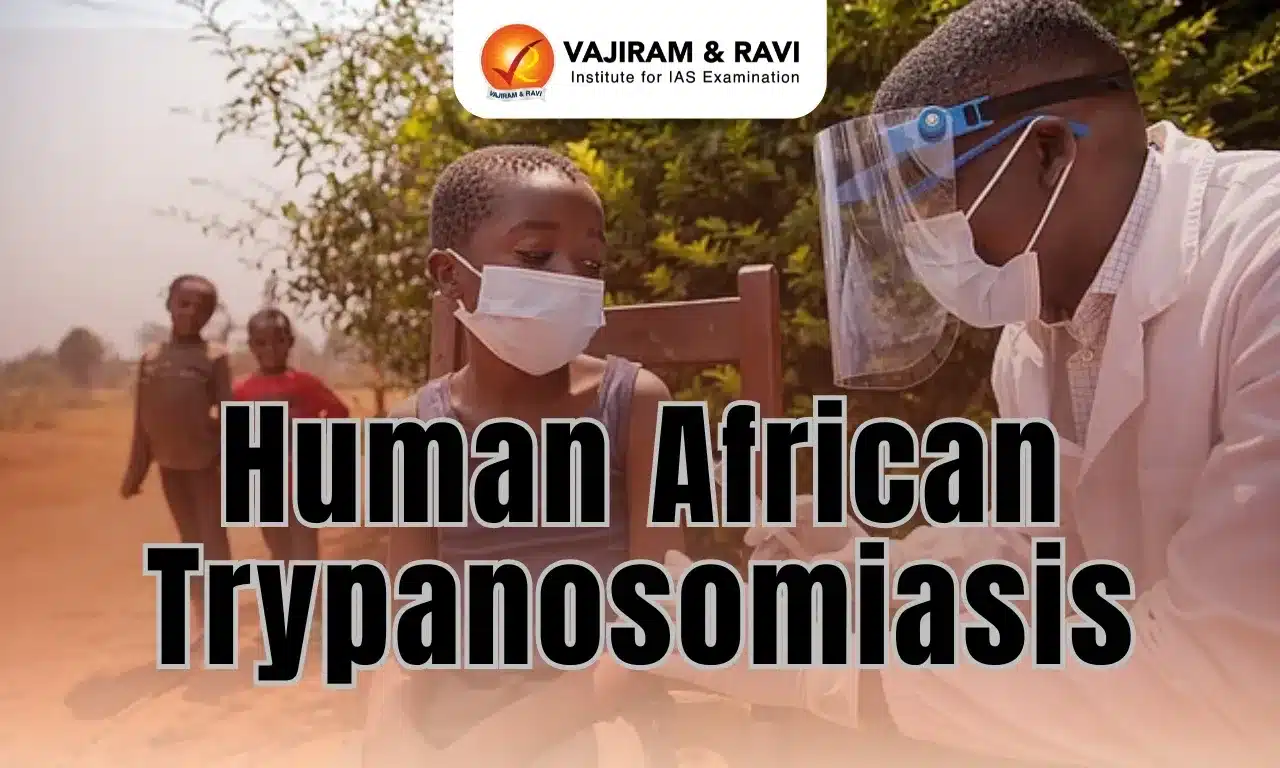
Recently, the World Health Organisation (WHO) certified Kenya as having eliminated human African trypanosomiasis, also known as sleeping sickness.

About Human African Trypanosomiasis

  • It is a parasitic disease transmitted through the bite of infected tsetse flies.
  • It is also known as sleeping sickness and is endemic in sub-Saharan Africa.

Symptoms of Human African Trypanosomiasis

  • It shows initially symptoms such as fever, headaches, and joint pain, but can progress to neurological issues like confusion, disrupted sleep, and behavioural changes.
  • First signs and symptoms emerge a few weeks or months after infection. The disease develops rapidly with multi-organ invasion, including the brain.
  • It takes 2 forms, depending on the subspecies of the infecting parasite:
    • Trypanosoma brucei gambiense: It is found in 24 countries of west and central Africa, currently accounts for 92% of reported cases and causes a chronic illness.
    • A person can be infected for months or even years without major signs or symptoms. When evident symptoms emerge, often the disease is advanced with the central nervous system already affected.
    • Trypanosoma brucei rhodesiense: It is found in 13 countries of eastern and southern Africa, accounts for 8% of reported cases and causes an acute disease.
  • Who is at risk? It is more prevalent amongst rural populations which depend on agriculture, fishing, animal husbandry or hunting are the most exposed.
  • Till today, WHO has validated the elimination of the gambiense form of HAT in seven countries: Togo (2020), Benin (2021), Ivory Coast (2021), Uganda (2022), Equatorial Guinea (2022), Ghana (2023) ,Chad (2024) and Guinea (2025).

Source: News on air

Human African Trypanosomiasis FAQs

Q1: What is another name for human African trypanosomiasis?

Ans: Sleeping sickness

Q2: Does trypanosomiasis have a cure?

Ans: Yes, with early diagnosis and proper treatment, trypanosomiasis is curable.

Heptapleurum assamicum

Heptapleurum assamicum

Heptapleurum assamicum Latest News

Scientists have recently identified a new plant species in Assam’s Dima Hasao and West Karbi Anglong districts — a lush, evergreen shrub now named Heptapleurum assamicum.

About Heptapleurum assamicum

  • It is a new plant species.
  • A lush, evergreen shrub, Heptapleurum assamicum was discovered in Assam’s Dima Hasao and West Karbi Anglong districts.
  • It belongs to the family Araliaceae, which also includes the familiar ornamental “umbrella plant” (H. arboricola).
  • However, this wild Assamese relative carries several distinctive traits: 
    • Its leaflets are narrow and lance-shaped, never more than 1.2 cm wide.
    • Its flowers are a striking purple rather than the greenish-yellow of its ornamental cousin.
    • Its compact inflorescences bear up to 15 flowers per umbel. 
    • The fruit, when ripe, turns a deep reddish-purple and is speckled with orange-red glands — an unusual feature even within the genus.
  • The plant flowers between January and March, with fruits ripening by May. 
  • Its current known population is tiny and highly localised, making it potentially vulnerable to environmental changes.
  • For now, it has been categorised as “Data Deficient” under IUCN criteria.

Source: EM

Heptapleurum assamicum FAQs

Q1: Heptapleurum assamicum, a newly discovered plant species, belongs to which plant family?

Ans: Araliaceae

Q2: In which Indian state was Heptapleurum assamicum discovered?

Ans: Assam

Q3: What is the flower colour of Heptapleurum assamicum?

Ans: Its flowers are a striking purple.

Q4: What is the current IUCN conservation status of Heptapleurum assamicum?

Ans: Data Deficient

Chitons

Chitons

Chitons Latest News

A groundbreaking new study published recently reveals that chitons grow teeth that aren’t just hard; they're harder than stainless steel, zirconium oxide, and even human enamel.

About Chitons

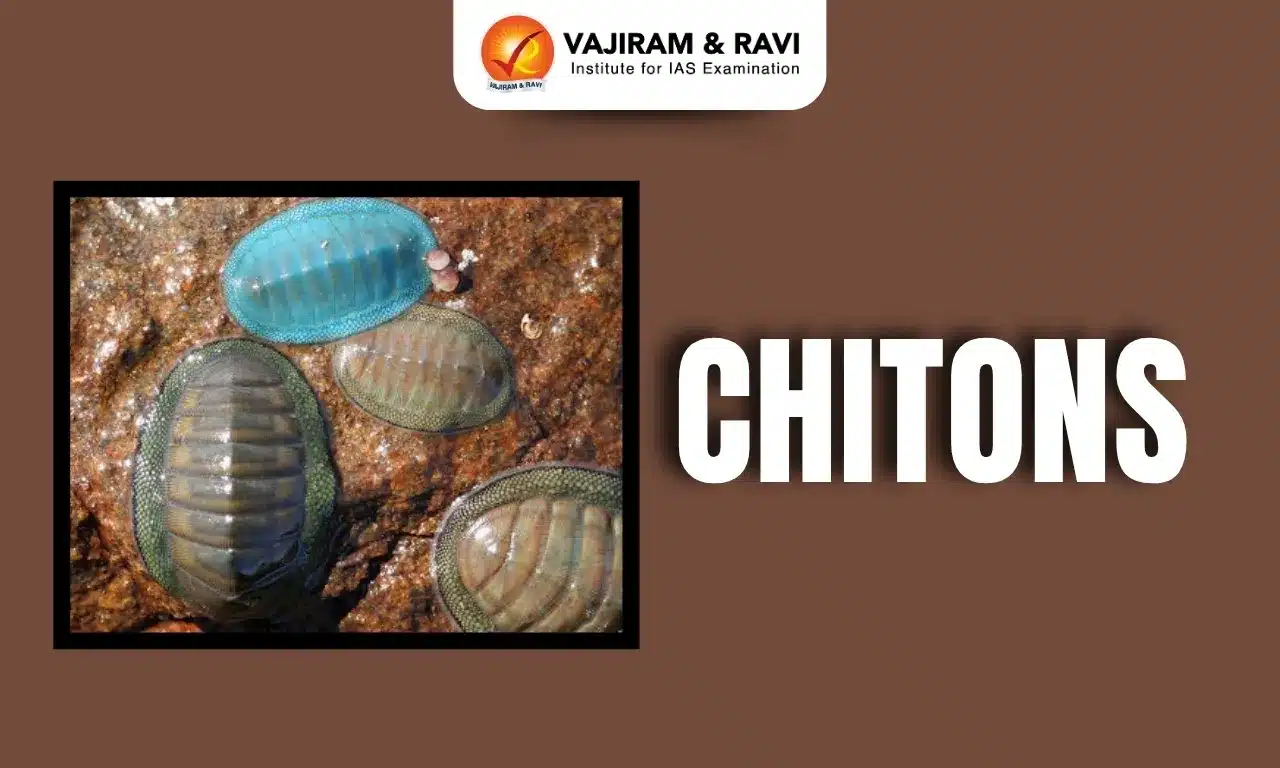
  • They are flattened, bilaterally symmetrical marine invertebrates. 
  • Chitons belong to the phylum Mollusca (along with sea snails, sea slugs, and bivalves).
  • Chitons occur only in marine habitats. They are worldwide in distribution but most abundant in warm regions.
  • The approximately 600 species are usually placed in the class Placophora, Polyplacophora, or Loricata.

Chitons Features

  • Chitons are usually oval in shape. 
  • They vary in appearance and can be found in shades of grey and brown, red, green, and pink.
  • On the dorsal (upper) surface is a row of eight overlapping plates surrounded or covered by a tough girdle. 
  • Chitons use a large, flat foot for creeping along and clinging to rocks; they also have a well-developed radula (filelike structure) with which to scrape algae and other plant food from rocks. 
  • On either side of the foot is a groove containing the gills.
  • About 5 cm (2 inches) is the maximum length of most chitons.
  • Chitons are very flexible and can fit snugly into rock crevices or curl into a ball when detached. 
  • They can also adhere so firmly to rocks that they may be injured when pried loose.
  • Life span typically ranges from a few years to 20 years.
  • Most are nocturnal in habit.

Source: TOI

Chitons FAQs

Q1: Chitons belong to which phylum?

Ans: Chitons belong to the phylum Mollusca.

Q2: What is the typical maximum length of most chitons?

Ans: 5 cm (2 inches)

Q3: The lifespan of chitons typically ranges from how many years?

Ans: Life span of chitons typically ranges from a few years to 20 years.

National Organ And Tissue Transplant Organization (NOTTO)

National Organ And Tissue Transplant Organization

National Organ And Tissue Transplant Organization Latest News

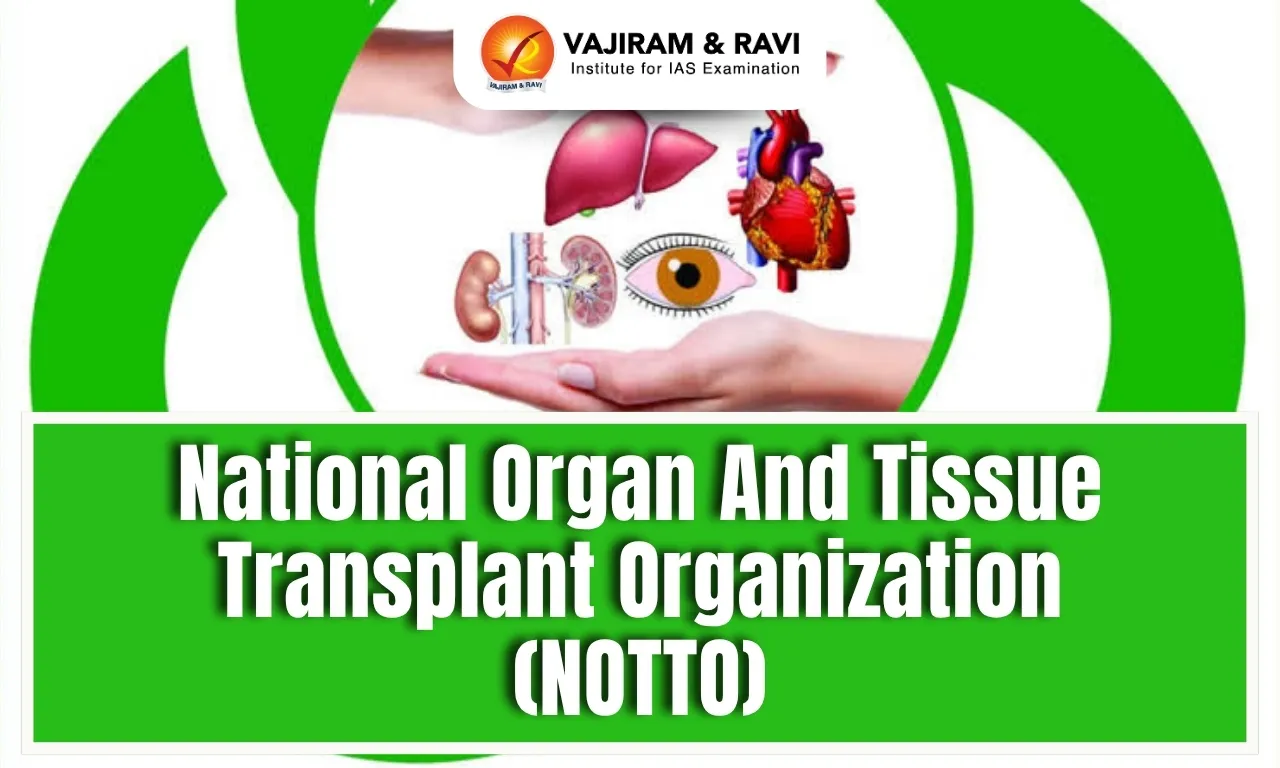
The National Organ & Tissue Transplant Organisation (NOTTO) recently issued a 10-point advisory stating that women patients and relatives of deceased donors awaiting organ transplants will get priority as beneficiaries.

About National Organ And Tissue Transplant Organization 

  • It is a national-level organization set up under the Directorate General of Health Services, Ministry of Health and Family Welfare in New Delhi.
  • The establishment of NOTTO is mandated as per the Transplantation of human Organs and Tissues (Amendment) Act of 2011.
  • It functions as the apex centre for all India activities of coordination and networking for:
    • procurement and distribution of organs and tissues; and 
    • registry of Organs and Tissues Donation and Transplantation in the country
  • It has the following two divisions: 
    • National Human Organ and Tissue Removal and Storage Network
    • National Biomaterial Centre
  • The following activities are undertaken at National Level by NOTTO to facilitate Organ Transplantation in the safest way in the shortest possible time and to collect data and develop and publish National Registry.
    • Lay down policy guidelines and protocols for various functions.
    • Network with similar regional and state-level organizations.
    • All registry data from States and regions would be compiled and published.
    • Creating awareness and promotion of deceased organ donation and transplantation activities.
    • Co-ordination from procurement of organs and tissues to transplantation when organs are allocated outside the region.
    • Dissemination of information to all concerned organizations, hospitals, and individuals.
    • Monitoring of transplantation activities in the regions and States and maintaining a data-bank in this regard.
    • To assist the states in data management, organ transplant surveillance & Organ transplant and Organ Donor registry.
    • Consultancy support on the legal and non-legal aspects of donation and transplantation
    • Coordinate and organize training for various cadres of workers.

Source: TH

National Organ And Tissue Transplant Organization FAQs

Q1: The National Organ and Tissue Transplant Organization (NOTTO) operates under which ministry?

Ans: NOTTO operated under the Directorate General of Health Services, Ministry of Health and Family Welfare.

Q2: The establishment of NOTTO is mandated under which Act?

Ans: The establishment of NOTTO is mandated as per the Transplantation of human Organs and Tissues (Amendment) Act of 2011.

Q3: Which are the two divisions of NOTTO?

Ans: National Human Organ and Tissue Removal and Storage Network and National Biomaterial Centre.

Mississippi River

Mississippi River

Mississippi River Latest News

Two people died when a helicopter crashed into a barge in the Mississippi River near East Alton, Illinois, recently.

About Mississippi River

  • It is the longest river in the United States and the second longest in North America. 
  • It starts at Lake Itasca in northern Minnesota and flows south until it reaches the Gulf of Mexico.
  • The major tributaries are the Red, Arkansas, Illinois, Missouri, and Ohio.
  • The Mississippi River alone is more than 2,300 miles (3,700 kilometers) long. 
  • If the length of the Missouri River system is added, the Mississippi-Missouri is the world’s fourth longest river system, following the Nile (4,160 miles/6,693km), the Amazon (4,000 miles/6,436km), and the Yangtze Rivers (3,964 miles/6,378km).
  • The Mississippi River basin drains 1,260,000 square miles, making it the largest drainage basin in terms of area in North America.
  • The basin is home to different ecosystems, including wet forests dominated by cypress trees, brackish and freshwater marshes, sandy beaches, and salt marshes.

Source: BS

Mississippi River FAQs

Q1: Where does the Mississippi River originate?

Ans: It starts at Lake Itasca in northern Minnesota, United States.

Q2: Approximately how long is the Mississippi River alone?

Ans: The Mississippi River alone is more than 2,300 miles (3,700 kilometers) long.

Q3: Which are the major tributaries of Mississippi River?

Ans: The major tributaries of Mississippi River are the Red, Arkansas, Illinois, Missouri, and Ohio.

Parthenium

Heptapleurum assamicum

Parthenium Latest News

As a part of a three-day campaign of Parthenium Free Pobitora, about 5.2 hectares of the Pobitora Wildlife Sanctuary in Assam‘s Morigaon district were cleared of Parthenium, or Congress grass, an invasive weed, by the forest staff recently.

About Parthenium

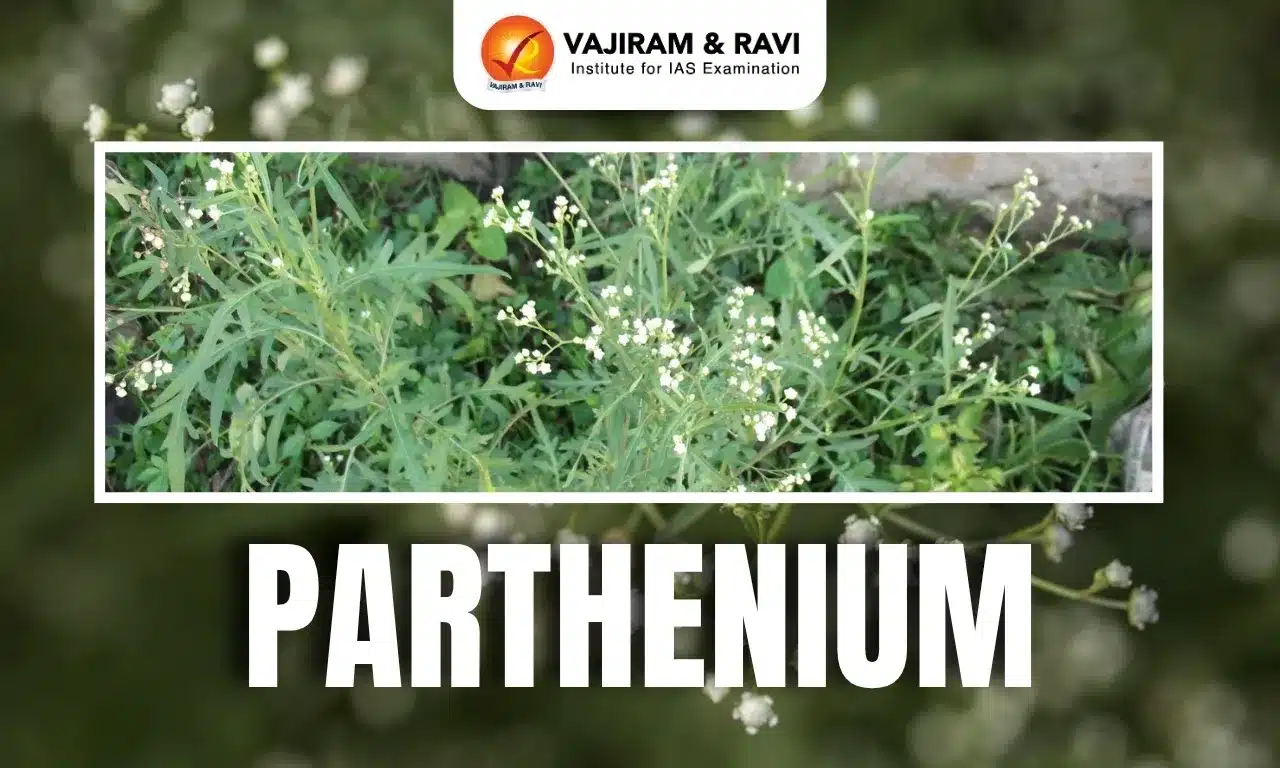
  • Parthenium hysterophorus L., commonly known as carrot weed, white top, or congress grass in India, is an herbaceous, erect, and annual plant belonging to the family Asteracae (compositae).
  • It is a poisonous, pernicious, problematic, allergic, and aggressive weed posing a serious threat to human beings and livestock.
  • In India, this weed has been considered as one of the greatest sources of dermatitis, asthma, nasal-dermal and nasal-bronchial types of diseases.
  • Besides ill effects, it also causes several other problems, like blockage of common pathways, and reduces the aesthetic values of parks, gardens, and residential colonies.
  • It is a nuisance on roadsides and railway tracks, vacant lands, wastelands, industrial areas, and on the sides of open drainage systems and irrigation canals, besides invading agricultural crops, orchards, and forest areas.
  • It is most popularly known as gajar ghas due to its appearance like a carrot plant.
  • The origin of parthenium is considered to be from Mexico, America, Trinidad, and Argentina. 
  • After the noticeable occurrence of parthenium in Pune (Maharashtra) in 1955, it has spread like a wildfire throughout India. 
  • At present parthenium has invaded about 35 million hectares of land in India.
  • It mainly spreads through seeds. 
    • A single plant can produce about 5000 – 25000 seeds.
    • The seeds are very small in size and light in weight.

Key Facts about Pobitora Wildlife Sanctuary

  • It is located in the eastern region of Guwahati, Assam.
  • It was established in 1998 and covers an area of 48.81 square kilometres.
  • The Sanctuary consists of the Rajamayong Reserve Forest and Pobitora Reserve Forest.
  • Flora
    • 72% of Pabitora consists of the wet savannah of Arundo donax, Erianthus ravennae, Phragmites karka, Imperata cylindrica, and Saccharum spp.
    • Water hyacinth (Eichornia crassipes) is a major problem, especially to waterfowl, as it forms thick mats on the water surface.
  • Fauna
    • Pobitora is mainly famous for its great Indian One-horned rhinoceros. 
    • It is known for holding the highest density of Greater One Horned Rhinoceros in the country.
    • Besides rhinoceros, the other animals are leopard, wild boar, Barking deer, wild buffalo, etc. 
    • It is also home to more than 2000 migratory birds and various reptiles.

Source: NEL

Parthenium FAQs

Q1: The origin of Parthenium is believed to be from region?

Ans: The origin of parthenium is considered to be from Mexico, America, Trinidad, and Argentina.

Q2: How many seeds can a single Parthenium hysterophorus plant produce?

Ans: 5000 to 25000 seeds.

Q3: Which disease is commonly caused in humans due to Parthenium exposure?

Ans: In India, Parthenium has been considered as one of the greatest sources of dermatitis, asthma, nasal-dermal and nasal-bronchial types of diseases.

Sea of Galilee

Sea of Galilee

Sea of Galilee Latest News

Recently, the Sea of Galilee in Israel has turned red due to the bloom of Botryococcus braunii algae.

About Sea of Galilee

  • Location: It is a large freshwater lake situated in the northeastern part of Israel.
  • It is considered the lowest freshwater lake on the planet and the world’s second-lowest lake after the Dead Sea. 
  • It is situated in Jordan Rift Valley primarily fed by the Jordan River and partly by underground springs.
  • Throughout its history, the Sea of Galilee has been referred to by various names such as the Sea of Kinneret, Lake of Gennesaret, Sea of Ginosar, Sea of Tiberias, Lake of Tiberias, Bahr Tubariya, etc.
  • Bordered by: It is bordered by the Plain of Gennesaret extends in the north to the northwest, and the Plain of Bet Ẓayda (Buteiha) in Syria extends to the northeast. To the west and southwest, the hills of Lower Galilee fall abruptly to the lake’s edge.

What is Botryococcus braunii?

  • It is a species of single-celled green algae found in freshwater or brackish lakes.
  • It is characterized by its ability to produce significant quantities of hydrocarbons and its formation of biofilms that consist of polysaccharides and biopolymers for structural support and protection.

Source: Wion

Sea of Galilee FAQs

Q1: Which country is the Sea of Galilee in?

Ans: Israel

Q2: Is the Sea of Galilee saltwater or freshwater?

Ans: Freshwater lake

Enquire Now