Khelo India ASMITA

Khelo India ASMITA

Khelo India ASMITA Latest News

Recently, the Khelo India ASMITA Football League 2025-26 was inaugurated by the Minister of State, Youth Affairs and Sports in Jalgaon, Maharashtra.

About Khelo India ASMITA

  • Achieving Sports Milestone by Inspiring Women (ASMITA) is part of Khelo India’s gender-neutral mission to promote sports among women through leagues and competitions.
  • It is an affirmative action in sports for increasing women’s participation.
  • Objective: Inclusive and grassroots-driven sports development.
  • The Khelo India ASMITA league is a core component of the 'Khelo Bharat Niti,' promoting sports for nation-building and women's empowerment.
  • The league is a dedicated platform for young girls, addressing historical imbalances and creating new opportunities.
  • As such, the Sports Authority of India (SAI) supports National Sports Federations in conducting Khelo India women’s leagues across multiple age groups at both zonal and national levels.
  • It was started in 2021, ASMITA leagues not only aim to increase the participation of women in sports but also to utilize the leagues as a platform for the identification of new talent across the length and breadth of India.
  • This financial year 2025-26, 852 ASMITA leagues have been planned in 15 sports disciplines, targeting more than 70,000 women athletes in all States/ UTs of the country.
  • Significance: This initiative is changing the narrative around women in sports, helping them challenge stereotypes and become new role models.
  • Nodal Ministry: Ministry of Youth Affairs and Sports

Source: PIB

Khelo India ASMITA FAQs

Q1: Which state hosted Khelo India 2025?

Ans: Bihar

Q2: What is the theme of Khelo India 2025?

Ans: The theme "Khel Ke Rang! Bihar Ke Sang!" echoes Bihar's sporting resurgence, celebrating its emergence as a modern sports hub.
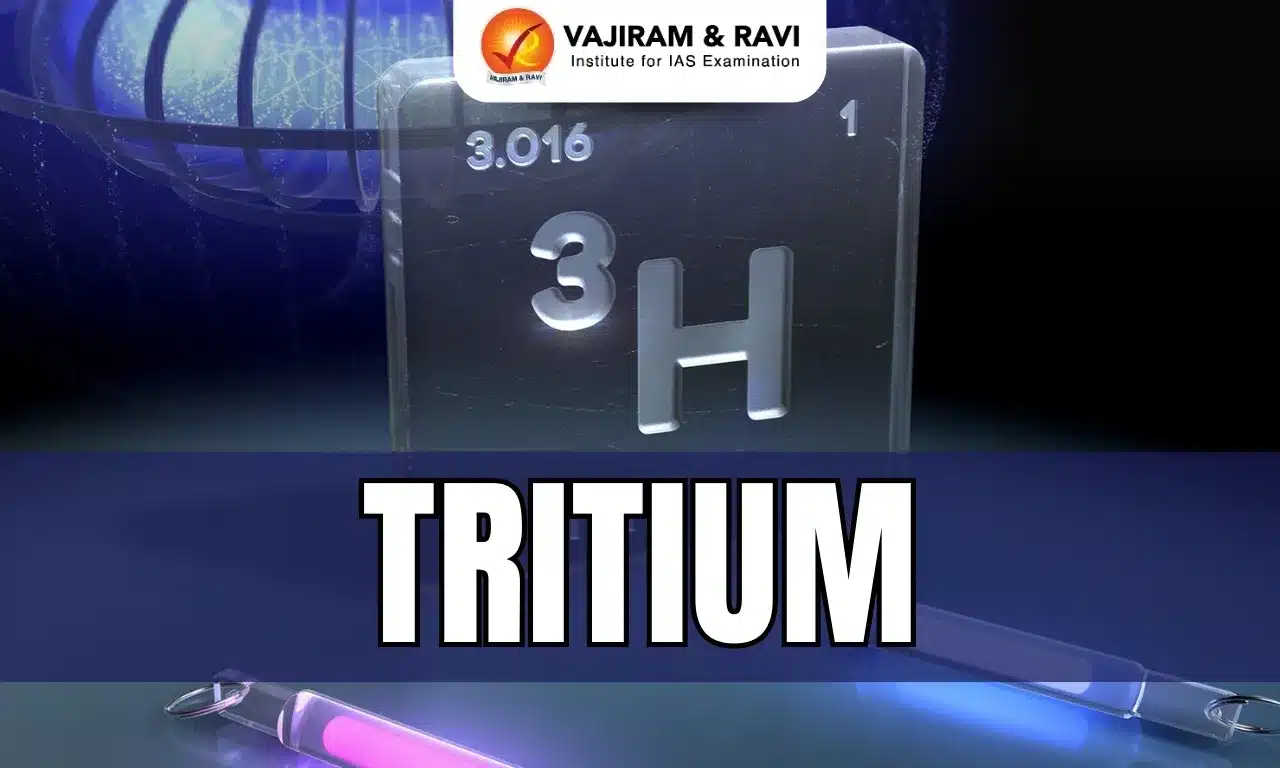
Tritium

Tritium

Tritium Latest News

A recent global ocean model study by the University of Tokyo and Fukushima University researchers have confirmed that the Fukushima Daiichi Nuclear Power Plant’s tritium wastewater release poses minimal impact on ocean waters.

About Tritium

  • Tritium is a radioactive isotope of hydrogen.

Features of Tritium

  • It has the same number of protons and electrons as hydrogen but has 2 neutrons, whereas regular hydrogen does not have any. This makes tritium unstable and radioactive.
  • It is produced naturally from interactions of cosmic rays with gases in the upper atmosphere.
  • Tritium can also be produced by man during nuclear weapon explosions, in reactors intended to produce tritium for nuclear weapons.
  • It is the only radioactive isotope of hydrogen and like hydrogen it reacts with oxygen to form water.
  • The transformation of tritium to tritiated water is a complex and slow process. Tritium is a colorless, odorless gas with a half-life of 12.3 years.
  • As a liquid, tritium moves easily through the environment just like water.
  • It occurs naturally in the environment in very low concentrations.

Uses of Tritium

  • It can be combined with phosphor to create glow-in-the-dark lighting such as exit signs, emergency lighting in buildings, and airport runway lights.
  • Medical Field: It is also used as a tracer in biomedical research to study and diagnose heart disease, cancer and AIDS. 
  • Electricity Generation: It may also be used to generate electricity in fusion reactors.

Source: TH

Tritium FAQs

Q1: What is tritium used for?

Ans: It is used to make luminous dials and as a source of light for sarety signs.

Q2: Is tritium toxic to humans?

Ans: Tritium is a hazard only when taken inside the body.

Kodali Karuppur Silk Sari

Kodali Karuppur Silk Sari

Kodali Karuppur Silk Sari Latest News

The iconic Kodali Karuppur silk sari, a luxury garment once patronised by the Maratha kings of Thanjavur is facing a crisis as its traditional handloom weavers dwindle in number.

About Kodali Karuppur Silk Sari

  • It derived its name from Karuppur, a village near Kumbakonam, Tamil Nadu.
  • The handwoven silk saris, dhotis, and furnishings of Karuppur that combined hand painting, block printing, and brocade-weaving were popular up to the 19th Century.
  • History of Kodali Karuppur Silk Sari
    • These evolved under the patronage of the Maratha ruler Serfoji Raja Bhonsle Chhatrapati II in 1787-1832 and were made exclusively for the Ranis of Thanjavur up to the 19th century.
    • The ancestors of the weavers comprised about 400-500 families who migrated from Saurashtra to Madurai, Salem and Kancheepuram.
    • The Karuppur cloth was worn only by the Thanjavur nobility, who gifted some as khillat or clothes of honour.
    • In some Maratha states like Baroda, Kohlapur and Satara, the Karuppur sari was an essential part of the bride’s trousseau, as was the Karuppur turban for the groom.
  • Design: The design vocabulary of the Karuppur sari is limited, mostly geometric and linear patterns, vine-like designs, stars, veldarri and the thazhambu or screw pine flower design.
  • This saree does not have a GI (Geographical Indication) tag.

Source: TH

Kodali Karuppur Silk Sari FAQs

Q1: What is the history of Kodalikaruppur saree?

Ans: It emerged during the reign of Maratha ruler Serfoji Raja Bhonsle Chhatrapati II (1787-1832), exclusively crafted for the Ranis of Thanjavur until the 19th century.

Q2: Who gives GI tag India?

Ans: It is issued by the Geographical Indication Registry under the Department of Industry Promotion and Internal Trade, Ministry of Commerce and Industry.

Dhirio-Bull Fighting

Dhirio-Bull Fighting

Dhirio-Bull Fighting Latest News

Recently, during a discussion in the state Assembly legislators across party lines demanded the legalisation of bull fighting which is locally called Dhirio in Goa.

About Dhirio-Bull Fighting

  • Bull fighting, locally referred to as dhirio or dhiri, is an integral part of Goa’s cultural fabric.
  • It is organised after the harvest season.
  • These bull fights have traditionally been held in paddy fields and football grounds of Goa, with village shepherds bringing in their animals.
  • Dhiri was a “part and parcel of every Church fest” and villagers from miles around would gather to witness the popular sport.
  • These bull fights have traditionally been held in paddy fields and football grounds of Goa
  • A bull fight begins with two bulls dashing at each other and locking horns.
  • They head-butt each other and repeatedly charge and retreat, provoked by trainers standing behind.
  • Bull fights have been taking place in Goa for generations, going back to the time of the Portuguese.
  • The High court in 1997 directed the state to take immediate steps to ban “all types of animal fights including bull fights and ‘dhirios.

Source: IE

Dhirio-Bull Fighting FAQs

Q1: What is dhirio?

Ans: It is a popular form of traditional bull wrestling in the state of Goa, Coastal South West India.

Q2: Which country's famous sport is bull fighting?

Ans: Spain

Vitthal Rukhmini Temple

Vitthal Rukhmini Temple

Vitthal Rukhmini Temple Latest News

A Marathi-Hindi language row has emerged at Pandharpur's renowned Vitthal-Rukhmini temple recently.

About Vitthal Rukhmini Temple

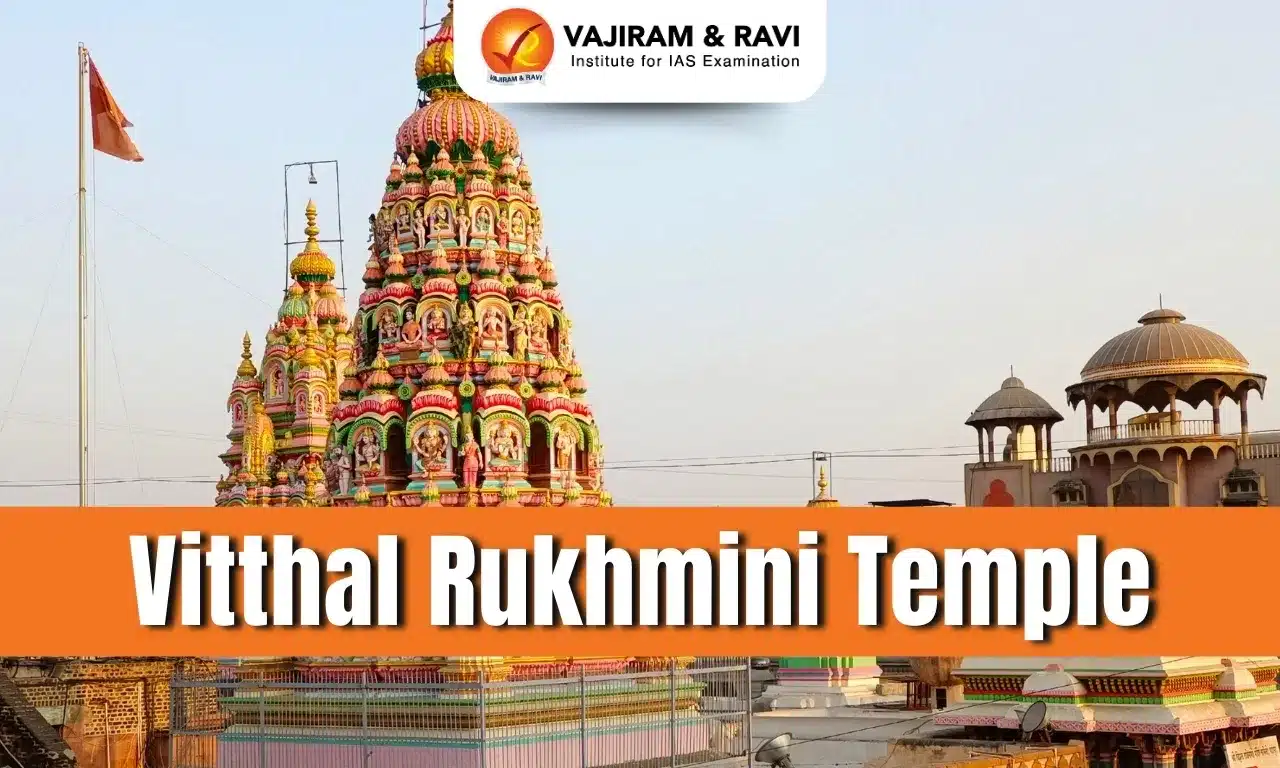
  • It is a Hindu temple situated in Pandharpur, Maharashtra.
  • Located on the banks of the river Bhima, also known as Chandrabhaga, Sri Vitthal Rukmini Mandir is dedicated to Lord Vithoba, a form of the Lord Vishnu or Krishna, and his consort Rukhmini. 
  • The temple is classified as one among the 108 Abhimana Kshethrams of the Vaishnavate tradition. 

Vitthal Rukhmini Temple History

  • The temple was built by King Vishnuvardhana of the Hoysala Empire between 1108 and 1152 CE.
  • He built the temple after being persuaded by Pundalik, a historical figure, great devotee of Lord Krishna.
  • There is an inscription in the temple, of a Hoysala King Vira Someshwara dating back to 1237 CE, which grants the temple a village for its upkeep. 
  • An extensive temple was constructed in the second half of the 13th century following the Hemadpanti style of architecture. 
  • The temple was attacked by invaders and completely damaged.
  • The present temple was built in the 17th century & later in the Deccan style, with dome motifs and lobed arches by the contribution of Peshwas of Pune, the Shindes of Gwalior, and the Holkars of Indore.
  • The temple was the first shrine in India that welcomed people and women from backward categories as priests in 2014.

Source: TOI

Vitthal Rukhmini Temple FAQs

Q1: The Vitthal Rukhmini Temple is located in which place?

Ans: Pandharpur, Maharashtra

Q2: On the banks of which river is the Vitthal Rukhmini Temple situated?

Ans: It is located on the banks of the river Bhima, also known as Chandrabhaga.

Q3: Who built the original Vitthal Rukhmini Temple between 1108 and 1152 CE?

Ans: King Vishnuvardhana of the Hoysala Empire

Bhagirathi River

Bhagirathi River

Bhagirathi River Latest News

A water body resembling a lake, stretching over a kilometre, has formed on the Bhagirathi River near Harsil after the recent cloudburst in the Uttarkashi district of Uttarakhand, prompting authorities to launch urgent drainage operations.

About Bhagirathi River

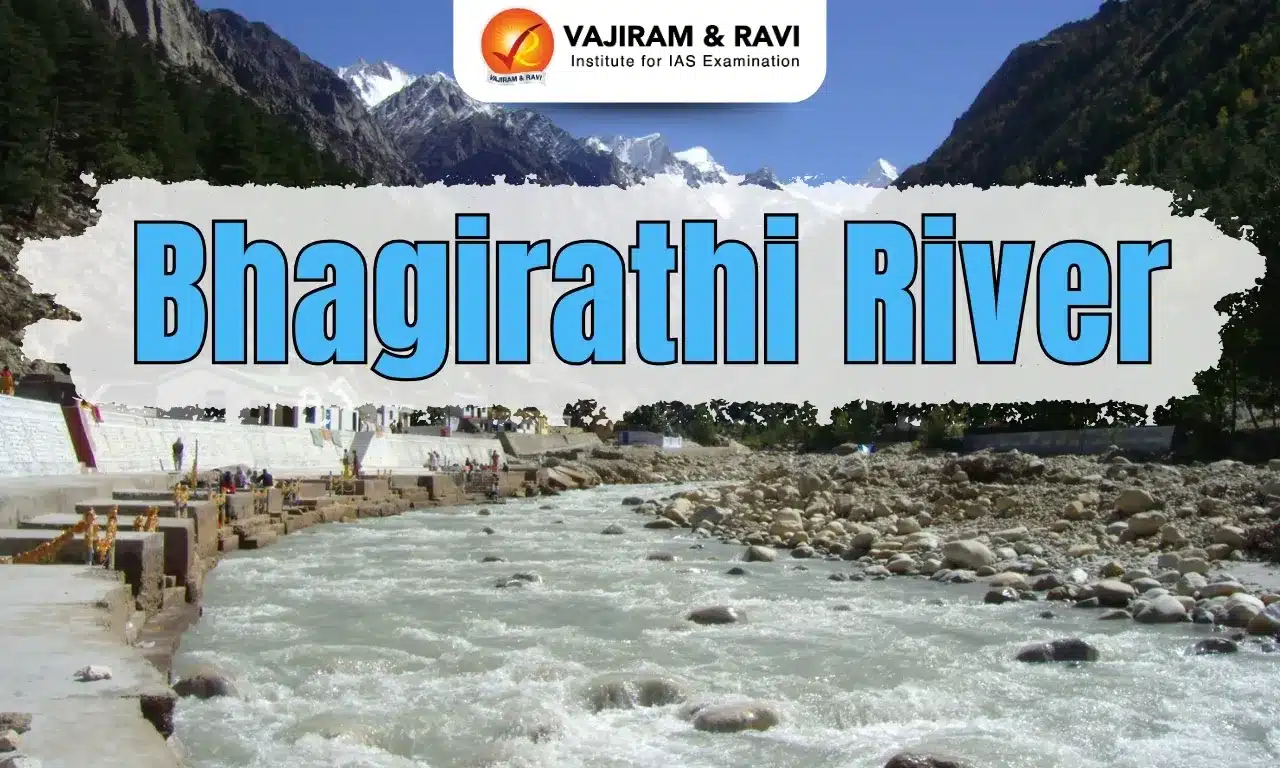
  • It is a turbulent Himalayan river in the state of Uttarakhand.
  • It is one of the two main headstreams of the Ganges River, the other being the Alaknanda River.
  • According to Hindu mythology and culture, Bhagirathi is the source stream of the Ganges. 
  • But according to the hydrology, Alakananda is the source stream of the Ganges for its flow and length.
  • Course:
    • It originates from the Gaumukh Glacier located at the base of the Khatling and Gangotri Glaciers in the Garhwal Himalayas, where the melting ice gives birth to the river.
    • Further, the river passes through the Tehri Garhwal district, including the towns of Uttarkashi and Tehri, where it encounters cliffs, rapids, and waterfalls.
    • It is joined by tributaries such as – Kedar Ganga, Jadh Ganga, Kakora Gad, Jalandari Gad, Siyan Gad, Asi Ganga and Bhilangana.
    • Finally, the Bhagirathi River meets the Alaknanda River at Devprayag.
    • The combined waters of the two rivers then flow as the Ganges River, and this river eventually empties into the Bay of Bengal.
  • Major Dams: Maneri Dam, Koteshwar Dam, and Tehri Dam.
  • Religious Significance: 
    • The confluence of the Bhagirathi and Alaknanda rivers is considered a sacred site in Hindu mythology.
    • It is an essential part of the sacred Panch Prayag Yatra, which involves visiting the five holy confluences of Uttarakhand: Devprayag, Rudraprayag, Nandprayag, Karnaprayag, and Vishnuprayag.
    • The banks of the Bhagirathi are dotted with numerous sacred cities and sites such as Gangotri, the source of the river, which is one of the Char Dham pilgrimage sites.

Source: HT

Bhagirathi River FAQs

Q1: The Bhagirathi River is located in which Indian state?

Ans: Uttarakhand

Q2: The Bhagirathi River originates from which glacier?

Ans: It originates from the Gaumukh Glacier located at the base of the Khatling and Gangotri Glaciers in the Garhwal Himalayas.

Q3: Bhagirathi River meets the Alaknanda River at which place?

Ans: Bhagirathi River meets the Alaknanda River at Devprayag.

Q4: What is the total length of Bhagirathi River?

Ans: Bhagirathi River flows for a total length of approximately 205 km before joining the Alaknanda River.

Pneumococcal Disease

Pneumococcal Disease

Pneumococcal Disease Latest News

Drug firm Pfizer recently introduced its next-generation 20-valent pneumococcal conjugate vaccine (PCV20) for adults in India, offering protection against 20 serotypes responsible for a majority of pneumococcal diseases.

About Pneumococcal Disease

  • Pneumococcal disease refers to a range of illnesses that affect various parts of the body and are caused by infection with the bacterium Streptococcus pneumoniae, commonly known as pneumococcus.
    • Streptococcus pneumoniae is an encapsulated bacteria with a polysaccharide capsule, an essential factor in virulence. 
    • About 90 distinct pneumococcal serotypes have been identified throughout the world, with a small number of these serotypes accounting for most diseases.
  • Illnesses range from mild infections, such as ear infections, to pneumonia and life-threatening infections of the bloodstream and central nervous system, such as meningitis.
  • It is a major public health problem worldwide. 
    • In the developing world young children and the elderly are most affected. 
    • It is estimated that about one million children die of pneumococcal disease every year. 
  • Pneumococci are transmitted by direct contact with respiratory secretions from patients and healthy carriers.
  • Treatment
    • Treatment typically involves antibiotics
    • Vaccines can reduce the risk of infection, especially in young children and older adults.
    • Pneumococcal resistance to antimicrobials is a serious and rapidly increasing problem worldwide.

Source: ET

Pneumococcal Disease FAQs

Q1: Which organism causes Pneumococcal disease?

Ans: Pneumococcal disease is caused by the bacterium Streptococcus pneumoniae, commonly known as pneumococcus.

Q2: How is pneumococcal disease primarily transmitted?

Ans: It is transmitted by direct contact with respiratory secretions from patients and healthy carriers.

Q3: How is pneumococcal disease treated?

Ans: Pneumococcal disease is typically treated with antibiotics, but prevention is also important through vaccination, especially for young children and older adults.

Talaq-E-Hasan

Talaq-E-Hasan

Sukhna Lake Latest News

The Chandigarh Administration recently closed the floodgate at Sukhna Lake early morning after water levels receded.

About Sukhna Lake

  • It is an artificial lake located in the city of Chandigarh at the foothills of the Shivalik hills. 
  • This 3 sq.km. rain fed lake was created in 1958 by damming the Sukhna Choe, a seasonal stream coming down from the Shivalik Hills. 
  • The lake is 1.52 km long and 1.49 km wide. 
  • After completion in 1958, the water-spread area of the lake was 188 ha and the average depth was 4.69 m. 
  • It had a depth of 18 feet originally, but due to heavy silt deposits, the depth reduced to 8 feet 6 inches and the area to 1. 5 sq.km. 
  • The lake is fringed by a golf course to the south, and Nek Chand famous Rock Garden of Chandigarh to its west.
  • The lake is declared National  Wetland by the Government of India.
  • During winter, Sukhna Lake transforms into a haven for diverse migratory birds such as Siberian ducks, storks, and cranes, hosting around 30 resident and migratory species.
  • The lake is also a part of the Sukhna Wildlife Sanctuary.
  • Sukhna Lake has the longest channel for rowing and yachting events in Asia.

Source: IE

Sukhna Lake FAQs

Q1: Where is Sukhna Lake located?

Ans: It is located in the city of Chandigarh at the foothills of the Shivalik hills.

Q2: Sukhna Lake was created in 1958 by damming which seasonal stream?

Ans: It was created in 1958 by damming the Sukhna Choe, a seasonal stream coming down from the Shivalik Hills.

Q3: Which famous tourist attraction is located to the west of Sukhna Lake?

Ans: Nek Chand’s Rock Garden

Q4: Sukhna Lake is a part of which protected area?

Ans: Sukhna Wildlife Sanctuary

Talaq-E-Hasan

Talaq-E-Hasan

Talaq-E-Hasan Latest News

The Supreme Court recently agreed to hear a batch of petitions challenging the practice of talaq-e-hasan as unconstitutional.

About Talaq-E-Hasan

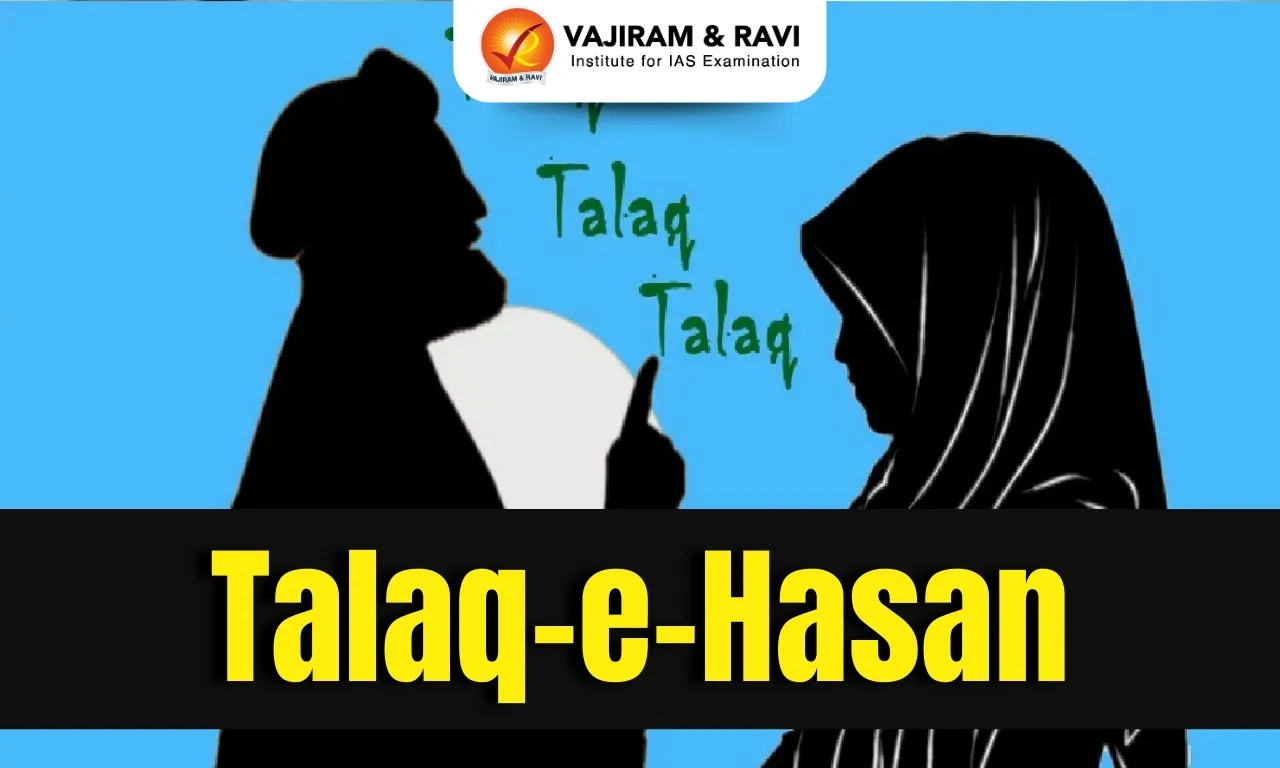
  • It is a type of extrajudicial form of divorce mentioned under Islam that only men can practice.
  • It is a revocable form of divorce. 
  • A traditional form of divorce, 'Talaq-e-Hasan is considered to be approved by Prophet Mohammad and is valid as per all schools of Muslim law.
  • To practice 'Talaq-e-Hasan, a man needs to pronounce talaq on his wife three turns at intervals of one month. 
  • The period of the gap between the three consecutive talaqs is called the period of abstinence or ‘iddat’ and its duration is 90 days. 
  • The divorce is assumed to be revoked if the couple begins to cohabit or be intimate during the period of abstinence. 

How is it Different from Triple Talaq?

  • Triple talaq or Talaq-e-Biddat was banned by the government in 2019. 
  • In this, a man can divorce his wife by pronouncing "talaq" thrice in one go. 
  • The divorce is instant and irrevocable. 
  • This is different from 'Talaq-e-Hasan as it does not have any waiting period and irrevocably terminates the marriage.

Source: TH

Talaq-E-Hasan FAQs

Q1: What is talaq-e-Hasan in Islam?

Ans: It is a type of extrajudicial form of divorce mentioned under Islam that only men can practice.

Q2: How to give talaq-e-hasan?

Ans: To practice 'Talaq-e-Hasan, a man needs to pronounce talaq on his wife three turns at intervals of one month.

Q3: What happens if the couple resumes cohabitation during the period of abstinence in Talaq-e-Hasan?

Ans: The divorce is automatically revoked.

Q4: Which type of talaq is banned in India?

Ans: Triple talaq or Talaq-e-Biddat was banned by the government in 2019.

Smooth-Coated Otter

Smooth-Coated Otter

Smooth-Coated Otters Latest News

Recently, the National Zoological Park (NZP) in Delhi welcomed a pair of smooth-coated otters from Surat in a rare animal exchange after 20 years.

About Smooth-Coated Otters

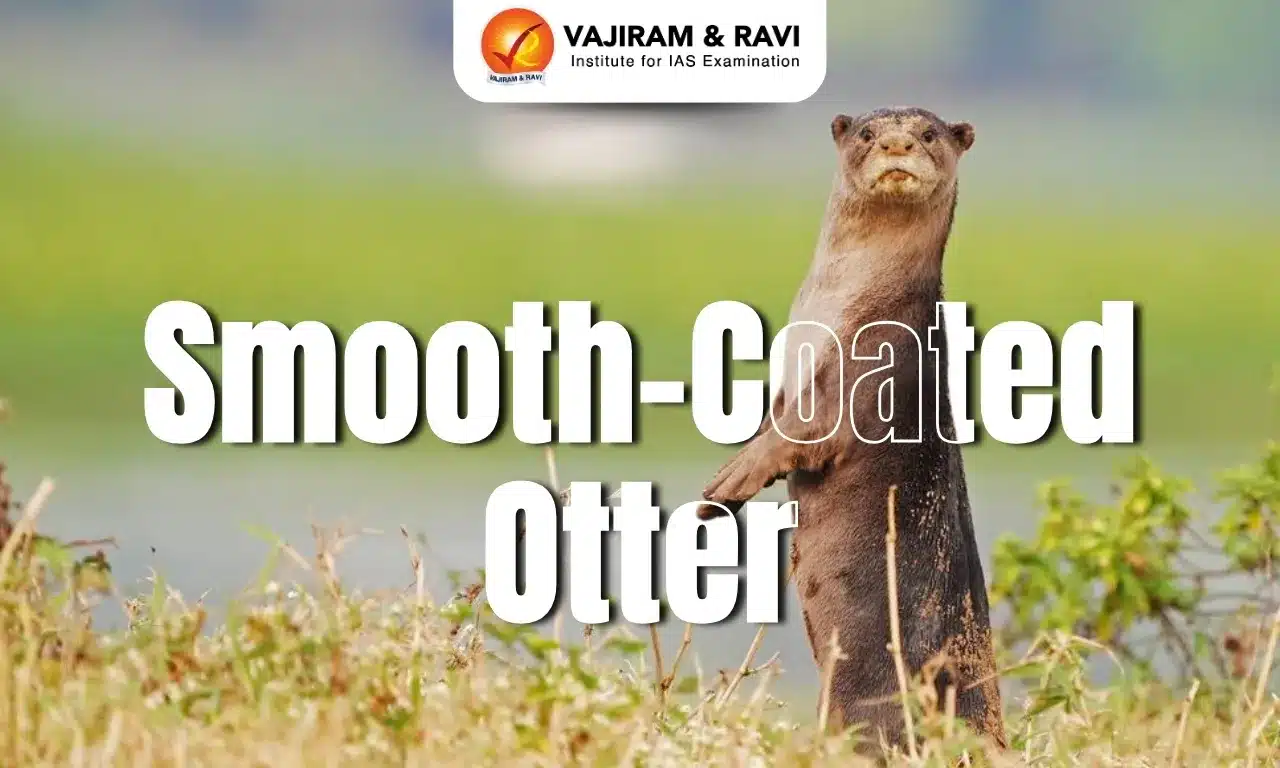
  • It is a species of otter, the only extant representative of the genus Lutrogale. 
  • Distribution: They live in southern and Southeast Asia, China, and India, and in Iraq there is a small population. 

Habitat of Smooth-Coated Otters

  • They are mostly found in lowlands, coastal mangrove forests, peat swamp forests, freshwater wetlands, large forested rivers, lakes, and rice paddies.
  • Although adapted for water, smooth-coated otters are equally comfortable on land and can travel long distances overland in search of suitable habitat. 

Features of Smooth-coated Otters

  • They are the largest otter in Southeast Asia.
  • As its name indicates, the fur of this species is smoother and shorter than that of other otters.
  • The fur is light to dark brown dorsally and light brown to almost gray ventrally.
  • They have short, tightly packed under fur and longer, water-repellant guard hairs.
  • They are strong swimmers and hunt in groups. When fishing, they travel in a V-formation going upstream.
  • Threats:  Loss of habitat, habitat degradation due to water pollution from fertilizers and pesticides and poaching.
  • Conservation Status: IUCN: Vulnerable

Source: IE

Smooth-Coated Otters FAQs

Q1: Where are smooth-coated otters found?

Ans: Southeast Asia

Q2: What is the status of smooth-coated otter in IUCN?

Ans: Vulnerable

Enquire Now