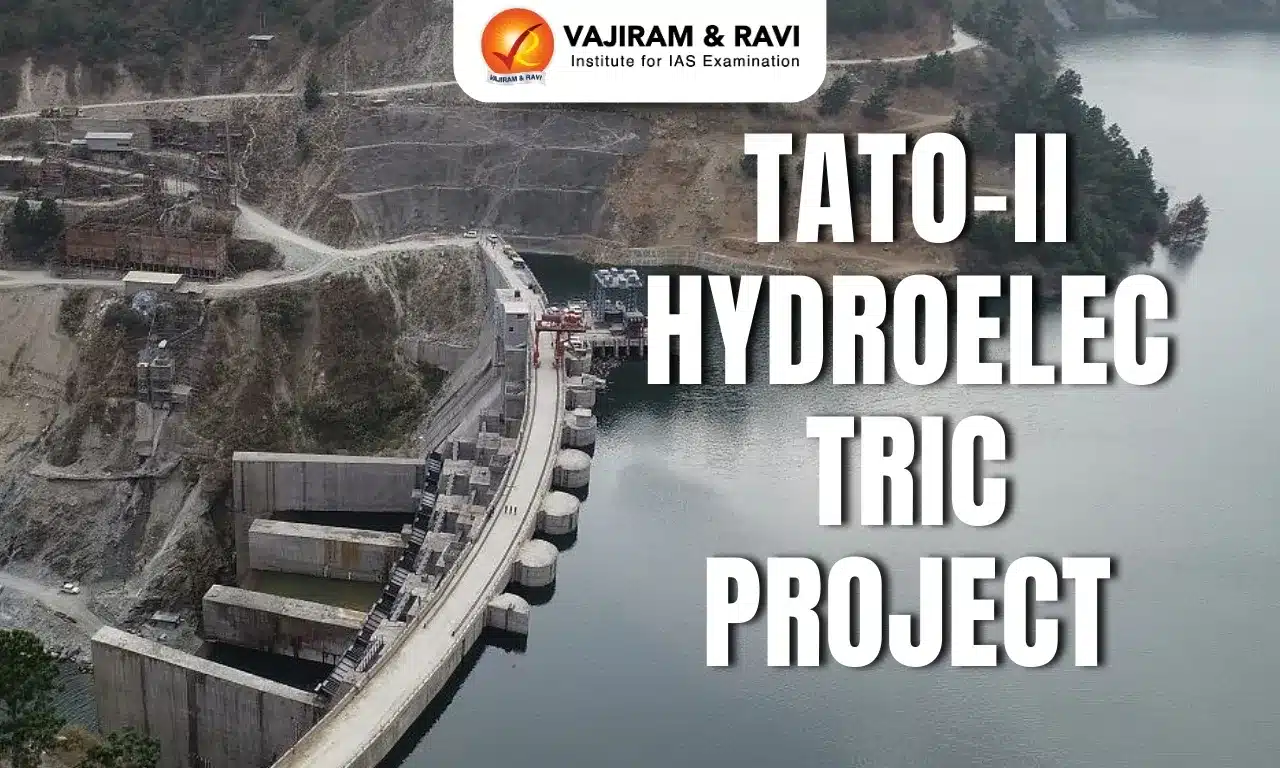
Tato-II Hydroelectric Project

Tato-II Hydroelectric Project

Tato-II Hydroelectric Project Latest News

The Cabinet Committee on Economic Affairs (CCEA) recently approved an investment proposal worth ₹8,146.21 crore for the construction of the 700 MW Tato-II Hydro Electric Project (HEP) in Shi Yomi district of Arunachal Pradesh.

About Tato-II Hydroelectric Project

  • It is a 700 MW hydro power project planned on Siyom river/basin in Arunachal Pradesh.
  • It is a run-of-river project. The hydro reservoir capacity is planned to be 56 million cubic meters.
  • The project consists of 4 turbines, each with 175MW nameplate capacity. 
  • It is expected to generate 2,738.06 million units of energy.
  • The Power generated from the project will help improve the power supply position in the state of Arunachal Pradesh and will also help in balancing the national grid.
  • Arunachal Pradesh will receive 12% free power and an additional 1% for the Local Area Development Fund (LADF).
  • The project will be implemented through a joint venture between North Eastern Electric Power Corporation Ltd (NEEPCO) and the Government of Arunachal Pradesh.
  • The project will cost Rs 8,146.21 crore.

Source: TOI

Tato-II Hydroelectric Project FAQs

Q1: The Tato-II Hydroelectric Project is planned on which river?

Ans: Siyom River

Q2: What is the total planned installed capacity of the Tato-II Hydroelectric Project?

Ans: 700 MW

Q3: The Tato-II project is classified as which type of hydro power project?

Ans: Run-of-river type.
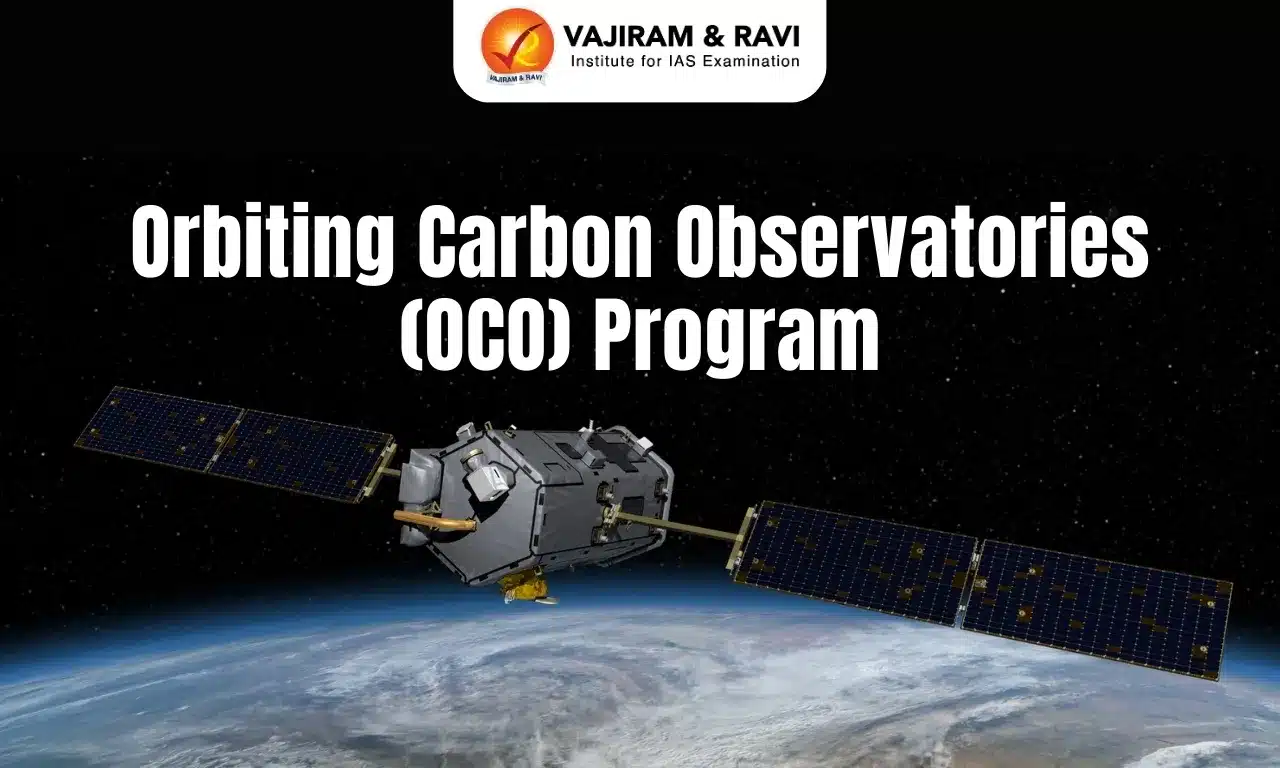
Orbiting Carbon Observatories (OCO) Program

Orbiting Carbon Observatories (OCO) Program

Orbiting Carbon Observatories (OCO) Program Latest News

Recently, the Trump administration asked to shut down NASA’s Orbiting Carbon Observatories (OCO) program.

About Orbiting Carbon Observatories (OCO) Program

  • OCOs are a series of dedicated Earth remote sensing satellites that were designed specifically to observe atmospheric CO2 from space in order to better understand the characteristics of climate change.

Timeline of Observatories

  • The first mission of the series failed soon after launch in February 2009.
  • A replacement satellite, OCO-2, was launched in July 2014. It was built based on the original OCO mission to minimise cost, schedule, and performance impacts.
  • In 2019, a third mission, OCO-3, was sent to the International Space Station (ISS) to further enhance the observation of atmospheric CO2.

Importance of Orbiting Carbon Observatories

  • NASA and other agencies have used the data to create high-resolution maps of plant growth around the world.
  • That’s useful to farmers, useful to rangeland and grazing and drought monitoring and forest mapping and all kinds of things, in addition to the CO2 measurements.
  • The data have been used by the US Department of Agriculture and many private agricultural consulting companies to forecast and track crop yields and drought conditions.

Source: IE

Orbiting Carbon Observatories (OCO) Program FAQs

Q1: What did the orbiting carbon observatory (OCO2) launched by NASA aim to measure?

Ans: Carbon dioxide

Q2: What is the resolution of OCO-2?

Ans: It has a cross-track swath width of 10 km and spatial resolution of 1.29 km cross-track and 2.25 km along-track.

Cess

Cess

Cess Latest News

As of 2023-24, the Central Government has failed to transfer ₹3.69 lakh crore worth of cess collections to the relevant funds for which the cess was implemented, the Comptroller and Auditor General has found.

About Cess

  • A cess is a form of tax levied by the government on tax with specific purposes till the time the government gets enough money for that purpose. 
  • Different from the usual taxes, and duties like excise and personal income tax, a cess is imposed as an additional tax besides the existing tax (tax on tax). 
  • For example, the Swachh Bharat cess is levied by the government for cleanliness activities that it is undertaking across India.
  • A cess, generally paid by the everyday public, is added to their basic tax liability paid as part of total tax paid.

Difference between Tax and Cess

  • A cess is different from taxes as it is imposed as an additional tax besides the existing tax (tax on tax). 
  • Another difference lies in the way the revenue recovered from the cess is maintained. 
  • While revenue from taxes like income tax is kept in the Consolidated Fund of India (CFI), and the government can use it for any purposes it deems fit, the revenue coming from cess is first credited to the Consolidated Fund, and the government may then, after due appropriation from Parliament, utilise it for the specified purpose.
  •  Another major difference between central taxes and cess is that the proceeds of a cess may or may not be shared with the state governments, while that of taxes have to be shared.

Source: TH

Cess FAQs

Q1: How is a cess different from normal taxes like income tax or excise duty?

Ans: It is levied as an additional tax on an existing tax.

Q2: What is the primary purpose of imposing a cess?

Ans: To finance specific government initiatives.

Q3: What is the main difference between a cess and a surcharge?

Ans: Cess revenue is earmarked for specific purposes, surcharge revenue can be used for any purpose.

India Semiconductor Mission (ISM)

India Semiconductor Mission

India Semiconductor Mission Latest News

The government recently approved four additional semiconductor manufacturing projects in the states of Odisha, Punjab, and Andhra Pradesh under the India Semiconductor Mission (ISM).

About India Semiconductor Mission

  • It is a specialized and independent institution under the Ministry of Electronics and Information Technology (MeitY), Government of India.
  • It is an independent Business Division within the Digital India Corporation.
  • It aims to build a vibrant semiconductor and display ecosystem to enable India’s emergence as a global hub for electronics manufacturing and design.
  • ISM has all the administrative and financial powers and is tasked with the responsibility of catalysing the India Semiconductor ecosystem in manufacturing, packaging, and design. 
  • ISM has an advisory board consisting of some of the leading global experts in the field of semiconductors.
  • ISM is serving as the nodal agency for efficient, coherent, and smooth implementation of the programme for development of semiconductor and manufacturing ecosystem in India.
  • ISM has been working as a nodal agency for the schemes approved under the Semicon India Programme.

Key Facts about Semicon India Programme

  • The ISM was launched in 2021 with a total financial outlay of Rs. 76,000 crores under the aegis of the Ministry of Electronics and IT (MeitY), Government of India.
  • It is part of the comprehensive program for the development of sustainable semiconductor and display ecosystems in the country. 
  • The programme aims to provide financial support to companies investing in semiconductors, display manufacturing, and design ecosystem.
  • It also promotes and facilitates indigenous Intellectual Property (IP) generation and encourages, enables, and incentivizes the Transfer of Technologies (ToT).
  • The following four schemes have been introduced under the aforesaid programme:
    • Scheme for setting up of Semiconductor Fabs in India.
    • Scheme for setting up of Display Fabs in India.
    • Scheme for setting up of Compound Semiconductors/Silicon Photonics/ Sensors Fab and Semiconductor Assembly, Testing, Marking and Packaging (ATMP)/OSAT facilities in India.
    • Design Linked Incentive (DLI) Scheme.

Source: NIE

India Semiconductor Mission FAQs

Q1: The India Semiconductor Mission (ISM) functions under which Union Ministry?

Ans: Ministry of Electronics and Information Technology

Q2: India Semiconductor Mission (ISM) serves as the nodal agency for implementing programmes under which scheme?

Ans: Semicon India Programme

Q3: What is the primary objective of India Semiconductor Mission (ISM)?

Ans: It aims to build a vibrant semiconductor and display ecosystem to enable India’s emergence as a global hub for electronics manufacturing and design.

Wallacean Hominids

Wallacean Hominids

Wallacean Hominids Latest News

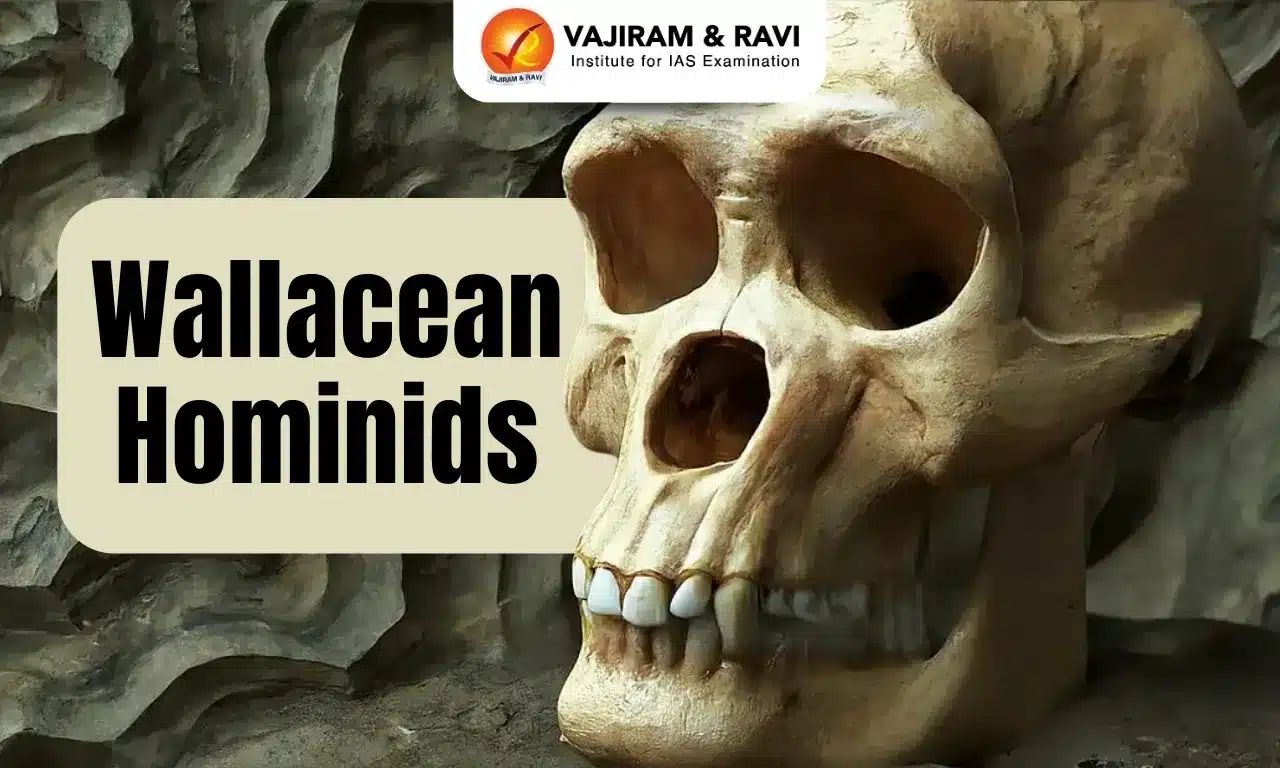
Recently, scientists have found possible artefacts of oldest known Wallacean hominids on Indonesia’s Sulawesi island.

About Wallacean Hominids

  • The earliest Wallacean humans, pre-historic persons known as Homo Erectus, were thought to have only settled in Indonesia’s Flores island and Philippines’ Luzon island around 1.02 million years ago.
  • They were thought to be incapable of distant sea travel, proving the significance of the Sulawesi findings in theories of migration.
  • Archaeologists from Australia and Indonesia found the small, chipped tools, used to cut little animals and carve rocks, under the soil in the region of Soppeng in South Sulawesi.
  • These were artefacts made by ancient humans who lived on the earth long before the evolution of our species, Homo Sapiens,”

Key Facts about Wallacea

  • It is a region in Eastern Indonesia including several islands such as Sulawesi, Lombok, Flores, Timor, Sumbawa that lie between Borneo and Java and Australia and New Guinea.
  • The region is named for the naturalist Alfred Russel Wallace who studied the fauna and flora of the area.

Source: DD News

Wallacean Hominids FAQs

Q1: What are the four types of hominids?

Ans: The hominidae family consists of the great apes (gorillas, chimpanzees, bonobos and orangutans) and human beings.

Q2: Who were the first human like hominids?

Ans: Homo erectus

State Health Regulatory Excellence Index

State Health Regulatory Excellence Index

State Health Regulatory Excellence Index Latest News

Recently, the union health secretary virtually launched the State Health Regulatory Excellence Index (SHRESTH).

About State Health Regulatory Excellence Index

  • It is a first-of-its-kind national initiative to benchmark and strengthen state drug regulatory systems through a transparent, data-driven framework.

  • The initiative, proposed by the Central Drugs Standard Control Organization (CDSCO) aims to drive improvements in the performance of state drug regulatory authorities across India, ensuring drug safety and quality standards are consistently met.

  • It will have 27 indices for Manufacturing States across five key themes: Human Resources, Infrastructure, Licensing Activities, Surveillance Activities and Responsiveness and 23 indices for Primarily Distribution States.

  • States will submit the data on predefined metrics to CDSCO which will be collected by 25th of every month and these metrics will be scored on the 1st of next month and shared with all states and UTs.

  • SHRESTH is a virtual gap assessment tool for states to assess their current position and help towards maturity certification

  • Significance: This Index will enable targeted improvements in human resources, infrastructure, and digitization across states, ensuring drug safety is guaranteed for every Indian, regardless of geography.

Source: PIB

State Health Regulatory Excellence Index FAQs

Q1: What is the central drug standard control organization?

Ans: The Central Drugs Standard Control Organization (CDSCO) is the Central Drug Authority for discharging functions assigned to the Central Government under the Drugs and Cosmetics Act.

Q2: Which ministry is CDSCO under?

Ans: Ministry of Health & Family Welfare

UNDP Equator Initiative Award

UNDP Equator Initiative Award

UNDP Equator Initiative Award Latest News

Recently, a self-help group (SHG) from a small village in Kundgol taluk of Dharwad district, Karnataka has bagged the ‘Equator Initiative Award’ given by the United Nations Development Programme (UNDP).

About UNDP Equator Initiative Award

  • It is presented under the Equator Initiative of the United Nations Development Programme.
  • It is awarded biennially to recognize outstanding community efforts to reduce poverty through the conservation and sustainable use of biodiversity. 
  • It is also referred to as the Nobel Prize for Biodiversity Conservation.
  • Prize money: The award includes a cash prize of $10,000.
  • This year’s award selection was based on the theme Women and Youth Leadership for Nature-Based Climate Action”
  • Eligibility Criteria

    • The initiative must have been in existence for at least three years, and/or the actions taken must have been in place for at least three years.
    • The nominee must be either a local community-based group, operating in a rural area, based in a country receiving support from the United Nations Development Programme or an Indigenous Peoples’ community in any country, operating in a rural area.
    • The actions taken must be nature-based, and must deliver benefits related to two or more Sustainable Development Goals (SDGs).

Source: TH

UNDP Equator Initiative Award FAQs

Q1: What is UNDP and its purpose?

Ans: UNDP is the United Nations' lead agency on international development. It supports countries and communities as they work to eradicate poverty, implement the Paris Agreement on climate change.

Q2: Where is the headquarter of UNDP?

Ans: New York City

Chagas Disease

Chagas Disease

Chagas Disease Latest News

Considering the enormous human and economic toll Chagas disease inflicts, investment in R&D of medical innovations such as diagnostics, pharmaceuticals, and vaccines remains disproportionately low.

About Chagas Disease

  • Chagas disease, also known as American trypanosomiasis, is an inflammatory, infectious disease caused by the protozoan parasite, Trypanosoma cruzi. 
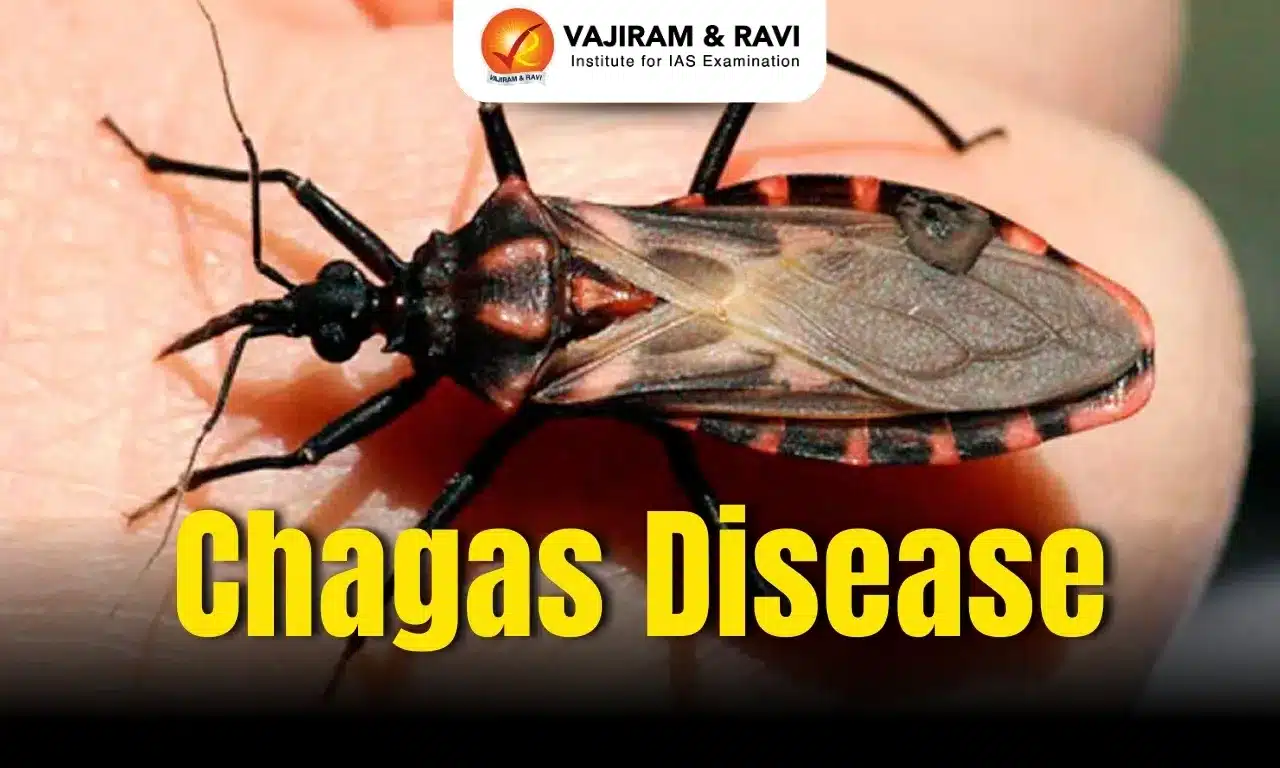
  • The most common way people are infected with Chagas is through the blood-sucking triatomine bugs.
    • This parasite is found in the feces of the triatomine bug.
    • These bugs also are called reduviid. They may also be known as "kissing bugs" because they tend to bite people's faces.
  • The parasite can also be transmitted from mother to child during pregnancy or childbirth, through contaminated food and beverages, blood transfusions, organ transplants, or laboratory accidents.
  • Chagas disease is common in South America, Central America, and Mexico, the primary home of the triatomine bug.
  • Few people have symptoms at first. But over time, parasites can move to your tissues and cause chronic infections, leading to heart and digestive tract damage.
  • Left untreated, Chagas disease later can cause serious heart and digestive problems.
  • Treatment:
    • During the first phase of infection, treatment of Chagas disease aims to kill the parasite.
    • Later, it's no longer possible to kill the parasite. Treatment in this later phase is about managing symptoms.

Source: NAT

Chagas Disease FAQs

Q1: Which organism causes Chagas disease?

Ans: It is caused by the protozoan parasite, Trypanosoma cruzi.

Q2: What is the most common mode of transmission of Chagas disease?

Ans: The most common way people are infected with Chagas is through the blood-sucking triatomine bugs.

Q3: Which region is the primary home of the triatomine bug and Chagas disease?

Ans: South America, Central America, and Mexico

BHU-NEER Portal

BHU-NEER Portal

BHU-NEER Portal Latest News

Recently, the minister of state for Jal Shakti informed the Lok Sabha about BHU-NEER Portal.

About BHU-NEER Portal

  • It is new state of the art portal which has been rolled out in 2024 by the Central Ground Water Authority (CGWA) under the Ministry of Jal Shakti,
  • Purpose: To provide a smooth and efficient mechanism for regulation of ground water development and management in the country by providing a quick and easy to use platform for filing No Objection Certificate (NOC) applications for ground water abstraction.

Features of BHU-NEER Portal

  • Its centralized database will allow users to access critical information on groundwater compliance, policies, and sustainable practices.
  • The portal is developed with several user-friendly features to offer streamlined process flow to the project proponents seeking groundwater withdrawal permits.
  • Having a simplified yet informative interface, and features like PAN based single Id system, NOC with QR code etc., “Bhu-Neer” marks a significant improvement over its previous version NOCAP.
  • No Objection Certificate: The Bhu-Neer portal is for the purpose of online application and processing of NOC for extraction of ground water by industries, infrastructure projects and mining projects
  • Significance: By helping in enforcement of the Guidelines meant for curbing indiscriminate extraction of ground water, the Bhu-Neer contributes to sustainable development and management of ground water resources in the country.

Source: PIB

BHU-NEER Portal FAQs

Q1: What is the aim of BHU-Neer portal?

Ans: It is for the purpose of online application and processing of NOC for extraction of ground water by industries, infrastructure projects and mining projects.

Q2: Who launched the Bhu Neer portal?

Ans: It has been rolled out in 2024 by the Central Ground Water Authority (CGWA) under the Ministry of Jal Shakti.

Enquire Now