Cheque Truncation System (CTS)

Cheque Truncation System

Cheque Truncation System Latest News

The Reserve Bank of India (RBI) has decided on the transition of the Cheque Truncation System (CTS) from the current approach of batch processing to continuous clearing with settlement on realisation in two phases.

About Cheque Truncation System 

  • It is a cheque clearing system undertaken by the Reserve Bank of India (RBI) for faster clearing of cheques. 
  • As the name suggests, truncation is the process of stopping the flow of the physical cheque in its way of clearing. 
  • CTS is an online image-based cheque clearing system where cheque images and Magnetic Ink Character Recognition (MICR) data are captured at the collecting bank branch and transmitted electronically, eliminating the actual cheque movement.
  • Security: CTS is protected by a comprehensive PKI-based security architecture which incorporates basic security and authentication controls such as dual access control, user ID, and passwords with crypto box and smart card interfaces.
    • Only CTS-2010 standards-compliant instruments can be presented for clearing through CTS.
    • CTS-2010 standards contain certain benchmarks towards achieving standardization of cheques issued by banks across the country. 
    • These include provision of mandatory minimum-security features on cheque forms like quality of paper, watermark, bank’s logo in invisible ink, void pantograph, etc., and standardisation of field placements on cheques.
    • The minimum-security features and standardisation help presenting banks while scrutinising/recognising cheques of drawee banks in an image-based processing scenario.
  • Benefits.
    • Realisation of proceeds of cheque possible within the same day.
    • Data storage and retrieval becomes easy.
    • Minimizes risks and introduces a secured cheque clearing system.
    • Will result in cost savings due to lower cost in the physical movement of cheques.
    • Minimizing bottlenecks and delays between presentation and realization time.
    • Provides shorter clearing cycles and a centralized image archival system.
      • CTS currently processes cheques with a clearing cycle of up to two working days. 
      • Once the newly announced measures by RBI on Continuous Clearing of Cheques under CTS are implemented, cheques would be cleared within hours of submission instead of two days.

Source: TH

Cheque Truncation System FAQs

Q1: The Cheque Truncation System (CTS) in India is operated by which institution?

Ans: Reserve Bank of India (RBI)

Q2: In the Cheque Truncation System, truncation refers to which process?

Ans: Cheque Truncation System is a cheque clearing system undertaken by the Reserve Bank of India (RBI) for faster clearing of cheques.

Q3: What is the main purpose of CTS-2010 standards?

Ans: To standardise and provide minimum-security features for cheques.
Ideonella Sakaiensis

Ideonella Sakaiensis

Ideonella Sakaiensis Latest news

Research has identified promising microbes like Ideonella sakaiensis, which can degrade PET plastic.

About Ideonella Sakaiensis

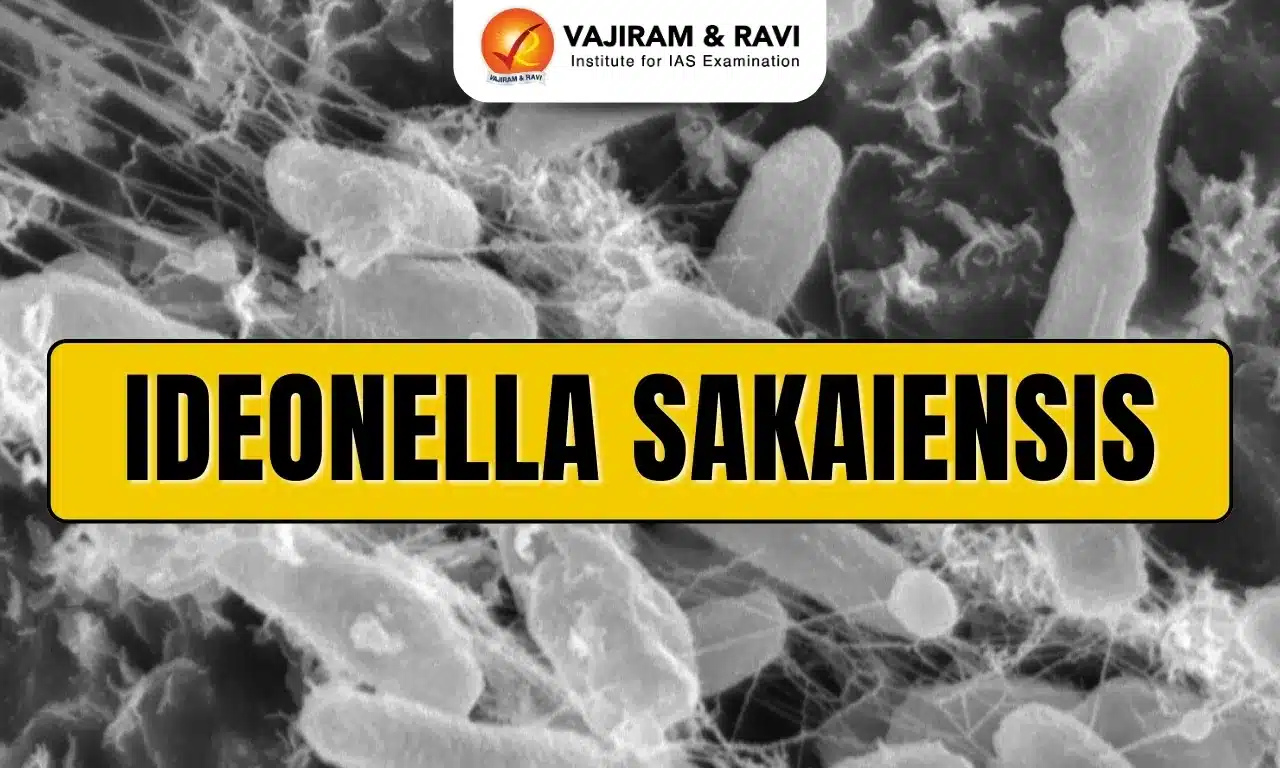
  • It is a bacterium from the genus Ideonella and family Comamonadaceae.
  • It is capable of breaking down and consuming the plastic polyethylene terephthalate (PET) using it as both a carbon and energy source. 
  • It was discovered by a group of researchers in Japan.
  • It breaks PET into its (environmentally benign) building blocks. These can then be used as food by I. sakaiensis and other organisms.

Characteristics of Ideonella Sakaiensis

  • It is a Gram-negative, rod-shaped, motile, non-sporing, non-pigment-producing, monotrichous bacterium.
  • They typically measure about 1.2 to 1.5 μm in length and 0.6 to 0.8 μm in width, giving the appearance of a bacillus under the microscope. 
  • It was initially discovered from PET-contaminated soil, suggesting its main habitat to be the environment, mainly soil with enriched plastic wastes.
  • They are found to live in oxygen-rich moist soil and sewage sludge. 

What is Polyethylene Terephthalate?

  • It is a condensation polymer of ethylene glycol and terephthalic acid.
  • The by-product of the reaction is water so it is an example of condensation or step-growth polymerization. 
  • PET Plastic is a thermoplastic synthetic substance which is malleable under heat and can be placed into nearly any shape.

Source: DTE

Ideonella Sakaiensis FAQs

Q1: What is Ideonella sakaiensis used for?

Ans: It may be useful in recycling and upcycling mixed plastics.

Q2: What is the natural habitat of Ideonella sakaiensis?

Ans: It is known to survive in oxygen-rich soil that is moist and aerated.

SabhaSaar AI Tool

SabhaSaar AI Tool

SabhaSaar AI Tool Latest news

The Centre is set to unveil an artificial intelligence (AI)-powered tool named ‘SabhaSaar’ in Tripura on Independence Day.

About SabhaSaar AI Tool

  • It is an AI tool which will automatically generate minutes of meetings of gram sabhas.
  • Gram Sabha is the primary body of the Panchayati Raj system, consisting of all registered voters of a gram panchayat.

Features of SabhaSaar AI Tool

  • It leverages the power of AI to generate structured minutes of meetings from gram sabha videos and audio recordings.
  • It will bring uniformity in minutes of the gram sabha meetings across the country.
  • Panchayat officials can use their e-GramSwaraj login credentials to upload video/audio recordings on ‘SabhaSaar’.
  • It is built on Bhashini, an AI-powered language translation platform launched by the government to bridge literacy, language, and digital divides.
  • The tool generates transcription from a video or audio, translates it into a chosen output language and prepares a summary.
  • It enables transcription in all major Indian languages like Hindi, Bengali, Tamil, Telugu, Marathi and Gujarati, in addition to English.
  • Significance: It is ideal for panchayats, administrative bodies, and rural development projects as it streamlines documentation and empowers stakeholders with instant access to meeting insights.

Source: IE

SabhaSaar AI Tool FAQs

Q1: What is Artificial Intelligence?

Ans: It is a set of technologies that enable computers to perform a variety of advanced functions, like ability to see, understand and translate spoken and written language and more.

Q2: What is meant by Gram Sabha?

Ans: Gram Sabha is the primary body of the Panchayati Raj system and by far the largest. It is a permanent body.

IN-SPACe

IN SPACe

IN-SPACe Latest News

Pune-based space tech startup Astrophel Aerospace recently signed a framework MoU with IN-SPACe, the Department of Space nodal body, to access ISRO facilities for technical reviews, system-level testing, and qualification support for semi-cryogenic propulsion systems, including turbopumps and engine modules

About IN-SPACe

  • Indian National Space Promotion and Authorization Center (IN-SPACe) is a single-window, independent, nodal agency that functions as an autonomous agency in the Department of Space (DOS). 
  • It is formed following the Space sector reforms to enable and facilitate the participation of private players.
  • IN-SPACe is responsible to promote, enable, authorize and supervise various space activities of non-governmental entities (NGEs) including building launch vehicles & satellites and providing space-based services; sharing space infrastructure and premises under the control of DOS/ISRO; and establishing of new space infrastructure and facilities.
  • The agency acts as an interface between ISRO and NGEs and assesses how to utilize India's space resources better and increase space-based activities. 
  • It also assesses the needs and demands of private players, including educational and research institutions, and explores ways to accommodate these requirements in consultation with ISRO.
  • Three Directorates viz., Promotion Directorate (PD), Technical Directorate (TD) and Program Management and Authorization Directorate (PMAD) are carrying out the functions of IN-SPACe.

Source: HBL

IN-SPACe FAQs

Q1: IN-SPACe functions under which department of the Government of India?

Ans: Department of Space

Q2: Which entities can approach IN-SPACe for space activities?

Ans: Non-governmental entities, including private companies and educational institutions.

Q3: What is IN-SPACe’s main objective?

Ans: To facilitate, authorize, and promote private sector participation in India’s space activities.

Lampedusa Island

Lampedusa Island

Lampedusa Island Latest News

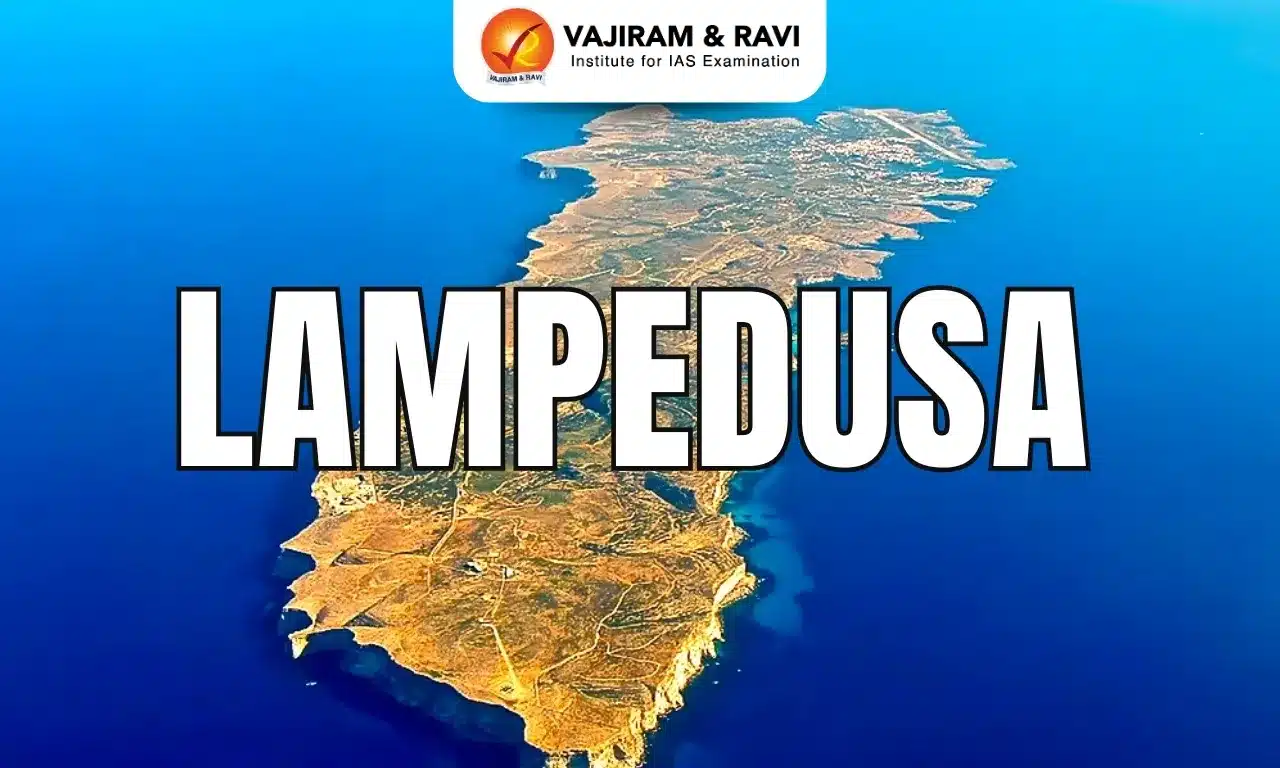
At least 20 people have died after a migrant boat capsized off the southern Italian island of Lampedusa recently.

About Lampedusa Island

  • It is the largest (21 sq.km.) of the Isole Pelagie (Pelagie Islands), an island group that includes the Linosa and Lampione islets. 
  • Administratively Lampedusa is part of the autonomous region of Sicily in Italy. 
  • It is geographically part of the African continent. 
  • It is located in the Mediterranean Sea between Malta and Tunisia, 105 miles (170 km) southwest of Licata, Sicily. 
  • It is a volcanic island.
  • It is also known as the Pearl of the Mediterranean because of the lava: it is the emerged part of a volcano whose last eruption events date back about 9000 years ago, when the last major seismic events were dated at the end of 1800.
  • Lampedusa’s greatest length is about 11 km; its greatest width is about 3 km. It rises to 133 meters above sea level.
  • It is a rocky island with limited natural freshwater sources.
  • The climate is typically Mediterranean, with hot, dry summers and mild, wet winters.

Source: TH

Lampedusa Island FAQs

Q1: Lampedusa Island is part of which autonomous region of Italy?

Ans: Sicily

Q2: Geographically, Lampedusa Island is considered part of which continent?

Ans: Africa

Q3: In which sea is Lampedusa Island located?

Ans: Mediterranean Sea

Moai Statues

Moai Statues

Moai Statues Latest News

A study warns that rising sea levels could submerge Easter Island's iconic moai statues by 2080 and it will threaten the island's cultural identity and tourism economy.

About Moai Statues

  • They are massive megalithic stone-carved human-shaped statues found at Easter Island.
  • The Easter Island statues are monolithic human figures carved from volcanic rock by the first Polynesian settlers on the island, the Rapa Nui people.
  • They were built in approximately 1400 – 1650 A.D. by the natives of this island known as Rapa Nui.
  • There are around 1000 Moai statues which are made up of volcanic tuff, the tallest of them being 33 feet.
  • They carved them in the likeness of their ancestors.

What do Moais Represent?

  • They were built to honor chieftains or other important people who had passed away.
  • They were placed on rectangular stone platforms called ahu, which are tombs for the people that the statues represented.
  • The moais were intentionally made with different characteristics since they were intended to keep the appearance of the person they represented.

Key Facts about Easter Island

  • It is located in the eastern Pacific Ocean. Together with Hawaii and New Zealand, it forms the so-called ‘Polynesian Triangle’, a spearhead-shaped area in the Pacific that is the traditional homeland of the Polynesian people.

Source: DTE

Gaur

Gaur

Gaur Latest news

The Palamau Tiger Reserve (PTR), the last stronghold of Gaur (Bos gaurus) in Jharkhand, has registered an alarming decline in the bovid’s population. 

About Gaur

  • Gaur, also known as Indian Bison, is the largest species among the wild cattle and the Bovidae.
  • Distribution: Gaurs are indigenous to the South and Southeast parts of Asia.
  • Habitat 
    • Gaurs are primarily found in evergreen and semi-evergreen forests along with moist deciduous forests with open grasslands.
    • They prefer hilly-terrains below an altitude of 1,500-1,800 m with large and undisturbed forest tracts and abundant water.
  • Conservation Status of Gaur
    • IUCN Red List: Vulnerable
    • CITES: Appendix I
    • Wild Life Protection Act, 1972: Schedule I 
  • Ecological Significance: It plays a vital role in maintaining ecological balance in forests besides serving as important prey species for tigers. Being herbivores, they also help shape vegetation dynamics and contribute to seed dispersal.
  • Threats: Loss of habitat throughout most of their range. Another serious concern is susceptibility to domestic cattle diseases like rinderpest, hoof, or mouth disease.

 Source: DTE

Gaur FAQs

Q1: What is the English name for Gaur?

Ans: Indian Bison

Q2: Which river flows through Palamau Tiger Reserve?

Ans: North Koyal, Auranga and Burha

Q3: In which state is the Palamau Tiger Reserve found?

Ans: Jharkhand, India

APAAR ID

Automated Permanent Academic Account Registry (APAAR) ID

APAAR ID Latest news

Recently, the Central Board of Secondary Education (CBSE) has now made it mandatory for students to submit their APAAR IDs while registering for the board exams.

About APAAR ID

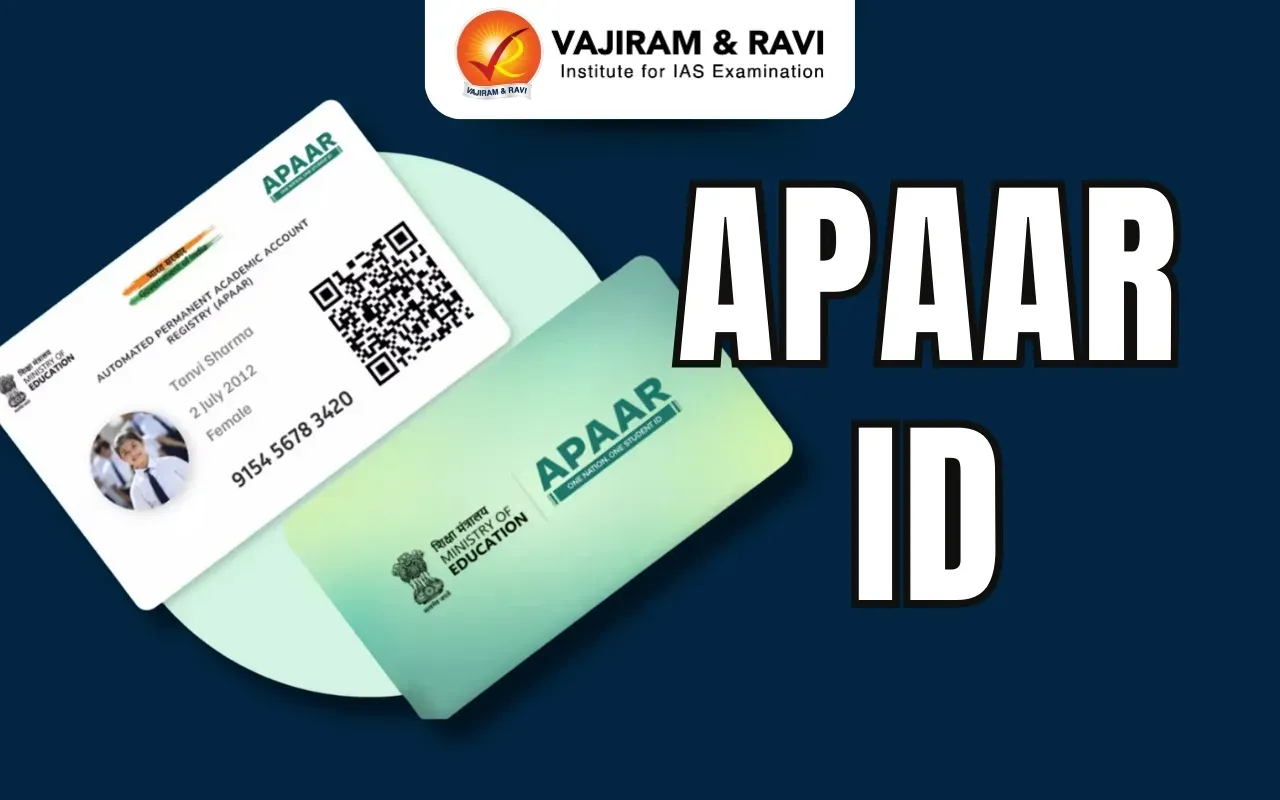
  • APAAR stands for Automated Permanent Academic Account Registry. It was envisioned under the New Education Policy, 2020.
  • It is an identification number which is linked to enrollment, and a student’s journey from pre-primary to higher education can be tracked through it.
  • APAAR assigns a unique and permanent 12-digit ID to every student, offering a comprehensive record of their academic achievements, including degrees, scholarships, awards, and other credits.
  • The APAAR ID will be unique and remain the same through one’s education journey.
  • It is linked to Aadhaar and stored in DigiLocker for easy access.
  • The APAAR ID embodies the vision of "One Nation, One Student ID", ensuring a unified and accessible academic experience for students across India.
  • It serves as a lifelong academic passport, consolidating all achievements and credentials of a student in one place.
  • APAAR is generated through Unified District Information System for Education Plus (UDISE+).

Objectives of APAAR

  • To accumulate and store students’ academic achievements in a central database
  • To facilitate seamless transfer between institutions
  • To provide standardized digital records for mark sheets and institutional affiliations.
  • To help in educational policymaking and analysis

Source: IE

APAAR ID FAQs

Q1: What is APAAR?

Ans: APAAR, which stands for Automated Permanent Academic Account Registry, is a specialized identification system designed for all students in India.

Q2: Who launched APAAR ID?

Ans: The Ministry of Education and the Government of India

Enquire Now