Golden Dome

Golden Dome

Golden Dome 

Golden Dome is a ground- and space-based missile defense system designed to safeguard the United States from advanced missile threats.

Golden Dome Latest News

Recently, the US President has announced a 175 billion Golden Dome missile defence shield for the United States. 

About Golden Dome

  • It is a ground- and space-based missile defense system designed to safeguard the United States from advanced missile threats.
  • Golden Dome aims to create a network of satellites to detect, track and potentially intercept incoming missiles. The shield could deploy hundreds of satellites for missile detection and tracking.
  • It will protect the US from long-range missiles, including those launched from space or other continents, and will integrate with current defense systems.

Key Features of the Golden Dome

  • Space-Based Interceptors: The system aims to deploy interceptors in space to detect and neutralize incoming missiles at various stages of their trajectory.
  • Advanced Tracking Technologies: Utilizing space-based radars and sensors, the Golden Dome will provide real-time tracking of missile threats.
  • Laser Weapons: The integration of laser technology is intended to enhance the system's capability to intercept and destroy missiles mid-flight.
  • Components of the Golden Dome will be drawn from existing American missile defence assets, including Patriot missile batteries, THAAD (Terminal High Altitude Area Defence), Aegis Ballistic Missile Defence, and Ground-based Midcourse Defence (GMD).

Source: DD News

Golden Dome FAQs

Q1: What is the significance of the Golden Dome?

Ans: The Golden Dome envisions a layered missile defense architecture covering the continental United States.

Q2: What is THAAD used for?

Ans: The Terminal High Altitude Area Defense (THAAD) is a highly effective, combat-proven defense against short, medium and intermediate-range ballistic missile threats.
Phoenix roxburghii

Phoenix roxburghii

Phoenix roxburghii Latest News

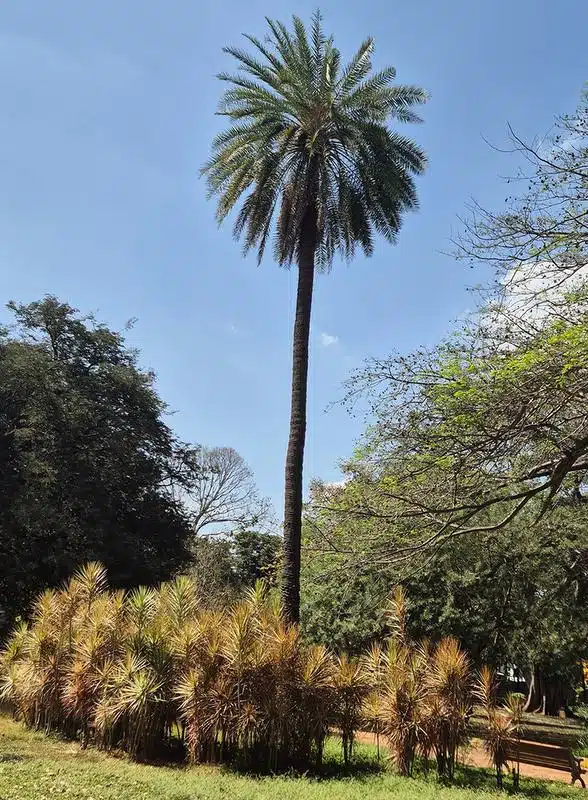
Recently, researchers have identified a new palm species and named it as Phoenix roxburghii. 

About Phoenix roxburghii

  • It is a new palm species named after William Roxburgh, considered the father of Indian Botany.

Features of Phoenix roxburghii 

  • It grows 12 to 16 metres tall. 
  • Phoenix roxburghii shares morphological similarities with Phoenix sylvestris, but differs by its taller solitary trunk, larger leaves and leaflets, musty-scented staminate flowers and larger, obovoid orange-yellow fruits,
  • Distribution: It is found on India’s eastern coast and Bangladesh, Gujarat, Rajasthan and Pakistan

Key Facts about Palm Tree

  • Palm is a member of the Arecaceae, or Palmae, a single family of monocotyledonous flowering plants of the order Arecales.
  • It is an evergreen plant which can grow in the form of shrubs, trees, or long, woody vines called lianas.
  • Distribution: It is distributed in America and in Asia, from India to Japan and south to Australia and the islands of the Pacific and Indian oceans, with Africa and Madagascar as a third but much less important palm region.
  • The palms with the greatest importance in world commerce are the coconut and the African oil palm (Elaeis guineensis); both are prime sources of vegetable oil and fat.

Source: TH

Phoenix roxburghii FAQs

Q1: What is the common name for Phoenix sylvestris in India?

Ans: Silver date palm

Q2: What is Phoenix sylvestris used for?

Ans: It has traditionally been used for abdominal distress, fever, unconsciousness, constipation, gonorrhea, heartburn.

Escherichia coli

Escherichia coli

Escherichia coli Latest News

Researchers have shown in a new study that genetically engineered Escherichia coli bacteria can be turned into self-powered chemical sensors that interface directly with electronics.

About Escherichia coli

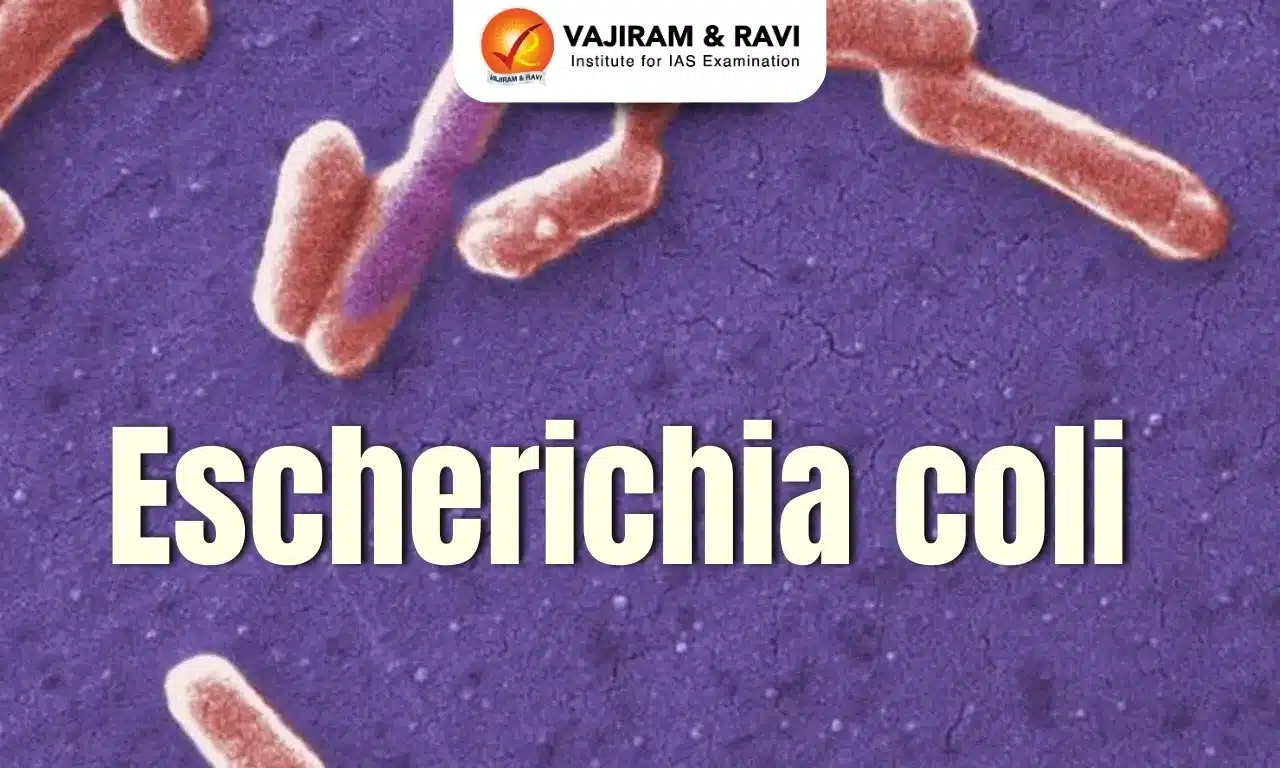
  • It is commonly known as E. coli, is a type of bacteria that can be found in the intestines of humans and animals.
  • It is a rod-shaped bacterium of the Enterobacteriaceae family.
  • While most strains of E. coli are harmless and even beneficial, some strains can cause illness and infections.
  • Some kinds of E. coli can cause diarrhea, while others cause urinary tract infections, respiratory illness and pneumonia, and other illnesses.
  • Transmission: It can be transmitted to humans through contaminated food, water, or contact with fecal matter from infected individuals or animals.
  • How does E. coli make you sick?
    • The most familiar strains of E. coli that make you sick do so by producing a toxin called Shiga.
    • This toxin damages the lining of your small intestine and causes diarrhea.
    • These strains of E. coli are also called Shiga toxin-producing E. coli (STEC).
  • Symptoms: The most common symptoms of E.coli infection include fever, persistent diarrhoea, bloody diarrhoea, and vomiting.
  • Treatment: Most E. coli infections are self-limiting and resolve on their own without treatment. However, it’s essential to stay hydrated during the course of the illness.

Source: TH

Escherichia coli FAQs

Q1: What does Escherichia coli cause?

Ans: It can cause severe stomach cramps, bloody diarrhea and vomiting.

Q2: What is Bacteria?

Ans: Bacteria are microscopic single-celled prokaryotic organisms that play a crucial role in the ecosystem and have a significant impact on human health.

Sarvottam Yudh Seva Medal

Sarvottam Yudh Seva Medal

Sarvottam Yudh Seva Medal Latest News

Recently, on the eve of the 79th Independence Day, the President of India awarded seven Sarvottam Yudh Seva Medals (SYSM) to the leaders of Operation Sindoor.

About Sarvottam Yudh Seva Medal

  • It was instituted on 26 Jun 1980 to recognize the distinguished service of the most exceptional order during war/conflict/hostilities.
  • Personnel Eligible:  All ranks of the Army, the Navy and the Air Force including those of Territorial Army Units, Auxiliary and Reserve Forces and other lawfully constituted Armed Forces when embodied.
  • And also Nursing officers and other members of the Nursing Services in the Armed Forces.
  • The medal may be awarded posthumously.

Features of Sarvottam Yudh Seva Medal

  • Medal: Circular in shape, 35 mm in diameter and fitted to a plain horizontal bar with standard fittings. The medal shall be of gold gilt.
  • The medal shall have on its obverse the State Emblem and the inscriptions "SARVOTTAM YUDH SEVA MEDAL" (in English). On its reverse, it shall have a five pointed star.
  • Ribbon: Golden colour with one red vertical stripe in the centre dividing it into two equal parts.
  • Bar: If a recipient of the medal is subsequently awarded the medal again, every such further award shall be recognised by a Bar to be attached to the riband by which the medal is suspended.
  • For every such Bar, a miniature insignia of a pattern approved by the Government shall be added to the riband when worn alone.

Source: The Print

Sarvottam Yudh Seva Medal FAQs

Q1: What are the 4 gallantry awards?

Ans: Param Vir Chakra, the Ashoka Chakra, the Mahavir Chakra, the Kirti Chakra, the Vir Chakra and the Shaurya Chakra.

Q2: What is the kirti chakra?

Ans: The Kirti Chakra is an Indian military decoration awarded for valour, courageous action or self- sacrifice away from the field of battle.

Key Facts about Tonga

Key Facts about Tonga

Tonga Latest News

Recently, an earthquake with a magnitude of 6.2 jolted the Tonga Islands Region.

About Tonga

  • It is a sovereign country in Polynesia, composed of an archipelago of 169 islands located in the South Pacific Ocean.
  • Neighbouring countries include Fiji to the west, Cook Islands to the east and Samoa north.
  • These islands are divided into three main groups: Tongatapu in the south, Ha‘apai in the center, and Vava‘u in the north.
  • The western islands (making up the Tongan Volcanic Arch) are all of volcanic origin; the eastern islands are nonvolcanic and are composed of coral limestone and sand
  • It features flat terrain with limestone and coral formations.
  • Terrain: Mostly flat islands with limestone bedrock formed from uplifted coral formation; others have limestone overlying volcanic rock.
  • Highest Point: The highest point in this region Kao Island in the Haʻapai group.
  • Tonga is a member of the Commonwealth Clean Ocean Alliance and Marine Protected Areas Action Groups.
  • Capital City: The capital city of Tonga is Nukuʻalofa, situated on the northern shore of Tongatapu Island. 

Source: News on Air

Tonga FAQs

Q1: What is the Commonwealth?

Ans: The Commonwealth is a voluntary association of countries around the world that were once part of the British Empire.

Q2: Where is Tonga located?

Ans: Oceania

Ionic Liquids (ILs)

Ionic Liquids

Ionic Liquids Latest News

Scientists have found life can exist on rocky super-earths with volcanic activity and little water thanks to ionic liquids.

About Ionic Liquids

  • ILs are a category of salt which are in liquid state at room temperature and made up entirely of ions.
  • ILs are restricted to salts whose melting point is below 100°C (212°F). 
  • Any salt that melts without decomposing or vaporizing usually yields an ionic liquid.
  • While ordinary liquids such as water are predominantly made of electrically neutral molecules, ILs are made of ions and short-lived ion pairs. 
  • Examples: Tetrabutylammonium nitrite, 1-(Cyanomethyl)-3-methylimidazolium chloride, Choline acetate, etc.
  • ILs are variously called liquid electrolytes, ionic melts, ionic fluids, fused salts, liquid salts, or ionic glasses.
  • General Properties:
    • Non volatile
    • Non-flammable
    • Stable at high temperature (up to 200°C / 392°F or 400°C /752°F depending on the product) and Chemical (water and oxygen)
    • Hydrophobic or Hydrophilic
    • Good conductors (electrolytes)
    • Broad electrochemical range
  • The physico chemical properties of ionic liquids depend on the type and the size of the two ions forming them.
  • Because of their highly tunable nature and exceptional properties, ILs have become essential players in the fields of synthesis and catalysis, extraction, electrochemistry, analytics, biotechnology, etc. 
  • ILs have emerged as an environmentally friendly alternative to various organic solvents and catalysts. 
  • As they are involatile and highly heat-resistant, they can be used in processes subjected to high temperatures.

Source: TH

Ionic Liquids FAQs

Q1: What are Ionic Liquids (ILs)?

Ans: Salts that are liquid at room temperature and made up entirely of ions.

Q2: What is the primary factor that determines the physicochemical properties of Ionic Liquids?

Ans: Type and size of ions forming them.

Q3: What are Ionic Liquids sometimes referred to as?

Ans: Ionic Liquids are variously called liquid electrolytes, ionic melts, ionic fluids, fused salts, liquid salts, or ionic glasses.

Bioactive Peptides (BAPs)

Bioactive Peptides

Bioactive Peptides Latest News

A study of population-specific responses to fermented food shows that the health effect of the bioactive peptides they contain, differ across populations and can personalise nutrition for India's diverse population.

About Bioactive Peptides

  • Peptides are strings of molecules called amino acids, which are the "building blocks" of proteins. 
  • The amino acids are joined by covalent bonds known as amide or peptide bonds. 
  • For a peptide to be considered bioactive, it should have a physiological effect in a positive manner. 
  • Although some BAPs exist free in their natural source, the vast majority of known BAPs are encrypted in the structure of the parent proteins and are released mainly by enzymatic processes. 
  • Most of the BAPs are derived from plants and animals.
  • The source of BAPs includes milk, cheese, pickles (fermented fruits and vegetables), plants, egg, fish, meat, and soybean products
  • Some BAPs have been prepared by chemical synthesis.
  • BAPs play a significant role in human health by affecting the digestive, endocrine, cardiovascular, immune, and nervous systems. 
  • BAPs are considered the new generation of biologically active regulators; they can prevent oxidation and microbial degradation in foods and also improve the treatment of various diseases and disorders, thus increasing the quality of life. 

Peptides vs. Proteins

  • Both peptides and proteins are made up of strings of amino acids that are held together by peptide bonds. 
  • The main difference is that peptides are shorter strings of amino acids than proteins, although the terms aren't used precisely. 
  • Most scientists refer to chains with over 100 amino acids as proteins.
  • In addition, peptides tend to be less well defined in structure than proteins, which can adopt complex conformations known as secondary, tertiary, and quaternary structures.

Source: PIB

Bioactive Peptides FAQs

Q1: What are the building blocks of peptides?

Ans: Amino acids

Q2: The majority of Bioactive Peptides are found in which form within their natural sources?

Ans: Majority of known Bioactive Peptides are encrypted in the structure of the parent proteins and are released mainly by enzymatic processes.

Q3: Why are Bioactive Peptides considered important in food science and human health?

Ans: They enhance food safety and human health by preventing oxidation and aiding disease treatment.

Sulawesi Island

Sulawesi Island

Sulawesi Island Latest News

An earthquake of magnitude 5.7 struck Sulawesi in Indonesia recently.

About Sulawesi Island

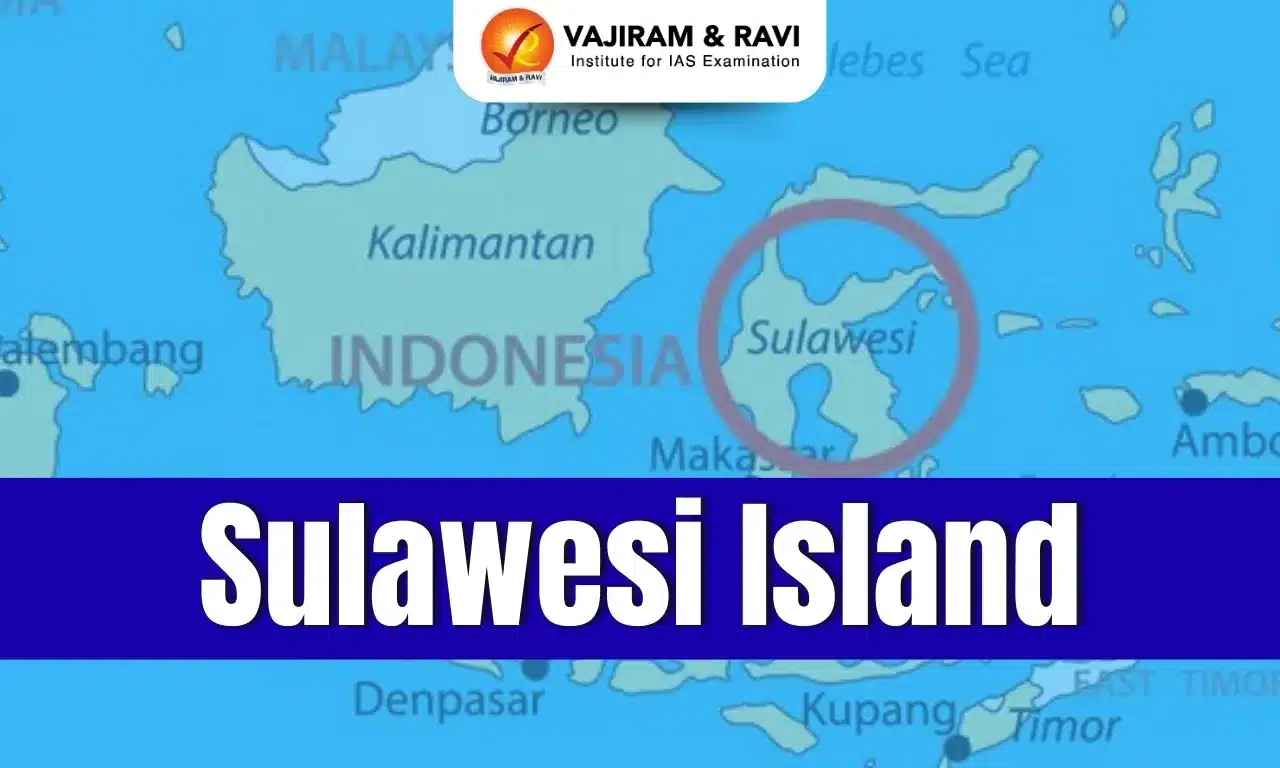
  • Sulawesi, formerly known as Celebes, is a large island in Southeast Asia, in the Indonesian archipelago.
  • It is part of the island chain known as the Greater Sunda Islands. 
  • It is the 11th largest island in the world. It covers an area of 180,680.7 sq. km.
  • The island consists almost entirely of four interconnecting peninsulas.
  • The island is surrounded on all sides by other big islands: Borneo to the west, Philippines to the north, the Maluku Islands to the east, and Flores and Timor to the south.
  • The island is highly mountainous, with some active volcanoes.
  • Sulawesi is known for its rainforests, which once covered the entire island until human activity led to mass deforestation.
  • The highest peak on the island of Sulawesi is Mt. Ratenkombola, which is also known simply as Mario. It reaches a height of 3,455 meters. 
  • The island contains thirteen freshwater lakes including the deepest lake, Matano, in Southeast Asia.
  • Seven major ethnic groups inhabit Sulawesi: the Toala, Toraja, Buginese, Makassarese, Minahasan, Mori, and Gorontalese. 
  • Makassar is the largest city on the island.

Source: HT

Sulawesi Island FAQs

Q1: Sulawesi Island is part of which country?

Ans: Indonesia

Q2: Sulawesi is part of which island group in Southeast Asia?

Ans: Greater Sunda Islands

Q3: What is the highest peak on Sulawesi Island?

Ans: Mt. Ratenkombola (Mario)

Green Ammonia

Green Ammonia

Green Ammonia Latest News

Larsen & Toubro’s (L&T), green molecules arm L&T Energy Greentech, recently bagged the tender for building India’s biggest green hydrogen plant at Indian Oil Corporation Ltd’s (IOCL) Panipat refinery.

About Green Ammonia

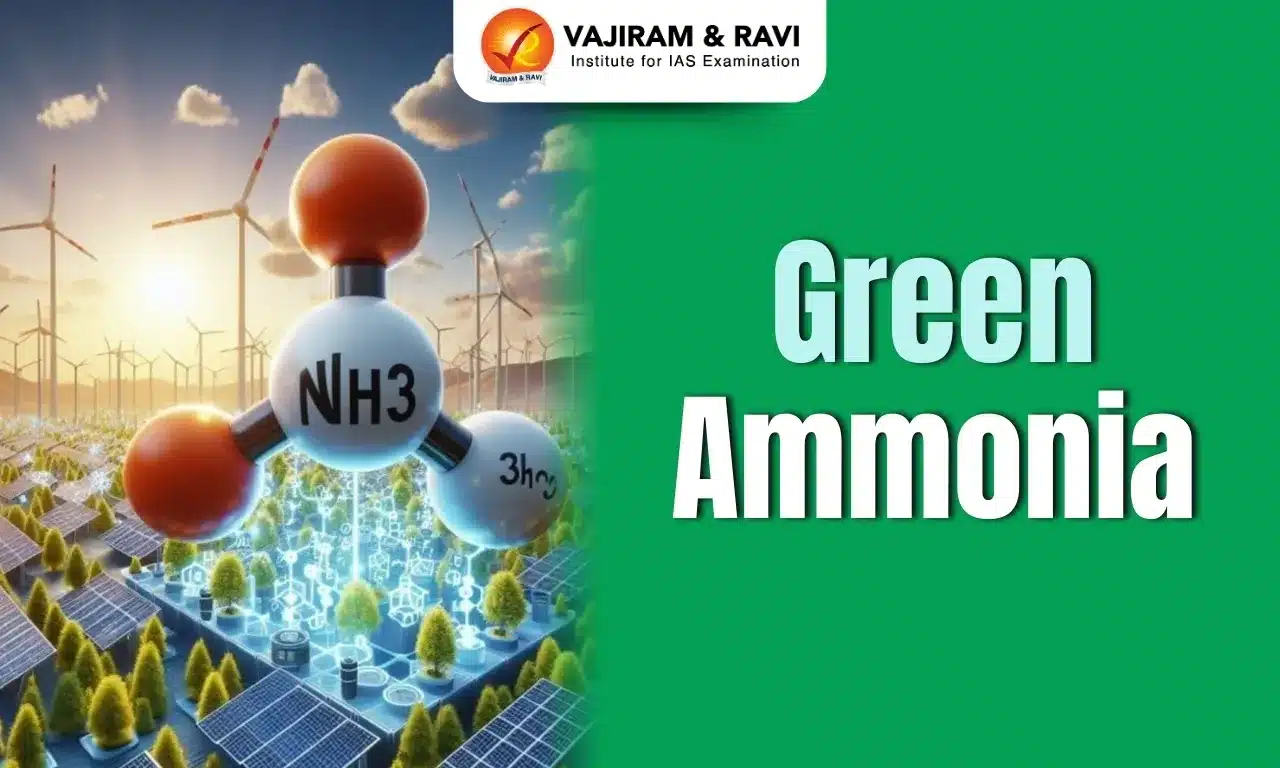
  • Ammonia (NH3) is a nitrogen and hydrogen based chemical compound widely used in the production of fertilisers and industrial chemicals. 
  • Ammonia is currently produced from natural gas and, in its production process, emits 2 tonnes of CO₂ for every tonne of ammonia. 
  • For this reason, conventional ammonia is referred to as grey ammonia. 
  • Green ammonia, on the other hand, does not emit CO₂ in its production process.

Green Ammonia Production Process

  • To produce green ammonia, green hydrogen must first be obtained through a process of water electrolysis. 
  • That is, water is decomposed into hydrogen and oxygen, using electrical energy generated from renewable sources. 
  • The hydrogen is then combined with atmospheric nitrogen through a process known as Haber-Bosch synthesis, which allows hydrogen and nitrogen to react at high pressure and temperature in the presence of a catalyst to form ammonia. 
  • The end result is the production of green ammonia using green hydrogen and atmospheric nitrogen. 
  • Green ammonia production is where the process of making ammonia is 100% renewable and carbon-free.

Green Ammonia Applications

  • It is widely used in the production of agricultural fertilisers as ammonia is an essential source of nitrogen for plant growth. 
  • It is also used as a raw material in the production of a variety of chemical products, such as nitric acid, synthetic fibres, explosives, dyes, and pharmaceuticals
  • It can be used in fuel for engines such as locomotives and shipping, replacing diesel and marine fuel oil.
  • It can be used as a fuel source for electricity power generation.

Source: MC

Green Ammonia FAQs

Q1: What best describes Green Ammonia?

Ans: Ammonia produced using renewable hydrogen and atmospheric nitrogen without CO₂ emissions.

Q2: Approximately how much CO₂ is emitted during the production of one tonne of conventional ammonia?

Ans: 2 tonnes

Q3: What industrial process is used to combine hydrogen with nitrogen to produce ammonia?

Ans: Haber–Bosch process

Q4: Which element in ammonia makes it essential for fertiliser production?

Ans: Nitrogen

Bandhavgarh Tiger Reserve

Bandhavgarh Tiger Reserve

Bandhavgarh Tiger Reserve Latest News

The National Green Tribunal recently criticised Madhya Pradesh for allowing the annual Darshan Yatra in Bandhavgarh Tiger Reserve's core area.

About Bandhavgarh Tiger Reserve

  • It is nestled in the Satpura and Vindhya mountain ranges in the Umaria district of Madhya Pradesh.
  • It is spread over 1536 sq. km., which includes the 716 sq. km. core zone and 820 sq. km. of the buffer zone.
  • The name “Bandhavgarh” is derived from the ancient Bandhavgarh Fort, which sits atop a hill in the park. 
    • According to legend, the fort was gifted by Lord Rama to his brother Lakshmana, hence the name “Bandhavgarh” (Brother’s Fort). 
  • It also has several archeological monuments. The reserve features around 39 caves with Pali inscriptions and animal depictions. It also contains ancient structures, including stupas and statues from the 1st century BCE.
  • The density of the tiger population at Bandhavgarh is the highest known in India as well as in the world
  • The habitat is characterized by valleys, hills, and plains, with the Bandhavgarh fort prominently seen as a major landmark. 
  • Flora: The flora of the region comprises majorly evergreen Sal forests, mixed forests, and grasslands.
  • Fauna: Apart from tigers, the park is home to other significant species such as leopards, sloth bears, Indian bison (gaur), Asiatic elephants, and a variety of deer species, including sambar and chital.

Source: TOI

Bandhavgarh Tiger Reserve FAQs

Q1: Bandhavgarh Tiger Reserve is located in which Indian state?

Ans: Madhya Pradesh

Q2: In which mountain ranges is Bandhavgarh Tiger Reserve nestled?

Ans: Satpura and Vindhya

Q3: What is the total area of Bandhavgarh Tiger Reserve?

Ans: It is spread over 1536 sq. km., which includes the 716 sq. km. core zone and 820 sq. km. of the buffer zone.

Enquire Now