Minimum Public Shareholding (MPS)

Minimum Public Shareholding

Minimum Public Shareholding Latest News

SEBI recently proposed to increase the flexibility of minimum public shareholding (MPS) and minimum public offer (MPO) for companies aspiring to get listed, aimed at “simplifying fund-raising by issuers in India.

About Minimum Public Shareholding 

  • The Minimum Public Shareholding (MPS) rule is a regulatory requirement laid out by SEBI under the Securities Contracts (Regulation) Rules, 1957, and reinforced by the Listing Obligations and Disclosure Requirements (LODR) Regulations.
  • It is applicable to all listed companies in India.
  • As per these rules, all listed companies must ensure that at least 25% of their total issued and paid-up equity share capital is held by public shareholders—i.e., non-promoters and non-promoter group entities. 
  • Where promoters are holding more than 75%, they have to mandatorily divest additional shares to the public to comply with the MPS rule.
    • Such stake reduction could be done either by placing shares with institutions or by issuing rights shares to dilute their holdings.
  • The objective is to:
    • Enhance liquidity in the market
    • Promote fair price discovery
    • Ensure broader participation and corporate governance
  • Newly listed companies are expected to meet this requirement within three years from the date of listing.
  • For issuers with a post-issue market cap of over ₹1 trillion, the deadline for 25% MPS is five years.
  • If the public shareholding falls below 25% at any time, such company shall bring the public shareholding to 25% within a maximum period of 12 months from the date of such fall.

Source: TH

Minimum Public Shareholding FAQs

Q1: The regulatory requirement for Minimum Public Shareholding (MPS) is laid down under which rules/regulations?

Ans: Securities Contracts (Regulation) Rules, 1957 and SEBI LODR Regulations

Q2: What is the maximum period allowed for newly listed companies (with market cap less than ₹1 trillion) to comply with the 25% Minimum Public Shareholding (MPS) requirement?

Ans: 3 years

Q3: If the public shareholding of a listed company falls below 25%, what is the maximum time within which it must be restored to 25%?

Ans: 12 months
Palmyra Palm Tree

Palmyra Palm Tree

Palmyra Palm Tree Latest News

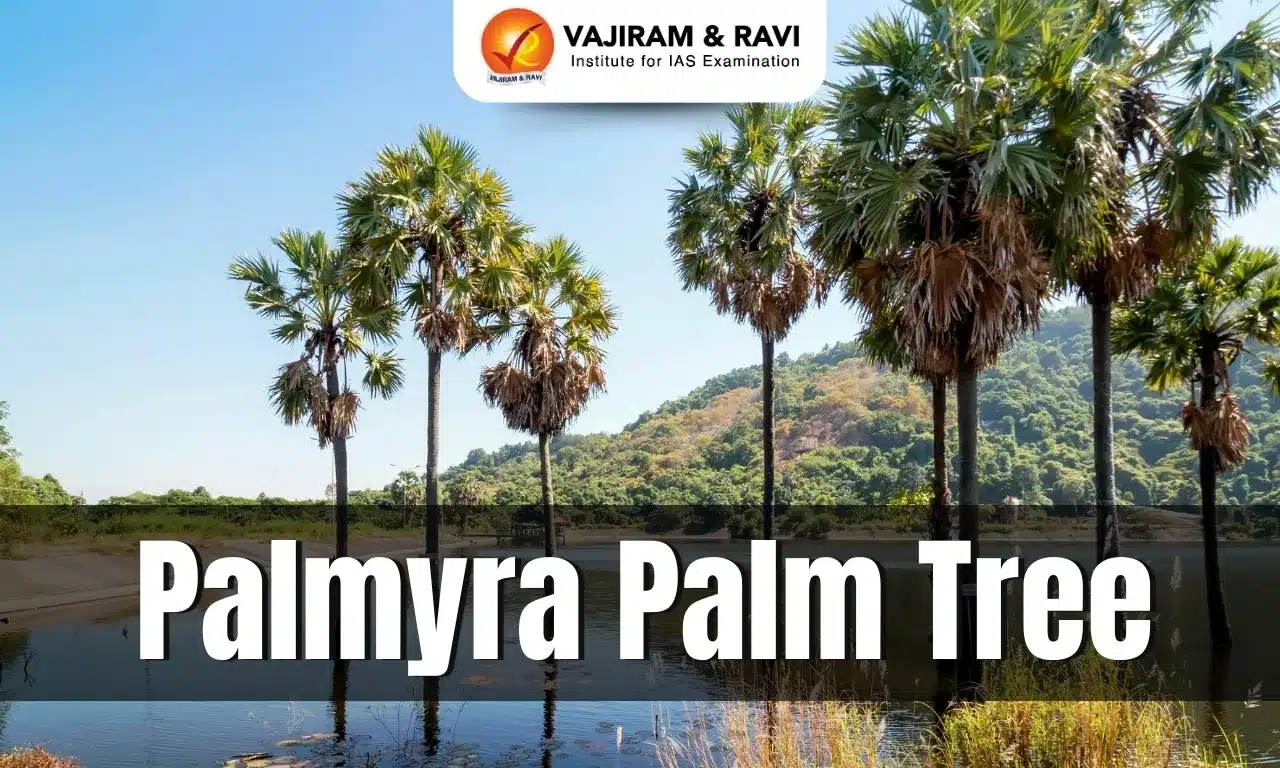
Palmyra palm trees in Odisha are providing dual benefits by reducing lightning-related deaths and serving as a food source for elephants during lean seasons.

About Palmyra Palm Tree

  • It is commonly named as sugar palm, or toddy palm or fan palm.
  • It is a native of tropical Africa but cultivated and naturalized throughout India.
  • In India, it is planted as a windbreak on the plains.
  • Required Climatic Conditions
    • Soil: It exhibits adaptability to a wide range of soil types, including arid and wastelands. They thrive particularly well in sandy soil, red soil, black soil, and river alluvium.
    • Rainfall: These palms are also suited for semi-arid regions with an annual rainfall of less than 750 mm.
    • They can grow at altitudes from sea level up to 800 meters.
    • Palmyra is mainly propagated through seeds and there is no vegetative method available for its propagation.

Benefits of Palmyra Palm Tree

  • It is used as a natural shelter by birds, bats and wild animals.
  • The chief product of the palmyra is the sweet sap (toddy) obtained by tapping the tip of the inflorescence.
  • The toddy ferments naturally within a few hours after sunrise and is locally popular as a beverage.
  • Palmyra palm jaggery (gur) is much more nutritious than crude cane sugar.
  • Traditionally, the Indian 'Nadar' community are the people who make their living from this tree using its wood, fruits, sap, stems, petioles and leaves to process a variety of food products, beverages, furniture, building materials, and handicrafts.

Source: DTE

Palmyra Palm Tree FAQs

Q1: What is the use of Palmyra tree?

Ans: The palmyra is considered as a tree of livelihood and used in, beverage, fibre, fodder, medicine and timber.

Q2: What is the other name for palmyra palm?

Ans: Borassus flabellifer

Rubella

Rubella

Rubella Latest News

The World Health Organization recently announced Nepal has eliminated rubella as a public health problem.

About Rubella

  • It is a highly contagious viral infection best known by its distinctive red rash. 
  • It's also called German measles or three-day measles.
  • Rubella isn't the same as measles, but the two illnesses share some signs and symptoms, such as the red rash. 
  • Rubella is caused by a different virus than measles, and rubella isn't as infectious or as severe as measles.
  • Rubella is caused by the Rubella virus, an enveloped, single-stranded RNA virus, different from the measles virus. 

Rubella Transmission

  • The Rubella virus spreads from person to person when you cough, sneeze, or touch surfaces with the virus on them.
  • It can also spread from a pregnant woman to the fetus. 
  • You can be contagious with rubella without symptoms.

Rubella Symptoms

  • This infection may cause mild or no symptoms in most people. 
  • The main symptom of rubella is a spotty rash that starts on the face or behind the ears and spreads to the neck and body.
  • The rash takes 2 to 3 weeks to appear after getting rubella.
  • Rubella can cause serious problems for unborn babies whose mothers become infected during pregnancy.
  • When a woman is infected with the rubella virus early in pregnancy, she has a 90% chance of passing the virus on to her fetus. 
  • This can cause the death of the fetus, or it may cause Congenital Rubella Syndrome (CRS). Infants with CRS may excrete the virus for a year or more.
  • Children with CRS can suffer hearing impairments, eye and heart defects, and other lifelong disabilities, including autism, diabetes mellitus, and thyroid dysfunction.

Rubella Prevention

  • The measles-mumps-rubella (MMR) vaccine is safe and highly effective in preventing rubella. 
  • The vaccine provides lifelong protection against rubella.

Rubella Treatment

  • There are currently no medications available to treat rubella.
  • Mild symptoms can be managed with bed rest and medicines for fever.

Source: WHO

Rubella FAQs

Q1: Rubella, also known as German measles, is caused by which organism?

Ans: Rubella is caused by the Rubella virus.

Q2: Which vaccine provides lifelong protection against rubella?

Ans: Measles-mumps-rubella (MMR) vaccine

Q3: What is the most common symptom of rubella?

Ans: The main symptom of rubella is a spotty rash that starts on the face or behind the ears and spreads to the neck and body.

Sakura Science Programme

Sakura Science Program

Sakura Science Programme Latest News

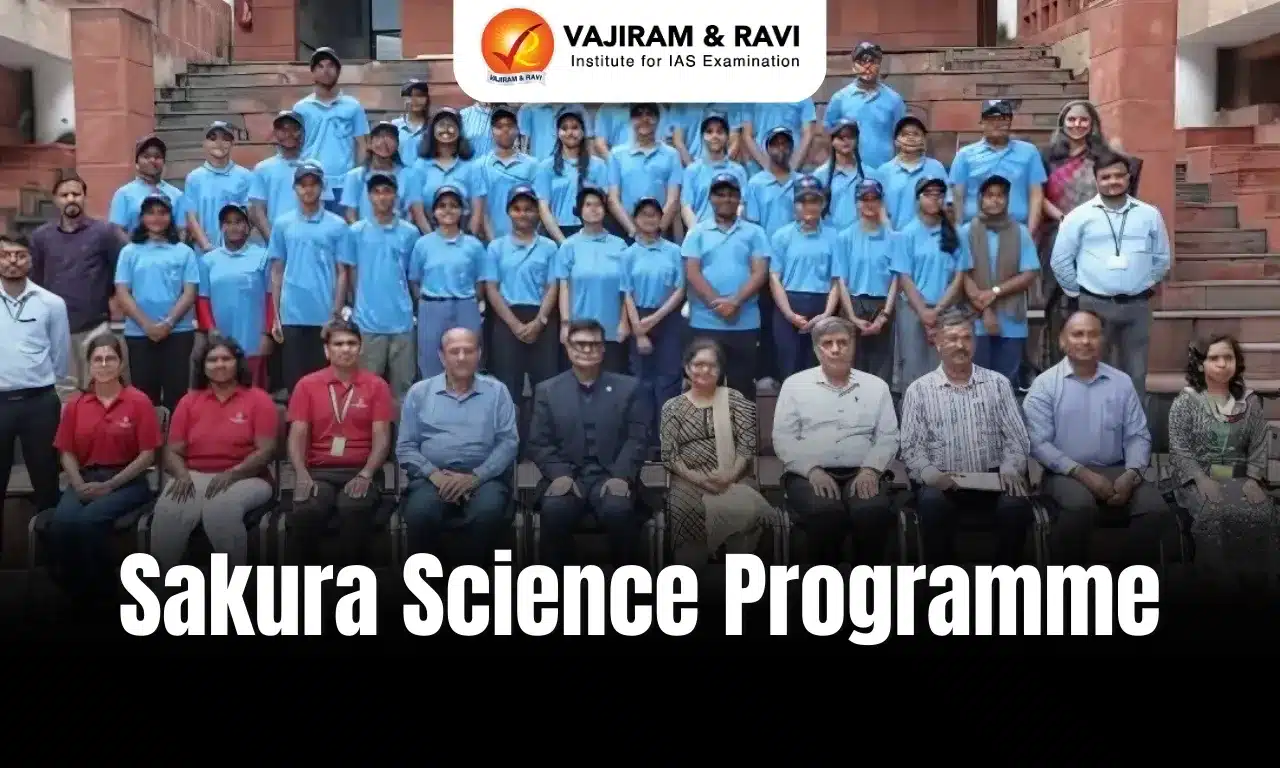
A group of thirty-four students from government schools in India are set to visit Japan under the Sakura Science Programme 2025.

About Sakura Science Programme

  • It is the prestigious Japan-Asia Youth Exchange Program in Science—better known as the Sakura Science Programme.
  • It was launched globally in 2014, aims to expand scientific curiosity amongst youth and encourage international collaboration.
  • India joined the Sakura Programme in 2016.
  • It is implemented by the Japan Science and Technology Agency (JST).
  • The initiative offers young learners a chance to explore cutting-edge science and immerse themselves in Japanese culture.
  • Under this programme, students are invited for short-term visits to Japan, providing them with the opportunity to experience Japan’s cutting-edge science and technology as well as its rich culture.
  • For the upcoming Sakura Programme 2025, JST has invited participants from six other countries Egypt, Ghana, Kenya, Nigeria, South Africa and Zambia.

Sakura Science Program's Objectives Include

  • To support the development of talented human resources from overseas who have the potential to contribute to innovation in science and technology.
  • To accelerate international brain circulation.
  • To promote continuous collaboration, cooperation and interaction between Japanese educational and research institutes and those overseas.
  • To strengthen good relationships between Japan and other countries and regions that can encourage diplomacy in science and technology.

Source: India Today

Sakura Science Programme FAQs

Q1: What is Sakura Exchange?

Ans: Under the framework of Sakura Science Plan, Japan-Asia Youth Science Exchange Program, Japan Science and Technology Agency, we invite young researchers and graduate students from the Asian region.

Q2: Who is eligible for the Sakura science program?

Ans: Applicants must be at least 18 years old on the day of their arrival in Japan, possess exceptional abilities in science and technology, and hold a valid passport.

Sliteye Shark

Sliteye Shark

Sliteye Shark Latest News

For the first time, scientists have recorded the sliteye shark in the Great Chagos Bank in the Indian Ocean, the world’s largest coral atoll.

About Sliteye Shark

  • It is a small-bodied shark species found in inshore waters throughout the Indo-West Pacific. 
  • It is a species of requiem shark, in the family Carcharhinidae, and the only member of its genus, Loxodon. 
  • Scientific Name: Loxodon macrorhinus
  • Named for its distinctive, slit-like eyes—thought to enhance vision in low-light conditions—the sliteye shark is well adapted to deeper, dimly lit environments as well as clear and shallow waters.
  • Distribution: Widespread in tropical waters of the Indian and western Pacific Oceans between 34°N and 30°S off the coasts of Australia, China, Djibouti, Egypt, Eritrea, India, Indonesia, Japan, Kenya, Madagascar, Mozambique, Myanmar, Oman, Pakistan, Saudi Arabia, Somalia, South Africa, Sri Lanka, Sudan, Taiwan, Tanzania, and Yemen. 

Sliteye Shark Features

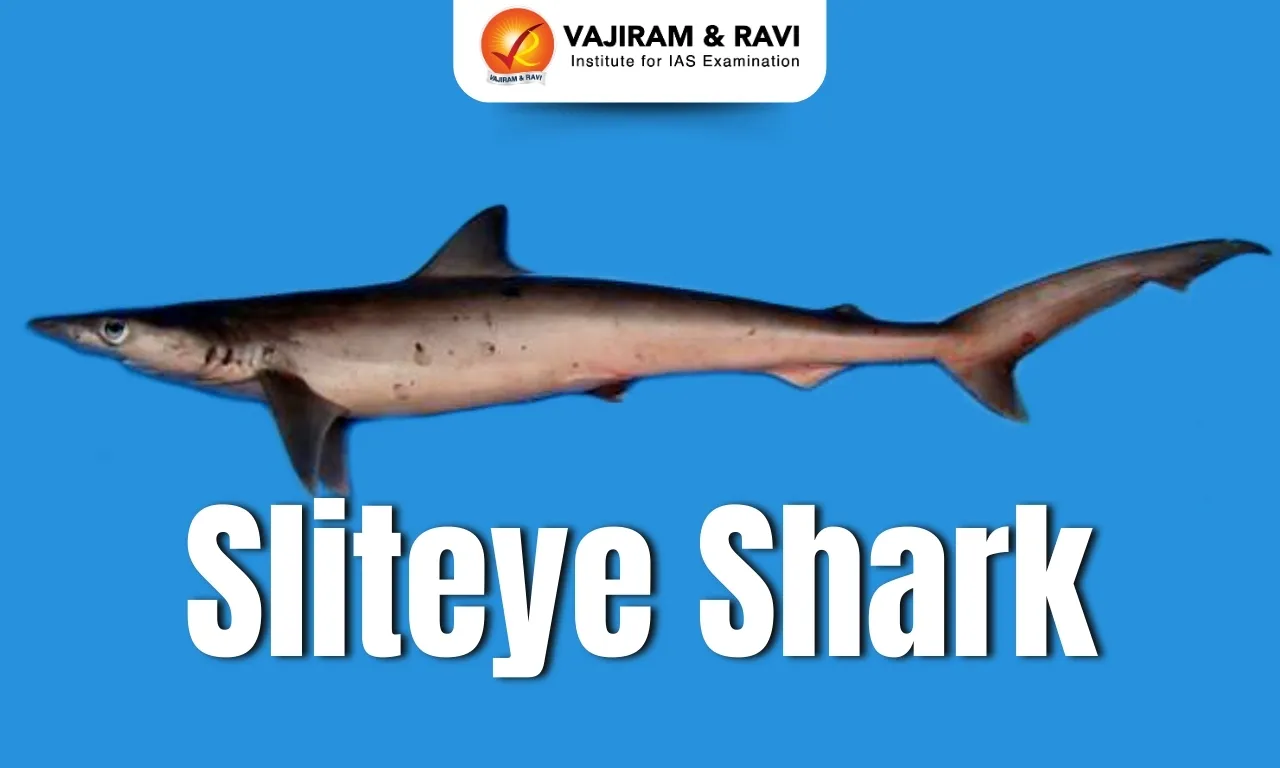
  • It is a small shark with a very slender body, a long narrow face, large eyes, and short furrows at the corners of the mouth. 
  • It can reach a length of about 95 cm.
  • The teeth are small, with a protruding tip and smooth edges. 
  • The ridge between the dorsal fins is absent or rudimentary. 
  • The coloration of the Sliteye shark is gray, the belly is white, and the edges of the fins are pale (transparent when alive). 
  • The caudal and first dorsal fins have dark edges.

Sliteye Shark Conservation Status

It is classified as 'Near Threatened' under the IUCN Red List.

Source: MC

Sliteye Shark FAQs

Q1: In which oceans is the Sliteye Shark commonly found?

Ans: Indian and Western Pacific Oceans

Q2: What is the IUCN Red List status of the Sliteye Shark?

Ans: Near Threatened

Q3: What is the typical body coloration of the Sliteye Shark?

Ans: The coloration of the Sliteye shark is gray, the belly is white, and the edges of the fins are pale (transparent when alive).

Udyam Sakhi Portal

Udyam Sakhi Portal

Udyam Sakhi Portal Latest News

The Udyam Sakhi Portal, launched by the Ministry of Micro, Small and Medium Enterprises (MSME), is helping women entrepreneurs across the country start, build, and expand their businesses, said the Minister of State in a written reply in the Rajya Sabha recently.

About Udyam Sakhi Portal

  • Udyam Sakhi portal (http://udyamsakhi.msme.gov.in/) was launched by the Ministry of MSME in March 2018 to provide information regarding financial schemes, policies, and programmes of the Ministry of MSME to existing/prospective women entrepreneurs in the MSME sector. 
  • The portal is a network for nurturing entrepreneurship and creating business models for low-cost products and services in order to empower women and make them self-reliant and self-sufficient.
  • The portal helps women to start, build, and grow their businesses.
  • The portal accords the following services through its programmatic functions:
    • Entrepreneurship learning tools
    • Incubation facility
    • Training program for fund raising
    • Providing mentors
    • One-on-one investor meet
    • Provide facilities for market survey
    • Learning and development; be it by means of education, information, or technical assistance and training.

Source: DD

Udyam Sakhi Portal FAQs

Q1: Which ministry launched the Udyam Sakhi portal?

Ans: Ministry of Micro, Small and Medium Enterprises (MSME)

Q2: What is the primary aim of the Udyam Sakhi portal?

Ans: To empower women entrepreneurs in the MSME sector.

Q3: In which year was the Udyam Sakhi portal launched?

Ans: 2018

Sustainable Aviation Fuel

Sustainable Aviation Fuel

Sustainable Aviation Fuel Latest News

India’s largest refiner and fuel retailer Indian Oil Corporation (IOC) expects to start producing sustainable aviation fuel (SAF) on a commercial scale at its Panipat refinery by December.

About Sustainable Aviation Fuel

  • It is a biofuel, also known as bio-jet fuel produced from sustainable feedstocks.
  • It has chemistry similar to conventional aviation turbine fuel (ATF) or jet fuel, which is derived from crude oil.
  • This means that existing aircraft engines can easily use the SAF-ATF blend.
  • It is made from renewable biomass and waste resources have the potential to deliver the performance of petroleum-based jet fuel. 
  • Various Indian airlines have already operated successfully a few test and demonstration flights using jet fuel doped with SAF in various proportions.
  • Production: It can be produced from a number of sources (feedstock) including waste oil and fats, green and municipal waste and non-food crops.
  • It can also be produced synthetically via a process that captures carbon directly from the air.

Significance of Sustainable Aviation Fuel

  • Its carbon footprint is significantly lower than aviation turbine fuel (ATF).
  • It is ‘sustainable’ because the raw feedstock does not compete with food crops or water supplies, or is responsible for forest degradation. 
  • It remains the major mature and viable pathway to decarbonise the aviation sector. At the same time, SAF only accounts for 0.3% of the current fuel use for aviation.

Source: IE

Sustainable Aviation Fuel FAQs

Q1: What is sustainable aviation fuel?

Ans: It is an alternative fuel made from non-petroleum feedstocks that reduces emissions from air transportation.

Q2: Why is sustainable aviation fuel so expensive?

Ans: It is due to the limited availability of sustainable feedstocks and the nascent stage of production technologies.

Enquire Now