Drake Passage

Drake Passage

Drake Passage Latest News

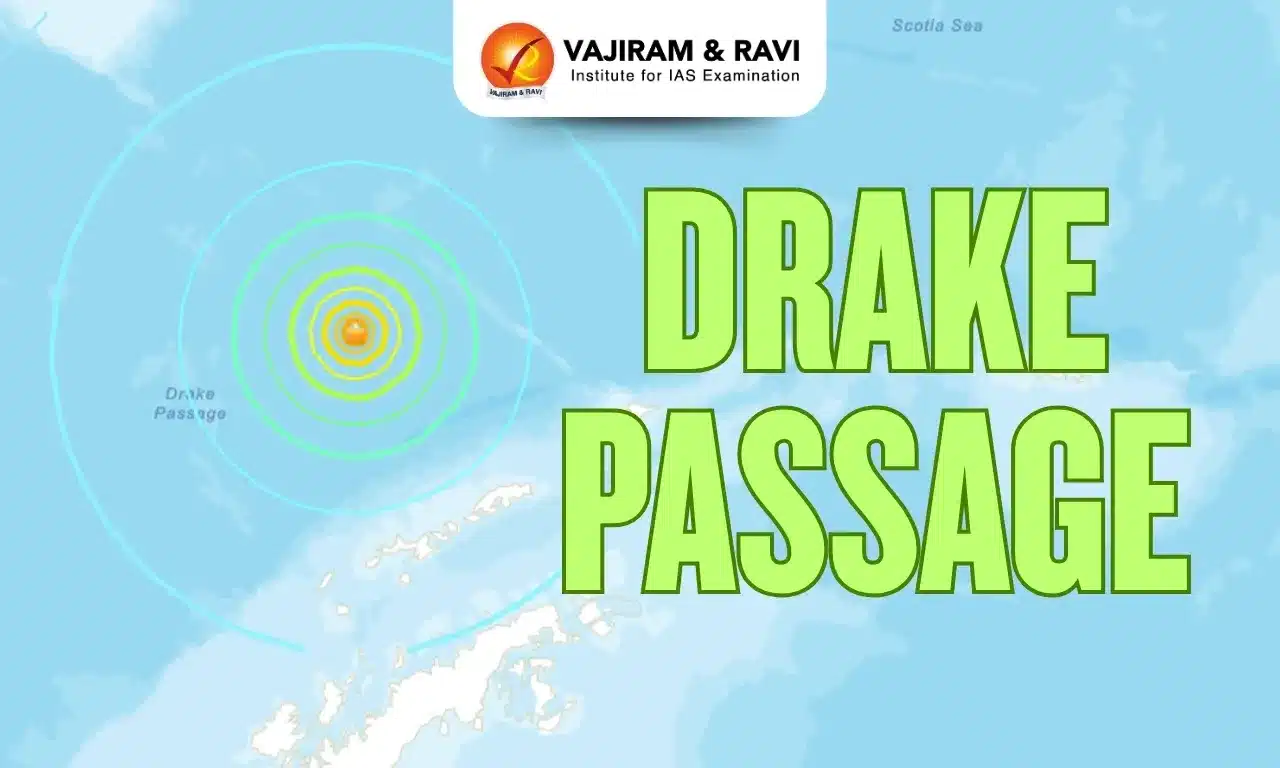
Recently, a strong earthquake of magnitude 7.5 hit Drake Passage and a tsunami alert was issued briefly.

About Drake Passage

  • It is located between South America's Cape Horn and the South Shetland Islands of Antarctica.
  • The passage is named after Sir Francis Drake, who was the first Englishman to circumnavigate the globe.
  • It is a deep and wide waterway that connects the southwestern Atlantic and southeastern Pacific Oceans.
  • It is considered one of the roughest waterways in the world because here, layers of cold seawater from the south and warm seawater from the north collide to form powerful eddies, which when combined with strong winds and storms can be treacherous for those attempting to navigate it.
  • It is also the narrowest stretch in the Southern Ocean and spans approximately 800 km between the southern tip of South America and the northern tip of the West Antarctic Peninsula
  • The Drake Passage defines the zone of climatic transition separating the cool, humid, subpolar conditions of Tierra del Fuego and the frigid, polar regions of Antarctica. 
  • The winds over the Drake Passage are predominantly from the west and are most intense to the north around Cape Horn. 
  • The Drake Passage played an important part in the trade of the 19th and early 20th centuries before the opening of the Panama Canal.

Source: HT

Drake Passage FAQs

Q1: Why is the Drake Passage so rough?

Ans: This is due to strong currents caused by the lack of nearby land, as well as the strength and structure of waves which can occur – particularly in stormy seasons.

Q2: What is the Drake Passage?

Ans: The Drake Passage defines the zone of climatic transition separating the cool, humid, subpolar conditions of Tierra del Fuego and the frigid, polar regions of Antarctica.
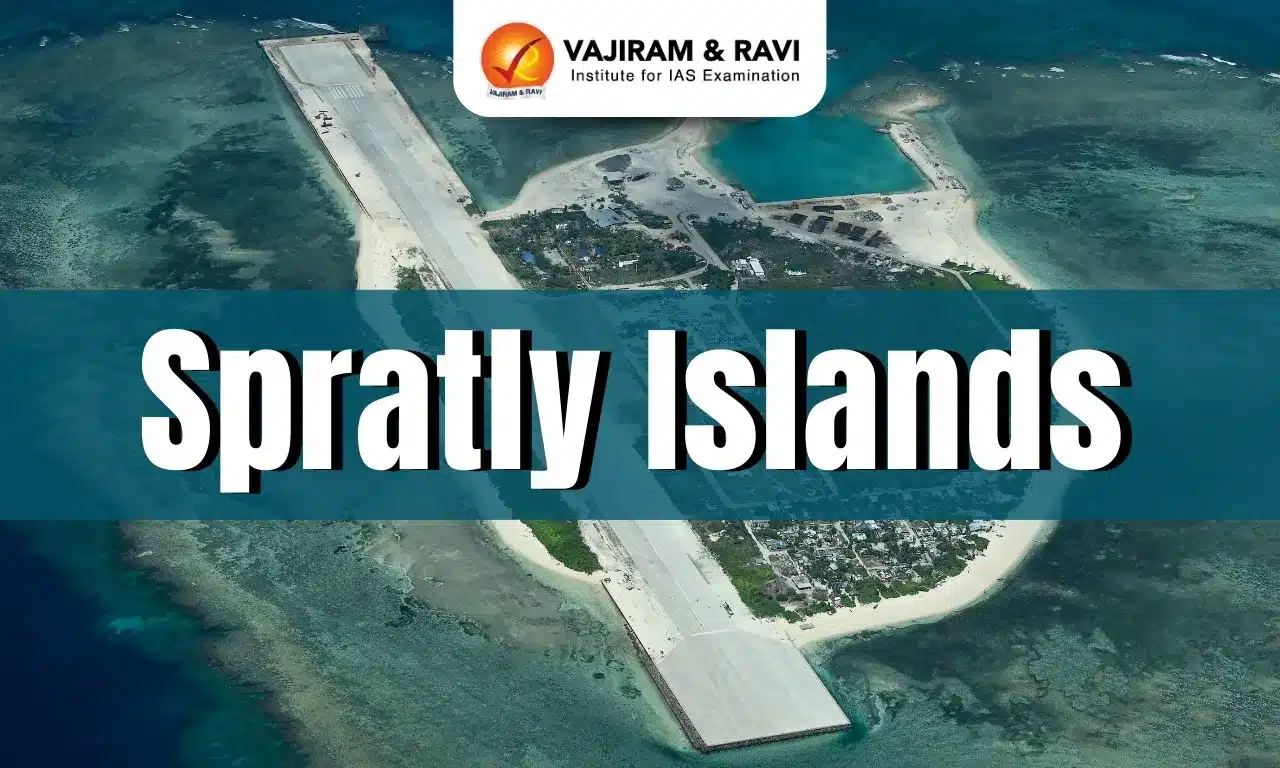

Spratly Islands

Spratly Islands

Spratly Islands Latest News

Vietnam has significantly expanded island-building work in areas it claims in the Spratly Islands chain of the disputed South China Sea and will match and likely surpass the scale of such activity there by China, a U.S. think tank reported recently.

About Spratly Islands

  • They are a large group of reefs, shoals, atolls, and small islets in the South China Sea of the Pacific Ocean. 
  • They are located north of insular Malaysia and are roughly midway between Vietnam and the Philippines.
  • They are spread out over a vast area of ocean measuring some 158,000 square miles (409,000 square km).
  • Climate: Tropical
  • A great number of them are submerged. 
  • Of the 12 main naturally occurring islets, the largest is the 90-acre (36-hectare) Itu Aba.
  • Another, called Spratly Island or Storm Island, measures 900 by 1,500 feet (275 by 450 metres). 
  • Turtles and seabirds are the only wildlife in these islands. There is no permanent human habitation.
  • History:
    • France held them between 1933 and 1939. 
    • During World War II Japan occupied the archipelago and developed it as a submarine base.
    • After the war the Chinese Nationalist government established a garrison on Itu Aba, which the Nationalists maintained after their exile to Taiwan in 1949.
    • When Japan renounced its claim to the islands in 1951, Taiwan, mainland China, and Vietnam all declared themselves the rightful owners, and the Philippines added a claim based on proximity in 1955.
  • Claims:
    • They are claimed in their entirety by China, Taiwan, and Vietnam, while portions are claimed by Malaysia and the Philippines.
    • Although Brunei did not claim any territory in the Spratlys, it claims an exclusive economic zone over this area that contained a Spratly reef.

Source: REUT

Spratly Islands FAQs

Q1: The Spratly Islands are located in which sea?

Ans: South China Sea

Q2: The Spratly Islands lie roughly midway between which two countries?

Ans: Vietnam and the Philippines

Q3: Which is the largest naturally occurring islet of the Spratly Islands?

Ans: Itu Aba

Q4: Which countries claim the Spratly Islands in their entirety?

Ans: China, Taiwan, and Vietnam, while portions are claimed by Malaysia and the Philippines.

SMILE Scheme

SMILE Scheme

SMILE Scheme Latest News

Recently, the central government of India launched a 15 days Entrepreneurship Development Programme under the SMILE scheme to make the transgender persons self-reliant by granting them economic empowerment.

About SMILE Scheme

  • The Support for Marginalized Individual for Livelihood and Enterprise (SMILE) scheme is a Central Sector Scheme.
  • It includes two sub-schemes
    • Central Sector Scheme for Comprehensive Rehabilitation for Welfare of Transgender Persons’ and
    • ‘Central Sector Scheme for Comprehensive Rehabilitation of persons engaged in the act of Begging’.
  • This umbrella scheme covers several comprehensive measures including welfare measures for both transgender persons and persons who are engaged in the act of begging.

Features of the SMILE Scheme

  • It provides Scholarships for Transgender Students studying in IX and till  post-graduation to enable them to complete their education.
  • It has provisions for Skill Development and Livelihood under the PM-DAKSH scheme.
  • Through Composite Medical Health it provides a comprehensive package in convergence with PM-JAY supporting Gender-Reaffirmation surgeries through selected hospitals.
  • The Housing facility in the form of ‘Garima Greh’ ensures food, clothing, recreational facilities, skill development opportunities, recreational activities and medical support etc. to the Transgender community and the people engaged in the act of begging.
  • The Provision of Transgender Protection Cell in each state will monitor cases of offences and to ensure timely registration, investigation and prosecution of offences.
  • The National Portal & Helpline will provide necessary information and solutions to the Transgender community and the people engaged in the act of begging when needed.
  • Nodal Ministry: Ministry of Social Justice & Empowerment

Source: PIB

SMILE Scheme FAQs

Q1: Which Ministry implements the SMILE Scheme?

Ans: Ministry of Social Justice and Empowerment

Q2: What are the two sub-schemes under the SMILE Scheme?

Ans: Central Sector Scheme for Comprehensive Rehabilitation for Welfare of Transgender Persons and Central Sector Scheme for Comprehensive Rehabilitation of Persons Engaged in Begging.

Q3: What is the role of ‘Garima Greh’ under the SMILE Scheme?

Ans: Shelter homes for transgender persons

Lesser Flamingo

Lesser Flamingo

Lesser Flamingo Latest News

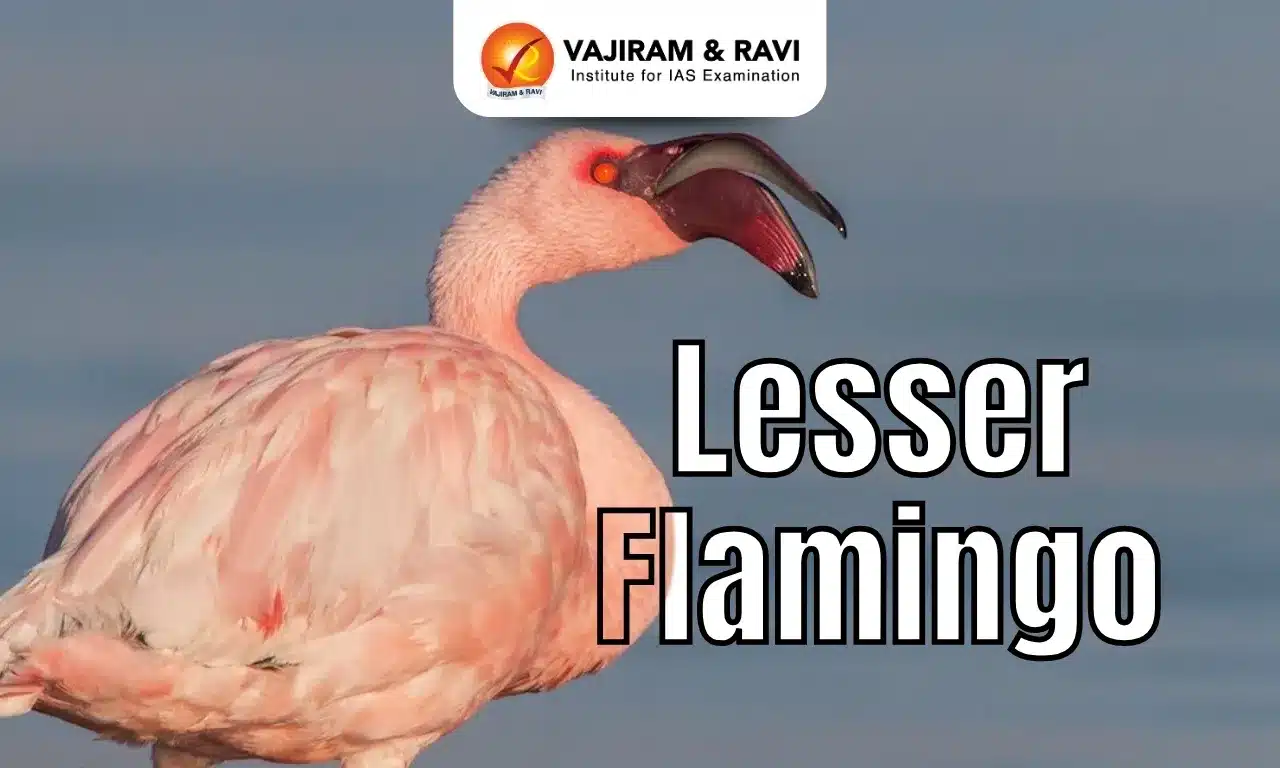
A rare sighting of a lesser flamingo (popularly known as Raj Hamsa) near the Fish Mill in Malpe has created excitement among bird enthusiasts and ornithologists alike.

About Lesser Flamingo

  • It is the smallest and most numerous of the world’s flamingo species. 
  • Scientific Name: Phoeniconaias minor
  • Distribution: This species is indigenous to sub-Saharan Africa and western India, with occasional sightings further north, typically regarded as vagrants.
  • Habitat: Lesser flamingos favor environments with highly alkaline or saline lakes, lagoons, and mudflats.

Lesser Flamingo Features

  • Lesser Flamingos stand out with their vivid pink colouring, long thin legs, and striking red eyes. 
  • Their bills are unique, deep red with a prominent black tip, and are specially adapted to filter-feed on microscopic algae and diatoms. 
  • It possesses the “hallux” or hind toe, that some other flamingos do not have.
  • On average, adult males measure significantly larger than females.
  • It is  serially monogamous, meaning they form pairs that remain together while they are raising the young.
  • It is a gregarious bird, often found in large flocks. They are known for their synchronized movements and group behaviors.

Lesser Flamingo Conservation Status

It is classified as 'Near Threatened' under the IUCN Red List.

Source: DAJ

Lesser Flamingo FAQs

Q1: What is the scientific name of the Lesser Flamingo?

Ans: Phoeniconaias minor

Q2: Which type of habitat do Lesser Flamingos prefer?

Ans: Lesser flamingos favor environments with highly alkaline or saline lakes, lagoons, and mudflats.

Q3: What is the IUCN conservation status of the Lesser Flamingo?

Ans: Near Threatened

Foot and Mouth Disease (FMD)

What is Foot and Mouth Disease (FMD)?

Hand, Foot, and Mouth Disease Latest News

The national capital is experiencing a significant rise in Hand, Foot, and Mouth Disease (HFMD) cases, especially among children.

About Hand, Foot, and Mouth Disease

  • It is a common viral illness that usually affects infants and children but can also affect adults. 
  • Most adults have strong enough immune systems to defend the virus, but those with immune deficiencies are very susceptible.
  • It tends to spread quickly among children in daycare and schools.
  • The most common cause of HFMD is Coxsackie virus A16.
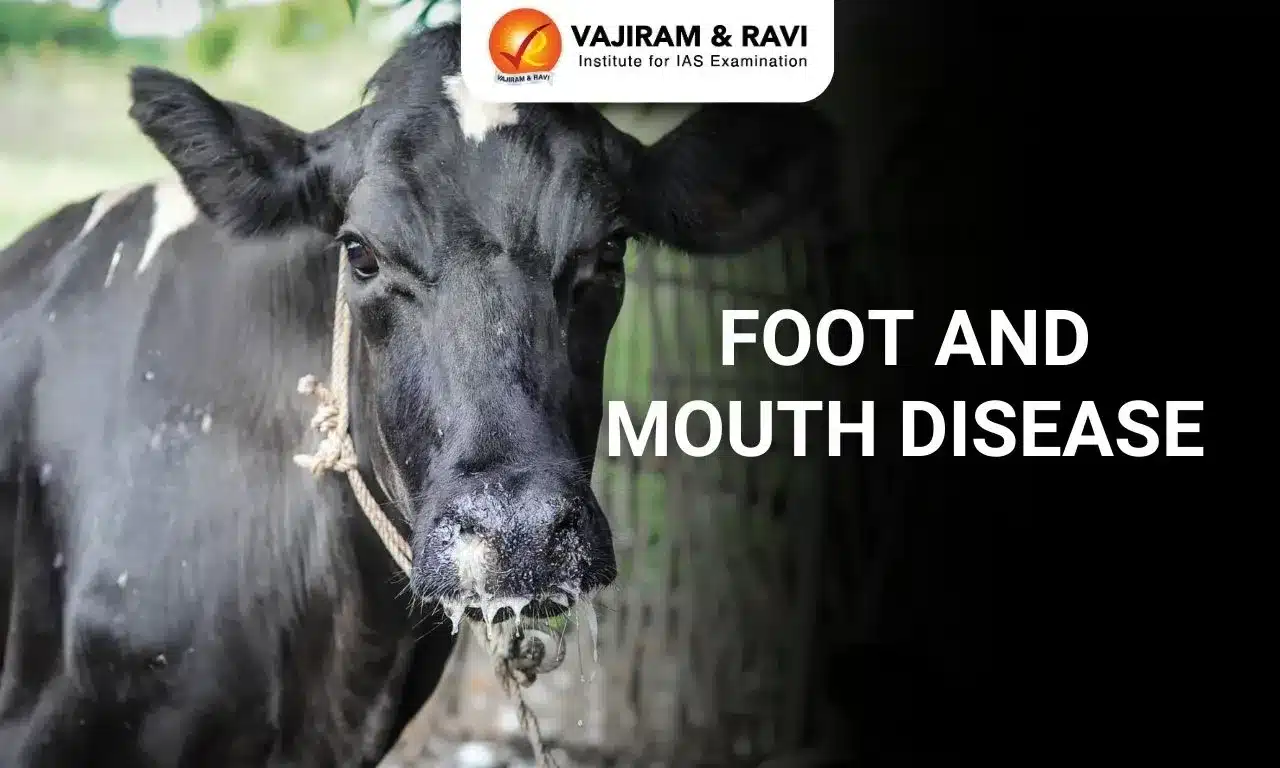
  • It is often confused with foot-and-mouth (also called hoof-and-mouth) disease, a disease of cattle, sheep, and swine; however, the two diseases are not related—they are caused by different viruses.
  • Symptoms of hand-foot-and-mouth disease include sores in the mouth and a rash on the hands and feet.
  • There's no specific treatment for hand-foot-and-mouth disease. 
  • Most people get better in 7 to 10 days.
  • Complications from HFMD are rare.
  • Rarely, the patient with Coxsackie virus A16 infection may also develop viral (“aseptic”) meningitis in which the person has fever, headache, stiff neck, or back pain and may need to be hospitalized for a few days.

Source: NIE

Foot and Mouth Disease FAQs

Q1: Foot and Mouth Disease (FMD) primarily affects which group of animals?

Ans: It affects all cloven-hoofed animals, including cattle, sheep, goats, camelids, deer, and pigs.

Q2: Does Foot and Mouth Disease (FMD affect humans?

Ans: No, Foot and Mouth Disease (FMD) does not affect humans.

Q3: What is the primary prevention method for Foot and Mouth Disease (FMD)?

Ans: Vaccination

Asia-Pacific Institute for Broadcasting Development

Asia-Pacific Institute for Broadcasting Development

Asia-Pacific Institute for Broadcasting Development Latest News

Recently, India has been elected as the Chairman of the Executive Board of Asia-Pacific Institute for Broadcasting Development (AIBD) during the 23rd AIBD General Conference, held in Phuket, Thailand. 

About Asia-Pacific Institute for Broadcasting Development

  • It was established in 1977 under the auspices of UNESCO.
  • It is a unique regional inter-governmental organisation servicing countries of the United Nations Economic and Social Commission for Asia and the Pacific (UN-ESCAP) in the field of electronic media development.
  • Mandate: The AIBD is mandated to achieve a vibrant and cohesive electronic media environment in the Asia-Pacific region through policy and resource development.
  • The International Telecommunication Union (ITU), the United Nations Development Programme (UNDP), and the United Nations Educational, Scientific and Cultural Organisation (UNESCO) are the founding organisations of the Institute and they are non-voting members of the General Conference.
  •  The AIBD currently has 92 member organisations from across 44 countries, including
    • 26 Government Members represented by 48 national broadcasters
    • 44 Affiliate Members from 28 countries and regions, spanning Asia-Pacific, Europe, Africa, Arab States, and North America
  • Secretariat: It is situated in Kuala Lumpur, Malaysia.

India and AIBD

  • India is one of the founding members of this organization.
  • India last held the position of AIBD Executive Council Chairman in 2016. 
  • Prasar Bharati, India’s public service broadcaster, is the representative body of the Ministry of Information & Broadcasting, Government of India, at AIBD.

Source: PIB

Asia-Pacific Institute for Broadcasting Development FAQs

Q1: What is UNESCO?

Ans: It stands for the United Nations Educational, Scientific and Cultural Organization. It is a specialized agency of the United Nations (UN) that was established on November 16, 1945.

Q2: Where is the secretariat of the Asia-Pacific Institute for Broadcasting Development (AIBD) situated?

Ans: Kuala Lumpur

International Big Cat Alliance

International Big Cat Alliance

International Big Cat Alliance Latest News

India has extended privileges and immunities to the International Big Cat Alliance (IBCA) and its officials under the United Nations (Privileges and Immunities) Act, 1947.

About International Big Cat Alliance

  • It was launched in April 2023 during the 50th anniversary of Project Tiger.
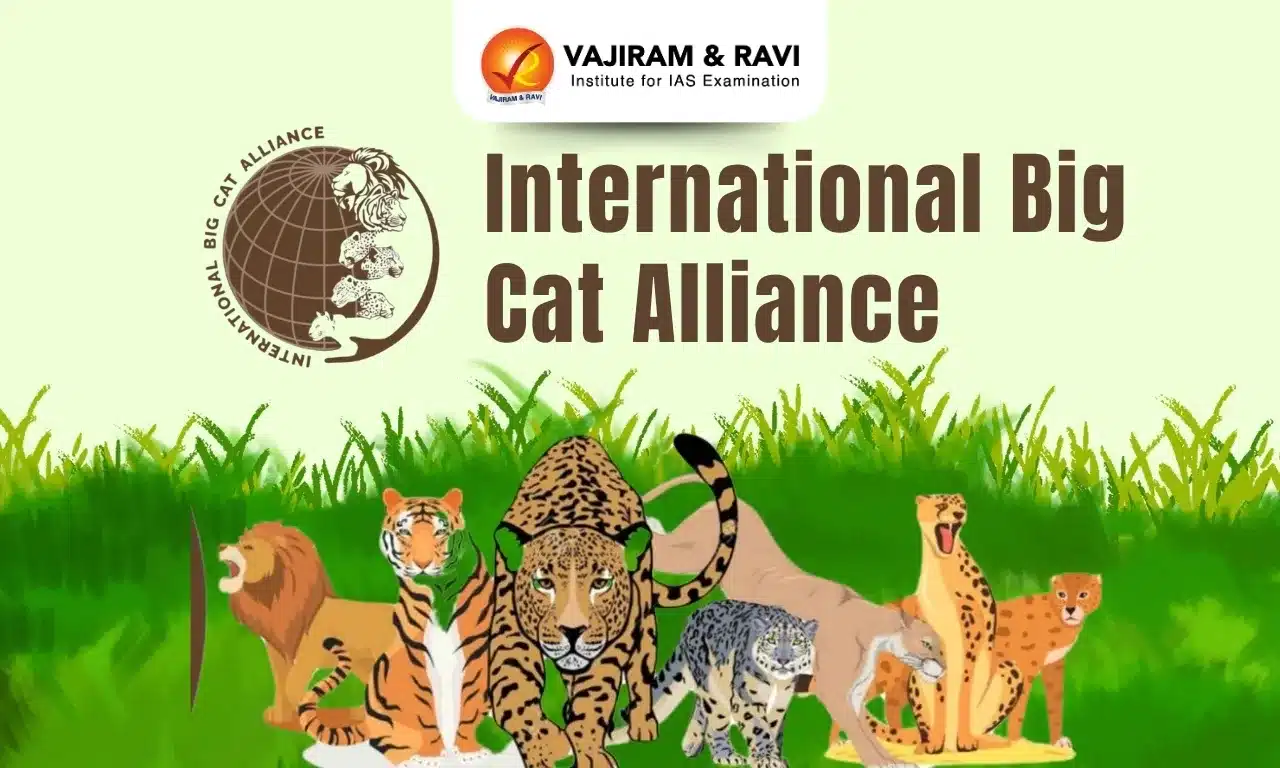
  • It is a treaty-based inter-governmental organisation that covers conservation of seven big cats — tiger, lion, leopard, snow leopard, cheetah, jaguar, and puma.
  • The primary objective of the Alliance is to facilitate collaboration and synergy among stakeholders, consolidating successful conservation practices and expertise to achieve the conservation of big cats at a global level.
  • It brings together 95 range and non-range countries, conservation partners, scientific organisations, and corporates to promote collaboration and share conservation practices.
  • Implementation agency: The IBCA is implemented through the National Tiger Conservation Authority (NTCA) under the Ministry of Environment, Forest and Climate Change (MoEFCC).
  • Membership: Membership is open to all UN Member States, including:
    • Range countries, where big cats naturally occur.
    • Non-range countries that are interested in supporting global conservation of big cats.
  • Institutional Support and Funding: India has committed ₹150 crore (for the period 2023–2028) as budgetary support for: Creating a corpus fund, Building infrastructure, and Covering recurring expenses of the IBCA.
  • Members: 12 countries (including India).

Source: DD News

International Big Cat Alliance (IBCA) FAQs

Q1: What is the International Big Cat Alliance (IBCA)?

Ans: The International Big Cat Alliance is a global initiative launched by India in 2023 to facilitate collaboration in the protection and conservation of seven big cat species: Tiger, Lion, Leopard, Snow Leopard, Puma, Jaguar, and Cheetah.

Q2: Which organisation leads the IBCA?

Ans: The International Big Cat Alliance is led by India, leveraging its Project Tiger experience, and aims to unite countries for research, training, and conservation financing.

Q3: Why was the IBCA established?

Ans: The IBCA was created to combat poaching, illegal wildlife trade, and habitat loss, while fostering transboundary cooperation among range countries for big cat conservation.

Enquire Now