Vithalbhai Patel

Vithalbhai Patel

Vithalbhai Patel Latest News

The Delhi Legislative Assembly held a two-day conference on ‘Vithalbhai Patel: His Role in Shaping India's Constitution and Legislative Institutions’ in New Delhi recently.

About Vithalbhai Patel

  • Vithalbhai Patel, born on 27 September 1873, was an Indian legislator and political leader, co-founder of the Swaraj Party, and elder brother of Sardar Patel. 
  • Much before Vallabhbhai Patel could enter politics, Vithalbhai got into the political world and became a prominent name in the Indian independence movement.
  • Despite not being completely in sync with Mahatma Gandhi's philosophy and practices, Vithalbhai joined Congress and began his struggle for India's independence. 
  • He managed to win a seat in the Bombay Legislative Council with the help of a band of supporters. 
  • After the incident of Chauri Chaura and the end of the Non-cooperation Movement in 1922, Vithalbhai left Congress and established his own party called Swaraj Party, along with Chittaranjan Das and Motilal Nehru.
  • The basic aim of the party was to enter the councils and abolish the government run by the British. 
  • He became popular amongst the masses through his oratorical and witty speeches.
  • Thereafter, he was elected to the Central Legislative Assembly in 1923 and later in 1925, became the Assembly's president.
  • He was the first Indian to hold the post of the President/Speaker of the Central Legislative Assembly. 
  • Vithalbhai Patel drew the attention of the world towards the importance and need of India’s freedom. Thus, he lit the flame of the Indian freedom struggle not only in the country but also abroad. 
  • He died in Geneva, Switzerland, on October 22, 1933. 

Source: TI

Vithalbhai Patel FAQs

Q1: Vithalbhai Patel was the elder brother of which Indian leader?

Ans: Sardar Patel

Q2: Who was the first Indian to become President/Speaker of the Central Legislative Assembly?

Ans: Vithalbhai Patel

Q3: Which political party did Vithalbhai Patel co-found?

Ans: Swaraj Party
Bloom Syndrome

Bloom Syndrome

Bloom Syndrome Latest News

Recently, a 12-year-old girl diagnosed with the Bloom Syndrome, underwent a bone marrow transplant using stem cells from her younger brother at a private hospital in Chennai.

About Bloom Syndrome

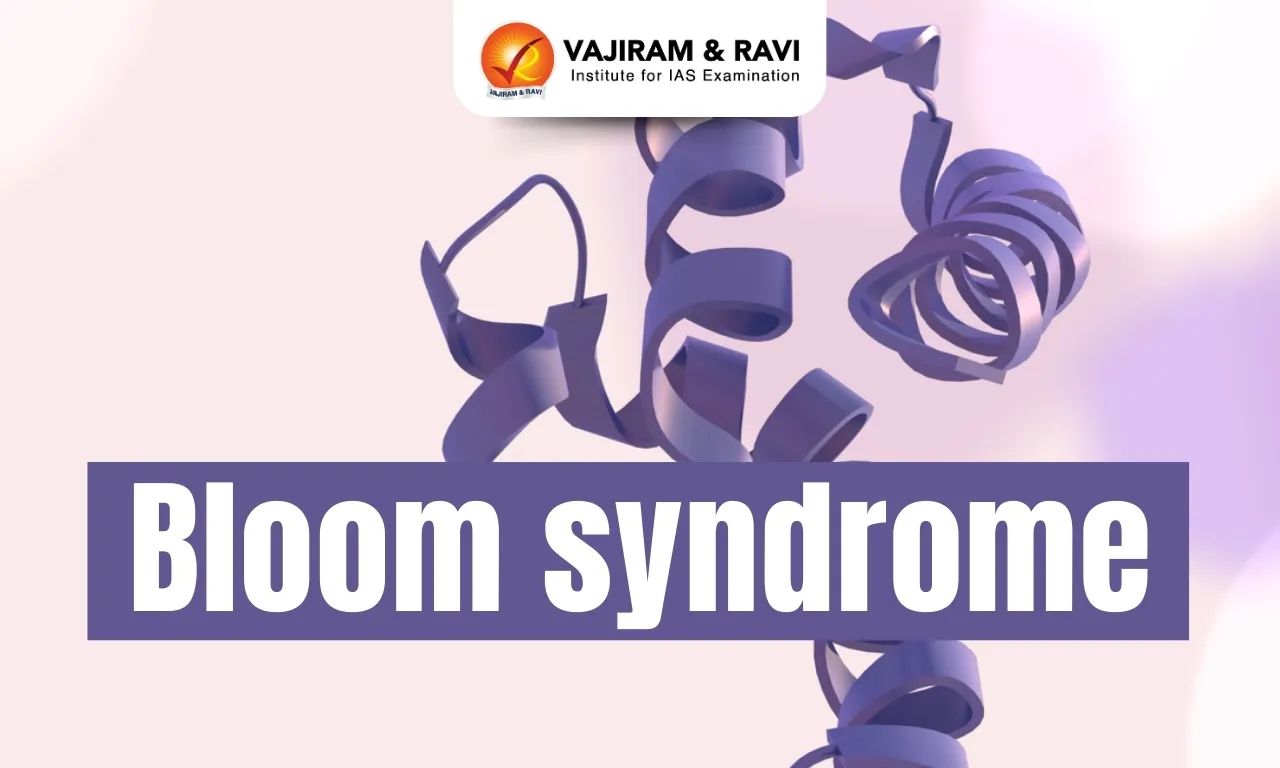
  • Bloom Syndrome or BSyn is a genetic disorder, in which the BLM gene, a protein-coding gene, does not function as it should.
  • It leads to growth delays, increased vulnerabilities to infections, sensitivity to the sun and an increased risk for certain cancers.
  • The BLM gene is a gene that makes a protein involved in maintaining the structure of DNA, when DNA is copied in a cell, and in repairing damaged DNA.
  •  Mutations in the BLM gene may cause cells to lose their ability to repair damaged DNA, which may lead to abnormal cell growth.
  • Other names for Bloom Syndrome are Bloom-Torre-Machacek syndrome and congenital telangiectatic erythema.

How does it Occur?

  • It is inherited in an autosomal recessive pattern. This means that if both parents have a mutation in one of their two BLM genes and if the child inherits two of the disease-causing variants of the gene, then the disorder occurs.
  • It is seen most commonly in the Eastern European (Ashkenazi) Jewish population.

Signs and Symptoms

  • Poor growth is a common clinical feature -- this happens during the development of the foetus and after birth. Below normal average height and head circumference may be seen. There may be abnormalities in certain features such as narrowing of the head and face, prominent ears and nose, long arms and legs and high-pitched voices.
  • Skin lesions: The skin is very sensitive to sunlight and red rashes may develop after exposure.
  • Insulin resistance leads to an increased risk of diabetes, while other issues include immune deficiencies.
  • People with Bloom Syndrome are at a higher risk of contracting infections such as ear and lung infections and also chronic obstructive pulmonary disease (COPD).
  • In adults, male sterility and female infertility may occur.
  • Bloom Syndrome increases the risk of developing cancer, and at an early age.
  • Treatment: It involves a multi-disciplinary approach. Since there is no specific treatment, the goal is to manage symptoms.

Source: TH

Bloom Syndrome FAQs

Q1: What is the cause of Bloom syndrome?

Ans: Bloom syndrome is caused by mutations in the BLM gene.

Q2: What are the main symptoms of Bloom's syndrome?

Ans: Shorter than average height, a narrow face, a red skin rash that occurs on sun-exposed areas of the body, and an increased risk of cancer

Integrated Air Defence Weapon System

Integrated Air Defence Weapon System

Integrated Air Defence Weapon System Latest News

Recently, the Defence Research and Development Organisation (DRDO) has successfully conducted the first flight-tests of an Integrated Air Defence Weapon System (IADWS).

About Integrated Air Defence Weapon System

  • It is a multi-layered air defence system, which includes three components — Quick Reaction Surface to Air Missiles (QRSAM), the advanced Very Short Range Air Defence System (VSHORADS) missiles, and a high-power laser-based Directed Energy Weapon (DEW).
  • QRSAM has been designed and developed by the DRDO, VSHORADS and DEW have been developed by Research Centre Imarat (RCI) and Centre for High Energy Systems and Sciences (CHESS) respectively, both Hyderabad-based facilities of the DRDO.
  • The integrated operation of all these weapon system components is controlled by a Centralised Command and Control Centre, developed by the Defence Research and Development Laboratory, Hyderabad.

The Three Components of the IADWS

  • QRSAM: It is a short-range Surface to Air Missile (SAM) system, primarily designed to provide a protective shield to moving armoured columns of the Army from enemy aerial attacks.
  • The entire weapon system is configured on highly mobile platforms. It has search and track capability and can fire on short halts. The system has an operation range of three to 30 kilometers.
  • The QRSAM weapon ensemble consists of a fully automated command and control system, two radars — Active Array Battery Surveillance Radar and Active Array Battery Multifunction Radar — and one launcher. Both the radars have a 360-degree coverage with ‘search on move’ and ‘track on move’ capabilities.
  • VSHORADS: It is a fourth-generation, technically advanced miniaturised Man Portable Air Defence System (MANPAD). This missile system has the capability to meet the needs of all the three branches of the Armed Forces — Army, Navy and Air Force.
  • Directed Energy Weapon (DEW): Earlier this April, the CHESS facility conducted a successful field demonstration of the land version of the Vehicle mounted Laser DEW MK-II(A).
  • It defeated fixed wing UAV and swarm drones, causing structural damage and disabling their surveillance sensors. With this, India has joined the exclusive club of global powers who possess such a system. DEW is said to have a range of less than three kilometers.

Source: IE

Integrated Air Defence Weapon System FAQ's

Q1: What is the primary benefit of using a laser weapon like the Mk-II(A) during conflict?

Ans: Reduced reliance on expensive ammunition and lower collateral damage

Q2: What is the short range air defense system?

Ans: Short range air defense (SHORAD) is a group of anti-aircraft weapons and tactics that have to do with defense against low-altitude air threats.

Mudumalai Tiger Reserve

Mudumalai Tiger Reserve (MTR)

Mudumalai Tiger Reserve Latest News

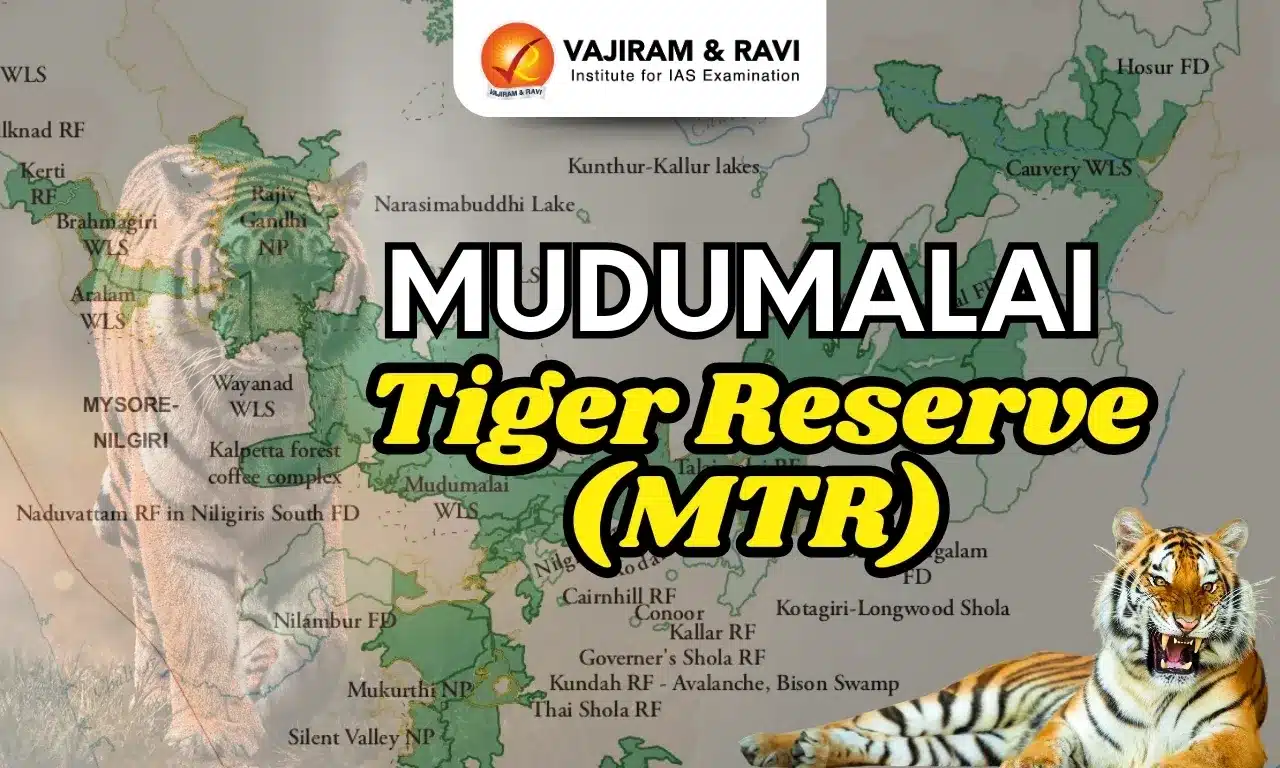
A 12-year-old tigress, which had been sick and roaming near the forest boundary in the Singara forest range of the Mudumalai Tiger Reserve (MTR) died recently.

About Mudumalai Tiger Reserve

  • It is located in the Nilgiris District of Tamil Nadu, spread over 321 sq. km. at the tri–junction of three states, viz, Karnataka, Kerala, and Tamil Nadu.
  • It lies on the Northeastern and Northwestern slopes of the Nilgiri hills, which is a part of the Western Ghats.
  • It is part of the Nilgiris Biosphere Reserve, the first biosphere reserve in India.
  • It has a common boundary with Wayanad Wildlife Sanctuary (Kerala) on the west, Bandipur Tiger Reserve (Karnataka) on the north, the Nilgiris North Division on the south and east, and Gudalur Forest Division on the south-west.
  • The name Mudumalai means ”the ancient hill range”. Indeed, it is as old as 65 million years when the Western Ghats were formed.
  • Terrain: The terrain is undulating, with the elevation ranging from 960m to 1266m.
  • Habitat: A variety of habitats ranging from tropical evergreen forest, moist deciduous forest, moist teak forest, dry teak forest, secondary grasslands, and swamps are found here.
  • River: The Moyar River runs through the reserve.
  • Flora:
    • It has tall grasses, commonly referred to as “Elephant Grass”, bamboo of the giant variety, and valuable timber species like Teak, Rosewood, etc.
    • It has wild relatives of cultivated plants, viz. wild rice, ginger, turmeric, cinnamon, etc.
    • The habitat also has swampy areas (Vayals) and grasslands.
  • Fauna:
    • The faunal assemblage includes: elephant, gaur, sambar, four-homed antelope, spotted deer, barking deer, blackbuck, wild pig, mouse deer, and predators like tigers, leopards, and wild dogs.
    • Around 8% of the total bird species in India can be found in the region.
    • The Oscar-winning ‘Elephant Whisperers’ was filmed at the Theppakadu Elephant Camp, located inside the Mudumalai Tiger Reserve.

Source: NIE

Mudumalai Tiger Reserve FAQs

Q1: Mudumalai Tiger Reserve is located in which Indian state?

Ans: Tamil Nadu

Q2: Mudumalai Tiger Reserve is part of which biosphere reserve?

Ans: Nilgiris Biosphere Reserve

Q3: Which river runs through the Mudumalai Tiger Reserve?

Ans: Moyar River

Integrated Food Security Phase Classification

Integrated Food Security Phase Classification

Integrated Food Security Phase Classification Latest News

According to a new Integrated Food Security Phase Classification (IPC) analysis more than half a million people in Gaza are trapped in famine, marked by widespread starvation, destitution and preventable deaths.

About Integrated Food Security Phase Classification

  • It is an independent body funded by Western countries and widely recognised as the main global system for measuring the severity of hunger crises.
  • It was set up to sound the alarm so that famine and mass starvation could be prevented and to help organisations respond.
  • The IPC is overseen by 19 major humanitarian organisations and regional bodies. It typically partners with national governments to analyse data.
  • It is an innovative multi-stakeholder global initiative aimed at enhancing food security and nutrition analysis to inform decisions.

How is Famine Determined?

  • The IPC system charts acute food insecurity on a five-phase scale. Its most extreme warning is Phase 5, which has two levels, catastrophe and famine.
  • If the IPC or one of its partners finds that at least one area is in famine, a famine review committee, led by up to six experts, is activated.
  • For an area to be classified as in famine, at least 20% of people must be suffering extreme food shortages, with one in three children acutely malnourished and two people out of every 10,000 dying daily from starvation or malnutrition and disease.
  • The IPC says it does not formally declare famine, but provides analysis for governments and others to do so.
  • The IPC relies on the U.N. World Food Programme and other relief organisations and government agencies to provide data.
  • The protocols used by the IPC are harmonized across the three individual scales (IPC Acute Food Insecurity, IPC Chronic Food Insecurity, and IPC Acute Malnutrition).

Source: IE

Integrated Food Security Phase Classification FAQs

Q1: What is the World Food Programme?

Ans: It is the leading humanitarian organization saving lives and changing lives, delivering food assistance in emergencies and working with communities to improve nutrition and build resilience.

Q2: Is India a member of WFP?

Ans: The World Food Programme (WFP) has been working in India since 1963.

Matua Community

Matua Community

Matua Community Latest News

A social outfit recently organised a march with members of the Matua community in Habra of North 24-Parganas to protest against the proposed special intensive revision (SIR) of electoral rolls in Bengal.

About Matua Community

  • The Matua community, a marginalized Hindu sect with roots in the 19th century, holds a significant socio- religious presence in the Bengal region, particularly across Bangladesh and West Bengal.
  • Founded by Harichand Thakur in the 1860s, the Matua movement arose as a response to the deep-seated caste discrimination present within Hindu society at the time. 
  • As followers of the Matua faith, the community primarily belongs to the "Namashudra" caste, traditionally regarded as a lower-caste group within Hinduism. 
  • Harichand Thakur’s teachings centered on principles of social equality, human dignity, and the empowerment of marginalized groups through education and religious reform, making the Matua movement a powerful counterforce to caste oppression.
  • Following the partition of Bengal in 1947, the Matua community experienced profound socio-political shifts. 
  • Many Matua families migrated to India to escape religious and political persecution, although a large portion of the community remained in what later became Bangladesh.
  • Today, Matuas constitute the second largest SC population of West Bengal.

Source: TI

Matua Community FAQs

Q1: The Matua community was founded in the 19th century by whom?

Ans: Harichand Thakur

Q2: The Matua community primarily belongs to which caste group?

Ans: Namashudra

Q3: The Matua community has significant socio-religious presence in which regions?

Ans: West Bengal and Bangladesh

NAMASTE Scheme

NAMASTE Scheme

NAMASTE Scheme Latest News

Recently, the union minister of Social Justice & Empowerment, Government of India shared information about the NAMASTE scheme.

About NAMASTE Scheme

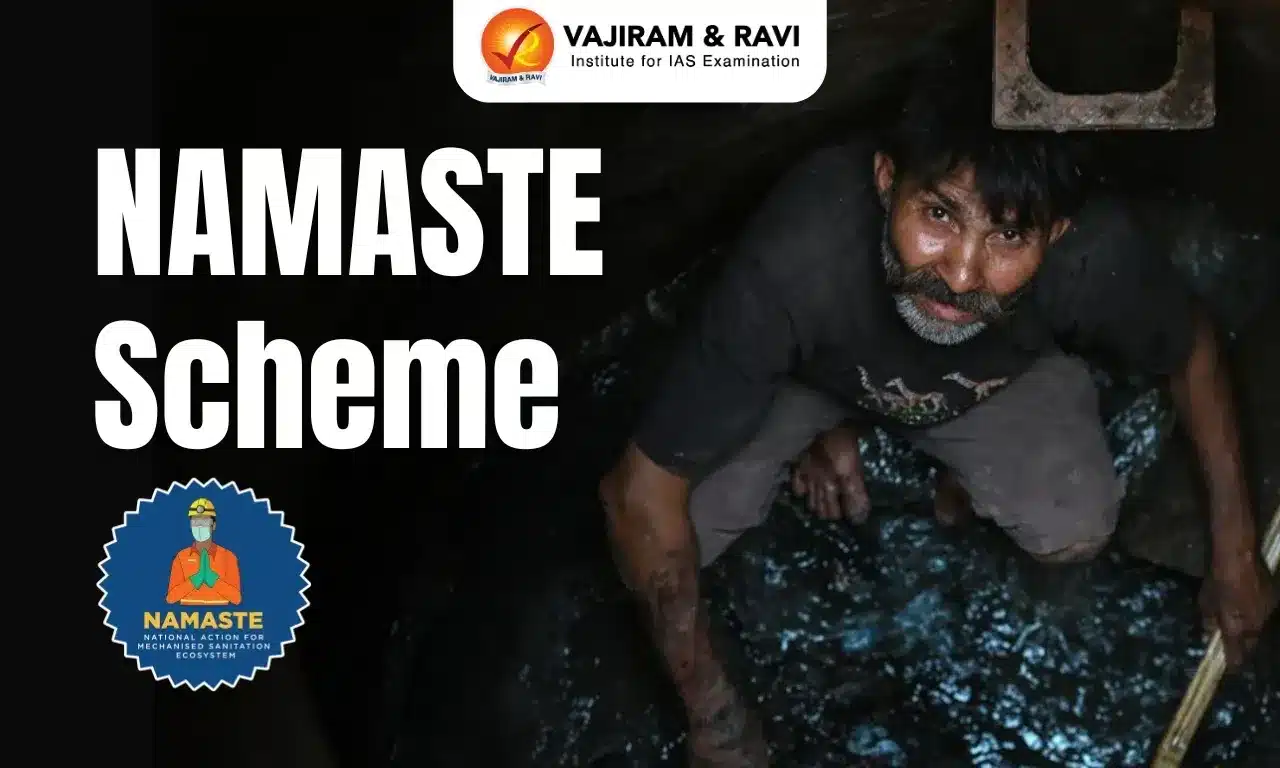
  • The objective of the “National Action for Mechanised Sanitation Ecosystem” (NAMASTE) scheme is to formalize and institutionalize the persons engaged in hazardous cleaning of sewers and septic tanks and promoting safe and mechanized cleaning through trained sanitation workers.
  • Ministries involved: It is jointly being implemented by the Ministry of Social Justice and Empowerment (MoSJE) and the Ministry of Housing and Urban Affairs (MoHUA).
  • Implementing agency: It is implemented by the National Safai Karmacharis Finance Development Corporation (NSKFDC) under the Ministry of Social Justice and Empowerment (MoSJE)
  • Duration: It would be implemented for three years from FY 2023-24 to FY 2025-26.
  • Target Groups: Sewer and septic tank sanitation workers (SSWs) and waste pickers in urban areas of India

What are the Aims of NAMASTE Scheme?

  • Zero fatalities in sanitation work in India
  • All sanitation work is performed by skilled workers
  • No sanitation workers come in direct contact with human faecal matter
  • Sanitation workers are collectivized into SHGs and are empowered to run sanitation enterprises
  • All Sewer and Septic tank sanitation workers (SSWs) have access to alternative livelihoods.

Source: PIB

NAMASTE Scheme FAQs

Q1: What is the tenure of the namaste scheme?

Ans: It would be implemented for three years from FY 2023-24 to FY 2025-26.

Q2: Who launched the Namaste scheme?

Ans: It is a joint initiative of the Ministry of Social Justice and Empowerment (MoSJE) and the Ministry of Housing and Urban Affairs (MoHUA).

INS Kadmatt

INS Kadmatt

INS Kadmatt Latest News

Recently, Indian Naval Ship INS Kadmatt, successfully completed a three-day port call at Surabaya, Indonesia.

About  INS Kadmatt

  • It is an indigenous stealth anti-submarine warfare corvette.
  • It is the second of four anti-submarine warfare corvettes built for the Indian Navy by the Garden Reach Shipbuilders and Engineers of Kolkata under Project 28.
  • It was commissioned into the Indian Navy in January 2016.
  • The ship was inducted into the Eastern Naval Command of the Indian Navy.
  • It has been named after the Kadmat Island of India's Lakshadweep Islands.
  • Role: The primary role of the INS Kadmatt is in anti-submarine warfare—to protect ships in convoys and ports from enemy submarine attacks.

Features of INS Kadmatt

  • The ship is fitted with state-of-the-art weapons, sensors, and machinery and is also designed to embark on the Sea king anti-submarine helicopter.
  • The ship also has on-board early warning, navigation, and fire control radars, besides underwater sensors and integrated communication and electronic warfare systems.
  • It produces low levels of radiated underwater noise, which reduces its chances of detection.
  • It is equipped with anti-aircraft guns, torpedoes, and rocket launchers. 

Source: PIB

INS Kadmatt FAQs

Q1: What is the motto of INS Kadmatt?

Ans: The ship's motto 'Nirvighnam Karomi' meaning 'I Remove Obstacles'

Q2: What does INS stand for in the Navy?

Ans: INS stands for Indian Naval Ship. Formerly Indian navy was known as Royal Indian Marine, Royal Indian Navy, etc.

Monetary Policy Committee (MPC)

Monetary Policy Committee (MPC)

Monetary Policy Committee Latest News

Reserve Bank of India (RBI) recently appointed Indranil Bhattacharyya, executive director, as a member of the Monetary Policy Committee (MPC).

About Monetary Policy Committee

  • Monetary policy refers to the use of monetary instruments under the control of the central bank to regulate magnitudes such as interest rates, money supply, and availability of credit with a view to achieving the ultimate objective of economic policy.
  • The RBI is vested with the responsibility of conducting monetary policy. This responsibility is explicitly mandated under the Reserve Bank of India Act, 1934.
  • The primary objective of monetary policy is to maintain price stability while keeping in mind the objective of growth. Price stability is a necessary precondition to sustainable growth.
  • In May 2016, the RBI Act, 1934, was amended to provide a statutory basis for the implementation of the flexible inflation targeting framework.
  • The amended RBI Act also provides for the inflation target to be set by the government of India, in consultation with the Reserve Bank, once in every five years.
  • The Monetary Policy Committee (MPC) constituted by the central government under Section 45ZB determines the policy interest rate required to achieve the inflation target.
  • Function: The MPC is entrusted with the task of fixing the benchmark policy rate (repo rate) required to contain inflation within the specified target level. 
  • The MPC replaced the previous arrangement of the Technical Advisory Committee.
  • Composition:
    • MPC will have six members: the RBI Governor (Chairperson), the RBI Deputy Governor in charge of monetary policy, one official nominated by the RBI Board, and the remaining three members would represent the Government of India.
    • The external members hold office for a period of four years.
  • The quorum for a meeting shall be four Members, at least one of whom shall be the Governor and, in his absence, the Deputy Governor, who is the Member of the MPC.
  • The MPC takes decisions based on a majority vote. In case of a tie, the RBI governor will have the second or casting vote.
  • The decision of the MPC would be binding on the RBI.
  • RBI’s Monetary Policy Department (MPD) assists the MPC in formulating the monetary policy.
  • The MPC is required to meet at least four times in a year.

Source: LM

Monetary Policy Committee FAQs

Q1: Who sets India’s inflation target?

Ans: Government of India in consultation with RBI

Q2: How many members are there in the Monetary Policy Committee (MPC)?

Ans: 6

Q3: Who chairs the Monetary Policy Committee?

Ans: RBI Governor

Enquire Now